Coffee Equipment
KINGrinder P1 vs Hario Slim vs Comandante: Budget Hand Grinder Showdown
The KINGrinder P1 challenges the long-standing Hario Slim at nearly the same price, with surprising results in taste and build quality. We tested all three against a premium benchmark.
Introduction
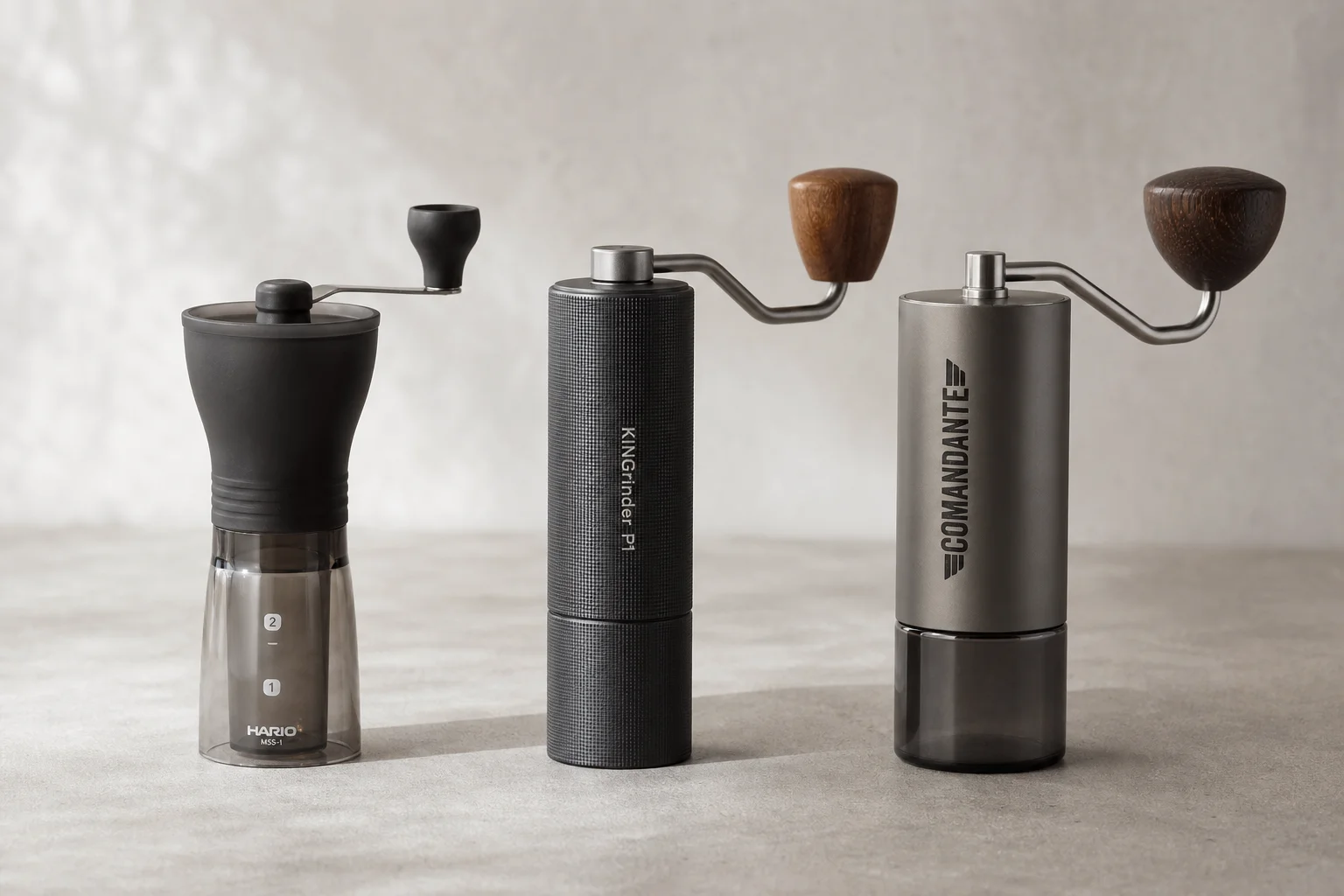
For years, the Hario Slim has been the default recommendation for anyone wanting to start grinding coffee at home on a budget. At around £30, it offered the cheapest entry point to burr grinding. But the KINGrinder P1 has arrived at nearly the same price point with a fundamentally different approach to build quality and performance. We tested all three grinders—the budget Hario Slim, the promising KINGrinder P1, and the premium Comandante—to see whether the gap between budget and expensive has genuinely narrowed.
The Hario Slim: The Long-Standing Budget Standard
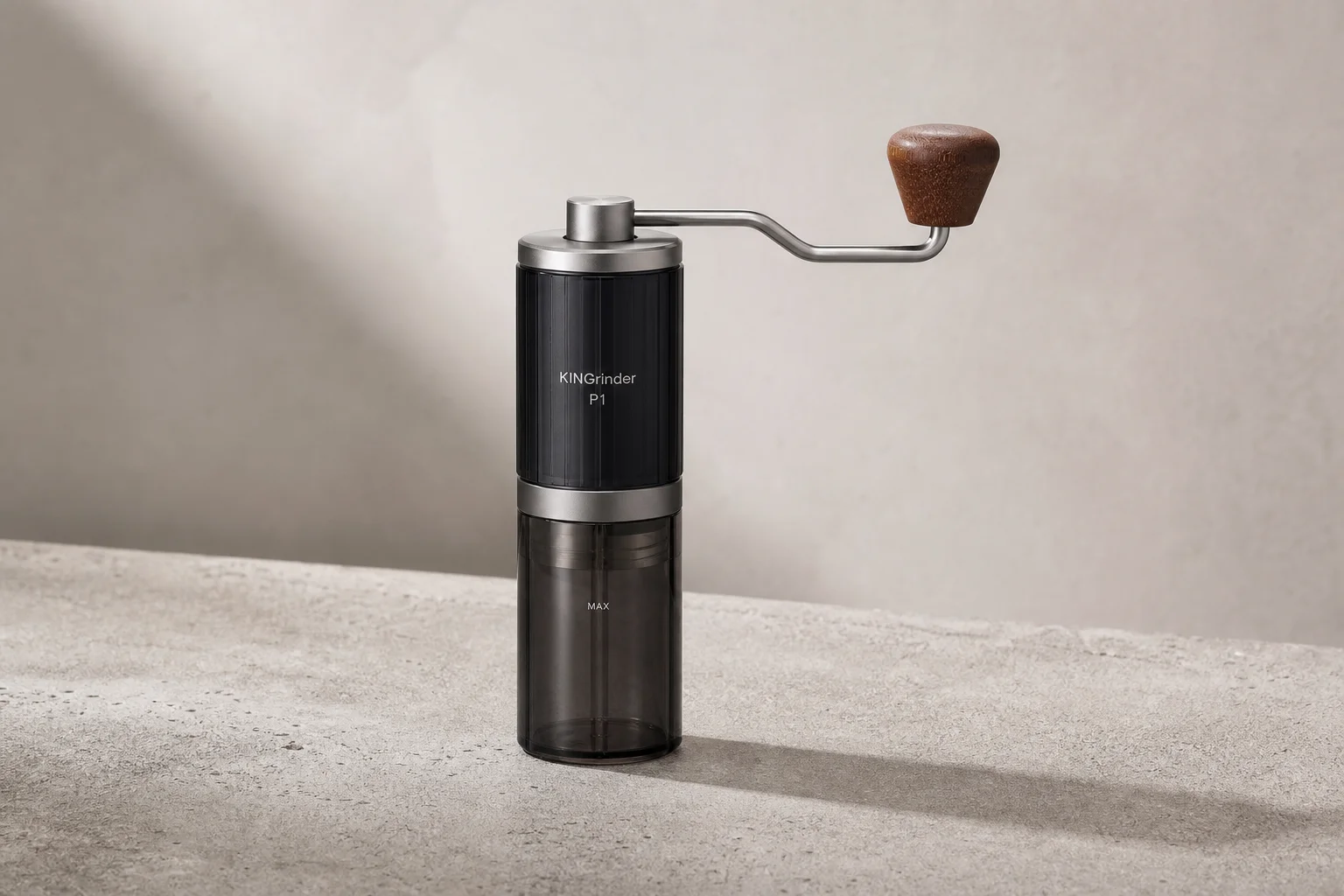
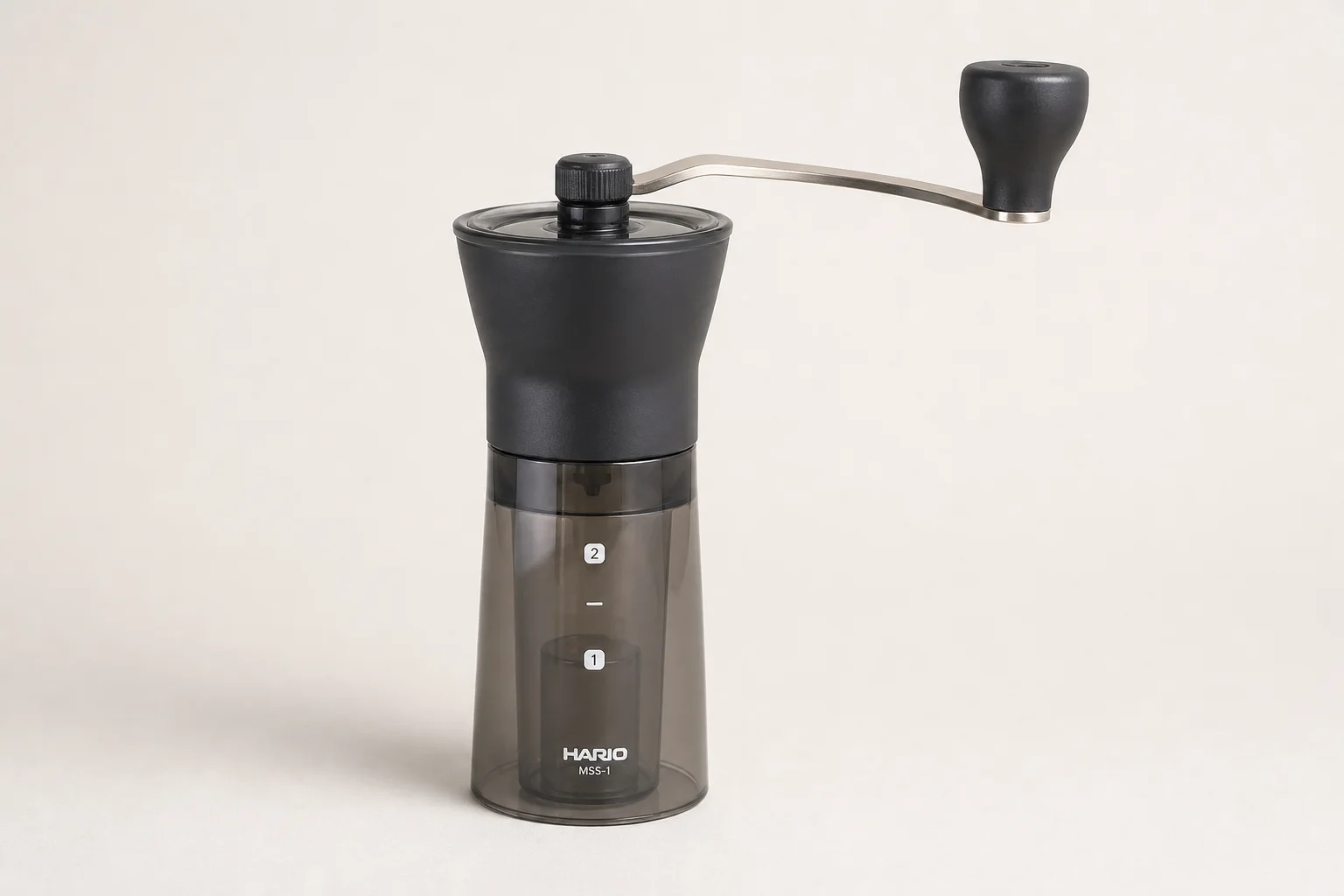
The Hario Slim has dominated the entry-level market for over a decade. Its ceramic conical burr and slim body make it easy to hold, but there are real limitations. The shaft connecting the handle to the burr has noticeable play, meaning the burr alignment isn’t tight. This loose construction translates directly into an inconsistent grind profile—the burr doesn’t sit perfectly centered, so particle size distribution suffers.
At £30, it’s cheap enough that recommending it felt reasonable for years. But “cheap” and “good” are not the same thing. The Hario Slim turns beans into pieces, but it doesn’t do it particularly well.
The KINGrinder P1: A Different Approach at the Same Price
The KINGrinder P1 arrives at £33—just three pounds more than the Hario Slim. The immediate difference is tactile. The body is polycarbonate, the handle is metal, and there’s a pleasant wooden accent on the grip. The burr inside is metal (a hexagonal design on the P1; the brand also offers heptagonal and pentagonal variants at slightly higher prices). The overall construction feels noticeably more refined than the Hario, despite the similar price tag.
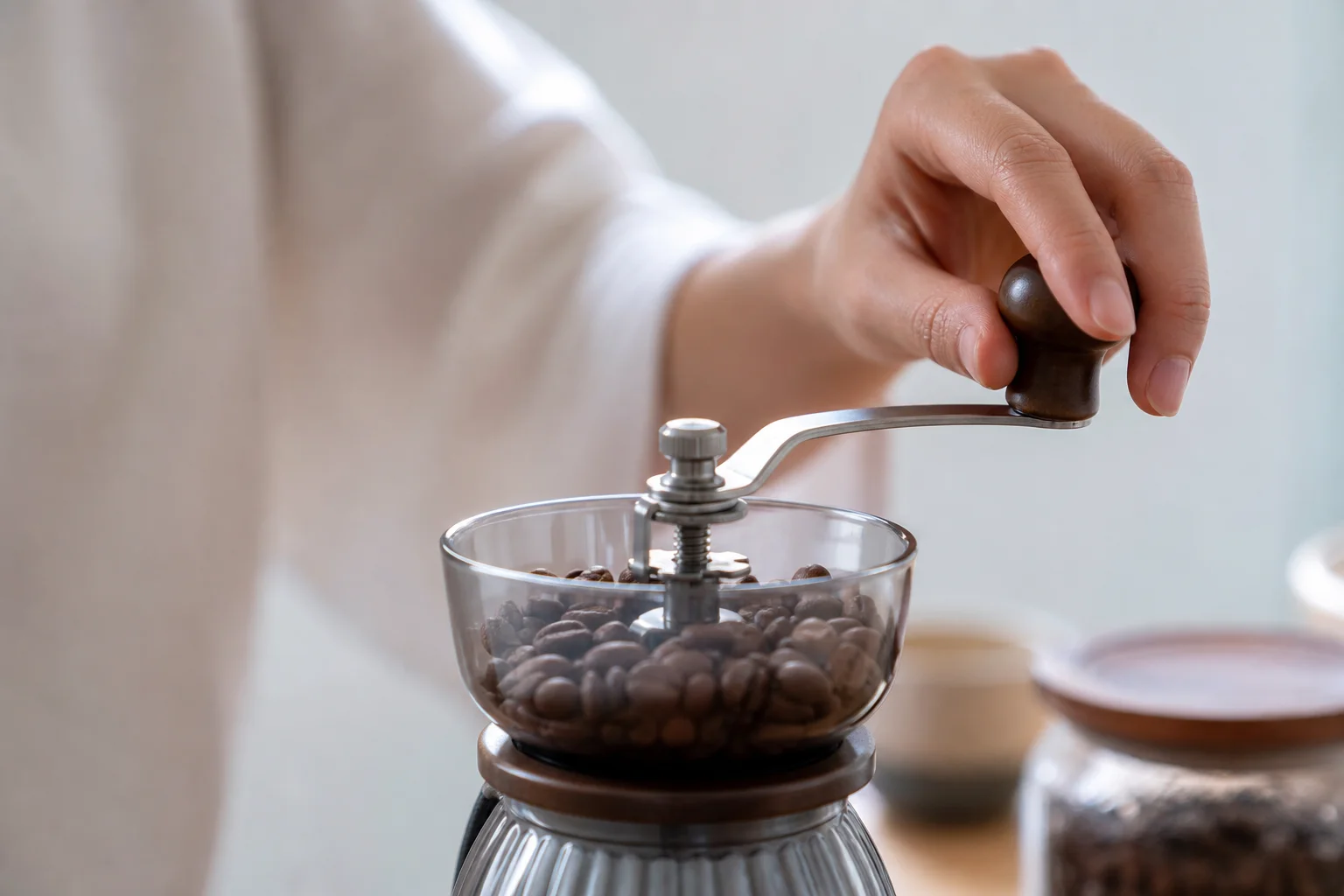
Grinding with the KINGrinder P1 is a different experience. The metal burr is faster and easier to turn than the Hario’s ceramic burr. The ergonomics are substantially better—the wooden handle piece and the overall weight distribution make the grinding action feel less like a chore. For someone considering a hand grinder for the first time, this matters.
Particle Size and Extraction
We used a particle size analyzer to compare the three grinders, all dialed in to produce roughly 21.3% extraction in a 1-cup V60. The data revealed something unexpected: the KINGrinder P1 produced significantly more fines (very small particles) than either the Hario Slim or the Comandante. On the surface, this looked like a disadvantage.
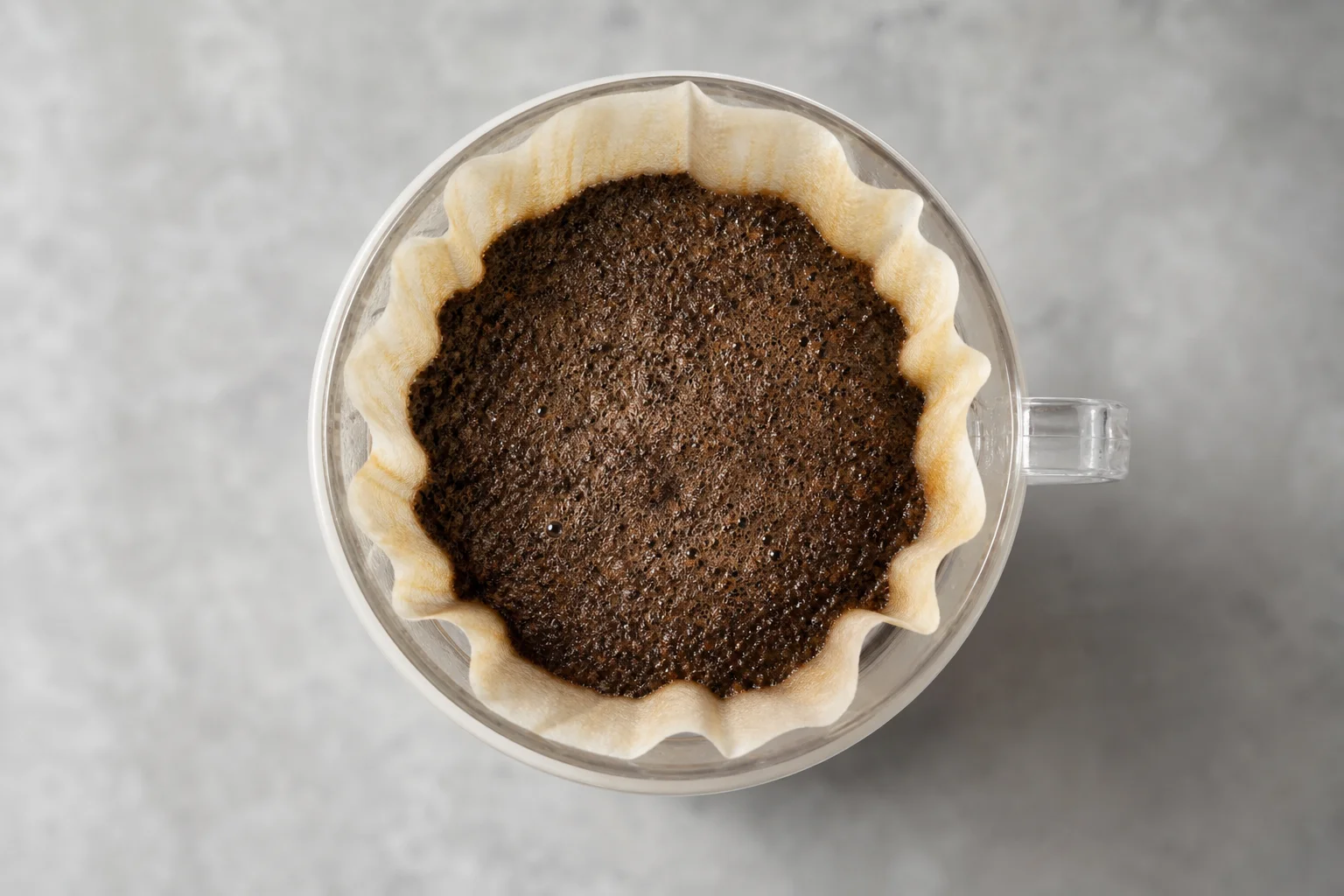
But the real story emerged when we looked at the cumulative undersize distribution. The Hario Slim had roughly 14% of its coffee in pieces larger than 1,500 microns—essentially large chunks that don’t extract properly. The KINGrinder P1 had far fewer of these oversized pieces. The Comandante, as expected from a £200+ grinder, had the most consistent distribution overall.
The lesson: obsessing over fines can be misleading. What matters more is eliminating the large boulders that don’t contribute to extraction. The KINGrinder P1 does this better than the Hario, even though it produces more fines.
Blind Taste Test Results
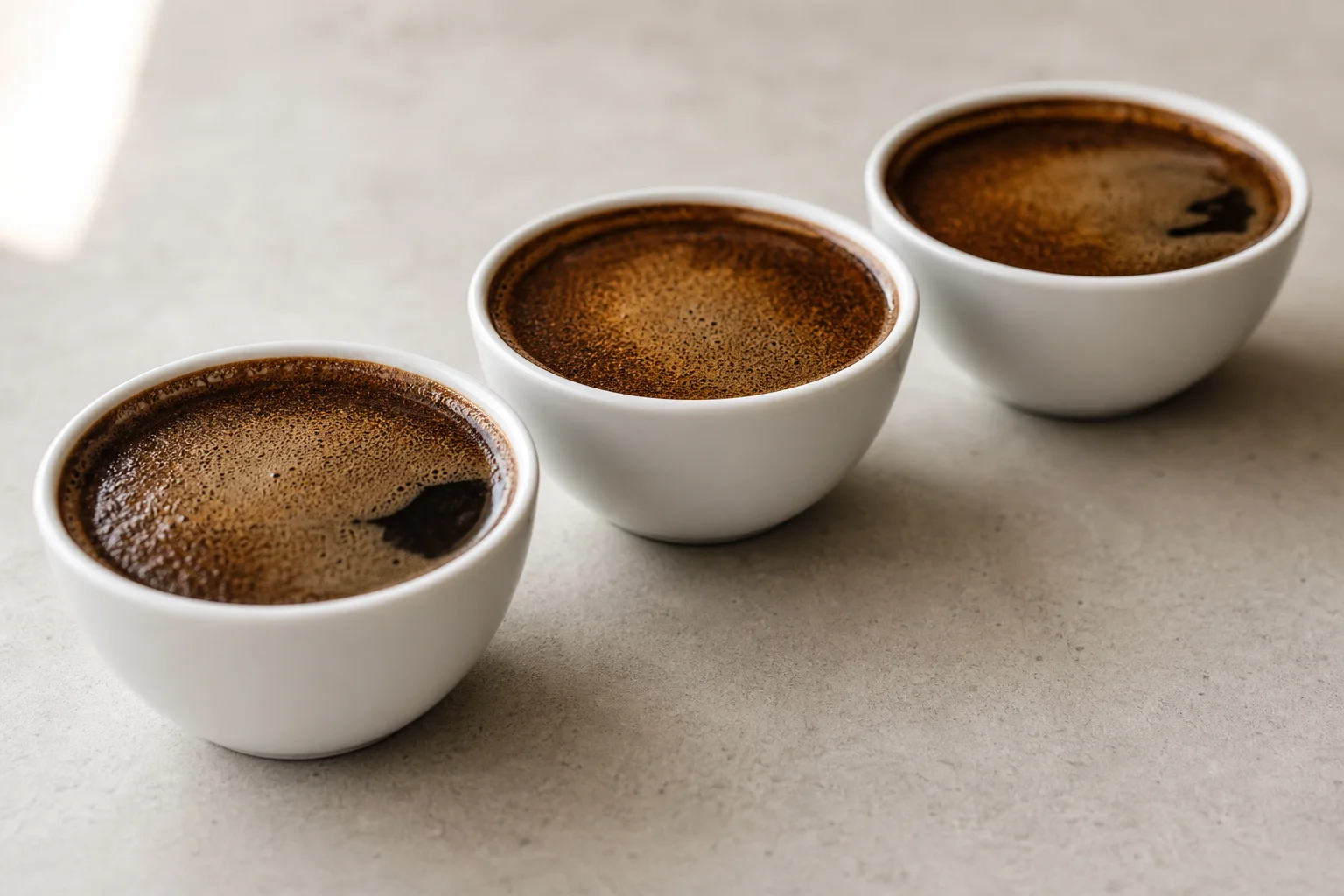
We brewed three separate V60s with each grinder, decanted them into cupping bowls, and conducted a blind tasting. The results were clear.
The Hario Slim tasted thin and astringent, with the least complexity. The cup felt like it was missing something—likely because those large chunks weren’t extracting properly.
The Comandante produced a very balanced, sweet, and clean cup. No surprises here; it’s a £200 grinder and it tastes like one.
The KINGrinder P1 landed firmly in second place. It was noticeably better than the Hario Slim—more balanced, sweeter, with better body and texture. It wasn’t quite as refined as the Comandante, but the gap was far smaller than the price difference would suggest.
Ergonomics and Build Quality
Grinding 15 grams of coffee by hand reveals a lot about a grinder’s design. The Hario Slim’s smaller capacity and ceramic burr made the task feel laborious. The KINGrinder P1, with its metal burr and better-balanced handle, was noticeably easier and faster.
The Comandante, with its premium metal construction and refined handle, felt the most pleasant to use—but the KINGrinder P1 came surprisingly close in terms of the actual grinding experience. For £33, the ergonomic difference between the two budget options is stark.
Espresso Performance
The KINGrinder P1 claims espresso capability. We tested it using a drill to match hand-grinding speed and dialed it in to a reasonable flow rate. The result was functional but not impressive—the shot was acidic and lacked sweetness and texture. Espresso appears not to be this grinder’s strength.
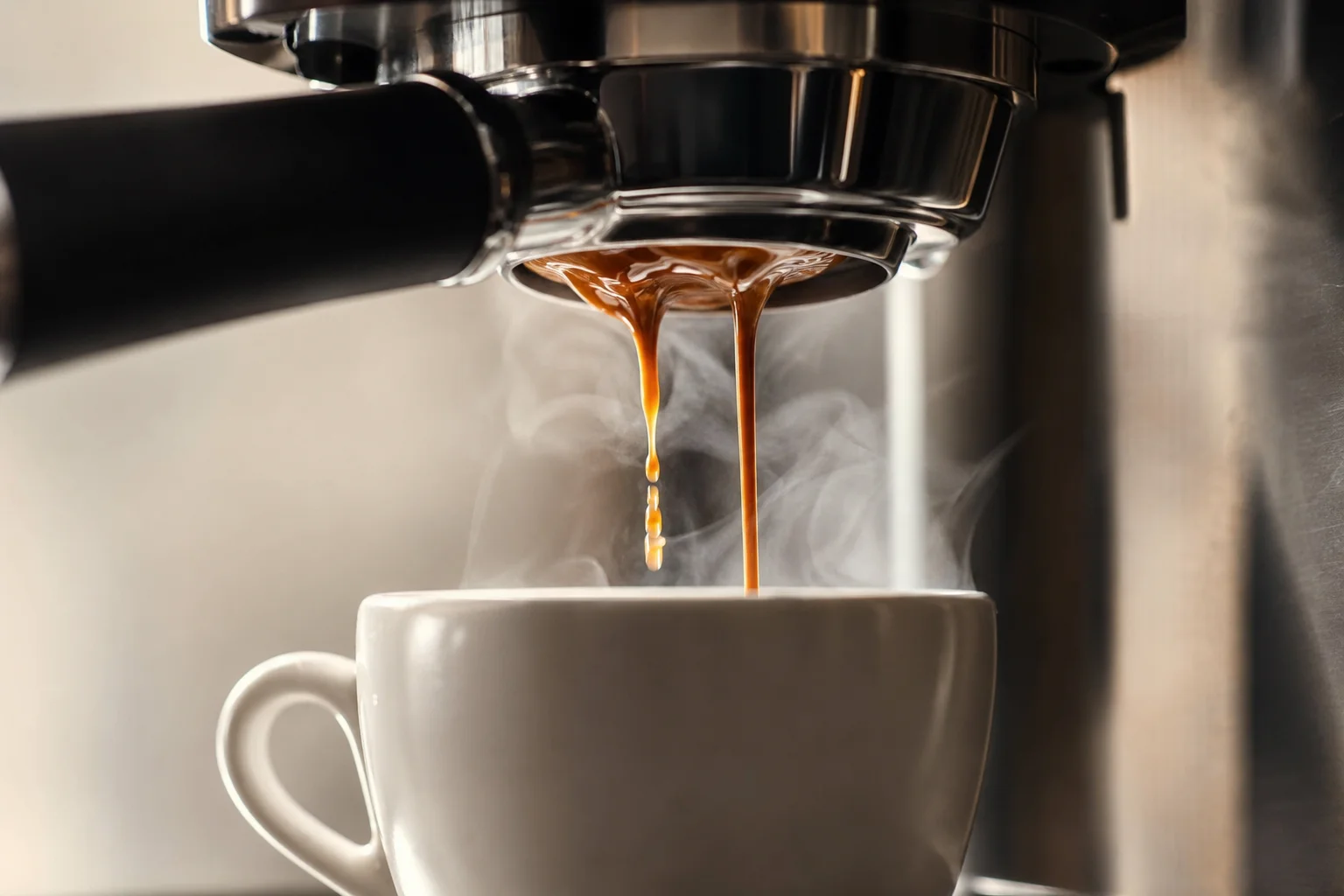
That said, at £33, expecting espresso-quality performance is unrealistic. The grinder can technically produce an espresso grind, but it’s not optimized for it. For pour-over and immersion brewing, it excels.
The Value Proposition
Here’s where the KINGrinder P1 becomes genuinely interesting. If you have £250 to spend on coffee, you could buy a Comandante and have £50 left for beans. Or you could spend £33 on the KINGrinder P1 and invest the remaining £217 in genuinely excellent coffee. The quality of the beans matters far more than the difference between a £33 and a £200 grinder.
The KINGrinder P1 is not as good as the Comandante. It produces slightly more fines, slightly less consistency, and a marginally less refined cup. But it’s dramatically better than the Hario Slim, and it’s better enough that recommending it to someone starting their coffee journey feels genuinely confident.
The real excitement here is that innovation is happening at the budget end of the market. For years, the Hario Slim was the only sensible option at this price. Now there’s a grinder that’s measurably better, more pleasant to use, and still costs almost the same. That’s progress.
Conclusion
The KINGrinder P1 represents a meaningful shift in what’s possible at the budget end of hand grinders. It won’t replace a premium grinder like the Comandante, but it makes the Hario Slim feel genuinely outdated. For anyone starting to explore grinding their own coffee, the KINGrinder P1 is the grinder to buy. It’s affordable, it’s capable, and it opens the door to a much better coffee experience than the alternatives at this price point.
Further reading
Related Reviews
Coffee Equipment
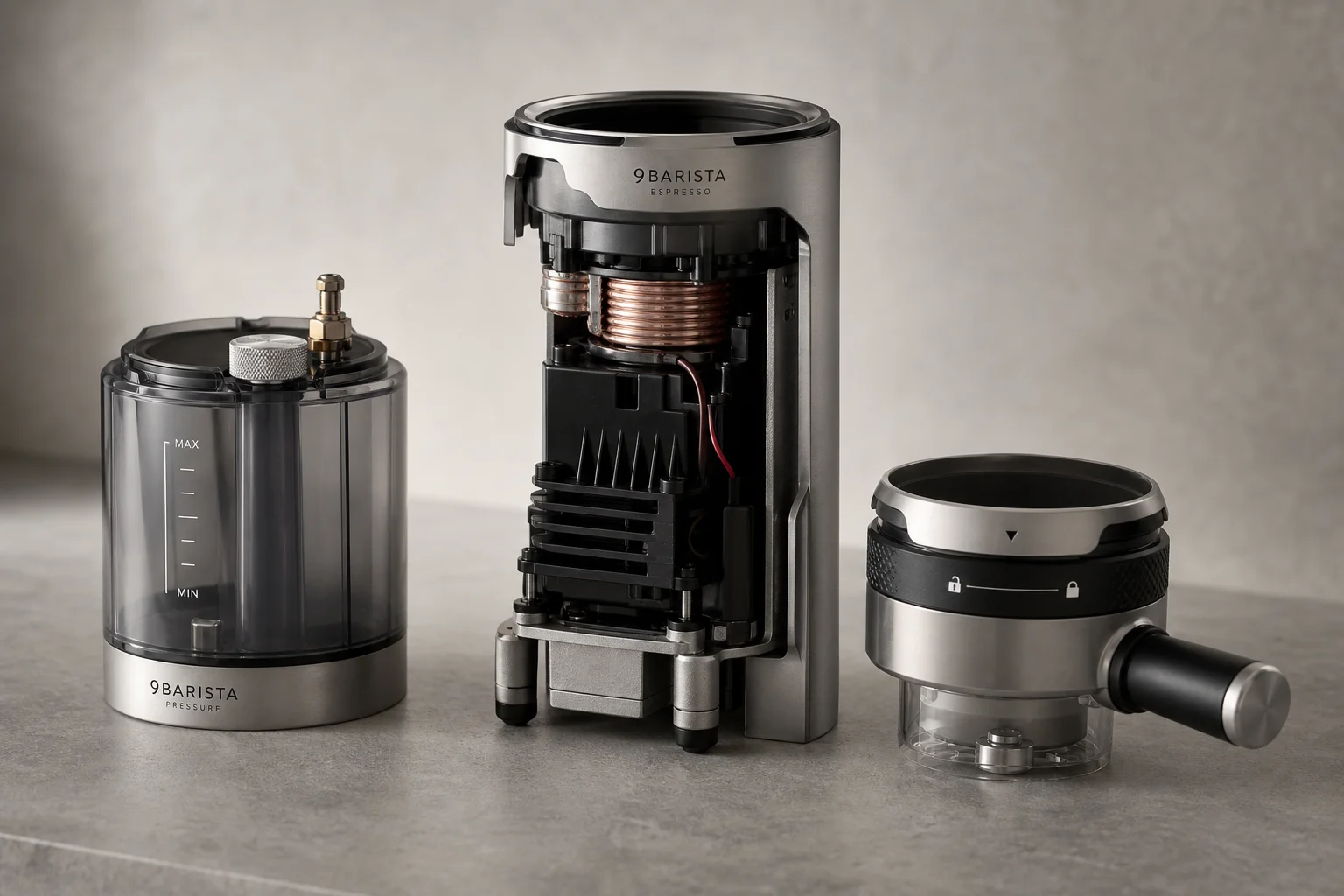
9Barista Espresso Machine Review: Stovetop Espresso for Single-Cup Enthusiasts
A cleverly engineered stovetop espresso maker that generates nine bars of pressure without electricity. Excellent coffee quality, but requires patience and suits solo drinkers only.
Coffee Equipment
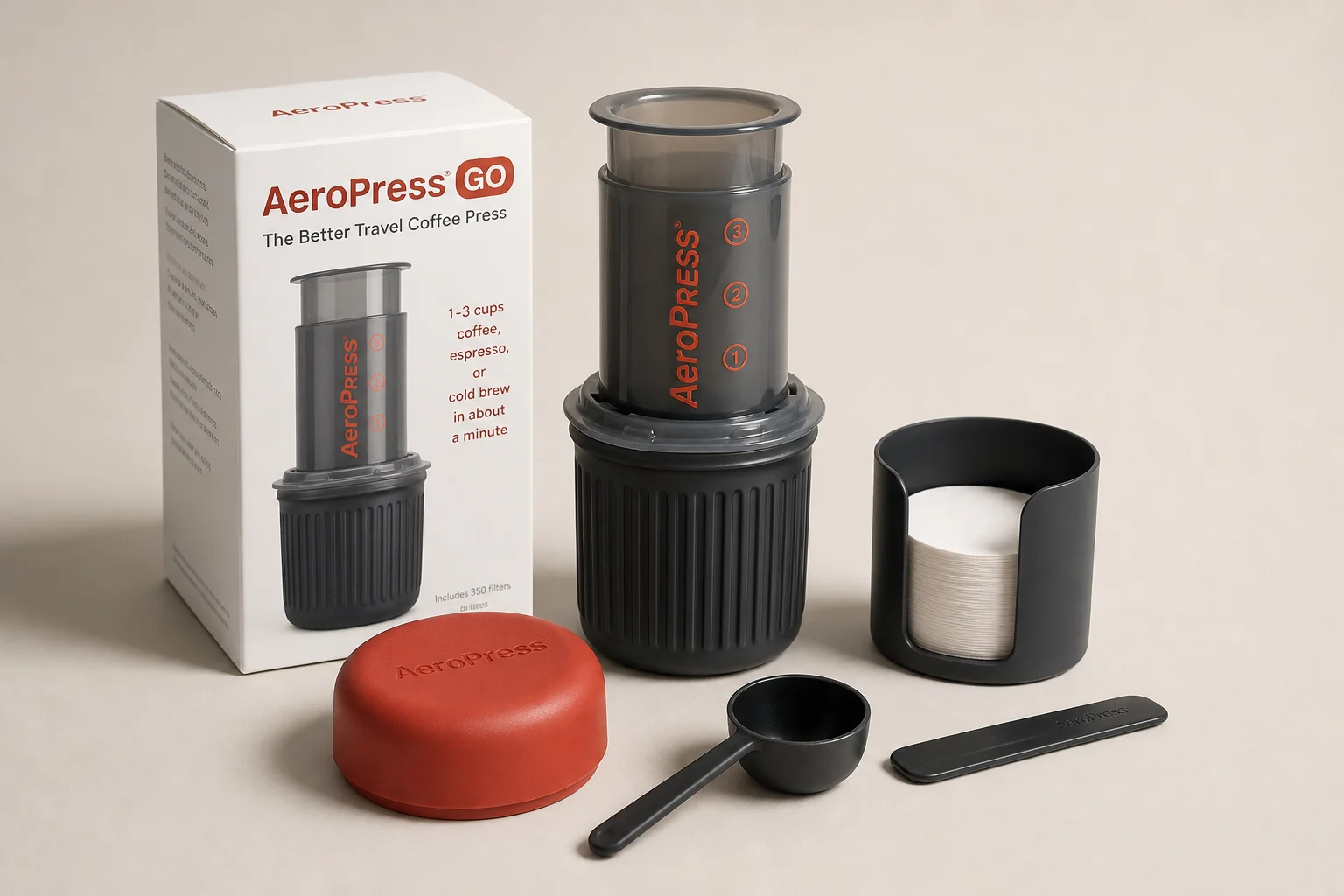
Aeropress Go Review: A Compact Travel Brewer That Solves One Specific Problem
The Aeropress Go shrinks the original design and adds an integrated cup, but it may not address the travel challenges most coffee enthusiasts actually face.
Coffee Equipment
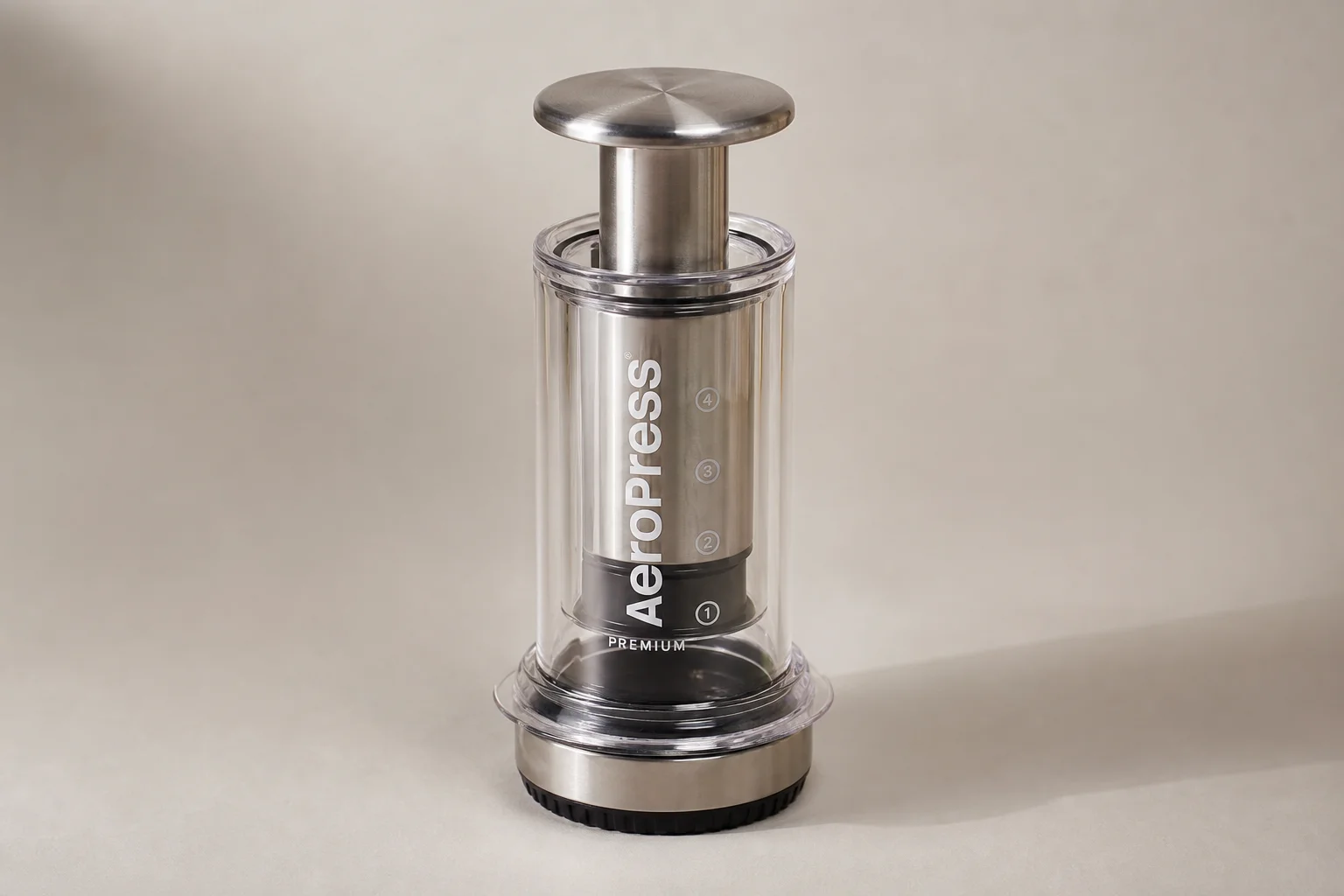
AeroPress Premium Review: Premium Materials, Practical Trade-offs
The AeroPress Premium brings glass and metal construction to a beloved brewer, but trades portability and durability for a more refined feel. Here's what changes in the cup and what matters before you buy.