Smart Telescopes
ZWO Seestar S50 Review: The Smart Telescope That Just Works
A full look at ZWO's affordable smart telescope, from solar and lunar imaging to deep-sky sessions under Bortle 7 skies.
Introduction
Smart telescopes keep coming up when first-time telescope buyers ask for advice, and for good reason. They trade the traditional eyepiece experience for ease of use, strong image quality, and a guided path straight into astrophotography. The catch has always been price: many smart telescopes sit well beyond what a curious beginner wants to spend before committing to the hobby.
The ZWO Seestar S50 changes that equation. It bundles ZWO’s smart telescope technology into a genuinely affordable package, and after spending several nights with it, the results speak for themselves.
What Comes in the Box
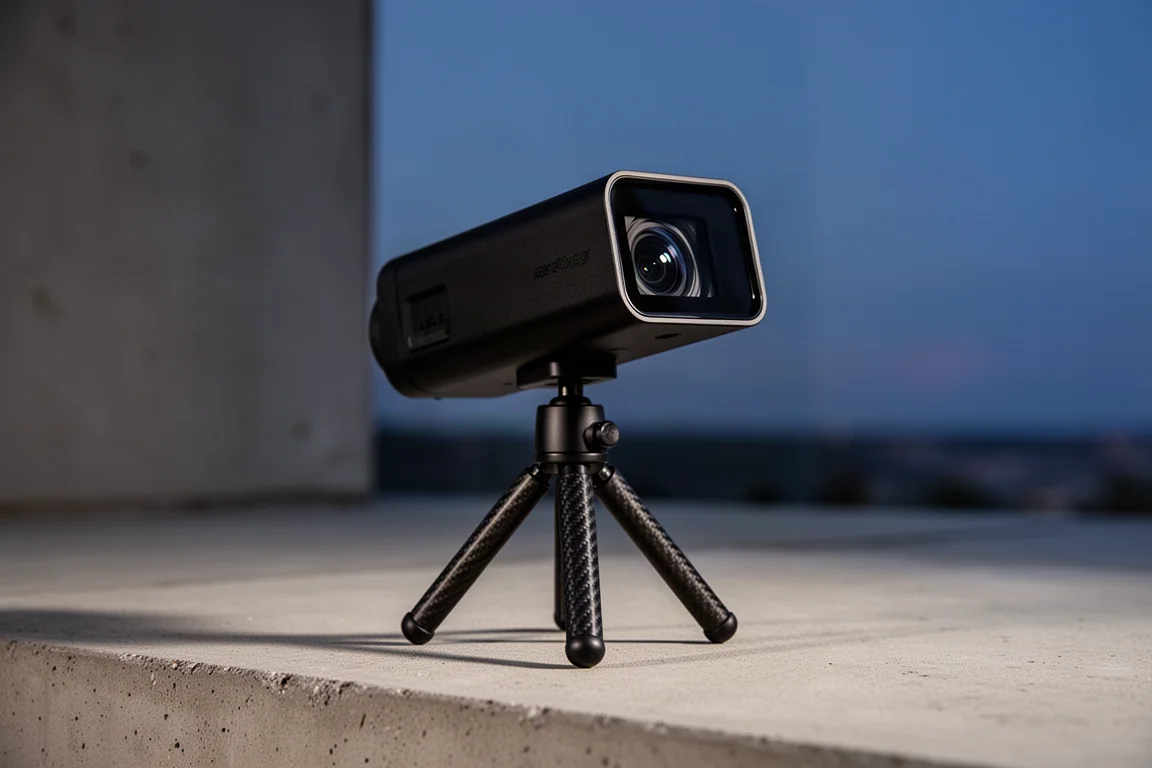
The Seestar S50 is built around a 50mm triplet refractor with a 250mm focal length and an f/5 focal ratio. Integrated into the unit are Wi-Fi, Bluetooth, a UV filter, a dual narrowband filter, and a highly sensitive Sony IMX462 camera sensor.
The included tripod is a highlight on its own: carbon fiber construction, extremely stable, and fully extendable. ZWO also includes a solar filter for solar photography, a simple USB-C cable for charging and transferring data to a computer, and the whole scope ships in a sturdy hard case.
Scenery Mode: More Capable Than Expected
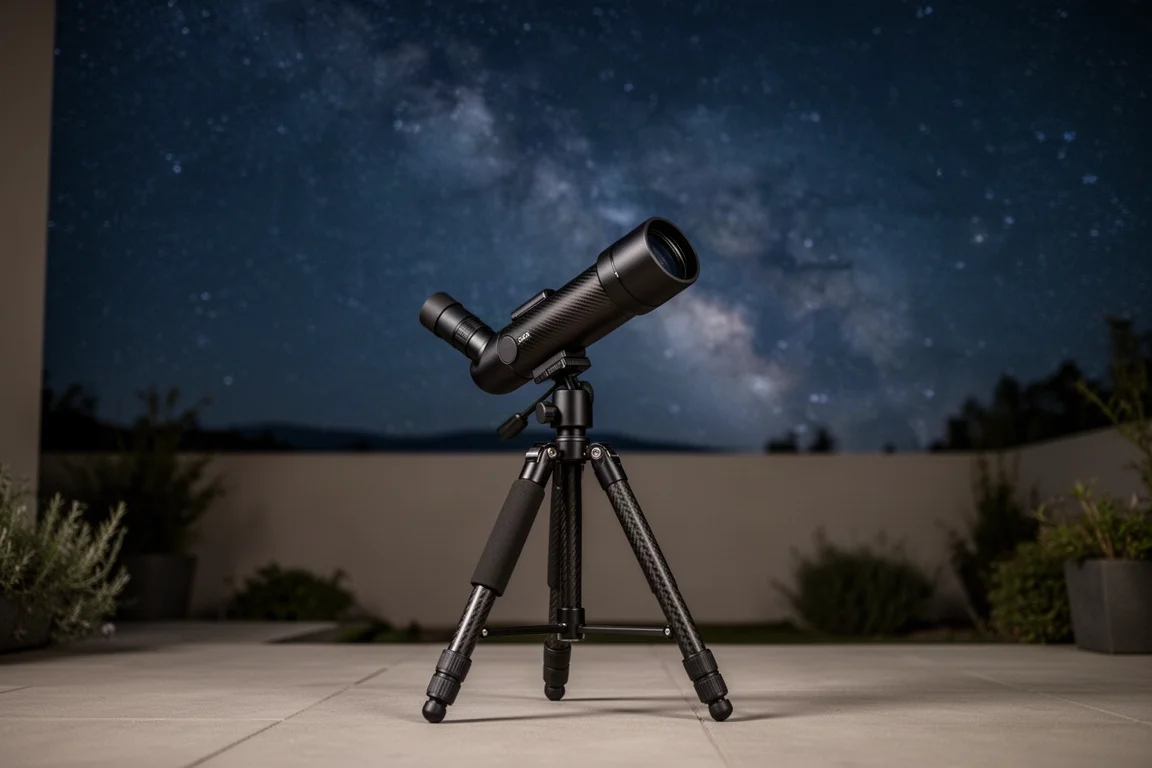
Scenery mode turned out to be far more capable than anticipated. Selecting the mode and moving the telescope around is all it takes, and time spent outside yields genuinely good nature photography. It is a fun option for photographing birds, wildlife, or even plants and trees far off in the distance.
Solar Imaging: Simple and It Just Works
Solar photography is one of the main reasons this telescope has become so popular among beginner amateurs. With eclipses drawing attention and the Sun approaching solar maximum, there is plenty of activity to view. The included solar filter is a Baader film filter, and the live views on a smartphone are sharp, crisp, and bright. The Seestar produced detailed photos and videos of the Sun showing several sunspots clearly. It is simple, and it just works.
Lunar Imaging: Sharp, Bright, and Simple
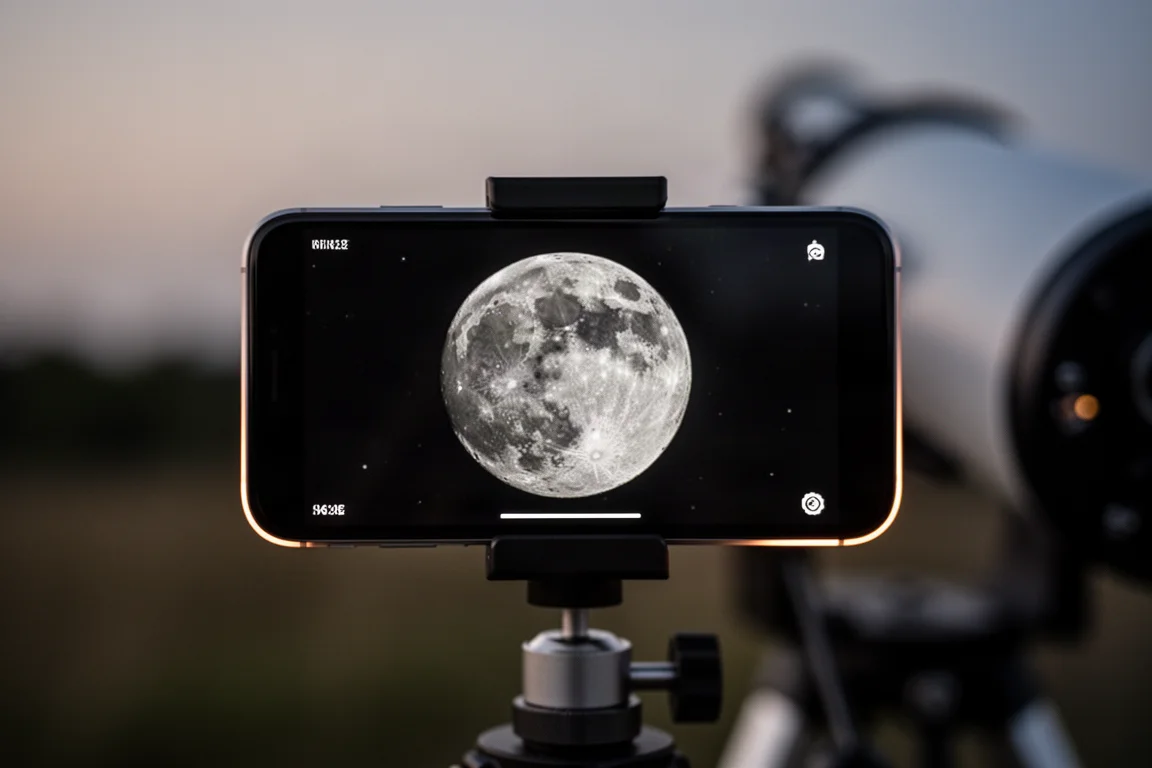
Like solar imaging, capturing detail on the lunar surface is extremely appealing, and the Seestar handles it well. Tracking a waxing crescent Moon as it set behind nearby houses, the scope delivered bright views with sharp detail and clearly visible craters. Earthshine even lit up the unlit half of the Moon faintly. This is everything you could want from lunar imaging with this scope.
Planetary Imaging: The One Weak Spot
Planetary imaging is where questions around smart telescopes usually come up, and the Seestar S50 does not escape them. While it uses a sensor popular in dedicated planetary cameras, there is no dedicated planetary imaging mode. You have to locate planets through the sky atlas, and when the scope slews to the planet it takes deep-sky style 10-second exposures. The result is a completely blown-out image with no visible surface detail, and even dropping the brightness fully in scenery mode does not recover it. The planets are extremely bright and the Seestar does not seem to compensate correctly for that brightness.
Deep-Sky Astrophotography Under Bortle 7 Skies
Deep-sky imaging is what these smart telescopes were designed for, and this is where the Seestar shines. Under Bortle 7 light pollution, spending roughly 10 minutes on each of several targets made for a satisfying first night of touring the sky. The scope is intuitive and simply does what it is asked to do.
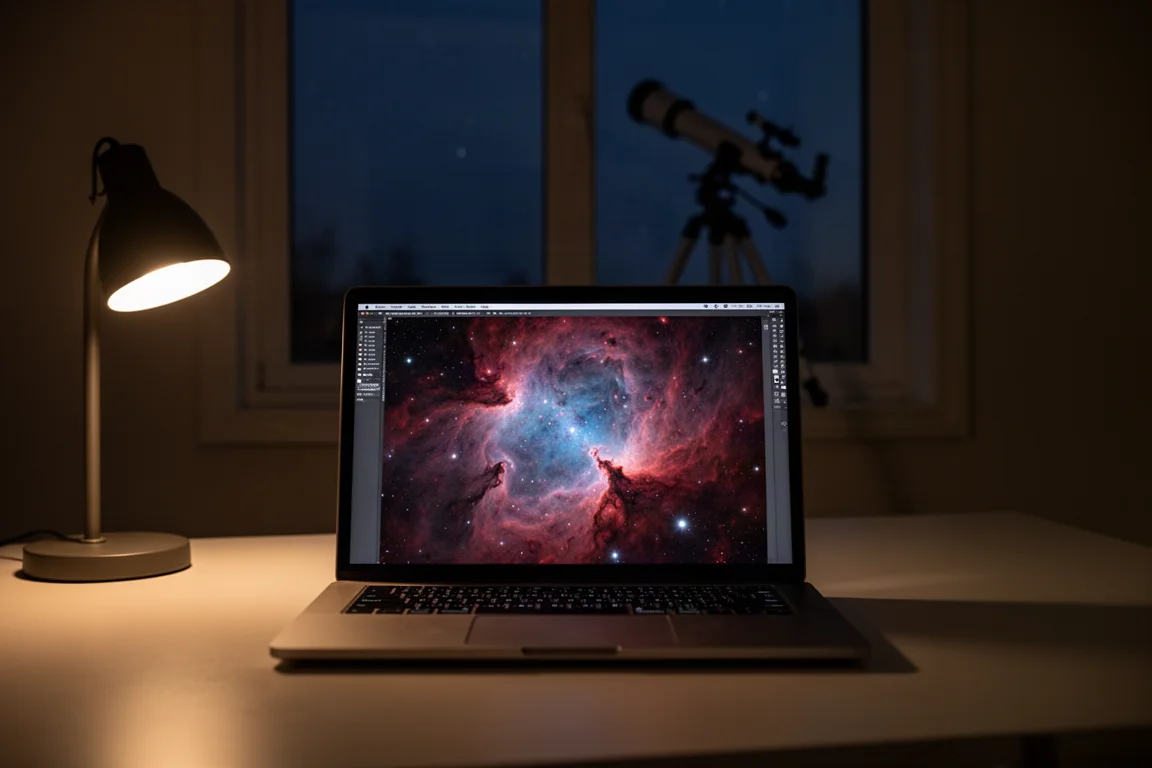
The next night pushed a different direction: an entire night collecting data on a single target instead of short sessions on many. For anyone who enjoys the scope and wants to improve image quality, longer integration on one object makes a clear difference. Running the dataset through PixInsight and post-processing pulled even more out of the data, and the integrated dual narrowband filter showed a visible improvement compared to the same amount of data captured without it.
The Companion App Experience
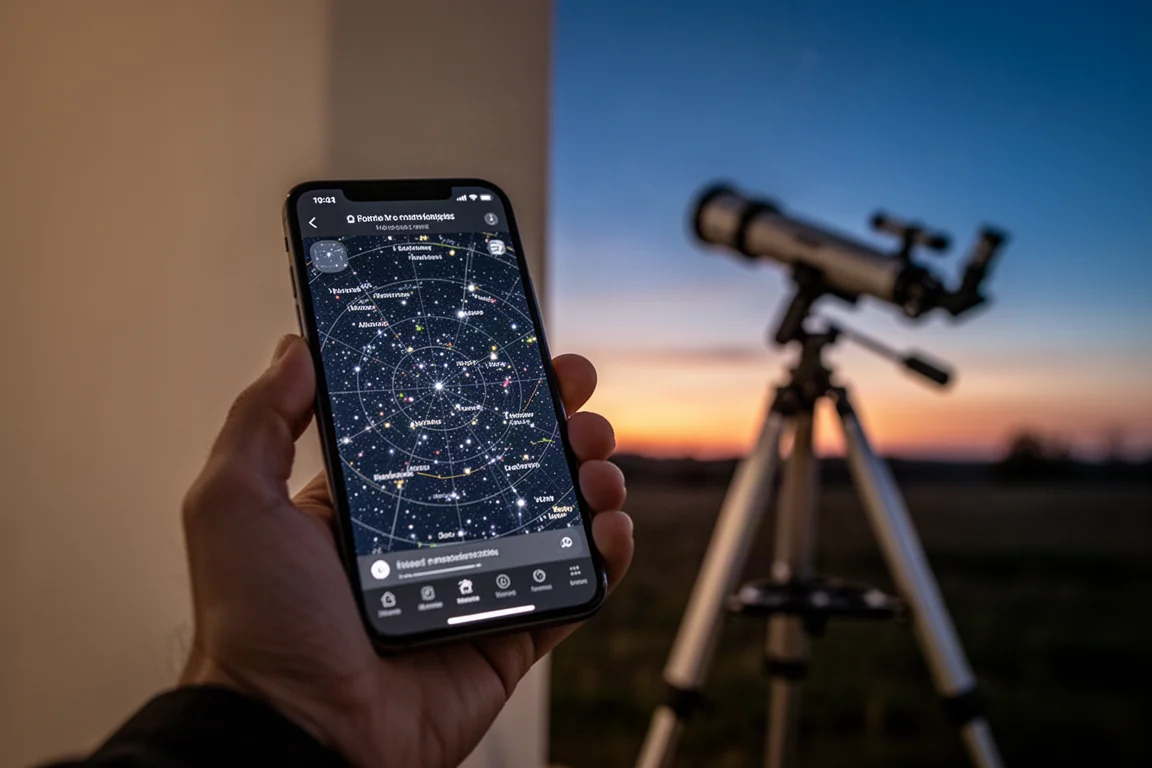
The app is where the Seestar experience comes together. From the home page you connect your phone and start a viewing session, with local weather plus Moon and Sun rise and set times shown below, expandable into a future forecast.
Scenery mode lets you move the telescope freely, adjust brightness, and autofocus. Solar mode requires the included filter and features auto go-to that finds the Sun with near-perfect accuracy, a genuinely safer approach than searching manually. Lunar mode adds autofocus for sharp surface detail. Stargazing mode is where deep-sky time goes: the sky atlas lets you search the survey, use the compass function, search for a specific object, or pick from recommended targets. Tonight’s best offers quick session ideas based on your location, alongside notable astronomical events.
Beyond imaging, ZWO includes a community sharing platform for photos from Seestar users worldwide, a nearby tab for discovering other users around you or across the globe, and a profile tab for sharing your experience.
Things to Consider Before Buying
The honest trade-off list is short but real. Planetary imaging is the clear weakness, with no dedicated mode and overexposed results. Long single-target sessions benefit from additional processing in software like PixInsight if you want the best possible output. And while the eyepiece experience of a traditional telescope has its own charm, the Seestar replaces that with a screen-first workflow by design.
Buying Advice
After several nights of use, the conclusion is simple: this telescope is designed for everyone. It ticks so many boxes that it is hard not to recommend, whether you are a beginner amateur astronomer, a veteran with a dedicated imaging setup, or someone who has never owned a telescope and is simply curious about the night sky. Setup, connectivity, the app interface, the Wi-Fi, everything worked as intended with not a single issue across the entire testing period.
Conclusion
The ZWO Seestar S50 delivers smart telescope technology at a price that finally makes sense for budding amateur astronomers. Solar, lunar, and deep-sky imaging all performed well, the scenery mode surprised us, and the app experience is polished from end to end. Planetary imaging remains its one gap, but as a first telescope, or as a fun grab-and-go addition to an existing setup, the Seestar S50 is an easy recommendation.
Product link
View more details for ZWO Seestar S50
This product is mentioned in the review. Check the specifications, options, and compatibility before buying.
View more details for ZWO Seestar S50Further reading
Related Reviews
Smart Telescopes
Vaonis Vespera 3 Review: A Premium Smart Telescope With Excellent Optics
A detailed look at the Vaonis Vespera 3 smart telescope, covering its standout hardware, impressive multi-night observations, and the software trade-offs to weigh before buying.
Smart Telescopes
Best Smart Telescopes Compared: Seestar S50 Pro, S50, S30 Pro, S30, and Dwarf Mini
Five of the most popular smart telescopes tested side by side in the desert: what they share, how they differ, and which one suits your budget and targets.
Smart Telescopes
Best Smart Telescopes: Four Scopes That Make Astrophotography Easy
Four smart telescopes that put detailed, color-rich night sky photos within reach of complete beginners, from ultra-portable to full home observatory.