Smart Telescopes
ZWO Seestar S30 Pro vs Seestar S50: Side-by-Side Comparison
Two smart telescopes compared on the Rosette Nebula, with field of view, star sharpness, and EQ mode findings worth knowing before you buy.
Introduction
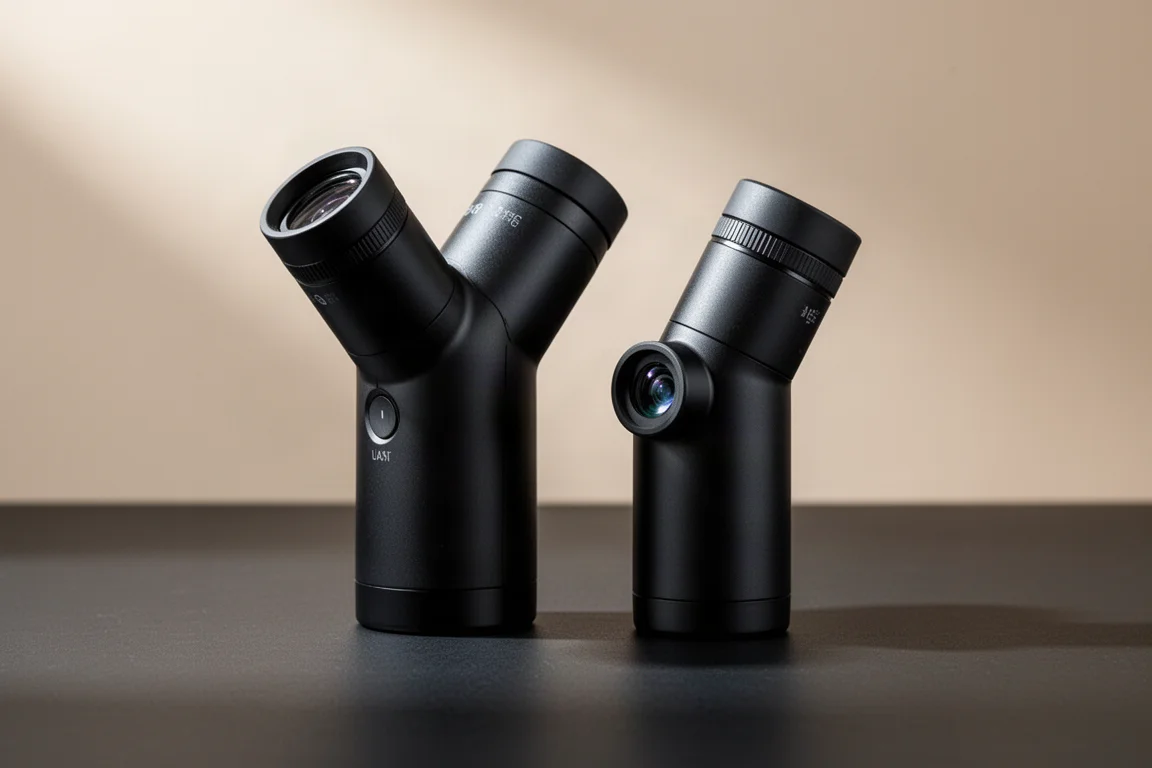
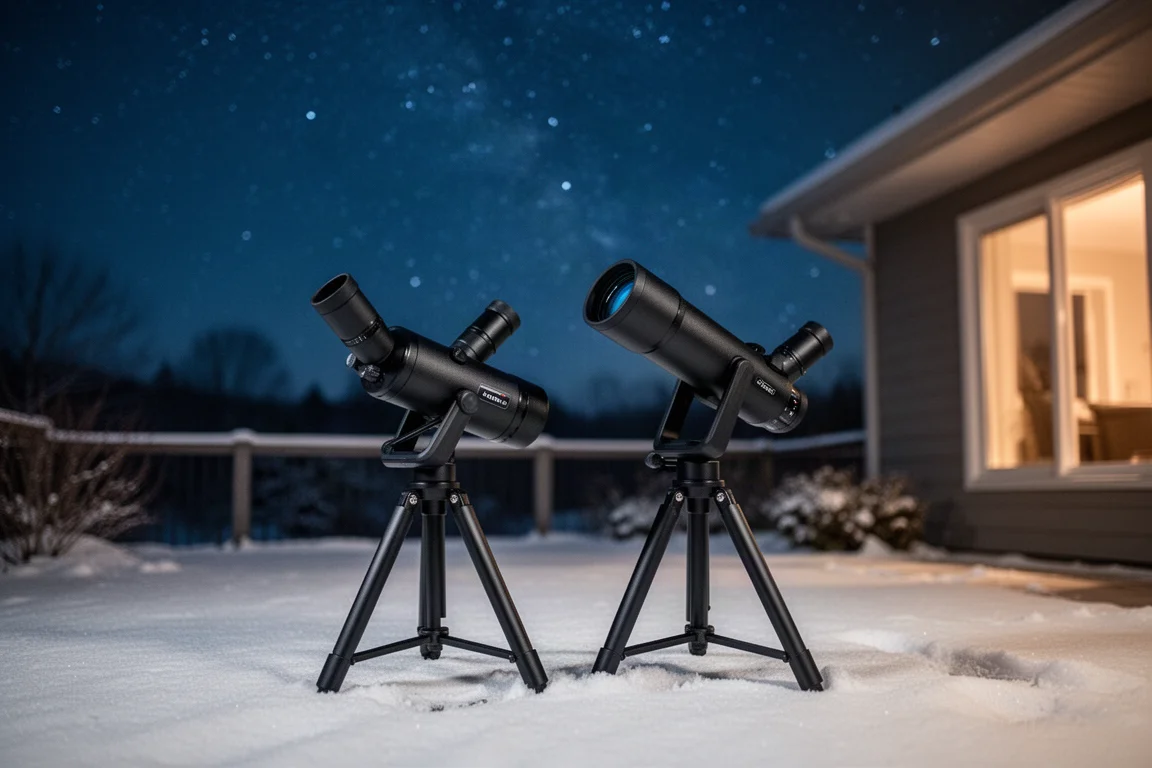
ZWO’s smart telescope lineup keeps expanding, and the newest addition, the Seestar S30 Pro, sits in the same body style as the original S30 while inviting an obvious question: how does it stack up against the larger Seestar S50? To find out, both scopes were set up outside in genuinely difficult conditions, around minus 10 degrees, given roughly 30 minutes to acclimatize, and pointed at the same target at the same time. Rather than repeating the usual Orion Nebula test, both telescopes were aimed at the Rosette Nebula, where the differences between the two become much easier to see.
Testing Setup: From the City, Like a Beginner
The S30 Pro was used exactly the way a first-time buyer likely would: carried outside, placed on the included tripod, and controlled from a phone. Each telescope got its own phone for control, and both went through their first-boot firmware updates before imaging began. The S50 ended up with roughly 10 to 15 minutes of extra exposure simply because of setup timing, which is worth keeping in mind when comparing the final results.
Field of View and Framing
The first meaningful difference appeared before either telescope captured a single useful frame. When framing the Rosette Nebula, the S50 could not quite fit the entire nebula in its field of view and would have needed mosaic mode to capture it fully. The S30 Pro framed the whole nebula comfortably in a single field.
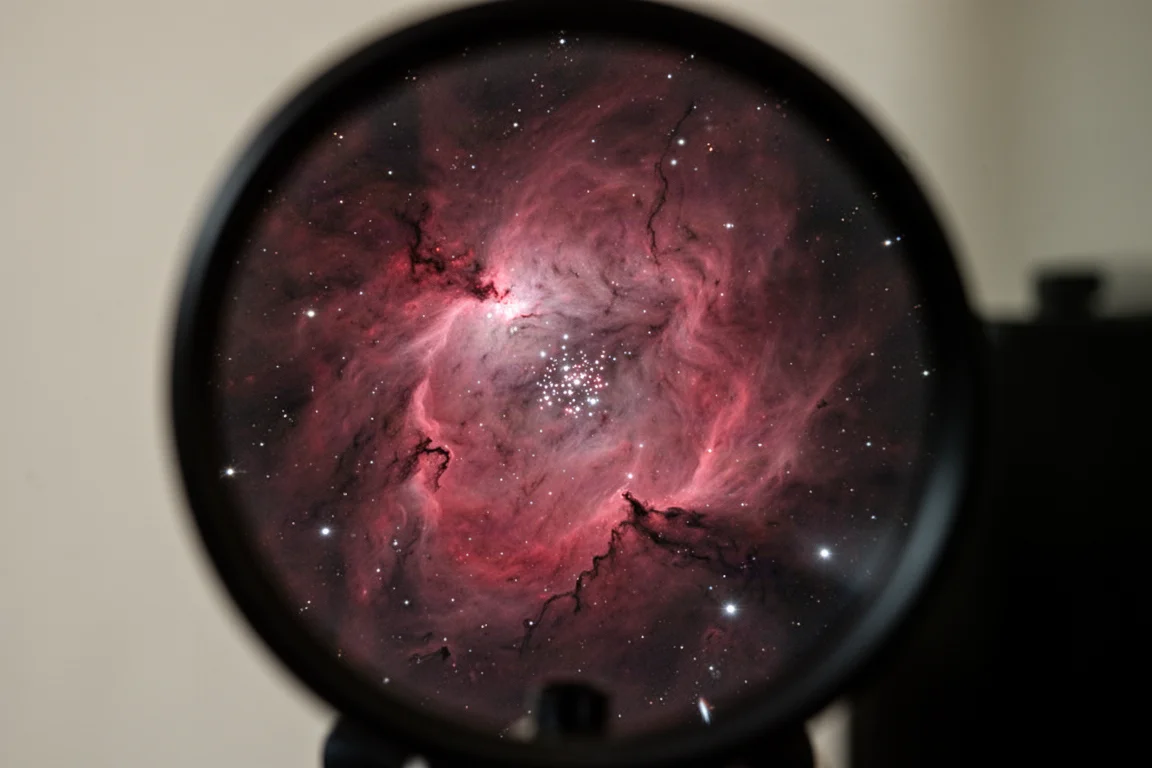
For anyone who enjoys shooting large nebulae, that wider field of view is a genuine, practical advantage for the S30 Pro. Both scopes reached the target and centered it in about the same time, so slew speed was essentially a tie.
Image Quality After an Hour
After just a few minutes of exposure, faint nebulosity was already visible in both images. Checking in at the 10-minute mark, zooming in on the star cluster at the heart of the Rosette Nebula told a clearer story: the S50, with its larger aperture, produced sharper stars and noticeably better separation between close pairs of stars. In terms of raw nebulosity, though, both telescopes were coming along nicely and were hard to separate.
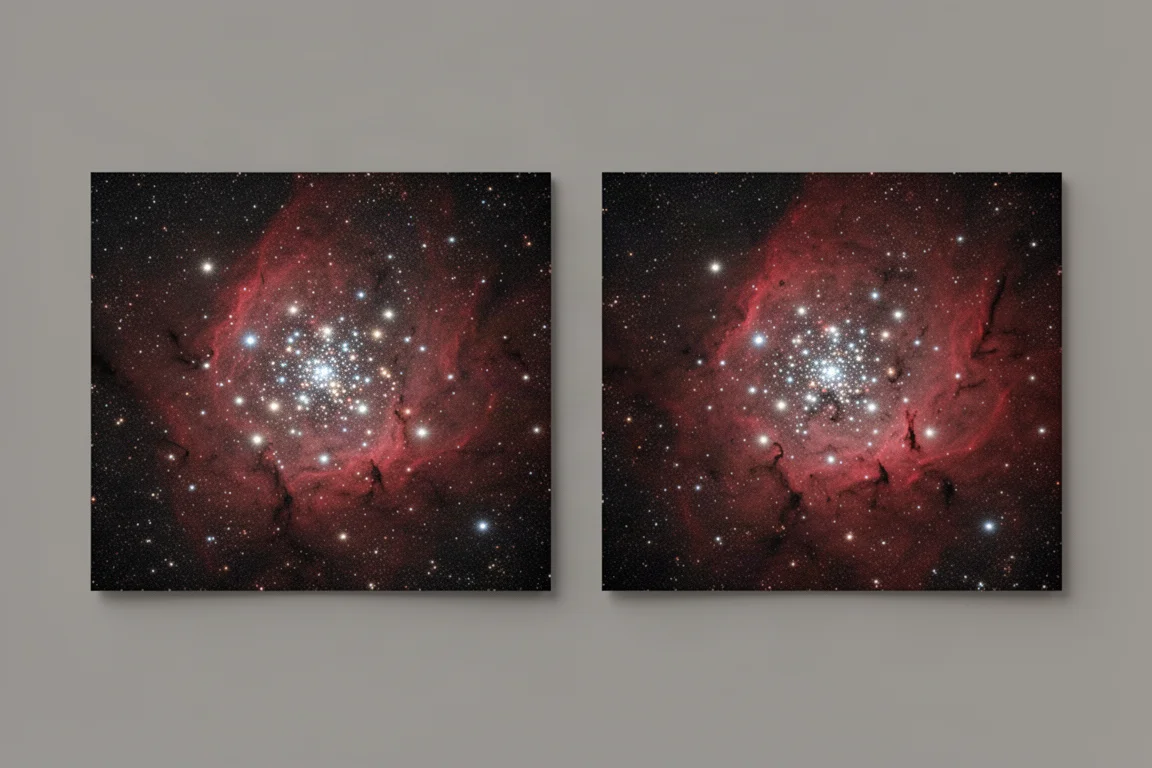
After more than an hour of total integration on the Rosette Nebula, both scopes produced appealing images once noise reduction was applied. One small practical note: the denoising step took about 15 seconds on the S50 and about 60 seconds on the S30 Pro, most likely due to sensor size. It is a minor difference, but frequent imagers will notice it.
View more details for ZWO Seestar S50
EQ Mode on the S30 Pro
The S30 Pro also supports equatorial mode with the optional tripod adapter, and the process is built directly into the app. After attaching the telescope to the adapter, switching to EQ mount under advanced features sends the scope to its home position with the light facing up. From there, the app walks you through adjusting the mount left, right, up, and down according to an on-screen diagram, then runs a polar alignment check by photographing the sky. In this test, the alignment landed within one degree, earning a green check mark and requiring no further adjustment. It is a smooth, guided process that first-time users should be able to follow without outside help.
To put the Pro’s imaging in context, an hour and 44 minutes on the Horsehead Nebula from the S30 Pro was compared against an earlier image of the same target taken with the regular S30 from downtown Austin. The difference in image scale between the two was substantial, which speaks to the improvements in this newer model.
View more details for ZWO Seestar S30 Pro
Which One Should You Buy?
Both telescopes delivered solid images of a challenging nebula from a light-polluted, bitterly cold backyard session. The choice comes down to priorities. If you want to frame large nebulae in a single shot and value the newest features, including EQ mode, the S30 Pro makes a compelling case. If you want the sharpest possible stars and better separation of close double stars thanks to larger aperture, the S50 remains the stronger performer on fine detail.
Conclusion
In this side-by-side test, the Seestar S30 Pro impressed with its wider field of view, polished setup experience, and easy guided equatorial alignment, while the Seestar S50 held its ground with sharper stars from its larger aperture. Both are capable smart telescopes that make deep-sky imaging approachable, and the right pick depends mainly on whether wide framing or star-level detail matters more to your kind of stargazing.
Further reading
Related Reviews
Smart Telescopes
Vaonis Vespera 3 Review: A Premium Smart Telescope With Excellent Optics
A detailed look at the Vaonis Vespera 3 smart telescope, covering its standout hardware, impressive multi-night observations, and the software trade-offs to weigh before buying.
Smart Telescopes
Best Smart Telescopes Compared: Seestar S50 Pro, S50, S30 Pro, S30, and Dwarf Mini
Five of the most popular smart telescopes tested side by side in the desert: what they share, how they differ, and which one suits your budget and targets.
Smart Telescopes
Best Smart Telescopes: Four Scopes That Make Astrophotography Easy
Four smart telescopes that put detailed, color-rich night sky photos within reach of complete beginners, from ultra-portable to full home observatory.