Astrophotography
ZWO EAF Pro Review: A Wireless Autofocuser That Cuts the Cable
The ZWO EAF Pro adds Bluetooth, an internal battery, and manual control buttons to a familiar autofocuser design. Here is how it performs in the field.
Introduction
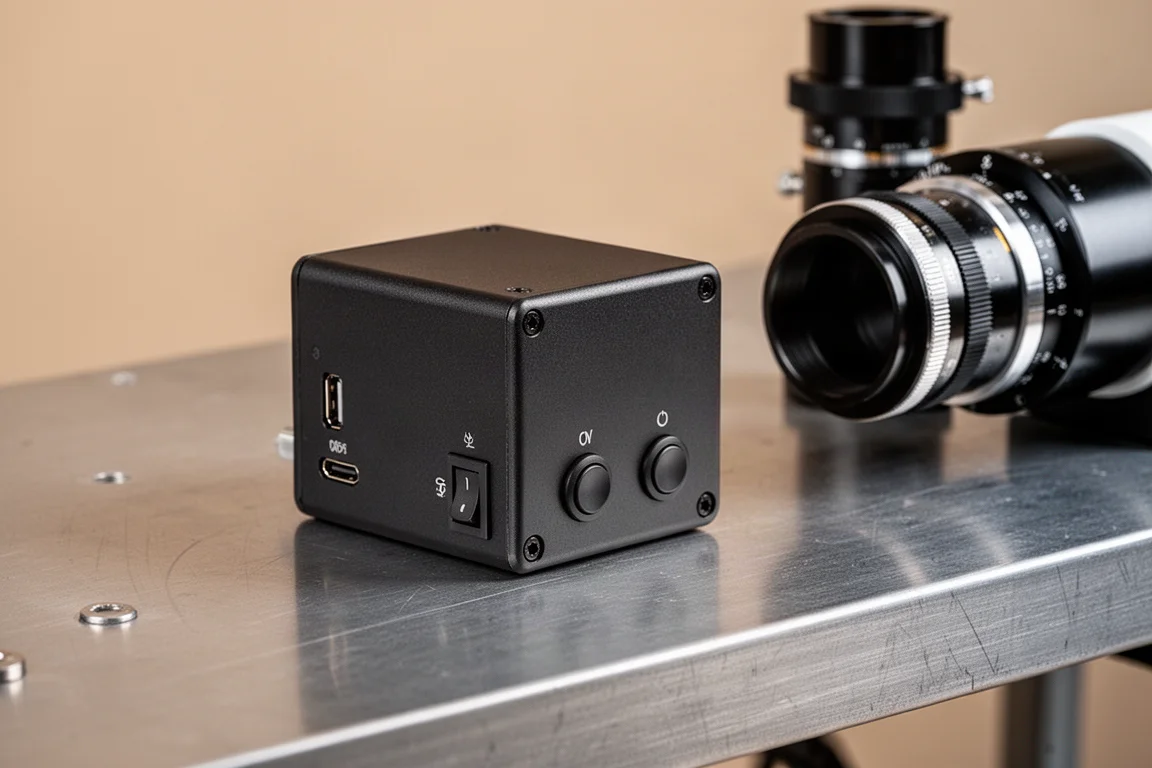
The ZWO EAF Pro is an electronic autofocuser designed for astrophotography rigs where every cable adds a potential point of failure. It builds on the familiar EAF design by adding Bluetooth low energy, an internal battery, and manual control buttons on the rear of the unit. The result is a focuser that can operate completely wirelessly, which makes for a cleaner and more reliable imaging setup.
The unit keeps the same dimensions as the standard EAF, so it can be installed in place of an existing focuser without changing mounting hardware. That compatibility is a significant advantage for anyone upgrading an existing rig.
Who This Product Is For
The EAF Pro is aimed at astrophotographers who want to reduce cable clutter and eliminate the risk of cable snags during automated imaging sessions. It is especially useful for those using ZWO smart cameras or the ASIAir controller, since the focuser pairs directly over Bluetooth without any additional hardware.
It also suits anyone who wants the convenience of adjusting focus without opening software. The physical in and out buttons let you move the focuser by hand, which is handy during setup or visual observation. If you already own a standard EAF and are happy with a wired connection, the Pro version may not be necessary, but for wireless-focused rigs it is a meaningful upgrade.

What Makes the EAF Pro Different
The most obvious change is the rear panel. Instead of only a USB-C port and a handbox port, the EAF Pro adds an on/off switch and two round buttons for moving the focuser in and out. These buttons work without any connection to a computer or controller, powered entirely by the internal battery.
The built-in battery is the key feature. It allows the focuser to operate independently, and combined with Bluetooth low energy, it can be controlled wirelessly from a ZWO ASIAir, a smart camera like the 2600 MC Air, or a Windows PC through ASCOM. The USB-C port remains for wired use, and the included cable has a 90-degree connector that keeps the connection stable and secure.
The package includes the usual four couplers, mounting screws, a USB cable, a mounting bracket, and hex keys. Everything matches the standard EAF, which means the Pro version is a direct drop-in replacement.
Installation and Compatibility
Installing the EAF Pro is straightforward. The mounting hardware is identical to the standard EAF, so you can keep the existing bracket and couplers on your telescope and simply swap the focuser body. In testing, the unit mounted in place without any modification, and the focuser moved immediately using the onboard buttons.
The first time you power it on, the focuser needs to be connected to USB-C once so it can initialize. After that, it operates normally. The unit can also be used over USB even when the power switch is off, which is a useful fallback if the battery ever runs out.
Wireless Control From the ASIAir
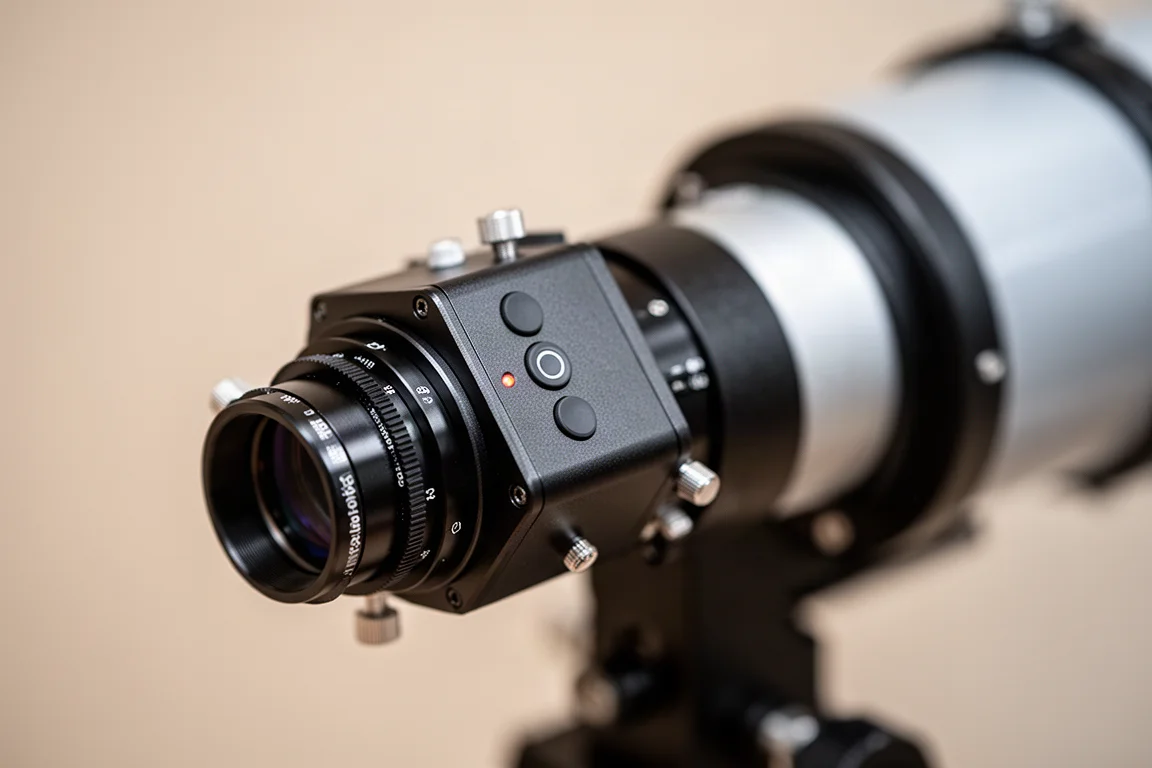
Using the EAF Pro with a ZWO ASIAir or smart camera is the most seamless experience. The focuser appears as a Bluetooth device, and after an initial pairing confirmation, it can be controlled from the ASIAir app just like a standard EAF. Focus movements are instantaneous, with no noticeable delay.
One minor quirk is that the focuser does not always reconnect automatically. Each session may require going into the focuser settings, selecting Bluetooth, and tapping connect. It is a small extra step, but worth knowing before you head out to the field. The first pairing also asks you to press the in or out button on the focuser to confirm the connection, which is a sensible security measure.
Wireless Control From a Windows PC
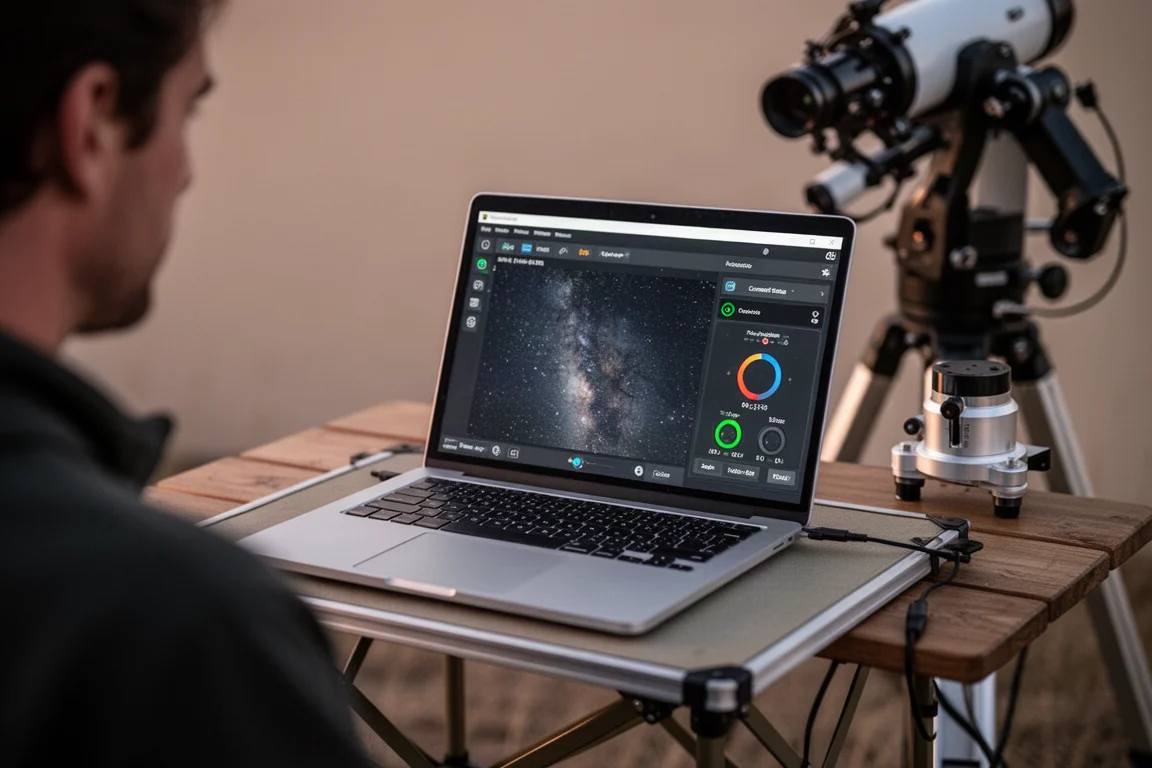
Wireless control from a Windows PC is possible, but it takes a bit more setup. Using NINA with the latest ASCOM drivers, the focuser can be found via a Bluetooth scan and connected through the ASCOM chooser. However, an initial issue prevented the connection from completing: the driver attempted to write a configuration file to a folder that did not exist. Once that folder was created manually, the connection worked reliably.
There is a noticeable delay of roughly two to three seconds between sending a move command and the focuser responding when connected wirelessly from a PC. This does not affect autofocus accuracy, but it does make autofocus runs take a little longer. Wired USB control has no such delay and works exactly like a standard EAF.
For those who want a smoother experience, ZWO’s own ASI Studio software connects to the focuser over Bluetooth without issues, since it uses the native driver. If you prefer NINA or SharpCap, creating the missing folder and setting the configuration file to read-only can prevent the Bluetooth name from being cleared between sessions.
Battery Life and Real-World Use
Battery life is solid. In a stress test, the focuser was moved continuously between positions 1,000 and 40,000 for a full hour. It started at 85 percent battery and ended at 63 percent, using 22 percent in an hour of constant motion. During that time, the internal temperature rose from 30 to 45 degrees Celsius. Realistic imaging sessions use the focuser far less, so a full night of imaging should not be a concern.
The internal battery does have a finite lifespan, but even if it eventually dies, the focuser can still be used over USB. In that scenario, it effectively becomes a standard EAF, so the investment is not wasted.
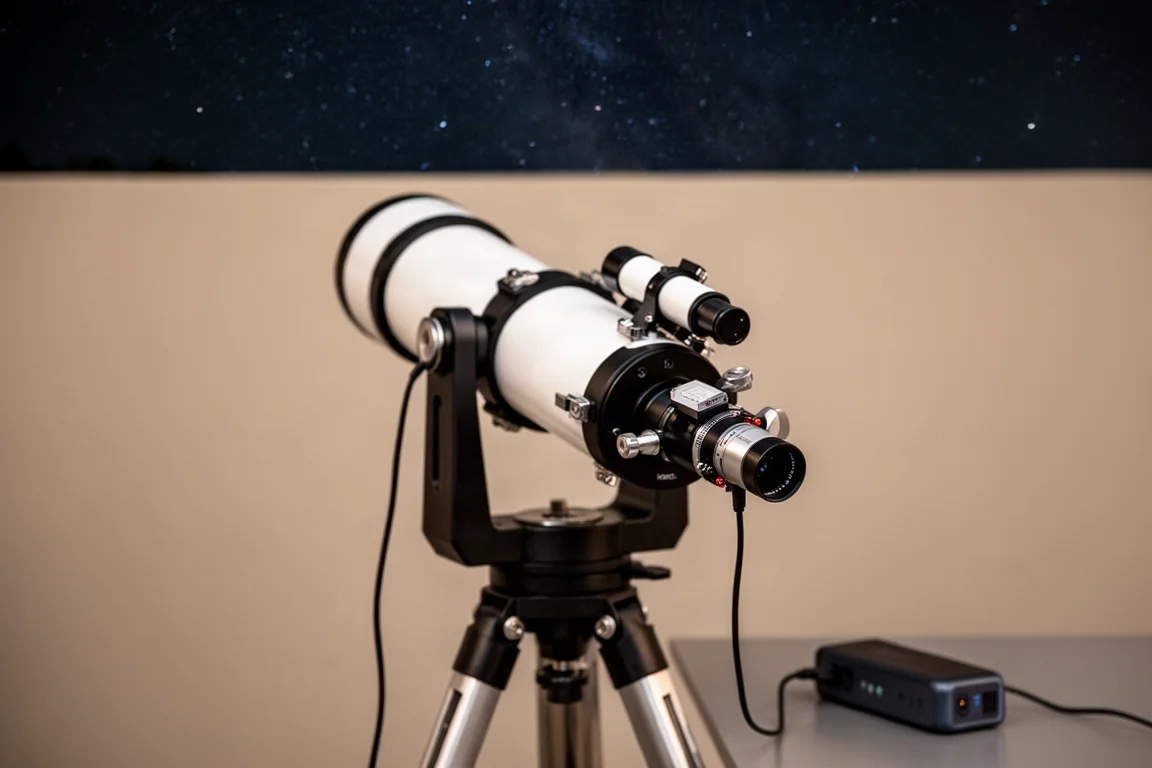
The wireless design also simplifies cable management. With a smart camera and a wireless mount, the only moving cable on the rig is the one from the mount to the power source. This dramatically reduces the chance of cable snags during slews and tracking.
Buying Advice
The EAF Pro is priced at $250, compared to $150 for the standard EAFN. The mechanics of the focuser are identical between the two, so the extra cost is entirely for the battery, the Bluetooth connectivity, and the manual control buttons.
If you use an ASIAir or a ZWO smart camera and want the cleanest possible setup, the wireless capability is genuinely useful. The ability to remove one cable from the imaging train is a real benefit, even if it is not strictly necessary. For those who prefer wired operation or want to save money, the standard EAFN remains a strong choice.
Conclusion
The ZWO EAF Pro is a well-executed update to a proven design. It keeps the same reliable mechanics and mounting compatibility while adding wireless control, an internal battery, and convenient manual buttons. The wireless experience is excellent with ZWO’s own ecosystem, and workable from a PC once you know the setup steps.
It is not a cheap upgrade, and the battery and Bluetooth features may feel unnecessary for some. But for astrophotographers chasing a cable-free rig, the EAF Pro delivers on its promise.
Product link
View more details for ZWO EAF Pro
This product is mentioned in the review. Check the specifications, options, and compatibility before buying.
View more details for ZWO EAF ProFurther reading
Related Reviews
Astrophotography
ASKAR FRA400C Review: A Versatile 400mm Refractor for Astrophotography and More
The ASKAR FRA400C is a compact 72mm refractor that balances reach, versatility, and portability for astrophotographers and visual observers.
Astrophotography
Askar SQA106 Review: A Premium 106mm Astrograph With Exceptional Optics
The Askar SQA106 is a premium 106mm quintuplet astrograph with impressive sharpness across full-frame sensors, though its price and weight demand careful consideration.
Astrophotography
Astro Imaging Gear 2026: Eight New Products Worth Watching
A look at the most interesting new astrophotography and astronomy products announced this year, from fast telescopes to smart cameras and wireless accessories.