Astrophotography
Askar SQA106 Review: A Premium 106mm Astrograph With Exceptional Optics
The Askar SQA106 is a premium 106mm quintuplet astrograph with impressive sharpness across full-frame sensors, though its price and weight demand careful consideration.
Introduction
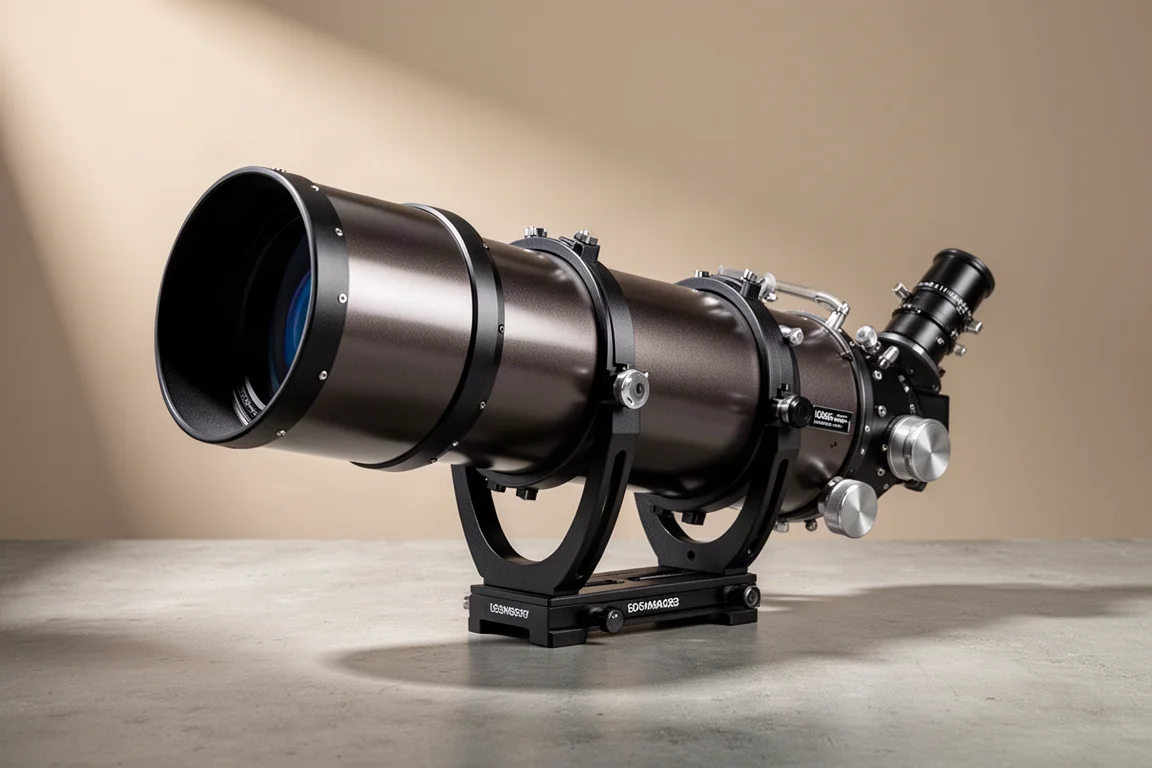
The Askar SQA106 is a 106mm aperture quintuplet astrograph designed for serious astrophotographers who demand exceptional optical quality. With a focal length of 509mm and a focal ratio of f/4.8, this telescope aims to deliver sharp, well-corrected star images across large sensors, including full-frame and even medium format. Priced at $3,395, it sits firmly in the premium segment of the market, promising performance that justifies the investment.
This review examines the telescope’s design, build quality, and real-world optical performance based on extensive testing with both APS-C and full-frame cameras.
Who This Telescope Is For
The SQA106 is built for astrophotographers who want a versatile, fast refractor capable of producing crisp images across a wide field of view. Its 106mm aperture and 509mm focal length make it a strong all-rounder, pairing well with APS-C sensors for general deep-sky work or with smaller sensors like the ASI585 for galaxy imaging.
This telescope suits enthusiasts who already own a sturdy mount capable of handling its weight. The complete setup with rings weighs approximately 8.9kg, so a robust equatorial mount and tripod are essential. It is not a grab-and-go instrument; it is a serious piece of equipment for dedicated imaging sessions.
Design and Build Quality
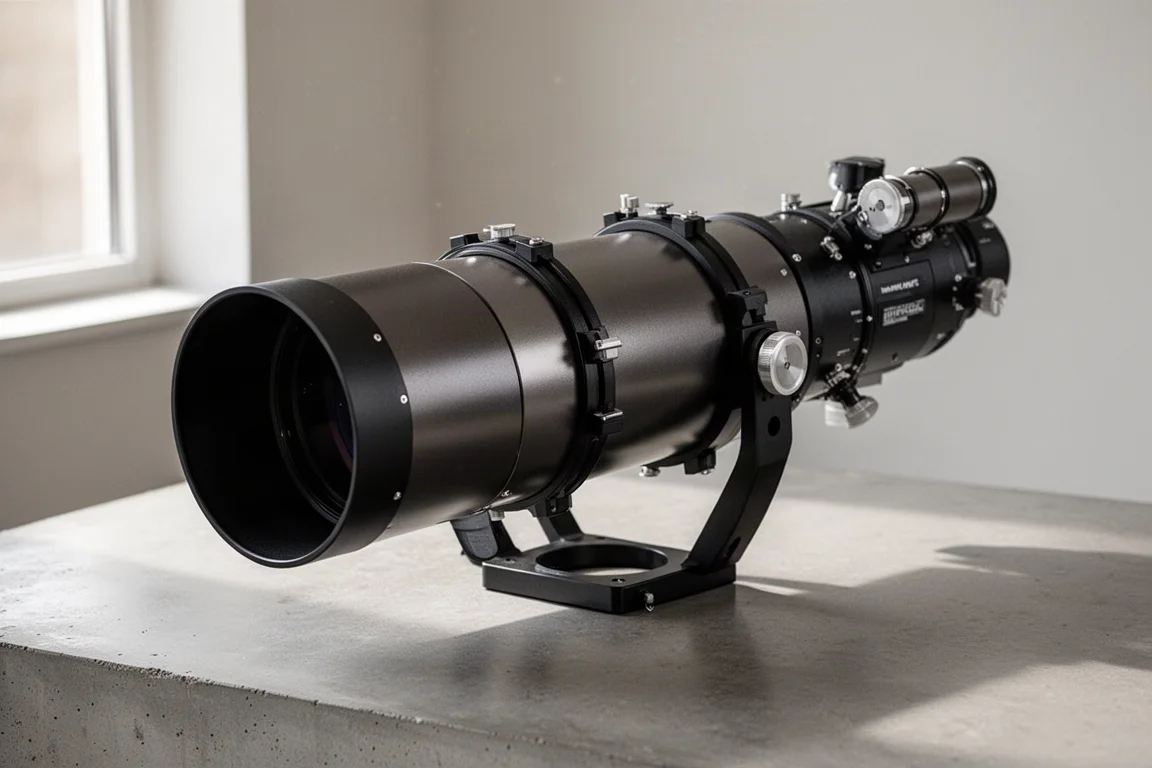
The SQA106 arrives in a substantial carry case that is noticeably thicker than typical telescope cases, offering solid protection for the instrument. Inside, the case includes a dedicated section for camera adapters, with M68 and M54 options supplied alongside the M48 adapter pre-installed on the telescope. A thoughtful cutout accommodates electronic focusers like a ZWO unit, allowing the telescope to remain in its case without modification.
The telescope itself feels exceptionally solid, with a weight that suggests the tube is densely packed with high-quality glass. The dual-speed focuser operates smoothly with appropriate tension, holding focus reliably during imaging sessions. A rotating mechanism at the rear allows the camera angle to be adjusted easily.
The dew shield extends smoothly and locks securely with a holding screw. The default dovetail plate is Losmandy-style, which makes sense given the telescope’s weight, though a Vixen-style plate can be fitted if the user provides one. Two guider dovetail saddles on top provide flexibility for mounting guide scopes or other accessories.
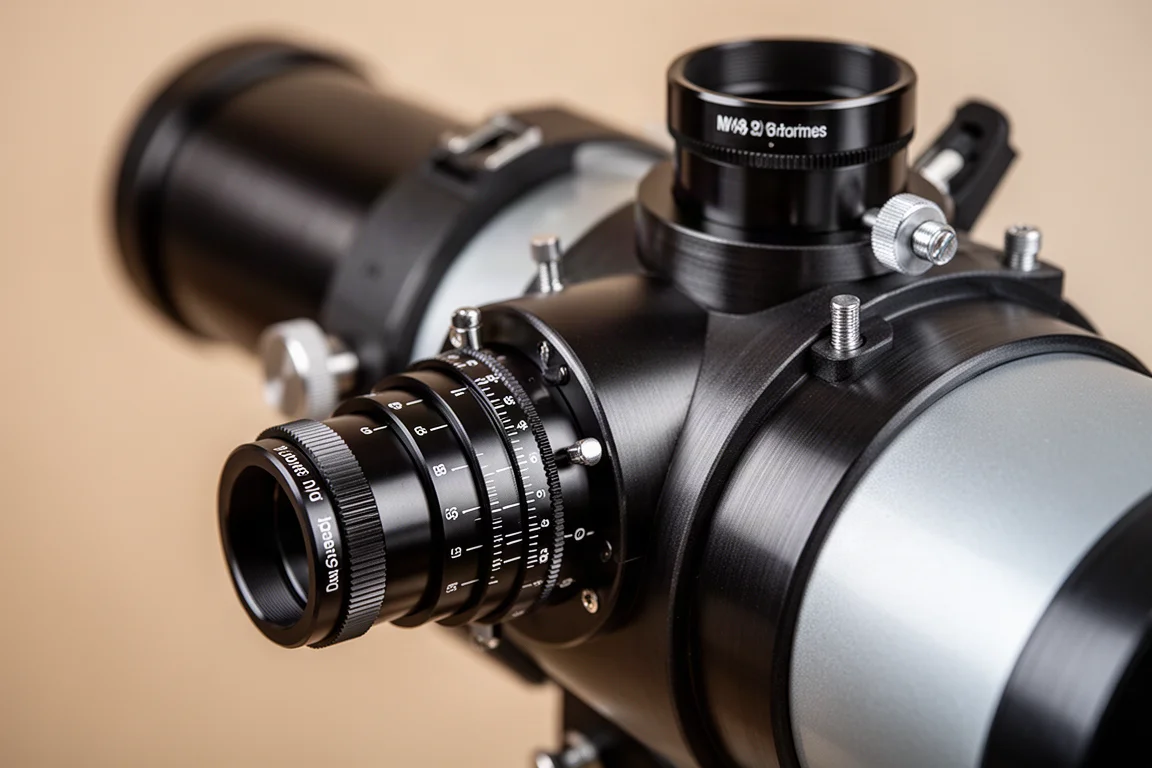
One minor complaint is that dust caps are only provided for the M48 adapter. Given the price point, dust caps for the M54 and M68 adapters would be a reasonable expectation. Additionally, the lettering on the front dust cap showed signs of wear after several weeks under a protective cover, rubbing off where the SQA85’s cap remained unaffected.
Optical Design and Specifications
The SQA106 uses a quintuplet optical design with high-quality glass elements. The spot diagrams provided by Askar show tiny star shapes across the field, extending to 27.5mm from the optical axis, which covers medium format sensors. The RMS radius at the center is approximately 1.65 microns, growing to around 2.2 microns at the corner of a medium format sensor.
The telescope’s Petzval design offers a forgiving back-focus range of 48mm to 78mm from the flange to the sensor. This flexibility means achieving focus is straightforward with most camera and filter combinations, though the focuser’s 3cm of travel limits the usable range.
Optical Performance on APS-C
Testing with a ZWO ASI2600MC Air camera produced excellent results. A stack of 60 one-minute exposures showed sharp, well-corrected stars across the entire APS-C frame. Chromatic aberration was minimal, with only slight blue and red fringing visible on the brightest stars at the corners.
The median FWHM measured 1.92 pixels across the full image, which compares favorably to the SQA85’s normalized result of approximately 2.01 in equivalent units. This indicates the SQA106 delivers slightly better sharpness than its smaller sibling, though the difference is modest.
One observation from pixel-peeping was a slight ovoid shape on the left side of bright stars, accompanied by small horn-like artifacts. This appeared consistently across different mounts and sensor rotations, suggesting it may be specific to this particular sample of the telescope rather than a design flaw.
Optical Performance on Full-Frame
Using a full-frame camera with 5.9 micron pixels, the SQA106 continued to impress. A stack of 60 one-minute exposures of the M13 globular cluster revealed incredibly sharp stars, with many appearing as single pixels despite the relatively large pixel size and 2.41 arcseconds per pixel sampling.
Corner performance on full-frame was excellent, with round, sharp stars showing no significant aberrations. Vignetting measured approximately 85% illumination at the darkest corner relative to the center, which is a solid result for a fast refractor.
The same slight spur on the left side of bright stars appeared in the full-frame images, consistent with the APS-C results. This reinforces the conclusion that it is a characteristic of this particular sample rather than a systemic issue.

Things to Consider Before Buying
The SQA106 is a significant financial commitment. At $3,395, it is $1,000 more expensive than the SQA85, which delivers remarkably similar optical performance. The FWHM measurements between the two telescopes are very close, and the SQA85’s sharpness is exceptional for its aperture class.
The telescope’s weight is another consideration. At roughly 8.9kg with rings, it requires a substantial mount and adds complexity to the setup process. The SQA85 is more compact, lighter, and easier to handle while offering comparable image quality with current sensor technology.
The limited focuser travel of 3cm means the back-focus range is constrained to 48mm to 78mm. While this covers most standard configurations, it is worth verifying compatibility with your specific camera and filter setup.
Buying Advice
For most astrophotographers, the SQA85 represents better value. It delivers nearly identical sharpness at a significantly lower price, with a more manageable weight and size. The 408mm focal length is close enough to the SQA106’s 509mm for wide-field work, and with sensors like the ASI585, results should be very similar.
The SQA106 makes sense if you specifically need the larger aperture for resolving finer detail on smaller targets, or if you plan to use full-frame or medium format sensors where the larger image circle provides an advantage. It is an exceptional telescope, but the premium price is hard to justify when the SQA85 performs so well.
If budget allows, purchasing both the SQA55 and SQA85 would provide greater flexibility than a single SQA106, covering both ultra-wide and wide-field imaging with outstanding sharpness.
Conclusion
The Askar SQA106 is an outstanding astrograph with pristine optics, excellent build quality, and impressive performance across APS-C and full-frame sensors. It delivers sharp, well-corrected stars from center to corner, with minimal chromatic aberration and good illumination across the frame.
However, perfection has a price, and at $3,395, the SQA106 demands a significant investment. The SQA85 offers comparable performance for $1,000 less, making it the more sensible choice for most astrophotographers. Unless you have a specific need for the larger aperture or full-frame coverage, the SQA85 delivers exceptional value without compromising on image quality.
For those who prioritize the absolute best in a 106mm class refractor and have the budget to match, the SQA106 will not disappoint. It is a beautiful, capable instrument that produces stunning images, but it faces stiff competition from its own smaller sibling.
Product link
View more details for Askar SQA106
This product is mentioned in the review. Check the specifications, options, and compatibility before buying.
View more details for Askar SQA106Further reading
Related Reviews
Astrophotography
ASKAR FRA400C Review: A Versatile 400mm Refractor for Astrophotography and More
The ASKAR FRA400C is a compact 72mm refractor that balances reach, versatility, and portability for astrophotographers and visual observers.
Astrophotography
Astro Imaging Gear 2026: Eight New Products Worth Watching
A look at the most interesting new astrophotography and astronomy products announced this year, from fast telescopes to smart cameras and wireless accessories.
Astrophotography
Central Obstruction in Astrophotography: What It Really Costs You
A practical look at how a telescope's central obstruction affects resolution, narrowband filter performance, and effective light gathering speed.