Astrophotography
ASKAR FRA400C Review: A Versatile 400mm Refractor for Astrophotography and More
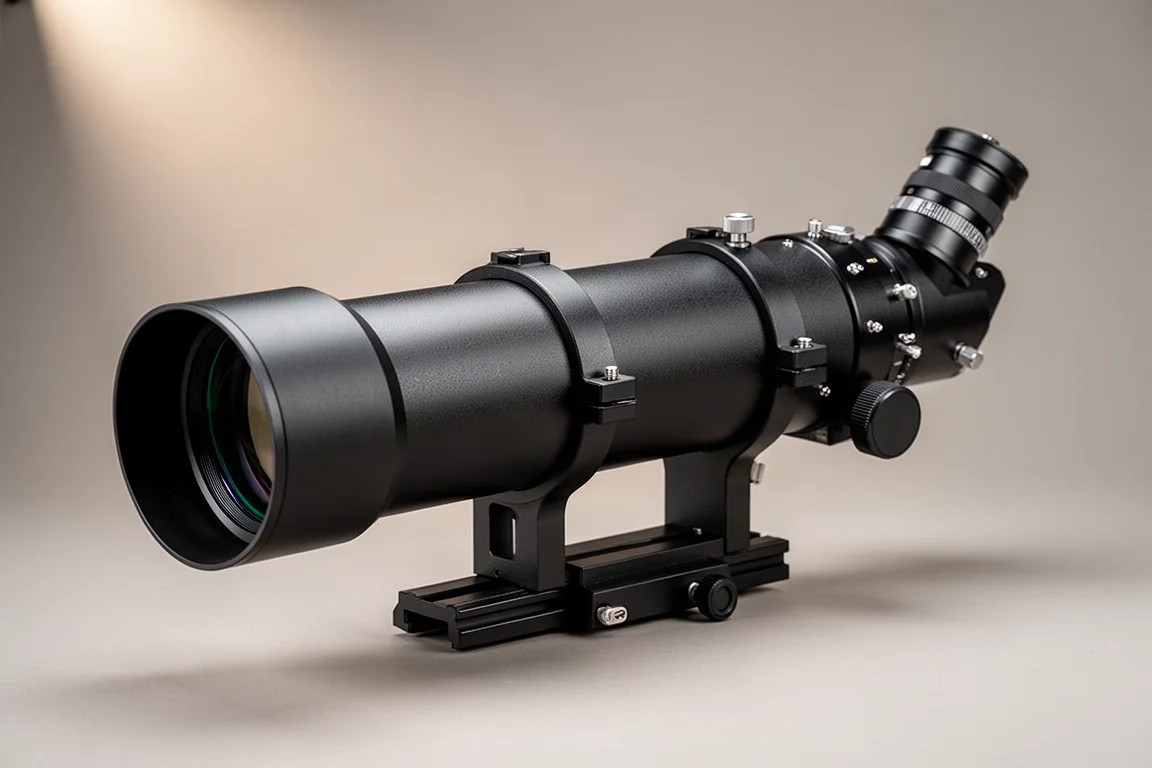
The ASKAR FRA400C is a compact 72mm refractor that balances reach, versatility, and portability for astrophotographers and visual observers.
Introduction
The ASKAR FRA400C is a compact 72mm aperture refractor telescope with a 400mm focal length. It weighs around 3.2 kg, making it a portable option for astrophotographers who want a decent amount of reach without a heavy setup. The telescope comes in a box with an adapter for visual astronomy, so it can serve both imaging and occasional visual use.
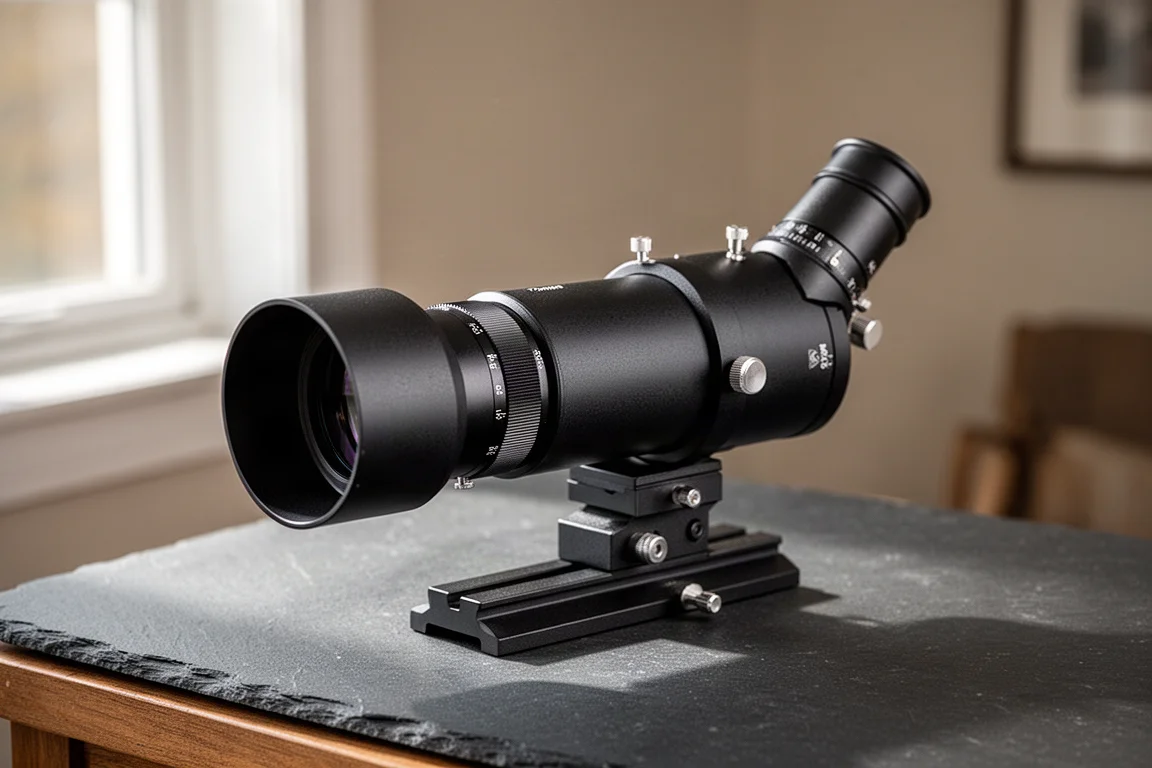
The FRA400C includes an integrated diaphragm that lets you change the focal ratio on the fly, from f5.6 down to f22. For astrophotography, leaving it wide open at f5.6 is the typical approach. An optional focal reducer is available separately, bringing the focal length down to 280mm at f3.9, which makes the scope considerably faster and more versatile.
Who This Telescope Is For
This telescope suits astrophotographers who want a single instrument that can handle multiple roles. The 400mm focal length is a useful middle ground, allowing you to image smaller targets like M1, the Crescent Nebula, or M27 with more detail than a short refractor, while still keeping the setup compact and light.
It is also a strong candidate for anyone who wants a telescope that can do both astrophotography and visual observation. The included visual adapter means you can switch between imaging and casual observing without buying additional parts. The ability to install a 2-inch filter inside the telescope is another practical feature, removing the need for a separate filter wheel in some setups.
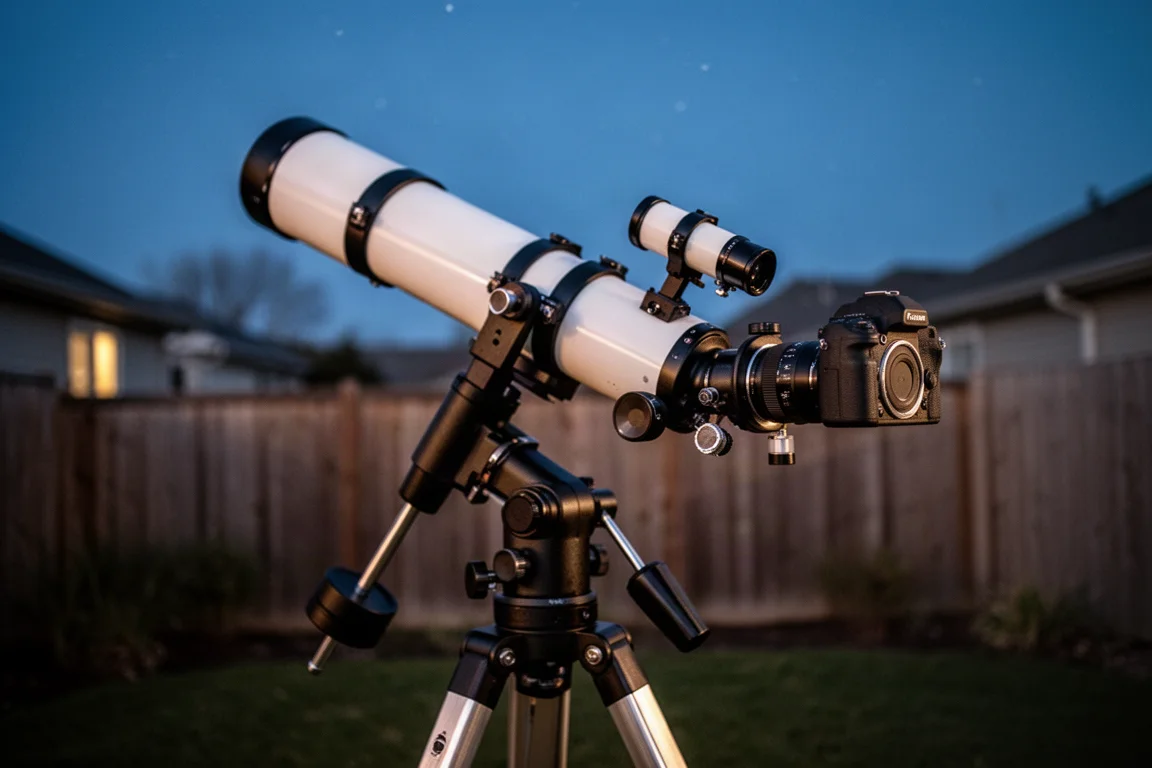
The optional focal reducer expands the scope’s versatility further. At 280mm and f3.9, it becomes a fast wide-field instrument that pairs well with APS-C and full-frame sensors for large targets like M31. This makes the FRA400C a jack-of-all-trades compared to more specialized scopes that are limited to imaging only.
Main Strengths
The build quality of the FRA400C is solid. The dovetail plate is around 28 to 30 cm long and is fixed in place by four bolts. The tube rings are a classical design that you can tighten or remove completely. Everything feels well assembled, stable, and properly machined.
The focuser is smooth in operation. Even though the focus ring moves the entire optical train within the tube, the movement is consistent and free of play. When you lock the focus, there is no detectable shift in focus, which is a welcome detail for precise imaging work.
The optical performance is respectable for the price. On an APS-C sensor, star shapes are sharp and round across most of the field of view. On full-frame, the corners do show some elongation, but the results are better than the published spot diagrams suggest. Chromatic aberration is very well controlled, with only a hint of blue and red fringing on bright stars.
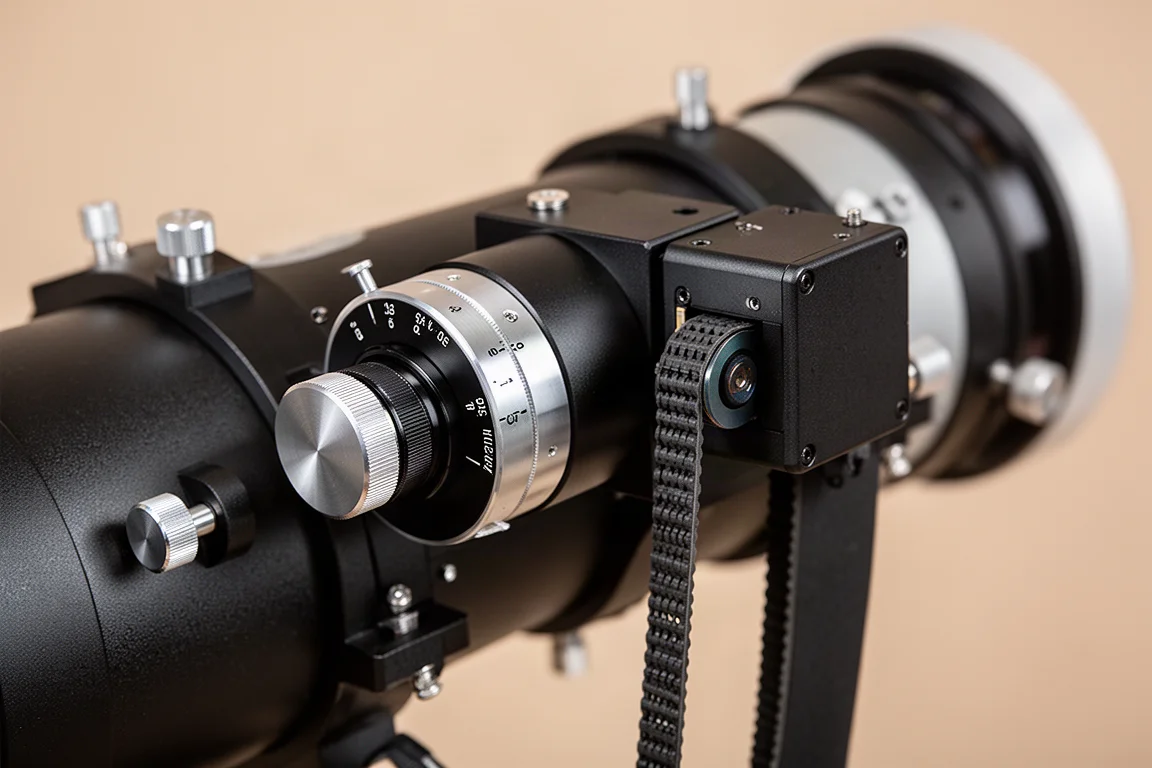
The telescope also offers a practical DIY path to autofocus. Between the two dovetail plates, there are holes that can be used to install an electronic focuser. With a timing belt and a small pulley wheel, which cost around 10 to 20 dollars, you can add autofocus without buying custom parts.
Things to Consider Before Buying
The main drawback is the focus ring sensitivity. When focusing manually, especially with a Bahtinov mask, the ring is quite coarse. Tiny movements can overshoot the focus point, and you may find yourself going back and forth to get the central spike properly centered. For astrophotography, an electronic focuser is highly recommended to avoid this frustration.
Rotation is another limitation. The telescope only rotates through the tube rings, with no secondary rotator at the rear. If you install an electronic focuser, the belt can prevent rotation altogether. You would need to loosen the pulley screw to rotate the telescope and then reset it, which is doable but not ideal.
The lens hood can slide back down when you place a Bahtinov mask or flat panel on top. ASKAR has included a tiny threaded hole where you can install an M3 grub screw to add tension, but the screw is not included in the box. It would be a nice touch to have this small part supplied with the telescope.
Buying Advice
At around $900 USD, the FRA400C sits in a competitive price range. If you add the optional focal reducer at roughly $250, the total package comes to about $1,150. That gives you a telescope that can do visual observation, astrophotography, and terrestrial photography, with either 400mm at f5.6 or 280mm at f3.9.
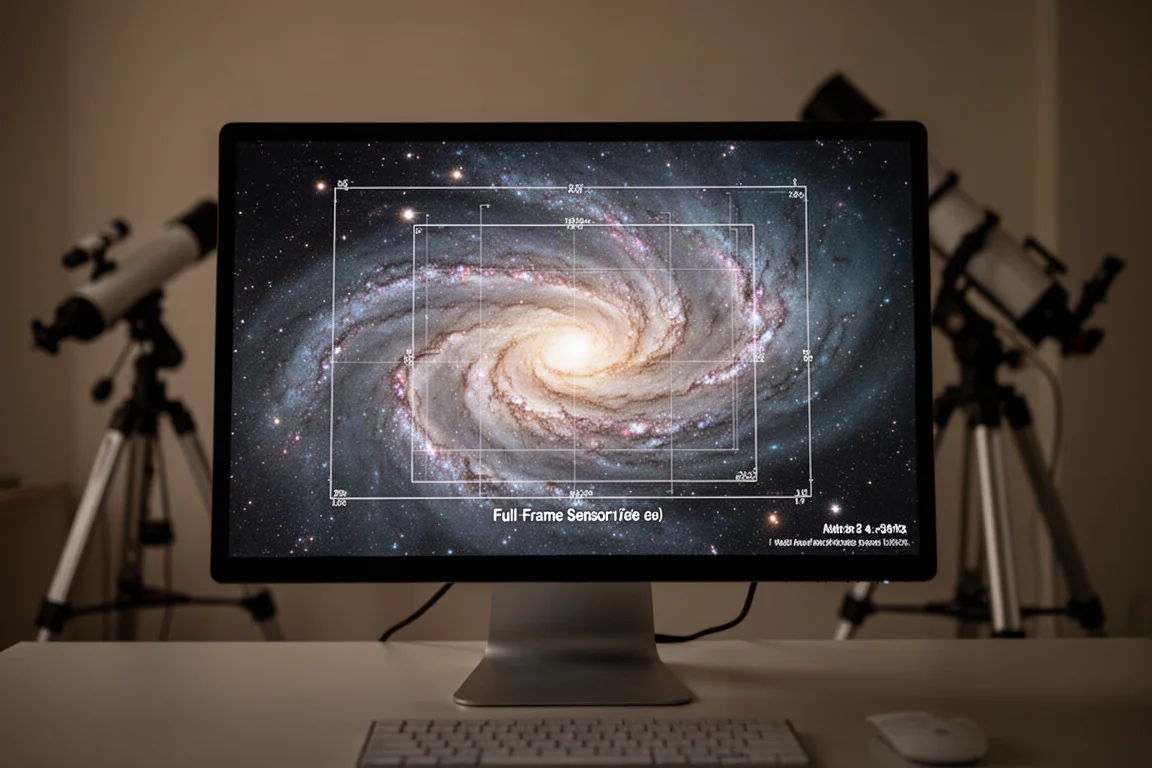
Compared to a more specialized scope like the ASKAR SQA55, which is optically impressive but limited to imaging and has a shorter focal length, the FRA400C offers more flexibility. The choice really comes down to your priorities. If you want a dedicated imaging scope with exceptional star shapes, the SQA55 is compelling. If you want a versatile all-rounder that can handle a wider range of targets and use cases, the FRA400C is a strong option.
Conclusion
The ASKAR FRA400C is a well-built, versatile refractor that delivers solid optical performance in a compact package. The 400mm focal length provides useful reach for smaller targets, while the optional reducer opens up wide-field imaging. The main trade-offs are the coarse manual focus and limited rotation options, both of which can be managed with an electronic focuser and a bit of patience.
For astrophotographers who want one telescope that can do a bit of everything, the FRA400C is a practical and capable choice. It is not the most optically stunning scope in its price range, but it is very reasonable, especially when you consider its versatility and portability.
Product link
View more details for ASKAR FRA400C
This product is mentioned in the review. Check the specifications, options, and compatibility before buying.
View more details for ASKAR FRA400CFurther reading
Related Reviews
Astrophotography
Askar SQA106 Review: A Premium 106mm Astrograph With Exceptional Optics
The Askar SQA106 is a premium 106mm quintuplet astrograph with impressive sharpness across full-frame sensors, though its price and weight demand careful consideration.
Astrophotography
Astro Imaging Gear 2026: Eight New Products Worth Watching
A look at the most interesting new astrophotography and astronomy products announced this year, from fast telescopes to smart cameras and wireless accessories.
Astrophotography
Central Obstruction in Astrophotography: What It Really Costs You
A practical look at how a telescope's central obstruction affects resolution, narrowband filter performance, and effective light gathering speed.