Astrophotography
ZWO ASI 585MC Air Review: Shooting the Orion Nebula With Only 60-Second Exposures
A smart all-in-one astrophotography camera tested on a demanding winter deep sky target, using nothing but 1-minute subs.
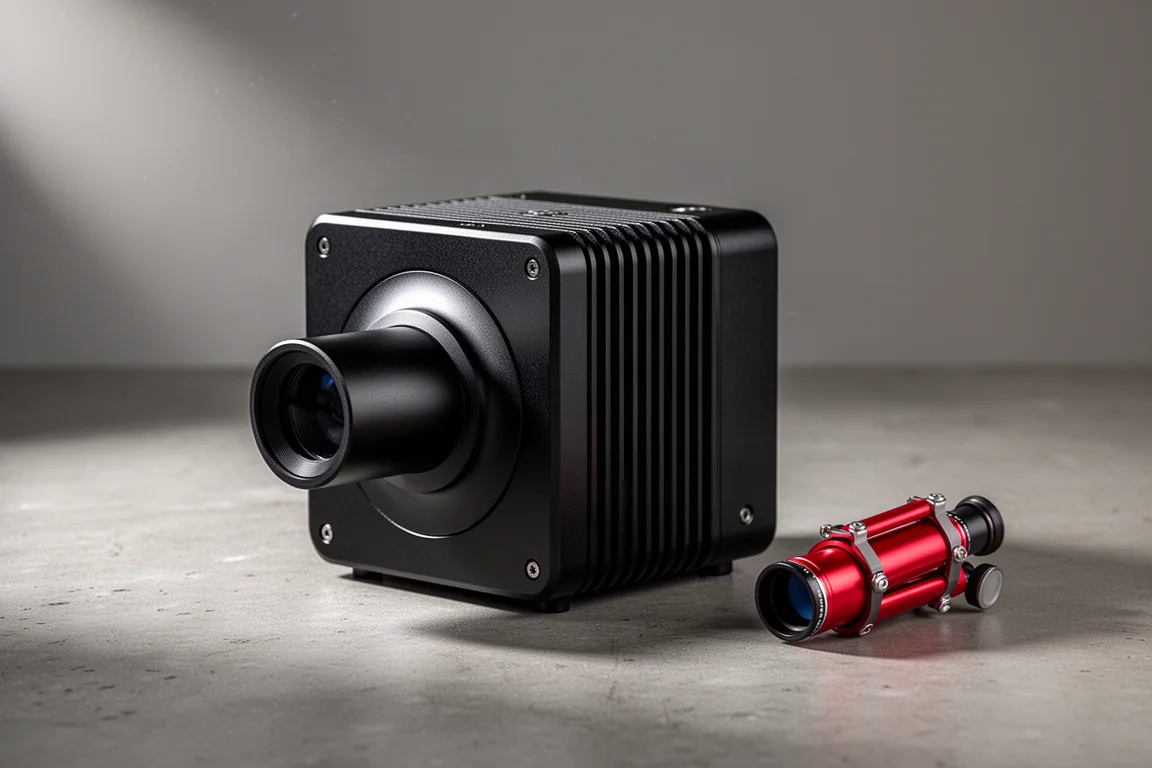
Introduction
The Orion Nebula is one of those rare targets that tests everything a camera can do. It combines extremely bright regions with incredibly faint outer dust, so if you overexpose the core you blow out the Trapezium immediately, and if you underexpose it you lose the subtle outer structure. That makes it a long-standing benchmark for camera sensors and filters.
To put the ZWO ASI 585MC Air through that test, the plan was deliberately simple: capture M42 using nothing but 60-second exposures. No long subs, no HDR tricks, just straight 1-minute frames on a compact wide-field refractor, to see how far this little camera can be pushed in an extreme dynamic range situation.
A Smart Camera That Simplifies the Workflow
The ASI 585MC Air is ZWO’s self-contained smart astrophotography camera. Think of it as a blend between a traditional dedicated astrophotography sensor and a smart telescope. Instead of giving you a complete telescope in one device, this is a smart camera that attaches to the telescope you already own.
The built-in computer is the key feature. You don’t need a laptop or an external controller. Everything is on board: you connect with your phone or tablet, choose a target, and start capturing. For beginners, that simplicity is huge. For experienced imagers, it streamlines the workflow without forcing you into a fixed optical system the way a smart telescope does.
The sensor itself is extremely sensitive, especially in visible wavelengths, and read noise is low enough that short exposures are genuinely practical. That’s exactly what makes an experiment like shooting only 60-second subs possible. The compact form factor is another benefit, particularly for portable rigs, travel setups, or single-night sessions.
Test Setup: RedCat 51, AM3 Mount, and a Light Pollution Filter
For this session, the camera was paired with the William Optics RedCat 51 riding on the ZWO AM3 mount, together with the Optolong L Quad Enhance filter. The RedCat is a small, fast, wide-field refractor with a 250 mm focal length at F4.9, and its wide field makes framing large nebulae like M42 easy. The whole rig is light enough that the AM3 barely notices it, and with a small refractor on a strain wave mount, guiding becomes almost effortless.
The Optolong L Quad Enhance filter improves contrast on deep sky objects while reducing the effects of light pollution. It’s not as aggressive as a dual narrowband filter, which makes it better for natural-looking color on bright objects like the Orion Nebula. You get enhanced contrast while retaining the broad spectrum needed to capture the nebula’s rich hues.
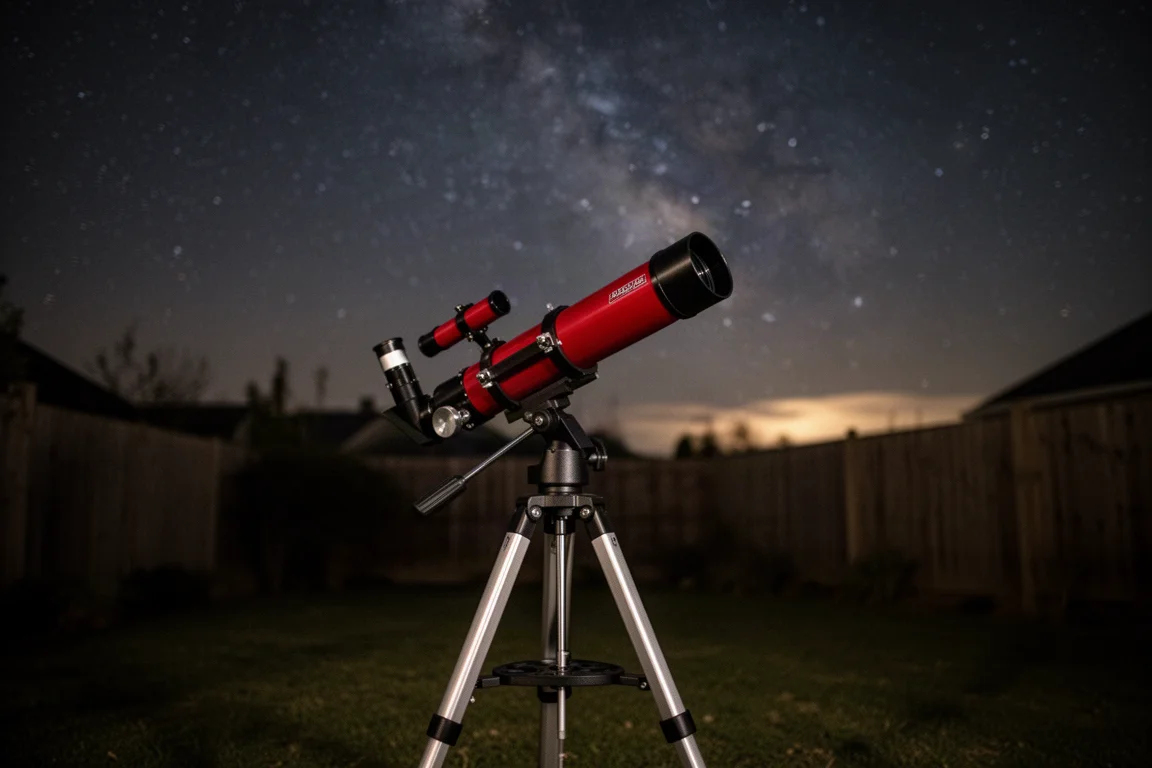
Together, the RedCat, the AM3, and the 585MC Air form a tight, highly portable imaging system. There is something satisfying about a rig that can be carried in one hand and still produce top-tier images.
Planning Framing and Checking Image Scale
Before heading out, framing was checked in Stellarium. With the RedCat’s 250 mm focal length and the 585MC Air’s sensor size, the Orion Nebula sits beautifully in the frame, with room not only for the main body of M42 but also for the Running Man Nebula above it. Visualizing orientation ahead of time avoids surprises in the field and lets you fine-tune rotation so the composition is on point.
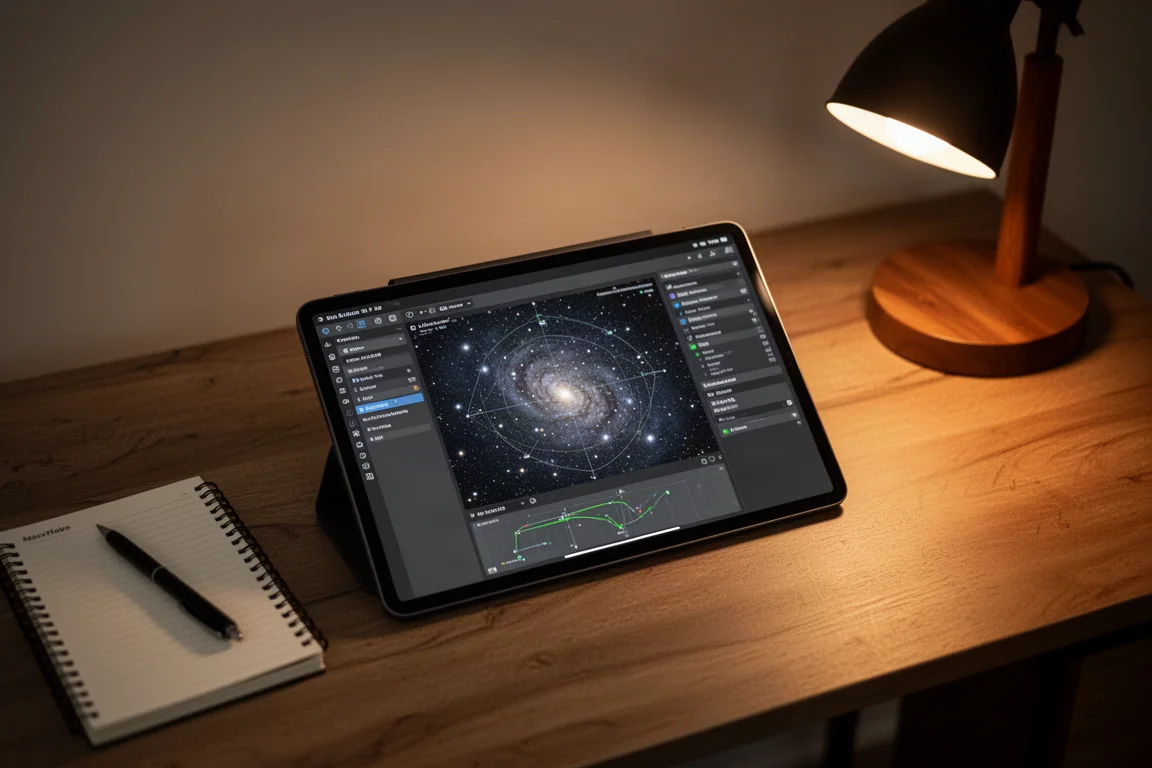
Image scale is just as important when pairing a camera with a telescope. It tells you how much sky each pixel covers, calculated as pixel size divided by focal length times 206. The ASI 585MC Air has a 2.9 micron pixel size, which with the RedCat’s 250 mm focal length gives an image scale of about 1.2 arc seconds per pixel. Most backyard seeing conditions fall between 1 and 3 arc seconds, so a value around 1.2 is extremely well matched. The result is tight stars and crisp nebula detail without oversampling or undersampling, and it’s a big reason small refractors work so naturally with small pixel sensors.
The 60-Second Exposure Experiment
Short exposures have real advantages: they reduce pressure on guiding, minimize star bloat, and limit the risk of overexposing the bright core. With older cameras, short subs meant fighting high read noise, forcing longer exposures just to get above the noise floor. Sensors as clean and sensitive as the one in the ASI 585MC Air make short exposures a legitimate option even for faint nebulae.
The goal was simple: see whether the camera handles the extreme brightness of the Trapezium while still revealing faint structure in the surrounding clouds. If the highlights hold up and the outer nebulosity stays clean, that’s a sign of genuinely good dynamic range. Winter itself is the other opponent: long nights, but often only one or two clear ones a month. When even a partial clearing shows in the forecast, it’s worth setting up, because some of the best images come from short windows when everything lines up.
The Results: 175 Frames of 60-Second Data
A single 60-second sub just barely blew out the Trapezium, so from a dynamic range standpoint, 60 seconds is slightly too long to keep the entire Orion Nebula well exposed in one frame. On the other hand, an autostretch of that single frame showed plenty of promising detail underneath.
The stack of 175 frames was the impressive part. The Running Man reflection nebula came through in detail, along with the extensive outer dust regions around the Orion Nebula. The core is blown out under an aggressive autostretch, but the raw data retains quite a bit of the core region, which can be recovered with subtle stretching. The Trapezium itself is the exception: that area is so bright it would need roughly 15-second exposures to keep from clipping.
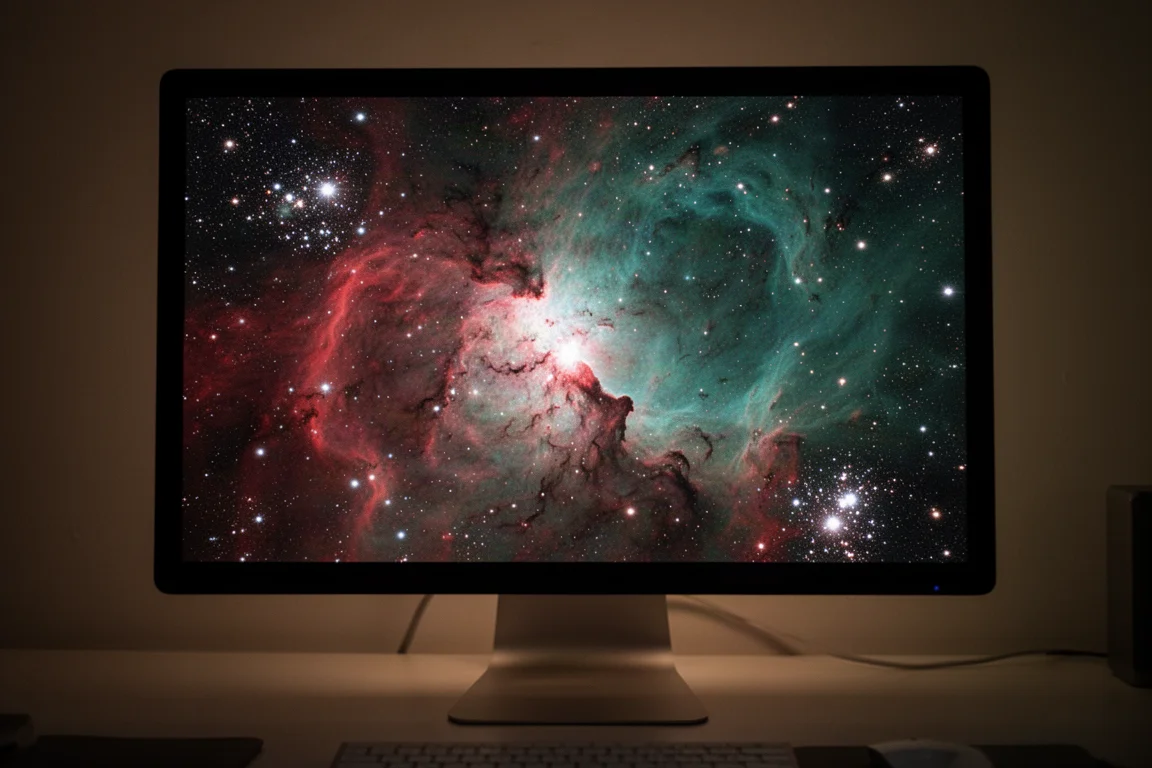
After just two basic processing steps in PixInsight, NoiseXterminator and BlurXterminator, the data looked remarkably clean. With 175 times 60 seconds of integration, the stars look excellent and the final image is genuinely impressive. The core clipped only barely, which is a strong result for a target with this kind of brightness range.
Buying Advice
If you want a self-contained imaging solution that works with the telescope you already own, the ASI 585MC Air makes a lot of sense. The onboard computer removes the laptop and external controller from your kit, the sensitive low-noise sensor makes short exposures practical, and the compact body suits portable and travel setups. Pairing it with a small, fast wide-field refractor is a particularly natural match, as the image scale lines up beautifully with typical backyard seeing. If your primary targets include very bright cores and you want to protect every highlight, plan on supplementing with shorter exposures as well.
Conclusion
Pushed to its limits on the Orion Nebula with nothing but 60-second exposures, the ASI 585MC Air delivered clean, detailed data with only the brightest core region clipping. For a camera this compact and self-sufficient, that’s a compelling result, and it shows just how capable modern smart astro cameras have become for deep sky work.
Product link
View more details for ZWO ASI 585MC Air
This product is mentioned in the review. Check the specifications, options, and compatibility before buying.
View more details for ZWO ASI 585MC AirFurther reading
Related Reviews
Astrophotography
ASKAR FRA400C Review: A Versatile 400mm Refractor for Astrophotography and More
The ASKAR FRA400C is a compact 72mm refractor that balances reach, versatility, and portability for astrophotographers and visual observers.
Astrophotography
Askar SQA106 Review: A Premium 106mm Astrograph With Exceptional Optics
The Askar SQA106 is a premium 106mm quintuplet astrograph with impressive sharpness across full-frame sensors, though its price and weight demand careful consideration.
Astrophotography
Astro Imaging Gear 2026: Eight New Products Worth Watching
A look at the most interesting new astrophotography and astronomy products announced this year, from fast telescopes to smart cameras and wireless accessories.