Astrophotography
ZWO ASI 533 Mono Review: Clean Data From a Beginner-Friendly Cooled Camera
A hands-on performance look at ZWO's cooled monochrome deep space camera, including narrowband imaging results and dark frame tests.
Introduction
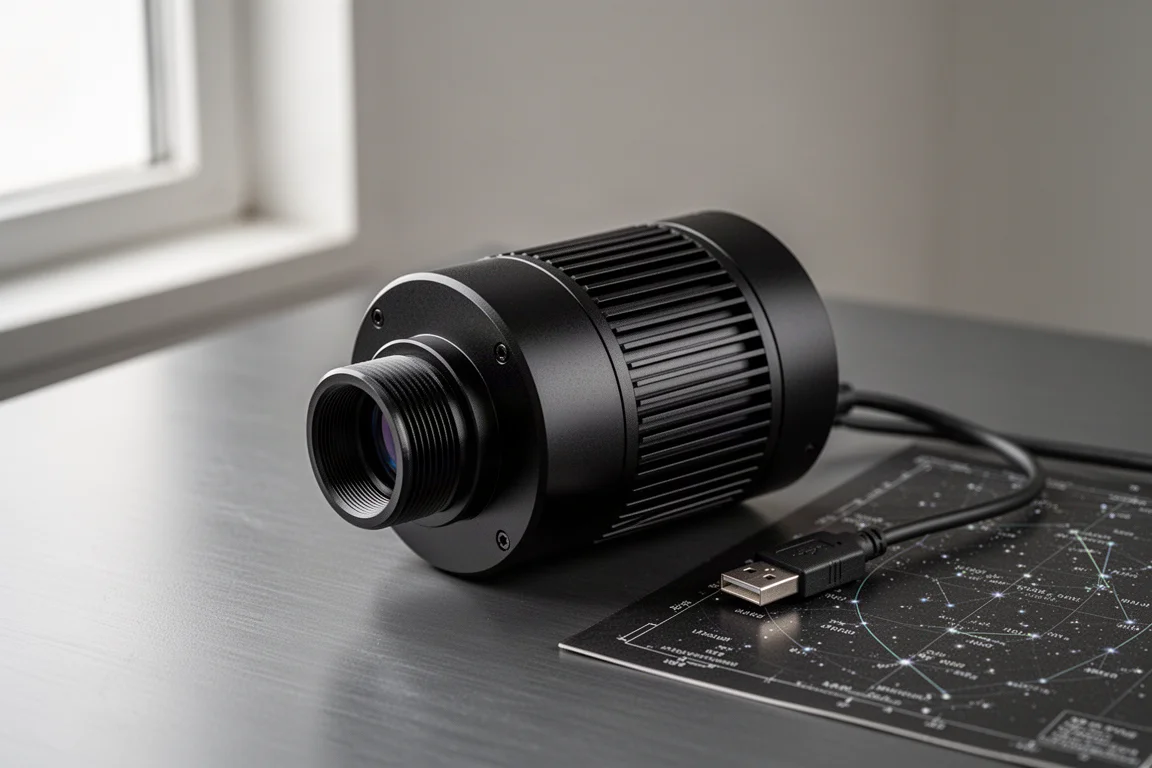
The ZWO ASI 533 Mono is the company’s latest cooled monochrome deep space imaging camera, and after putting it through a full narrowband imaging run on NGC 7000, the North American Nebula and its striking hydrogen structure known as the Cygnus Wall, the headline is simple: this camera produces remarkably clean data.
Shooting through 3nm narrowband filters on a 10-inch Newtonian, the ASI 533 Mono delivered stacks with no visible amp glow and, once properly calibrated, essentially no vignetting or dust artifacts. For anyone stepping up to a dedicated cooled imaging camera, that cleanliness matters more than almost any spec sheet number.
Key Specs and Sensor Details
The ASI 533 Mono uses a one-inch format sensor with a resolution of 3008 x 3008 pixels, which makes it a square sensor. Square framing is often pitched as a convenience, but in practice framing is still necessary. The Cygnus Wall, for example, would only fit diagonally in the frame, so plan on composing your targets as usual.
Pixel size is 3.76 microns, a scale that pairs well with refractors from roughly 350mm of focal length all the way up to Newtonians and larger telescopes around 1200mm. If you are unsure whether the camera suits your scope, that focal length range is the key thing to check. Quantum efficiency is 91 percent in the O3, or blue-green, band, and output is a 14-bit ADC, an improvement over the 1x1 binning mode of the ASI 294 as well as the ASI 183 and ASI 1600.
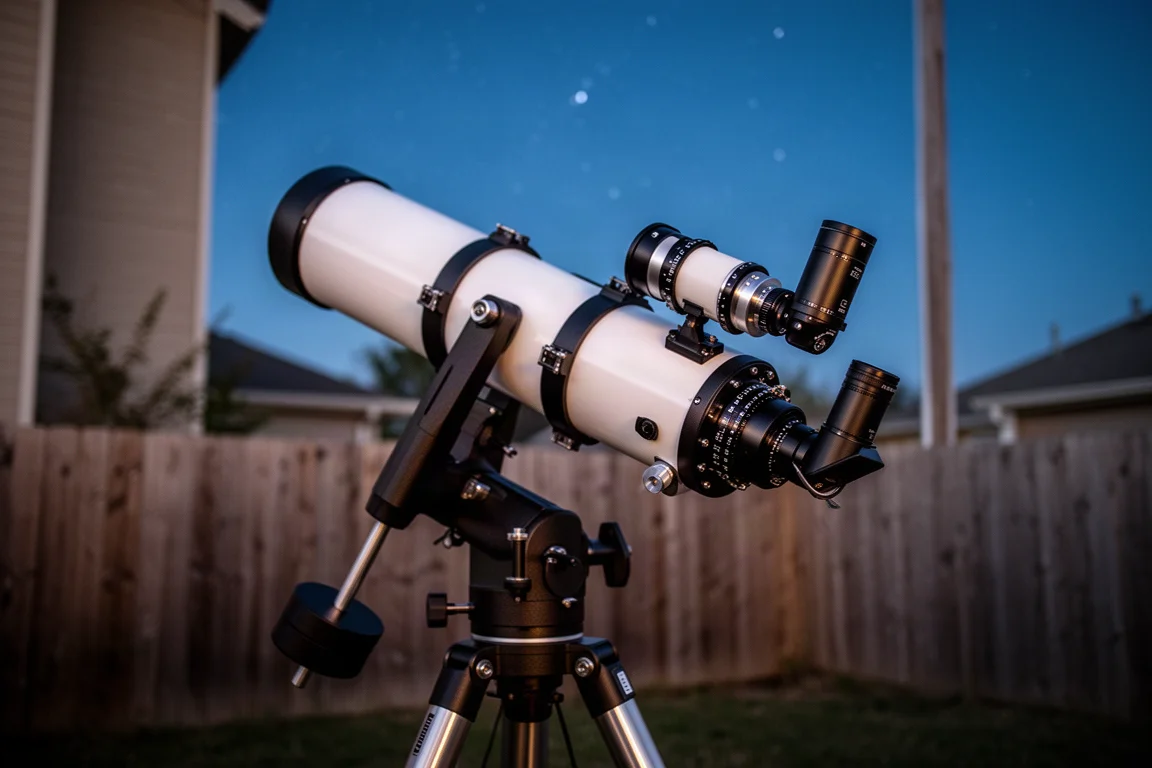
Setup is genuinely plug and play. With an off-axis guider, filter wheel, and spacers already configured at the standard 55mm back focus, swapping in the 533 Mono took moments. Amp glow is entirely absent: even a 15-minute dark frame at high gain shows none, and long exposures show no amp glow either.
Real-World Narrowband Imaging Performance
The imaging plan split the capture across three nights: hydrogen alpha on the first night, which went smoothly, then O3 and S2 on a second night shortened by clouds. That meant the performance review was completed with a modest amount of data, roughly six hours of Ha plus the O3 and S2 channels combined into about 12 hours of total SHO data.
Flat frames threw one curveball. Sky flats taken the morning after capture were targeted at the usual 20,000 to 30,000 ADU range recommended for most CMOS cameras, but the flats over-corrected. Dropping the ADU target all the way to 3,000 produced flats that corrected the vignetting perfectly. If you run into over-correction with this camera, low ADU flats are worth testing.
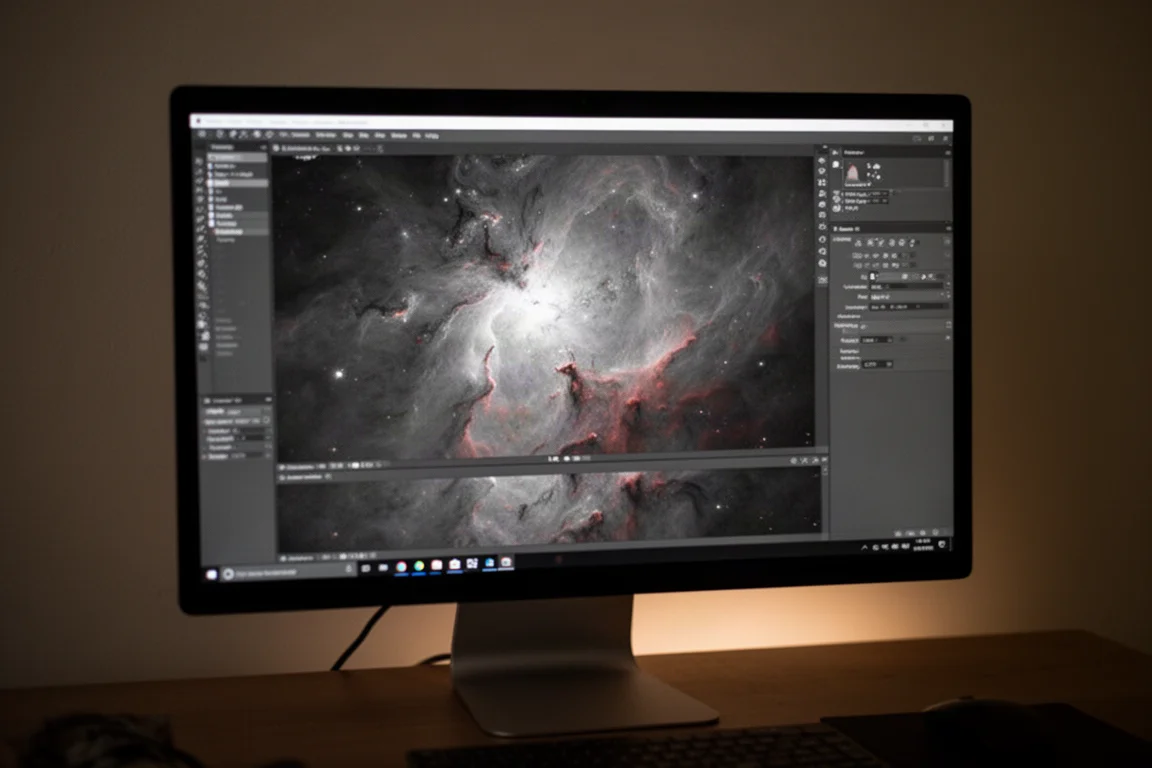
In PixInsight, the linear Ha, O3, and S2 files, once stretched, showed zero signs of amp glow, and the 3k ADU flats eliminated vignetting and dust modes. This clean data has two practical benefits: it saves significant post-processing time, and for beginners choosing their first dedicated imaging camera, the ASI 533 Mono is forgiving and easy to work with while still delivering excellent results.
Do You Still Need Dark Frames?
To answer the question the lack of amp glow raises, 15 dark frames of 600 seconds each were taken at -12 degrees and unity gain, captured in a light-tight studio environment, then applied to the Ha, O3, and S2 stacks.
The results were channel-dependent. In the O3 data, the version without dark frames showed striations and banding that vanished once the darks were applied. The S2 data showed banding and noticeably more noise without darks, while the calibrated version was cleaner with noise visibly reduced. The Ha data, by contrast, looked essentially identical with and without darks, perhaps marginally smoother with them.
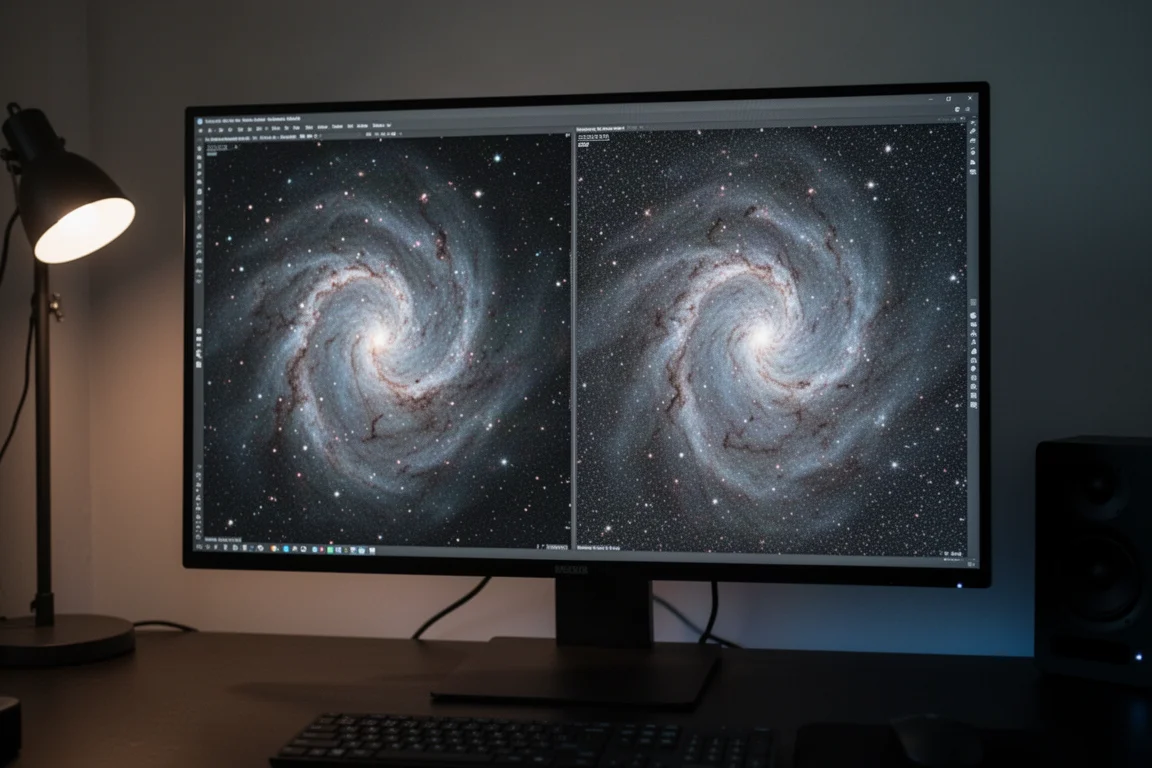
The practical recommendation: go ahead and take your dark frames. You may not see a difference in your hydrogen alpha signal, but in S2 and O3 data the dark frames removed banding and reduced noise, which is well worth the extra capture time.
Final Image Results
With all 12 hours of SHO data stacked and combined, the final image of the Cygnus Wall came together with only a little finishing work remaining. The preliminary result showcases exactly what this sensor is built for: smooth, low-noise narrowband data with clean backgrounds and no amp glow artifacts to fight in processing.
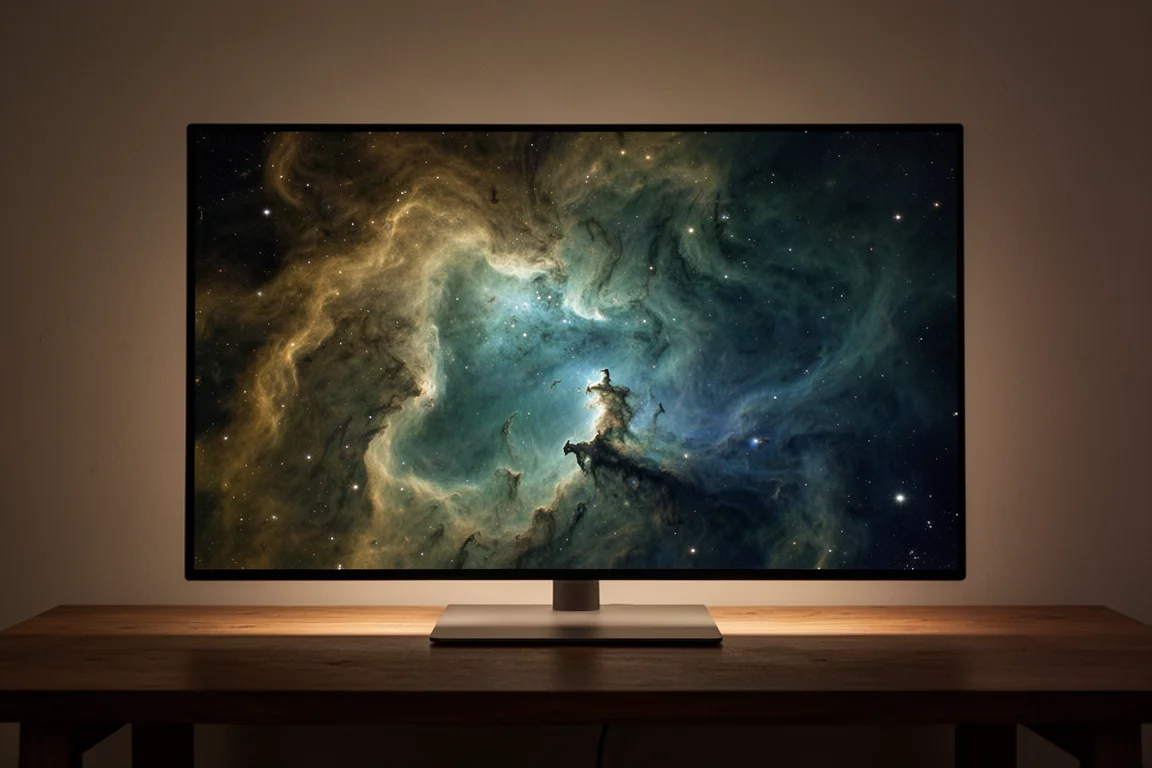
The pairing advice holds across the board: if you have a refractor at around 350 to 400mm of focal length, or a longer scope up to about 1200mm, anything in that range will work very well with the ASI 533 Mono.
Buying Advice
For beginners seeking a first dedicated cooled monochrome camera, the ASI 533 Mono is an easy recommendation. The plug-and-play compatibility with standard 55mm imaging trains, the complete absence of amp glow, and the forgiving, clean sensor output all reduce the friction that typically trips up new imagers. Experienced shooters will appreciate the time saved in post-processing, though the flat-frame ADU quirk is worth knowing about before your first calibration run.
Conclusion
The ZWO ASI 533 Mono did exactly what a cooled deep space camera should do: deliver clean, high-quality data that is a pleasure to process. With 91 percent quantum efficiency in O3, a 14-bit ADC, no amp glow even on the longest exposures, and noise performance that rewards proper calibration, it earns its place on imaging trains from short refractors to longer Newtonians. Clear skies.
Product link
View more details for ZWO ASI 533 Mono
This product is mentioned in the review. Check the specifications, options, and compatibility before buying.
View more details for ZWO ASI 533 MonoFurther reading
Related Reviews
Astrophotography
ASKAR FRA400C Review: A Versatile 400mm Refractor for Astrophotography and More
The ASKAR FRA400C is a compact 72mm refractor that balances reach, versatility, and portability for astrophotographers and visual observers.
Astrophotography
Askar SQA106 Review: A Premium 106mm Astrograph With Exceptional Optics
The Askar SQA106 is a premium 106mm quintuplet astrograph with impressive sharpness across full-frame sensors, though its price and weight demand careful consideration.
Astrophotography
Astro Imaging Gear 2026: Eight New Products Worth Watching
A look at the most interesting new astrophotography and astronomy products announced this year, from fast telescopes to smart cameras and wireless accessories.