Astrophotography
ZWO AM7 Review: A High-Capacity Harmonic Drive Mount for Heavier Astrophotography Rigs
ZWO's newest strainwave mount raises payload capacity to 44 lb without a counterweight while keeping the quick, portable setup the AM lineup is known for.
Introduction
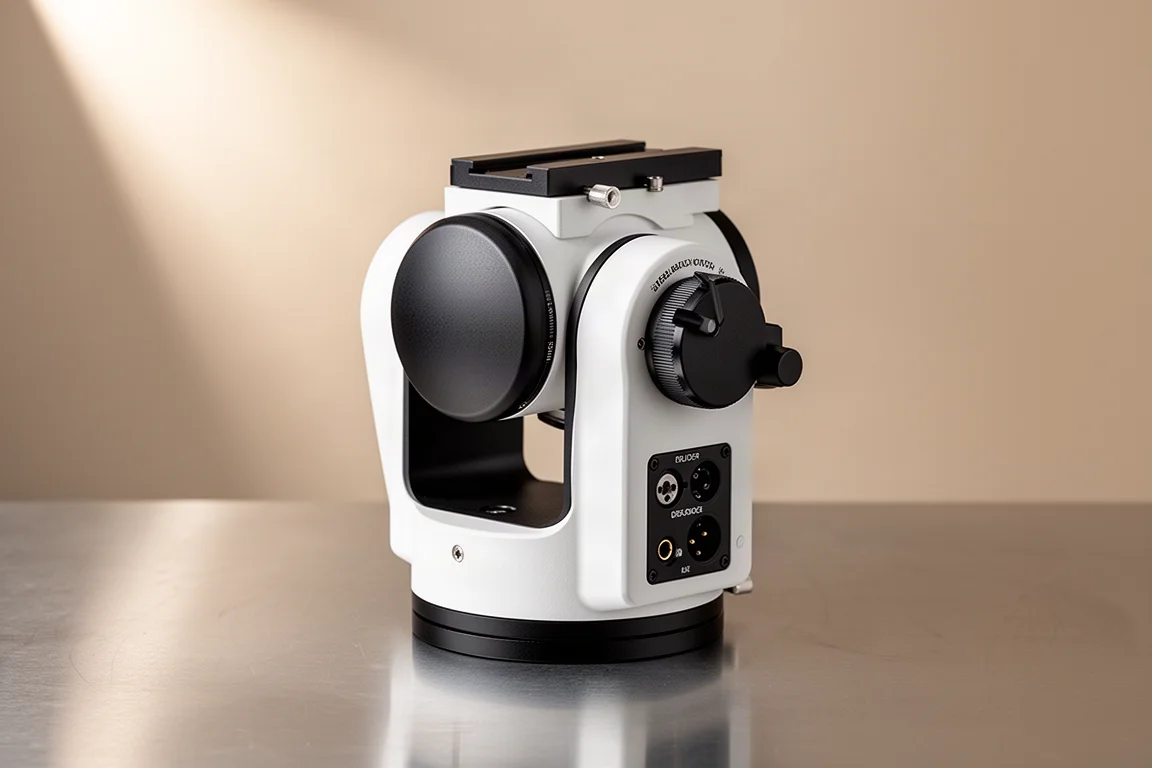
For years, the ZWO AM3 and AM5 made lightweight harmonic drive mounts feel almost like a cheat code: quick to set up, easy to carry, and dependable night after night. The AM7 is ZWO’s answer to the most common request from that audience, a bigger version that can handle heavier optical systems without giving up the convenience that made the smaller models popular.
After using the AM7 in the backyard for over a month in genuinely harsh winter conditions, the picture is clear: it is a familiar formula scaled up, and that is largely a good thing.
What the AM7 Is Designed For
The AM7 is ZWO’s top-end harmonic drive equatorial mount. It uses the same strainwave gear design as the AM3 and AM5, but it is engineered for higher payload and performance, aimed at astrophotographers running longer focal length systems and heavier imaging trains. Like the rest of the AM lineup, it can be used in equatorial mode for imaging or in altaz mode for visual observing.
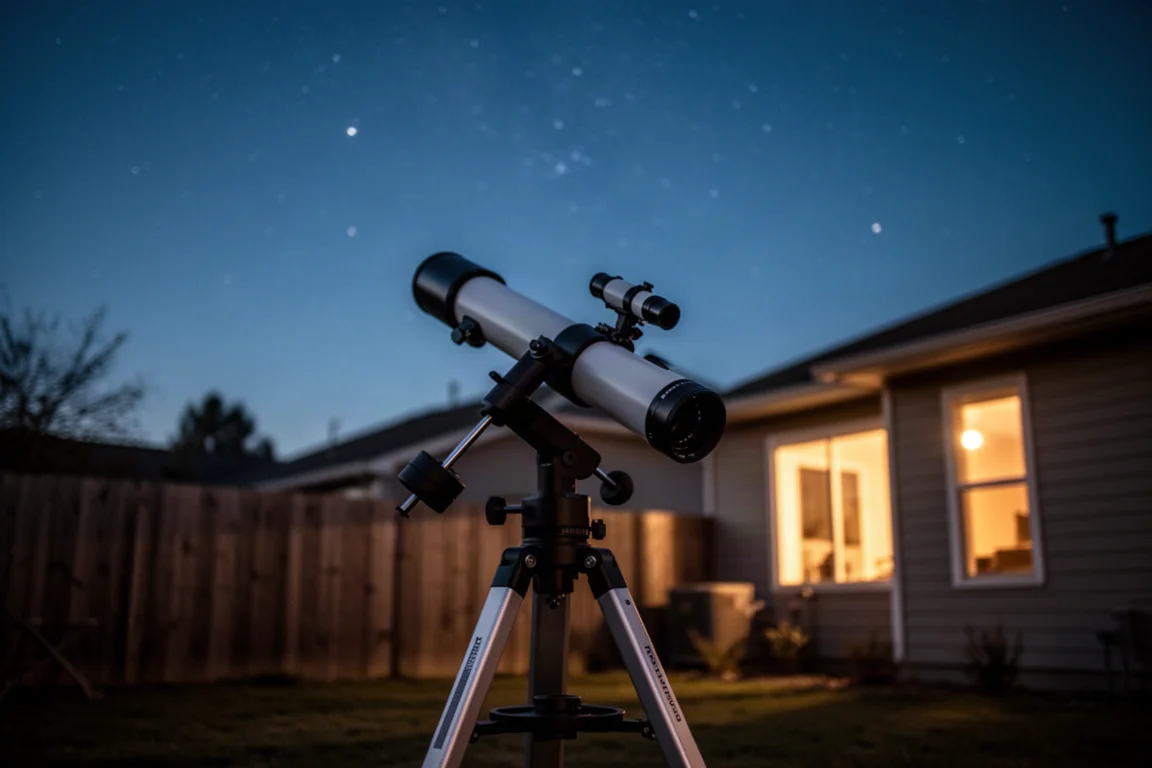
At its core, the mount pairs a harmonic drive with a synchronous belt at a 300:1 reduction ratio. That design gives very fine control over motion and tracking, which is what makes sharp long-exposure images possible.
Payload Capacity and Portability
Payload is the headline reason astrophotographers have been waiting for this mount. The AM7 head weighs just 15 lb, yet it can carry up to 44 lb of gear without a counterweight. Add a counterweight and that jumps to 66 lb. For reference, the mount handled a 32 lb telescope without a counterweight.
The striking part is that the head only weighs about 3 lb more than the AM5. That gives the AM7 a payload-to-weight ratio of roughly 3:1, letting you run larger telescopes that would push an AM5 to its limit, without moving up to a massive traditional German equatorial mount.
It also gives you room to grow. Overmounting whenever budget allows remains some of the most durable advice in this hobby: you may think you will never outgrow your current system, but the extra headroom tends to pay off eventually.
Tracking Performance in Real Conditions
The main test telescope was a heavy 18 lb refractor, closer to 20 lb with camera and accessories, run without a counterweight. It was not an ultimate stress test, but it was a heavier load than would have been comfortable on an AM5 without a counterweight. The AM7 handled it effortlessly, with no sense that it was being pushed.
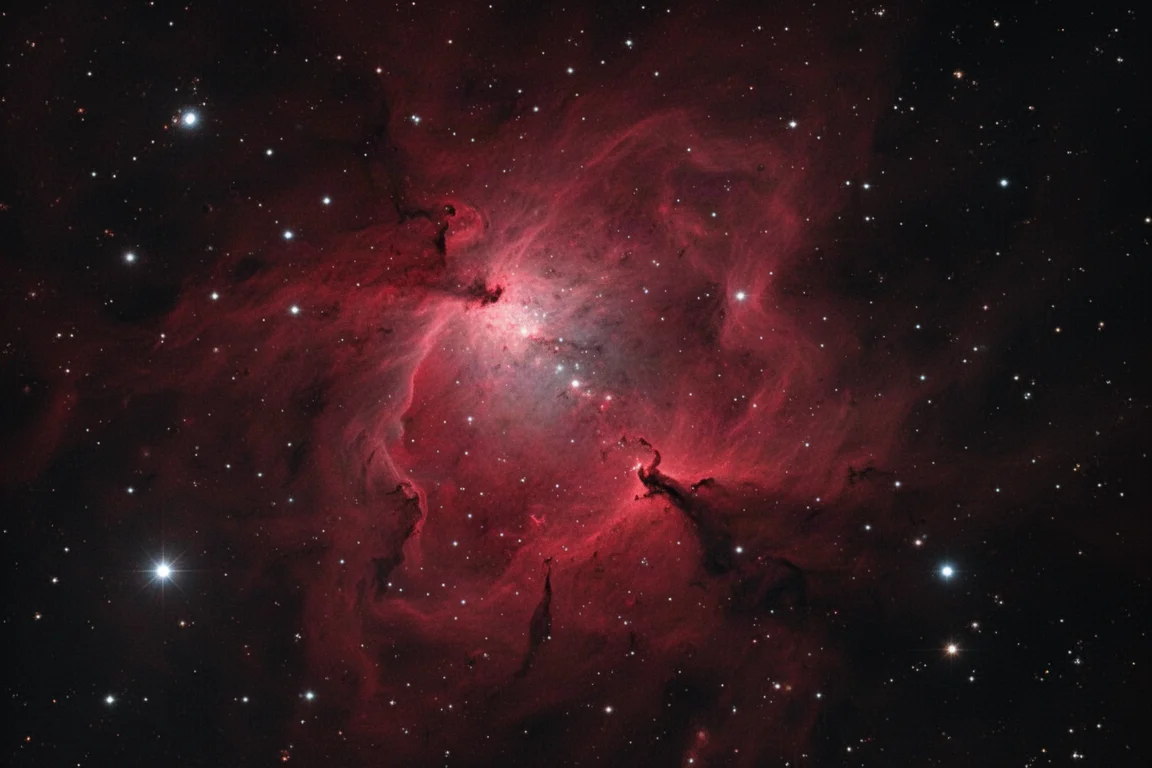
To evaluate tracking and guiding, the Rosette Nebula was captured using 5-minute exposures. Total RMS error hovered around 0.74 arcseconds throughout the session, which translates into sharp, round stars in every sub. At that target’s 520 mm focal length, that level of tracking was honestly overkill.
The entire session ran from a tablet using the ASI Air app in station mode, with autofocus, meridian flip and all. Just like experiences with the AM3 and AM5, there were no surprises. The only worry of the night was a stiff cable catching, which comes down to cable management rather than the mount.
Handy Features for Heavier Rigs
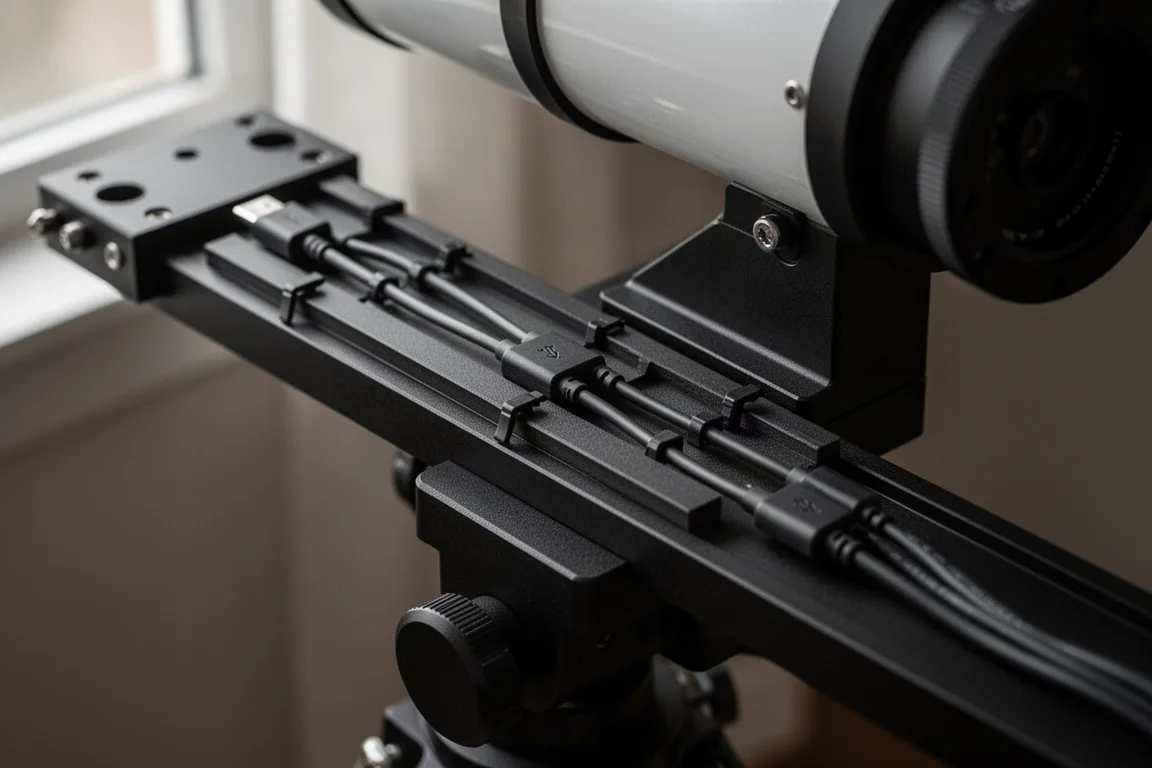
The AM7 adds ports that the AM5 and AM3 lack: a USB-C and a DC output at the rear of the saddle. These exist to clean up cabling, and the DC output in particular is handy for powering a camera in a straight line back to the rear of the scope, skipping a major potential snag point.
Two other features matter more as payloads grow. First, a mechanical zero position lets the mount reliably find its home position. Second, the right ascension axis has a brake, so if power is lost, the telescope will not suddenly drop on that axis.
There is no brake on the declination axis, though. Losing power there is more of a slow drift than a devastating drop, but with a heavy load it still makes sense to get declination balance as good as possible.
Tripod Choice Matters
With mounts in this payload class, tripod stability matters, not just for guiding performance but for safety and peace of mind. The standard TC40 and a heavy-duty carbon fiber tripod are both rated for up to 110 lb, but the heavier-duty option with wider, thicker legs and a central spreader tray feels noticeably more solid. As a bonus, the spreader tray doubles as a spot to set a phone during polar alignment.
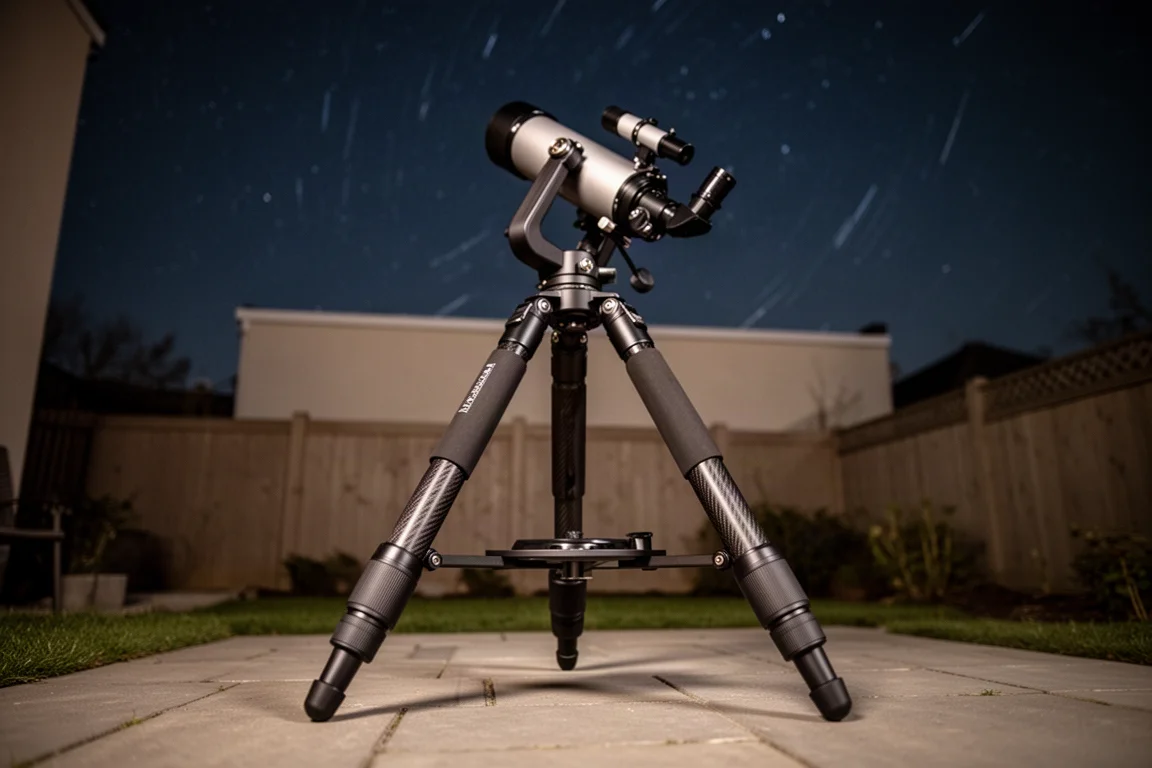
For even more stability, a pier puts the scope at a better height and gives maximum clearance for longer systems. That setup loses some of the portability of a lightweight carbon fiber tripod and becomes more semi-permanent, but it is a strong configuration for running the AM7 with medium to heavy scopes like a 5-inch refractor or an 11-inch Edge HD.
How It Compares
Against the AM5N, the AM7 is a clear step up in payload capacity, but otherwise there is nothing groundbreaking about its performance. That is fine news, because the AM5N is already a fantastic mount, and a bigger version of it is a welcome thing.
The SkyWatcher EQ6-R has long been a benchmark for capable mounts, and the AM7 matches its 44 lb payload while weighing 23 lb less. With a counterweight, the AM7 reaches 66 lb, which technically opens the door to a 12-inch Newtonian. Still, a harmonic drive mount is best enjoyed without a counterweight, so there is little reason to overdo it. For genuinely scary-heavy systems, traditional observatory-grade equatorial mounts still have a place.
One practical note: the counterweight shaft on the AM7 is a larger 25 mm size, so it requires a different counterweight than the AM5. Compatible options exist, but they are an additional investment if you need the extended payload.
Who Should Skip It
If you are running a lighter rig with a compact refractor, the AM7 may be overkill. An AM5 or a SkyWatcher Wave 150i both provide up to 33 lb of payload without a counterweight, which covers a lot of ground. Even a large 120 mm refractor would leave 15 lb of headroom on such a mount.
The AM7 is really for astrophotographers running heavy setups at longer focal lengths who are tired of heavy equatorial mounts. That is the audience it serves, and it serves them well.
Buying Advice
In practical terms, the AM7’s price sits $500 above the AM5N, and what you are paying for is an extra 11 lb of counterweight-free payload capacity. That might not sound like much, but it makes a big difference in the types of telescopes you can run on a quick-setup harmonic drive system.
If you already own an AM3 or AM5, you know how reliable these mounts are. If you are on board with overmounting whenever possible, the AM7 makes a lot of sense for a growing imaging train.
Conclusion
The ZWO AM7 does not reinvent the harmonic drive mount; it scales the proven formula up to a payload class that previously demanded a heavy traditional equatorial mount. Effortless handling of heavier refractors, sub-arcsecond tracking, thoughtful cabling ports, and safety features like the RA brake and mechanical zero position make it a confident choice for serious astrophotographers. Lighter rigs may not need it, but for heavier systems, it removes most of the reasons to go back to a bulky mount.
Product link
View more details for ZWO AM7
This product is mentioned in the review. Check the specifications, options, and compatibility before buying.
View more details for ZWO AM7Further reading
Related Reviews
Astrophotography
ASKAR FRA400C Review: A Versatile 400mm Refractor for Astrophotography and More
The ASKAR FRA400C is a compact 72mm refractor that balances reach, versatility, and portability for astrophotographers and visual observers.
Astrophotography
Askar SQA106 Review: A Premium 106mm Astrograph With Exceptional Optics
The Askar SQA106 is a premium 106mm quintuplet astrograph with impressive sharpness across full-frame sensors, though its price and weight demand careful consideration.
Astrophotography
Astro Imaging Gear 2026: Eight New Products Worth Watching
A look at the most interesting new astrophotography and astronomy products announced this year, from fast telescopes to smart cameras and wireless accessories.