Astrophotography
ZWO AM5 vs iOptron HEM27 vs Sky-Watcher EQ6-R: Harmonic Drive Mount Showdown
Two compact harmonic drive mounts face off against a proven classic equatorial mount to see which deserves your astrophotography budget.
Introduction
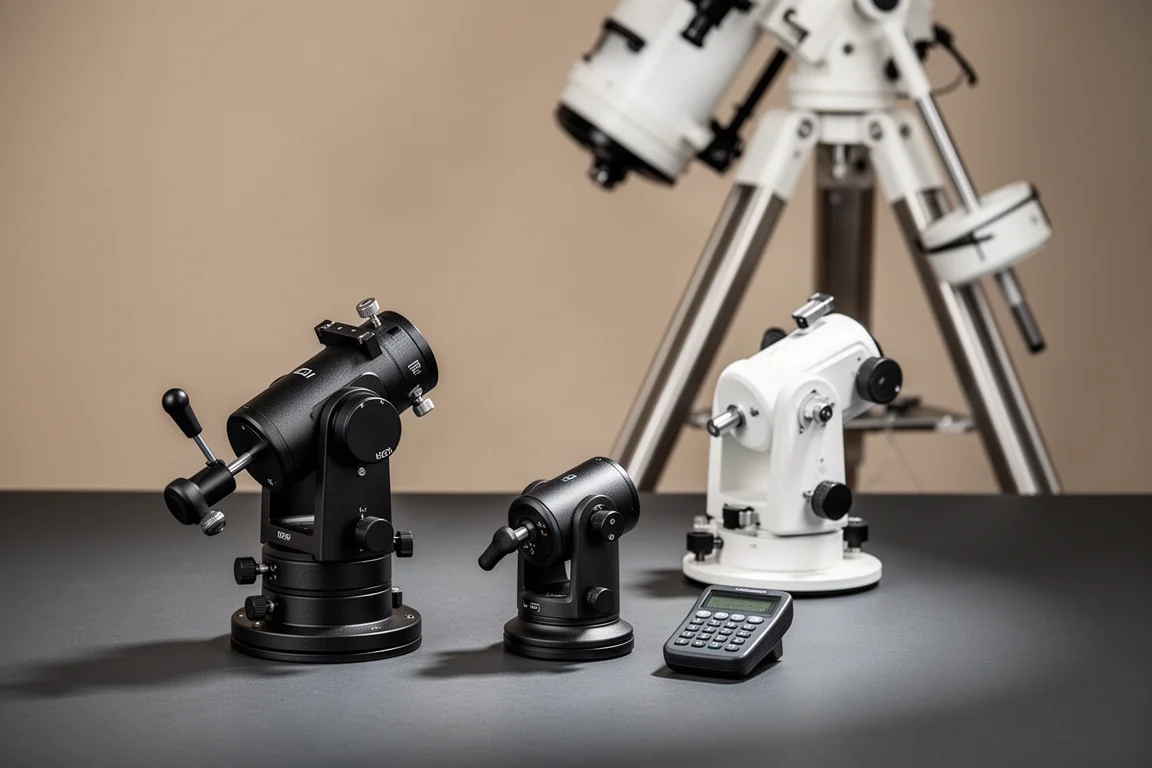
Ask any experienced astrophotographer which piece of gear matters most, and the answer is almost always the mount. It has to hold your telescope and camera steady while tracking the night sky precisely for minutes at a time so your long exposures produce round stars. Traditionally, longer focal lengths demanded bigger, heavier mounts. Harmonic drive mounts, which use compact strain wave gearing, may be changing that. This comparison looks at the two most affordable harmonic drive mounts widely available in the U.S. market, the ZWO AM5 and the iOptron HEM27, against the proven Sky-Watcher EQ6-R as a control.
Why the Mount Matters
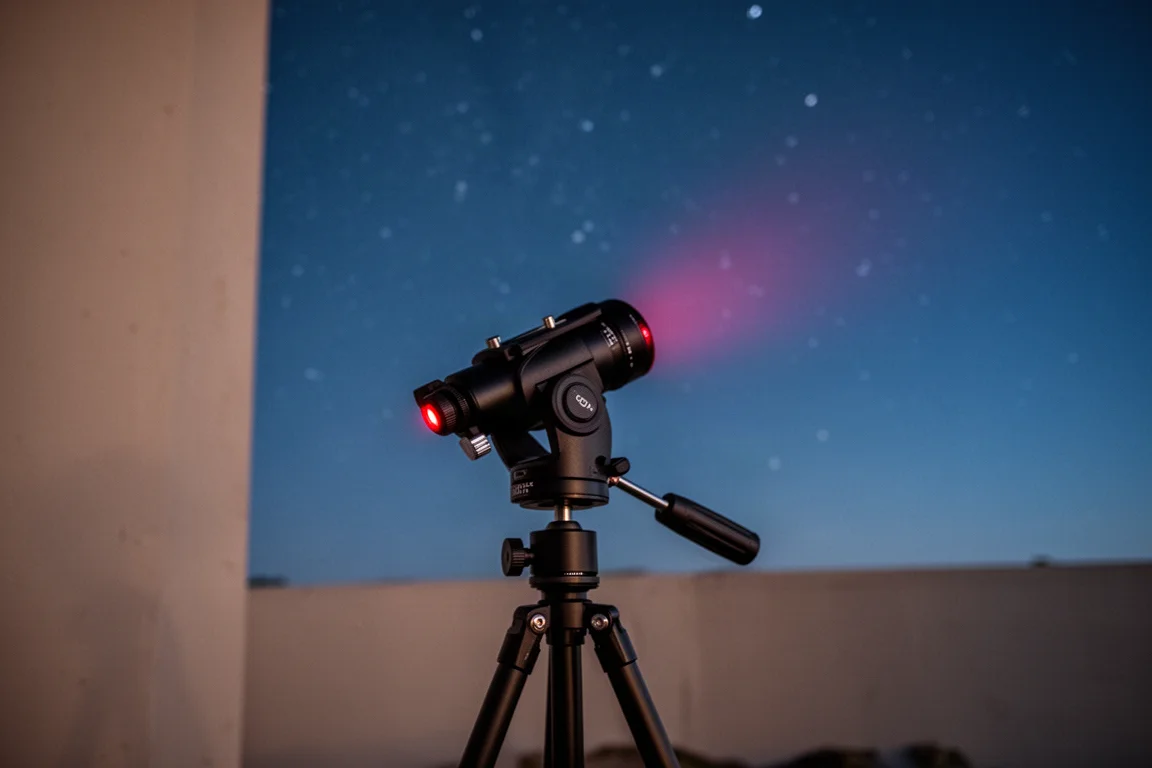
Strain wave gearing can be built very small, yet thanks to its design it can carry a huge payload even without counterweights. The counterweight on these harmonic drive mounts mainly exists to keep the whole assembly from tipping over when it is badly out of balance. These mounts have been around for a while, first appearing from the South Korean company Rainbow Astro, but prices have come down over the past several years. In 2022 a wave of new harmonic drive mounts arrived, including first-time mount makers like ZWO, and iOptron released its own first strain wave design, the HEM27.
Design and Operating Modes
The EQ6-R and the HEM27 are equatorial mounts only: you polar align them and they track the night sky in right ascension. The AM5 is also an equatorial mount as shipped, but it can be converted to alt-az mode by setting the azimuth adjustment on the wedge to 90 degrees and holding the cancel button on the hand controller while powering on, confirmed by a green status light. This matters mainly for visual observers who prefer a more natural telescope position; for photography it is a nice extra, and it is only available on the AM5 of the three.
Polar Alignment and Wedge Adjustment
All three mounts need polar alignment. The EQ6-R includes a built-in visual polar scope, and you can add an electronic polar scope such as a QHY PoleMaster or an iOptron iPolar. The HEM27 can be bought with an iPolar camera already installed as the HEM27A for about a hundred dollars more, which is a no-brainer if you plan to use a Windows or Mac laptop or mini PC. The AM5 has no polar scope option at all, so you rely on electronic methods like an ASIAir, which is fine since the mount really needs a computer or app anyway.
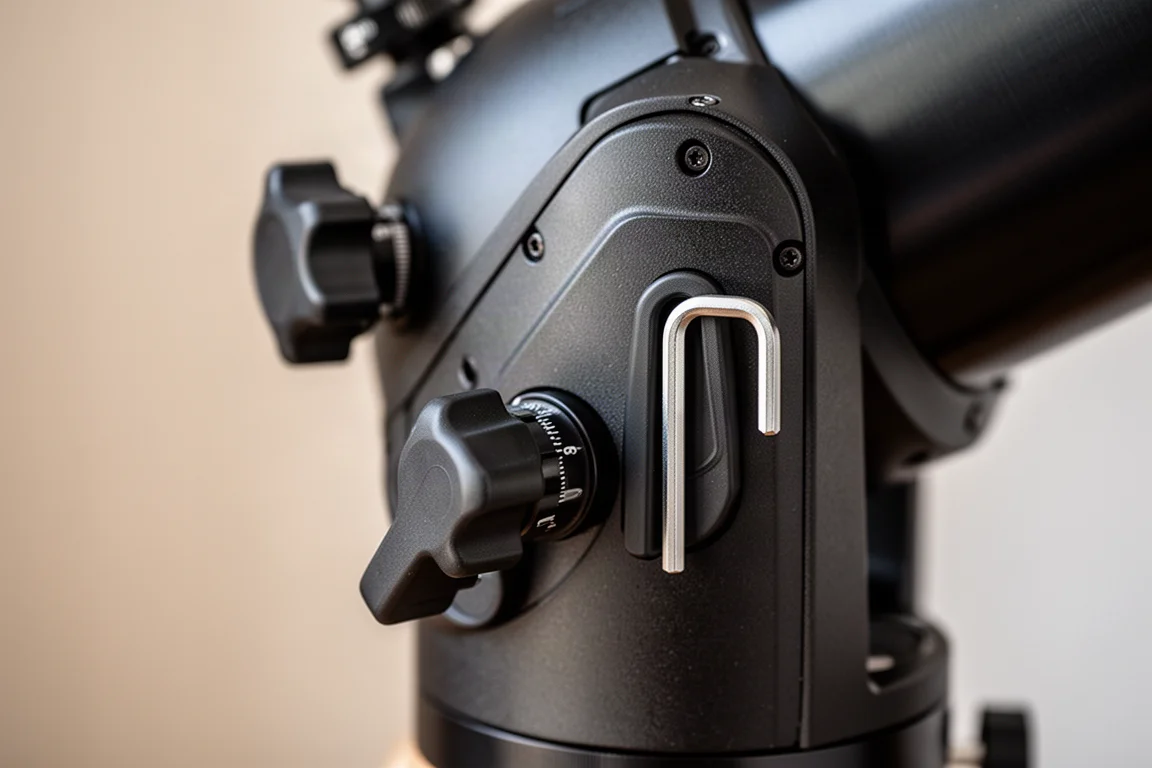
For wedge adjustments, the EQ6-R uses a simple push-pull system with larger plastic knobs, and after a little practice it aligns quickly. The HEM27 and AM5 use push-pull mechanisms plus separate locks, which can shift alignment as you tighten them; you have to snug the locks about 95 percent of the way early and make tiny final adjustments. The AM5 is laid out well with easy-to-grasp knobs. The iOptron design is quirky: the lock screws require a small hex key stored magnetically on the mount, and operating a tiny metal key in the dark and cold is not ideal. That said, in practice it did not slow things down much compared to the AM5.
Connections and Hand Controllers
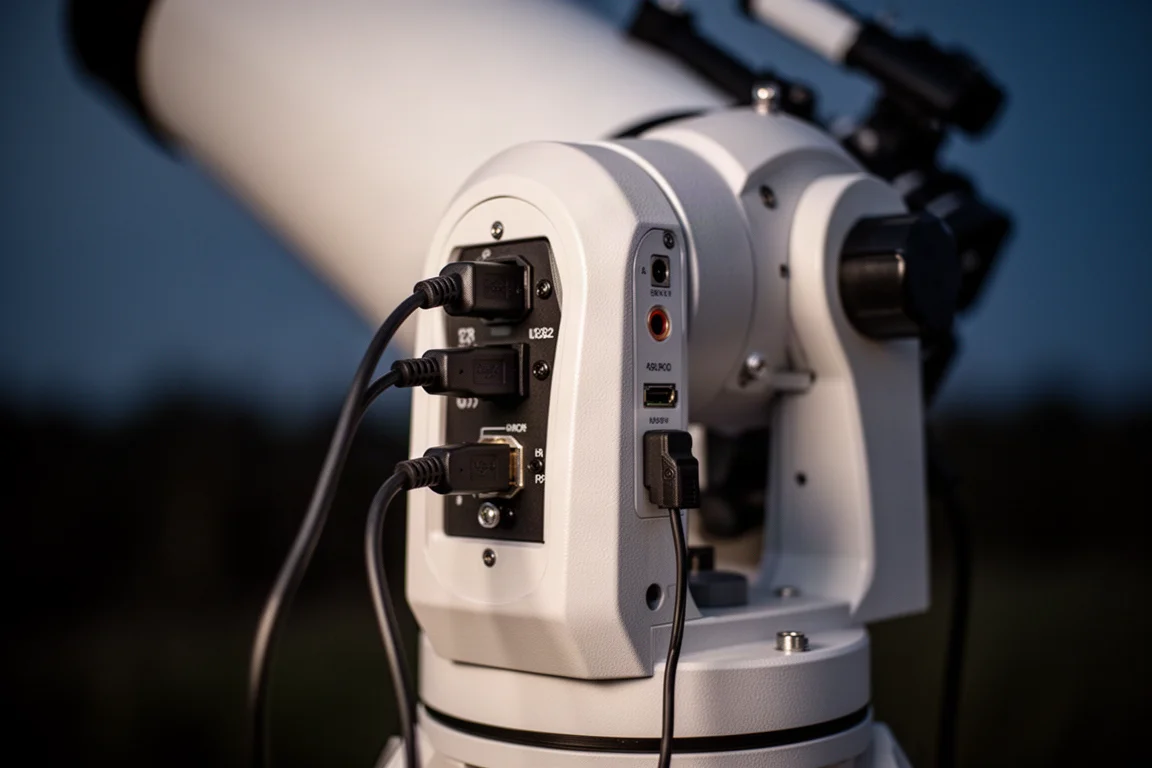
Port placement differs slightly: the AM5 keeps most ports on the front with one DC out on the side, the HEM27 puts almost all ports on the back, and the EQ6-R places them on the side, which is easiest since you never duck under the telescope. The white EQ6-R is also the easiest to see in the dark; black control panels on the two smaller mounts are harder to read under red light.
All three run off DC or an AC adapter, but only the HEM27 includes an AC adapter in the box. Power connectors differ too: the EQ6-R uses a 12mm two-pin aviation plug, which is not proprietary and benefits from being a locking connector; the AM5 uses the common 5.5x2.1mm barrel plug but ships without a power cable; the HEM27 uses a less common 5.5x2.5mm plug, so your ASIAir or Pegasus Power Box cables will not fit without an adapter.
For control, the EQ6-R includes the full SynScan hand controller and the HEM27 the standard GoToNova hand controller, both with full GoTo catalogs, alignment, and park options without a computer. Note the iOptron hand controller needs a CR2032 button battery that is not supplied. The AM5 instead comes with just a joystick that only moves the mount at different speeds; most features require an app, an ASIAir, or third-party software on a computer. That is not necessarily a drawback for imagers who already control everything from a PC.
On computer connectivity, the AM5 is the easiest, offering Wi-Fi and a full USB-B data port; the ZWO ASCOM driver on Windows worked flawlessly. The EQ6-R is more involved on the Gen 1 model, needing an EQDirect cable from the serial port, with driver options like EQASCOM and Green Swamp Server. The HEM27 still needs the hand controller plugged in to operate, but with a USB cable into the hand controller, nearly everything can be done from the computer via iOptron Commander. All three have ST-4 ports for autoguiding, though pulse guiding is generally the better route. The HEM27 adds an iPolar port, USB 2.0 pass-through from saddle to mount back, and two 12V power ports; the AM5 also has a DC out port.
Saddles, Clutches, and Drive Design
All three claim dual saddles accepting Vixen or Losmandy D-style plates, but the EQ6-R and AM5 have true dual saddles that take either plate at any time. The HEM27 accepts only one style at a time, and switching requires removing eight screws and disassembling the saddle, a task best done indoors. It is a mild annoyance if you own telescopes on both plate styles.
The HEM27 also has a declination locking clutch because it is a hybrid design: only the RA axis uses strain wave gearing while Dec is driven by a belt and worm gear. The AM5 uses strain wave gearing on both axes, so it has no clutches at all, while the EQ6-R has clutches on both axes and must be carefully balanced to work well.
Weight and Payload
This is where harmonic drive mounts get interesting: they weigh very little but handle a lot of payload. The ZWO AM5 head weighs 12.1 pounds with a max payload of 28.6 pounds without counterweights and 44 pounds with, a 3.6-to-1 ratio. The iOptron HEM27A head weighs just 8.2 pounds, with 29.7 pounds payload without counterweights and 44 pounds with, an impressive 5.4-to-1 ratio. The Sky-Watcher EQ6-R head weighs a hefty 38 pounds, with a 44-pound max payload with counterweights and a 1.2-to-1 ratio.
When you use a counterweight, all three tops out at 44 pounds, but the mount head weight difference is dramatic: just over eight pounds for the HEM27, a little over 12 for the AM5, and a very heavy 38 for the EQ6-R.
Cost and Accessories
At time of comparison, the Sky-Watcher EQ6-R costs $2,025 including the steel tripod, tripod spreader, two 11-pound counterweights, and the hand controller. The AM5 is $2,000 for just the mount head and joystick, with no tripod, counterweight shaft, or counterweights. The HEM27A with iPolar is also about $2,000 without tripod or counterweight system, and the base HEM27 runs $1,888.
Both harmonic drive mounts have matching carbon fiber tripods: the ZWO TC40 at $300 and the iOptron tripod at $318, which gets a little taller. Both also include nice carry cases for the mount head and accessories; the EQ6-R does not, though High Point Scientific’s Apertura line offers a case set for $150 on sale, normally $250. If you want a counterweight bar, ZWO’s costs $39 and iOptron’s $45. All three offer optional pier extensions that lift the mount head off the tripod and help adapt the smaller mounts to beefier tripods.
Totalling everything with cases and tripods, all three end up around $2,300, rising to about $2,400 for the harmonic drive mounts with counterweight gear. Note that iOptron also offers an HEM27EC with high-precision encoders at $3,248, claimed to allow unguided imaging, though that claim was not tested. The standard HEM27 definitely needs guiding, with fast 0.5-second guide exposures.
Imaging Test Results
Two real-world imaging tests put all three mounts to work. The first used a 15-pound payload with a Stellarvue SVQ86 at 464mm focal length and an ASI2600MC camera, an image scale of 1.67 arc-seconds per pixel. The EQ6-R was used with counterweights and balancing; the harmonic drive mounts ran without any.
Guide logs told a nuanced story. The AM5 posted a total RMS of 0.79 arc-seconds over an hour with quick settling after dithers and most spikes around two to two and a half arc-seconds recovering fast. The HEM27 produced a textbook calibration but a 1.14 arc-second total RMS, with some declination spikes taking up to ten seconds to recover, which could matter at longer focal lengths; its RA and Dec traces also looked visibly different, reflecting the hybrid design. The EQ6-R delivered 0.74 arc-seconds and settled very quickly.
The second test used a much heavier 34-pound payload, the Askar 130PHQ at 1,000mm focal length with a QHY533M camera, for an image scale of 0.78 arc-seconds per pixel. Here the HEM27 closed the gap at 0.97 arc-seconds total RMS, very close to the AM5’s 0.9, and its earlier declination spike issues did not reappear. The EQ6-R recorded exactly 1.0 arc-second, likely hampered by deteriorating sky conditions and high clouds that night.
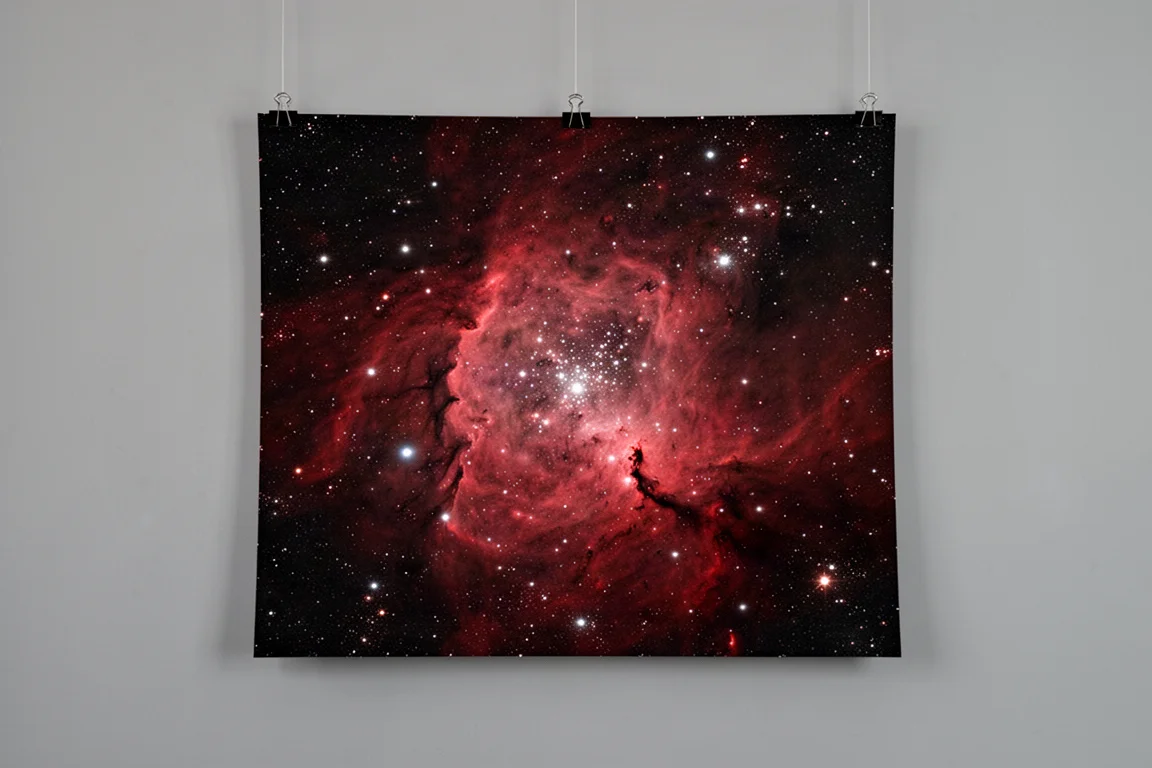
At first glance the final images from all three mounts were nearly identical, and zooming to 200 percent showed no meaningful differences in star roundness or size in the first test. In the second test the AM5 looked marginally best, but it was also shot first when sky conditions were best. The stars looked very similar across all three.
Overall Buying Advice
Any of these mounts can handle imaging setups within their limits, and an experienced imager will have no trouble with any of them. The only performance differences seen were that the AM5 guided slightly better than the HEM27 on paper, and the EQ6-R settled faster than either smaller mount. The real deciding factors are elsewhere: portability, control preferences, and accessories. If you want maximum performance per pound and already use an ASIAir or computer, the AM5 is a strong pick. If you want the lightest head and a full hand controller included, the HEM27 fits. If you value a proven workhorse with the easiest port access and everything in the box, the EQ6-R remains a great choice.
Conclusion
Harmonic drive mounts have genuinely changed the equation for astrophotographers. Both the ZWO AM5 and iOptron HEM27 tracked comparably to the much heavier Sky-Watcher EQ6-R in real imaging tests, meaning you can now get big-payload performance in a package you can carry with one hand. Match your choice to how you shoot: app-driven and portable for the AM5, lightest head with full handheld control for the HEM27, or the time-tested heavyweight for the EQ6-R.
Product link
View more details for ZWO AM5
This product is mentioned in the review. Check the specifications, options, and compatibility before buying.
View more details for ZWO AM5Further reading
Related Reviews
Astrophotography
ASKAR FRA400C Review: A Versatile 400mm Refractor for Astrophotography and More
The ASKAR FRA400C is a compact 72mm refractor that balances reach, versatility, and portability for astrophotographers and visual observers.
Astrophotography
Askar SQA106 Review: A Premium 106mm Astrograph With Exceptional Optics
The Askar SQA106 is a premium 106mm quintuplet astrograph with impressive sharpness across full-frame sensors, though its price and weight demand careful consideration.
Astrophotography
Astro Imaging Gear 2026: Eight New Products Worth Watching
A look at the most interesting new astrophotography and astronomy products announced this year, from fast telescopes to smart cameras and wireless accessories.