Backcountry Sleep Systems
Zenbivy Ultralight Sleep System Review: A Four-Piece Backcountry Bed
A close look at the Zenbivy Ultralight Sleep System, covering the pad, sheet, quilt, and pillow, who it suits, and what to weigh before buying.
Introduction
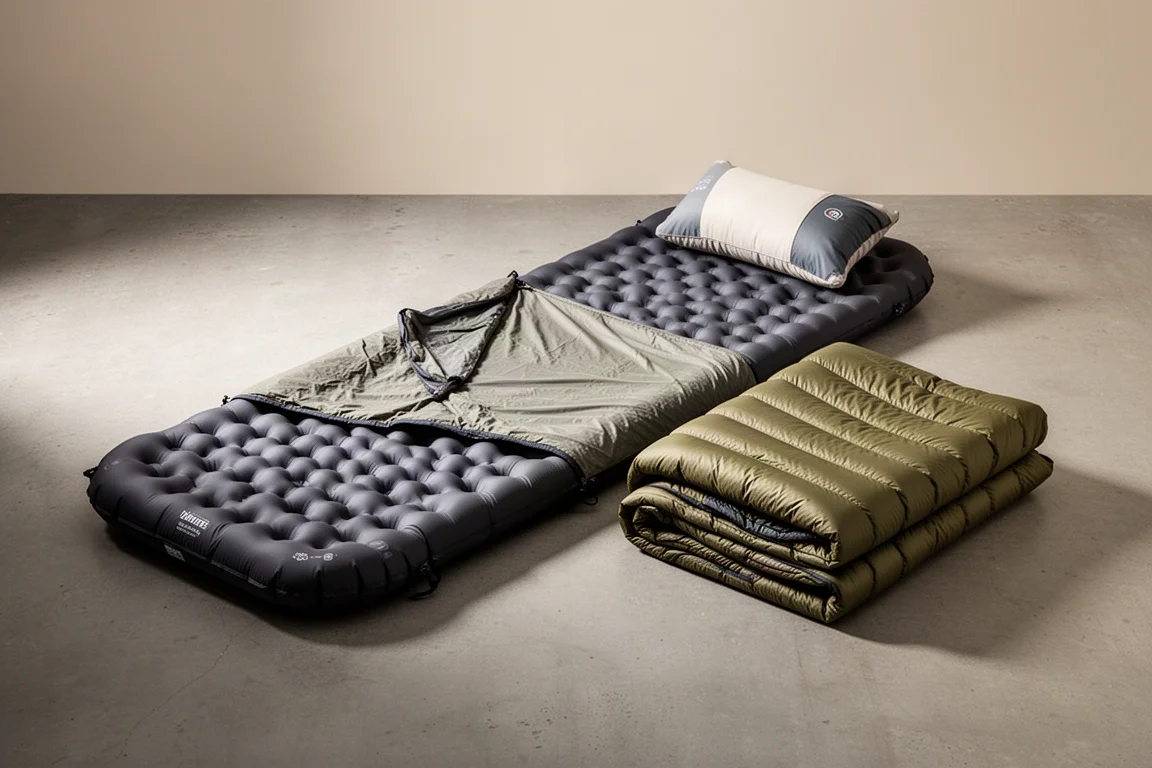
Sleep is the part of backpacking that gear can most easily ruin. A pack that carries well and a tent that pitches fast still cannot rescue a night spent sliding off a pad or fighting a quilt that keeps letting cold air in. The Zenbivy Ultralight Sleep System takes a different approach to that problem: instead of assembling a pad, a quilt, and a pillow from three different brands, it treats them as one piece of equipment with four connected parts.
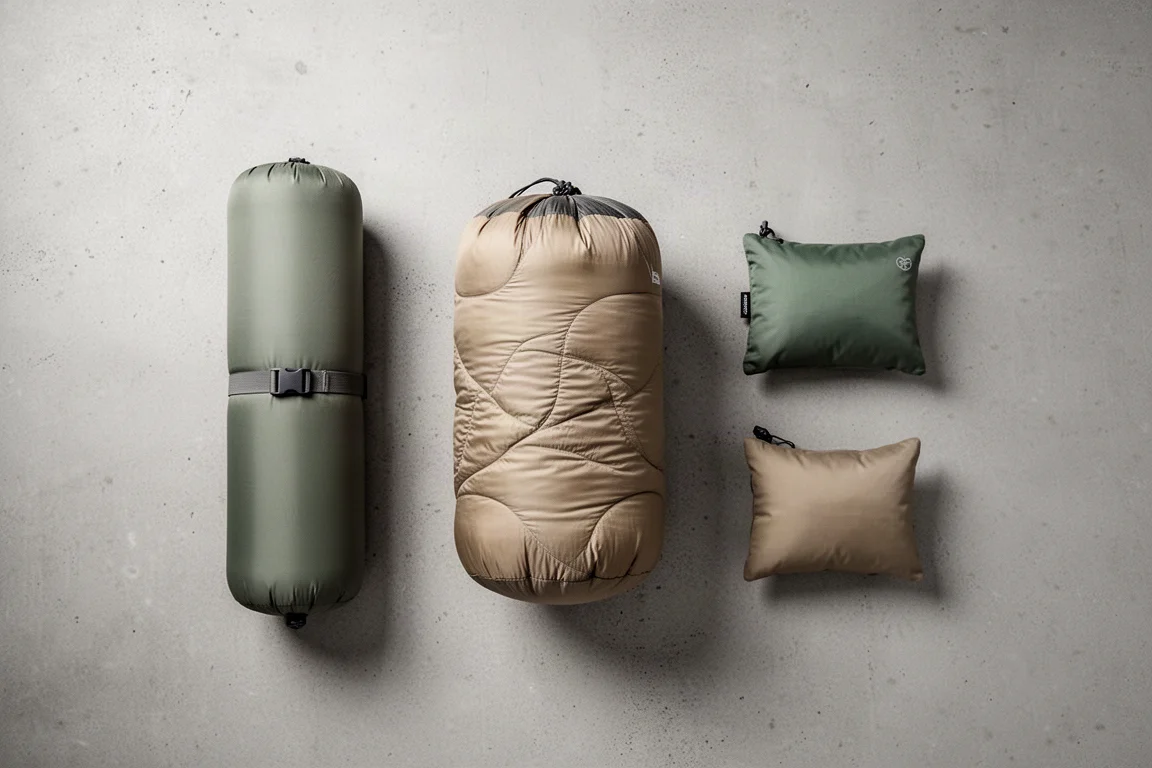
The system consists of an inflatable sleeping pad, a half-length sheet that sits over the top of the pad, a quilt that hooks onto that sheet, and a pillow that clips into the same sheet. Each part is designed around the others, and the result is a setup that behaves more like a sleeping bag for draft control while keeping much of the weight saving and freedom of movement of a quilt.
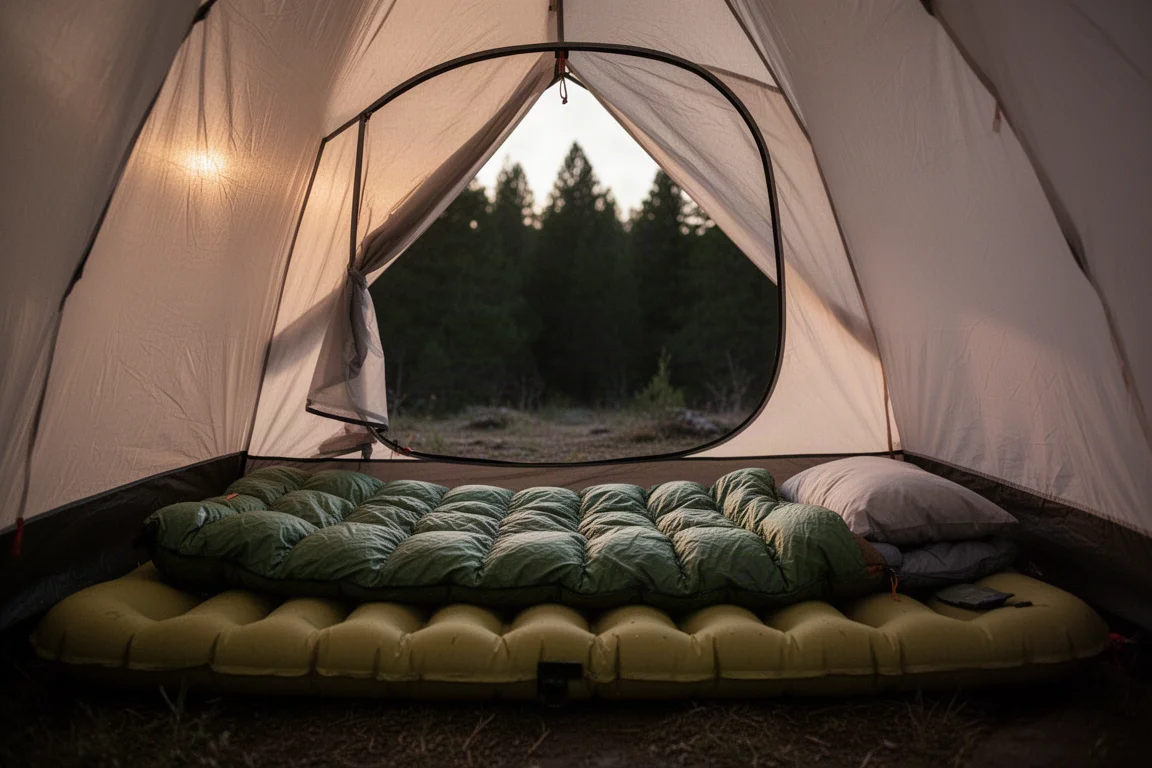
That combination is the core idea here. The pad supplies warmth and pressure relief, the sheet turns the pad into a stable platform, the quilt attaches to the sheet rather than to the pad itself, and the pillow locks into the sheet so it stays where you put it.
Who This Product Is For
This system makes the most sense for backpackers who have already accepted that sleep quality matters more than shaving the last few grams off a pack. It suits side sleepers in particular, because the pad uses a dimpled baffle pattern that spreads pressure rather than concentrating it, which helps keep a shoulder or arm from going numb overnight.
It also suits anyone who has struggled with quilt straps. Quilts save weight and let you move around, but pad straps can be fiddly, and plenty of people give up on them after one cold night. Here, the quilt clips to the sheet with colour-coded hooks, which is a far more forgiving process than threading straps under a pad in the dark.
Campers who mostly sleep in mild conditions may find the full system is more than they need. Those who routinely camp below about 20°F (-6°C) should read the notes on the neck closure further down before committing.
How the Four Components Fit Together
The four parts are worth looking at individually, because the strengths of the complete setup come directly from how each one is built and how it connects to the next.
The Sleeping Pad
The pad is the foundation, and it gets several details right. It uses a dimpled baffle pattern across the surface, measures roughly 3 to 3.5 inches thick, and comes in multiple sizes. The regular wide version measures 25 inches wide by 72 inches long, with narrower 20-inch versions and longer options also available for taller sleepers.
The two-way valve sits on top of the pad, with one flap for inflation and a second for deflation. Having the valve on top matters more than it sounds: you can press it to bleed a small amount of air and fine-tune firmness, or top the pad up if it softens as overnight temperatures drop.
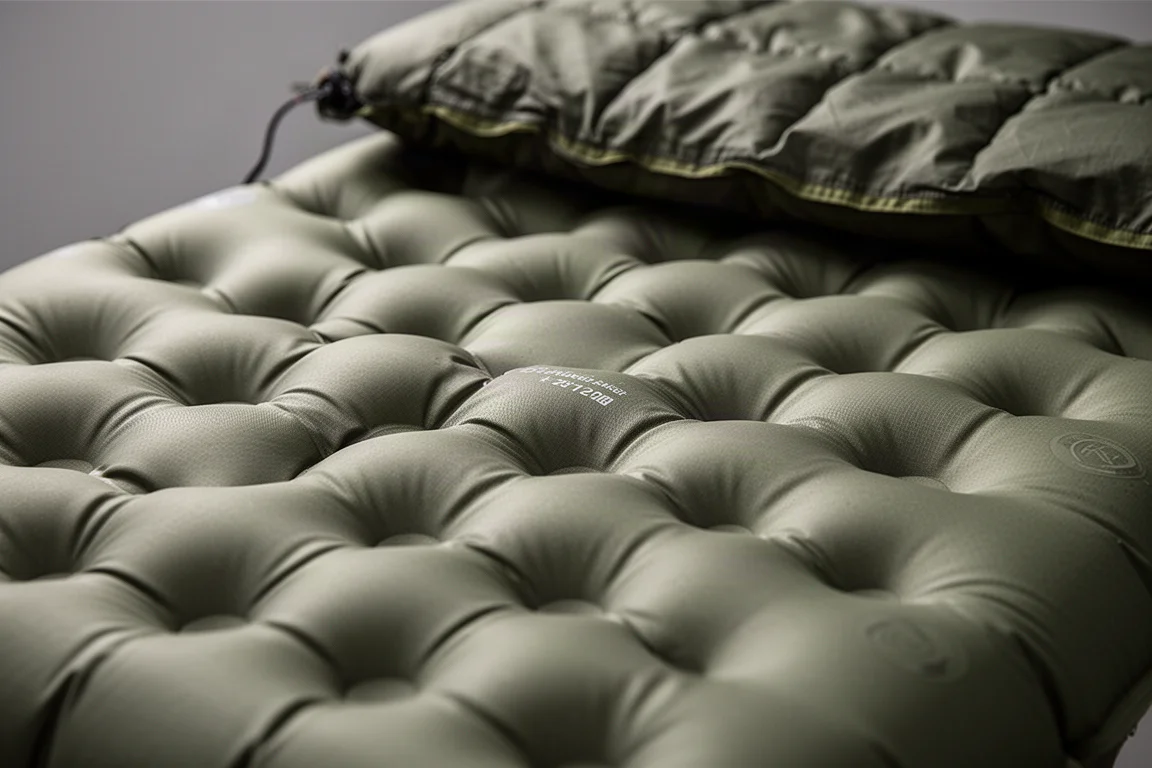
Warmth is rated at an R-value of 5, achieved with a reflective film suspended inside the pad that bounces heat back toward the sleeper instead of letting it drain into the ground. Reflective films have a mixed reputation in some pads because the film can settle at the bottom and stop doing anything useful. Held up to sunlight, the film in this pad stays suspended through the interior. The shell is 20 denier polyester, a reasonable balance of weight and toughness, though it is the component most likely to need care over time. The pad is not among the lightest on the market, but it offers a solid balance of weight against warmth and comfort.
The Sheet: The Connective Layer
The sheet is the part that holds everything together. It covers only the top half of the pad rather than running the full length, which is where much of the weight saving comes from. It weighs 81 grams, light for the amount of function it provides.
Along each side are flaps with four hooks, and those hooks are what the quilt attaches to. Every hook is colour-coded to match its corresponding loop on the quilt, which removes most of the guesswork from setup and teardown. The hook design is also easier to open and close than earlier versions, which matters in cold weather and for anyone with limited hand strength.
At the head end there is a hood that a pillow can be tucked into, available in insulated and uninsulated versions. The uninsulated hood adds little beyond a place to tuck the quilt edge, and leaving it behind saves a small amount of weight.
The Quilt: Ultralight Warmth
The quilt is where the biggest weight savings show up. The shell is 10 denier Pertex nylon, paired with 900 fill power down, which puts it among the lightest material combinations available for a quilt. The 25°F version weighs 539 grams, comparable to other quilts with a similar temperature rating.
Sizes include regular, regular wide, and large. Given that a 25-inch-wide pad is the comfortable choice for most sleepers, the regular wide or large versions are the ones worth considering for anyone prioritising comfort over the smallest possible packed size.
The quilt attaches to the sheet’s hooks through small loops, again colour-coded, which locks it to the pad and largely eliminates the drafts that creep in around the edges of a loosely strapped quilt. The design wraps the quilt around the sleeper rather than simply laying it on top, which is a meaningful difference on a cold night.
At the head end there is a draft tube and a neck cinch to seal the gap around the shoulders. The one thing missing is a snap that joins the two bottom corners together for a complete seal at the neck; instead, the corners tuck into the hood and the cinch is tightened. That works well enough down to freezing, but without a full snap the system is a less confident choice below roughly 20°F (-6°C).
The foot box uses an overlapping closure that traps heat effectively, and it can run warm for sleepers with warm feet. A hook-and-loop tab partway up allows the bottom to be opened, adding space and ventilation around the feet.
The Pillow: Two Layers of Comfort
The pillow is a small system in its own right, made of three parts. The outer cover is a basic pillowcase with two hooks that clip into the sheet. Inside, a lightweight TPU air bladder provides the base structure at 57 grams, and a down topper at 174 grams sits on top of it to add loft and cushioning. The cover itself weighs 37 grams.
The air bladder alone is thin, and side sleepers will likely find it insufficient on its own, though back sleepers could get away with it. Combined with the down topper, the stack gains enough height to support a side sleeper properly. The topper is the heaviest single piece in the system and can run warm around the head, which is worth knowing if you sleep hot.
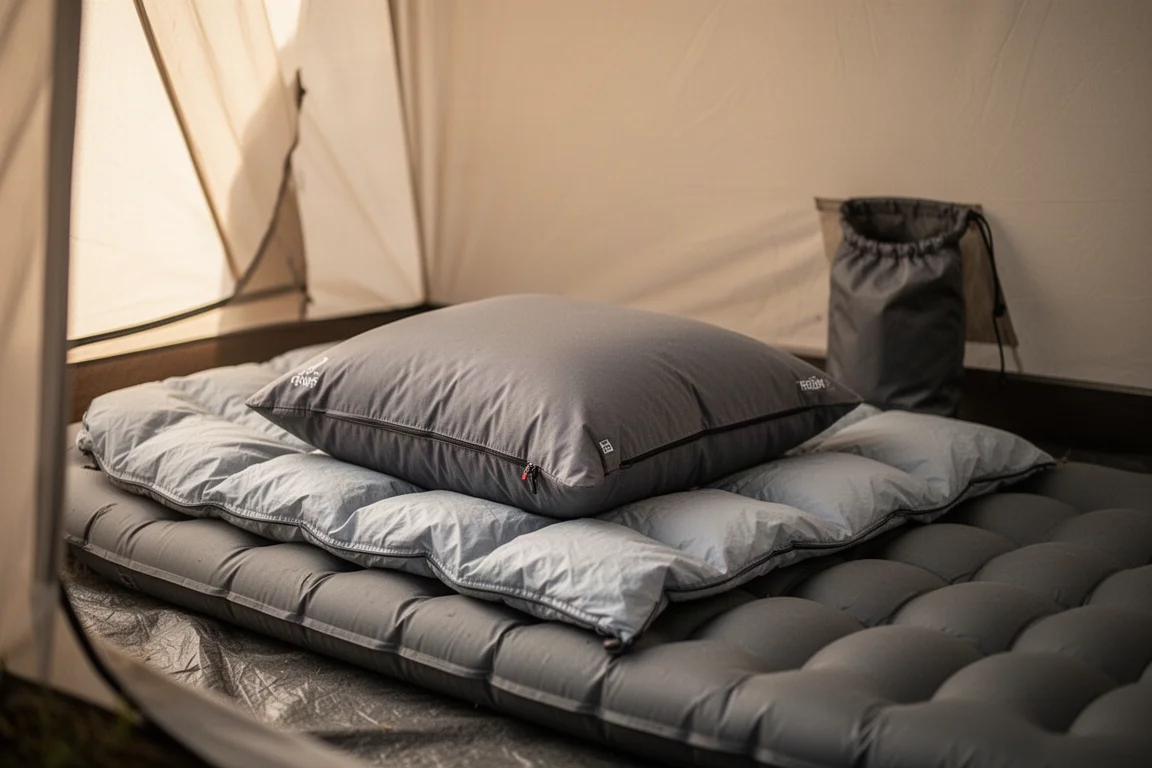
The two hooks on the pillowcase are what make the design work. They clip into the sheet and hold the pillow in place so it does not slide sideways or creep down during the night. That stability is normally achieved with straps running under a pad, so getting the same result from two small hooks is a neat piece of design. It also explains why the uninsulated hood is optional: the pillow does not need the hood to stay put.
Main Strengths of the Complete System
The strongest argument for this system is integration. Most backpackers build a sleep setup from parts that were never designed to meet, and the compromises show up as drafts, a pillow that migrates, or a quilt that comes unhooked in the middle of the night. Here, the sheet, quilt, and pillow all reference each other, and the connections are colour-coded and quick to use.
The second strength is that it delivers the benefits of both a sleeping bag and a quilt. You get the draft control and enclosed feeling of a bag, with the weight savings and freedom to roll over that a quilt provides. The quilt wraps around the sleeper rather than sitting flat on top, which is where much of that draft resistance comes from.
Third, the system is flexible. It works with essentially any sleeping pad, so the pad can be swapped out without losing the sheet, quilt, and pillow arrangement.
Things to Consider Before Buying
Warmth limits are the main thing to weigh. The quilt performs well down to freezing, but the absence of a full neck snap makes it a less certain choice below about 20°F (-6°C). If your trips regularly involve those temperatures, plan around that limitation.
Durability of the pad is unproven over the long term. The 20 denier polyester shell and the weld points in the dimpled baffle pattern are the areas to watch, since similar construction has been known to develop leaks around weld points after a few years of regular use. Treating the pad carefully and storing it loosely will help.
Weight is the other trade-off. The pad is not the lightest available, and the pillow’s down topper is the heaviest single component. Anyone counting grams for a fast and light trip will notice both. The uninsulated hood is easy to leave at home, but the rest of the system is best treated as a comfort-first setup rather than a minimal one.
Finally, the pillow runs warm for some sleepers, and the quilt’s foot box does too. Both can be managed, but they are worth knowing about before you commit.
Buying Advice
Buy this system if you have decided that sleep is the part of your kit worth investing in. It rewards that decision with a setup that goes together quickly, stays together through the night, and behaves predictably when the temperature drops to freezing.
Choose the regular wide or large quilt if you are pairing it with a 25-inch pad, since the extra coverage under the quilt is where much of the comfort comes from. Skip the uninsulated hood unless you specifically want a place to tuck the quilt edge, and consider the insulated version if you sleep cold around the head. If you already own a pad you like, keep it: the sheet, quilt, and pillow work with essentially any pad, so there is no need to replace everything at once.
If your trips are mostly summer overnights in mild conditions, a simpler and lighter quilt and pad combination will likely serve you well for less. This system earns its place on colder trips, longer trips, and anywhere a bad night’s sleep carries a real cost the next day.
Conclusion
The Zenbivy Ultralight Sleep System is a rare case of a sleep setup designed as one product rather than four. The pad’s R-value of 5 and dimpled baffling handle warmth and pressure, the half-length sheet turns the pad into a stable platform with colour-coded attachment points, the 10 denier Pertex and 900 fill power quilt keeps weight down while wrapping around the sleeper, and the pillow’s air bladder and down topper lock into place with two hooks.
The trade-offs are clear and manageable: no full neck snap below about 20°F, a pad whose long-term durability is still unproven, and a weight penalty against the very lightest options. For backpackers who want quilt-level weight with sleeping-bag-level draft control, this is a coherent and well-considered answer.
Product link
View more details for Zenbivy Ultralight Sleep System
This product is mentioned in the review. Check the specifications, options, and compatibility before buying.
View more details for Zenbivy Ultralight Sleep SystemFurther reading
Related Reviews

Backpacking Gear
Building a 10 lb Base Weight: An Ultralight Backpacking Gear List
A practical walkthrough of the ultralight pieces behind a 10 lb base weight, from a 765 g pack and a roomy one-person tent to a full camp chair and a dependable water filter.

Road Bikes
10 New Road Bikes Worth Watching: Aero, Titanium, Steel and Endurance Standouts
A practical roundup of 10 new road bikes, from aero flagships chasing single-watt gains to titanium, steel and endurance platforms built for real roads.
Bikepacking Gear
11 Bikepacking Essentials for Long-Distance Cycling
Eleven bikepacking essentials for long-distance cycling, from a steel gravel frame and a two-person tent to helmet lights, packable gloves, and a frame bag that puts weight in the right place.