Backpacking Sleep Systems
Zenbivy Sleep System Review: Light Bed and Core Quilt Compared
A practical look at the Zenbivy Light Bed and Core Quilt, covering temperature ratings, mattress R-value, packed weight, and which setup fits your trips.
Introduction
Zenbivy builds backpacking sleep systems around a simple idea: a quilt that stays attached to your mattress, so you get the comfort of a cover at home instead of the confinement of a mummy bag. The brand’s designer has spent decades in the outdoor industry, beginning at MSR in 1994, and the sleep system is the result of that experience pointed at one problem, sleeping well in the backcountry.
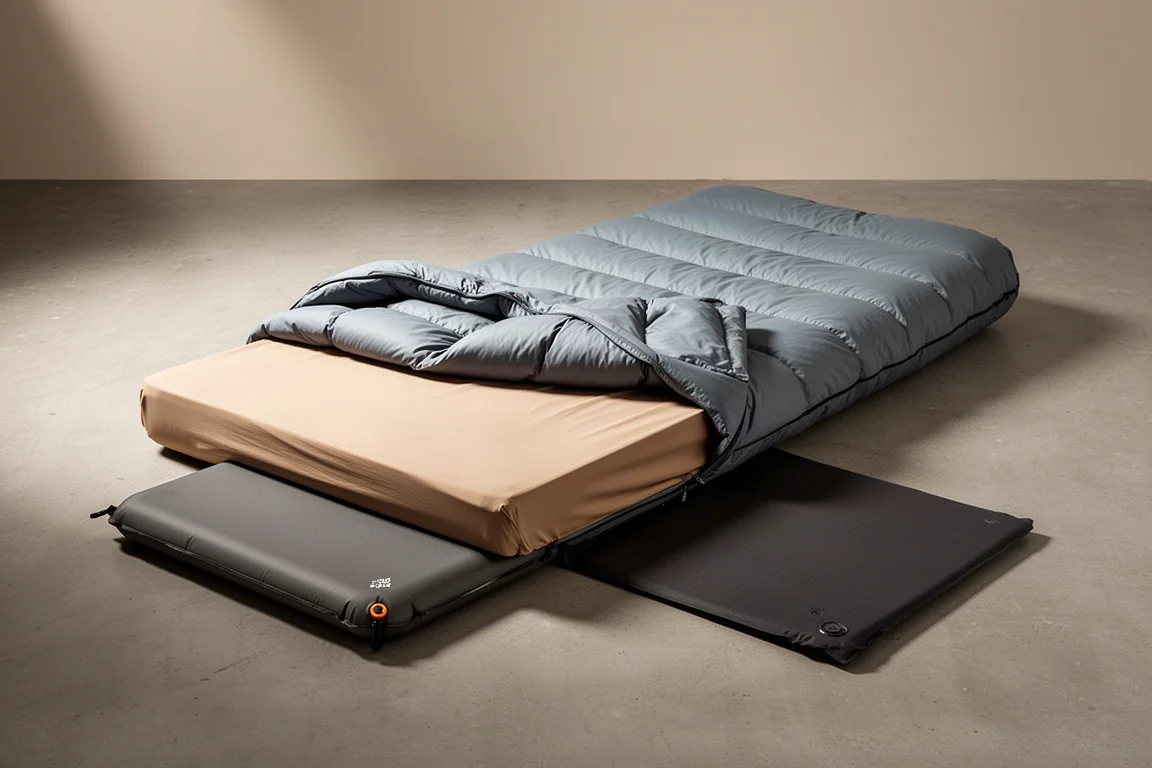
Two pieces anchor the range. The Light Bed is the complete system, pairing a Light Quilt with a sheet and an insulated mattress. The Core Quilt is the softer, lower-cost quilt option that keeps the same attachment design. This guide covers what each one does, how they differ, and which one makes more sense for your trips.
What Makes the Zenbivy Sleep System Different
A backpacking quilt has two advantages over a mummy bag: it is generally lighter, and it lets you sleep in your normal position. The drawback is that quilts slide off the mattress, create drafts at the shoulders, and leave your head and neck exposed when temperatures drop.
Zenbivy’s answer is an attachment system. Small cord loops and clips on the quilt mate with the sheet and mattress, so the quilt stays where you put it through the night. The quilt itself is semi-rectangular rather than hourglass-shaped, and the natural folding of the fabric forms a baffle that closes the gap at the foot end, a common weak point on convertible quilts. The quilt carries several patented design differences, and it is sold separately, so it can be used as a standalone quilt on any mattress when you leave the sheet at home.
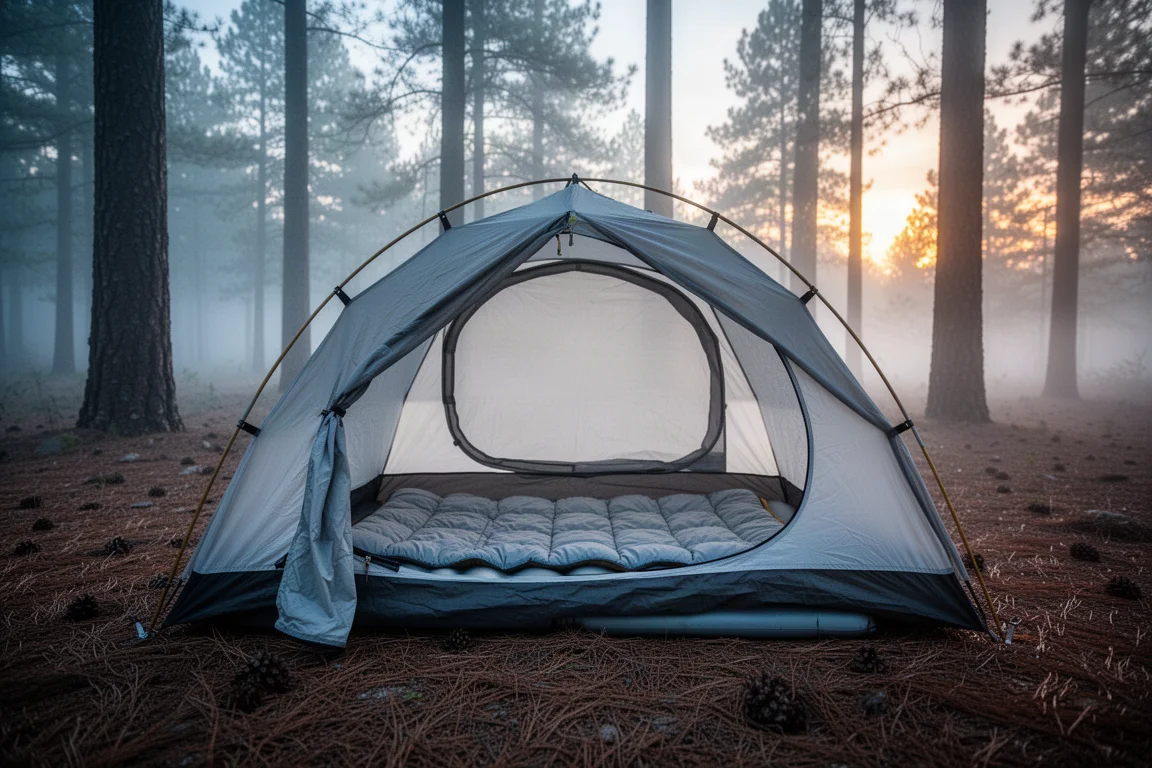
That attachment detail is what separates the system from a standard quilt. Without it, you are adjusting a cover in the dark. With it, the quilt behaves more like the bedding you sleep under at home.
Zenbivy Light Bed: The Complete Sleep System
The Light Bed bundle is the full setup: a Light Quilt, a Light Sheet, and an insulated mattress, with everything needed to go from a backpack to a made bed in a tent.
The most popular configuration uses 800 fill power down with 20D taffeta fabrics. That fabric choice is deliberate. Zenbivy selects shell materials for how soft they feel against the skin rather than for a ripstop grid, and the brand has held off on an ultra-light version because the lighter fabrics it has tested have not met that standard.
Weight is reasonable for a complete system. In a 25 x 77 size, with the quilt, sheet, mattress, inflation dry sack, and packing sacks counted together, the setup comes in at exactly four pounds. That is a full R5 mattress and a down quilt in one package, and the price for that configuration is $664.
Quilts in the range come in convertible versions that open fully flat and in versions with a closed foot box, which is lighter and simpler if you never need a flat quilt.
Zenbivy Core Quilt: Softer Fabric, Lower Cost
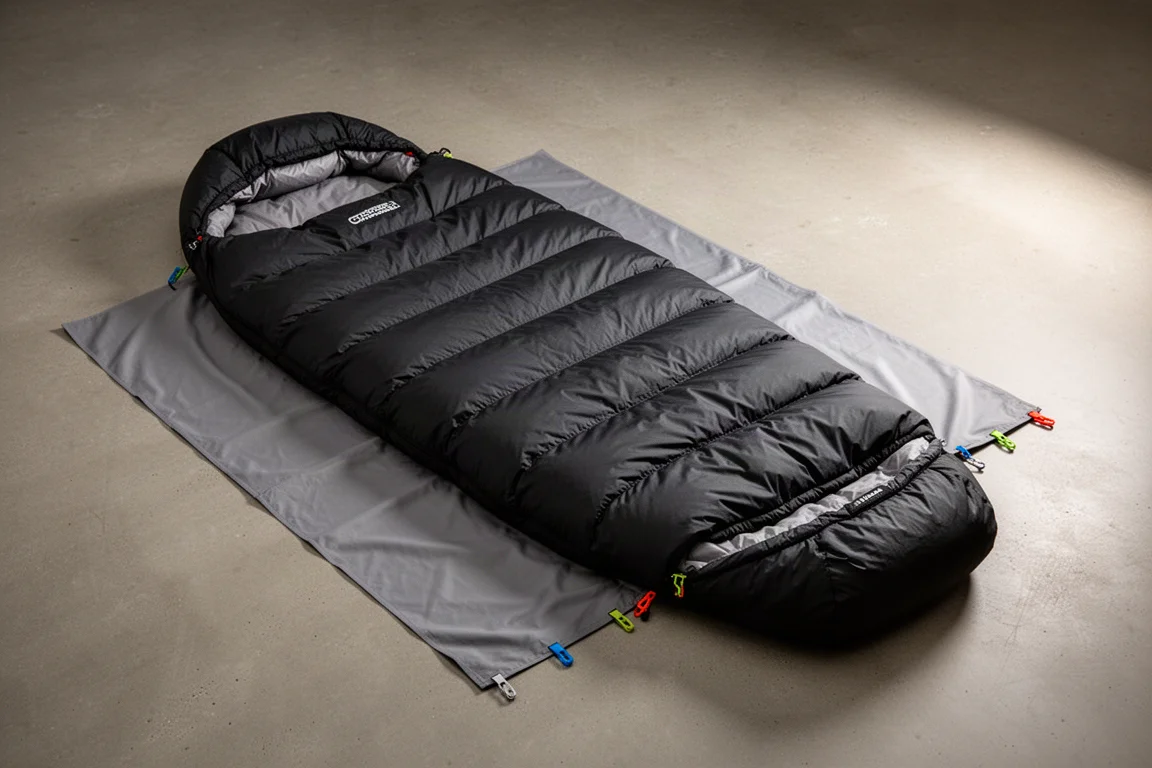
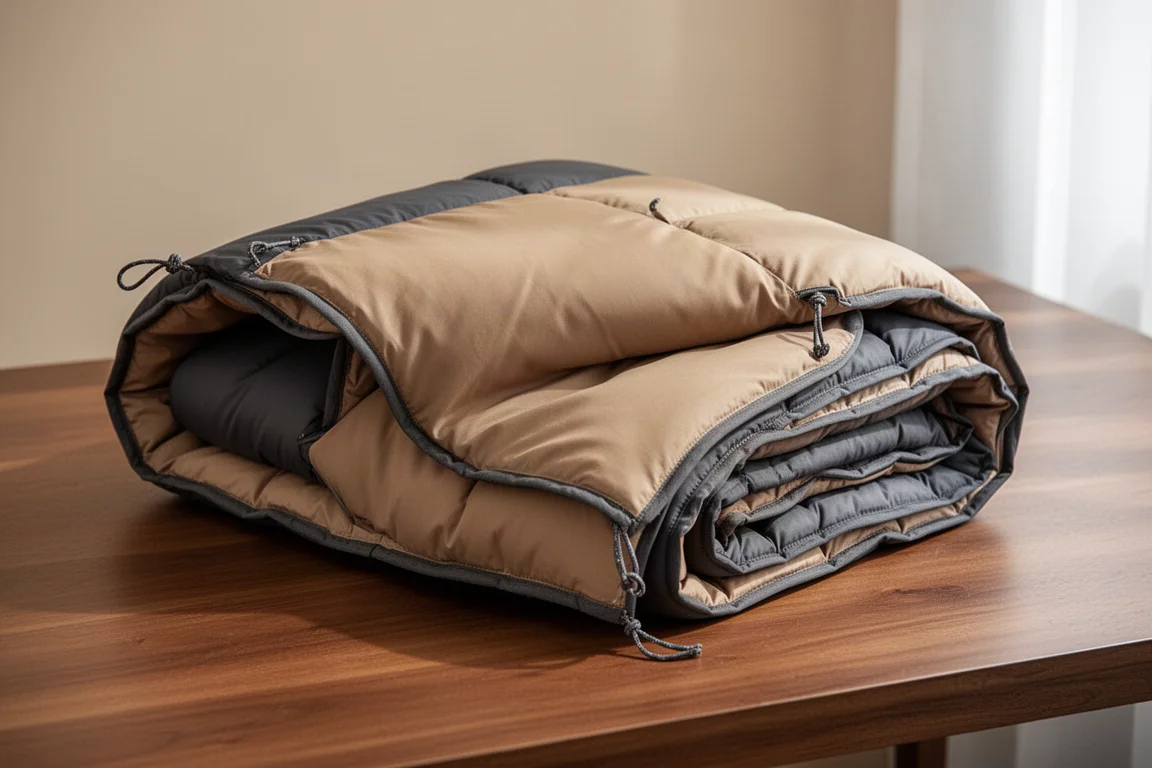
The Core Quilt uses 650 fill power down and a 50D liner on the inside of the sheet, along with a slightly heavier 30D shell. The trade-off is a few extra ounces, and the benefit is a noticeably softer surface. It is comfortable enough to sleep in with socks off, which is not something every quilt manages.
The price difference is the other half of the story. The Core Quilt runs roughly $100 less than the comparable Light Quilt for a penalty of about three to four ounces. If you are new to the system, or you simply value comfort over the last few grams, that is an easy recommendation.
Temperature Ratings and Mattress R-Value
The published quilt ratings are limit ratings, and comfort sits roughly 10 degrees higher. In practice, a 25 degree bed is designed to take most people down to freezing, especially when a down jacket is worn inside it. The 10 degree version is the choice for genuinely cold sleepers and for trips that push deeper into three-season conditions.
Mattress insulation deserves more attention than it usually gets. Sleeping bag ratings are established with a mattress around R5, while many three-season pads sold today sit between R3 and R4. Matching a 15 degree bag to an R3 pad is a common reason people feel cold and then blame the bag. Zenbivy builds every mattress in its range to R5, with some measuring above that and some sizes rounding to six. The insulation inside is a batted synthetic layer, so there is no down to compress underneath you.
Clips, Zippers, and Nighttime Practicality
The earlier version of the bed used zippers on both sides plus a foot box zipper. Zippers are convenient, but they are heavy, and when the quilt is used alone you end up carrying what amounts to half a zipper down the front of it. The current design replaces them with clips and cord loops.
The honest trade-off is that clips are less intuitive than a zipper, particularly in the dark. There are ways around that. Many users attach the clips on one side only and slide in from the other, which is enough for most nights and most sleep positions. In genuinely cold weather, attaching both sides adds security and the extra effort feels worthwhile.
Packed Weight and Cost of the Full Setup
Mattresses come in 20 inch, 25 inch, and 30 inch widths. The 30 inch option is unusual in a lightweight pad, and it is a meaningful difference for anyone who moves around at night. A 25 x 77 mattress weighs 25 ounces, or 1 pound 9 ounces, which is competitive for a full R5 pad. At launch, the brand positioned its lightweight mattress among the lightest full R5 options available.
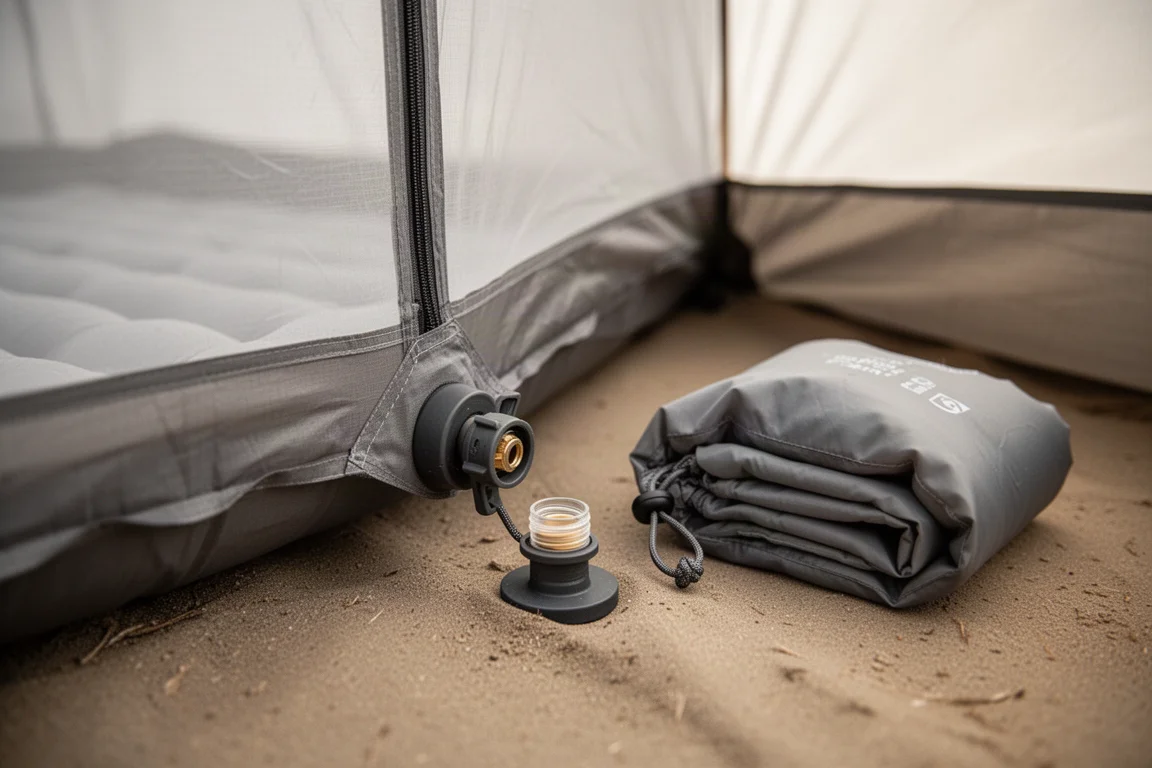
The inflation system is one of the more practical details. The plug contains the valve, so the valve can be replaced rather than the whole pad, and deflating is a simple matter of opening the plug. An inflation dry sack is included.
Adding it up: the complete Light Bed in the large size, quilt, sheet, and mattress, runs $664 and weighs four pounds packed. Comparable performance from a separate bag and pad usually costs less up front, but you give up the integrated attachment and the guaranteed R5 underneath you.
Who Each Setup Suits
The Light Bed makes sense if you want one purchase that covers quilt, sheet, and mattress, and you would rather not work out R-value matching yourself. The Core Quilt makes sense if you want the softer liner and a lower entry price, and you are willing to add three or four ounces while pairing it with a sheet and pad separately.
Both are aimed at the same core user: someone whose sleep position does not work in a mummy bag, and who has cut trips short because they could not sleep. The brand’s own framing is direct. If you sleep on your side or you move around at night, the semi-rectangular quilt and the attachment system are the features that matter.
Overall Buying Advice
Start with the mattress decision, because it drives everything else. A full R5 pad is what the temperature ratings assume, and it is the single biggest factor in whether you sleep warm. If you already carry a down jacket on cold trips, consider a sheet with an uninsulated hood. You can tuck the quilt into it and wear the jacket, which saves weight and money without giving up much warmth.
On quilt temperature, most three-season backpackers are well served by the 25 degree option. Choose the 10 degree version if you know from experience that you sleep cold. On materials, the 800 fill power and 20D Light Quilt is the lighter choice, while the 650 fill power Core Quilt is the more comfortable one for a modest weight penalty and about $100 less.
Conclusion
The Zenbivy system solves a real problem with quilts, which is that they move when you do. The attachment design keeps the quilt in place, the semi-rectangular shape closes the usual gaps, and every mattress in the range is built to the R5 standard that sleeping bag ratings assume. Choose the Light Bed if you want the complete, integrated setup at four pounds, or the Core Quilt if you want the softer liner and a lower price. Either way, you are buying the version of a quilt that behaves more like the bedding you sleep under at home.
Further reading
Related Reviews
Backpacking Sleep Systems
Extreme Cold Sleep System: Six Backpacking Layers for Deep Winter Warmth
A bottom-up look at a six-piece winter sleep system, from a foam ground mat to a floorless shelter, and the reason each layer earns its place.
Backpacking Sleep Systems
Luxury Backpacking Sleep System: Four Pieces That Feel Like a Bed at Home
A wide, thick sleeping pad, a draft-free quilt, a generously cushioned pillow, and a few small habits that bring backcountry sleep much closer to home.
Backpacking Sleep Systems
Quilts vs Sleeping Bags for Backpacking: Five Sleep Systems Compared
A practical look at five backpacking sleep systems, from wide quilts to adjustable sleeping bags and a ground-focused quilt bed, and how to choose between them.