Backpacking Sleep Systems
Extreme Cold Sleep System: Six Backpacking Layers for Deep Winter Warmth
A bottom-up look at a six-piece winter sleep system, from a foam ground mat to a floorless shelter, and the reason each layer earns its place.
Introduction
Staying warm through a deep winter night is less about fighting the cold and more about slowing heat loss. You do not really feel cold, you feel heat leaving your body into the ground and the air around you. Every layer in a winter sleep system exists to interrupt one of those pathways.
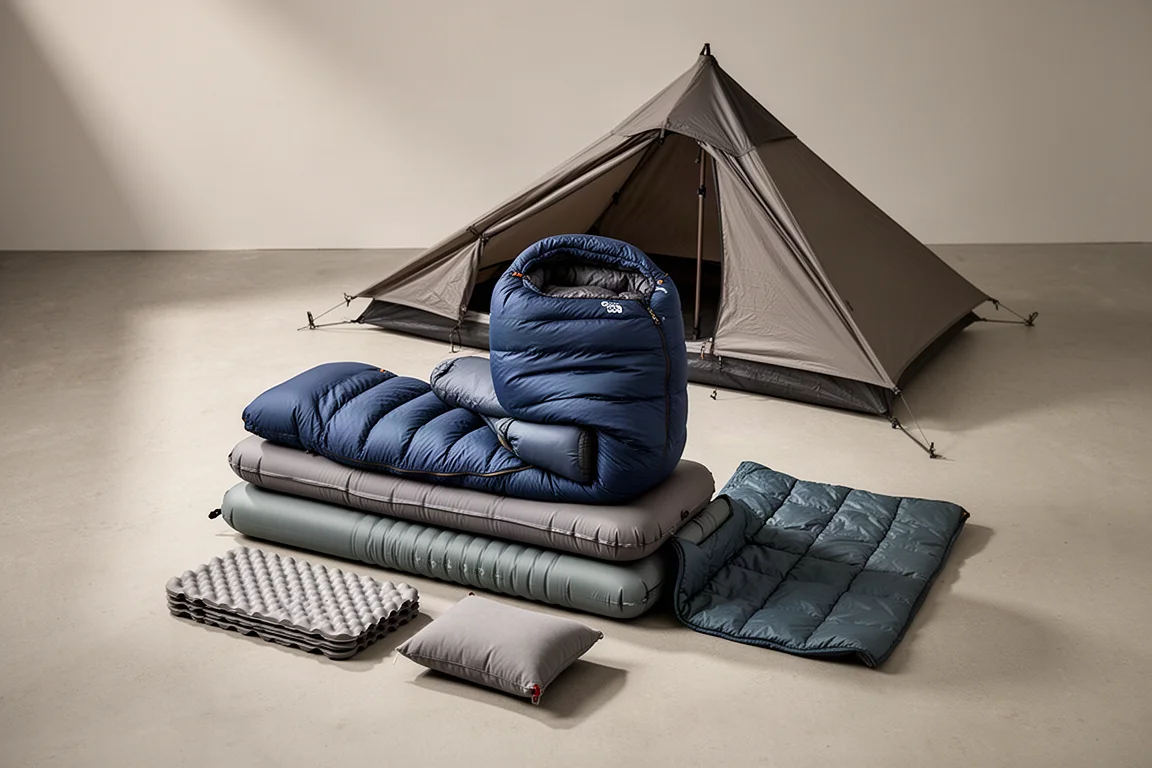
The setup below is built from the ground up and relies only on body heat. No fires, no heated tents, no hand warmers, no heaters. It is designed for the kind of cold that reaches minus 40 to minus 50, and every piece has a specific job: adding insulation, blocking radiative loss, limiting convective loss, managing moisture, or keeping you centred on your pad.
Here is how the six pieces fit together and what each one contributes.
How This Extreme Cold Sleep System Works
R-value is the number used to compare sleeping pads. In testing, a pad is sandwiched between a hot plate and a cold plate, and the energy required to keep the hot plate warm is measured. The higher the number, the more resistance the pad offers to heat moving away from you.
That framing matters because insulation does not create warmth. It slows the transfer of heat you already produce. Stacking layers is simply stacking resistance, which is why the foam mat and the insulated air pad in this system are treated as one combined figure rather than two unrelated purchases.
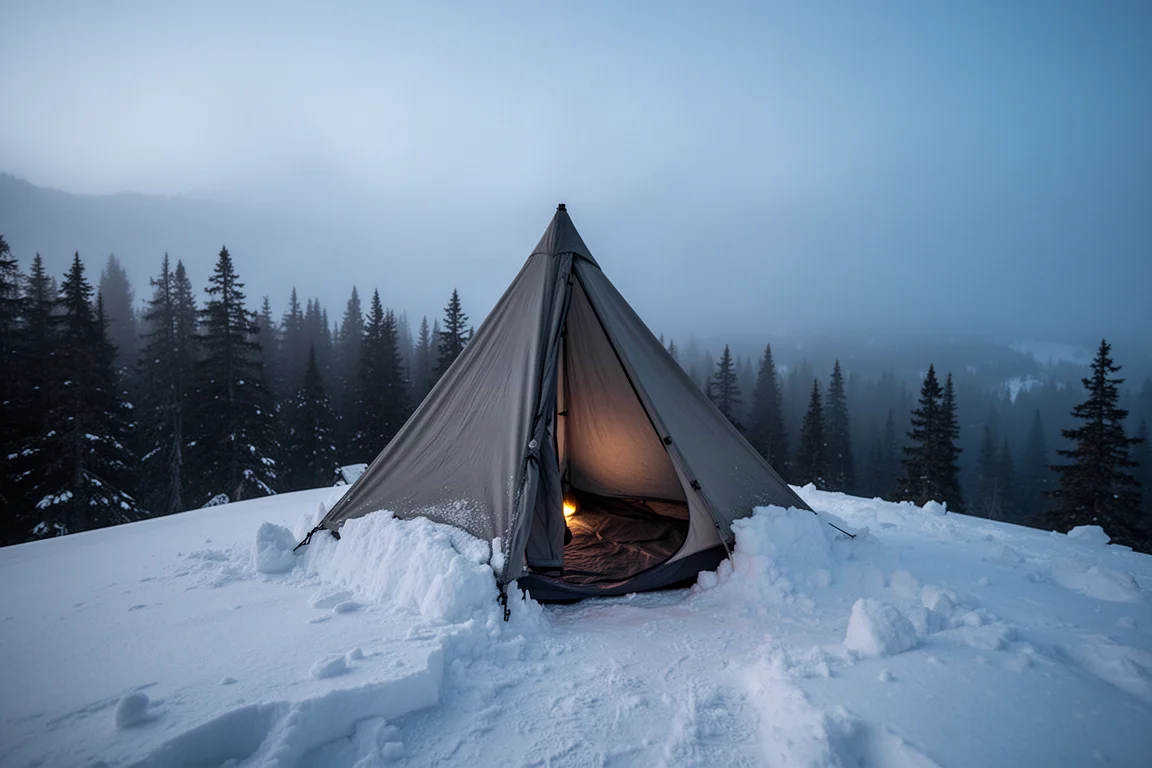
Two other mechanisms matter in real conditions. Radiative heat loss is heat travelling away from your body as infrared energy, and it can be reduced with reflective films suspended inside a pad. Convective heat loss is warm air moving through the open spaces inside a pad or a bag, cooling as it travels and forcing your body to reheat that space. Breaking those spaces into smaller cells limits how far air can move, and that distinction becomes very clear once you are sleeping on snow.
Ground Layer: Nemo Switchback
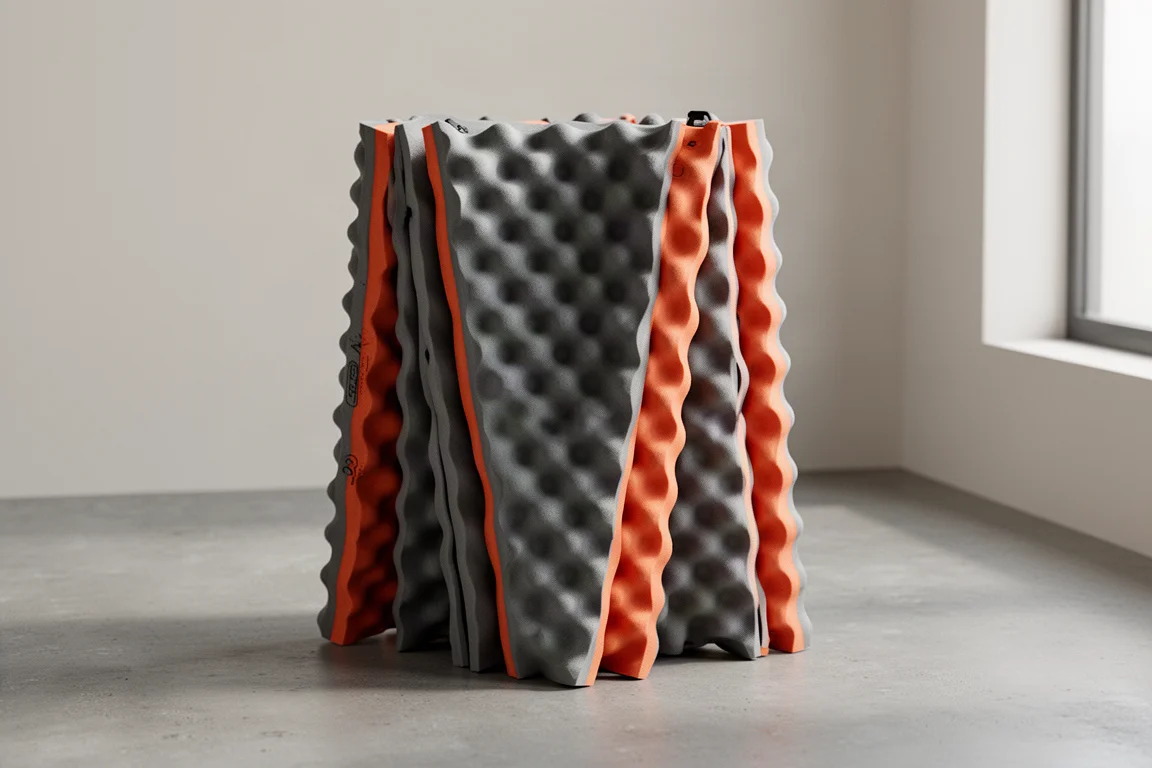
The first layer sits directly on the snow. The Switchback is a closed-cell foam mat with an R-value of two, and it does three things at once.
It adds insulation to the whole system. It doubles as a sitting pad around camp, whether you carry a chair or build a snow seat, so your back and legs are not drawing heat straight out of the ground. And because foam grips snow and ice more predictably than an inflatable pad, it stops the stack above it from sliding around overnight. That last point matters most with floorless shelters, where there is no bathtub floor holding everything in place.
Foam is also indifferent to moisture, which is why it pairs so well with the condensation and frost that builds up inside a floorless shelter.
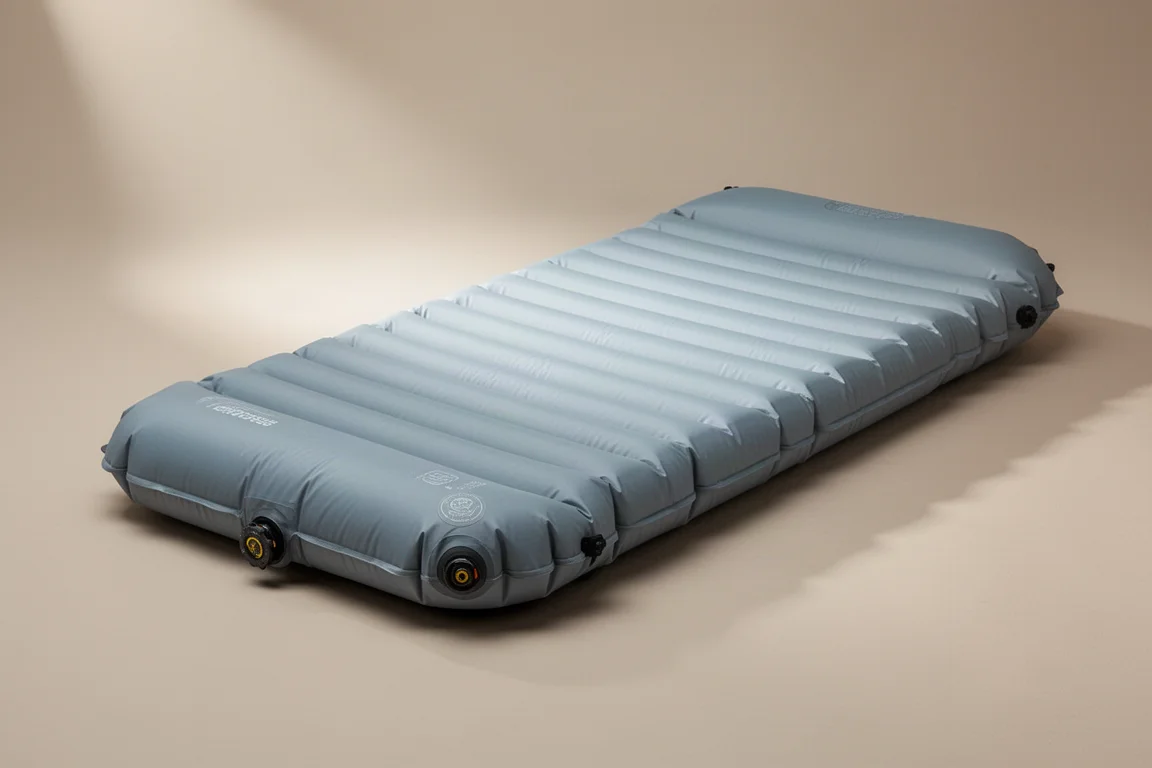
Core Insulation: Therm-a-Rest NeoAir XTherm NXT
On top of the foam sits an insulated air pad with an R-value of 7.3. Combined with the mat below it, the stack reaches an R-value of 9.3. The regular size weighs 440 grams, and choosing a shorter, narrower pad is deliberate: less surface area in contact with cold air means less heat drawn away from you.
Two construction details do the heavy lifting. ThermaCapture technology suspends reflective film through the pad to cut radiative heat loss, bouncing your own heat back toward you. Triangular Core Matrix divides the interior into triangular cells to limit convective heat loss, so warm air cannot travel to colder regions of the pad and cool off there.
In real winter conditions that convective control is easy to underestimate, because it is difficult to capture in standardised pad testing. Reflective film paired with a low weight is one of the most effective ways to get warmth without bulk, which is why this pad sits at the centre of the system.
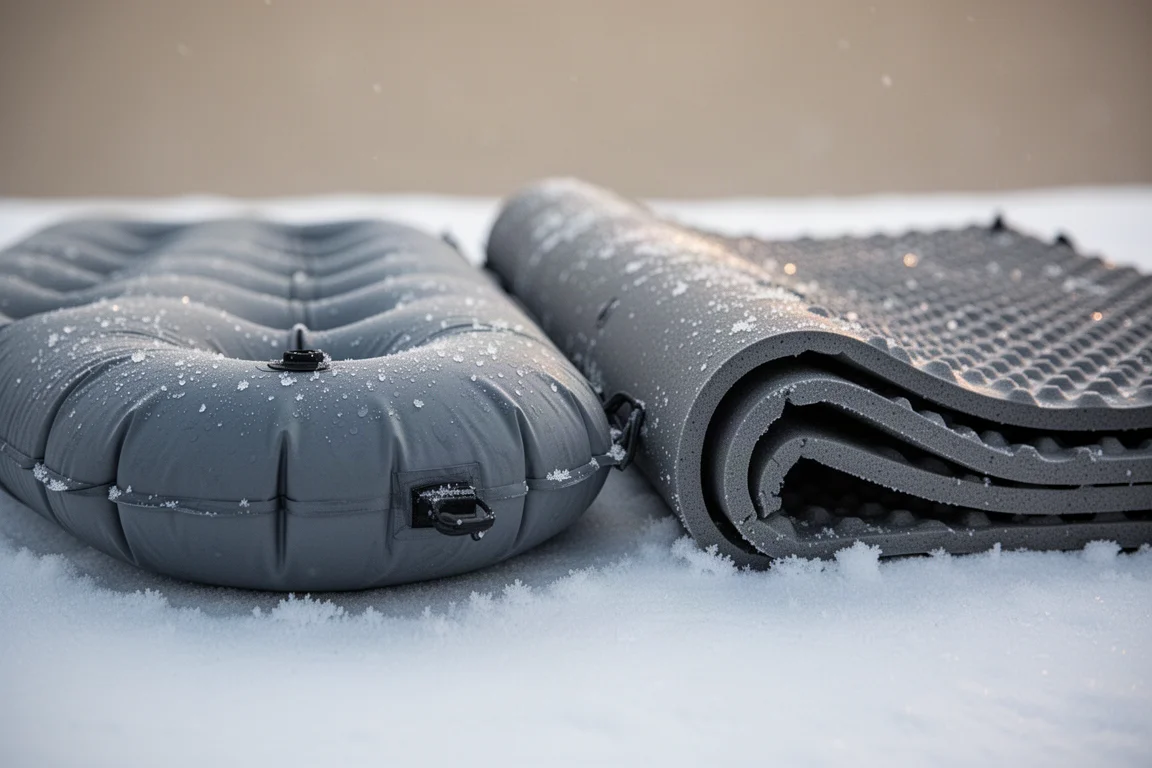
With both layers in place, the ground stops being the dominant source of heat loss and the rest of the system can do its work.
Head and Pillow: Exped Mega Pillow
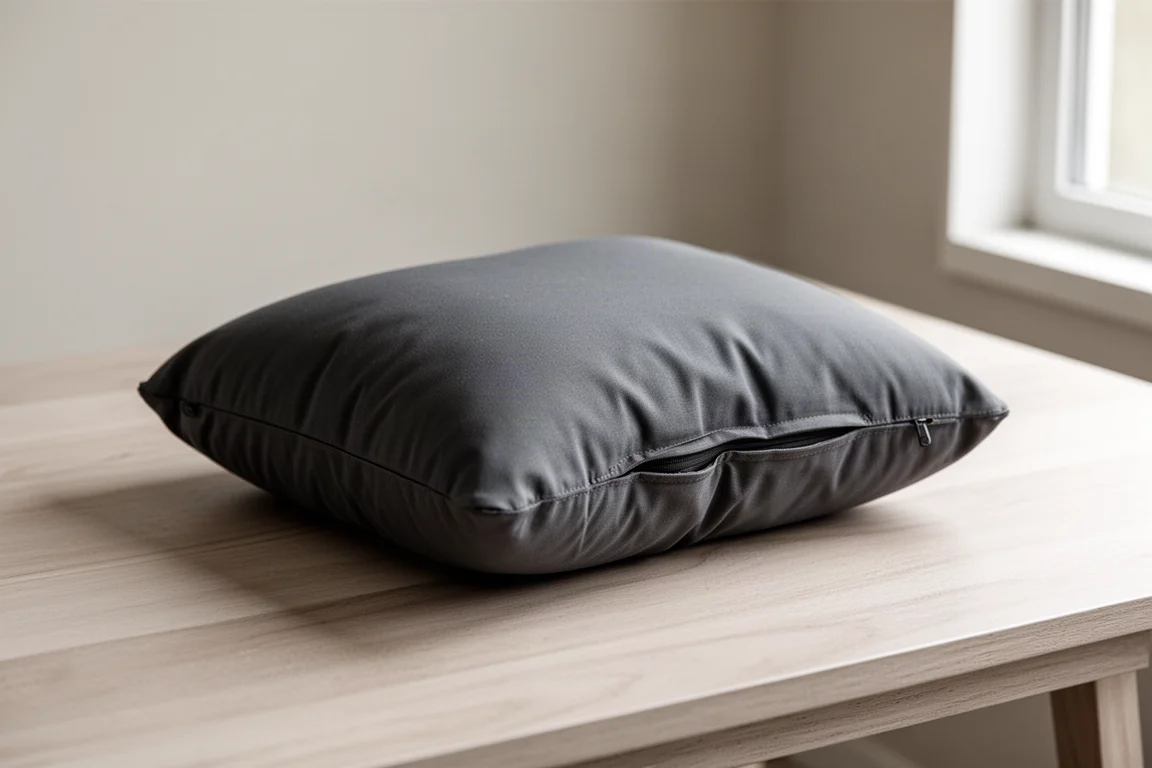
A pillow sounds like a comfort item until you realise how much heat a cold head loses overnight. The Mega Pillow handles that in three ways.
Small loops on the sides accept a pad strap, so the pillow locks onto the sleeping pad instead of wandering around the shelter. The wide surface means you keep your head on it as you turn during the night. And there is a layer of insulation in the top, which matters because an uninsulated air pillow becomes a heat sink for your head.
A warmer alternative exists, but it is narrower and shorter, and the wider shape here is the reason this one is in the system.
Sleeping Bag: Therm-a-Rest Polar Ranger
The sleeping bag carries the bulk of the insulation: 970 grams of 800 fill power down. The regular size comes in just under 1,500 grams, which is light for a bag with this feature set and this level of warmth.
The most distinctive detail is the snorkel at the hood. It is a synthetic rim that creates a pocket of warm air around your face, and because it is synthetic, it also manages the moisture in your breath so it does not soak into the down around your head.
Down the length of the bag, the centre zipper is built not to snag. That sounds minor until you imagine dumping down out of your bag or repairing it in the middle of a very cold night. Twin side zippers serve double duty as vents when the bag is too warm and as arm holes when it is not, letting you cook or sort gear while keeping most of your body inside the bag.
Draft tubes run around the arm holes, the centre zip, and the neck. They block cold air at the openings, and they also fill dead space inside the bag. Less air inside means less air for your body to heat, which makes the whole system more efficient.
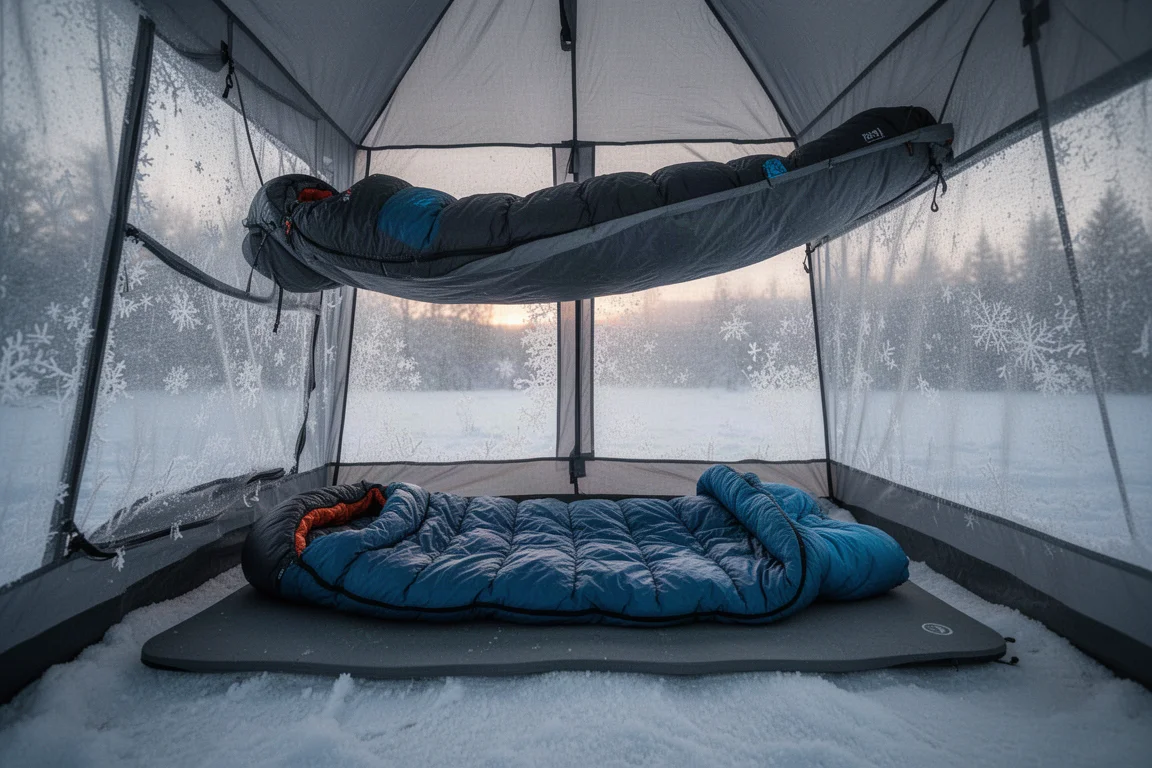
Taken together, the snorkel, the draft tubes, and the close-fitting interior are what separate this bag from a warmer-rated bag with a looser cut.
Moisture Management: Enlightened Equipment Revelation Apex
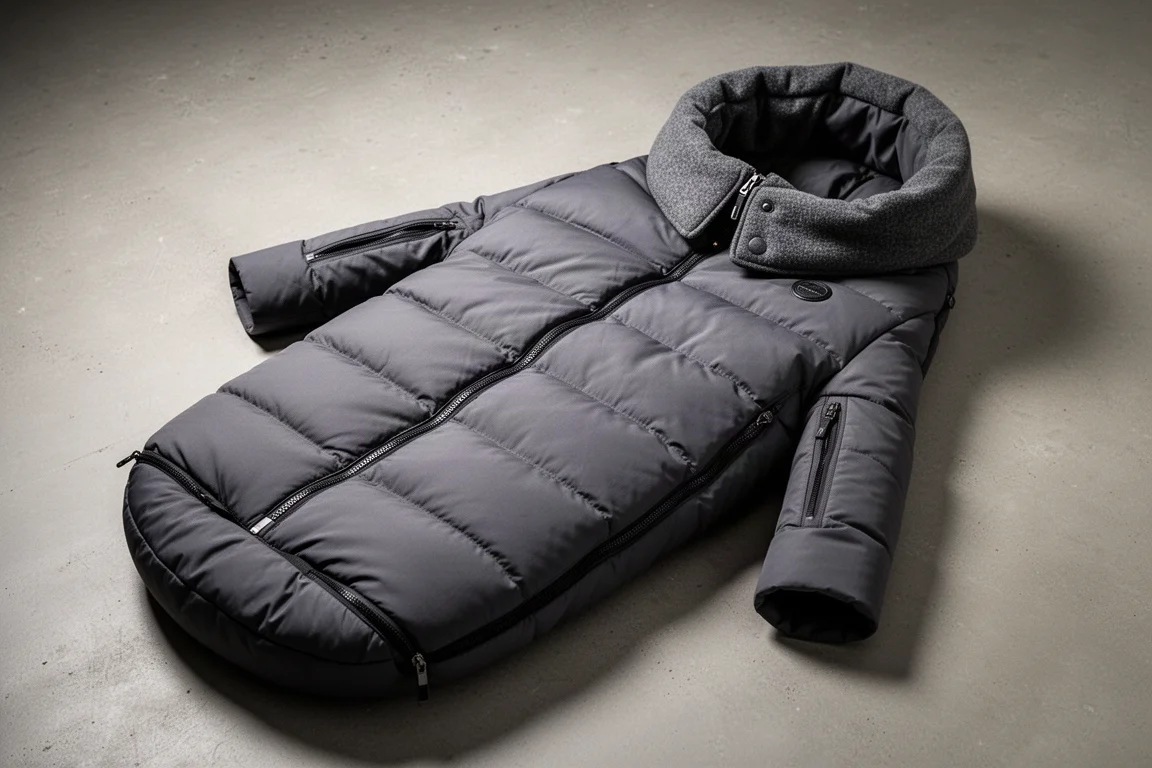
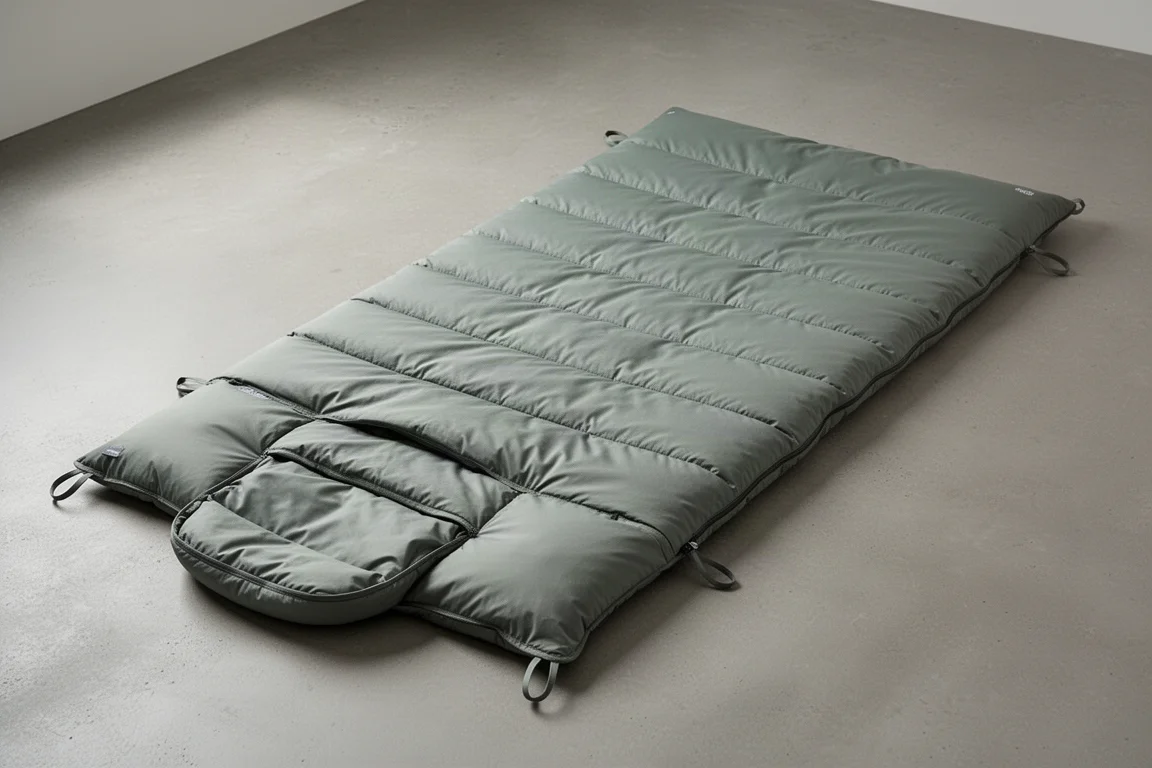
Over the sleeping bag goes a synthetic quilt, and it is arguably the most important piece for very low temperatures. The Revelation Apex uses Apex synthetic insulation, a continuous sheet of material sandwiched between shell fabrics.
It adds a layer of warmth, in the same way the foam mat does at the bottom of the system. It attaches to pad straps so you stay centred on the sleeping pad rather than rolling off onto the ground. And it manages moisture, which is the part that protects everything else.
Your body releases water vapour through the night, and that vapour travels outward through the insulation until it reaches cold air and condenses. If it condenses inside down, the down loses loft and stops working. A synthetic overquilt moves the dew point out of the down bag and into synthetic insulation, which tolerates that moisture far better.
Once temperatures drop to around minus 15 to minus 20, a synthetic overquilt like this stops being optional.
Shelter: Black Diamond Mega Light 4
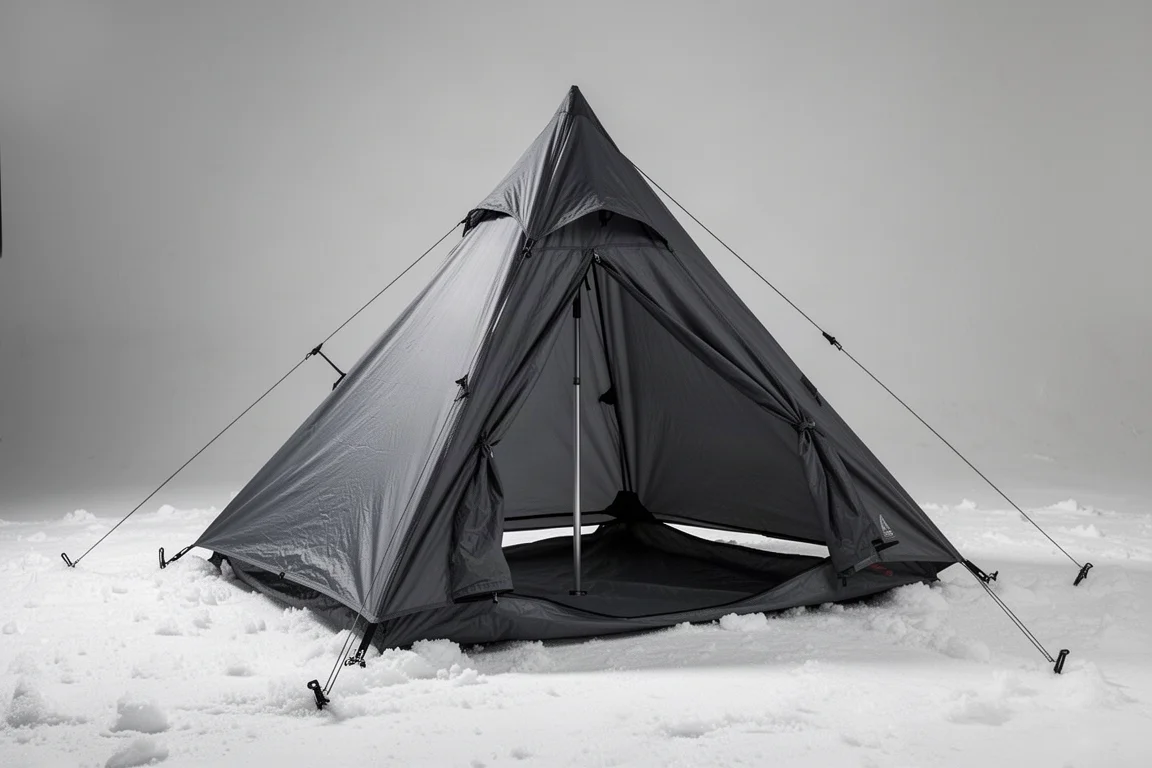
The shelter is the final piece, and a floorless design is a deliberate choice. It is lighter than an enclosed tent, and when frost builds up on the inside walls, you can shake it off and carry on. In a fully enclosed tent, that same frost tends to turn into snowballs that stay inside with you for the rest of the trip.
The trade-off is that there is no floor, which is exactly why the foam mat at the bottom of the stack matters. It grips the snow, keeps the inflatable pad from sliding, and gives you a surface to sit on when you are sorting gear or cooking.
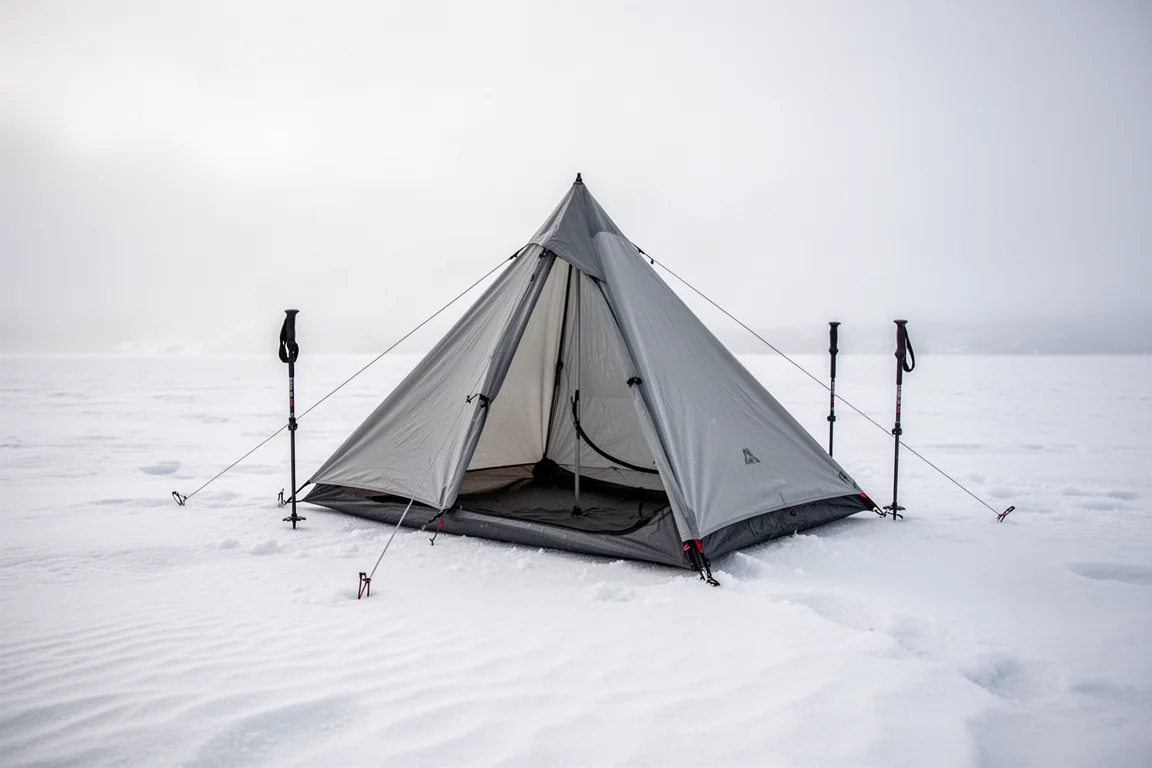
Used together, the floorless shelter and the foam mat solve a problem that neither one handles alone.
Overall Buying Advice
If you are building this system a piece at a time, start at the ground and work up. The foam mat is the simplest way to add insulation and grip, and it stacks cleanly with an insulated air pad. The air pad is the single biggest upgrade to warmth per gram. The pillow and the quilt address the two failure points people underestimate, namely heat loss from the head and moisture compromising down. The sleeping bag and the shelter are the largest purchases, and both are worth buying for fit and features rather than headline temperature ratings alone.
Match the pieces to your conditions. A three-season camper does not need every item here. Someone heading out in deep winter does, and the logic of the stack is what makes it work.
Conclusion
A cold-weather sleep system is a chain of resistances, and the ground layer, the pad, the pillow, the bag, the quilt, and the shelter each interrupt a different path for heat to leave your body. Buy them in that order, understand what each one is doing, and the system will hold up well below freezing.
Further reading
Related Reviews
Backpacking Sleep Systems
Luxury Backpacking Sleep System: Four Pieces That Feel Like a Bed at Home
A wide, thick sleeping pad, a draft-free quilt, a generously cushioned pillow, and a few small habits that bring backcountry sleep much closer to home.
Backpacking Sleep Systems
Quilts vs Sleeping Bags for Backpacking: Five Sleep Systems Compared
A practical look at five backpacking sleep systems, from wide quilts to adjustable sleeping bags and a ground-focused quilt bed, and how to choose between them.
Backpacking Sleep Systems
Two Bed-Like Backcountry Sleep Systems: Zen Bivvy Light Bed and Sea to Summit Ascent
A quilt-and-sheet system and a traditional down bag, compared on interior space, venting, and draft control for backpackers who want a better night outside.