Backpacking Sleep Systems
Zen Bivy Light Bed Review: A Quilt and Fitted Sheet Sleep System for Restless Sleepers
A detailed look at the Zen Bivy Light Bed, a quilt and fitted sheet sleep system with 800 fill power hydrophobic down, a deep draft-blocking overlap, and a three-season comfort window.
Introduction
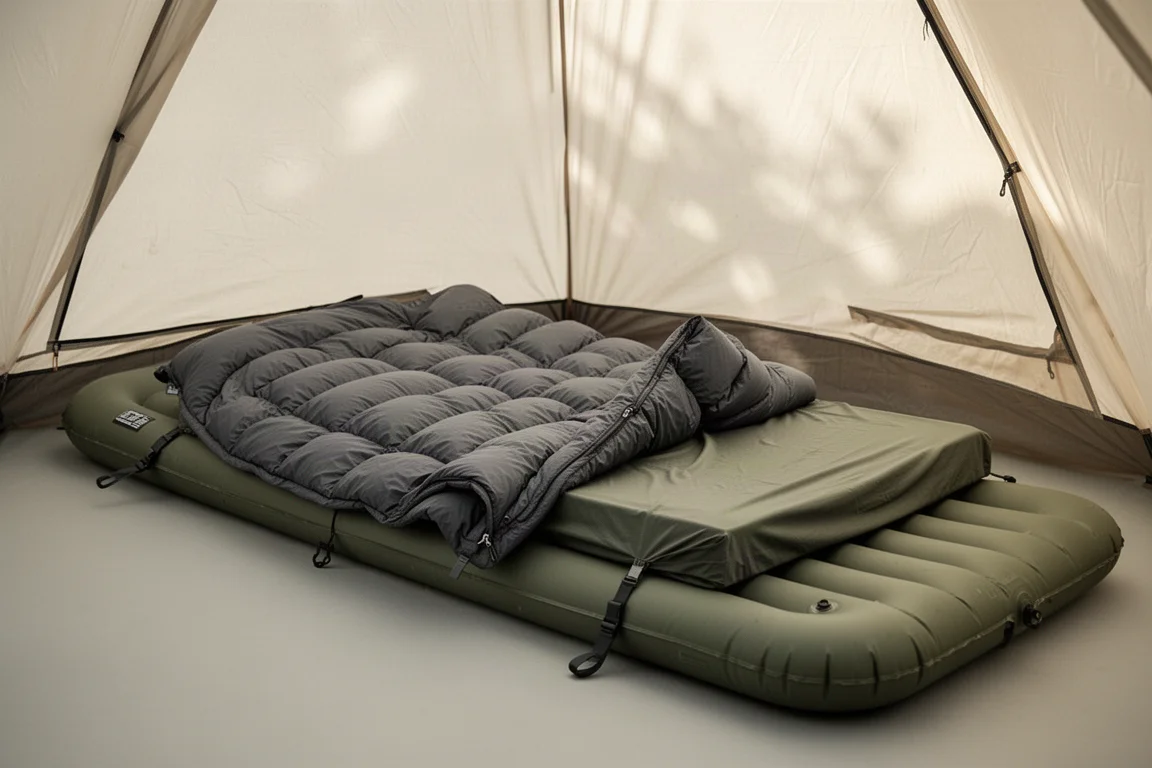
Sleeping systems usually ask you to pick a side. A zipped mummy bag traps warmth efficiently but restricts movement, while a plain quilt lets you move freely but can leave gaps around the shoulders. The Zen Bivy Light Bed takes a third route, pairing a wide fitted sheet with a quilt that clips onto it, so the whole setup behaves more like a duvet at home than a cocoon.
That distinction matters most for anyone who turns over during the night, sleeps on their front or side, or wakes up because the down has drifted away from the top of the body. The Light Bed sits between the original Zen Bivy Bed and the Zen Bivy Ultralight Bed, positioned as a balance of cost, durability, and weight. It uses 800 fill power RDS certified hydrophobic down that is fully traceable, and it has traditionally been easier to source in the United States than in the UK.
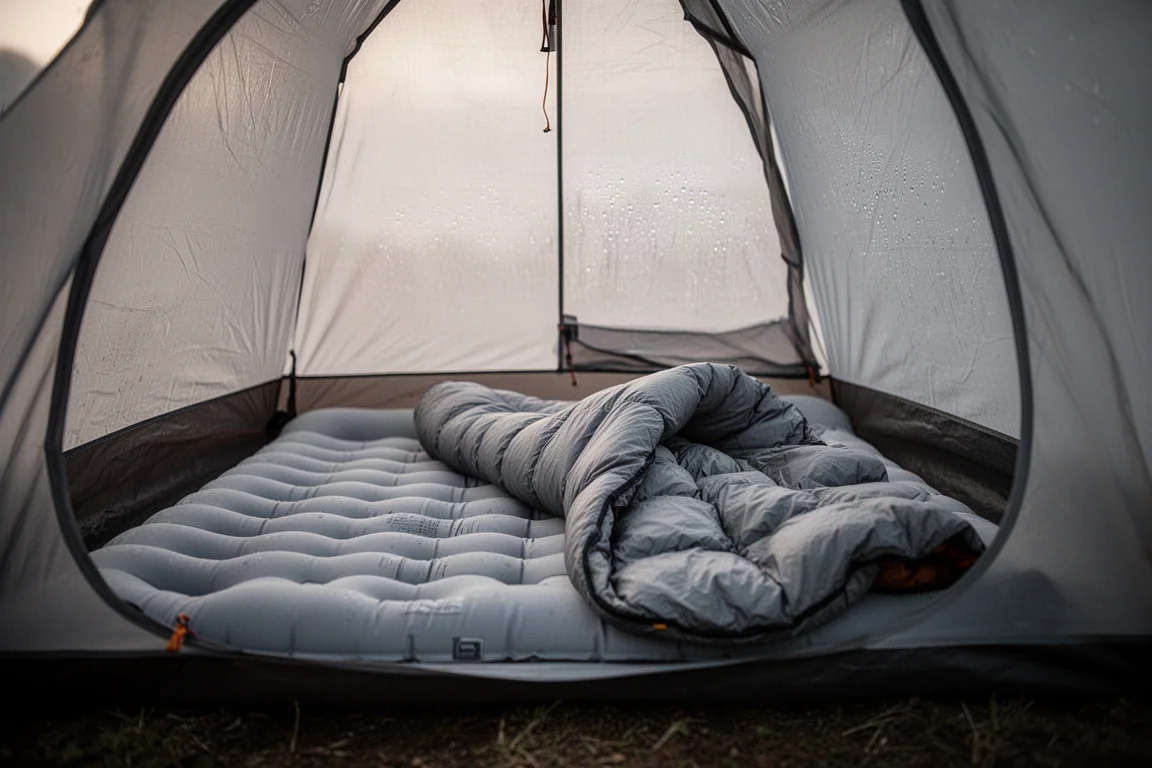
The configuration covered here is the large Light quilt paired with the wide 25 inch fitted sheet, which together come to around £335, split as roughly £249 for the quilt and £85 for the sheet. That is a significant outlay for a camping sleep system, so the practical question is whether the comfort and build quality justify the spend.
Who the Zen Bivy Light Bed Is For
This system is designed for people who do not sleep well in a traditional mummy bag. Front sleepers, side sleepers, and restless sleepers get the most from it, because the quilt can be tucked in at the sides and pulled down at the top without the whole bag twisting around the body. Anyone who sleeps with an arm tucked under a pillow and a duvet wrapped around them will recognise the shape immediately.
It is also a strong option for campers who prioritise sleep quality over pack weight. The total weight of the system is 856 g, with the large Light quilt accounting for 652 g, which is reasonable rather than record breaking.
Back sleepers who are comfortable in a zipped mummy bag are unlikely to gain much here. For that group, a conventional sleeping bag remains the simpler and often lighter choice.
Main Strengths of the Zen Bivy Light Bed
The headline strength is the draft protection. The fitted sheet rises far higher than a typical sheet and the quilt drops far deeper than a typical quilt, so the two overlap by a large margin. The result is that drafts around the shoulders and neck are very difficult to create, and the system holds its warmth even when the sleeper rolls from one side to the other.
The quilt attaches to the sheet with small clips, and the fixings are colour coordinated, which makes setup quick even in low light. Two clips hold the fitted sheet in place on the pad, and there are two loops at the top where an optional pillow and pillow case clip in and hang down. The bottom of the quilt can be clipped in, left open, or connected around the mat with an additional strap, and the foot end can be unclipped entirely on warm nights.
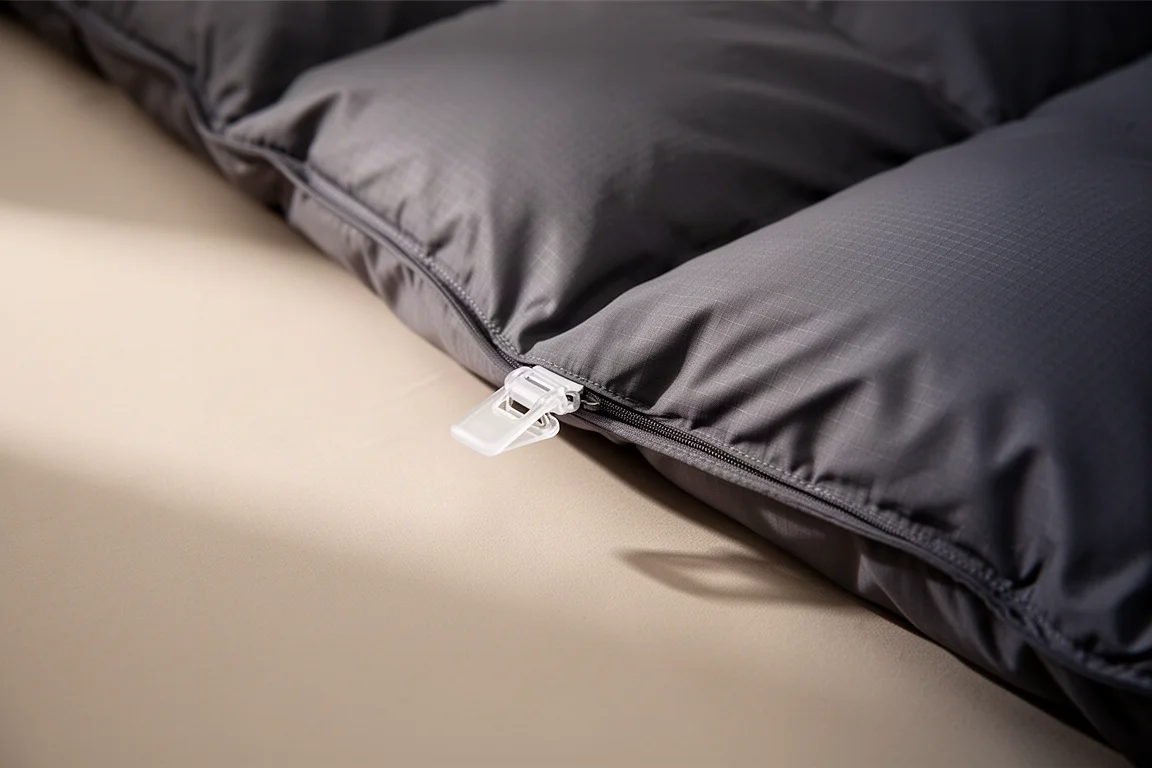
Once unclipped at the top, the quilt behaves like a duvet. It can be folded down, left flapping open, or half raised, which gives a wide range of temperature control without getting out of the sleeping system. In practice that means fewer cold spots in the early hours and fewer overheating wake ups later on.
The shell uses a 20D fabric rather than an ultralight 10D material, so it should cope with regular use and ground contact without feeling fragile. The down fill is spread through 366 g in the quilt, with a further 53 g in the fitted sheet.
Warmth, Down Quality, and Baffle Design
The down is 800 fill power, RDS certified, hydrophobic treated, and fully traceable. Hydrophobic treatment matters for damp British conditions because the insulation retains more of its warmth if it picks up moisture.
The baffle layout is one of the more thoughtful details. The lower half of the quilt uses horizontal baffles, while the upper half uses vertical baffles. Vertical baffles across the chest and shoulders help stop down migrating to the sides during the night, which is a common cause of cold patches in quilts and sleeping bags that use horizontal baffles at the top.
Things to Consider Before Buying
The main consideration is price. At roughly £335 for the quilt and wide fitted sheet together, this is not a budget sleep system, and the quilt alone is around £249. The upside is that the materials and construction feel genuinely high end, with the 20D shell, traceable 800 fill power down, and a design that has clearly been refined through several iterations, including updated clips on the 2024 version.
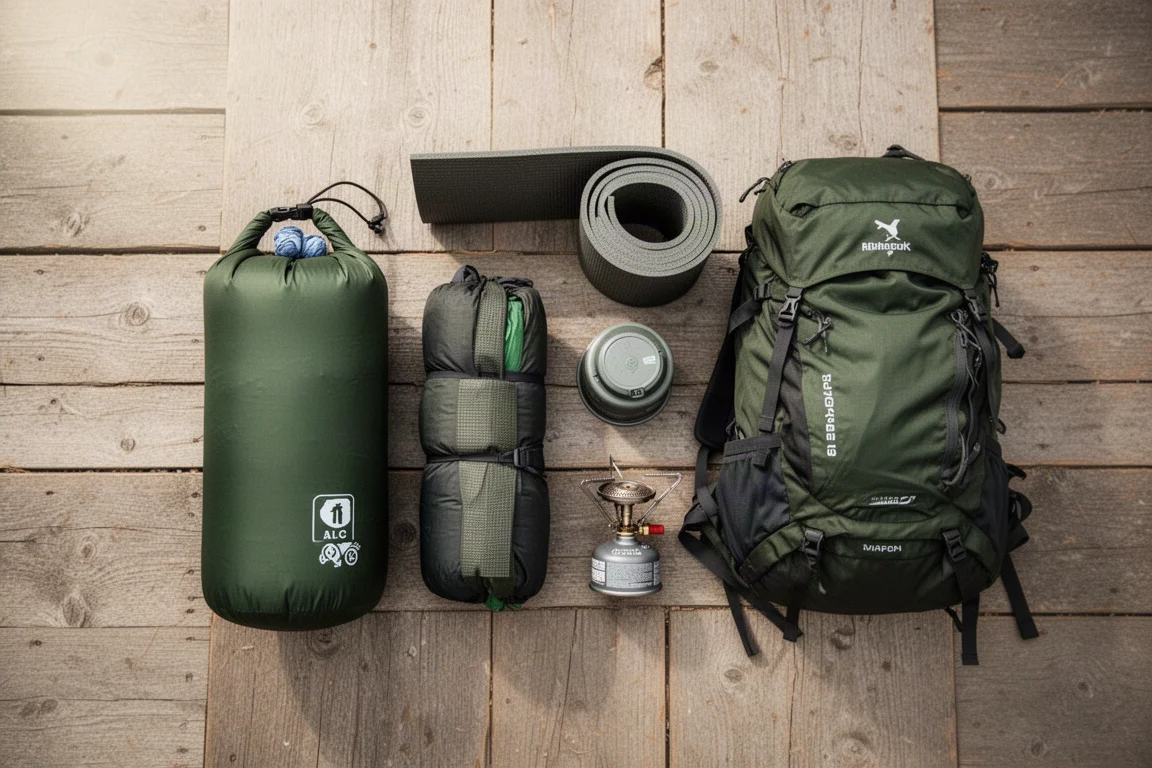
Weight is the second consideration. At 856 g all in, the Light Bed is not the lightest option available, and anyone counting grams for a long distance route should weigh that against the quality of sleep it delivers. Packed down in a large dry bag without being fully compressed, the system measures roughly 22 cm by 27 cm. Leaving some loft in the down helps preserve its performance over time.
The fitted sheet on the 2024 version deliberately stops short of the very bottom of the pad to save weight, on the assumption that the feet normally stay inside the quilt. In cold conditions, that is worth knowing before you commit.
It is also worth deciding whether to buy the quilt on its own or the system as a whole. The quilt works perfectly well by itself, but the fitted sheet is what separates this design from a standard quilt, so the two together are the more sensible purchase. Availability has improved as well, with a UK based route to buy now alongside the original US supply.
Temperature Ratings and Real-World Season Use
The version covered here is rated to 25°F, and a 10°F version is also available with a comfort limit of around minus 12. The stated comfort level for the 25°F model is around plus 2°C, though in practice that figure feels a couple of degrees optimistic. Comfortable use with normal base layers is closer to 5 to 8°C, and adding thicker base layers or a mid layer for sleeping could push the system down towards 0°C.
Because a quilt always has some limitations compared with a fully enclosed bag, this is best treated as a three season system. In genuinely sub-zero conditions, a traditional sleeping bag remains the more dependable choice.
Buying Advice
Buy this as a system rather than as separate pieces. The quilt and fitted sheet are designed to work together, and the deep overlap between them is the reason the setup sleeps as warmly as it does.
On sizing, a regular length pad around 66 cm wide leaves plenty of room inside the wide 25 inch fitted sheet and the large quilt, even for a sleeper around 172 cm tall. The wide sheet and large quilt combination is the one that creates the full bed-like feel, and it is the configuration most restless sleepers will want.
If you already own a quilt and only want to solve drafts, the fitted sheet is the part that changes the experience. If you are starting from scratch, the complete package makes more sense, because mixing the quilt with a non-matching sheet removes the overlap that gives the design its advantage.
For anyone who camps regularly and notices that poor sleep affects the following day, the extra grams and the higher price are easier to justify than they first appear. Better rest translates into more energy on the trail, which is worth more over a long day than the weight saved by a lighter bag.
Conclusion
The Zen Bivy Light Bed is a well made, thoughtfully detailed sleep system that solves a real problem for front sleepers, side sleepers, and anyone who fidgets through the night. The 800 fill power traceable hydrophobic down, the vertical baffles across the upper body, and the deep draft-blocking overlap between quilt and sheet all contribute to a warmer, more settled night than a conventional mummy bag typically provides.
It is not the lightest system on the market and it is not cheap, so it suits campers who value sleep quality over minimum pack weight and who want a three season setup rather than an expedition bag. For that audience, the Zen Bivy Light Bed is a genuinely comfortable place to spend the night.
Product link
View more details for Zen Bivy Light Bed
This product is mentioned in the review. Check the specifications, options, and compatibility before buying.
View more details for Zen Bivy Light BedFurther reading
Related Reviews
Backpacking Sleep Systems
Extreme Cold Sleep System: Six Backpacking Layers for Deep Winter Warmth
A bottom-up look at a six-piece winter sleep system, from a foam ground mat to a floorless shelter, and the reason each layer earns its place.
Backpacking Sleep Systems
Luxury Backpacking Sleep System: Four Pieces That Feel Like a Bed at Home
A wide, thick sleeping pad, a draft-free quilt, a generously cushioned pillow, and a few small habits that bring backcountry sleep much closer to home.
Backpacking Sleep Systems
Quilts vs Sleeping Bags for Backpacking: Five Sleep Systems Compared
A practical look at five backpacking sleep systems, from wide quilts to adjustable sleeping bags and a ground-focused quilt bed, and how to choose between them.