Camping Sleep Systems
Zen Bivy Beds and Mattresses: A Practical Guide to the Full Sleep System Lineup
How the Zen Bivy bed system works, what separates each build from the original to the Ultralight, and which mattress feel suits you.
Introduction
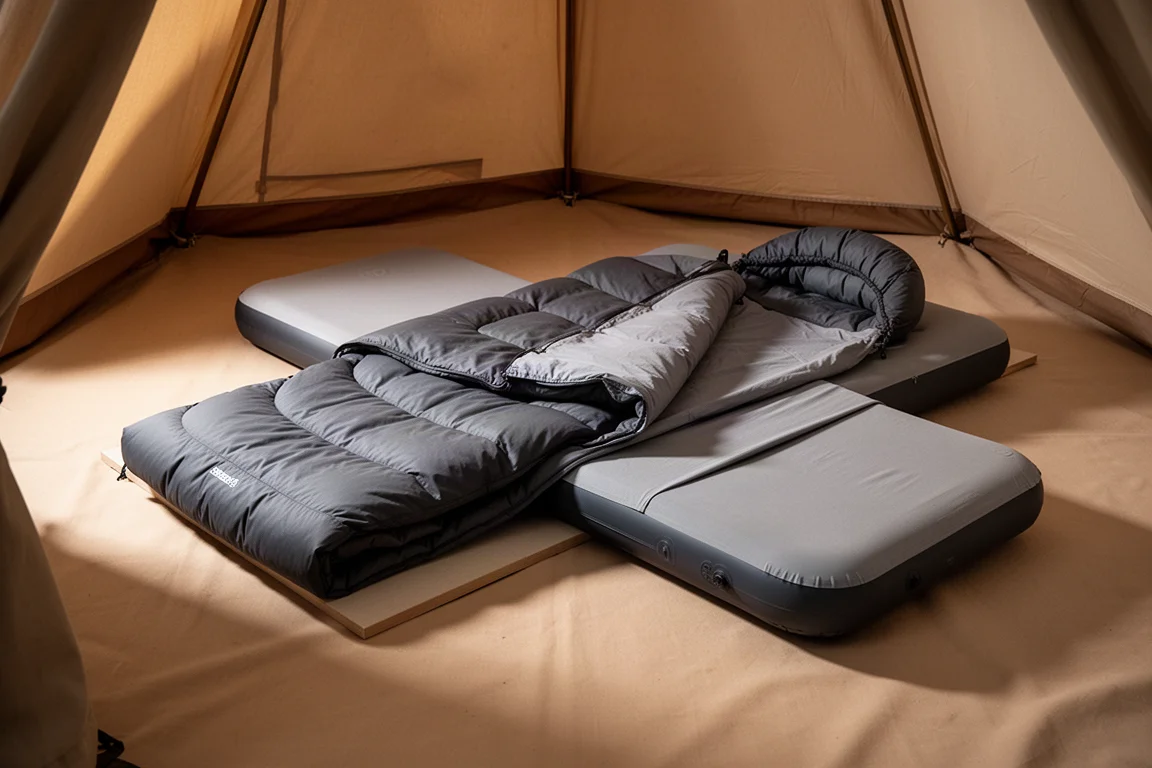
Zen Bivy approaches sleep on the trail differently from a conventional mummy bag. Rather than one closed bag, the system pairs a semi-rectangular top quilt with a mattress and a sheet, so the quilt tucks in around you the way covers do at home. The quilt links to the mattress at hinge points set in from its edge, which lets it move with you while staying put.
This guide walks through the current bed builds and the two mattress designs, explains the details that separate them, and points to where each one makes the most sense.
How the Zen Bivy Sleep System Works
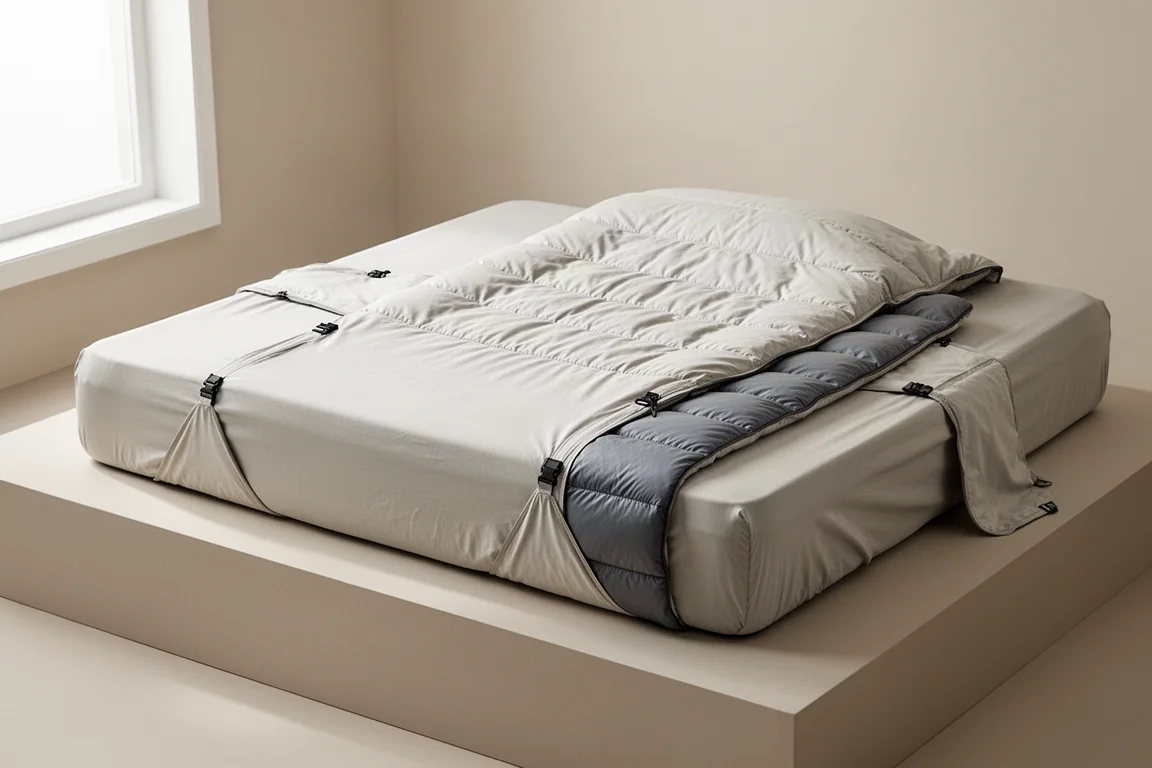
A Zen Bivy bed is a two-piece design: a semi-rectangular top quilt and a sheet that links the quilt to the mattress. The sheet’s side panels do the important work. Instead of clipping the quilt to the mattress edge, the system attaches roughly ten inches in from the quilt edge on a hinge. The quilt can then float across your body without sliding off the mattress and opening a cold gap.
Because the quilt is not pinned down at a fixed width, it wraps around you instead of being held in place. That is what allows an insulated version to match a mummy bag for warmth while weighing less, since there is no insulation underneath you to compress. The quilt shape itself matters too: it is semi-rectangular with no hourglass taper, so there are no narrow points for the bedding to catch and twist on when you roll over.
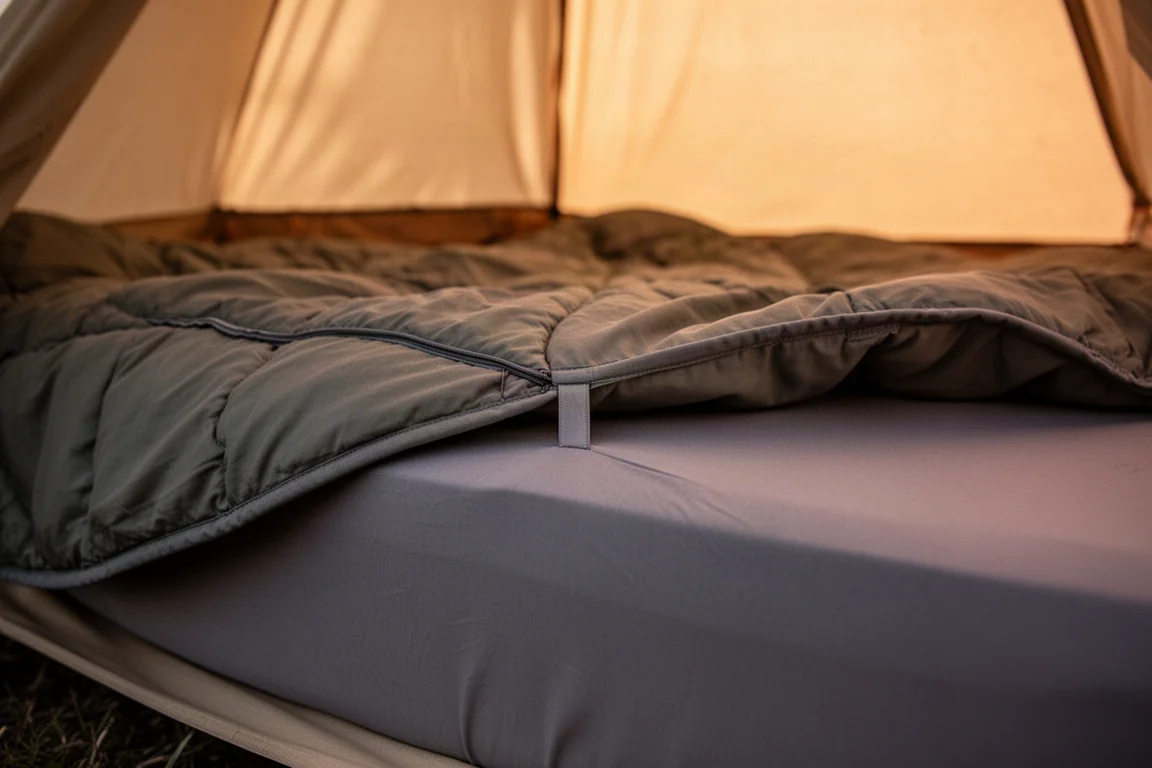
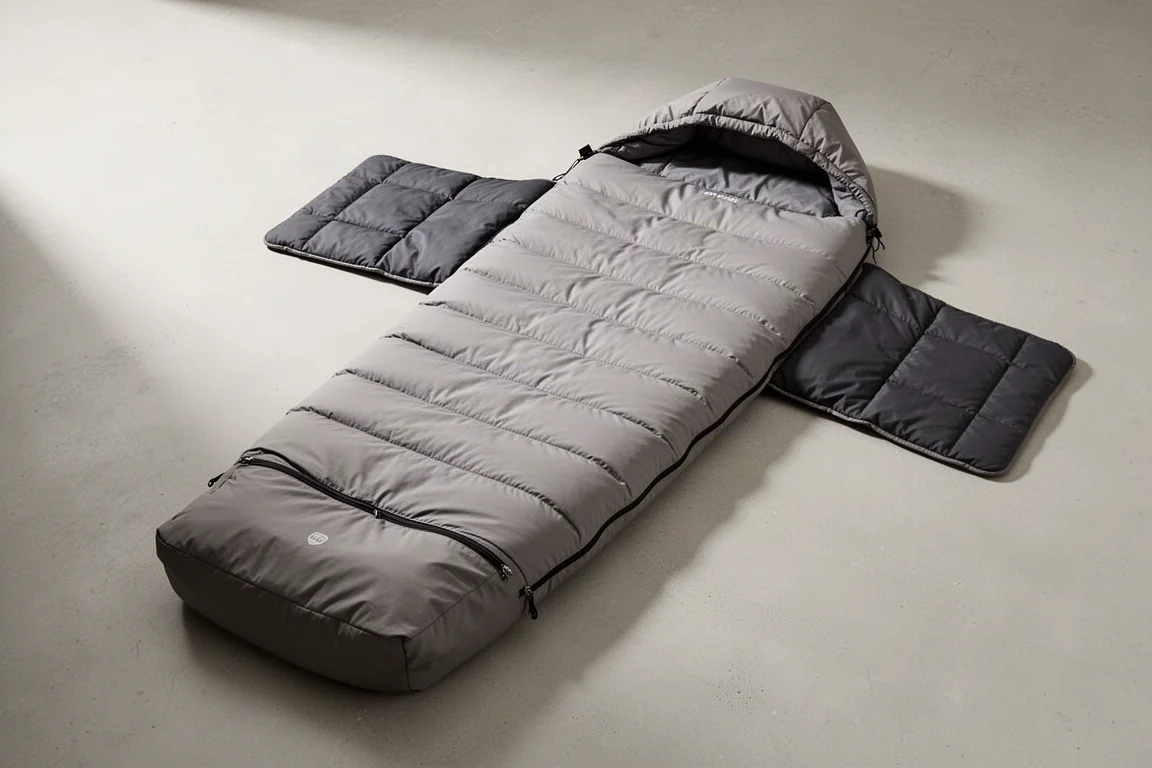
Two foot box options appear across the range. The convertible foot box folds flat into a blanket and closes with overlapping panels rather than a zipper, with an origami baffle that flips in to close the gap at the bottom. The fast foot box uses a single attachment to open very wide from a full mummy shape, and it is the version many sleepers prefer for its wide, draft-resistant box.
The draw cord runs along a shortened section of the quilt edge, leaving the side panels free to hang and seal against the mattress. That lets side sleepers hook a little fabric over the shoulder without lifting the edge of the quilt and creating a draft. The cord is also routed off to the side rather than sitting across the face.
An insulated hood finishes the top end. It acts as a headboard and gives the top of the quilt somewhere to tuck in, which addresses the drafts that usually start around the shoulders. Uninsulated hoods are offered as well, and interior pillow holders keep a pillow from wandering.
Zen Bivy Bed: The Original Two-Piece Design
The original Zen Bivy Bed is the zippered version of the system. The quilt attaches to the sheet with zippers rather than clips, and it carries the same semi-rectangular quilt, the convertible foot box, and the hood that made the design distinctive.
Zippers have real advantages. They are familiar, quick to open in the middle of the night, and they do not ask you to find and work hardware in the dark. The trade-off is weight. Zippers are heavier than clips, and the original zippered beds are noticeably chunky by current backpacking standards.
Zen Bivy Light Bed: The Weight-to-Value Sweet Spot
The Light Bed is built around 20D fabrics and 800 fill power down. That combination is the best balance of weight and cost in the range, giving you most of the lightweight feel without moving into the highest price bracket. The difference to the Ultralight Bed is only a few ounces, while the price gap is a couple of hundred dollars.
The 3/4 length sheet is the minimal option and the one that sells best, and full-length sheets are offered on certain beds in the range. A full-length sheet is easier to fit and covers the whole mattress, but it adds meaningful weight and does not add warmth at the bottom end.
Zen Bivy Ultralight Bed: Maximum Warmth-to-Weight
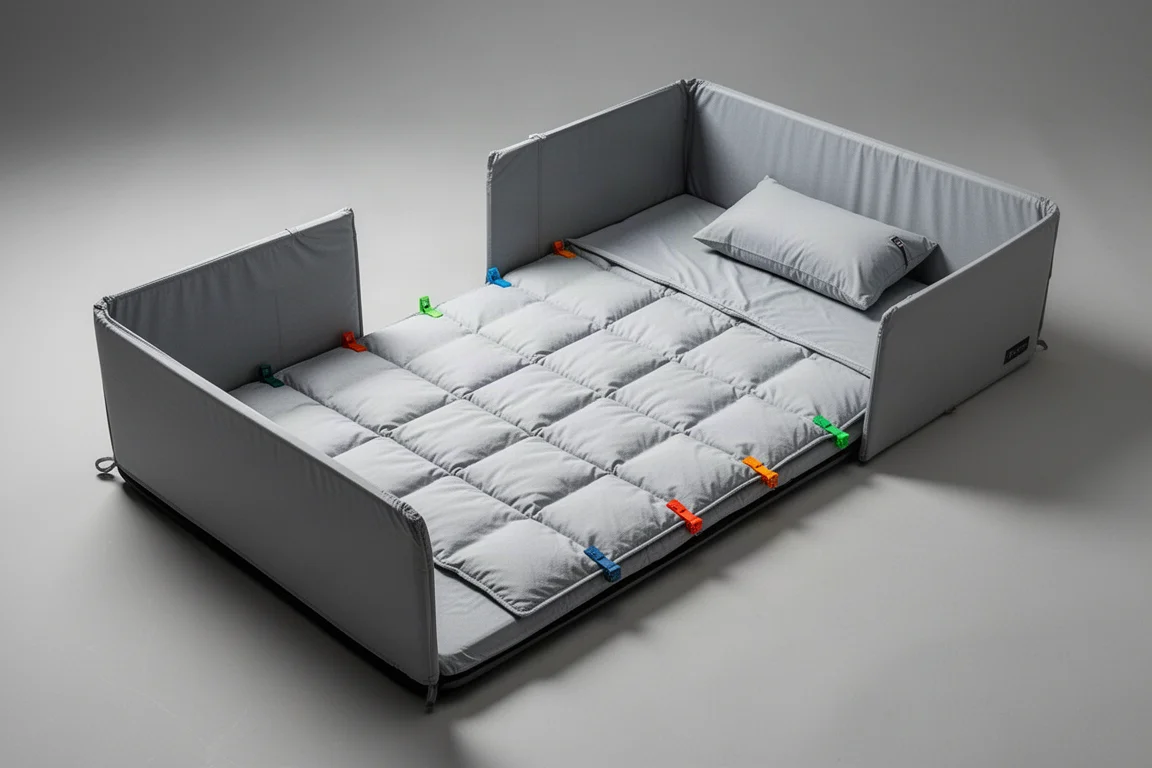
The Ultralight Bed uses a Pertex shell and 900 fill power goose down, and it comes with the 3/4 length sheet. It is fitted with the fast foot box and its single attachment, which opens wide from full mummy mode without leaving a drafty gap at the feet.
The warmth-to-weight argument is the reason this build exists. Because the quilt is free to wrap around you and there is no insulation beneath you to compress, an insulated Zen Bivy is designed to match a mummy bag for warmth at a lower weight, which is something earlier two-piece systems could not manage. Those systems had to be cut large enough to let you move around inside them, which made them heavier and less thermally efficient.
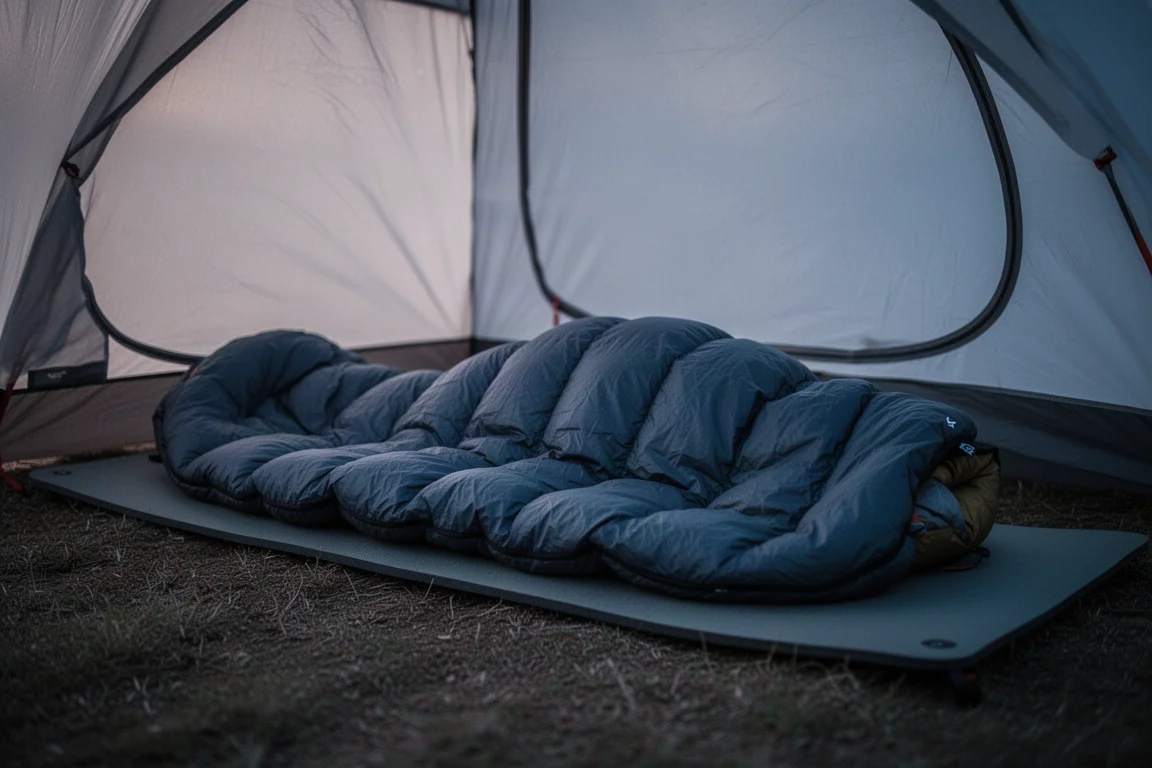
Budget is the honest consideration here. As a complete bed the Ultralight runs around $600, made up of a $450 quilt and a $150 sheet, so it sits at the top of the range and asks you to genuinely care about grams.
Zen Bivy Core Bed: A More Approachable Build
The Core Bed keeps the same sheet-and-quilt architecture and trades a little extra weight for a substantially lower price. It is the entry point for anyone who wants the bed-style arrangement without paying for the lightest fabrics and the highest fill powers.
For campers who are not counting ounces on every trip, this is where the system becomes genuinely easy to recommend. You give up some packed weight and gain a price that is far closer to a conventional sleeping bag.
Zen Bivy Becker Bed: Zippers Return in a Lighter Package
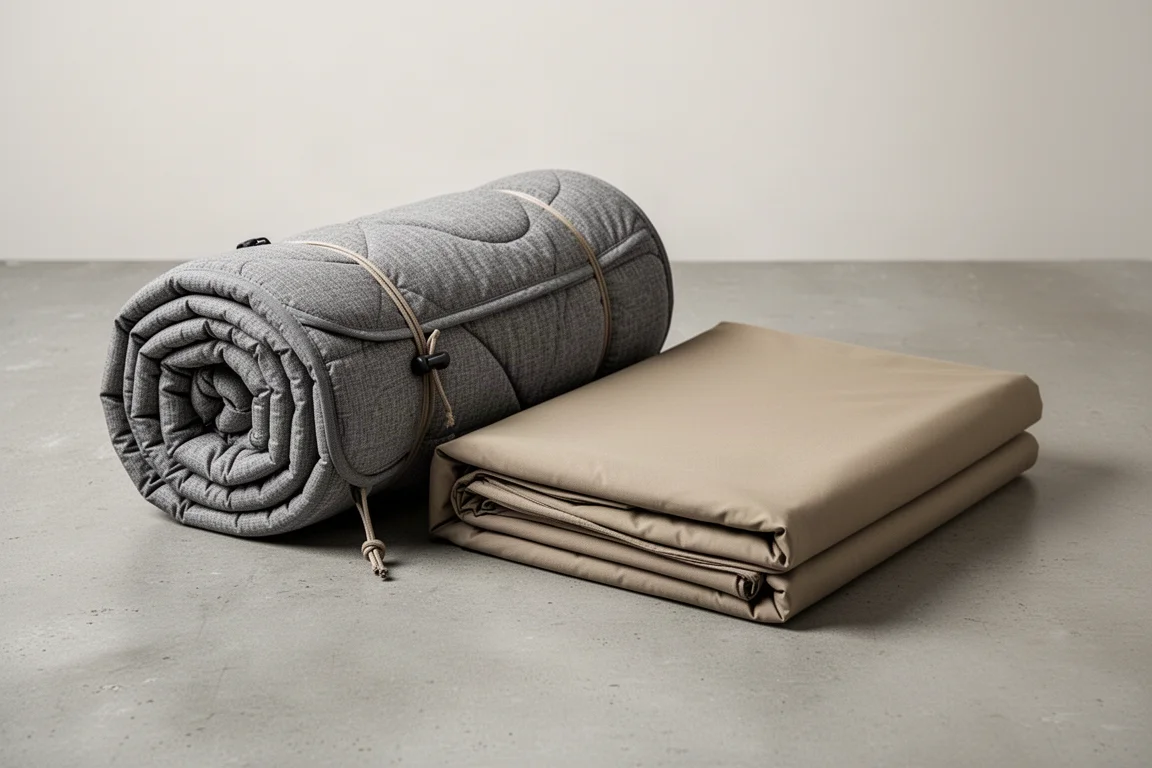
The Becker Bed brings zippers back to the bed format in a lighter build. The attachment runs along the sheet edge with locking zippers that hold their position anywhere along the track and do not slide open on their own, so the quilt stays where you set it.
The interior uses a 50D pongee fabric at the touch points that matter most, around the head and underneath, with lighter fabric elsewhere to keep the weight down. The result is an interior that feels closer to a cotton sheet than a typical nylon sleeping bag shell. An earlier version of this design used pongee along the entire inner surface, which added weight without adding comfort where it counted.
The Becker Bed pairs a full-length sheet with a short mattress and uses the fast foot box with its single attachment. For anyone who finds clips fussy, especially on a middle-of-the-night trip out of the tent, the zipper is a familiar and quick alternative. The finish shown on early units is a prototype colour rather than final production.
Zen Bivy Ultralight Mattress: Stretch-Knit Comfort on Top
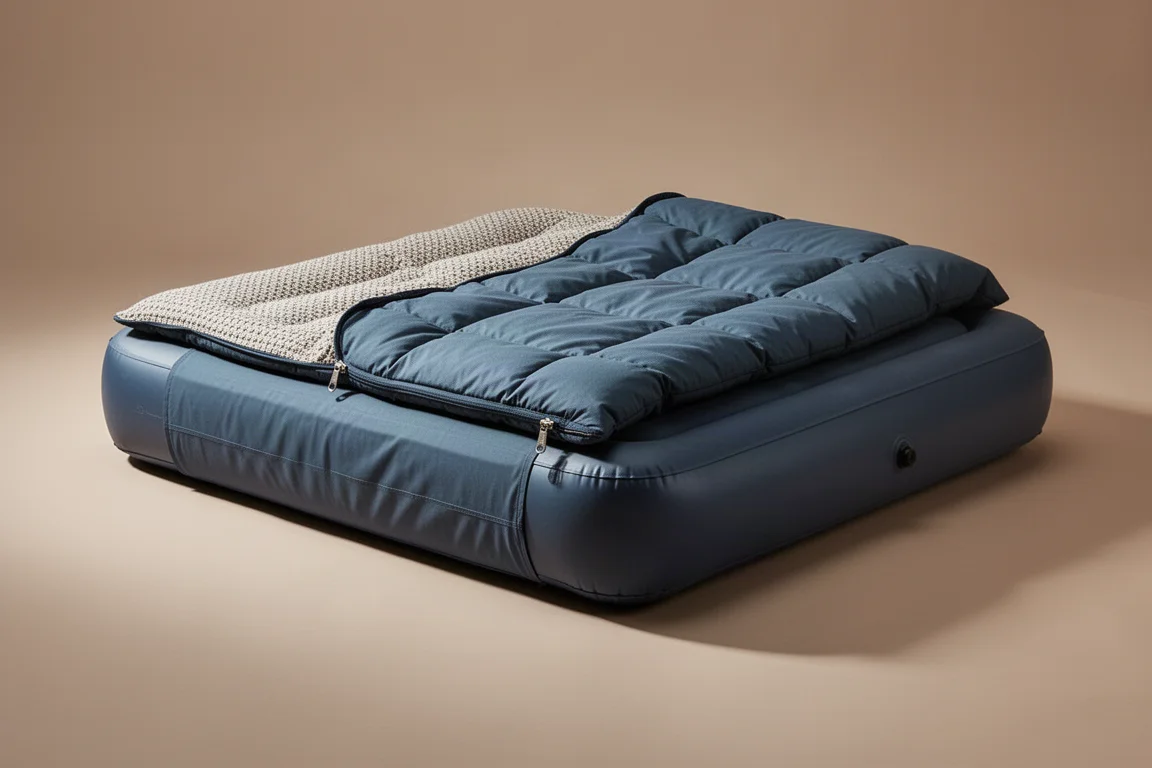
The Ultralight Mattress uses a 4-way stretch knit across the top surface, which changes how the pad feels under a quilt. Air mattresses get hard when they are filled to full pressure, and this one is meant to be inflated hard; the softness comes from the pad’s internal chambers rather than from under-inflation. The stretch knit is what makes that firm-but-not-rock-hard feel possible.
Construction matters for warmth as well. The pad uses offset welded points rather than through-welded dots, with three layers inside and two layers of Mylar suspended between them. Losing one of those Mylar layers costs warmth, which is one reason running the pad soft can leave you cold. The Ultralight version uses a similar stretch fabric on both sides and is slightly lighter than the standard stretch-top model.
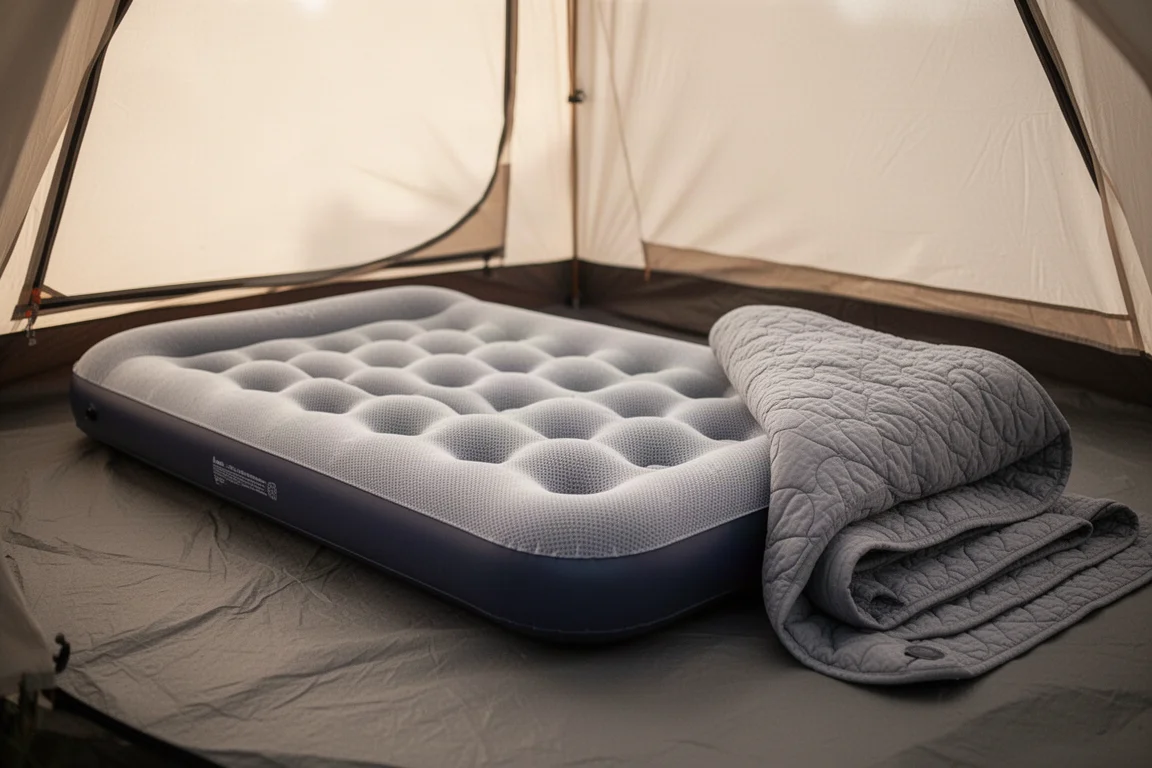
If you like a mattress you sink into, this is not the right pad. Inflate it properly, give it a fair trial, and judge it on how it supports your hips and shoulders through the night rather than on how it feels when you first press a palm into it.
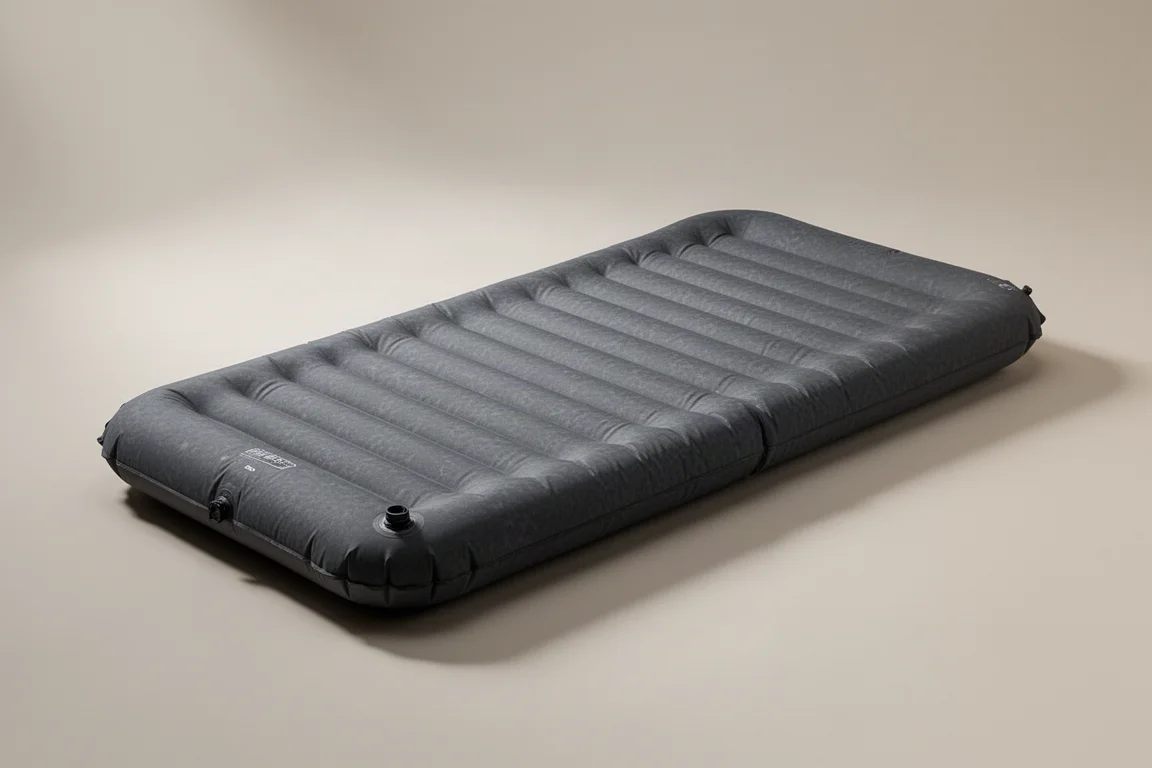
Zen Bivy Light Mattress: A Softer, Traditional Feel
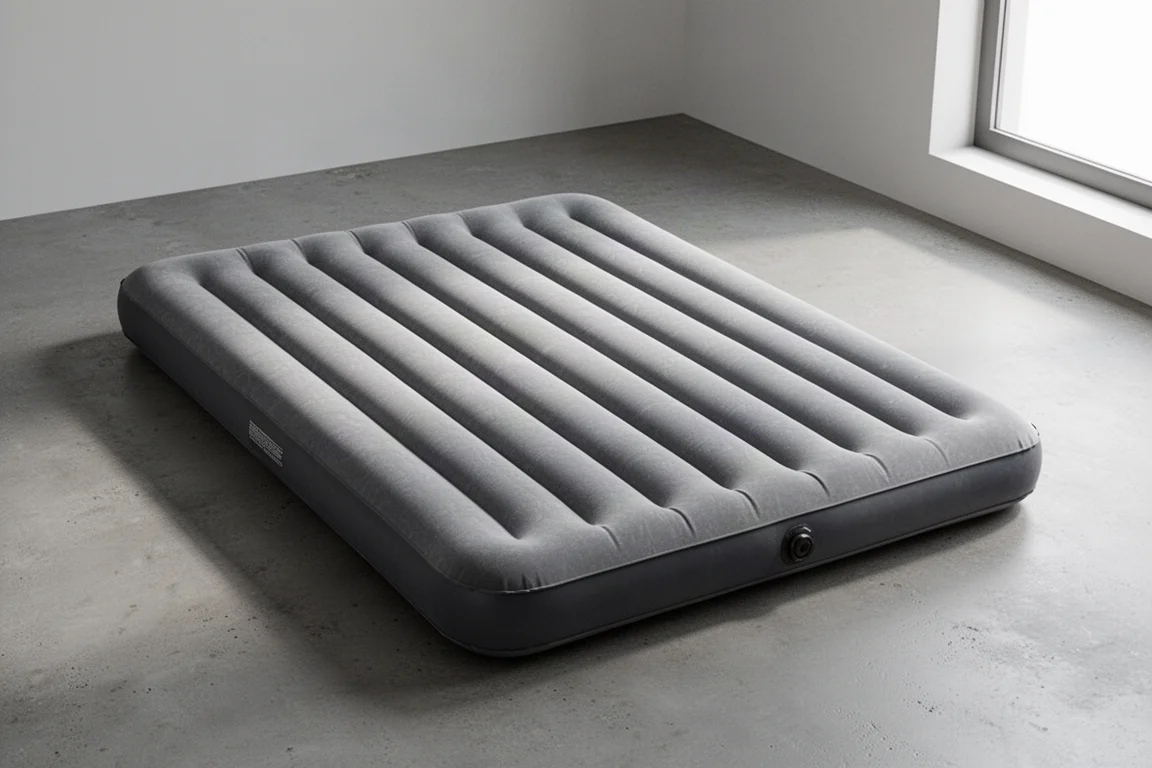
The Light Mattress uses a more conventional vertical tube construction and a softer overall character. Inflated to low pressure it behaves a little like a water bed, letting you settle down into it. If you prefer a very soft mattress and dislike a firm platform under you, this is the better match. If you want the firm support that pairs naturally with a tucked quilt, the stretch-top design is the one to look at.
What Is Changing Next: Muscovy Duck Down
Zen Bivy is preparing to offer the same ultralight quilt build with Muscovy duck down, a material the brand says has not previously been used for down production. The clusters are larger than goose down, and the down is ultrasonically cleaned during processing to handle its texture.
Fill power reaches 900, which is the practical ceiling for duck down, at roughly a third of the cost of comparable goose down. That is expected to bring the quilt from about $450 down to about $339 without changing the rest of the build. The material is described as springy and resilient, and there may be durability benefits, though the brand is careful not to make firm claims yet.
Buying Advice: Which Zen Bivy Setup Fits You
Start with how you sleep and how you carry your gear, rather than with the lightest number on the sheet.
For most backpackers the Light Bed is the sensible default. The 20D fabrics and 800 fill power down keep the weight competitive while the price stays a couple of hundred dollars below the Ultralight Bed, for a difference of only a few ounces.
Choose the Ultralight Bed when weight is the priority and the budget allows. Pertex and 900 fill power goose down put it at the top of the range, and the complete bed lands around $600 with quilt and sheet.
The Core Bed makes the same architecture available at a far lower price in exchange for a bit more weight.
If you want a zipper instead of clips, the Becker Bed is the lighter zippered option, with the 50D pongee interior at the key touch points and a full-length sheet.
On the mattress side, match the pad to the feel you want. The stretch-top Ultralight Mattress rewards being inflated firm, with its softness coming from the internal chambers. The Light Mattress is the softer, more traditional option with vertical tubes.
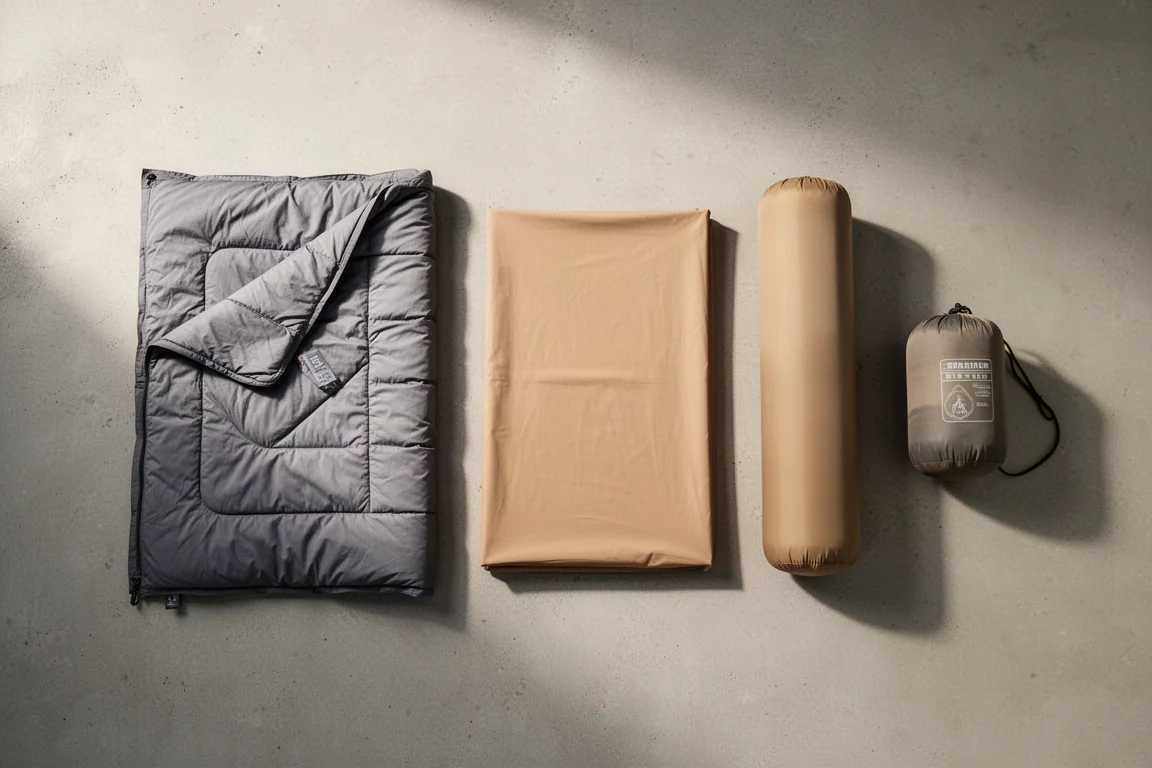
One last point applies to every build. These systems are designed to last for a long time, which is the real argument for spending on sleep rather than replacing gear every few seasons. Quilts and sheets can also be bought separately if you already own part of the setup.
Conclusion
Zen Bivy beds are not sleeping bags, and they are not quilts in the usual sense. They are a mattress, sheet and quilt assembly that behaves like bedding at home, with a quilt that floats, tucks in and seals without pinning you down. The range now spans a genuinely wide set of priorities: a zippered original, a value-focused Light Bed, a 900 fill Ultralight Bed, a heavier Core Bed and a lighter zippered Becker Bed, alongside two mattresses with distinctly different feels. Match the build to your budget and your sleeping style, and the system does the rest.
Further reading
Related Reviews
Camping Sleep Systems
Backcountry Sleep System Guide: Two Pads and Two Pillows for Colder Nights
Two sleeping pads and two camp pillows that cut pressure points and tossing, plus the quilt setup habits that keep cold air out of your sleep system.
Camping Sleep Systems
Extreme Cold Sleep System: Three Pieces That Make Winter Camping Work
A practical look at the three core pieces of an extreme cold sleep system that together handle wind, cold ground, and moisture on sub-zero nights.
Camping Sleep Systems
NatureHike Ultralight Down Quilt Review: A Versatile Warm-Weather Sleep System
A close look at the NatureHike Ultralight Down Quilt, covering real-world warmth, build quality, weight, sizing, and the one trade-off to expect from any down-filled product.