Camping Sleep Systems
NatureHike Ultralight Down Quilt Review: A Versatile Warm-Weather Sleep System
A close look at the NatureHike Ultralight Down Quilt, covering real-world warmth, build quality, weight, sizing, and the one trade-off to expect from any down-filled product.
Introduction
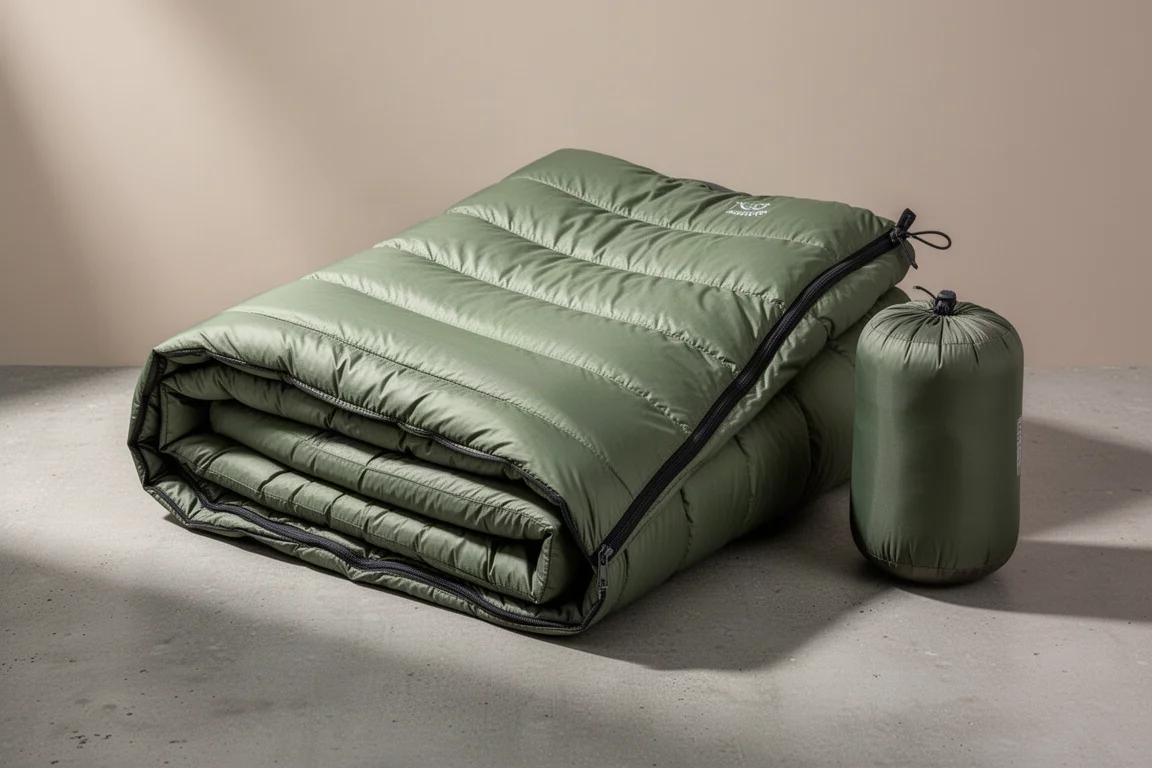
A down quilt that can be a sleeping bag, a quilt, a blanket, or an over-quilt inside a hammock is a lot of product for one purchase. The NatureHike Ultralight Down Quilt is exactly that: a single piece of gear that shifts role depending on how you zip, drape, or layer it.
The open question with any quilt at this price is warmth. The temperature label on this one lists a comfort rating of 42.1°F and a transition rating of 33.3°F, and those numbers hold up in practice. It performs comfortably down to around 40°F, and it still feels usable below that. For warm-weather camping and shoulder-season trips, that is a genuinely useful window.
This review focuses on how the quilt behaves over time: warmth, build quality, weight, sizing, and the small compromises that come with any down-filled product.
Who This Quilt Is For
This quilt makes the most sense for three kinds of campers. The first is the summer and early-fall camper who wants a light, packable layer and does not want to carry a full hooded bag. The second is the hammock user, who can run it as an over-quilt and get a meaningful warmth boost without buying a dedicated under-quilt setup. The third is the camper who already owns a sleeping bag and wants to extend its range.
That last use case is where the quilt earns its keep. Layered over an existing sleeping bag, it raises the effective temperature rating by a noticeable margin. If there is enough room inside the bag, it can go in; if not, it drapes over the top just as effectively.
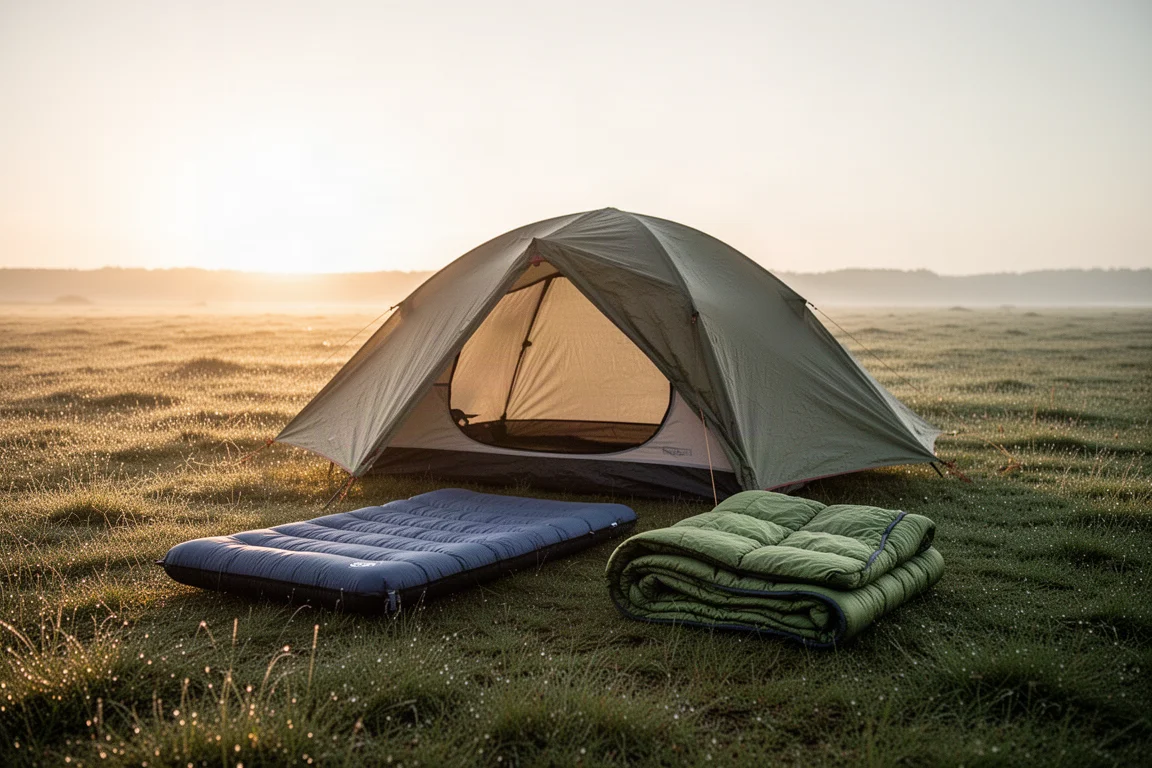
There is no hood, and that is a deliberate trade-off rather than a flaw. At around 40°F, a hood is not something most warm-weather campers will miss. Riders of colder conditions may feel differently, which is why the quilt is best judged as a warm-weather and layering tool rather than a deep-winter bag.
Warmth and Temperature Performance
Temperature ratings for sleep systems are always somewhat personal. Body heat output varies, and a camper who sleeps warm will get more range out of the same quilt than one who sleeps cold. With that caveat in mind, the published figures on this quilt look accurate rather than optimistic.
The comfort rating is listed at 42.1°F and the transition rating at 33.3°F. In use, the quilt stays warm down to roughly 40°F, and it remains reasonably comfortable below that threshold. For summer camping and the cooler weeks of fall, that covers the majority of trips most people take.
The quilt also works as an additive layer. Used on top of an existing bag, or inside one with enough interior space, it lifts the overall warmth of the sleep system. How much of a boost you get depends entirely on what you are layering it with, so treat it as a flexible component rather than a fixed rating.
Construction, Materials, and Hardware
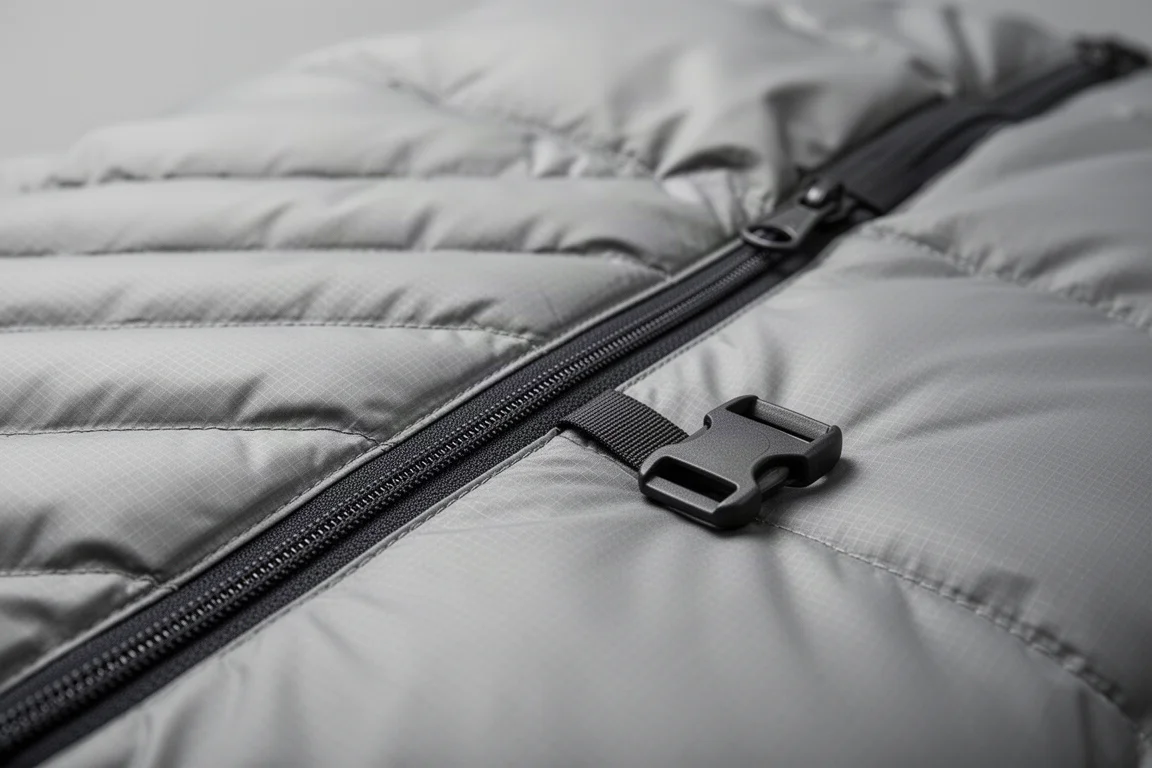
The build quality is the most surprising part of this product. A YKK zipper runs along the perimeter, which is what allows the quilt to convert between a sleeping bag, a partially zipped quilt, and a flat blanket. A draw cord at the top lets you cinch the opening, and a sewn-in tag lists both the temperature rating and the fill type, which is duck down.
The shell is a lightweight nylon fabric with a fine weave, and the insulation is duck down. Hardware includes Duraflex buckles and tensioners on the storage bag, which is the kind of detail that is easy to overlook until a cheaper buckle fails in the field. Stitching is even and consistent throughout, with none of the sloppy seams that show up on some far more expensive sleep systems.
The fabric feels good against the skin, though it has a slightly silky hand that some sleepers notice on the first night. It is not a drawback so much as a characteristic of the shell material, and it does not affect warmth or durability.
Versatility: Sleeping Bag, Quilt, Blanket, and Hammock Use
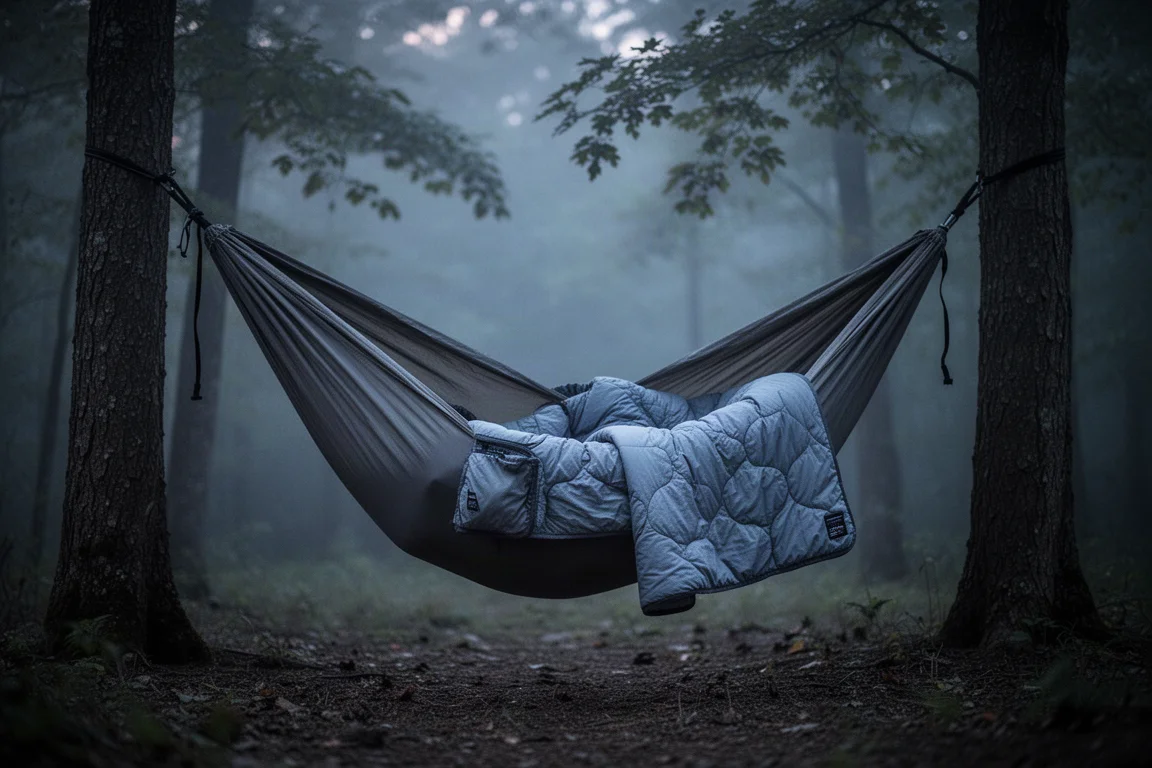
Very few pieces of camping gear genuinely change function, and this one does. Fully zipped, it is a sleeping bag for warm conditions. Partially zipped, it becomes a quilt with a closed foot box and an open top. Fully open, it is a blanket. In a hammock, it works as an over-quilt.
The quilt configuration is the one most people will settle on. Zip the foot box, slide your feet in, and the top section drapes over you like a top quilt. It holds position well and avoids the cramped feeling of a fully enclosed bag on a mild night.
As a blanket, it behaves exactly as you would expect: no complaints, no awkward hardware digging in, and enough length to cover an adult comfortably. The same applies in a hammock, where the quilt follows the asymmetric lay without fighting it.
Size Options, Weight, and Storage
There are two versions of this quilt, and the differences matter more than the naming suggests. The larger version measures 78.7 x 31.5 inches and weighs 1.74 lb. The smaller version measures 74.8 x 28.3 inches and weighs 1.3 lb.
Packed size follows the same split. The larger version stuffs down to 13.7 x 6.3 inches, while the smaller version packs to 10.2 x 4.7 inches. For a quilt that covers this temperature range and this many use cases, both figures are impressively light.
Temperature ratings differ between the two as well. The larger version carries the 42°F comfort rating, while the smaller version is rated at 51.8°F comfort, which makes it the better choice for genuinely warm nights and the larger one the better choice for shoulder season.
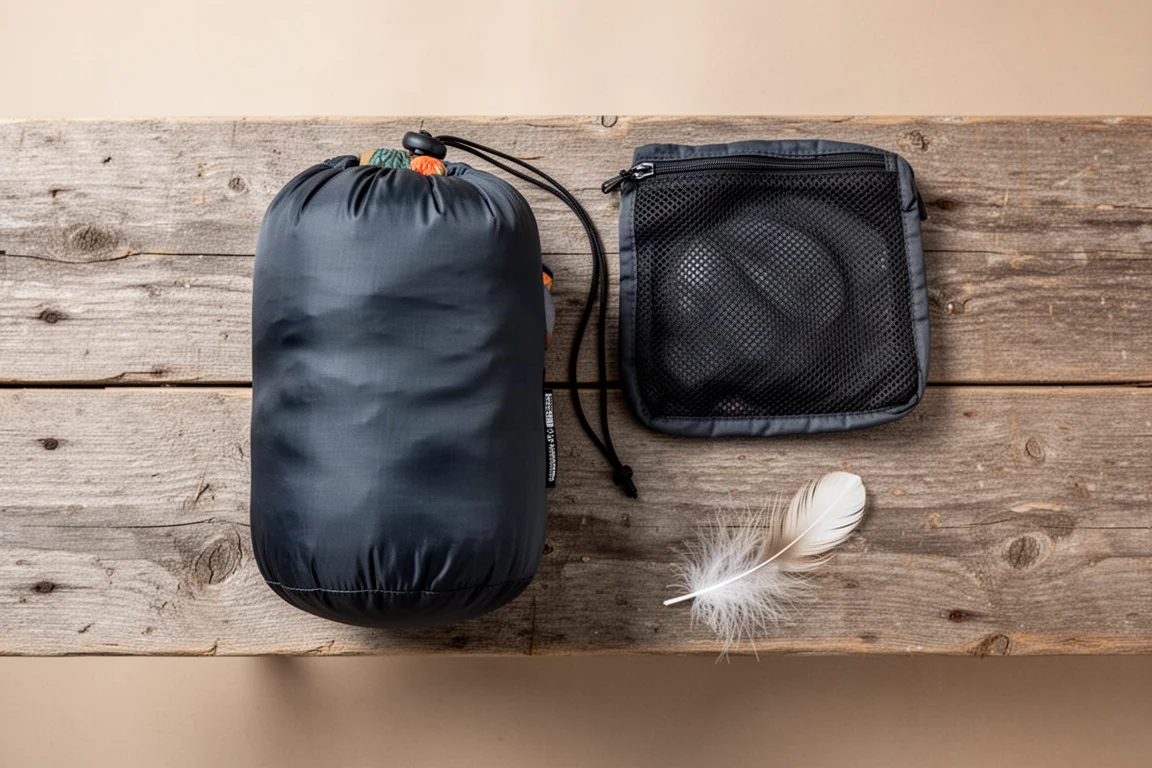
Storage is handled thoughtfully. The included stuff sack is generously sized, compressible, and built with quality hardware. A mesh storage bag is also included, which lets you keep the quilt uncompressed between trips and avoid long-term damage to the down loft. Getting both bags at this price point is unusual.
The quilt is available in two colors, green and blue.
Things to Consider Before Buying
Down loss is the one real drawback, and it applies to every feather-filled product rather than to this quilt specifically. Over roughly six months of use, some feathers have worked their way out of the shell. The rate is moderate: about five or six loose feathers typically show up after a trip. It is not severe, and it is not unusual, but it is worth knowing before you buy.
The lack of a hood is the second consideration. This is a warm-weather and layering product by design, and anyone expecting a three-season hooded bag will be disappointed by the shape rather than the performance.
Third, the temperature ratings are personal. The published numbers have proven accurate in practice, but individual body heat, sleepwear, sleeping pad insulation, and shelter all influence how warm any quilt feels. Treat the rating as a starting point and layer accordingly.
Finally, choose the version deliberately. The smaller quilt is lighter and packs down further, but its 51.8°F comfort rating narrows the seasons it suits. The larger version weighs more and costs more, but it is the one that stretches from summer into fall.
Buying Advice
At $140 for the larger version, this quilt represents strong value. The combination of a YKK zipper, duck down insulation, Duraflex hardware, two storage bags, and genuinely versatile use makes the price feel low relative to what is in the box. Fit and finish at this level is not something to take for granted.
The smaller version carries a retail price of around $90, and it is worth being patient: sales bring it down to roughly $60 at times. Seasonal discounts are common across the range, so waiting a few weeks can meaningfully change what you pay.
If your trips run warm and you want the lightest possible option, the smaller version is the sensible pick. If you want one quilt that handles summer nights and cooler fall evenings, or that can be layered over an existing bag, the larger version is the one to choose.
Conclusion
The NatureHike Ultralight Down Quilt does a lot of things well and does them at a price that is hard to argue with. The warmth claims hold up, the construction is clean, the weight is low for the coverage it offers, and the ability to shift between sleeping bag, quilt, blanket, and hammock over-quilt means it earns space in a pack rather than sitting in a gear bin.
The down loss is real but minor, and it is the nature of the material rather than a defect in this particular product. The absence of a hood is a design decision that suits its intended temperature range.
For warm-weather camping, shoulder-season layering, and hammock setups, this is a confident purchase. Match the version to your coldest expected night, and it will serve you well across the seasons it is built for.
Product link
View more details for NatureHike Ultralight Down Quilt
This product is mentioned in the review. Check the specifications, options, and compatibility before buying.
View more details for NatureHike Ultralight Down QuiltFurther reading
Related Reviews
Camping Sleep Systems
Backcountry Sleep System Guide: Two Pads and Two Pillows for Colder Nights
Two sleeping pads and two camp pillows that cut pressure points and tossing, plus the quilt setup habits that keep cold air out of your sleep system.
Camping Sleep Systems
Extreme Cold Sleep System: Three Pieces That Make Winter Camping Work
A practical look at the three core pieces of an extreme cold sleep system that together handle wind, cold ground, and moisture on sub-zero nights.
Camping Sleep Systems
OneWind Top Quilt Review: One Piece of Gear, Four Ways to Sleep
A practical look at the updated OneWind Top Quilt, covering its quilt, sleeping bag, blanket, and poncho modes, the new sleeping pad panel, sizing, weight, and what to check before ordering.