Camping Sleep Systems
Extreme Cold Sleep System: Three Pieces That Make Winter Camping Work
A practical look at the three core pieces of an extreme cold sleep system that together handle wind, cold ground, and moisture on sub-zero nights.
Introduction
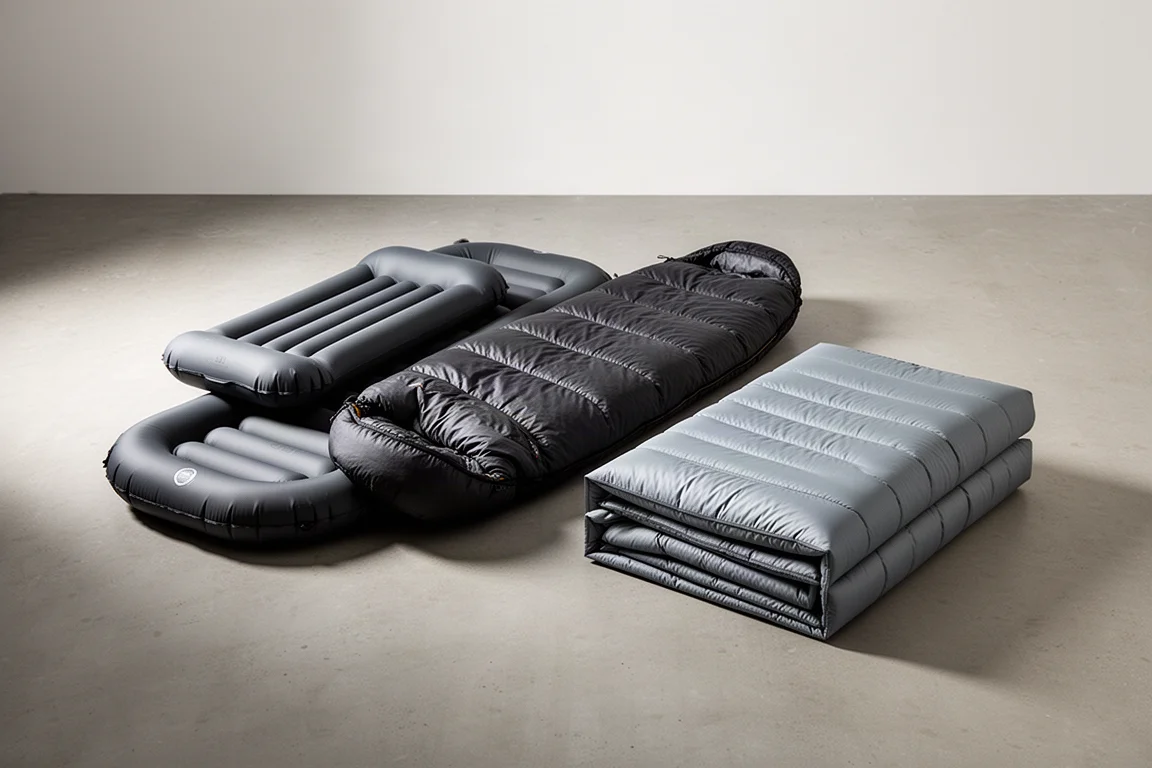
Sleeping outdoors in extreme cold, which for practical purposes means minus 40 or below, is a safety problem before it is a comfort problem. Simply being outside at those temperatures carries real risk, and spending the night there raises the difficulty again. What works is not a single miracle product but a system, built gradually by sleeping at colder and colder temperatures and adjusting one piece at a time until a full night at minus 50 degrees Celsius became not only survivable but comfortable enough to sleep straight through.
Three dangers shape that system: wind, cold ground, and moisture. Each one can strip warmth out of otherwise excellent gear, and each one needs its own answer. The three pieces below cover the core of a setup built for that kind of cold.
What an Extreme Cold Sleep System Has to Handle
Wind is the first problem to solve, because it pulls heat out of even the warmest sleep system. The most effective countermeasure is not a piece of gear at all but a decision: choose a protected campsite and avoid open areas where wind can sweep through. A tent pitched high off the ground is a similar mistake, since air funnels underneath and cools the sleeper from below. A sheltered site and a tent without drafts do a great deal of the work.
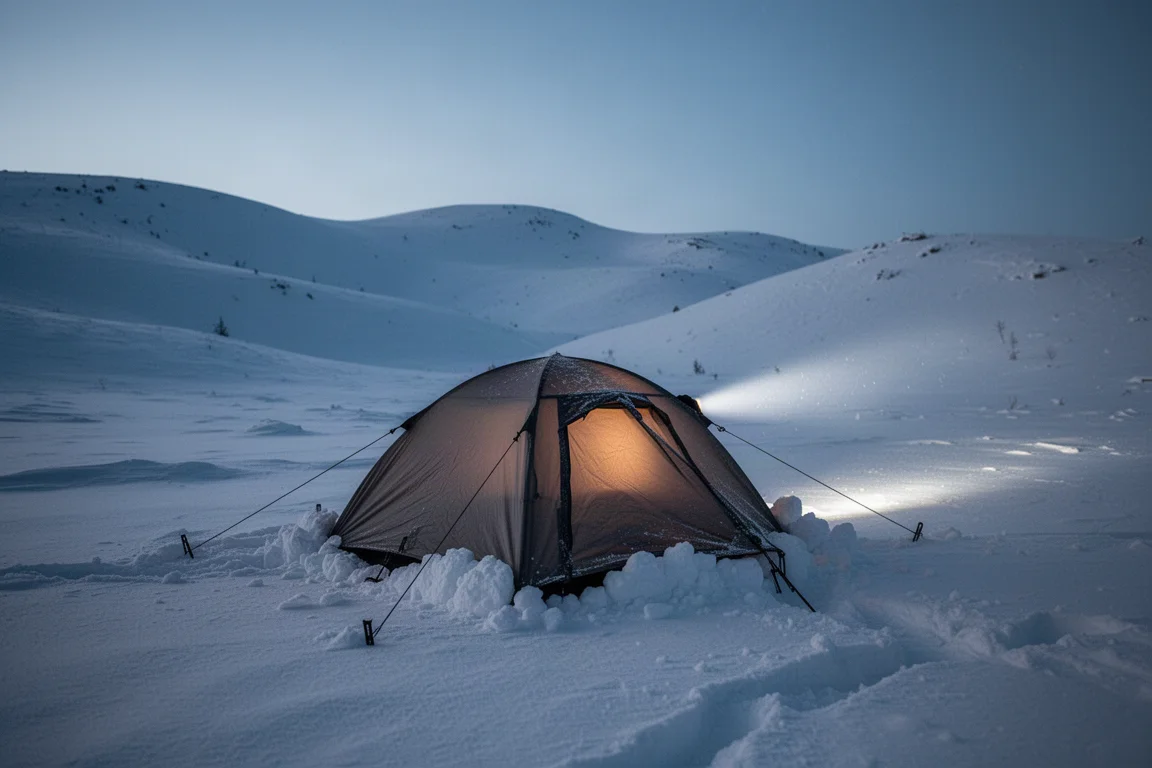
For anyone who prefers a floorless tent in winter, piling snow around the edges seals out wind effectively. Once wind is under control, the remaining work is a matter of layering insulation below and above the body, and then keeping moisture moving through the system instead of letting it collect inside it.
Ground Insulation: Building a Base Under the Pad
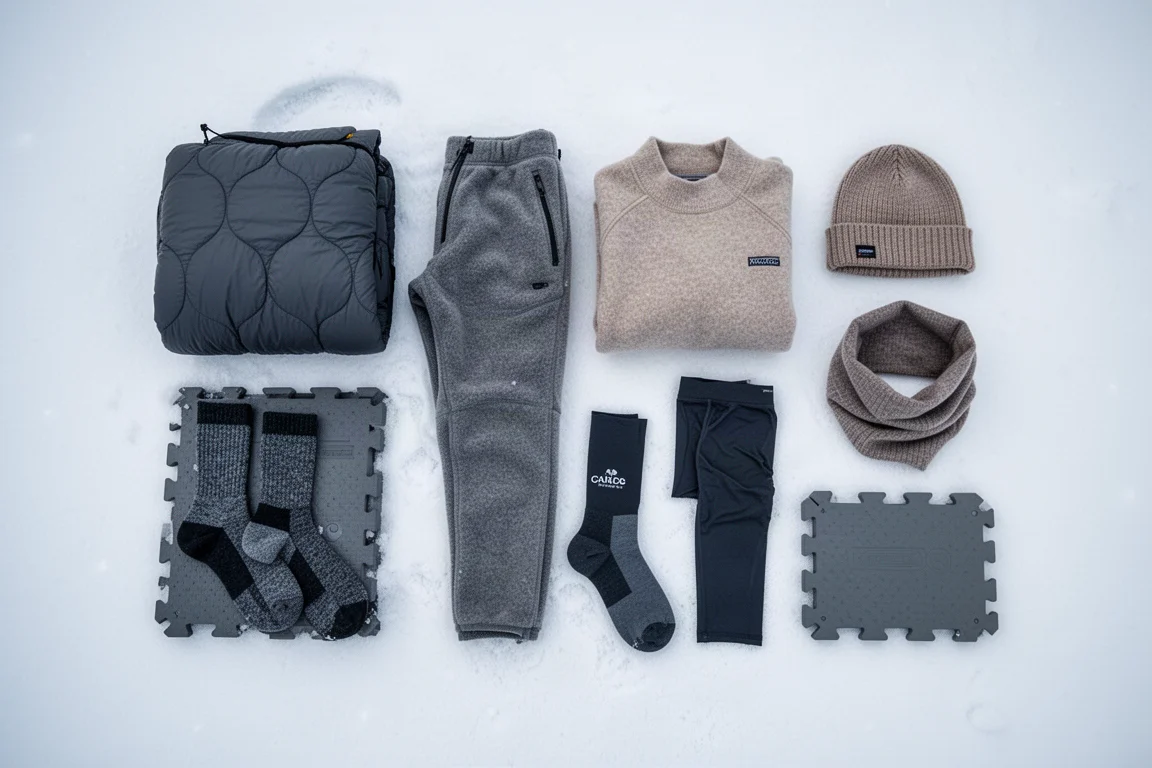
Ground insulation works best as three parts rather than one. The first is a thin reflective mat. On its own it adds little warmth, roughly half an R value if it has a little foam in it, but it protects the whole sleep system from abrasion and lifts it slightly off the ground, which matters in a floorless tent.
It is worth being clear about how reflective layers actually work. A reflective surface returns heat to the sleeper and reduces radiative heat loss, but only when it is not pressed against something solid. In direct contact with a solid surface it conducts heat instead, and the warmth boost disappears. Placement matters more than the material.
The second part is a full foam mat, which reduces conductive heat loss to the ground and adds roughly two R value. It also acts as a fail-safe: if an inflatable pad loses air in the middle of the night, the foam keeps the sleeper insulated from the snow. Folding accordion-style mats are the practical choice over roll-up versions, which are notoriously difficult to unroll in serious cold. Placing the foam mat on top of the pad is marginally warmer, but underneath is noticeably more comfortable.
The Warmest Pad: Therm-a-Rest XTherm NXT
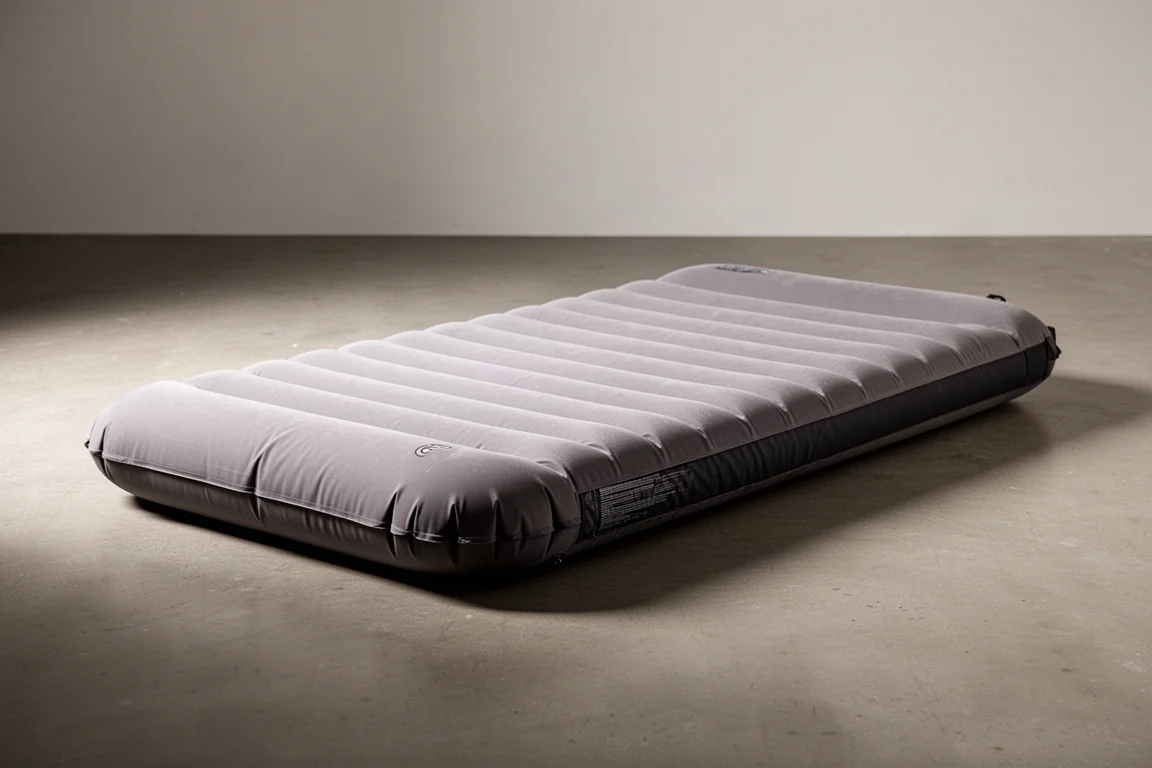
The bulk of ground insulation comes from the Therm-a-Rest XTherm NXT. The reflective film inside the pad is noticeable in use: lying on it, heat is returned to the body rather than lost downward, which is exactly what is wanted when the ground is frozen solid.
The NXT version brings three meaningful changes over the earlier model. It is thicker at three inches, warmer with an R value of 7.3 instead of 6.9, and slightly lighter as well. In a system where every layer has to justify its weight and packed size, that combination is difficult to argue with.
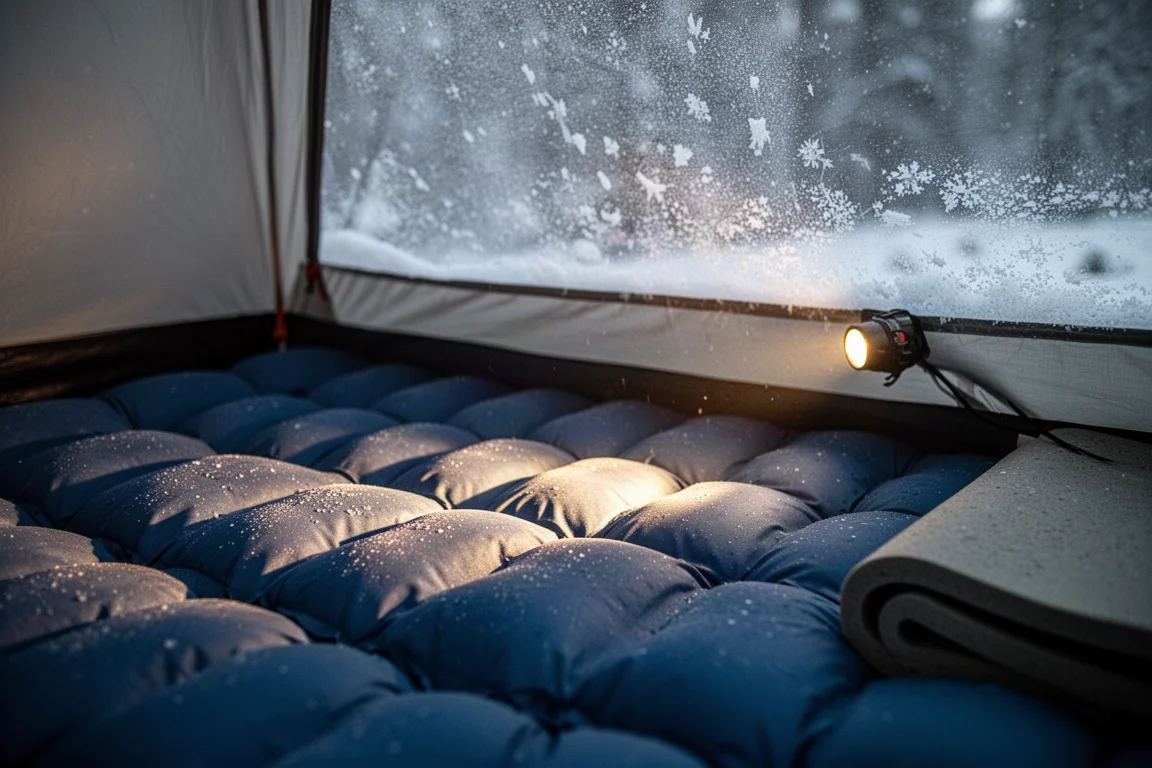
In practice the pad sits at the centre of the ground insulation stack, with the foam mat below and the sleeping bag above. Its thickness also helps on uneven snow, where a thinner pad can bottom out under a hip or shoulder and lose most of its insulating value at that point.
Base Layers and Moisture Management
Around the body, protection from cold air and moisture starts with the base layer and extends outward. A thin, tight long-sleeve top and long pants are the first step, worn not for insulation but for moisture management. Their job is to wick sweat away from the skin, and a thin, close-fitting fabric does that most efficiently. Merino socks serve the same purpose in the same layer.
Above that come insulated socks, fleece pants, and a fleece sweater for added body insulation. Keeping the number of layers manageable is deliberate. Getting out of the tent at extreme cold is genuinely dangerous, so a setup that is quick to undo makes a pee bottle practical, and below minus 30 a pee bottle is not optional. Nobody wants to leave a warm sleep system and a warm tent at those temperatures.
The Core Warmth: Therm-a-Rest Polar Ranger
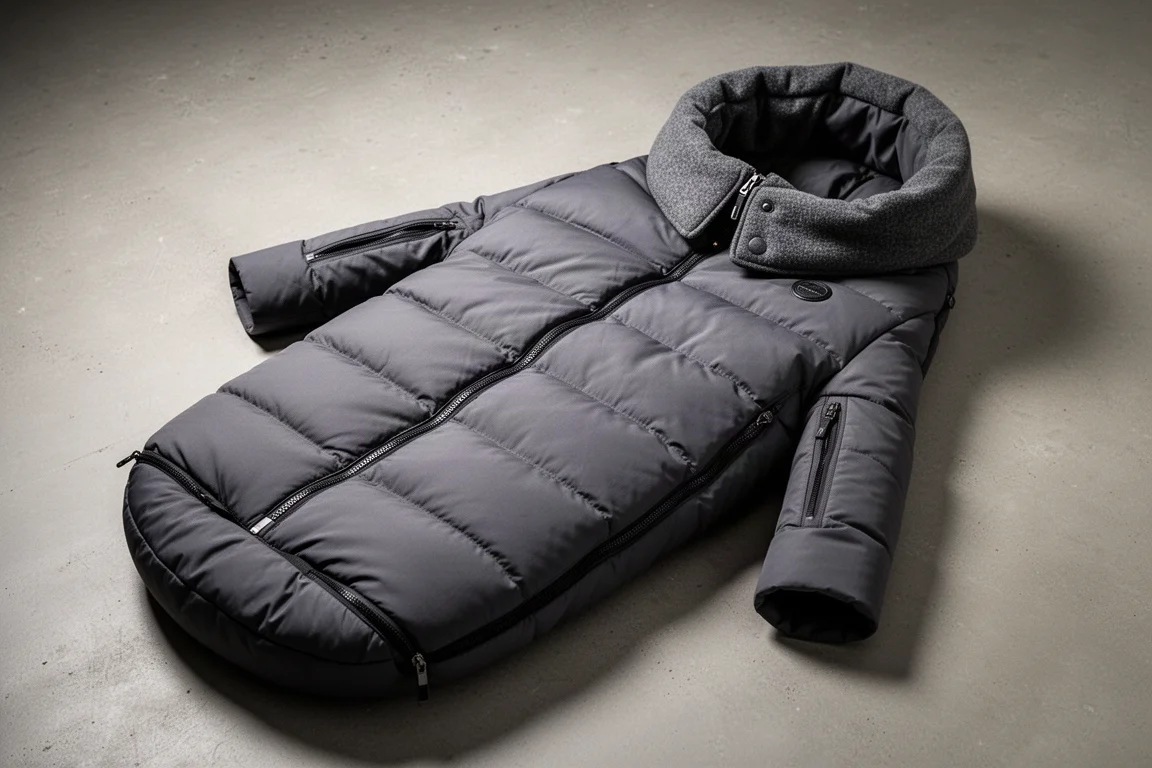
The centrepiece is the Therm-a-Rest Polar Ranger. It is comfort rated to minus 20 degrees Celsius and limit rated to minus 30, and it has been used down to those temperatures comfortably. For how warm it is, it stays reasonably light at 1.48 kilograms.
Its features are clearly designed around cold-weather problems. A snorkel at the head end helps manage moisture and keeps the face warm at the same time. Armholes double as vents in milder conditions, and they let the wearer stick an arm out to hold a book or handle small tasks around the tent without leaving the bag entirely. An updated version released for 2022 made only minor changes to the features, with the significant difference being a switch to 100 percent recycled nylon, so the bag is largely the same performer with a lighter footprint.
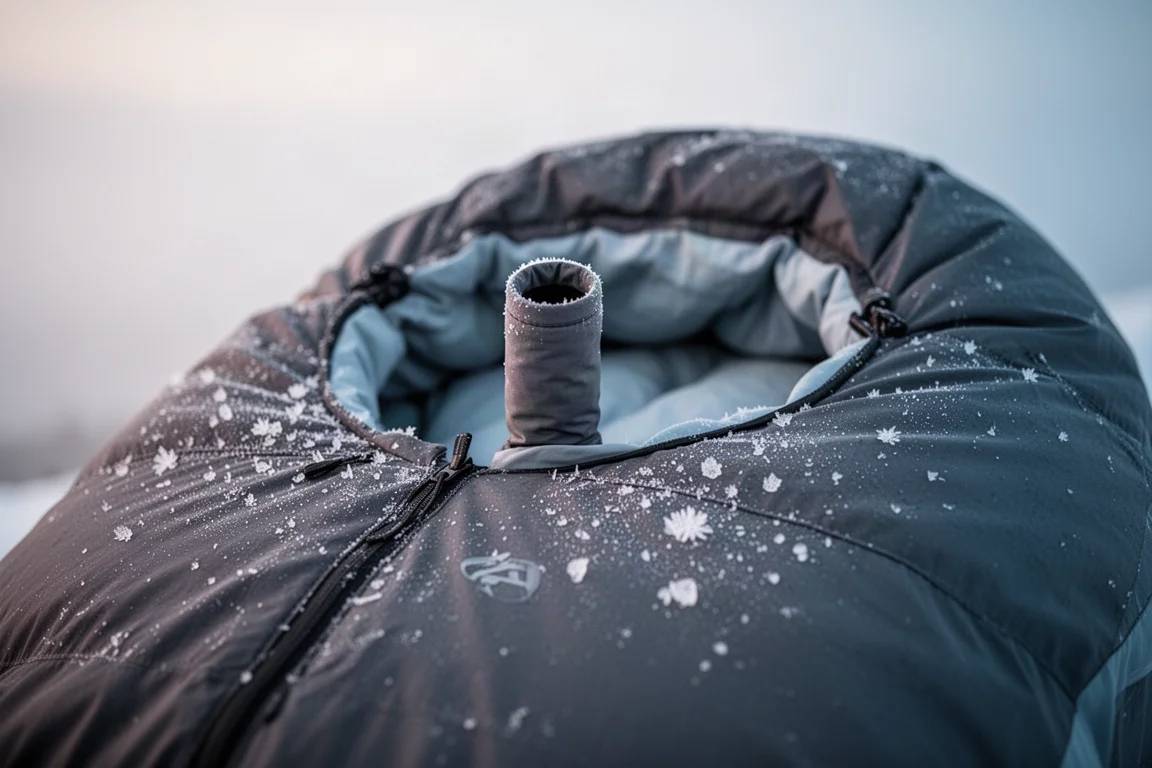
For the coldest nights, the bag is treated as the warm core of the system rather than the whole answer, which is why an outer layer sits on top of it and why the base layers underneath matter so much.
The Outer Layer: Enlightened Equipment Revelation Apex Quilt
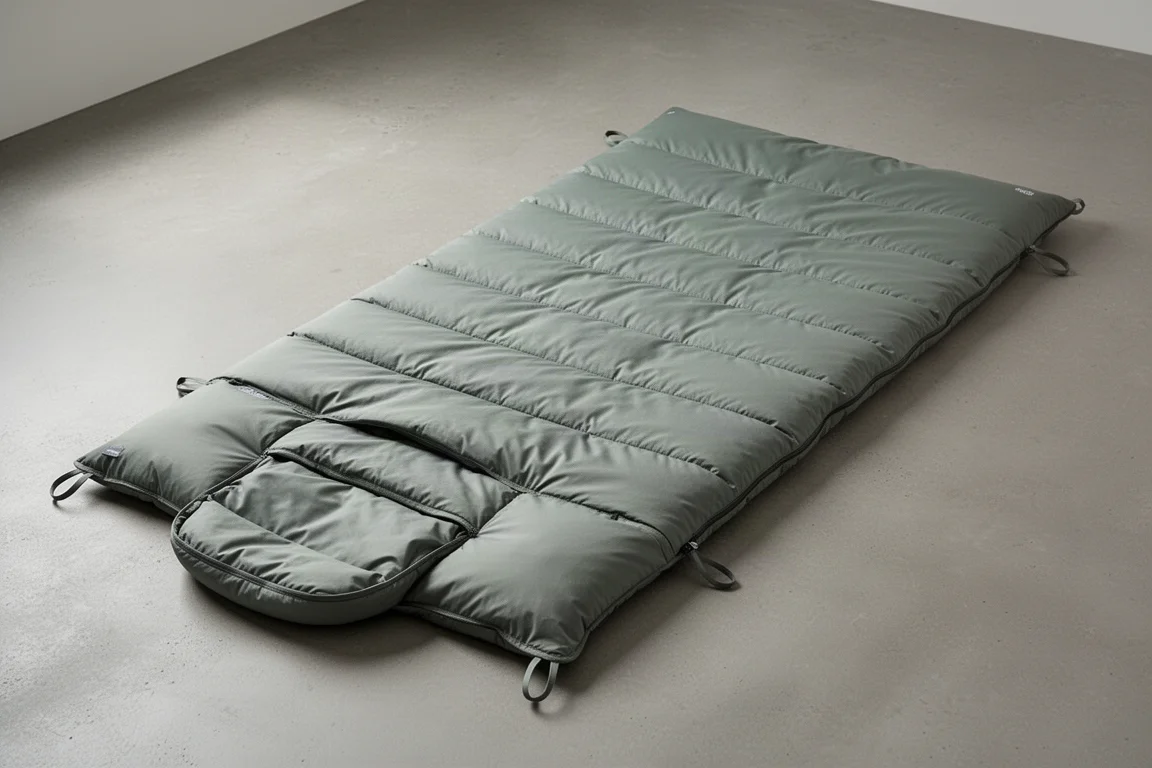
The final major piece is a top quilt that goes over the Polar Ranger. It adds warmth, but its more important role is moisture management, and that is what makes it worth carrying. The body produces a significant amount of moisture during sleep. Without somewhere for that moisture to go, it accumulates inside the sleep system, reduces the insulation’s performance, and turns a manageable night into a dangerous one quickly.
The path moisture takes runs from the skin into the base layers, then outward as vapour through each breathable layer. As that vapour moves toward the colder outer edge of the temperature gradient, it eventually condenses into liquid. The one place it must not condense is inside the down of a sleeping bag, because wet down loses its loft and its warmth. A synthetic top quilt gives the vapour a safe place to condense, since synthetic insulation keeps its loft when exposed to moisture.
The Enlightened Equipment Revelation Apex quilt uses Apex insulation, which is relatively light and less bulky than some other synthetic options. It ships with pad straps: small clips on the quilt attach to straps wrapped around the sleeping pad, which helps lock out drafts and lock in warmth. On the head, a merino hat and merino neck gaiter are usually enough, with a synthetic hood added when conditions demand more.
Buying Advice
Build the system in the order the dangers arrive. Wind protection and campsite selection come first, because no amount of insulation compensates for an exposed pitch. Ground insulation comes next, and the pad does the heaviest lifting there, supported by a foam mat that also serves as a backup. Only then does the sleeping bag and the outer quilt come into play, and the quilt earns its place as much through moisture control as through added warmth.
A hot tent is a worthwhile addition for the evening hours, providing a warm place to read or watch something without climbing straight into a sleep system. It is generally not kept running overnight, so the sleep system still has to stand on its own. Matching each layer to the temperatures actually expected, and testing the full setup on progressively colder trips, is the most reliable way to end up with something that works when it matters.
Conclusion
A sleep system for extreme cold is a stack of small, deliberate decisions: shelter the pitch from wind, insulate thoroughly from the ground up, and give moisture somewhere safe to go. The XTherm NXT handles the ground, the Polar Ranger provides the warm core, and the Revelation Apex quilt protects the whole setup from the moisture that would otherwise quietly undo it. Together they turn a night at minus 40 or below from a gamble into something a well-prepared camper can sleep through.
Further reading
Related Reviews
Camping Sleep Systems
Backcountry Sleep System Guide: Two Pads and Two Pillows for Colder Nights
Two sleeping pads and two camp pillows that cut pressure points and tossing, plus the quilt setup habits that keep cold air out of your sleep system.
Camping Sleep Systems
NatureHike Ultralight Down Quilt Review: A Versatile Warm-Weather Sleep System
A close look at the NatureHike Ultralight Down Quilt, covering real-world warmth, build quality, weight, sizing, and the one trade-off to expect from any down-filled product.
Camping Sleep Systems
OneWind Top Quilt Review: One Piece of Gear, Four Ways to Sleep
A practical look at the updated OneWind Top Quilt, covering its quilt, sleeping bag, blanket, and poncho modes, the new sleeping pad panel, sizing, weight, and what to check before ordering.