Hi-Fi Amplifiers
Zen Amp SSD Review: A Boutique British Integrated Amplifier With a Warm Class A Voice
A hand-built British integrated amplifier with a liquid, Class A style midrange, a vast sound stage, and a few practical details worth checking before you buy.
Introduction
Zen Amp is a small British manufacturer building amplifiers by hand in a workshop in Kent, England. The brand has been running since 2017, and its founder, Nick Cresswell, has been designing amplifiers for more than 20 years. Both details matter when you are weighing up a purchase from a boutique maker, because they say something about how long the company is likely to be around and how well its products can be supported.
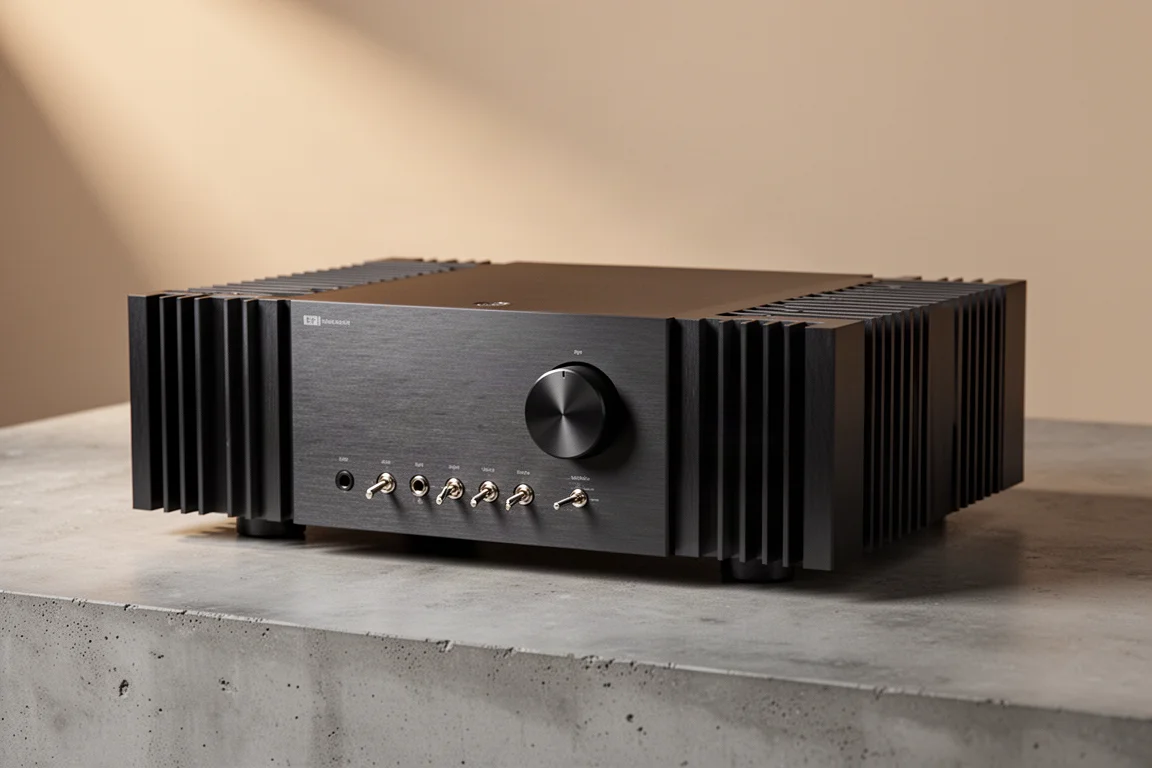
The Zen Amp SSD is the integrated amplifier at the heart of the range, sold direct at £1,999. It is built around a circuit topology the company calls Simultaneous Class A, a refinement of the current dumping approach Quad patented in 1978 with its 405 power amplifier. The goal is the smooth midrange character associated with Class A operation, without the efficiency penalty that normally comes with it. The internals are fully discrete and through-hole, which keeps servicing and parts replacement straightforward for any competent engineer.
Who This Amplifier Is For
This is an amplifier for listeners who care about tone as much as detail. If your priority is a liquid, unhurried midrange and a sound stage that spreads well beyond the speakers, the Zen Amp SSD is aimed squarely at you. It also suits anyone running a turntable, because the company offers an optional moving magnet phono stage for £140, and phono stages are something of a speciality for this brand. Fitting moving coil support raises the cost further.
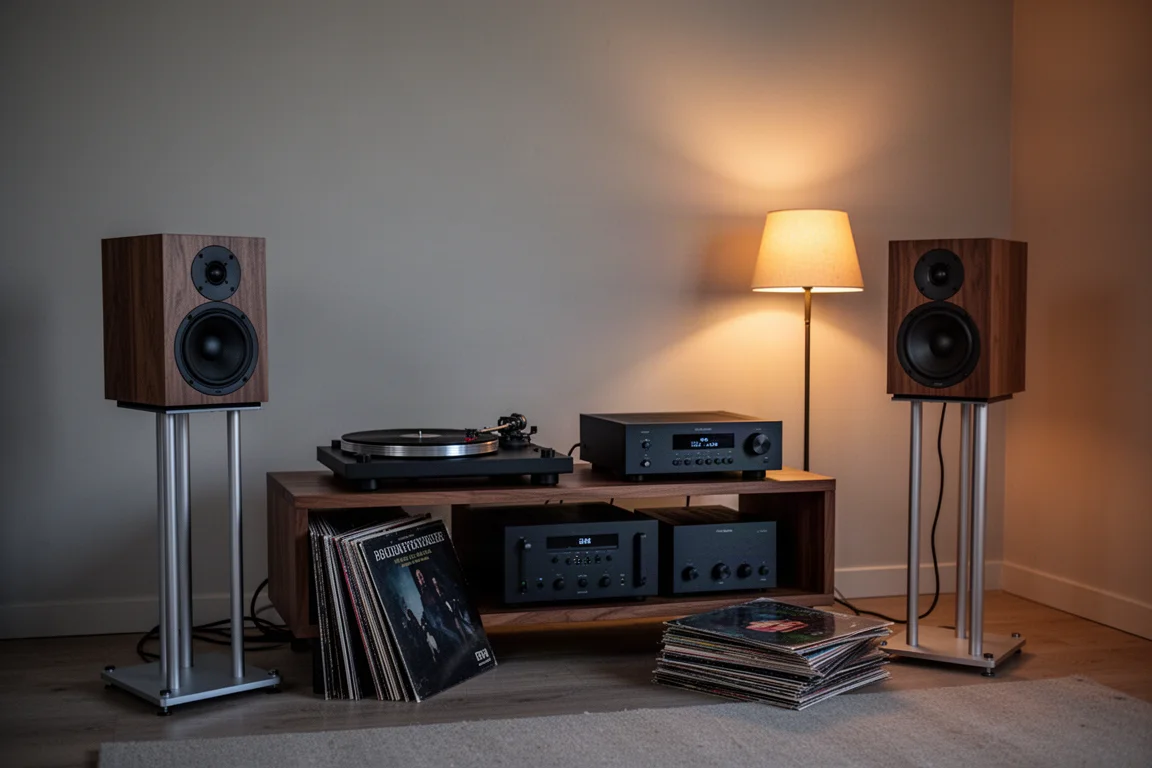
Owners of high-sensitivity speakers will appreciate the rotary gain control, which lets you trim the amplifier’s gain to reduce hiss. It is a subtle adjustment rather than a dramatic one, but it gives you enough variation to make sensitive designs behave. The amplifier is quiet even at a high gain setting, so this is a refinement rather than a fix.
If your listening leans towards forensic detail and tight, punchy bass above all else, the character here is deliberately different, and it is worth being honest with yourself about which camp you fall into before committing.
How Simultaneous Class A Works
To understand what you are buying, it helps to know why Class A designs still hold appeal. Single-ended Class A amplifiers use one transistor to handle the entire signal, so there is no crossover distortion, but the transistor stays on at full power the whole time, which generates a lot of heat and limits output power. Class B designs split the work between two transistors, each handling half the waveform, and distortion appears at the moment they hand over. Most amplifiers today are Class AB, which applies a small bias current so the transistors never fully switch off, smoothing that transition, although distortion still tends to rise as you push the amplifier harder.
The Zen Amp SSD takes a different route. It uses a dual output stage: a small Class A stage drives a much larger output stage rated at 120 W per channel into 8 ohms, with an extra 50 mA of bias on the Class AB section. Together the two stages form a feed-forward error correction network. In practice the Class A stage connects to the speakers through a small resistance, and the small voltage drop across that resistance is detected by the larger stage, which dumps current into the speaker load. It is a neat piece of engineering that runs far cooler than a pure Class A design.
The manufacturer quotes total harmonic distortion of 0.008% at low volume, rising only marginally to 0.01% close to full power, with most of the distortion being second-order harmonic distortion at low frequencies. That low-frequency behaviour is a large part of why the amplifier sounds warm rather than clinical.
Build, Controls, and Connectivity
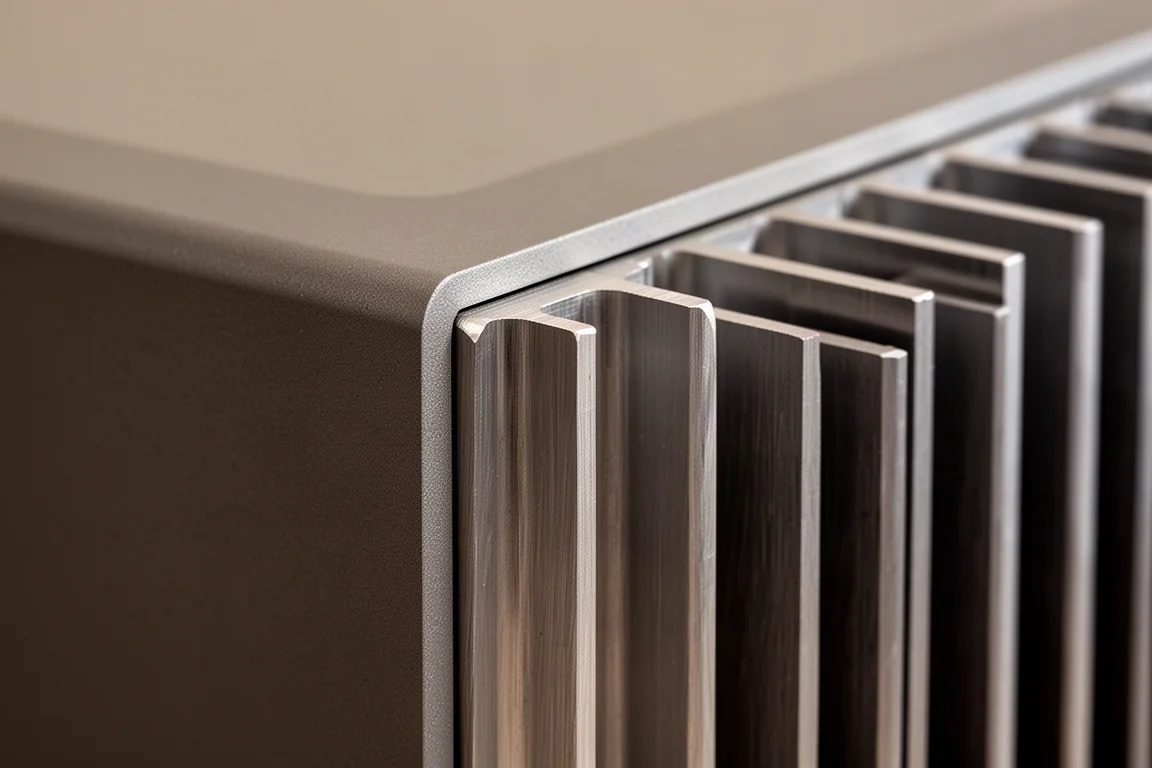
The chassis is machined from chunky sheets of aluminium, measuring 430 x 78 x 335 mm, or roughly 16.9 x 3.1 x 13.1 inches, and weighing about 9 kg. It feels solidly constructed, and the styling reads as artisan, with the brand logo placed almost as an afterthought. One practical note: the edges of the heat sinks are not radiused, so take care when lifting the unit.
The front panel covers the essentials well. There is a 6.35 mm headphone jack, a rotary dial for input selection, and toggle switches to engage a recording loop and to select Dynamic Equalization. That last one behaves like a loudness control, but it only lifts bass and treble subtly. A second rotary control adjusts amplifier gain, and a further set of toggles selects the A and B speaker terminals and powers the unit up. The layout is not symmetrical, which some owners will notice more than others. A remote control is available as a £99 option.
Day-to-day usability is helped by an automatic standby mode: with no signal for 30 minutes the amplifier drops into standby and powers back up as soon as a signal is detected. Inside, a 300 VA toroidal transformer sits in a pot to limit radiated noise, which matters because the preamplifier circuit is mounted right next to it. The phono stage, which handles even lower-level signals, is positioned further away. Each channel uses four Toshiba output devices mounted to the heat sink, and the power supply is fully regulated, which keeps voltage steadier under heavy load and allows the designer to use two 4,700 microfarad electrolytic capacitors rather than a much larger bank.
Main Strengths
The headline strength is the midrange. What you expect from a Class A amplifier is a liquid smoothness born from the absence of crossover distortion, and that is exactly what this amplifier delivers. There is not even a glimmer of harshness, and the effect is immediate on well-recorded vocals and acoustic instruments.
The sound stage is the second standout. It is wide and deep, and it holds very good stereo imaging while doing so, which is a combination that smaller amplifiers often struggle to achieve. The presentation is spacious enough to place a recording in a believable acoustic rather than pinning it between the speakers.
Driving capability also deserves credit. With stand-mount speakers that need a bit of current before the sound stage opens up, the Zen Amp SSD never felt like it was struggling for power, even with the volume cranked up and average listening levels above 80 dB. The Dynamic Equalization switch is genuinely useful as well, particularly on tracks where the flat setting comes across as a touch mid-centric. The variable gain control and the optional phono stage round out a thoughtful feature set.
Sound Character and System Matching
Tone is where this amplifier makes its case, and where it will divide listeners. It is distinctly warm, with a softness in the bass when handling aggressive low-frequency transients. That softness is the one area where the design feels like it leaves something on the table: a little more grip in the lower registers would lift the performance from very good to something exceptional. Against a more neutral amplifier, the differences are clear. A leaner, more analytical design will sound more agile in the lower frequencies, express more timbral nuance through the mids, and offer a more airy quality in the highs, with greater detail and precision and less tonal coloration.
The pairing story is unusually encouraging. With cool to fairly neutral stand-mount speakers, the result was close to synergy perfection: the creaminess of the amplifier came through while the crispness of the speakers was retained. That is not the usual outcome when two components sound so different, since the result is normally an averaging of their characters. With a second pair of neutral-leaning speakers at almost twice the price, the same pattern held, with a full-sounding midrange and the pace and rhythm that makes those speakers special still intact. Warm, cosy speakers, on the other hand, are the wrong match. A warm amplifier with warm speakers pushes things too far in one direction, and a 4 ohm load with 88.5 dB sensitivity and two midwoofers to keep in check was simply not a happy combination.
Things to Consider Before Buying
The bass softness is the main caveat. If you own ultra-revealing speakers, you will likely want more detail and tighter bass control to get the best from them, and vintage designs that reward fine timbre and crisp leading edges may leave you wanting a little more musical insight. This is not an amplifier that flatters every system, and warm-sounding speakers should be avoided.
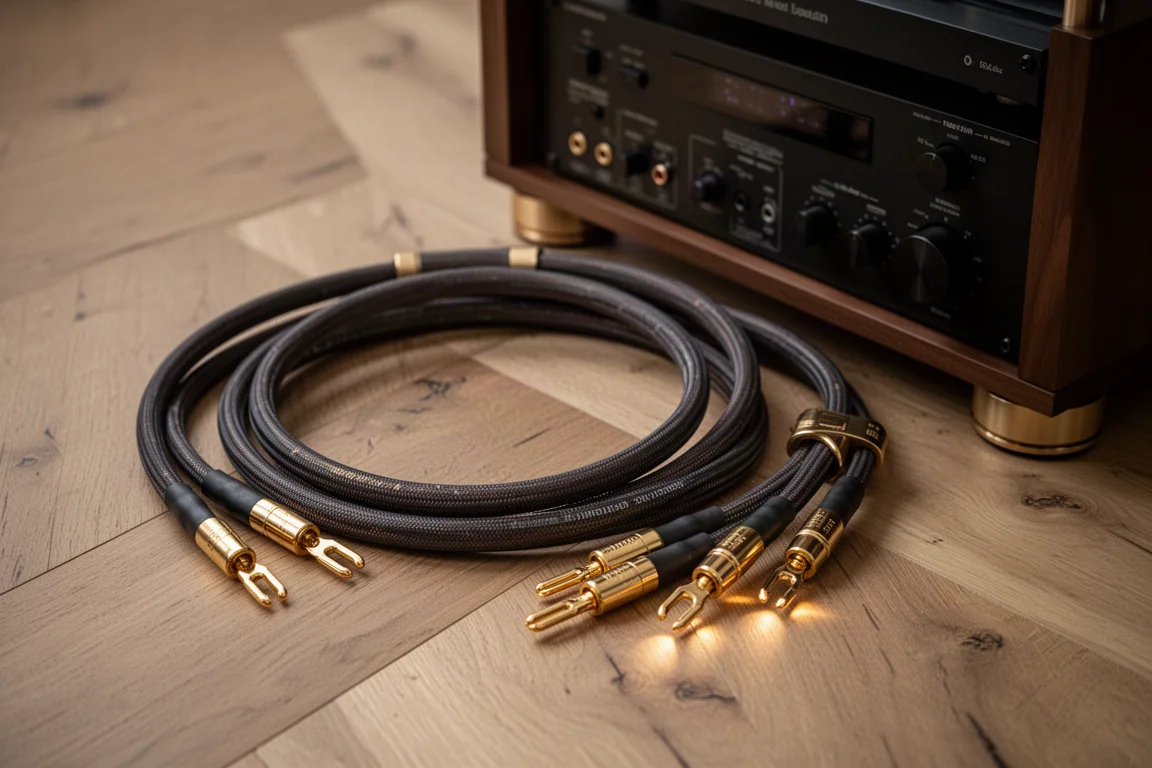
Two practical points are worth flagging. First, the two sets of speaker terminals sit above the IEC mains inlet, which makes fitting heavy-duty banana plugs and spade connectors more awkward than it should be, even though a power cable at that position should not cause electrical interference with low-impedance speaker connections. The RCA connections, by contrast, are good quality and give access to the recording loop, line-level inputs and the phono stage. Second, the remote control is a paid option rather than standard equipment, so factor that in if you rely on one.
How It Compares With Other Amplifiers
Against a well-regarded neutral integrated in a similar price band, the Zen Amp SSD gives up some agility in the lower frequencies, some timbral nuance through the mids and some airiness in the highs. What it returns is a warmer, more coloured presentation with a wider and deeper sound stage and very good stereo imaging. Which of those you prefer is a matter of taste rather than a question of one being better.
It is also worth setting expectations correctly at the top end. This is not an amplifier chasing the performance of a £3,000 reference integrated, but it has given benchmark amplifiers below £2,000 a genuinely good run for their money. Its sound stage dimensions and level of detail delivery were a match for a tube amplifier with upgraded valves across all three stages, with the difference showing up in tone rather than in scale: the tube design was fairly well balanced, while the Zen Amp SSD is distinctly warmer.
Buying Advice
Buy the Zen Amp SSD if you want a warm, liquid, Class A style midrange with a spacious sound stage at a price that undercuts much of the established competition. It is a particularly sensible choice for vinyl listeners, since the optional moving magnet phono stage is inexpensive and the brand already has a reputation in that area. Owners of high-sensitivity speakers will also benefit from the gain control.

Match it with speakers that sit on the cool or neutral side of the scale, and the amplifier’s creaminess works with the speaker’s crispness rather than against it. Pair it with already-warm speakers and the result will be too much of a good thing. Before ordering, decide whether you want the remote control and the phono stage, since both affect the final cost, and be prepared to lift the unit carefully because of the unradiused heat sink edges.
Conclusion
The Zen Amp SSD offers something different from the norm, and the way it sounds is genuinely a bit special: a liquid, rich midrange with very good detail retrieval, all presented across a vast sound stage. In those areas it is matched only by the very best tube and solid state Class A amplifiers in this market segment. The design goal of delivering Class A character without the efficiency drawbacks has been met, and the serviceable, fully discrete internals add real long-term reassurance.
Two things hold it back from a clean sweep: bass control that could be tighter, and chassis work that could be more considered. If those are acceptable trade-offs, this amplifier earns a strong recommendation. It may not have the sound everyone is chasing, but for listeners who value warmth, space and smoothness, it is likely to win them over.
Product link
View more details for Zen Amp SSD
This product is mentioned in the review. Check the specifications, options, and compatibility before buying.
View more details for Zen Amp SSDFurther reading
Related Reviews
Hi-Fi Amplifiers
Accuphase E-280 Review: Entry-Level Accuphase With Flagship Attention to Detail
A close look at the Accuphase E-280 integrated amplifier, covering its champagne build, AAVA volume control, sound quality, and the speakers and sources that suit it best.
Hi-Fi Amplifiers
Advance Paris A10 Classic vs Yamaha A-S301: Two Integrated Amplifiers Compared
A practical comparison of a $350 integrated amplifier and a $2,500 reference model, covering the differences that matter and the ones that do not.
Hi-Fi Amplifiers
Affordable Chinese Amplifiers Worth Buying: Five Budget Hi-Fi Amps Compared
A practical look at five affordable amplifiers, what each one does well, and the trade-offs to weigh before you buy.