Hi-Fi Amplifiers
Accuphase E-280 Review: Entry-Level Accuphase With Flagship Attention to Detail
A close look at the Accuphase E-280 integrated amplifier, covering its champagne build, AAVA volume control, sound quality, and the speakers and sources that suit it best.
Introduction
Accuphase is one of those brands that commands quiet respect across the audio industry, even where it is not a household name. The E-280 is the entry point to the company’s integrated amplifier range and sells for £4,950 in the UK. It replaces the E-270, which was launched in 2016, and it carries the latest generation of the company’s own volume control technology.
The company itself dates back to 1972, when two brothers left Trio Kenwood to build a dedicated audio business. It was renamed Accuphase Laboratories on its tenth anniversary, taking its name from a core engineering principle: accurate phase. Five decades on it remains a small independent manufacturer, and every product is still designed and made in-house in Yokohama, Japan.

That history explains the reputation, but it does not answer the practical question. This review covers what the E-280 actually offers: the finish and controls, the circuitry behind the front panel, how it sounds with demanding material, and the speakers and sources that let it perform at its best.
Who This Product Is For
The E-280 is aimed at listeners who value detail, refinement and a three-dimensional soundstage above sheer weight and warmth. It suits a system built around revealing stand-mount speakers from around £2,000 upward, or floorstanders from around £3,000 upward, where the amplifier’s imaging and resolution can be heard properly.
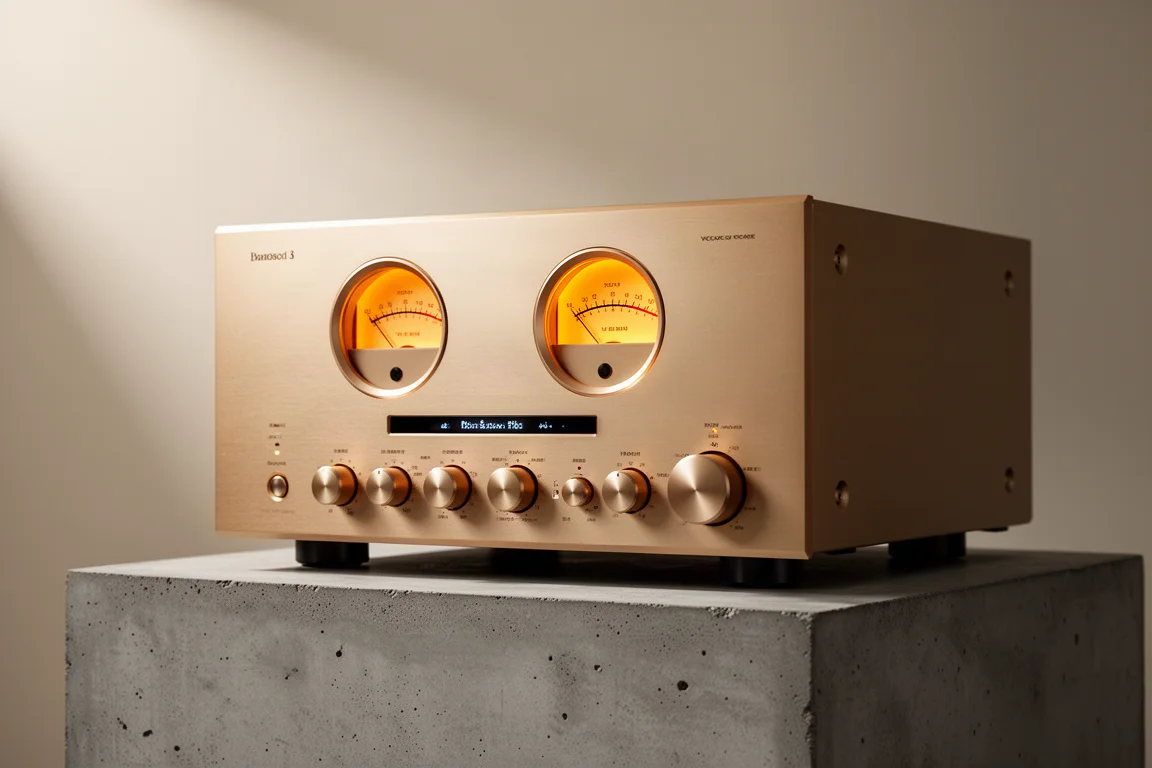
It also appeals to anyone who enjoys the physical side of hi-fi ownership. Two VU meters, a champagne front panel and dials with real resistance are part of the experience, and the optional DAC and phono modules mean you only pay for the inputs you will genuinely use.
Design and Build Quality
The 12.5 mm half-inch champagne front plate is beautifully finished, and the large rotary aluminium dials have polished bevel edges. The resistance you feel as you click through inputs and the smoothness of the volume dial are exactly the sort of details that reassure you the money went somewhere sensible. Two VU meters move in time with the music, and the volume is displayed below the illuminated logo in half-decibel steps, which makes fine adjustment straightforward.
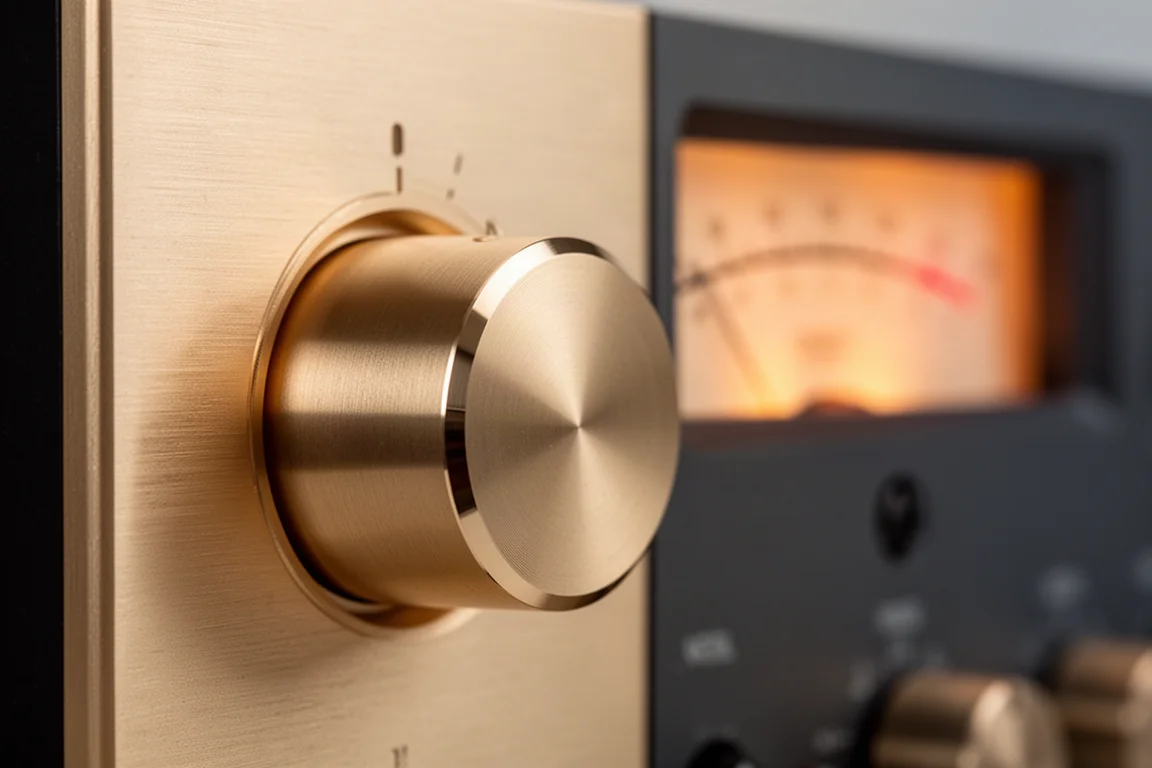
Along the bottom sits a bank of small buttons and dials. These are plastic rather than aluminium, a reasonable concession on the entry model, and they cover the essentials: power, Main In bypass so the E-280 can be used as a power amplifier, A and B speaker selection, access to the recording loop, input selection for the optional DAC board, display defeat, moving magnet and moving coil selection for the optional phono board, phase invert, tone controls, bass, treble, balance, mono, loudness compensation, and a button that attenuates the volume by 20 dB for quieter listening sessions. A 6.25 mm headphone jack is provided too, and the supplied remote control is a chunky aluminium handset.
Features and Connectivity
Behind the front display sits the AAVA assembly, short for Accuphase Analog Variable Gain Amplifier. Rather than attenuating the signal with a rotary variable resistor, it uses 16 voltage-to-current converters arranged in four parallel circuits to provide different gain, which is how the E-280 maintains its maximum stated signal-to-noise ratio of 107 dB. The design also reduces noise compared with the previous version of the circuit.
Balanced remote sensing is a separate technology with nothing to do with the remote control. It provides balanced feedback for both the signal and ground lines from close to the speaker terminals, keeping output impedance low. The result is a damping factor of 500, an improvement of 25 percent over the 400 of the outgoing E-270, and damping factor plays a significant part in an amplifier’s ability to keep control of a speaker.
Inside, two power supply filter capacitors are rated at 30,000 microfarads each, which is generous for a 90 watt amplifier. The transformer is encased in a metal jacket to reduce radiated noise and uses a traditional EI type rather than the toroidal designs common in many European amplifiers. Two power amplifier modules run in a dual mono configuration for better channel separation, and the circuit uses discrete through-hole components rather than tiny surface mount parts. Accuphase describes the topology as an instrumentation amplifier with a current feedback circuit, designed to maintain excellent phase characteristics throughout its operating range.
Around the back you will find an XLR balanced input, five single-ended RCA inputs, loop connections for a recording device, pre-outs for an external amplifier or subwoofer, a main input that bypasses the internal preamplifier, and two sets of speaker terminals.
Main Strengths
Detail, refinement and the way the E-280 builds a soundstage are its defining strengths. The leading edges of notes are defined with precision without sounding etched, and the way those notes decay is beautifully handled. On solo piano, the subtle variations in the striking of the keys and the way notes ring out into the room are captured with real delicacy, which depends on high frequencies that are extended and refined rather than bright.
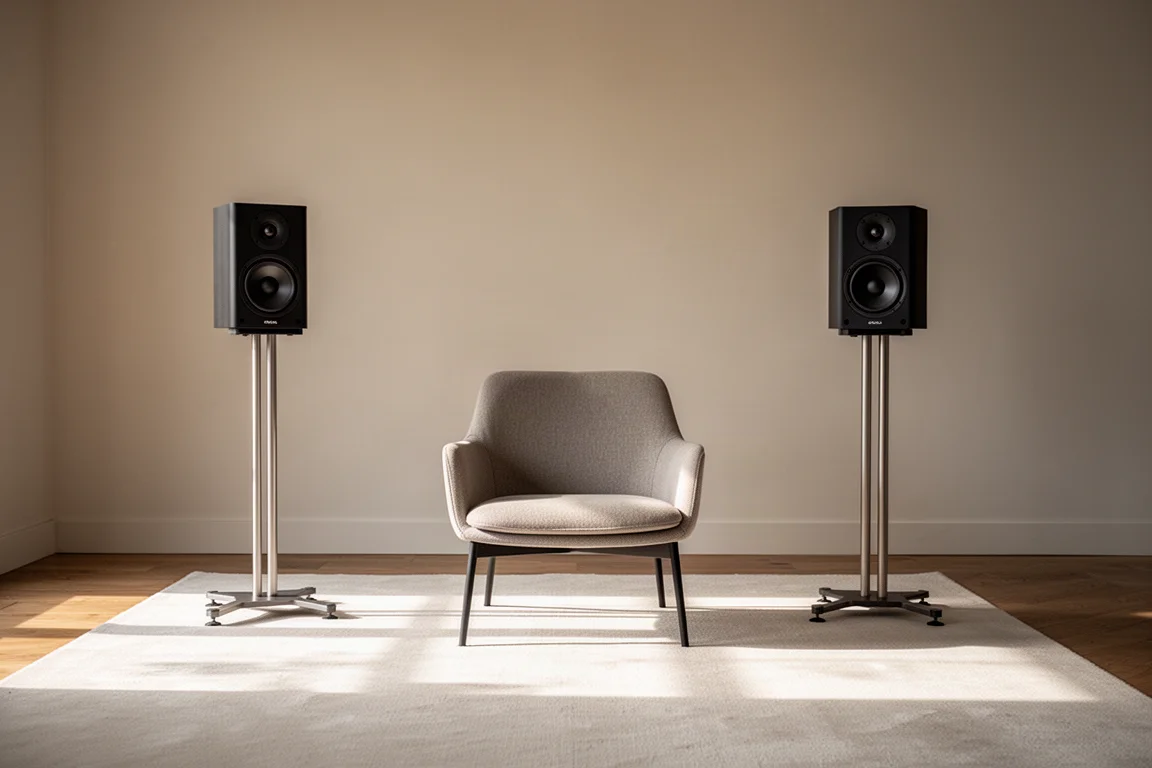
The soundstage is wide, and it has depth and height as well. Performers are placed left to right, front to back and vertically with a precision that is unusual at this price, and everything inside that stage is clearly defined. Tonality is balanced overall, with a slight lightness that keeps the presentation agile rather than lean.
Things to Consider Before Buying
The E-280 is not the last word in weight. There is a touch of lightness to the presentation, and a little more body from the mid-range and bass would be welcome. It would be unfair to call it lean, because everything is in balance, but it is lighter on its feet than a muscular alternative. Bass control is also average for this class. An integrated amplifier such as the Hegel H190, with a damping factor of 4,000, keeps a firmer grip on low frequencies and can match the E-280 for soundstage width, though not for depth, height or imaging precision.
The optional DAC and phono boards are not fitted as standard. That keeps the price focused on the features you will use, but it does mean budgeting for them if you need them, and the performance of those modules depends on the configuration you choose.
Speaker matching matters as well. Speakers that are lean in the bass and mid-range, or that lack definition in the low frequencies, will highlight the amplifier’s weaker points instead of its strengths. The Dali Epicon 2, for example, delivers the detail, soundstage and imaging this amplifier thrives on, but it can sound lean in the mid-range at lower volumes and its midwoofer benefits from an amplifier with plenty of current, which made it a mixed match. On the source side, a resolving outboard DAC is a sensible minimum, and the amplifier rewards better digital sources as you move up the range.
Buying Advice
At £4,950 in the UK, the E-280 competes with pre-power combinations at a similar price, and it holds its own against them for detail and refinement. For speakers, a really good stand-mount at around £2,000 and above, or a floorstander at around £3,000 and above, will show off what the amplifier can do with detail, sound staging and imaging. Steer clear of designs that are lean in the bass and mid-range, or that lack low-frequency definition, and you will be playing to its strengths.
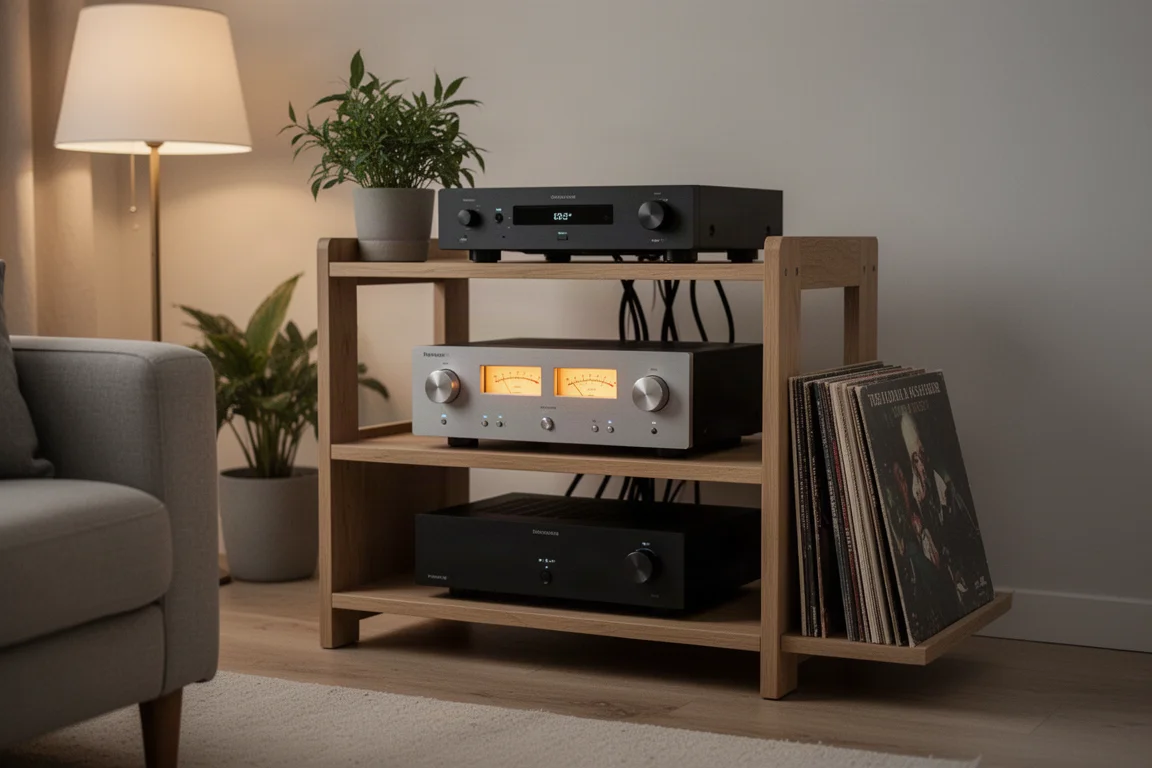
If you need a phono stage or an internal DAC, factor the optional modules into your budget from the start rather than treating them as an afterthought, and pair the amplifier with a source that can keep up with it. Get those two decisions right and the rest of the system falls into place around it.
Conclusion
The E-280 delivers the ownership experience you would hope for from this brand. The champagne finish, the bouncing VU meters and the feel of the volume dial make it a pleasure to use, and the supplied remote does not change that. More importantly, it reproduces music with exquisite detail, a layered soundstage and an imaging precision that is class defining at this price.
A little more bass definition and a more authoritative overall presentation would be welcome, and that is presumably where the larger models in the range come in. For listeners who prize detail, refinement and three-dimensionality over a muscular sound, the Accuphase E-280 is a very strong choice at its price.
Product link
View more details for Accuphase E-280
This product is mentioned in the review. Check the specifications, options, and compatibility before buying.
View more details for Accuphase E-280Further reading
Related Reviews
Hi-Fi Amplifiers
Advance Paris A10 Classic vs Yamaha A-S301: Two Integrated Amplifiers Compared
A practical comparison of a $350 integrated amplifier and a $2,500 reference model, covering the differences that matter and the ones that do not.
Hi-Fi Amplifiers
Affordable Chinese Amplifiers Worth Buying: Five Budget Hi-Fi Amps Compared
A practical look at five affordable amplifiers, what each one does well, and the trade-offs to weigh before you buy.
Hi-Fi Amplifiers
AGD Gran Vivace Review: The Flagship Monoblock Question
The AGD Gran Vivace flagship monoblocks bring full-bodied bass, a saturated midrange and a smooth top end. Here is what the extra power buys over the Audion, and where the design asks for compromises.