Hi-Fi Receivers
Yamaha R-N2000A Review: A Premium Two-Channel Network Receiver Built to Last
A measured look at the Yamaha R-N2000A network Hi-Fi receiver, covering build quality, bench-tested power delivery, phono stage performance, and what to weigh before buying.
Introduction
The Yamaha R-N2000A is a two-channel network Hi-Fi receiver rated at 90 watts per channel into 8 ohms, with both channels driven across the full audio bandwidth. It sells for around $4,000, which places it well above the more affordable R-N1000A at roughly $1,800, and the obvious question is what that extra money actually buys.
Bench testing answers a good part of it. The chassis weighs close to 50 pounds. The heatsink area is larger than what a typical 11-channel AV receiver provides, and the power supply pairs a large toroidal transformer with a bank of four 18,000 microfarad capacitors. Yamaha rates the amplifier conservatively, and the measurements back that up.
This review covers the build, the measured power delivery, the preamplifier and phono stage, the digital section, and the practical questions worth answering before you commit to a receiver at this price.
Who This Receiver Is For
The R-N2000A is aimed at listeners building a serious two-channel system who want streaming, vinyl and television sound handled by a single, well-built box. It is a natural fit for anyone whose speakers are hard to drive: low-sensitivity designs with low tuning and a low nominal impedance are exactly the loads this receiver was measured to handle without strain.
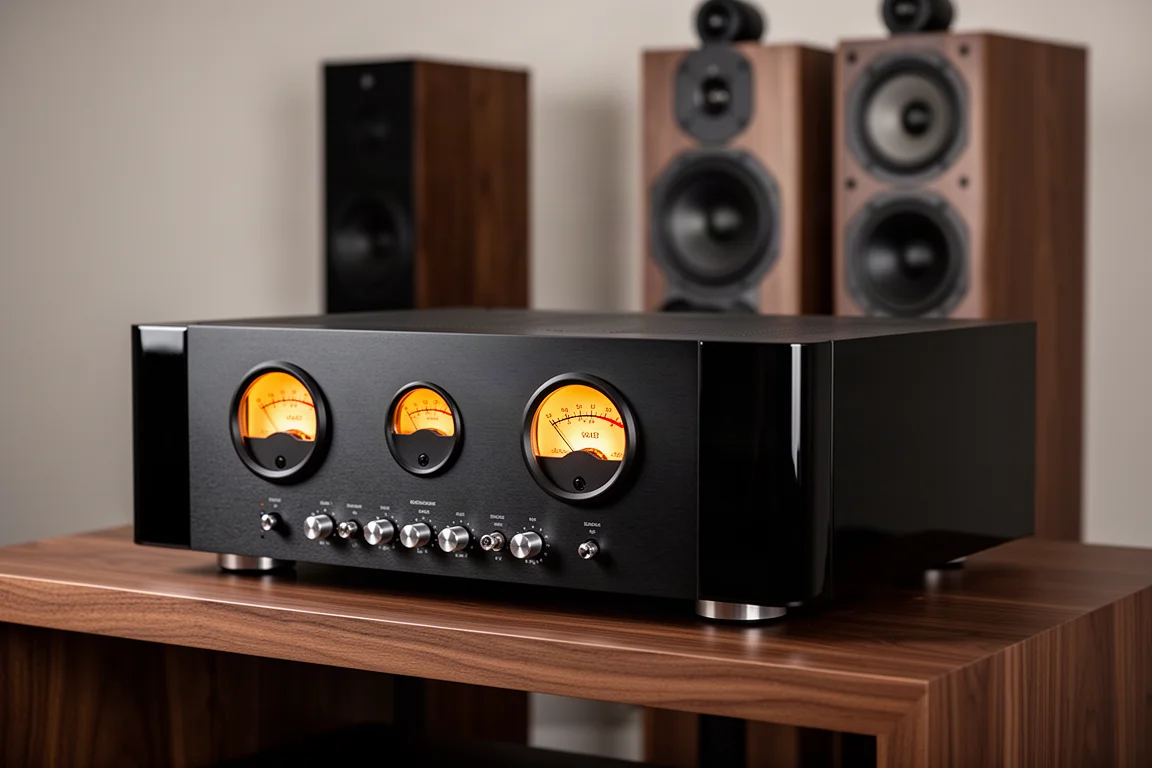
It also suits listeners who care about the physical experience of the equipment. The front panel carries multi-function VU meters, the controls feel substantial, and the volume dial runs on bearings with a smooth, graduated action. The finish is available in silver or black, and the silver version leans deliberately on Yamaha’s Hi-Fi heritage.
It is not the right choice for anyone who needs surround channels. A two-channel receiver with HDMI ARC can handle television audio and streaming duties for a simple setup, but multichannel formats are simply not part of what this product does. Buyers who want a full home cinema processor should look elsewhere; buyers who want a refined stereo system with television input should feel at home here.
Build Quality and Design
The casework is the first thing that stands out. The panel is finished to a high standard, the VU meters are multi-function rather than decorative, and every dial has a reassuring weight to it. The volume control in particular uses bearings, so it moves in smooth, graduated steps instead of the lighter action found on the R-N1000A.
Inside, the layout explains the weight. A large toroidal transformer feeds four output capacitors, and there is enough heatsink area that the amplifier can dissipate heat without working itself into trouble. Yamaha uses MOSFET output devices here, with four output devices per channel, rather than the bipolar devices used in the R-N1000A and in the company’s AV receivers. The design also carries the floating ground approach and symmetrical layout associated with Yamaha’s higher Hi-Fi series.
Around the back, the connections are equally solid. There are two sets of gold-plated binding posts, wired in parallel so two pairs of speakers can be connected at once, and there is no impedance selector switch to complicate the setup. That last detail matters: impedance switches are a common source of compromised performance, and this receiver simply does not have one.
Measured Power and Stability
Yamaha rates the R-N2000A at 90 watts per channel into 8 ohms, both channels driven, full bandwidth. A regulated power sweep from 20 Hz to 20 kHz, run with both channels driven just below the 1 percent distortion threshold, delivered 100 watts per channel. That is above the published rating, and it was achieved across the entire audible band rather than at a single test frequency.
At 1 kHz with both channels driven into 8 ohms, the amplifier produced 120 watts at 1 percent distortion and roughly 111 watts at 0.1 percent. Into 4 ohms it reached 148 watts at 0.1 percent distortion. Into 2 ohms, a load Yamaha does not publish a rating for, it delivered 288 watts per channel at 1 percent distortion and 258 watts at 0.1 percent, with both channels driven. Dynamic burst testing into 2 ohms produced 360 watts. At no point did the amplifier show instability, audible strain or resonance from the test tones.
Thermal behaviour is equally reassuring. Running the amplifier for a full hour at one-third power, the traditional preconditioning standard, left the top panel warm to the touch but never hot. Power output measured after that hour was actually higher than before it, which Yamaha confirms is normal: the amplifier is designed to be warmed up, and roughly half an hour of running is recommended before critical listening so the output stage is properly biased.
The most telling result is how little the power supply sags under load. Output was virtually identical whether one channel or both channels were driven, which points to a power supply with enough capacitance to hold its rails steady regardless of load impedance. In practice, that is what makes the receiver feel effortless with demanding speakers.
Preamplifier and Phono Stage Performance
Used as a preamplifier into a separate power amplifier, the R-N2000A measures very cleanly. In Pure Direct mode, distortion sat around 0.002 percent and stayed near 0.005 percent under most operating conditions, with total harmonic distortion plus noise remaining under 0.01 percent even close to 4 volts RMS of output. The second-order harmonic in a 1 kHz fast Fourier transform sat about 103 dB below the fundamental, with no ground noise or other artefacts visible.
The phono stage is the standout. It is a moving magnet design with full-bandwidth response and no forced subsonic filter, which means vinyl listeners can add their own filtering rather than living with a rolloff below 20 Hz that cannot be switched off. It accepted a 50 millivolt input, far beyond what any moving magnet cartridge will deliver, and stayed clean and flat. Measured from the turntable input all the way through to one watt at the speaker outputs in Pure Direct mode, the signal-to-noise ratio reached 80 dB A-weighted, a figure normally associated with a good power amplifier alone.
For anyone with a modest moving magnet cartridge and a reasonable record collection, that combination removes the usual argument for buying a separate phono preamplifier.
Digital Inputs and Connectivity
The digital section steps up from the R-N1000A with an ESS Sabre digital-to-analog converter of a higher grade than the one used in the cheaper model. Measured dynamic range with a 24-bit, 192 kHz input reached 117 dB, which is close to 19.5 bits of usable resolution. Out-of-band behaviour at a 44.1 kHz sampling rate, the rate that matters most for CD playback, was completely clean above Nyquist with no spurious spikes. The preamplifier’s response extends to roughly 80 kHz before rolling off by 3 dB.
Distortion performance on the digital inputs is good rather than perfect. With a minus 20 dBFS signal, the third harmonic was the dominant component at 95 to 96 dB below the fundamental. Driving a full-scale 0 dBFS signal raised that figure to about 88 dB below the fundamental, which is a measurable increase but remains far below anything audible. Signal-to-noise measured 92.5 dB from a full-scale digital input through to one watt at the output, roughly 2 dB better than the R-N1000A.
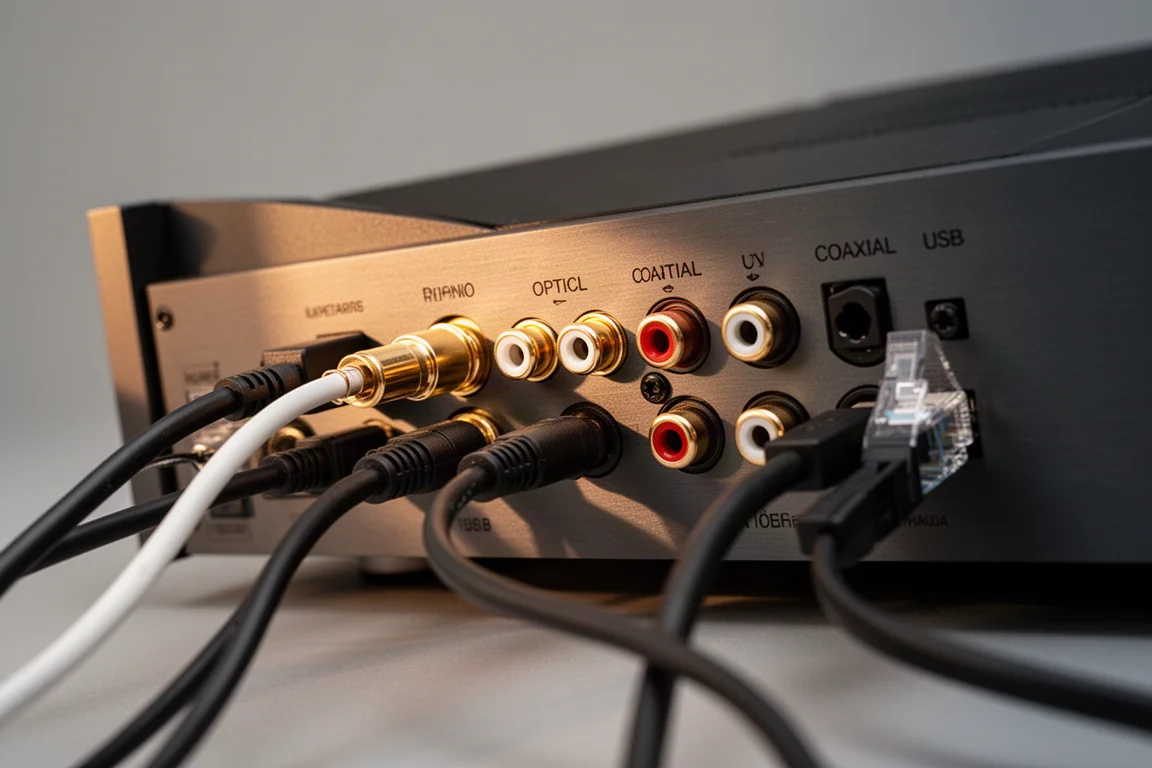
Connectivity covers the practical bases. There is USB, coaxial and optical digital input, HDMI ARC for television sound, a full set of analog inputs, and a subwoofer output with bass management handled through the Yamaha MusicCast app. MusicCast also manages networked music playback, and Tidal Connect is supported for streaming.
Living With the R-N2000A
The measured stability translates directly into how the receiver behaves with difficult speakers. With a low-sensitivity 4 ohm bookshelf design tuned down to 22 Hz, a less capable amplifier can sound forward and strained as it runs out of current. The R-N2000A stayed relaxed and warm, with bass that sounded controlled rather than forced, and it kept that character as the volume went up. The amplifier behaves like a much larger unit than its 90 watt rating suggests.
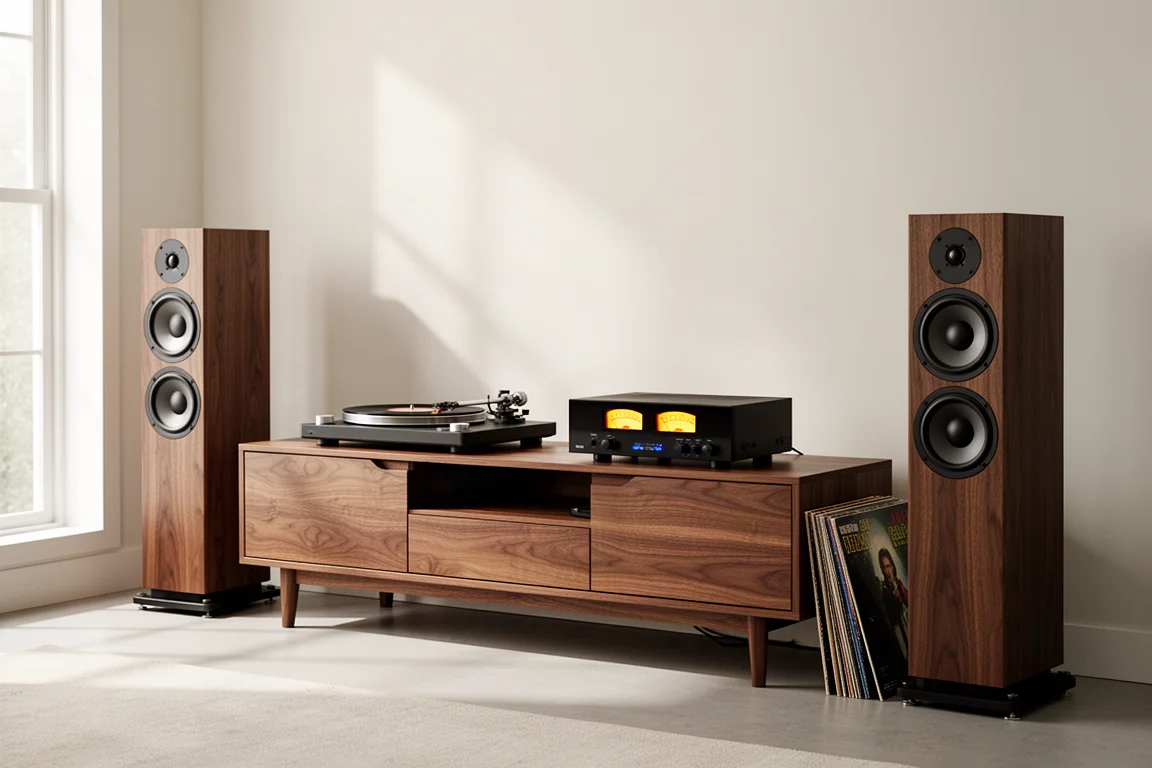
Day to day, the receiver is straightforward to live with. MusicCast handles library browsing, streaming and bass management, HDMI ARC brings television audio into the same system, and the phono input means a turntable can be connected without extra boxes. Two pairs of speakers can be connected simultaneously through the parallel binding posts, though running both pairs at once doubles the current demand on the amplifier.
The chassis runs warm rather than hot, and the front panel stays visually calm thanks to the multi-function meters, which can display level information without dominating the design.
Things to Consider Before Buying
The first consideration is price. At around $4,000, this is a premium two-channel receiver, and the R-N1000A delivers a great deal of the same experience for roughly $1,800. On paper, the cheaper model even carries a higher power rating, and in two-channel tests it produced slightly more output at 8 ohms. The R-N2000A’s advantage appears at low impedances and under sustained loads, where it was measured driving 2 ohm loads happily while the cheaper model was not pushed that far in testing.
The second is documentation. Yamaha does not publish a 2 ohm power rating for this receiver, so the strong 2 ohm results are a bonus rather than a guaranteed specification. Buyers with unusually demanding speakers should treat that as useful headroom rather than a promise.
Third, the cleanest measurements came in Pure Direct mode, which disables the tone controls, the DSP processing and the analog-to-digital converters. Listeners who rely on tone shaping will be working with the standard signal path rather than the best-case one.
Finally, plan for the physical realities. The unit weighs close to 50 pounds, it needs ventilation, and Yamaha recommends roughly half an hour of warm-up before critical listening. Digital input distortion does rise slightly at full-scale input, though it stays well below audible levels.
Buying Advice
If you own demanding speakers, listen to vinyl and want one well-built box for streaming and television sound, the R-N2000A is an easy recommendation. Measured power exceeds the published rating, the supply holds steady under load, the phono stage is clean enough to remove a separate preamp from your shopping list, and the build quality justifies a long ownership horizon.

If your speakers are efficient and your budget is tighter, the R-N1000A remains a sensible alternative and covers much of the same ground for well under half the price. The decision really comes down to your speakers and how hard you intend to push them. For anyone building a system around low-sensitivity or low-impedance speakers, the R-N2000A is the more stable platform and the one that will feel less compromised over time.
Conclusion
The Yamaha R-N2000A is a two-channel network receiver that delivers more than its 90 watt rating suggests. Across bench testing it produced 100 watts per channel into 8 ohms over the full audio band, handled 2 ohm loads without complaint, stayed cool under an hour of sustained preconditioning, and paired an exceptionally clean phono stage with a high-grade digital section and genuinely useful connectivity.
It is a premium purchase, and buyers with easy-to-drive speakers can save a substantial amount by choosing the R-N1000A. For everyone else, this is a receiver built to be kept, with the power supply stability, build quality and vinyl performance to justify the investment.
Product link
View more details for Yamaha R-N2000A
This product is mentioned in the review. Check the specifications, options, and compatibility before buying.
View more details for Yamaha R-N2000AFurther reading
Related Reviews
Hi-Fi Audio
Accuphase C-57 vs Allnic H-7000V: Two High-End Phono Stages Compared
A fully balanced solid-state phono stage with a pitch-black noise floor meets a tube design built for well-loved records. Here is how to choose between them.
Hi-Fi Amplifiers
Accuphase E-280 Review: Entry-Level Accuphase With Flagship Attention to Detail
A close look at the Accuphase E-280 integrated amplifier, covering its champagne build, AAVA volume control, sound quality, and the speakers and sources that suit it best.
High-End Audio
Accuphase E-3000 Review: A Class AB Integrated Amplifier Built to Last
The Accuphase E-3000 is the entry point into a legendary Japanese high-end line. Here is how it sounds, how it is built, and who should consider it.