Hi-Fi Speakers
Yamaha NS-5000 Review: A Modern Take on a Legendary Loudspeaker
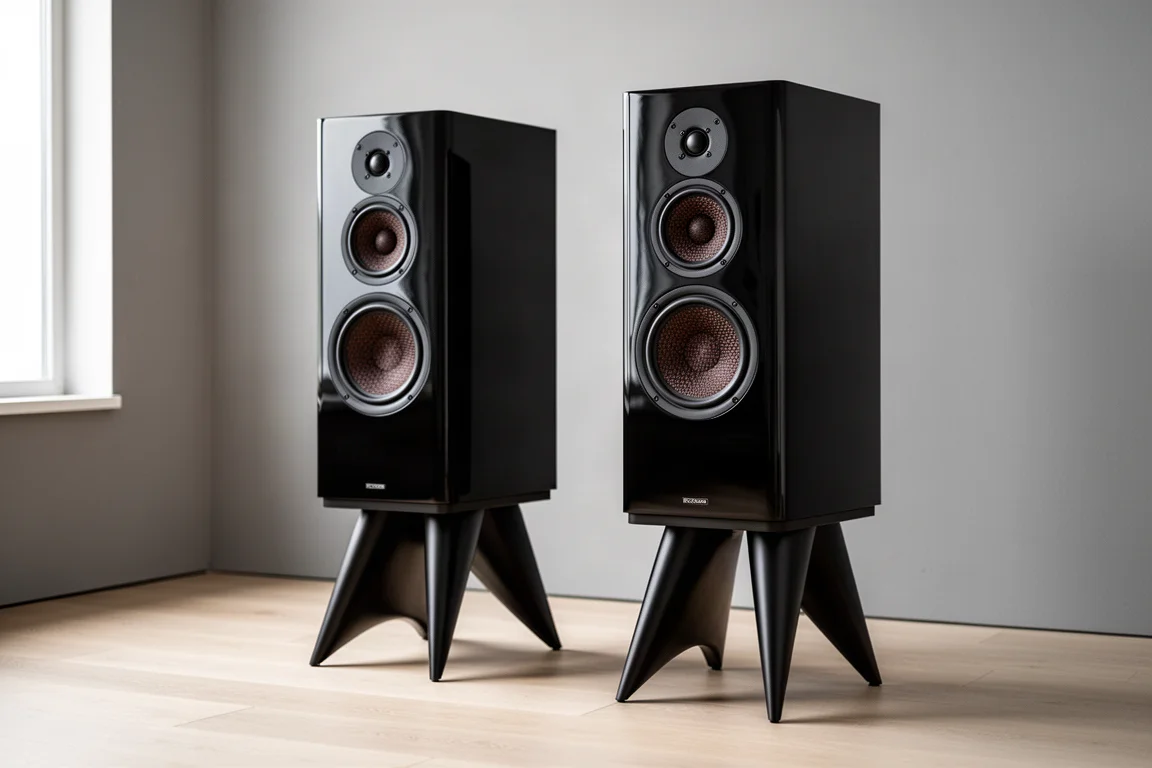
A stand-mounted three-way speaker with ZYLON drivers, a birch plywood cabinet, patented internal resonance control, and a piano-grade gloss black finish.
Introduction
The Yamaha NS-5000 marks a deliberate return to two-channel hi-fi for a company that spent the intervening decades focused largely on home theater. In the 1970s Yamaha built the NS-1000 around beryllium dome drivers at a time when paper and other cone materials were the norm. That speaker became a studio staple, and used examples still command strong prices today. Production ended in the mid to late 1990s, and no direct successor appeared until now.
The NS-5000 is a from-scratch design rather than a warmed-over classic. It sells for $15,000 per pair, comes only in gloss black, and ships with its own stands. The driver material, the cabinet, the internal pressure control, and the crossover all serve one goal: a speaker that reacts instantly and stays quiet when it should.
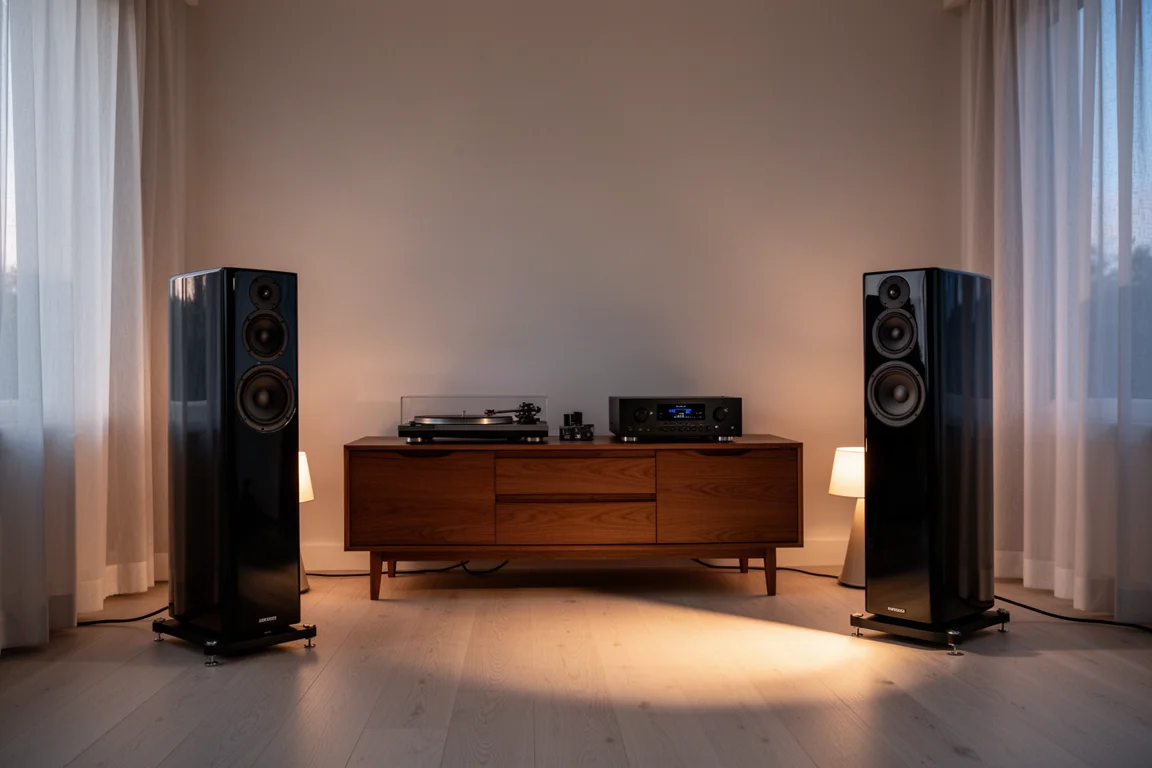
This piece walks through what is inside the cabinet, how those choices shape the way it sounds, and what to weigh before committing to a pair.
Who This Speaker Is For
The NS-5000 belongs in a two-channel system. It is the natural partner for the 5000 series electronics, and it will appeal most to listeners who value the character of the original NS-1000 and want a modern version of it rather than a different flavor of speaker altogether.
Because the cabinet is ported at the rear, the speaker benefits from a few inches to a few feet of clearance behind it, which is worth planning for before purchase. Buyers who want a compact, easy-to-tuck-away speaker will be happier elsewhere.
Driver Technology: ZYLON Across All Three Bands
All three drivers use ZYLON, a synthetic fiber that ranks among the strongest materials of its kind. A fiber just 1.5 millimeters thick can lift a metric ton. That strength is why the material appears in aerospace heat shielding and in Formula One components, and it is also why shaping it into a dome is difficult: it does not stretch over a form the way a carbon fiber sheet does, so a dedicated forming process was developed for these drivers.
The payoff is sonic. ZYLON behaves much like beryllium, the material used in the NS-1000, with a damped character that resists ringing while still moving quickly. Beryllium, however, is brittle and toxic, which limits dome size to roughly two and a half to three inches. Using ZYLON lets Yamaha run the same material for the tweeter, the midrange, and the woofer, so the sound stays coherent as it moves up through the frequency range.
The tweeter is a three-quarter inch dome rather than the more common one inch. The smaller dome gives up some low-frequency reach but gains better dispersion, and the midrange covers enough of the range that the trade-off works in the speaker’s favor. That midrange is a dome measuring roughly three and a quarter inches, and the woofer is a 12-inch unit with a butyl rubber surround, a vented pole piece, a vented voice coil, and dual spiders that linearize travel in both directions. Small masses added to the rear of the woofer cone tame resonances in the cone itself.
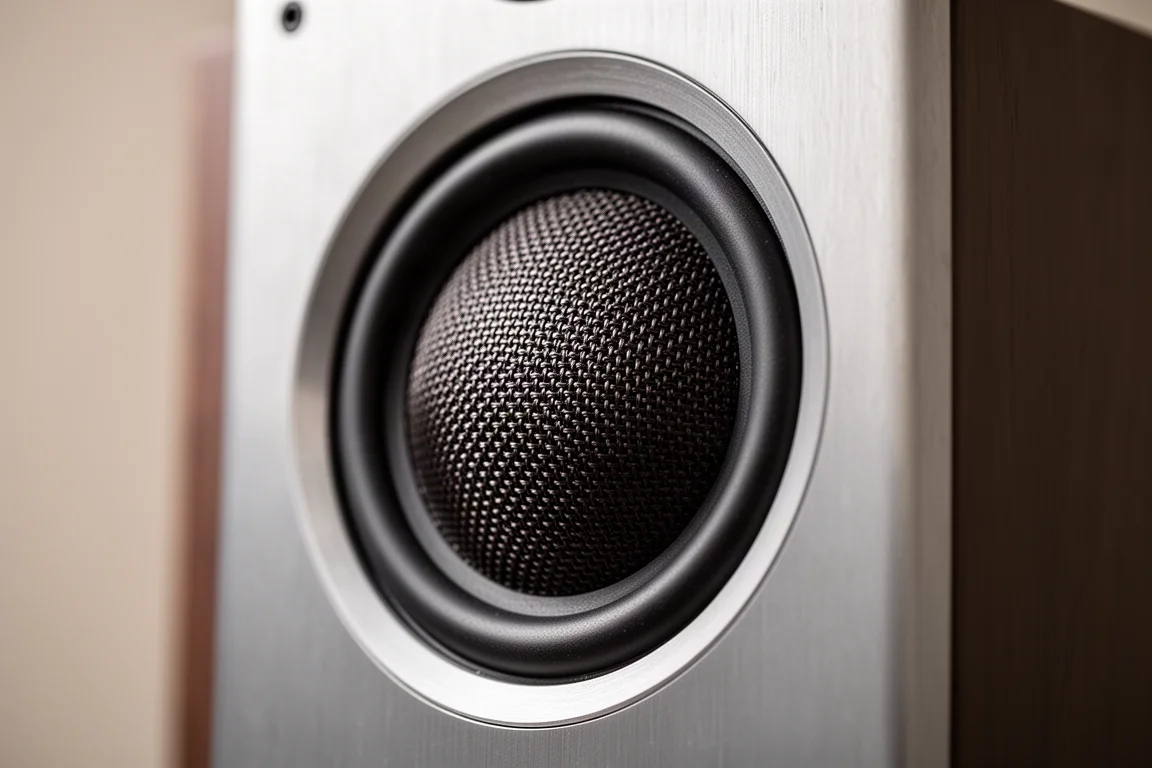
Each driver sits in a cast aluminum faceplate, and the structure behind it borrows directly from Yamaha’s brass instrument manufacturing. A set of tubes, each tuned to a different frequency, cancels resonances in the driver and its surrounding structure while keeping back pressure consistent. The tubes behind the midrange are longer and hold more volume to match its lower frequencies.
Cabinet Construction and Patented Resonance Control
The enclosure is birch plywood, chosen after designers walked a Tokyo furniture show tapping on every table on display. The layered construction alternates grain direction from one ply to the next, and the corners are miter cut, drawing on a woodworking tradition that reaches back to the 1800s.
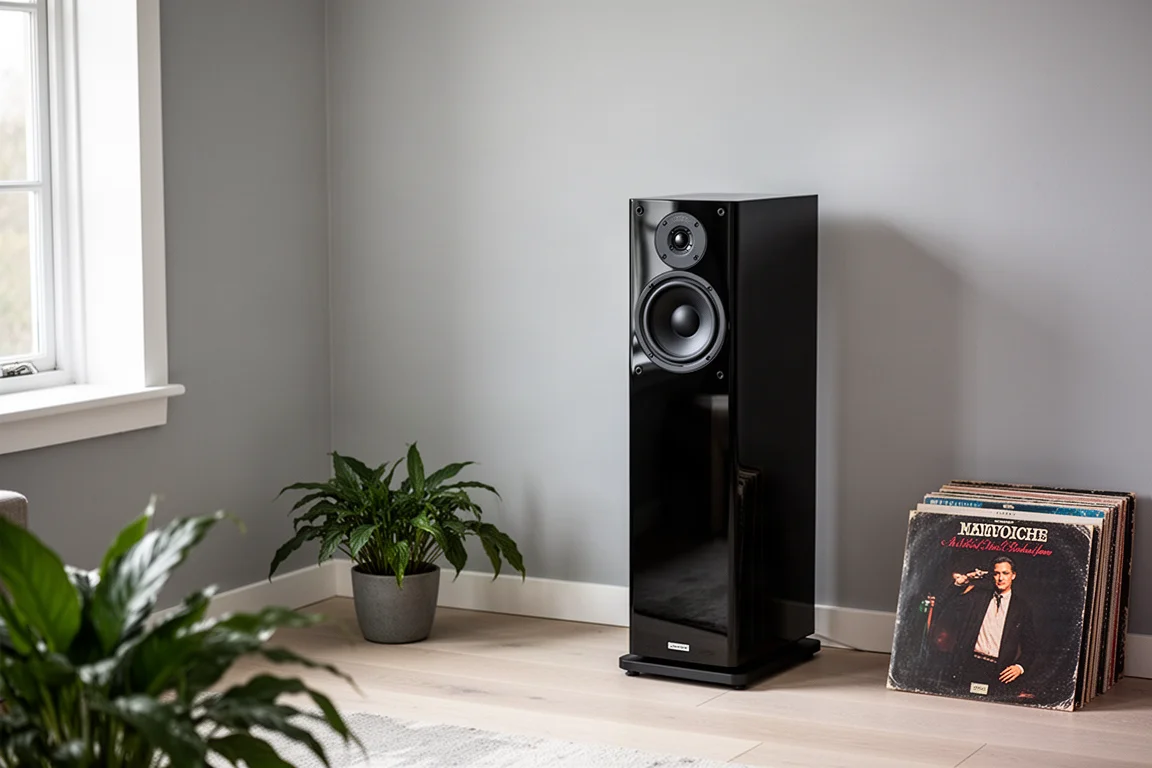
The gloss black finish is the same multi-stage piano lacquer used on Yamaha grand pianos, applied through a seven-stage paint, buff, and primer process. It is not only cosmetic. Because the front baffle shapes how sound leaves the cabinet, the finish is part of the acoustic design, and sanding it away would change the speaker’s character.
Inside, there is no batting material. Damping material slows the air within a cabinet, which shifts resonances out of phase, but it also reduces efficiency, and it never fully solves the problem. Instead, the NS-5000 uses two internal panels tuned to sit out of phase with the cabinet’s resonance. They equalize pressure inside the box, so the woofer is not fighting a moving wall of air while it tries to reproduce low frequencies. The panels are internal and deliberately unglamorous. The approach is patented and has since been applied to other products in the range.
Crossover and Internal Layout
The crossover uses Mundorf capacitors and a heavy board with thick copper traces. The inductor for the woofer is large enough that it sits off the board entirely, which also separates it from magnetic coupling with the rest of the network. Components are oriented at 90 degrees to one another, and the high-power resistors are mounted on standoffs for thermal stability. It is the kind of layout that shows the design was treated as a whole rather than a list of parts.
Sound Character and Imaging
The result is a balanced speaker. Bass has punch and depth, the treble has bite without tipping into brightness, and the midrange is articulated. Nothing in the presentation feels pushed forward at the expense of anything else.
Transient response is where the design choices pay off most clearly. On material with sharp percussive hits, all three drivers have to start and stop at the same instant, and the driver and cabinet work here keeps that snap intact instead of smearing it.
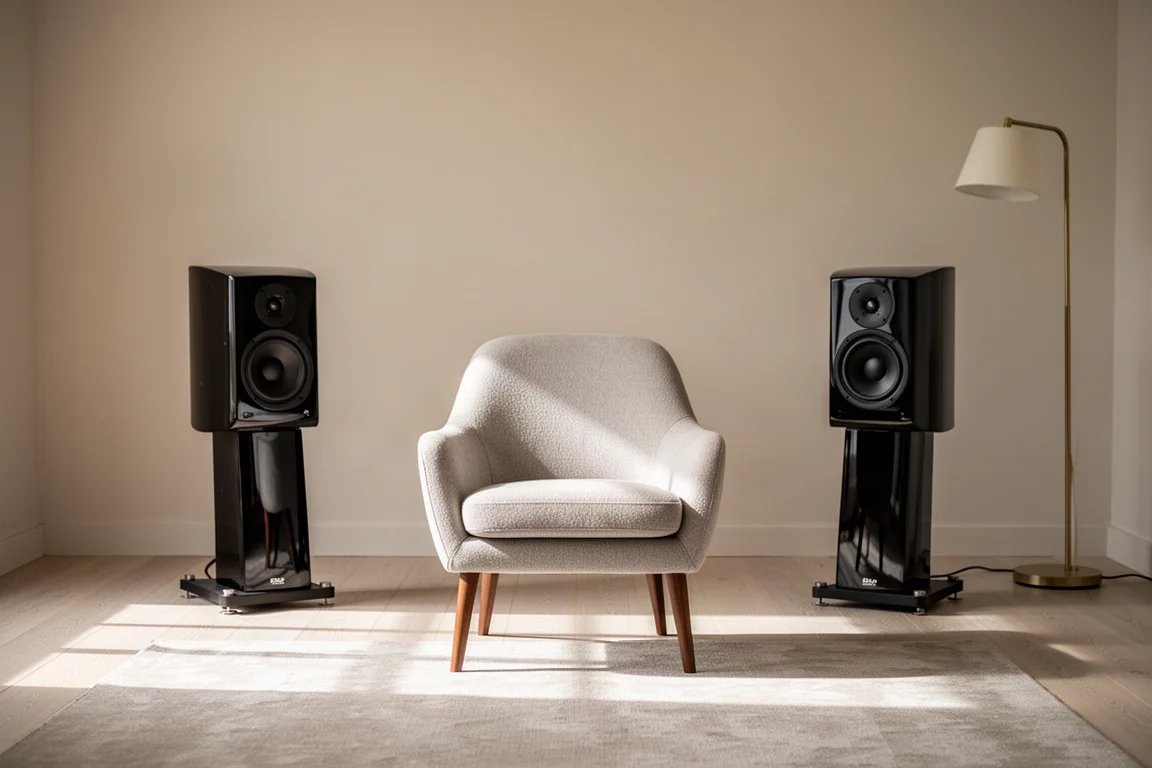
Imaging is strong without painstaking setup. A small amount of toe-in is enough to produce a convincing phantom center and a stable image, and a room that is far from acoustically ideal does not prevent the speaker from opening into a three-dimensional presentation once the listening position is dialed in.
Things to Consider Before Buying
The NS-5000 is a substantial purchase at $15,000 per pair, and it is offered in gloss black only. The stands are included and are not decorative: the legs are shaped to absorb coupling between the woofer and the floor, so the speaker should be used as supplied rather than placed on a shelf or a third-party stand.
Rear porting means the speaker wants breathing room behind it. Plan for a few inches at minimum, and more if the room allows. Placement also matters more than it does with some speakers, because the design rewards finding the listening position where the image locks in.
Buying Advice
If you are considering a used pair of NS-1000s at a price near or above what a new pair costs, the NS-5000 deserves a serious look. It carries the same visual language and the same intent, with modern driver materials, a patented cabinet, and a finish taken from Yamaha’s piano line. Adjusted for inflation, the asking price lands slightly below what the original NS-1000M would have cost in today’s money.
The speaker makes the most sense for listeners building a two-channel system around the 5000 series electronics, or for anyone who has wanted the NS-1000 sound with current engineering behind it. Give it a proper stand position, a little clearance from the wall, and a careful listening seat, and it will reward the effort.
Conclusion
The NS-5000 is a considered answer to a long-standing question: what would the NS-1000 be if it were designed today. ZYLON drivers across all three bands, a birch plywood cabinet with a piano-grade finish, an internal pressure control system that replaces conventional damping, and a carefully laid out crossover all serve the same aim, which is a speaker that responds immediately and stays out of its own way. For buyers in this bracket, it is a persuasive blend of heritage and current thinking.
Product link
View more details for Yamaha NS-5000
This product is mentioned in the review. Check the specifications, options, and compatibility before buying.
View more details for Yamaha NS-5000Further reading
Related Reviews
Hi-Fi Speakers
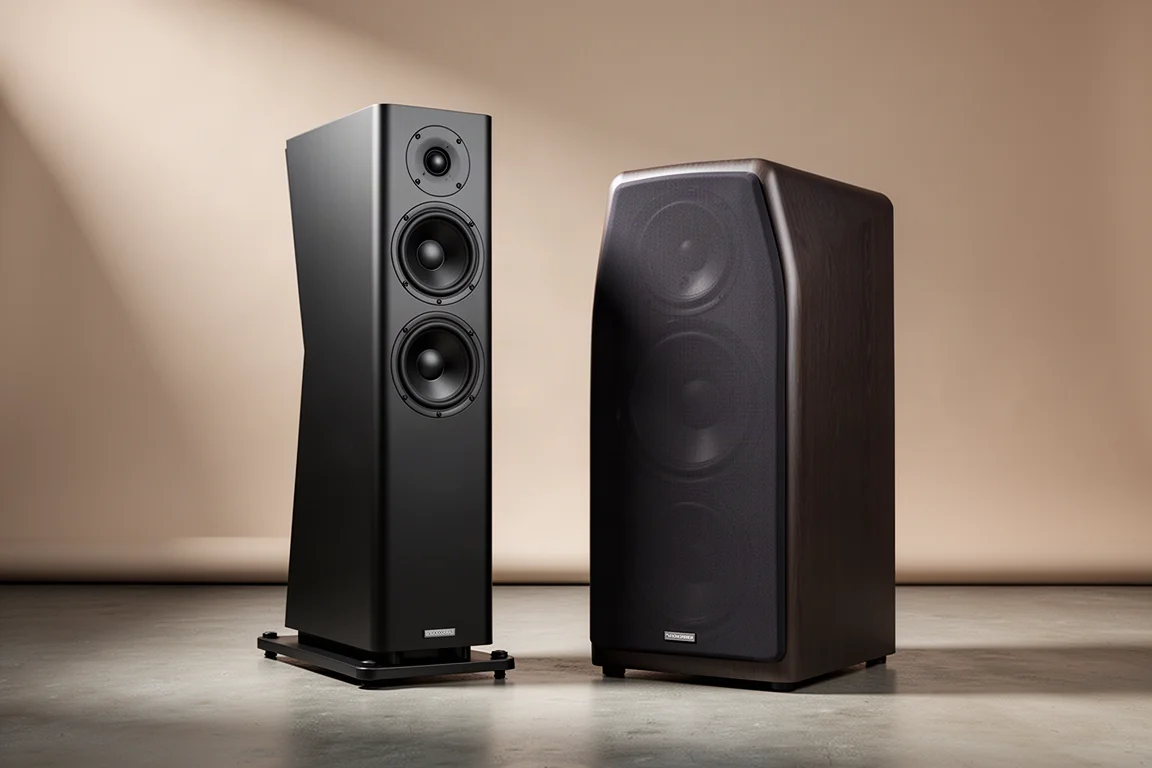
1723 THX Tower vs 1528 Bookshelf: Which Speaker Fits Your Room?
Two speakers at roughly the same price, built very differently. How the 1723 THX tower and the 1528 bookshelf compare on construction, bass, power needs, and sound.
Hi-Fi Speakers
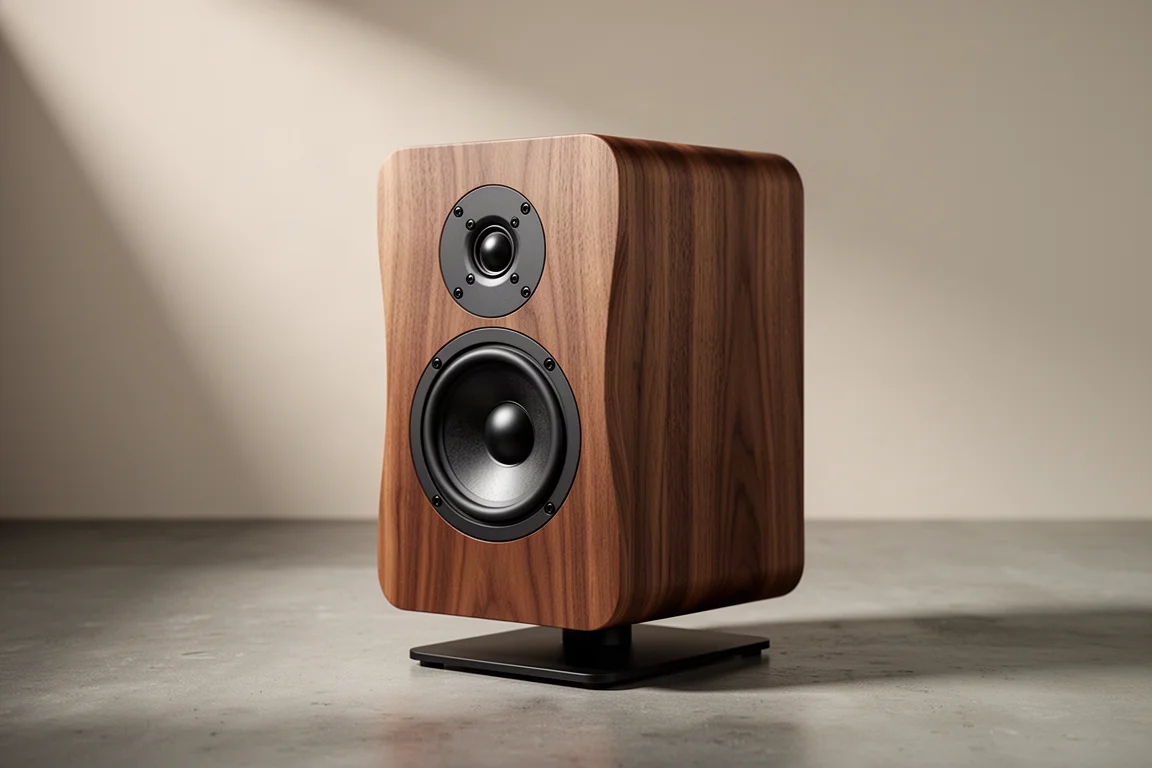
Acoustic Energy AE 300 Review: Deep Bass From a Compact Standmount
A two-way standmount with real wood veneer, surprising low-end weight, and a warm, easygoing character. Here is what to know before buying.
Hi-Fi Speakers
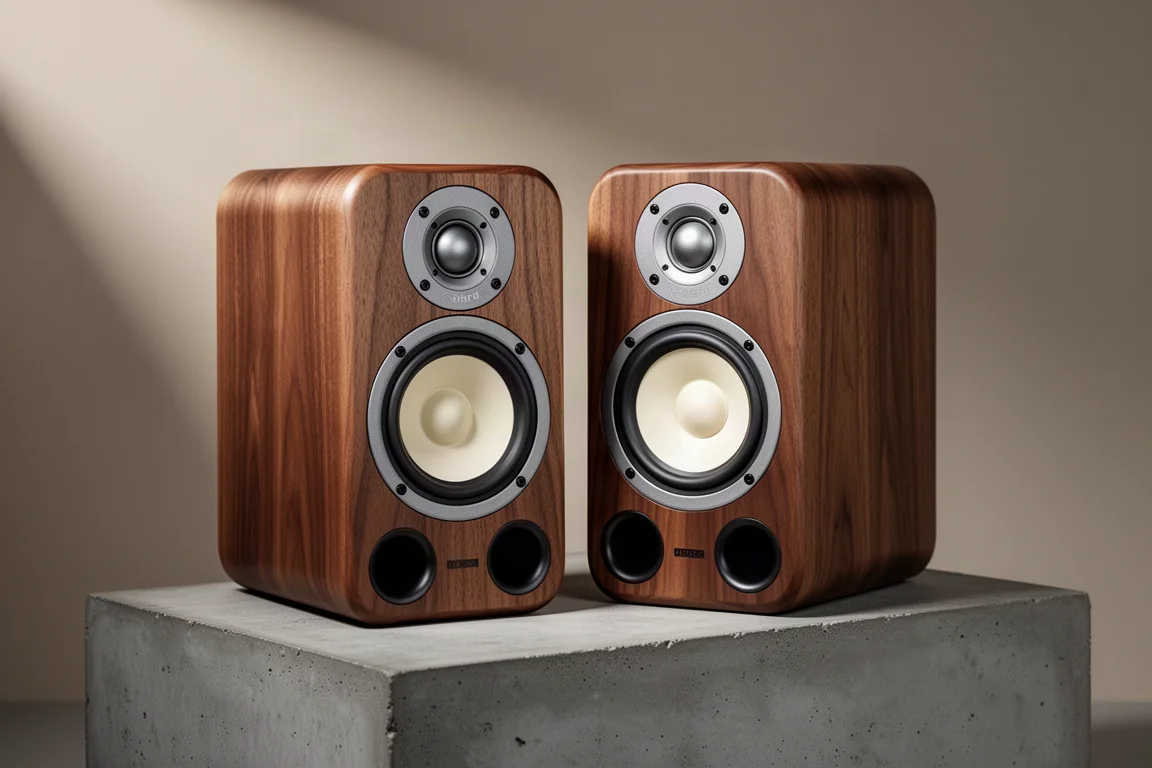
Acoustic Energy AE1 40th Anniversary Review: A Modern Take on a British Classic
A compact standmount that revives a 1980s favorite with all-new parts, a warm mid-centric balance, and a price of £1,499 per pair.