Hi-Fi Speakers
1723 THX Tower vs 1528 Bookshelf: Which Speaker Fits Your Room?
Two speakers at roughly the same price, built very differently. How the 1723 THX tower and the 1528 bookshelf compare on construction, bass, power needs, and sound.
Introduction
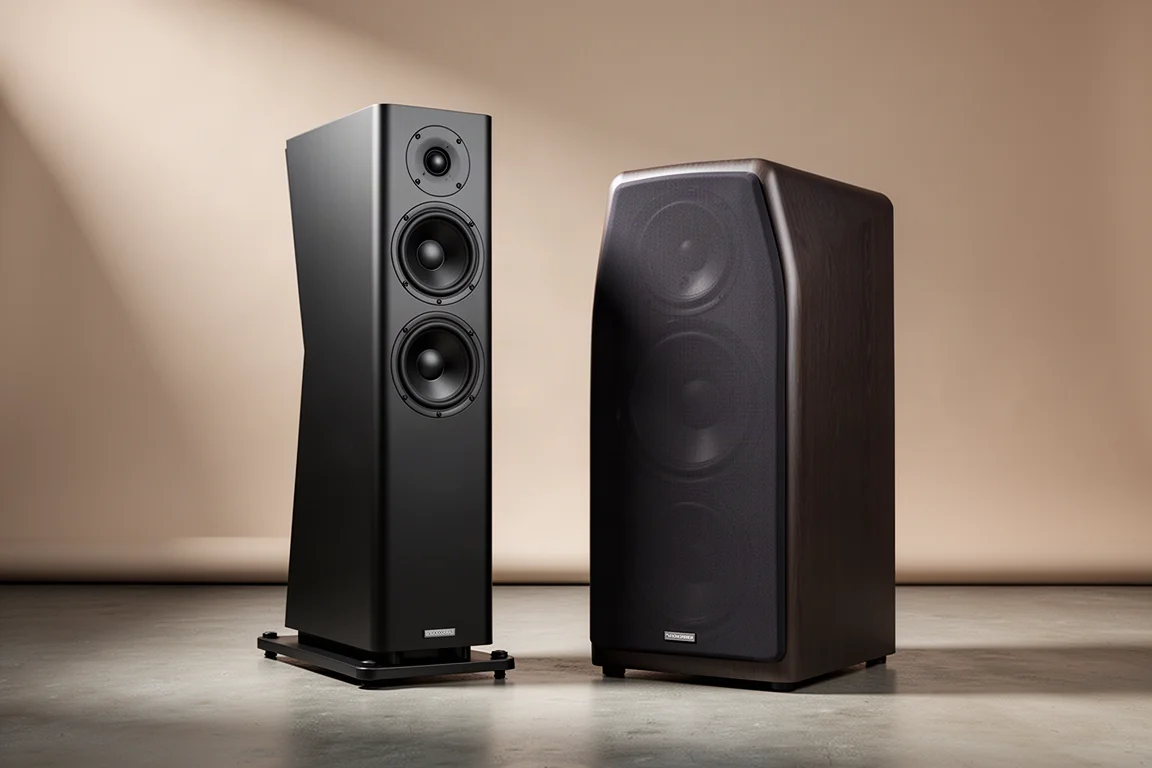
Two speakers, both priced at around $4,500, both built to a standard that goes well beyond typical mass-market cabinets. One is a tall floorstanding tower. The other is a large stand-mount that only carries the “bookshelf” label in the loosest sense.
The comparison below covers construction, driver design, bass behaviour, power requirements, and sound quality, so you can work out which one suits your room and your amplifier.
What Both Speakers Have in Common
Both cabinets are built from HDF, a higher-density fiberboard, rather than the MDF used in most budget speakers and in plenty of high-end designs as well. MDF is not a problem material, but HDF is denser and more rigid, and both of these speakers use it throughout.
Both also use rhodium-plated copper binding posts, and the fit and finish on each is high. Internally, both are heavily braced, and neither shows cabinet resonance worth complaining about.
Tonally they share a philosophy. Neither is boosted in the treble, so long listening sessions stay comfortable, and both stay close to neutral rather than adding artificial excitement.
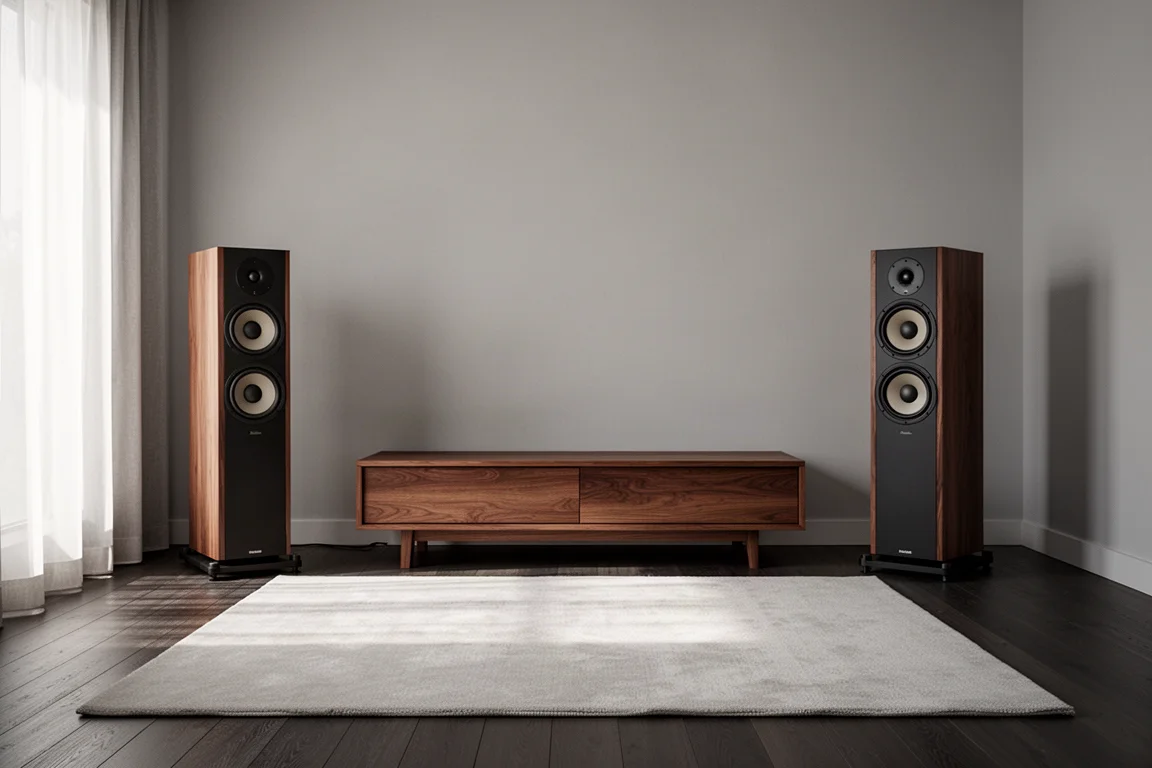
Where they separate is in how far each design pushes materials and construction. That is where the rest of this comparison lives.
Build Quality and Cabinet Construction
The 1528 bookshelf speaker uses 2-inch thick HDF panels. The 1723 THX tower uses panels between roughly 1 and 1.5 inches. Both are serious cabinets, but 2-inch walls are unusual at any price, and the result is a stand-mount that weighs about 66 lb each.
Crossover parts differ too. The 1528 uses polypropylene capacitors, wirewound resistors, and air coil inductors, and keeps ferrous materials such as steel out of the signal path. The 1723 THX tower uses good crossover components for its price, but they are not on the same level as the 1528.
Driver and Tweeter Design
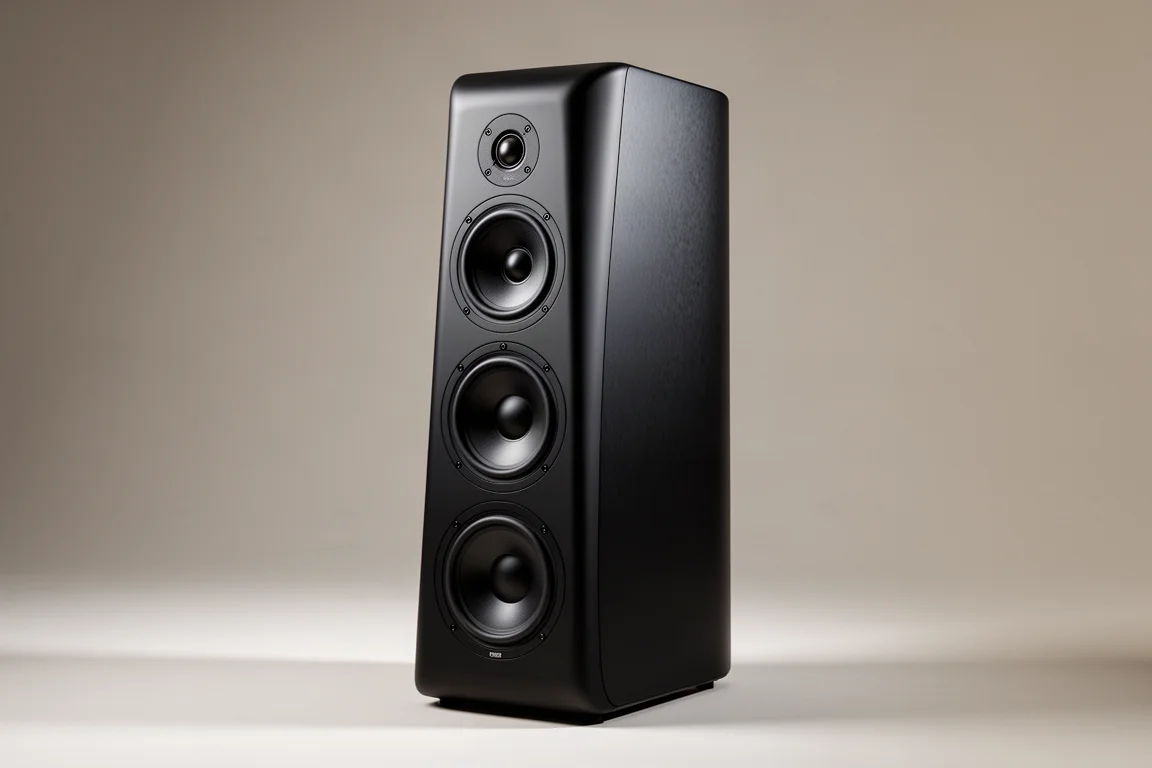
The two speakers take different routes to time alignment. The 1723 THX tower slants its cabinet so the drivers arrive at the listening position in phase. The 1528 bookshelf instead uses a curved front baffle made from thin HDF layers that are curved, glued, and compressed, a slow and costly process.
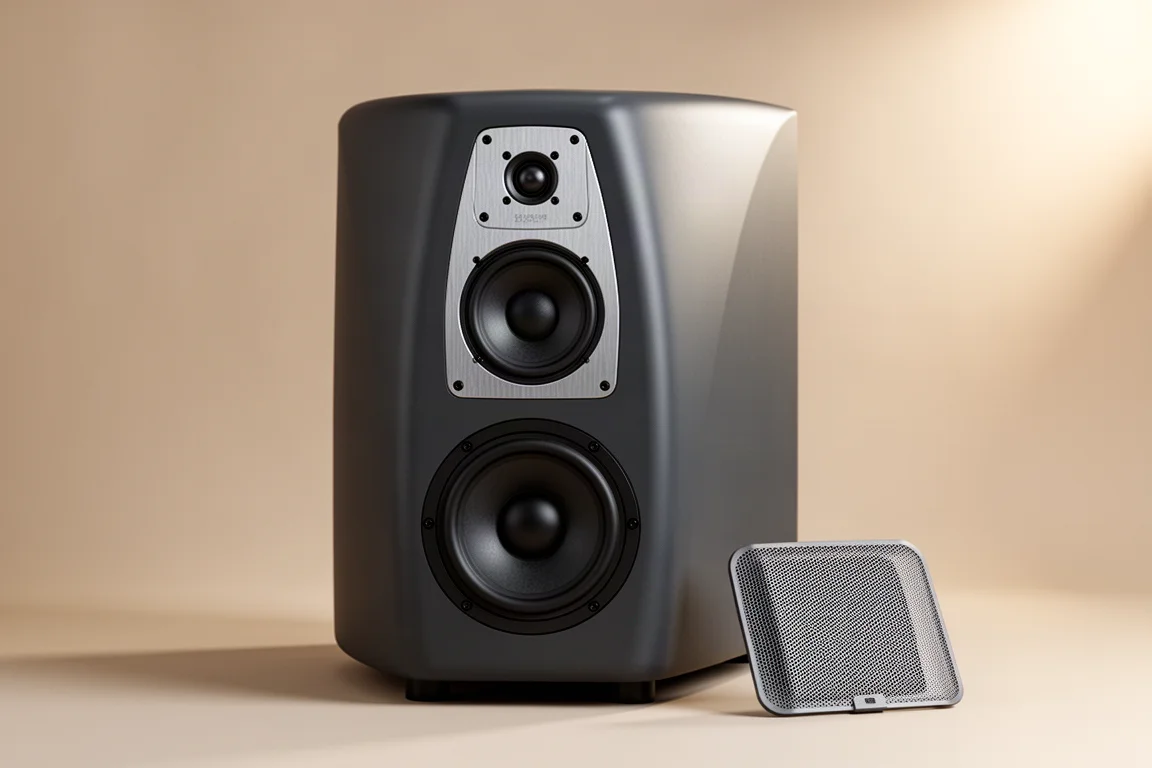
The 1528 also pairs an elliptical waveguide with acoustic grilles in front of both the mid-range driver and the tweeter, which helps off-axis response. The 1723 uses a circular waveguide, and there are reasonable arguments on both sides of that design choice.
Tweeter materials differ as well. The 1723 THX tower uses a soft dome tweeter. The 1528 uses a lithium magnesium tweeter, a rare choice in any price bracket, and it comes across as delicate and nuanced without any added brightness.
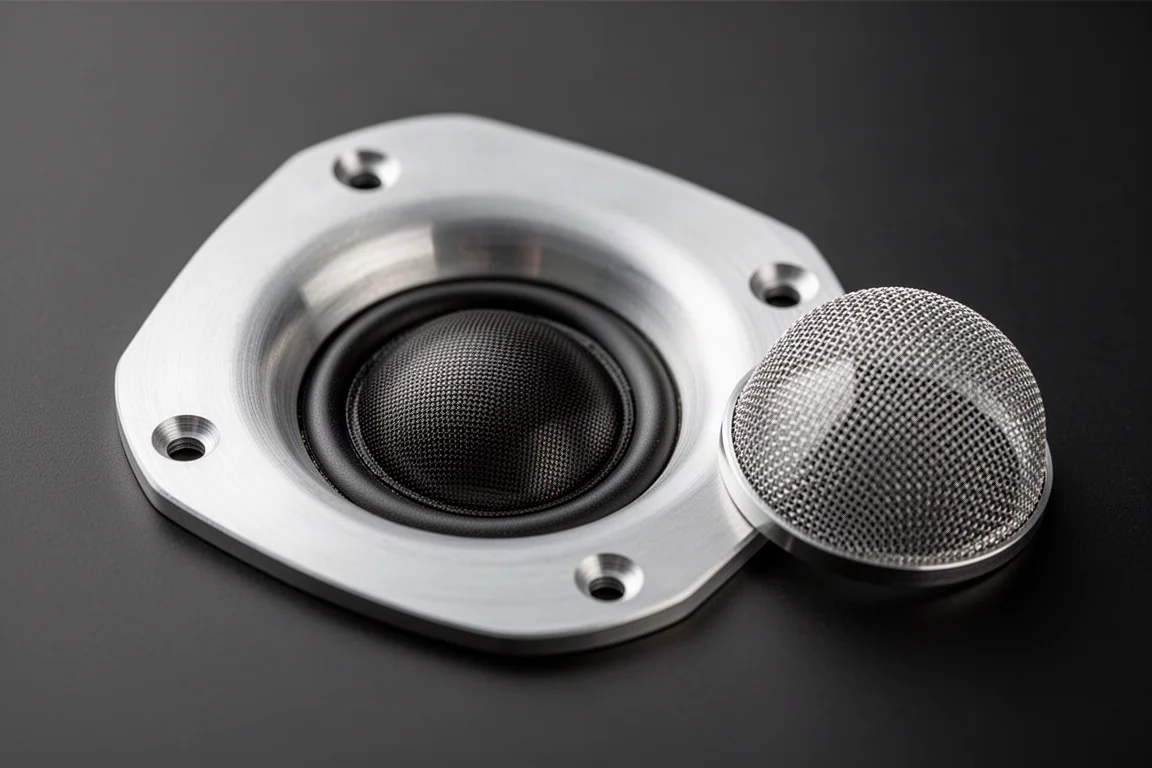
Behind that grille sits a 5-inch mid-range driver with a very large magnet, held in place by a machined aluminium fascia. Its quality sits in the same territory as the drivers used in mini monitors that sell for around $9,000. The 8-inch bass driver in the 1528 is a high-excursion design.
Bass Response and Room Tuning
Bass extension and overall quantity are close between the two. The difference is in character. The 1528 bookshelf moves more air, so it delivers more physical bass impact and a stronger sense of body.
Tuning flexibility goes the other way. The 1723 THX tower has three ports on the back, and you can plug different combinations to shape low-frequency response for your room. The 1528 has a single port. Plugging it creates a sealed alignment that rolls off the bass sooner, which is useful mainly when the speaker has to sit close to a wall.
Power Requirements and Sensitivity
The 1723 THX tower is the more sensitive speaker. It plays louder and fills a larger room with less amplifier power. The 1528 bookshelf is rated conservatively at 84 dB, with real-world sensitivity closer to 86 dB, so it is not difficult to drive, but it asks more of an amplifier. Both are roughly 4 ohm nominal.
The common assumption that bigger towers need more power gets it backwards. Smaller speakers usually need more, because sensitivity and impedance tend to run lower. In a small or medium room the 1528 still gets plenty loud, including with lower-powered tube amplification. In a large room, driven by the same amplifier, the tower is the safer choice.
Sound Quality and Soundstage
Both are neutral and natural, and both handle dynamics well, so either will work across a wide range of music and partnering gear.
On clarity, the 1528 bookshelf has the edge. It sounds cleaner and more detailed while remaining easier to listen to, which is difficult to achieve without lifting the treble. It also throws a wide, deep soundstage with focused imaging that keeps individual instruments separated, and it stays forgiving of both modest and modern recordings.
The main criticism of the 1723 THX tower is a soundstage that sounds narrower and more constricted by comparison. Everything else about it remains strong.
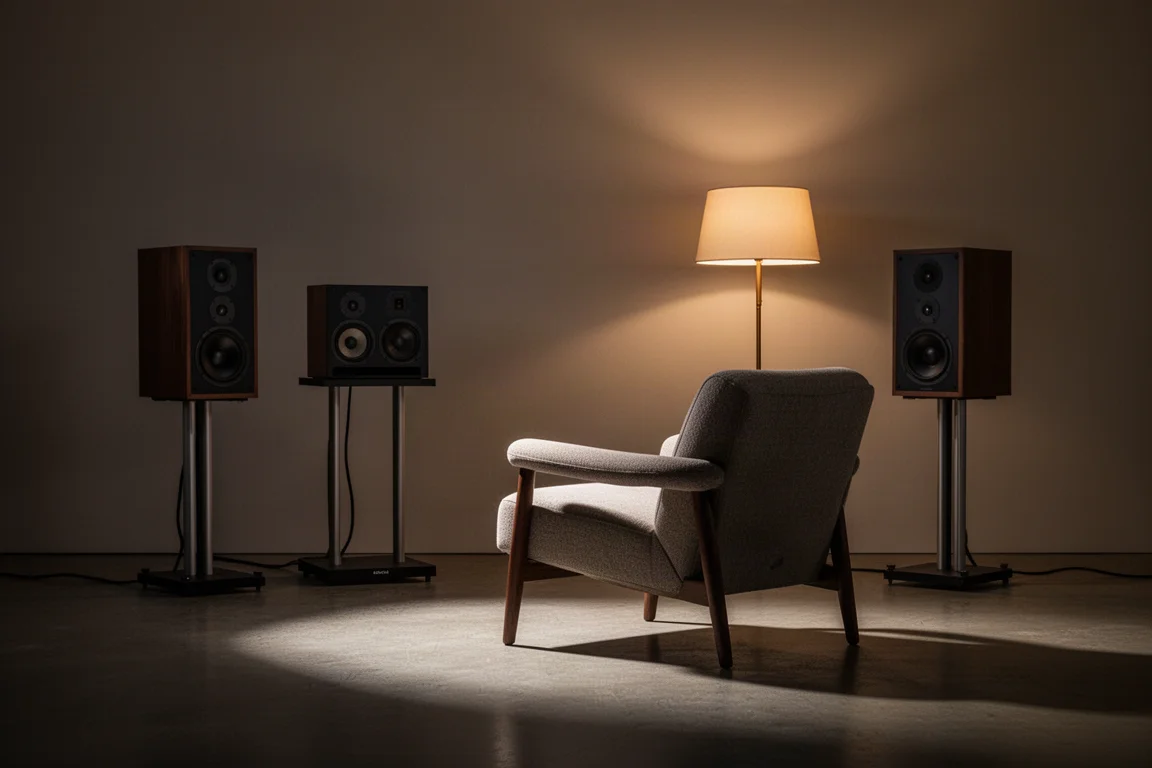
For pure sound quality, the 1528 is the more refined and higher-definition speaker of the two.
1723 THX Tower Speaker: Flexibility and Headroom
The 1723 THX tower is the speaker to choose when room size and amplifier matching matter most. It is more sensitive, so it reaches higher output with less power and keeps more headroom in a large space. Three rear ports let you tune bass response to the room rather than fighting it, and the slanted cabinet handles driver time alignment. It uses a soft dome tweeter and a circular waveguide, with crossover parts that are solid for the price. Bass extension is comparable to the 1528, though it moves less air and gives less physical impact.
1528 Bookshelf Speaker: Clarity and Detail
The 1528 bookshelf speaker is the more finely built and more revealing of the two. Its 2-inch HDF panels, curved front baffle, upgraded crossover parts, elliptical waveguide, and acoustic grilles over the mid-range and tweeter all point in the same direction. The lithium magnesium tweeter and 5-inch mid-range driver deliver clarity and nuance, while the 8-inch bass driver adds impact you would not expect from a stand-mount. It needs more amplifier power than the tower and offers only a single port for tuning.
Value and Total System Cost
Both speakers are strong value at around $4,500, but the stand-mount carries a hidden cost. Despite the bookshelf label, the 1528 is a large, heavy stand-mount that occupies the same floor space as a tower. Stands are not included, and the matching stands add meaningful money on top. Even third-party stands will push the total past the $4,500 figure.
If you already own suitable stands, the 1528 becomes easier to justify. If not, budget for them from the start.
Buying Advice
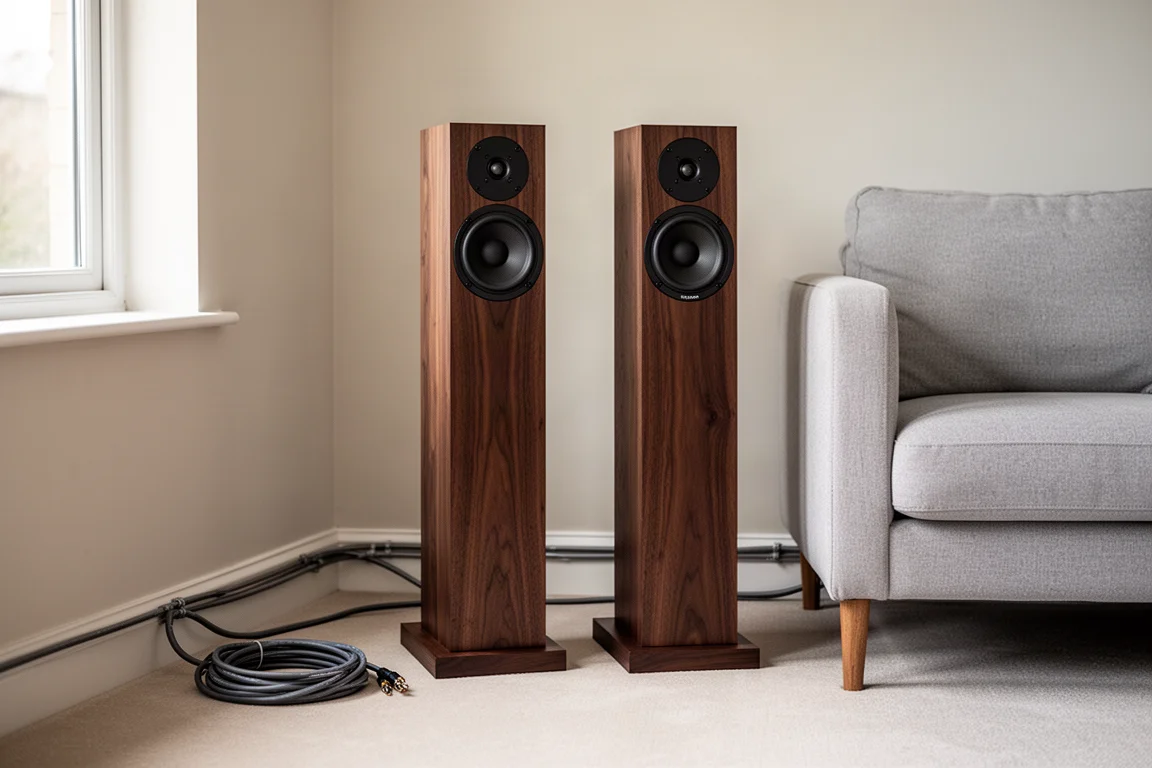
Choose the 1723 THX tower if you listen in a larger room, want the most output per watt, or want to tune bass response with port plugs. It is also the simpler purchase, because it needs no stands.
Choose the 1528 bookshelf if clarity, imaging, and soundstage depth matter most to you, and if you are willing to give it a capable amplifier and a proper pair of stands. In a small to medium room it will still play as loud as most listeners need.
Conclusion
Both speakers are well made, neutral, and priced at roughly the same point, so the decision comes down to priorities. The 1723 THX tower wins on sensitivity, output, and bass tuning flexibility. The 1528 bookshelf wins on cabinet construction, crossover quality, driver refinement, and overall clarity, at the cost of higher amplifier demand and the extra expense of stands.
Further reading
Related Reviews
Hi-Fi Speakers
Acoustic Energy AE 300 Review: Deep Bass From a Compact Standmount
A two-way standmount with real wood veneer, surprising low-end weight, and a warm, easygoing character. Here is what to know before buying.
Hi-Fi Speakers
Acoustic Energy AE1 40th Anniversary Review: A Modern Take on a British Classic
A compact standmount that revives a 1980s favorite with all-new parts, a warm mid-centric balance, and a price of £1,499 per pair.
Hi-Fi Speakers
ADAM Audio A7V Review: Precision-First Active Standmount Speakers
The ADAM Audio A7V pairs a hand-built folded ribbon tweeter with a rigid mineral stone fibre woofer and 90 W of Class D power per cabinet. Here is how it sounds, who it suits, and what to weigh before buying.