Hi-Fi Speakers
Acoustic Energy AE1 40th Anniversary Review: A Modern Take on a British Classic
A compact standmount that revives a 1980s favorite with all-new parts, a warm mid-centric balance, and a price of £1,499 per pair.
Introduction
The BBC’s engineering legacy has shaped British loudspeaker design for more than half a century. Harbeth, Spendor, KEF and PMC all trace their roots to former BBC engineers, and the most celebrated design of them all, the LS3/5A, remains in production today even though the blueprint is over 50 years old. That influence still shows in current models from ProAc, ATC and others, including the speaker reviewed here.
The Acoustic Energy AE1 was the model that launched the brand four decades ago. It set out to build on the strengths of the LS3/5A by adding clarity, dynamics and power handling inside a similar sized cabinet, and it became a widely admired compact monitor through the 1980s. To mark its 40th anniversary, Acoustic Energy has brought the AE1 back.
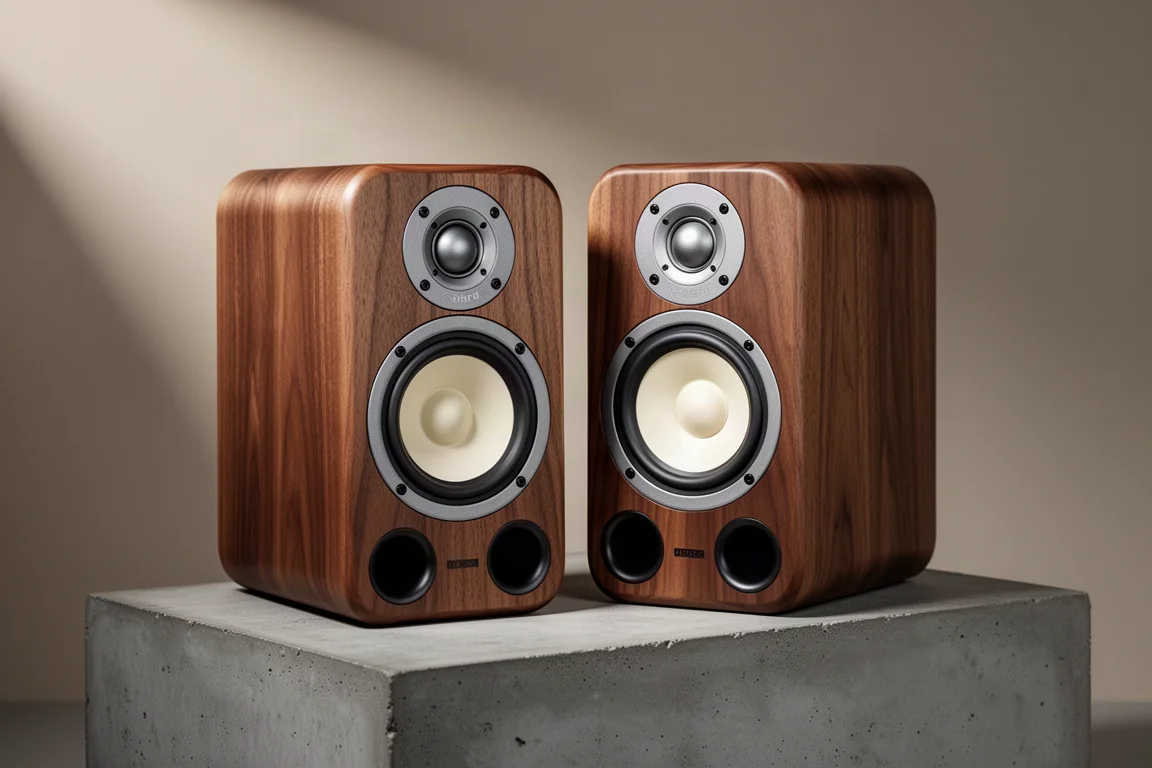
Because none of the original parts are still in production, this is a ground-up design with all-new components, voiced to sit close to the 1980s classic. The result is a two-way standmount with aluminum drivers and an almost identically sized enclosure, priced at £1,499 per pair in a choice of gloss black or real wood walnut veneer finished with 10 coats of lacquer.
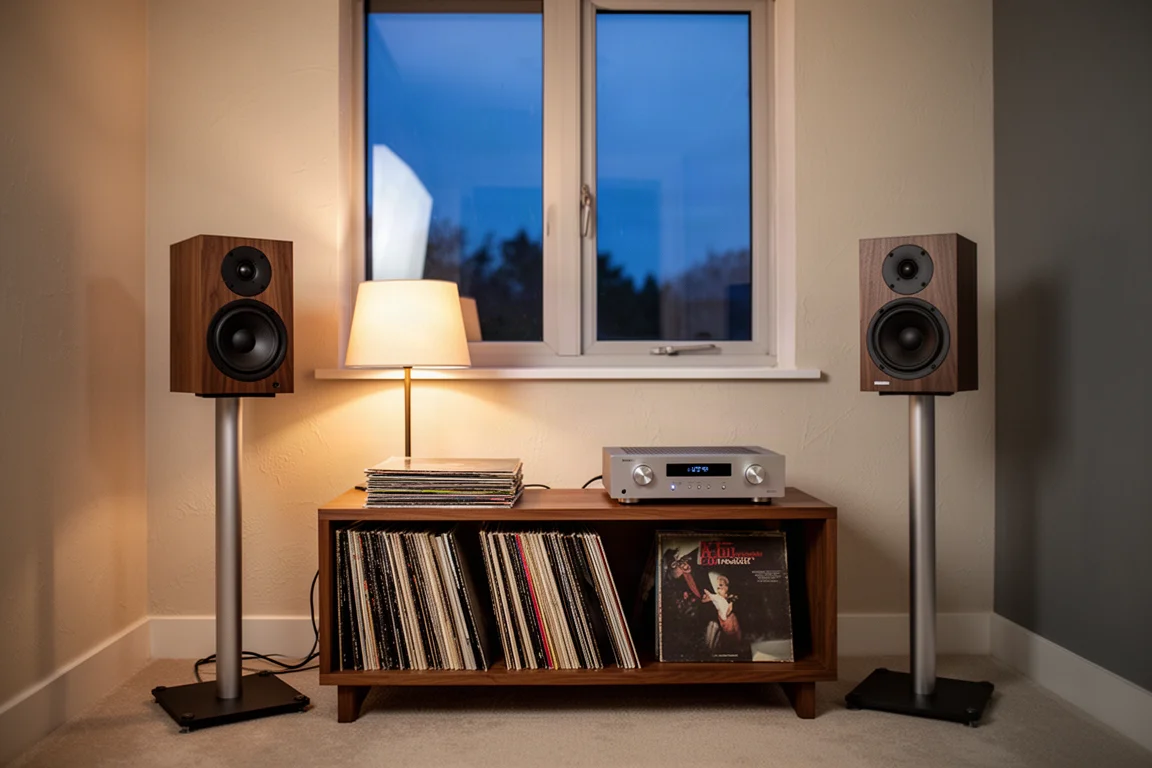
That combination of heritage and modern parts is the heart of the appeal: the character people remember, rebuilt with current materials and current manufacturing.
Who the AE1 40th Anniversary Speakers Are For
These are compact standmounts, measuring 295 by 180 by 240 mm (11.6 by 7.1 by 9.5 in) and weighing 7 kg (15.4 lb) each. Their size makes them a sensible fit for small and medium rooms, and a space up to roughly 20 square meters (215 square feet) is a comfortable match.
They also suit listeners who value the warm, mid-centric presentation often described as the classic British sound. Vocals and lead instruments sit a little forward in the sound stage, and the speakers stay engaging at low listening levels as well as high ones, so they work for quiet evening sessions as much as for louder, more energetic listening.
Near-field use is plausible too, though the spacing of the two drivers is wider than on many two-way standmounts of similar size because of the front-firing ports, which makes them less than ideal at the end of a desk.
Design and Build: What Changed From the Original
The cabinet is a clear step up from the model that put Acoustic Energy on the map. Instead of MDF, the enclosure uses HDF with a bitumen layer sandwiched in the middle, which makes the cabinet more inert and less prone to adding its own color to the sound. The two front-firing ports are carried over from the original design.
On the rear there is a single set of speaker binding posts, so bi-wiring and bi-amping are not options here. The sample arrived in the real wood walnut veneer, which is finished with 10 coats of lacquer; gloss black is the alternative.
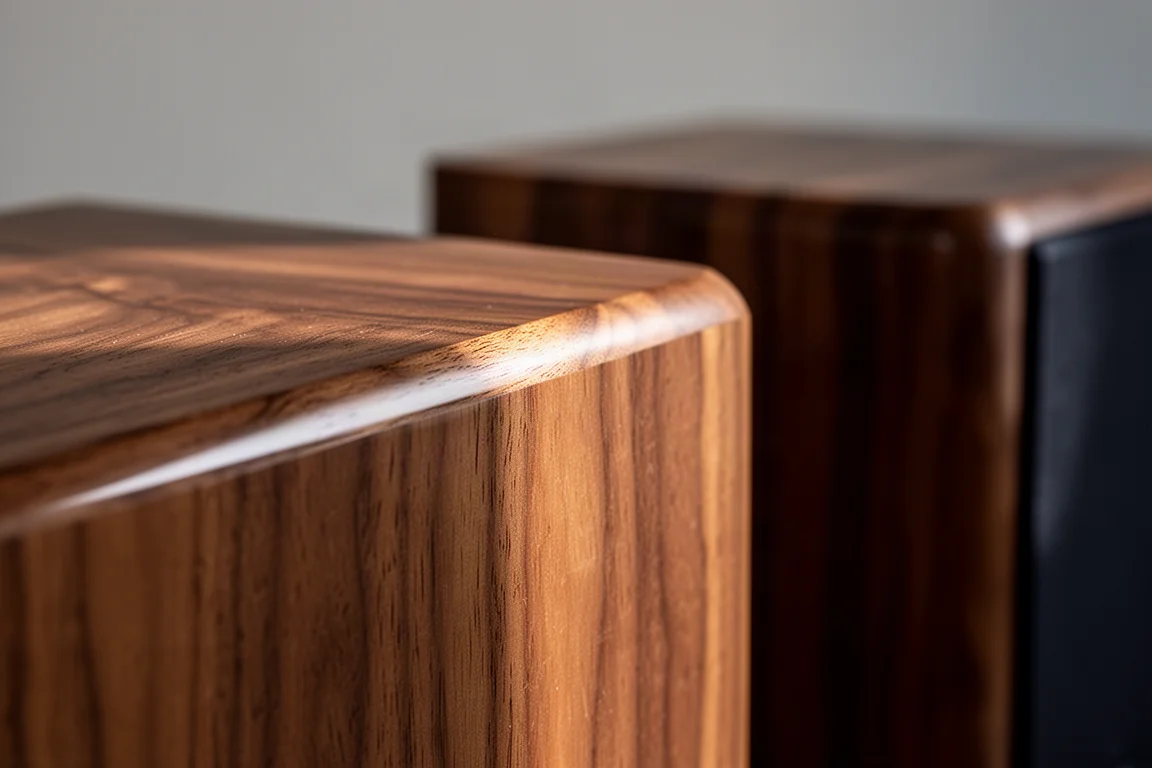
The front-ported layout brings a practical benefit as well: it makes the speakers easier to place closer to a wall than rear-ported designs.
Drivers, Crossover, and the British Sound
The tweeter has grown from the 25 mm (1 in) unit used on the first AE1 to a 29 mm (1.2 in) aluminum dome. It remains ferrofluid cooled for damping and to help power handling, and it now sits in a larger rear chamber that lowers the fundamental resonance and reduces distortion.
The midwoofer is also slightly larger than the 1980s version at 125 mm (5 in). Acoustic Energy has kept the spun aluminum cone, which offers greater uniformity, stiffness and lower distortion than the cheaper pressed metal cones found on many drivers. A ceramic coating is anodized onto both sides of the cone for damping, and an aluminum shorting ring has been added to the motor structure to lower voice coil inductance and further reduce distortion.
Those better-behaved drivers allowed the crossover to be simplified. The crossover point drops from 3 kHz to 2,800 Hz, and the fourth-order filters of the original give way to first-order slopes. Fewer components sit in the signal path, which is generally good news for transparency.
There is a tonal signature to consider as well. When BBC engineers developed the LS3/5A they introduced a dip in the presence region between 2 and 4 kHz, on the view that it made the sound less bright and more enjoyable, particularly for near-field listening. The new AE1s carry a dip in the upper midrange too, inherited from the Mark II prototype they are voiced to resemble rather than from the original model.
Main Strengths: How the AE1 40th Anniversary Sounds
The headline quality here is agility. Bass may only extend into the high 40s, and that is with some help from room gain, but the mid-bass has genuine punch and the weight and definition on offer are captivating. The midrange is crisp yet full, the treble has plenty of extension, and resolution holds up across the frequency range.
They also handle power well and play loud without turning harsh, with a crisp transient attack that keeps energetic music lively. The warm, mid-focused balance means they are never bright, and the dip in the presence region keeps long listening sessions comfortable.
How They Compare With Other Compact Speakers
Against a ProAc Response 1 SC, a long-standing reference point with an exceptionally detailed and natural midrange, the AE1 40s share many of the same strengths. They do not separate out individual performers quite as confidently and they push the midrange slightly further forward, but their bass agility, open highs and articulate mids are impressive for speakers costing roughly half the price of an equivalent modern ProAc.
Compared with the Amphion Argon 1, which sells for a similar amount, the AE1 40s give away some dynamic headroom and run a fuller, warmer midrange. The Neat Petite Classics, at £2,000, retrieve more detail and image more precisely, but they also sound different rather than simply better. The Dali Menuet SE, at just under £1,500, is cleaner and stronger at separating instruments within a three-dimensional stage, though it has less bass. Below £1,000, the Monitor Audio Silver 100 7G reaches lower, but it does not match the resolution or the authentic tonality of the Acoustic Energy pair.
Things to Consider Before Buying
Sensitivity is 87 dB into a 6-ohm load, which tells only part of the story. The original AE1 had a reputation for demanding amplification. The 40th anniversary version has been designed to be a little more forgiving, but it still responds well to current and control. A minimum of 75 W per channel into 8 ohms, backed by a robust power supply, is a sensible target.
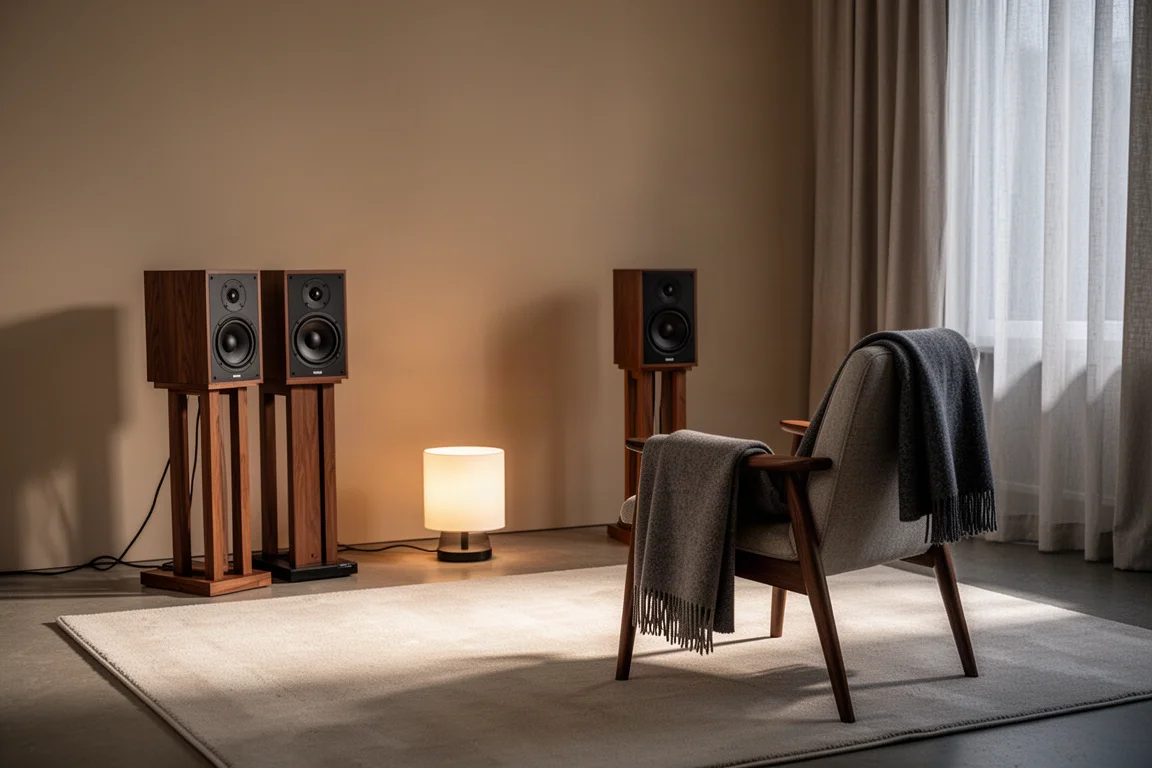
Placement matters as well. The front ports make wall-adjacent positioning easier than with rear-ported speakers, but these cabinets still need some space around them to deliver convincing stereo imaging and a three-dimensional stage. In practice, 85 cm (33.5 in) from the wall behind, measured from the center line of the front baffle, with a conventional toe-in angle, worked well. Buyers with very small rooms or a desk-bound setup should factor that in.
Buying Advice: Amplifiers, Sources, and Placement
Amplifier matching is where these speakers reward a bit of care. The Audiolab 6000A Mark II, one of a handful of amplifiers below £1,000 with a robust power supply, 60,000 microfarads of filter capacitance, 50 W per channel into 8 ohms and a peak current capability of 11 amps, drives them competently with nice resolution, but it can sound a little soft in the leading edge of notes, so it is best treated as a stopgap.
The Exposure 2510 adds detail and openness to the sound stage, and it is an easy combination to live with, although a touch more control over note edges would be welcome. The Hegel H150 supplies exactly that, with extra grip and definition in the bass while matching the Exposure’s way with nuanced mid and high frequency information. Stepping up to the Hegel H190 and its 150 W per channel confirms that these speakers still enjoy power: the extra current brings them fully to life.
On the source side, a streaming transport such as the Bluesound Node 2i paired with a Denafrips NEO 15th DAC is a well-judged match, offering good resolution and a spacious presentation.
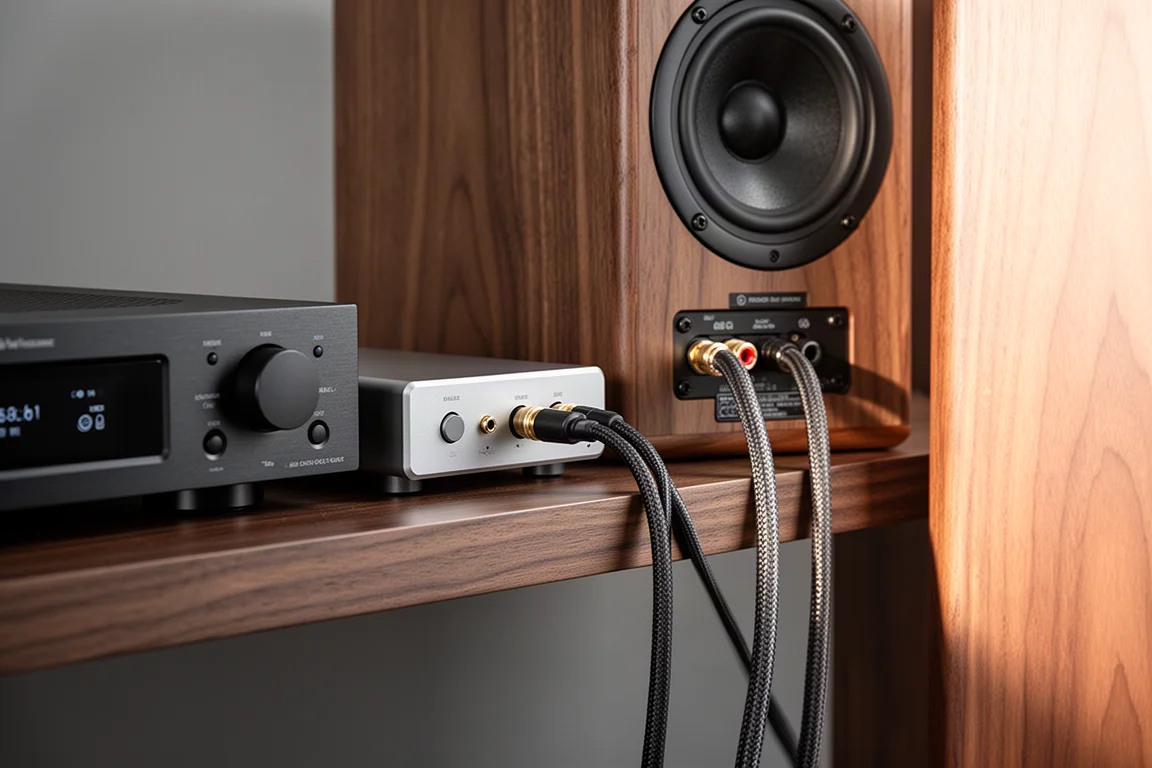
Get the amplifier and the positioning right and the AE1 40s deliver a rare combination of agility and energy without ever turning bright. At £1,499 a pair, that mix of virtues places them in a select group of compact speakers offering strong value for money, and they can hold their own against considerably more expensive benchmarks.
Conclusion
The AE1 legend carries on convincingly. The Acoustic Energy 40th Anniversary speakers stay true to what made the original a favorite among industry veterans, add new parts and improve performance where possible, and they still deliver a clean, snappy bass, a crisp yet full midrange and plenty of top-end extension. They are not the easiest speakers to drive, but they are far from difficult, and with a well-chosen amplifier in an appropriately sized room they are an outstanding proposition at this price.
Product link
View more details for Acoustic Energy AE1 40th Anniversary
This product is mentioned in the review. Check the specifications, options, and compatibility before buying.
View more details for Acoustic Energy AE1 40th AnniversaryFurther reading
Related Reviews
Hi-Fi Speakers
1723 THX Tower vs 1528 Bookshelf: Which Speaker Fits Your Room?
Two speakers at roughly the same price, built very differently. How the 1723 THX tower and the 1528 bookshelf compare on construction, bass, power needs, and sound.
Hi-Fi Speakers
Acoustic Energy AE 300 Review: Deep Bass From a Compact Standmount
A two-way standmount with real wood veneer, surprising low-end weight, and a warm, easygoing character. Here is what to know before buying.
Hi-Fi Speakers
ADAM Audio A7V Review: Precision-First Active Standmount Speakers
The ADAM Audio A7V pairs a hand-built folded ribbon tweeter with a rigid mineral stone fibre woofer and 90 W of Class D power per cabinet. Here is how it sounds, who it suits, and what to weigh before buying.