AV Receivers
Yamaha Aventage RX-A6A Eco Mode: What It Costs You in Amplifier Power
A measured look at the Yamaha Aventage RX-A6A Eco Mode setting, how much amplifier output it gives up, and when leaving it on makes sense.
Introduction
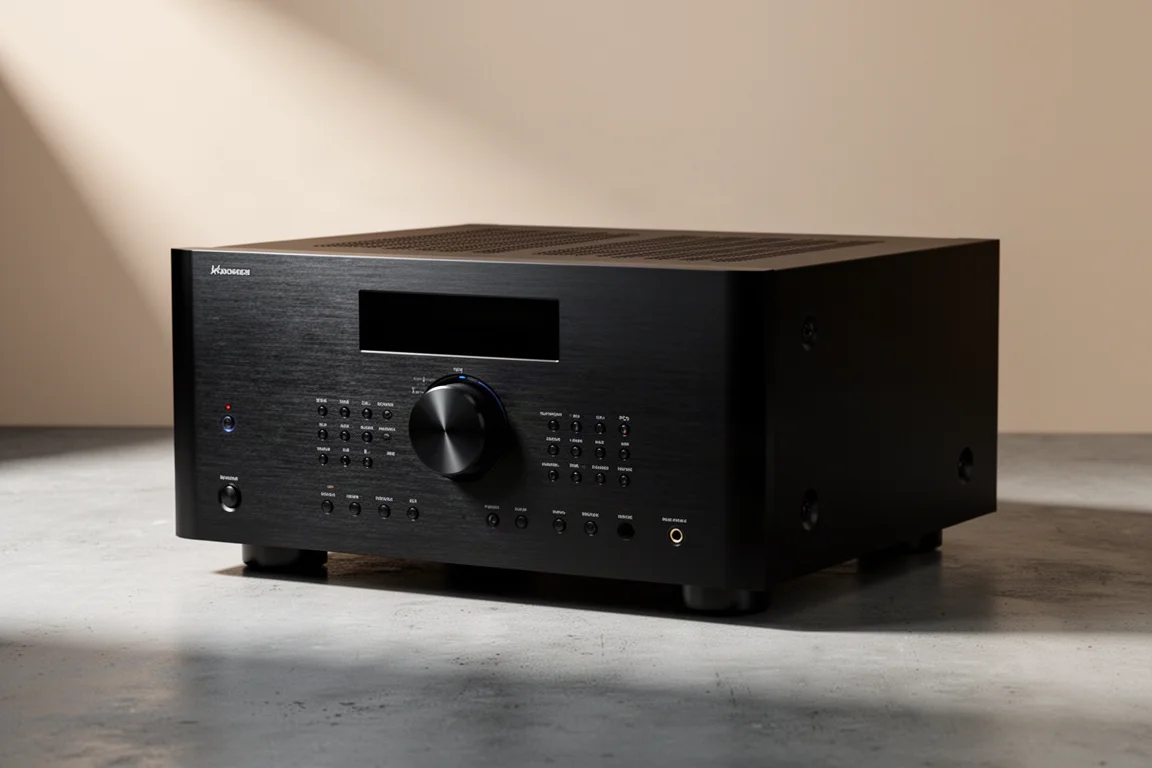
The Yamaha Aventage RX-A6A includes an Eco Mode setting in its system menu. It is normally set to off, and it offers only two states: on or off. That simplicity is worth understanding before you switch it on, because on this receiver the setting does considerably more than trim a small amount of consumption.
Bench measurements of the RX-A6A, a receiver rated at 150 watts per channel, show the amplifier section producing well above its rating with Eco Mode off. Two channels driven reached roughly 170 watts unclipped, with the measured curve approaching 200 watts. Switching Eco Mode on cuts that same two-channel figure to about 58 watts at 0.1 percent distortion, or 65 watts at 1 percent.
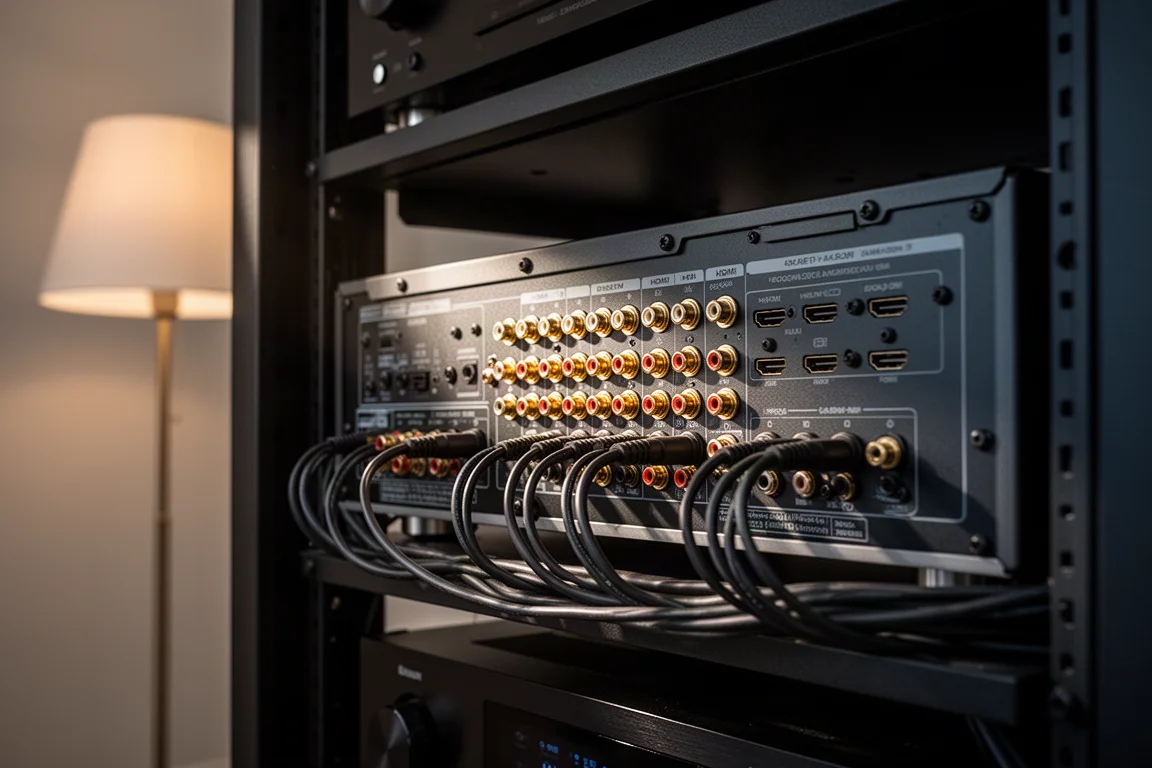
That is the trade-off in one line: Eco Mode reduces power draw, but it also caps amplifier output far below what the receiver can otherwise deliver.
Who this product is for
The RX-A6A suits listeners building a surround system who want genuine amplifier headroom for two-channel listening and moderate multi-channel use. It also suits buyers who plan to run it as a preamp and processor alongside separate power amplifiers, since its preamp outputs measured a clean 4 volts RMS with all channels driven simultaneously.
If your priority is efficiency at low listening levels without sacrificing peak output, note that the RX-A6A does not offer the automatic rail-switching behaviour found on some competing receivers. Its Eco Mode is a plain on or off choice, with no middle setting that preserves full output as volume rises.
Main strengths
With Eco Mode off, the RX-A6A comfortably exceeds its 150 watt per channel rating. Two channels driven measured around 170 watts unclipped, and four channels driven held at approximately 140 watts before the protection circuit began limiting output as distortion climbed under continuous test signals.
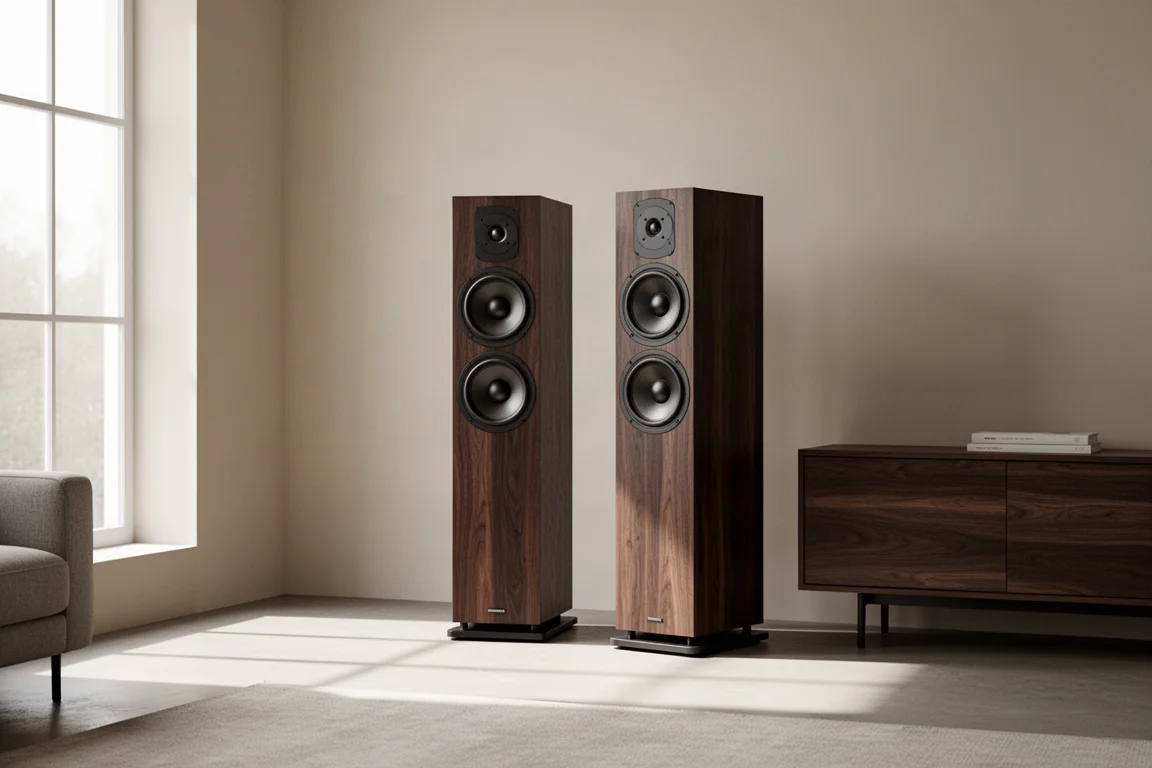
The preamp section is a real strength. A voltage sweep of the preamp outputs produced a clean 4 volt RMS signal with every channel driven at once, and Eco Mode made no difference to that result at all.
How eco mode affects amplifier power
The measurements tell a consistent story. With two channels driven, Eco Mode drops output from roughly 170 watts to about 58 watts at 0.1 percent distortion. With four channels driven, output falls from around 140 watts to about 50 watts per channel. With seven channels driven simultaneously, the receiver is limited to roughly 42 watts in Eco Mode against about 50 watts with it off, because the limiting circuit is already constraining the amplifier at that point.
The receiver does not enjoy being driven with more than four or five channels continuously. That observation comes from sustained test tones rather than music program material, and dynamic content is unlikely to trigger the same limiting behaviour in a normal room.
Things to consider before buying
If you intend to power your speakers from the RX-A6A’s internal amplifiers, leaving Eco Mode off preserves the output the receiver is capable of. Eco Mode gives up a large share of that capability in exchange for a modest reduction in consumption.
One further detail is worth knowing. During testing, the centre channel and two of the surround channels showed higher distortion than the other channels, at around 0.05 percent. That figure is still low, but the channel-to-channel difference is noticeable, and it is a point the manufacturer has been asked about directly.
Using the RX-A6A as a preamp
If you use the RX-A6A as a preamp and processor and drive your speakers with separate amplifiers, Eco Mode behaves very differently. The preamp outputs measured a clean 4 volts RMS with every channel driven, and Eco Mode had no effect on that figure whatsoever. In this configuration, Eco Mode lowers the receiver’s power consumption and heat output without touching the signal sent to your external amplifiers.
Buying advice
The decision comes down to how you use the receiver. If the internal amplifiers are driving your speakers, leave Eco Mode off so you keep the full output the RX-A6A is capable of.
If the receiver is acting purely as a preamp and processor, Eco Mode is a reasonable way to cut power consumption and heat, since measurements showed it does not affect preamp output. Either way, the setting lives under System in the setup menu, and it ships set to off.
Conclusion
The RX-A6A is a capable receiver that measured well above its rated power with Eco Mode off. Its Eco Mode is a blunt instrument: simple on or off, with no automatic rail switching, and a large reduction in amplifier output when engaged. Treat it as a preamp-only power saver if efficiency matters to you, and leave it off if you want the power you paid for.
Product link
View more details for Yamaha Aventage RX-A6A
This product is mentioned in the review. Check the specifications, options, and compatibility before buying.
View more details for Yamaha Aventage RX-A6AFurther reading
Related Reviews
AV Receivers
Anthem MRX 740 8K Review: Composed Home Theater Sound With a Few Rough Edges
A close look at Anthem's mid-tier MRX 740 8K receiver, covering its sound, ARC Genesis room correction, HDMI 2.1 features and the daily quirks worth knowing before you buy.
AV Receivers
Anthem MRX 740 vs MRX 1140: Which AV Receiver Fits Your System?
A measured look at the Anthem MRX 740 and MRX 1140, covering preamp output performance, amplifier behaviour, bass management, and expansion headroom.
AV Receivers
Best AV Receivers for Home Theater: Denon, Onkyo, Marantz and Yamaha Compared
Four home theater receivers compared on features, sound character, setup and value, with clear guidance on which one fits which kind of buyer.