AV Receivers
Best AV Receivers for Home Theater: Denon, Onkyo, Marantz and Yamaha Compared
Four home theater receivers compared on features, sound character, setup and value, with clear guidance on which one fits which kind of buyer.
Introduction
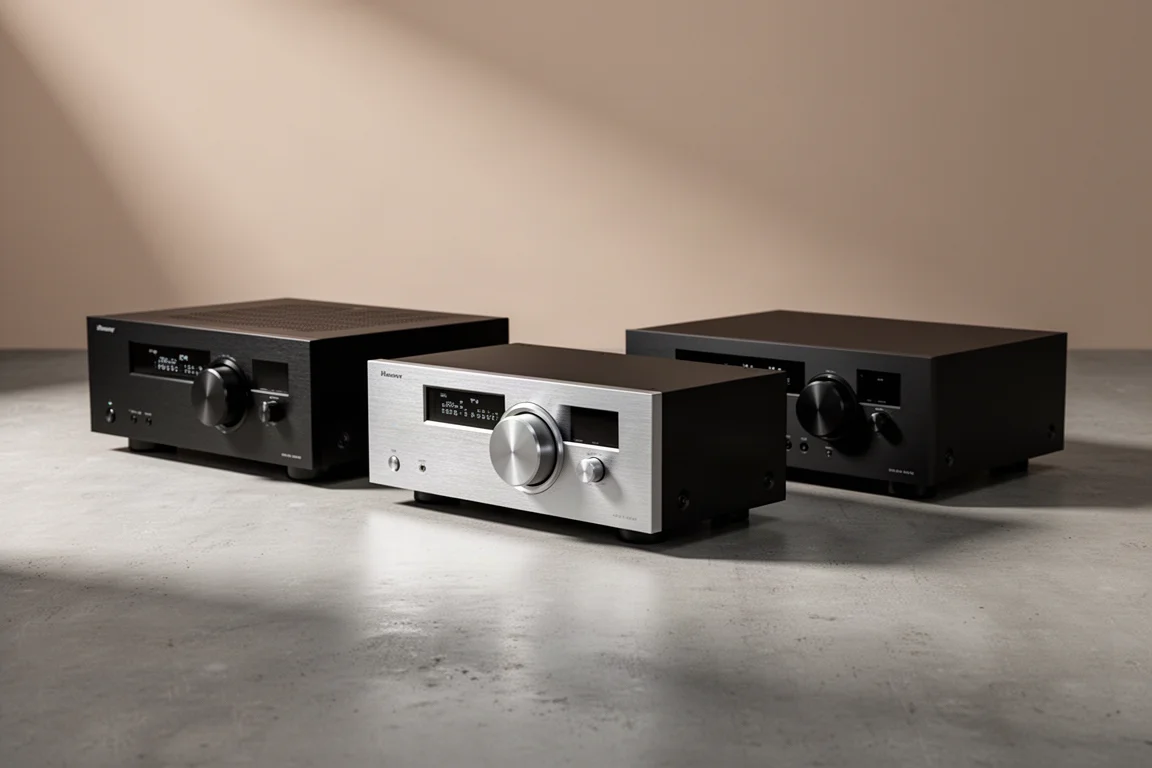
An AV receiver decides how the rest of a home theater behaves. It sets how many speakers you can run, how many sources you can plug in, and how much control you have over the sound in your room. Four models sit at the center of that conversation right now, and each one takes a different route to the same goal.
The Denon X3800H brings the widest feature list for the money. The Onkyo RZ50 leans on value and a wide stereo soundstage. The Marantz Cinema 50 asks a higher price in exchange for a smoother, more refined presentation. The Yamaha A6A goes the other way, offering deep customization for listeners who want to tune every parameter themselves.
The sections below cover what each receiver does well, where each one gives something up, and which kind of buyer each one suits.
What to Look For in a Home Theater Receiver
Before comparing models, it helps to know which specifications actually change the experience.
Channel count and amplification come first. A receiver rated at a given wattage per channel in stereo will deliver less power once more channels are driven, so preamp outputs are worth checking if you expect to add a separate amplifier later. Subwoofer outputs are the second item, since independent outputs give far more flexibility when you run more than one sub. HDMI capacity is the third, covering how many devices you can connect, whether every input handles the highest resolutions, and which HDR formats pass through. Room correction is the fourth, because it can transform how a system sounds in a real room, and it is worth knowing whether the version you want is included, paid, or still pending. Finally, setup experience and software readiness matter, since a receiver that needs firmware updates to deliver promised features is a different purchase from one that is complete on day one.
Denon X3800H: The Most Feature-Dense Option
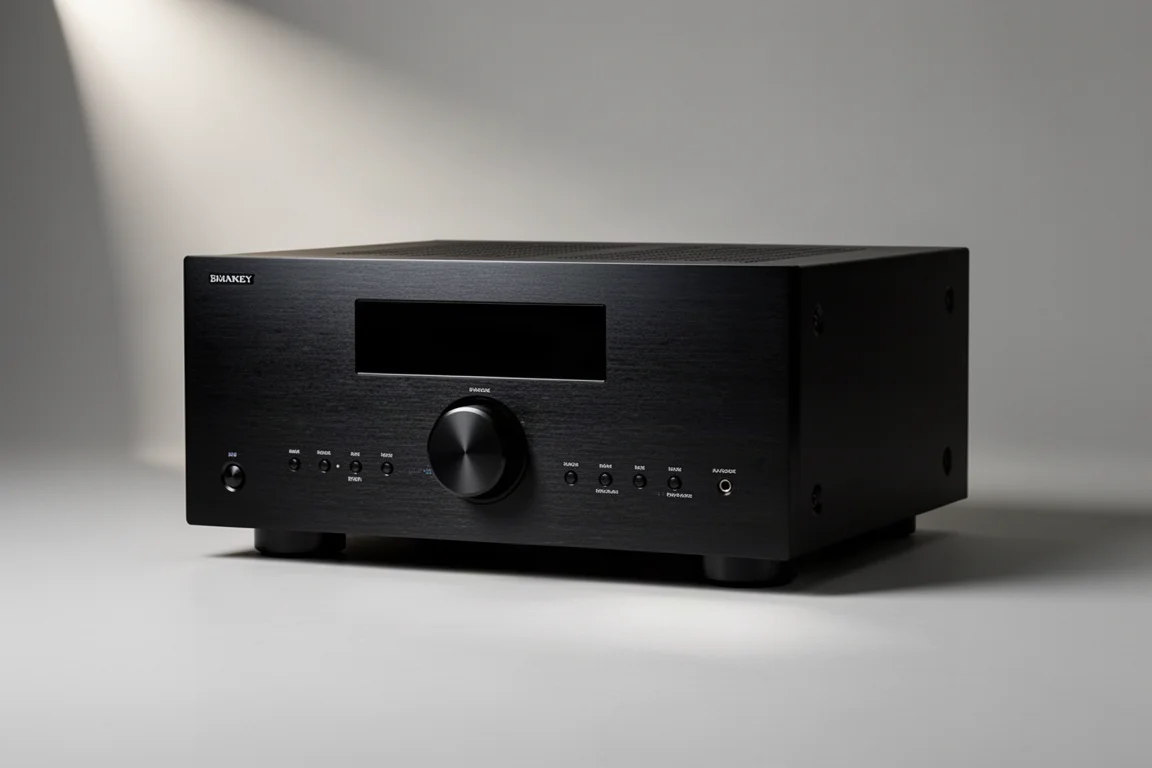
Denon’s X3800H sits close to the middle of the company’s receiver line, and it covers a lot of ground for the price. It is a 9.4-channel design with Dolby Atmos, DTS:X, Auro-3D and IMAX Enhanced support, rated at 105 watts per channel in stereo. Power output drops as more channels are driven, but there is enough on tap to drive most loudspeakers, and anyone who needs more can add a separate amplifier through one of the 11 preamp outputs. Those outputs also let the X3800H work as an 11.4-channel processor, which is rare at a price just under $1,700.
Bass management is a genuine highlight. The receiver has four subwoofer outputs and all of them are independent, which makes multi-subwoofer setups far easier to tune. Connectivity runs to six HDMI inputs and three HDMI monitor outputs, with support for signals up to 8K60 and 8K upscaling depending on settings. Unlike earlier Denon models, 8K support is not limited to a single HDMI input, so owners of more than one current-generation console do not have to choose which one gets the best treatment. ARC and eARC are covered, along with HDR formats including Dolby Vision.
Setup is straightforward, helped by a cleaned-up on-screen interface that guides newcomers through the process while letting experienced users skip ahead. Calibration can be handled from the television, the included remote, the receiver app, or a laptop with an internet connection. Audyssey MultEQ XT32 is included out of the box and does a capable job of tailoring speakers to a room, although its curves lean leaner and more forward than a careful manual setup. Dirac room correction is also part of the plan, but it requires a firmware update that was not available at launch and an additional fee.
Sonically, the X3800H is bold, slightly forward, dynamic and surprisingly weighty in the low end, with a leaner and more detailed mid-range. High frequencies are where it shows its more budget-friendly position: at higher volumes the top end can turn crunchy, and it is more noticeable with music. Its stereo soundstage is also narrower and shallower than the Marantz and the Onkyo. Auto input switching occasionally chose the wrong HDMI input in day-to-day use, a minor bug that manual selection resolves. Gaming, on the other hand, was flawless, with 4K 60 and 4K 120 titles running at their highest settings with and without HDR.
Onkyo RZ50: The Value Leader
The RZ50 is the value benchmark in this group. Its feature set is available now rather than promised for later, which makes it a simpler purchase than receivers waiting on firmware. Its strongest card is soundstage: stereo material extends well beyond the speakers and fills the room, and it is the most impressive of the four in that respect. Dynamically it is roughly equal to the Denon at low and moderate listening levels.
For anyone who wants the Marantz but cannot justify the price, the RZ50 is the natural alternative. It also comes across as the more fleshed-out product of the two more affordable options.
Marantz Cinema 50: The Premium Performer
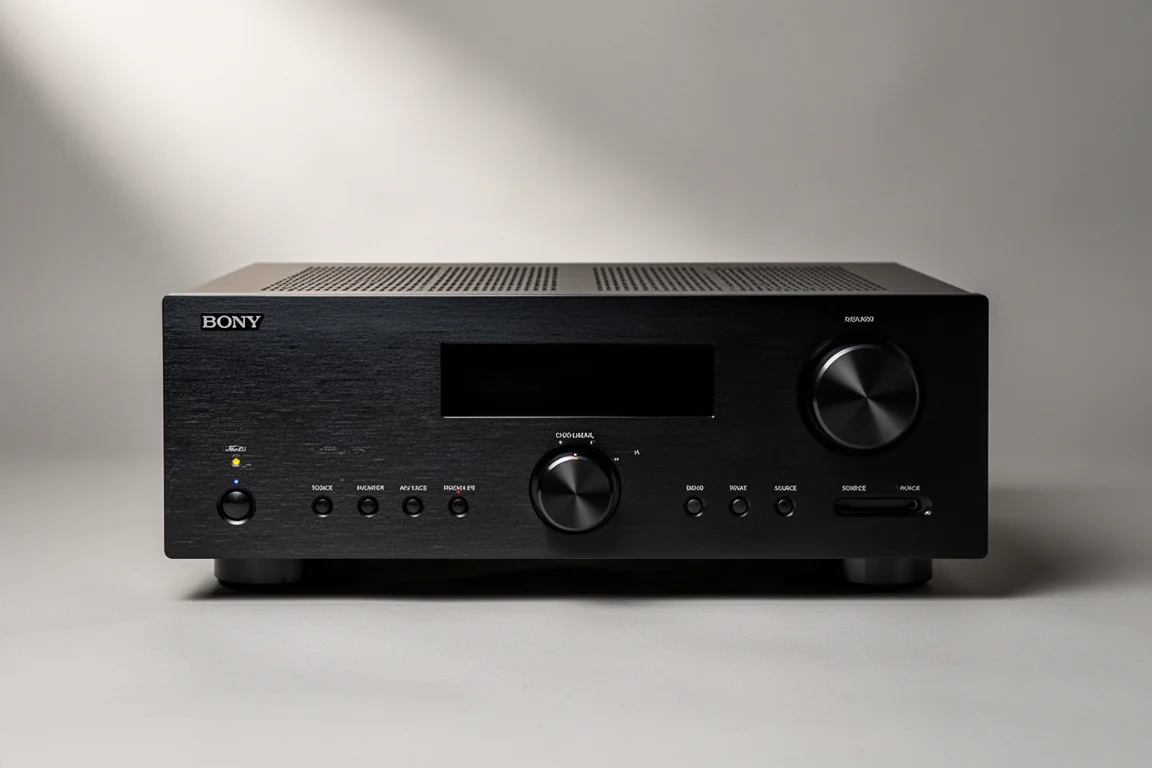
The Cinema 50 is the most expensive receiver here, costing roughly a thousand dollars more than the Denon, and it justifies that gap in two areas: design and sound. Where the Denon is bold and forward, the Marantz is smoother, rounder and warmer. Its bass stays neutral rather than adding presence, and its top end remains refined instead of turning crunchy as the volume climbs. The soundstage is wider and deeper than the Denon’s, and stereo listening benefits from it the most.
The menu system is essentially the same as the Denon’s, with minor differences in color and graphics, so the extra money buys hardware and tuning rather than software. Dirac room correction was also not available at launch on the Cinema 50 and requires the same kind of paid upgrade.
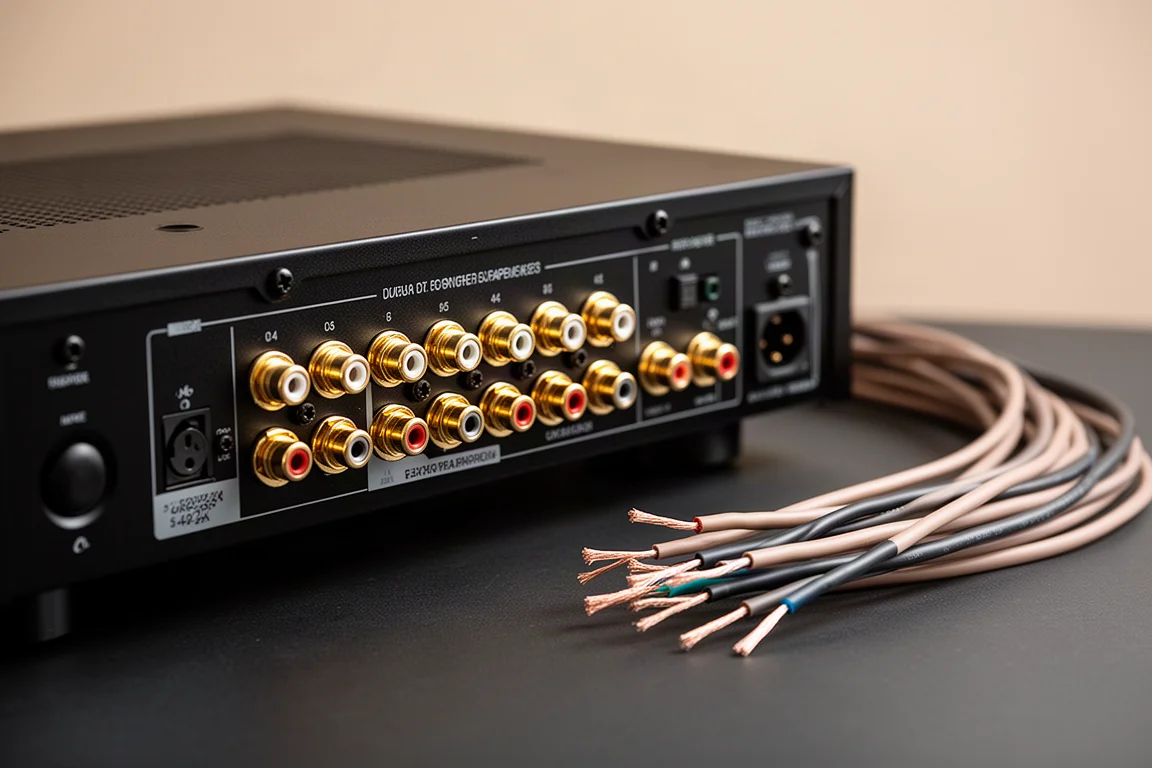
In a direct comparison, the Cinema 50 is the receiver most listeners would prefer if the budget allows it. It is the more complete performer, and the price difference is the only real obstacle.
Yamaha A6A: Deep Customization, Slower Start
The A6A was not part of the direct listening comparison, so its position here reflects the wider Yamaha experience rather than a head-to-head result. Yamaha makes capable receivers, and the A6A’s appeal is customization: an unusually deep set of tuning options for listeners who want to adjust everything.
That same depth works against newcomers. Getting up and running takes noticeably longer than with the Denon, the Marantz or the Onkyo, and the overall user experience does not feel on par with the price. It is also widely regarded as expensive for what it offers, and it is not the receiver to start a first home theater with.
Which AV Receiver Should You Buy?
Ranked by overall preference, the order runs Marantz Cinema 50 first, Onkyo RZ50 second, Denon X3800H third and Yamaha A6A last.
If the budget is not the deciding factor and you want the best sound and the best design, the Cinema 50 is the pick. If the Marantz costs more than you want to spend, the RZ50 delivers a wide soundstage and a complete feature set for less, and it is the stronger value of the two affordable options.
The X3800H is still a good receiver at its price and the most feature-dense model here, particularly for anyone who needs four independent subwoofer outputs or 8K on every HDMI input. Its weaknesses are mostly in software, and it needs a firmware update or two, plus a paid Dirac upgrade, before it reaches its full potential.
The A6A suits listeners who enjoy tinkering and want maximum control. Buyers who would rather be watching a film shortly after unboxing will have an easier time with the other three.
Conclusion
Each of these receivers makes sense for a different buyer. The Marantz Cinema 50 is the most refined and the most expensive. The Onkyo RZ50 is the value leader with the best stereo soundstage of the group. The Denon X3800H offers the deepest feature set for the money and plenty of headroom for growth once its software matures. The Yamaha A6A rewards patience and a taste for customization. Match the receiver to the way you actually listen, and the decision becomes much simpler.
Further reading
Related Reviews
AV Receivers
Anthem MRX 740 8K Review: Composed Home Theater Sound With a Few Rough Edges
A close look at Anthem's mid-tier MRX 740 8K receiver, covering its sound, ARC Genesis room correction, HDMI 2.1 features and the daily quirks worth knowing before you buy.
AV Receivers
Anthem MRX 740 vs MRX 1140: Which AV Receiver Fits Your System?
A measured look at the Anthem MRX 740 and MRX 1140, covering preamp output performance, amplifier behaviour, bass management, and expansion headroom.
AV Receivers
Denon A1H Review: A 15.4-Channel Flagship Receiver With One Big Caveat
The Denon A1H delivers fifteen channels, four independent subwoofer outputs and superb surround sound once Dirac Live is added, but the licence cost is part of the real price.