Home Theater Receivers
Yamaha Aventage A4A Review: Neutral Sound With Deep Setup Control
A 7.2-channel Dolby Atmos and DTS:X receiver with 8K60 and 4K120 support, extensive manual calibration, and a deliberately neutral sound signature.
Introduction
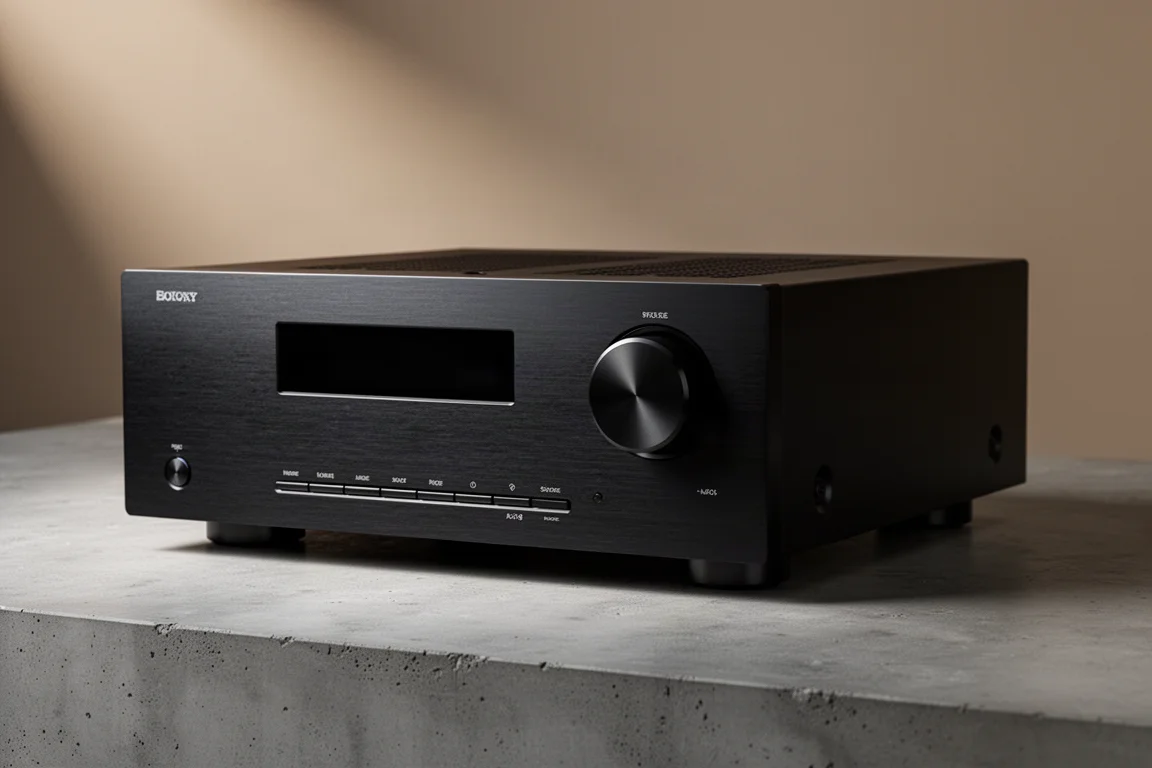
The Yamaha Aventage A4A sits one step above the entry point of the Aventage line, which is the A2A, and for many buyers it will be the natural place to start. It is a 7.2-channel receiver with Dolby Atmos and DTS:X support, and it carries official support for 8K60 and 4K120 video along with a broad set of gaming-related features.
Yamaha rates it at 110 watts per channel in stereo. That figure will drop as more speakers are added, and neither the Yamaha website nor the manual states a power rating with all channels driven, so the practical multi-channel output is difficult to pin down from the specifications alone.
HDR support covers most formats including Dolby Vision, and lower-resolution sources such as HD can be upscaled to 8K60. Several features that were still waiting on firmware when the pricier A8A arrived are now live and fully functional, which matters if you were holding off until the platform matured.
Who the Yamaha Aventage A4A Is For
This receiver suits people who want a well-built 7.2-channel foundation with genuine setup depth. Yamaha is unusual in offering a fully manual calibration path alongside its automatic room correction, and the A4A keeps that flexibility even at its lower price point. If you like the idea of setting speaker distances, levels, and EQ yourself, the tools are all here.
It is equally reasonable for listeners who want something straightforward. Running the automatic room correction produces results that are broadly similar to a careful manual configuration, so the depth of control is optional rather than mandatory.
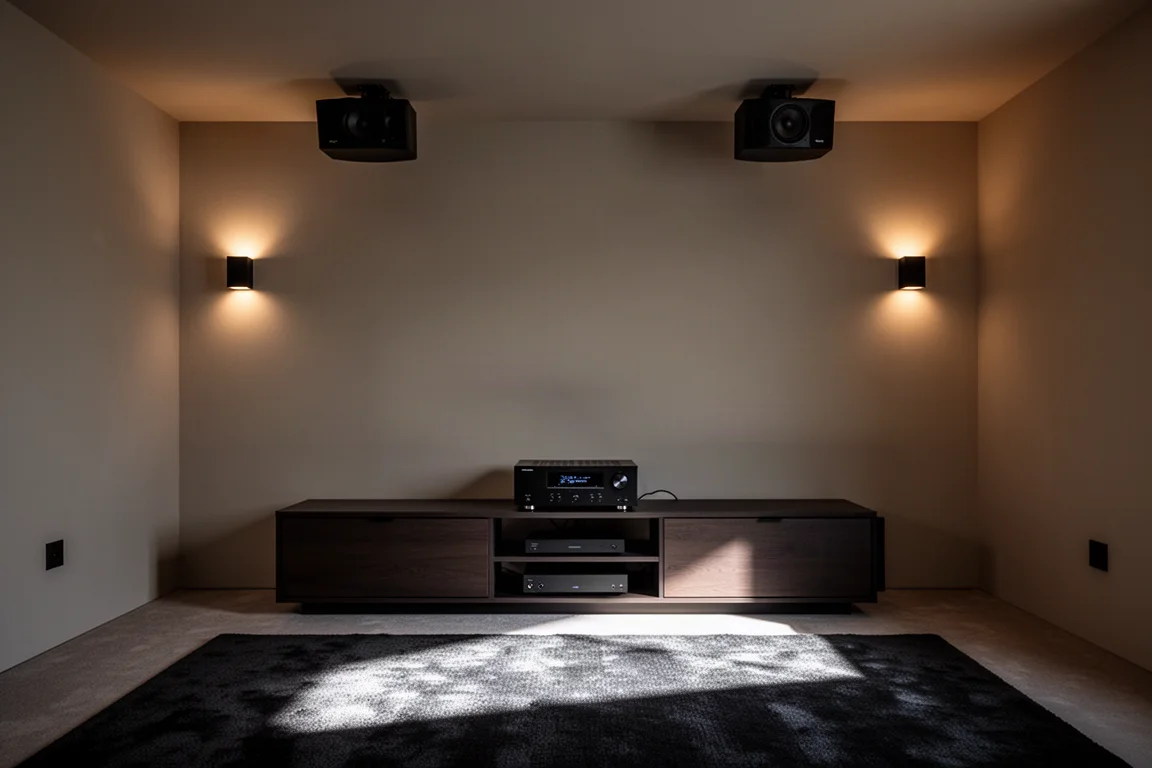
The practical limit to keep in mind is Dolby Atmos. The A4A supports Atmos configurations up to 5.1.2, which means no back channels and no more than two overhead speakers while Atmos is active. Buyers who want 7.1.2 or 5.1.4 Atmos layouts need to step up to the A6A or A8A. Outside of Atmos content, the A4A handles 7.1 material as expected.
Main Strengths of the Yamaha Aventage A4A
Three qualities stand out: sound that stays neutral, setup that can be as deep as you want it, and surround steering that holds together across a room.
Neutral, Honest Sound
The A4A does not put its own stamp on the material. Across Klipsch Cornwall theater speakers, Triangle Borea towers, and Q Acoustics Concept 50 speakers, it neither added nor subtracted character. There is no obvious house curve, no boosted bass, and no lifted treble. Some listeners may describe that as boring, but the intent is transparency: what you hear is largely what the speakers and the mix provide.
Dialogue stays intelligible even with dialogue enhancement switched off, and voices remain planted in the mix rather than being pushed forward. The trade-off sits in the upper midrange and top end, which is smoother than some rivals deliver. That smoothness means dynamic swings and action hits can feel slightly less forceful, and details such as bullet ricochets or musical accents come across as more subdued. Dialogue settings help a little, and a click or two of adjustment improved intelligibility, but pushing further introduced an unnatural, distorted quality.
Flexible Setup and Customization
Yamaha’s manual setup path is the real differentiator. Rather than forcing a single automated routine, the A4A allows a full manual configuration, and the range of customization on offer is impressive for the price. For newcomers that breadth can be a lot to absorb, but it does not have to be used all at once. Automatic room correction is a perfectly sensible starting point, and the manual tools remain available for anyone who wants to refine the result later.
Surround Steering and Video Switching
Surround performance is even-handed. Movement and placement of effects across the connected speakers were balanced, with clean transitions front to back, side to side, and overhead, so there were no gaps as action unfolded around the room. Even with the back channels silent during true Atmos content, the receiver spread sound well enough that their absence was not distracting. On the video side, switching was smooth and precise, and 4K gaming at 120 frames per second worked without issue, with the dense surround mix of the Modern Warfare 2 campaign coming through convincingly.
Things to Consider Before Buying
Dolby Atmos Channel Limits
The 5.1.2 ceiling on Atmos is the single most important specification to understand before buying. It is not a flaw in sound quality, but it does constrain how large an Atmos system you can build. If your room and your plans call for more overhead speakers or rear channels in an Atmos configuration, this is the wrong tier.
Power Ratings, Speaker Matching, and Menus
The 110-watt figure applies in stereo, and the all-channels-driven rating is not published. In practice the receiver is comfortable with speakers rated between 6 and 8 ohms. Owners of 4-ohm speakers should either look further up the range or plan on external amplification. The preamp outputs themselves work well: paired with Crown and AudioLab amplifiers, the A4A gained a little extra focus, low-end detail, and control, but the difference was not dramatic. A separate amplifier is not necessary unless your speakers are unusually inefficient or drop below 6 ohms.
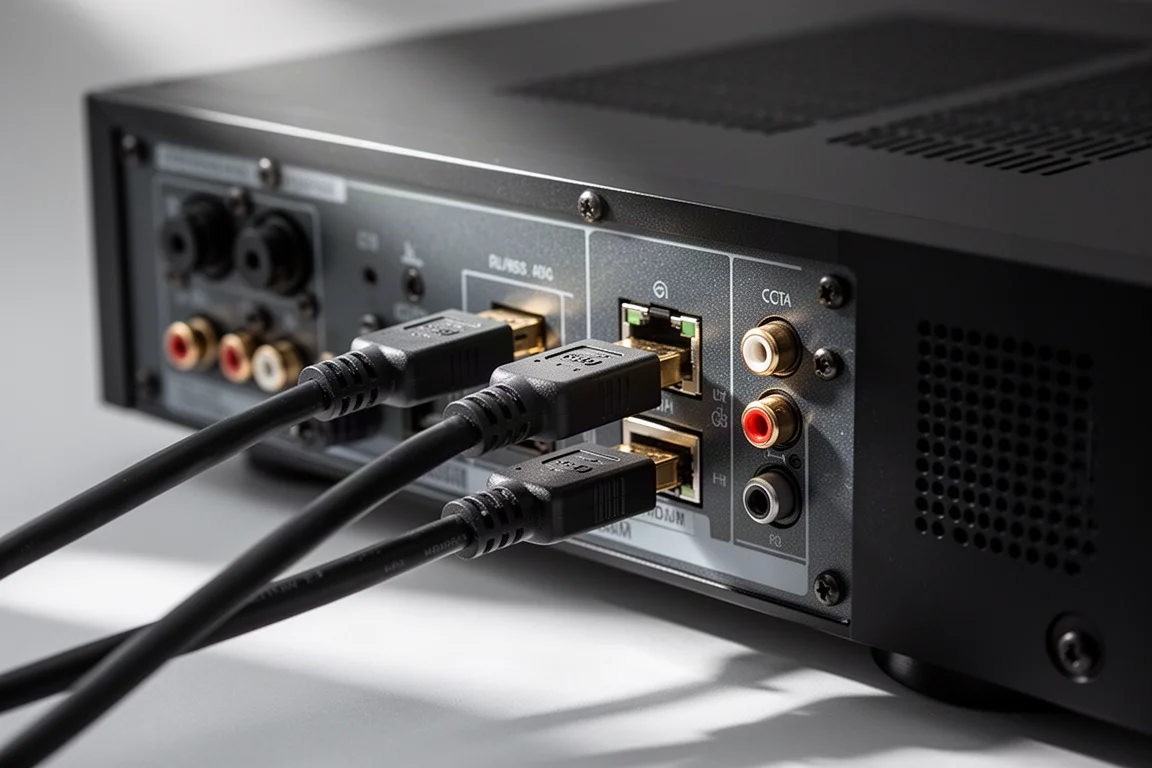
The on-screen menus are functional but dated, having changed little across several product generations. It reads as a missed opportunity rather than a dealbreaker, because the control available underneath those menus is so capable.
How the Yamaha Aventage A4A Compares
Against the Onkyo RZ50, the A4A’s full multiband manual parametric EQ keeps it competitive, and its neutrality is something Onkyo does not match. On value for money, however, the RZ50 remains the stronger proposition, offering more channels of amplification and Dirac room correction for roughly the same cost. The RZ50 also sounds more exciting with action-heavy films such as Top Gun: Maverick. Buyers who prioritize absolute neutrality and enjoy tinkering will prefer the Yamaha.
The Marantz Cinema 60 is harder to place without direct testing, but based on the costlier Cinema 50 it will very likely sound excellent and deliver a better overall user experience thanks to its more polished menus. It will not offer Dirac, so room correction would rely on Audyssey. Both receivers are built to a high standard with similar power output and performance, so the decision comes down to taste.
Against the Denon AVR-X2800H, the A4A is the more powerful and more feature-rich option, and those upgrades come at a higher price. The X2800H itself has not been evaluated, though the slightly more powerful and more directly comparable AVR-X3800H was impressive. On balance, the Yamaha would be the pick.
For buyers who need to save a little more, the Onkyo NR7100 is worth considering at roughly $1,300. It is a 9.2-channel receiver rated at 100 watts into 8 ohms, so it is slightly less powerful, but the difference is unlikely to matter in practice. It supports Dolby and DTS surround, includes Dirac Live, is THX certified, and provides seven HDMI inputs with two outputs, two of which support 8K60 and 4K120 over HDMI 2.1. It also avoids the A4A’s Atmos channel limitations.
Buying Advice
At just over $1,600, the A4A is not a budget purchase, but it is far from unobtainable given what it includes. The case for it rests on three things: neutral sound that respects the source, unusually deep manual calibration, and solid build quality in a chassis that looks the part. The case against it rests on the 5.1.2 Atmos ceiling, dated menus, and a sound signature that trades some excitement for accuracy.
If maximum impact and channel count per dollar matter most, the Onkyo RZ50 is the better value. If you want a receiver that stays out of the way of the recording, gives you the tools to tune it exactly as you like, and now has all of its promised firmware features in place, the A4A is a genuinely solid buy. Pair it with 6 to 8 ohm speakers, keep your Atmos layout within 5.1.2, and it will reward a careful setup.
Conclusion
The Aventage A4A delivers what the more expensive A8A initially promised: a fully realized platform with a complete feature set and a neutral, capable sound. Its Atmos configuration limit and dated menus are real considerations, and the RZ50 offers more per dollar. Even so, the A4A earns a recommendation for listeners who value neutrality, customization, and build quality over extra channels and extra drama.
Product link
View more details for Yamaha Aventage A4A
This product is mentioned in the review. Check the specifications, options, and compatibility before buying.
View more details for Yamaha Aventage A4AFurther reading
Related Reviews
Home Theater Receivers
Arcam AVR11, AVR21, AVR31 and AV41: Inside the Current Home Theater Lineup
Three AV receivers and one surround processor share Arcam's house sound and a complete modern feature set. Here is how they differ and which one fits your room.
Home Theater Receivers
Best Home Theater Receivers 2026: Ten Picks From Entry Level to Flagship
A practical roundup of ten home theater receivers, from an affordable 5.1.2 model to a 15-channel flagship, with the features that matter most before you buy.
Home Theater Receivers
Best Home Theater Receivers: Eight Picks From Entry Level to Audiophile
Eight home theater receivers compared on channels, amplifier headroom, room correction, subwoofer outputs, and expansion, from an entry-level pick under $750 to audiophile flagships.