Home Theater Receivers
Best Home Theater Receivers: Eight Picks From Entry Level to Audiophile
Eight home theater receivers compared on channels, amplifier headroom, room correction, subwoofer outputs, and expansion, from an entry-level pick under $750 to audiophile flagships.
Introduction
Choosing a home theater receiver comes down to balancing channel count, amplifier headroom, room correction, and streaming features against budget. The eight models below cover that entire range, from an entry-level option under $750 to flagship audiophile designs.
Every receiver on this list includes Dolby Atmos, eARC, app control, Bluetooth, 8K video switching, and music streaming, so basic compatibility is rarely the deciding factor. What separates them is how many channels are powered on board, how much current the amplifier section can deliver, which room correction system is included, and how far the unit can grow with external amplification.
What These Receivers Have in Common
All eight share a modern baseline: Dolby Atmos decoding, eARC on the main HDMI output, app-based control, Bluetooth streaming, 8K video switching, and built-in music streaming. That means most buyers can start the shortlist from feature support alone and then narrow it down on the details that actually change the experience.
The details that matter are channel count, preamp outputs, room correction, amp matrixing, the number of independent subwoofer outputs, and whether a phono section is included. Channel count sets how many speakers can be powered without an external amplifier, while preamp outputs decide whether the receiver can grow into a larger layout later. Room correction determines how well the system adapts to a real room rather than an ideal one.
A practical way to shop is to decide the speaker layout first and then choose the receiver that powers it comfortably. Anyone who expects to expand later should weight preamp outputs and channel processing heavily, while those building a fixed system can put more of the budget into amplifier quality and room correction.
Height channel handling is worth a closer look as well. Dolby Atmos and DTS:X effects can be delivered by up-firing modules, on-wall speakers, or in-ceiling models, and the more precisely a receiver can be told which type and position is in use, the more convincing the result.
Best Entry-Level Pick: Pioneer VSX-935
The Pioneer VSX-935 is the entry point here, and it covers a surprising amount of ground for the price. It supports Dolby Vision and upscales 1080p and 4K content to 8K, and it handles both DTS and Dolby Atmos upscaling, so stereo and 5.1 material can be expanded into an immersive layout. Dolby Atmos Height Virtualizer and DTS Virtual:X simulate height channels when physical height speakers are not part of the plan.
Streaming support is broad: high-resolution 192/24 playback plus Amazon Music HD, Pandora, Spotify, Tidal, and Deezer, along with AirPlay 2, Chromecast, and Alexa. Bluetooth streaming is included, and the receiver can transmit to Bluetooth wireless headphones for late-night listening. A Sonos Port can be added so the VSX-935 behaves as a Sonos Zone with volume control through the Sonos app.
Room correction comes from MCACC, one of the earliest automatic correction systems and still one of the easiest to run. It can fine-tune subwoofer phase so the sub blends more cleanly with the main speakers, which is a meaningful advantage at this price. The power amplifier section is beefy for the class and delivers a gutsy, dynamic sound, and the receiver can drive a 5.1.2 Dolby Atmos configuration.
Best Step-Up Under $1,250: Denon AVR-X2800H
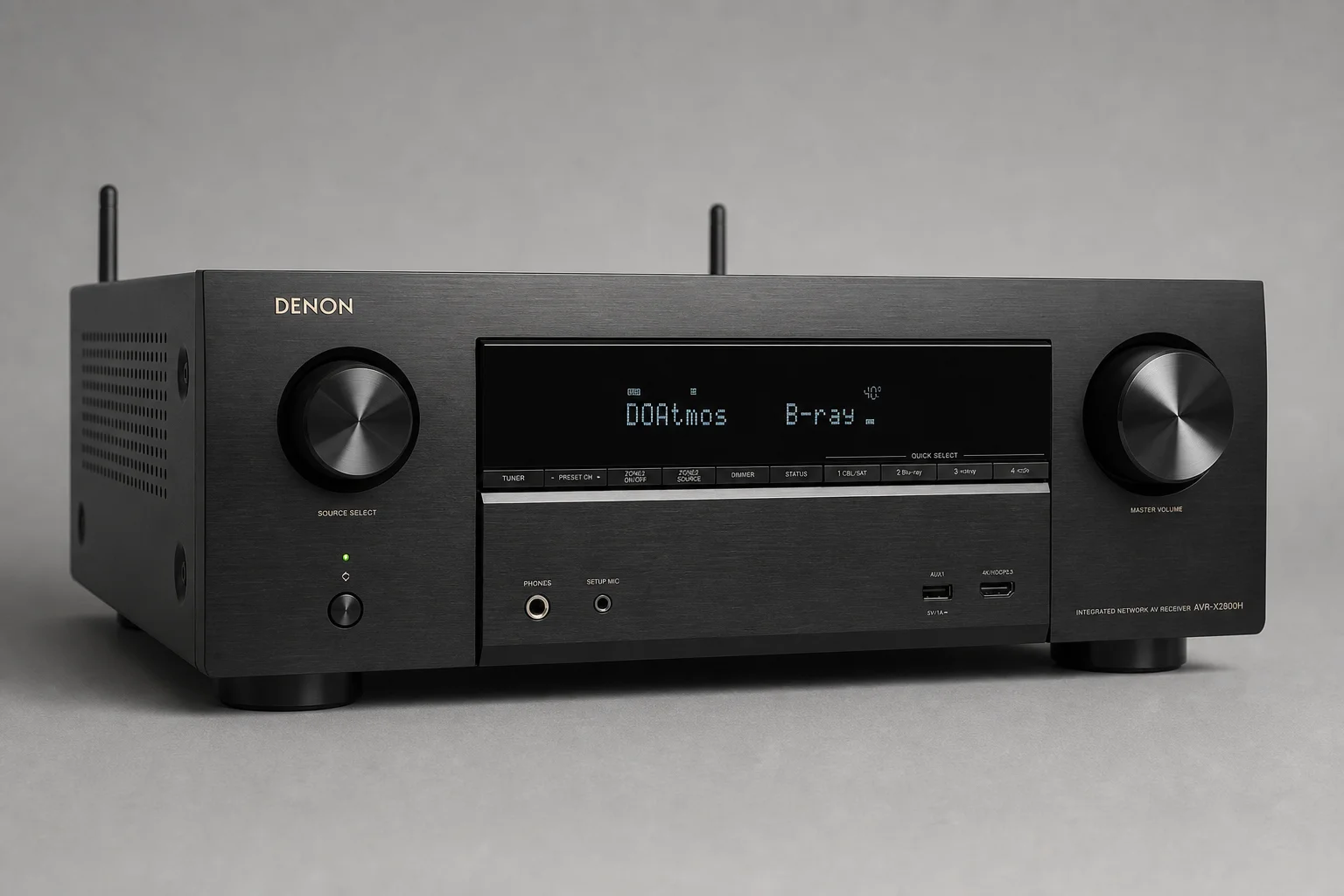
The Denon AVR-X2800H steps up the amplifier section and adds real flexibility in how height channels are configured. At 21 pounds it has the mass to suggest a capable power supply, and its dynamic power capability is excellent for this price category.
Dolby Atmos and DTS:X deliver the immersive mix, and the height speaker handling is unusually granular. Rather than a single generic setting, the receiver lets you specify the type of height speaker in use, whether on-wall, up-firing, or in-ceiling, along with its position in the room. The internal processing then knows more precisely where each effect should be placed, which pays off in a more convincing Atmos presentation.
Voice control covers Siri, Alexa, and Google. Dolby Vision, DTS Virtual:X, and Dolby Atmos Height Virtualizer are all present, along with upscaling of non-immersive audio to Dolby Atmos or DTS:X. Bluetooth works in both directions, so audio can be streamed in or sent out to wireless headphones. HEOS handles music services and Spotify Connect, and a 192/24 DAC supports WAV lossless and DSD 2.8 and 5.6 MHz files. Audyssey MultEQ XT handles room EQ and setup, and it remains one of the simplest systems to run: connect the microphone and it takes over.
Best Upgradeable Value: Onkyo RZ50
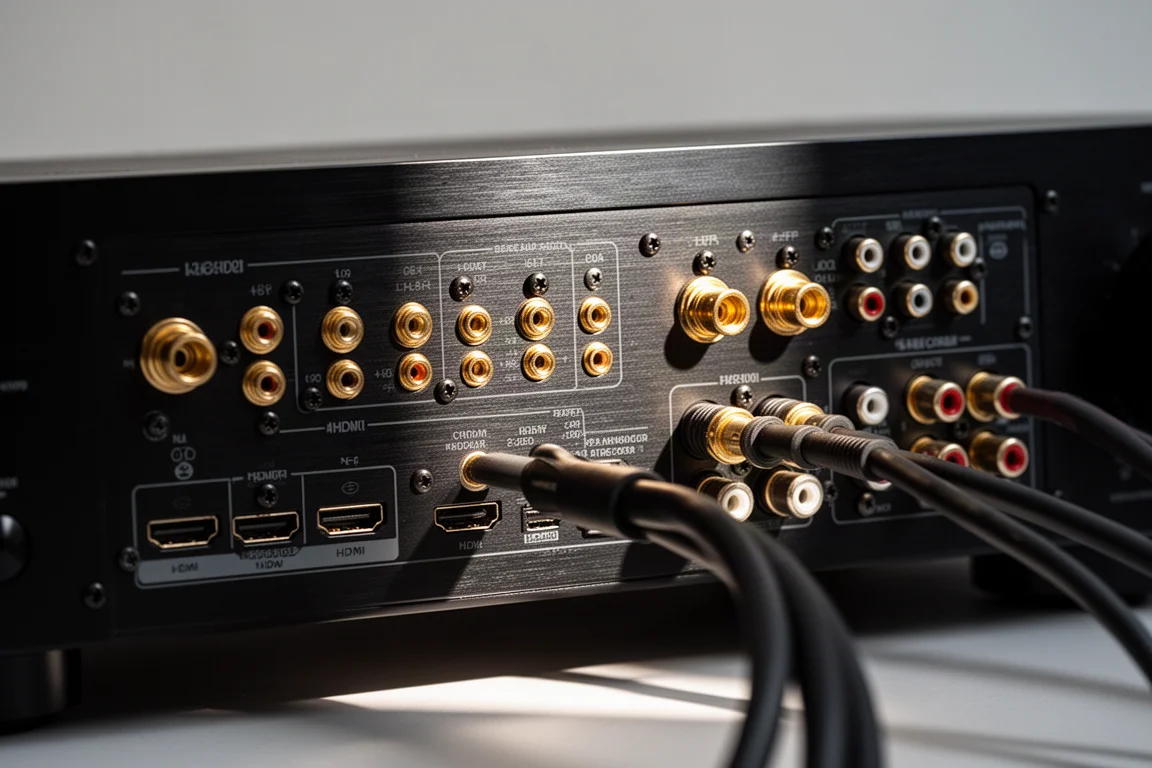
The Onkyo RZ50 is the value pick for anyone who wants a system that can grow over time. It powers nine channels on board and includes preamp outputs for eleven channels plus two subwoofers, which means a full 7.2.4 Dolby Atmos layout is reachable by adding an external amplifier later.
All six HDMI inputs are 8K with HDCP 2.3, and there are two independent 8K outputs with eARC on the main one. App control, several voice control options, streaming music, and bidirectional Bluetooth are all included, so late-night headphone listening is straightforward. Sonos users can connect up to three Sonos Ports for full Sonos Zone control through the Sonos app.
The headline feature is Dirac Live, included with a calibration microphone. Dirac has been a favorite room correction system among audio enthusiasts for close to a decade, and it has typically only appeared in far more expensive hardware. For anyone serious about implementing it properly, an aftermarket microphone such as a miniDSP unit, around $100, is worth considering. Adding a two-channel power amplifier opens the door to a full eleven-channel Atmos system, and the preamp outputs make further power upgrades simple.
The trade-off is clear: some receivers on this list sound a little better outright, but few combine this level of processing, connectivity, and expansion at this price. For a system that will be assembled in stages, that flexibility is worth more than a small edge in outright sound quality.
Best 9-Channel Option: Marantz Cinema 50
Above roughly $2,500, receivers start carrying more serious amplifier sections, and the Marantz Cinema 50 is a clear example. It weighs close to 30 pounds, and its nine powered channels allow several different home theater speaker configurations. Adding a two-channel power amplifier takes it to a full 7.4.4 system.
The “four” in 7.4.4 is the interesting part. The Cinema 50 has four discrete subwoofer outputs, and each one can be calibrated separately. Multiple subwoofers smooth out bass response because their different positions help cancel room issues, and they do not have to work as hard to reach the same output. Being able to calibrate each subwoofer individually is a genuinely useful capability for anyone serious about bass.
Connectivity covers AirPlay 2, Bluetooth, HEOS for music services, and voice control from Apple, Google, and Amazon. Dolby Vision, low latency for gaming, and 8K upscaling are built in, and vinyl listeners get a moving magnet phono section. The amplifier uses discrete components and a large power supply for this price range, producing a rich, warm sound that makes music and soundtracks more enjoyable to listen to. Setup runs through one of the easier on-screen interfaces available, followed by an Audyssey room EQ pass that optimizes the speakers for the room. Dynamic Volume tames loud explosions for late-night viewing, and Dirac Live can be added later as an option.
Best Seven-Channel Sound-First Pick: Anthem MRX 740
Anthem builds receivers for listeners who put sound quality first. The company applies the same approach in its receivers as in its large separate power amplifiers, with massive power supplies that give speakers substantial current reserves. On the digital side, a quad-core processor extracts detail from object-based surround mixes, and the signal is decoded through premium 32-bit/768 kHz differential output DACs, a step above what most receivers use.
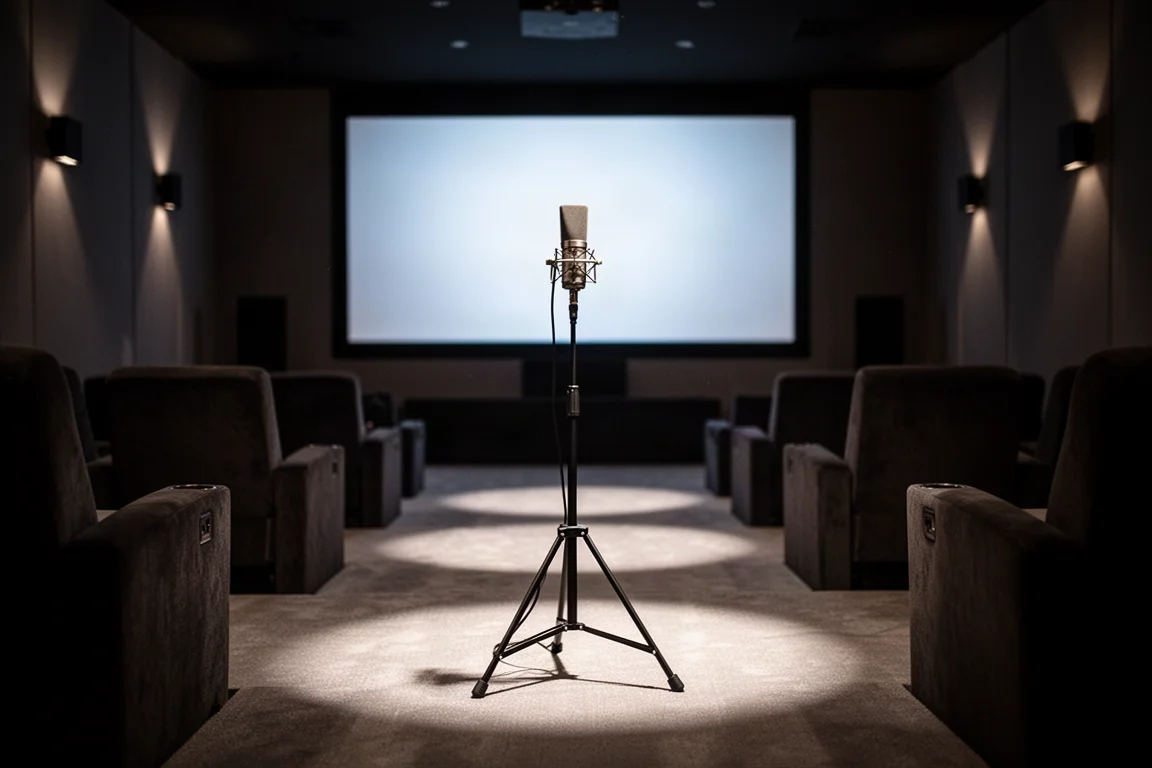
Room correction is ARC Genesis, and each unit ships with a professional-style calibrated microphone. It is capable enough that careful setup can produce results that would previously have required professional calibrators. Four separate room correction profiles can be stored, for example one for a single listener, one for family viewing, and one for music only.
The MRX 740 can grow into a full 7.2.4 Dolby Atmos system through its preamp outputs, and it offers amp matrixing that no other receiver here matches. If you want four Atmos channels instead of two, you can add a two-channel power amplifier for the main left and right speakers and then reroute the receiver’s own amp channels to drive two additional Atmos speakers. Dolby Vision, HDR, and IMAX Enhanced cover the video side, while AirPlay 2, Chromecast, and Bluetooth handle streaming.
Seven powered channels is the limit on board, but the MRX 740 weighs more than any receiver mentioned above it here, thanks to that oversized power supply. The result is closer to what you would expect from separate components, with dynamics that make a system come alive.
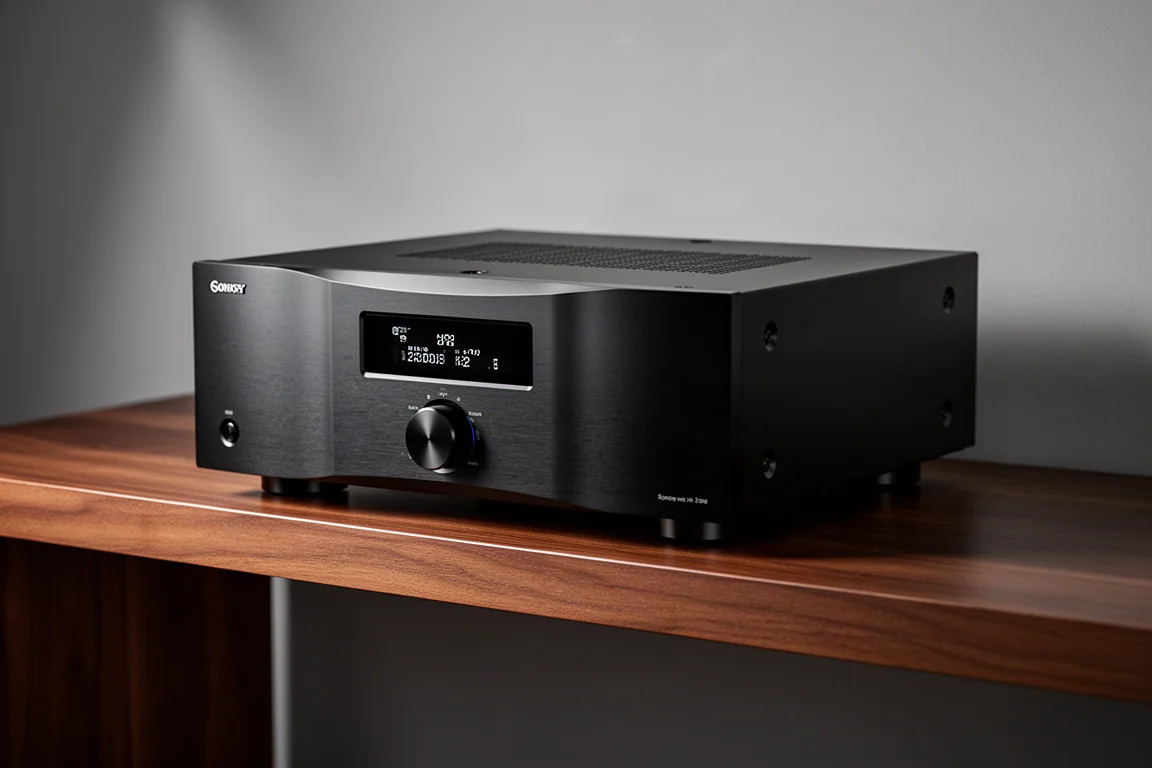
Best Full 11-Channel Receiver: Anthem MRX 1140
The Anthem MRX 1140 takes everything the MRX 740 offers and adds four more amplifier channels along with an upgraded toroidal power supply. Those extra channels mean a complete Dolby Atmos system, with all seven bed-layer speakers and four Atmos speakers, can be fully powered from a single receiver.
There is a modest step up in sound quality over the MRX 740, though the bigger difference is simply having the extra amplification on board. Processing for 15 channels means the receiver can expand to a 9.2.6 layout by adding a four-channel power amplifier. Two independent subwoofer outputs are included, and ARC Genesis phase-aligns each subwoofer so it blends properly with the rest of the speakers. That calibration and speaker phase alignment is one of the most consistently praised parts of the Anthem experience, transforming a room’s audio after a single run.
For a full-blown Dolby Atmos build, the MRX 1140 is the strongest option under $5,000.
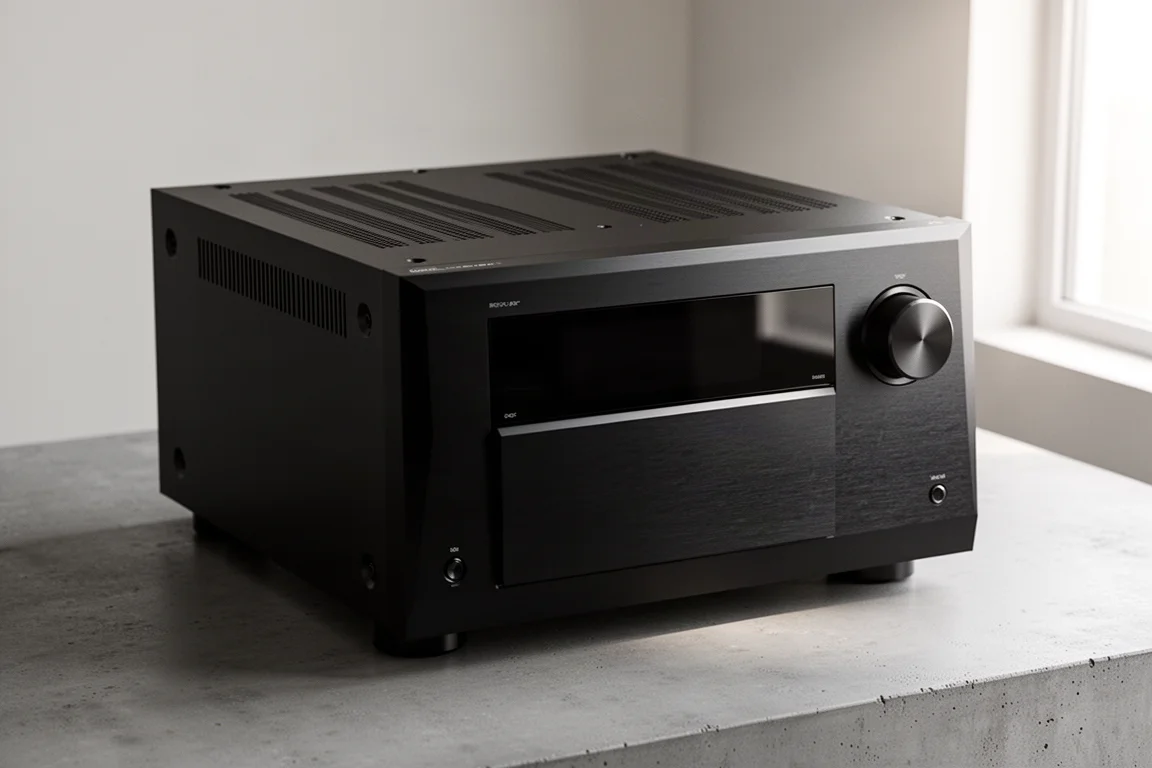
Best Audiophile Entry: Arcam AVR11
Arcam is a British company known for audiophile stereo components, and the AVR11 brings that sensibility to a home theater receiver at roughly half the price of the brand’s flagship. At 37 pounds it carries a larger power supply section and power transformer than is typical for the category.
Its seven Class AB amplifiers sound remarkably similar to the amplifiers found in Arcam’s audiophile stereo products, and high-resolution music playback is handled by dual ESS 9026 Pro DACs with ESS reference voltage regulators. MQA is supported and the unit is Roon ready. AirPlay 2 and Chromecast are built in, the MusicLife app covers most streaming services, and Bluetooth uses aptX HD.
Nothing is sacrificed on the home theater side: seven 8K HDMI inputs, Dolby Atmos, DTS:X, Auro-3D, and Dolby Vision are all present. A four-channel power amplifier can be added to use the receiver’s 12 channels of processing for a full 7.1.4 immersive Dolby Atmos system, and Dirac Live is built in. For anyone who wants an excellent home theater system without giving up two-channel music quality, the AVR11 is the natural fit.
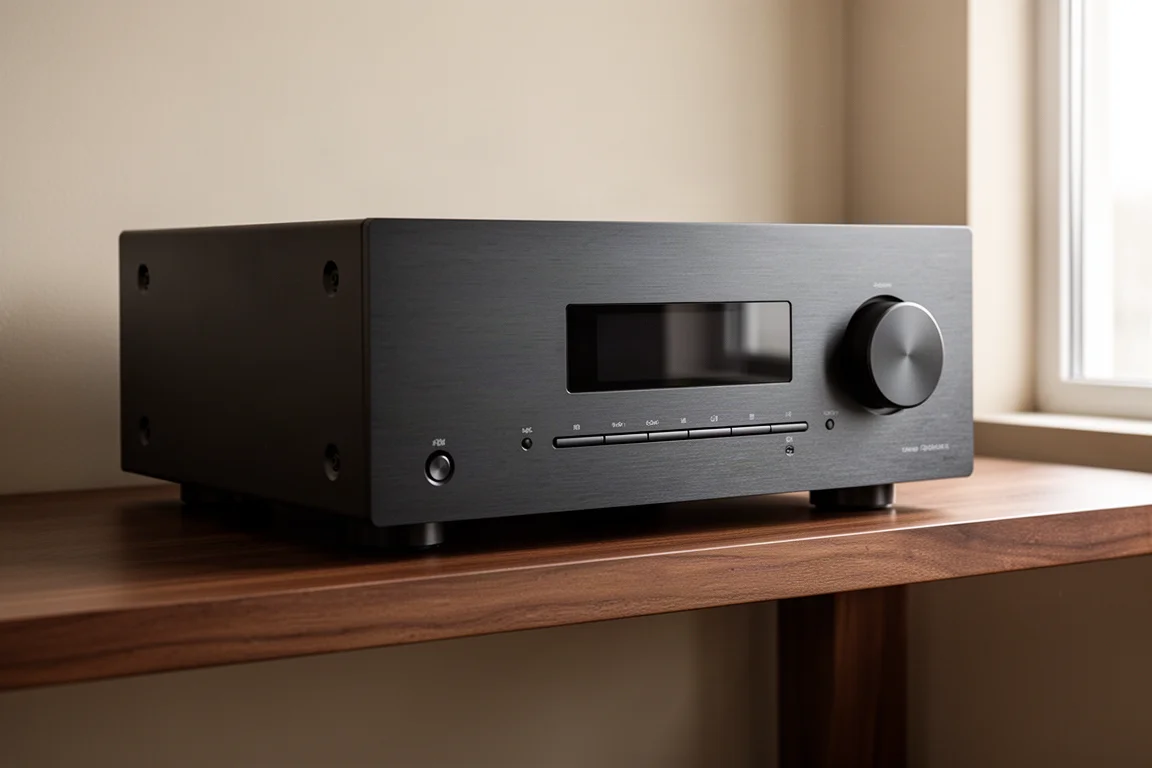
Best Audiophile All-In-One: Arcam AVR31
The Arcam AVR31 is the flagship of this group and, from a pure audio standpoint, the best sounding receiver covered here. It has seven powered channels, dual ESS 9026 Pro DACs with ESS reference voltage regulators, and Class G amplifiers. Class G runs in pure Class A up to a point and then switches over to Class AB, which preserves the sound quality of Class A while avoiding the heat and inefficiency of running it at higher power. At 40 pounds, the AVR31 is built like a serious separate component.
Expansion options are generous. Processing covers 15 channels, and there are four assignable outputs. If you are not going all the way to a 9.1.6 system, those four outputs can be assigned as four independent calibrated subwoofer outputs instead. Video support includes 8K, Dolby Vision, HDR10, HDR10+, and HLG. AirPlay 2 and Google Chromecast are on board, and this is the only receiver here with the better version of aptX HD Bluetooth. The MusicLife app streams most popular services, and the unit is set up for Roon.
Decoding covers Dolby Atmos, DTS:X, and Auro-3D. Dirac Live is included, with Dirac Live Bass Control available as an option that does an excellent job of blending subwoofers with the main speakers. It is not inexpensive, but for listeners who want the very best audiophile sound with plenty of room to expand, it is the top choice.
Buying Advice
Start with the speaker layout you actually want and work backwards. A 5.1.2 system is well served by an entry-level receiver, while 7.2.4 or 9.2.6 layouts call for a model with enough onboard channels or preamp outputs to get there without compromise.
If you expect to add amplification later, prioritize preamp outputs and channel processing. If you are building once and keeping the system for years, put more of the budget into amplifier quality and room correction. Serious about bass? Then the number of independent subwoofer outputs, and the ability to calibrate each one separately, becomes a deciding factor.

Treat the room correction system as part of the purchase rather than an afterthought. Every model here includes one, but they differ in depth, and the more capable systems can noticeably improve how a system performs in a real room rather than a showroom.
Also weigh the smaller details. A phono section matters if you play vinyl, bidirectional Bluetooth is genuinely useful for late-night headphone listening, and a Sonos or HEOS ecosystem may already be part of your home. Finally, check the physical footprint. Several of these receivers weigh 30 to 40 pounds, so plan for a shelf that can support them and leave room for ventilation.
Conclusion
The right receiver depends on the layout you are building and how much you expect it to grow. The Pioneer VSX-935 covers a first 5.1.2 system with broad streaming support for under $750, while the Denon AVR-X2800H adds amplifier headroom and unusually precise height speaker setup for under $1,250. The Onkyo RZ50 is the value pick for anyone planning to add power later, with nine onboard channels, eleven channels of preamp outputs, and Dirac Live.
For a single-box 9-channel build, the Marantz Cinema 50 pairs four independently calibrated subwoofer outputs with a warm, discrete-component amplifier. Anthem’s MRX 740 and MRX 1140 are the sound-first choices, with ARC Genesis and amp matrixing, and the MRX 1140 powers a complete 7.2.4 system for under $5,000. At the top of the range, the Arcam AVR11 and AVR31 bring audiophile two-channel quality into a home theater chassis, with the AVR31 standing as the best sounding receiver in this group.
Further reading
Related Reviews
Home Theater Receivers
Arcam AVR11, AVR21, AVR31 and AV41: Inside the Current Home Theater Lineup
Three AV receivers and one surround processor share Arcam's house sound and a complete modern feature set. Here is how they differ and which one fits your room.
Home Theater Receivers
Best Home Theater Receivers 2026: Ten Picks From Entry Level to Flagship
A practical roundup of ten home theater receivers, from an affordable 5.1.2 model to a 15-channel flagship, with the features that matter most before you buy.
Home Theater Receivers
Best Home Theater Receivers Under $1,000 in 2026: Five Picks Worth Considering
Five home theater receivers at or around $1,000, compared by channel count, HDMI 2.1 support, room correction and everyday usability.