Integrated Amplifiers
Yamaha AS2200: A Fully Balanced Integrated Amplifier With Serious Clarity
The Yamaha AS2200 brings fully balanced circuitry, dual mono power modules, a 620 VA transformer and a discrete phono stage to an integrated amplifier that undercuts most balanced rivals.
Introduction
A fully balanced amplifier is not simply an amplifier with balanced connectors on the back panel. Inside, the signal travels on two lines rather than one: the usual signal on the hot line and an identical but out-of-phase signal on the cold line. Noise added by the circuit is common to both, so it can be compared and cancelled out, a process known as common mode rejection. The trade-off is that doubling the signal path doubles the parts count, which is why fully balanced designs rarely come cheap.
Yamaha’s entry into this category is the AS2200, an integrated amplifier that retails for £3,750 in the UK and can regularly be found on sale for just below £3,000. That is still a serious outlay, but it sits well below several specialist balanced designs, among them the Musical Fidelity M8s preamplifier and M8s 500S power amplifier at around £7,500, the Burson Soloist 3X GT preamplifier and Timekeeper 3X GT monoblocks at a similar UK figure, and the Denafrips Hades and Thallo combination at roughly £4,500. Those designs share an exceptional level of clarity, so the question is whether Yamaha can get close for considerably less.
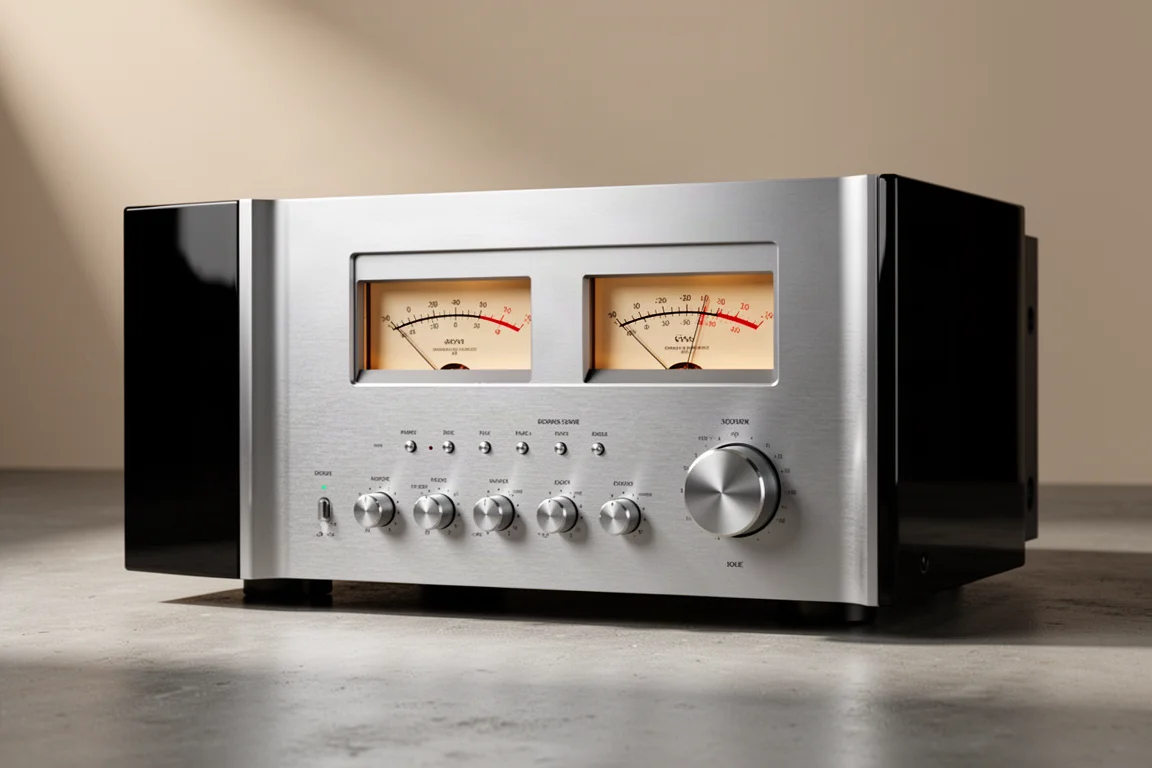
The AS2200 comes in a black finish, and the silver option suits the vintage-inspired VU meter styling particularly well. At 22.7 kg, or 50 pounds, it is clearly a substantial piece of hardware rather than a slimline lifestyle product.
Who This Amplifier Is For
The AS2200 suits listeners who put clarity first: detail retrieval, precise instrument placement and a low noise floor. It is a natural fit for owners of revealing speakers who want to hear what their system is doing, and for anyone building an analogue front end around vinyl, because the phono stage can be switched between moving magnet and moving coil cartridges and is fully discrete.
Headphone listeners get a dedicated gain dial covering -6 dB to +12 dB, which makes it easier to match both sensitive and demanding headphones without leaning on the main volume control. Two sets of speaker terminals, selectable individually or together, are useful for running a second pair in another room or for comparing speakers.
This is also an amplifier for listeners who plan to keep a component for a long time. The build quality is of the standard premium Japanese amplifiers are known for, and a well cared for example should last generations.
Main Strengths: Balanced Circuitry and Build
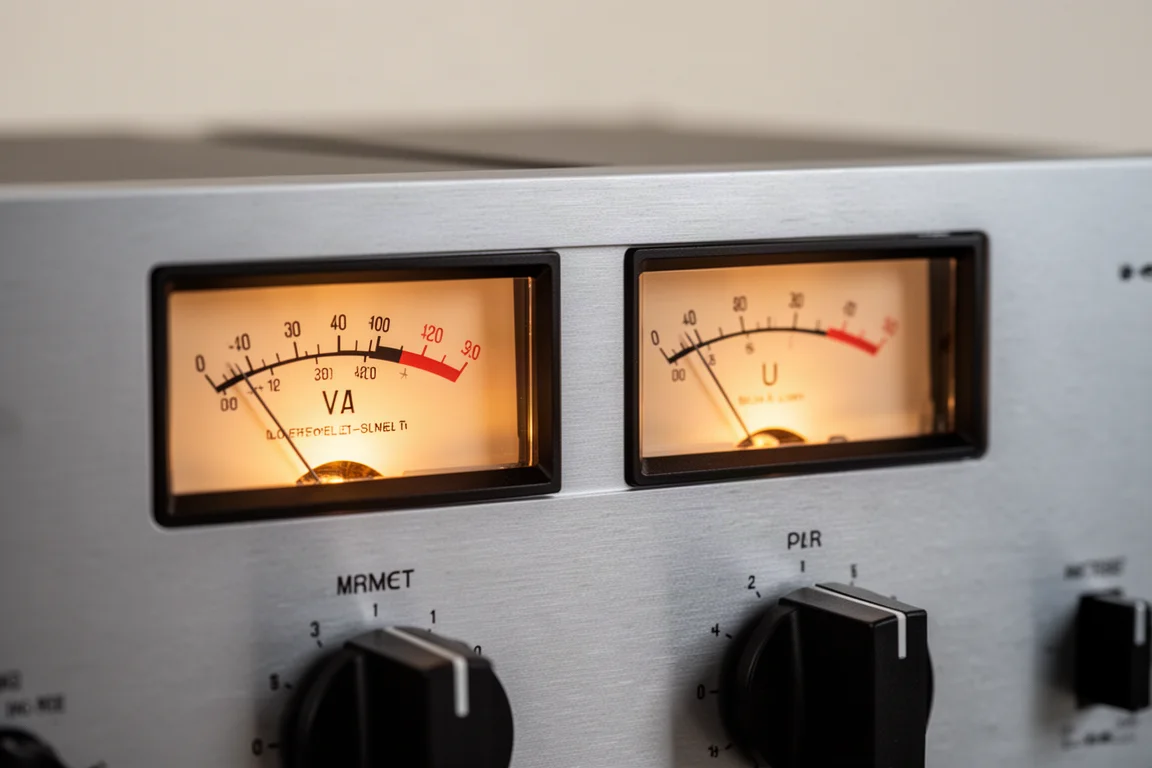
The casework sets the tone. A thick anodised aluminium front fascia, chunky gloss black side panels and a 22.7 kg chassis give the AS2200 a reassuring solidity. The two VU meters can display peak levels in decibels or in volume units, which track more closely with how sound is perceived, and the dimmer dial lets you set the illumination until it looks right in the room. Bass and treble can be adjusted by plus or minus 10 dB, and when both are set to zero the signal automatically bypasses the tone control circuit. There is a left and right balance control, a headphone gain dial, a switch to bring the amplifier out of standby, selection between two sets of speaker terminals or both or neither, an audio mute that reduces volume by roughly 20 dB rather than cutting it entirely, and a large rotary volume dial. The supplied remote has a silver aluminium plate, a pleasing weight and clearly laid out buttons.
Inside, the volume control is a resistor ladder, which should give a more linear response across the range than a conventional potentiometer. The power supply is built around a 620 VA toroidal transformer, roughly twice the size of what is often found at this price, feeding two Yamaha branded Nippon filter capacitors rated at 22,000 microfarads each. The power amplifier modules are mounted directly to the heat sinks, with an identical module on the opposite side, giving the AS2200 a dual mono topology normally associated with more expensive designs. Rated output is 105 W per channel into 8 ohms and 190 W into 4 ohms, with a 2 ohm rating as well, so difficult speaker loads should not present a problem.
The balanced circuitry runs from input to output, including the preamplifier section, and Yamaha’s floating balanced power stage takes both connections directly from the power supply rather than referencing one to ground, which reduces ground loops and the potential for noise and hum. The mechanical ground concept bolts the transformer, block capacitors and heat sinks straight to the chassis, while the solid brass feet are silver plated with bolts welded to the chassis to improve rigidity and reduce vibration. Thick ground wiring keeps circuit impedance low. Around the back there are three line-level RCA inputs labelled tuner, CD and line one, a line two input with an output for recording devices, two sets of pre-outs for an external power amplifier or powered subwoofers, a phono input, and a balanced input that can be attenuated by 6 dB and have its hot and cold pins phase inverted. The speaker terminals are weighty pure brass.
Sound Quality: Detail, Speed and Imaging
The overall character will be familiar to anyone who has spent time with a fully balanced amplifier. Detail levels are excellent, but the tonal balance leans cool and analytical, much like the Burson Soloist 3X GT and Timekeeper 3X GT monoblocks and the Musical Fidelity M8s preamplifier and M8s 500S power amplifier. It is not as dry and clinical as the Denafrips Hades and Thallo combination.
Bass is superbly well defined, stopping and starting quickly enough to track fast percussive passages even when the music becomes dense, and rock and large orchestral works are very well served. What is missing is a little weight, and that costs the amplifier some of its muscularity and dynamic impact.
The midrange is where the AS2200 is most impressive. Instrument separation is excellent, the sound stage extends well beyond the speakers laterally, and there is enough depth to place it behind only the very best tube amplifiers in its class. Performers are laid out precisely, helped by very little bleed from the bass into the midrange and by leading note edges that are tangibly defined. Timing cues in the upper registers are preserved, which is what makes that precision possible, and the treble stays in balance with the rest of the range: extended, without tipping into brightness. The flip side is that the amplifier takes no prisoners when it comes to harshness in a recording or elsewhere in the equipment chain.
How It Compares With Other Amplifiers
The Accuphase E-280 is the closest premium Japanese rival, retailing at just under £5,000 in the UK. It offers better refinement in the mids and highs, lays performers out in a more holographic way and maintains a more effortless musical presentation, while the AS2200 hits back with noticeably better bass control. Both amplifiers share a lack of body and harmonic richness in the midrange, which is what would otherwise flesh out vocals and lead instruments more realistically, and the Yamaha would also benefit from a slightly longer decay at the end of notes.
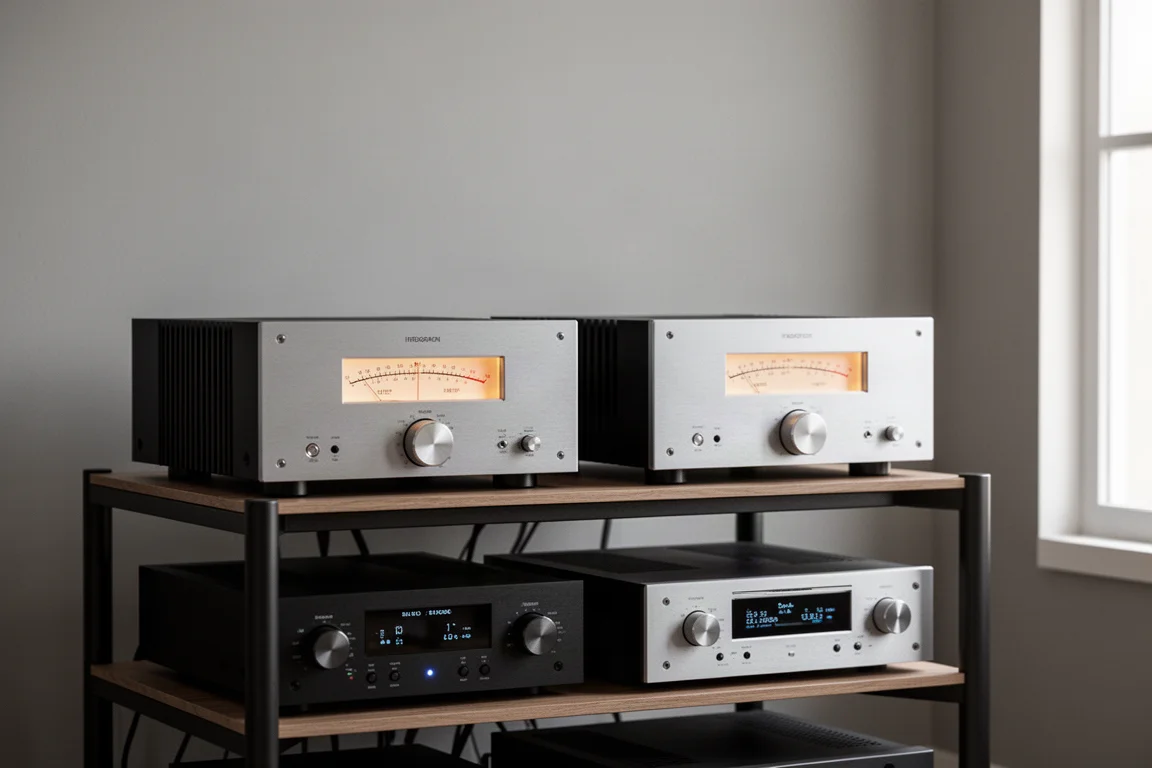
The Hegel H190, at £3,300, is likely to be cross-shopped because it includes a very good DAC and a basic streamer. It is a totally neutral amplifier that works with a wider range of speakers than almost anything else, and it has the midrange body the AS2200 lacks while matching it for sound staging. In most other respects it sits a level below: imaging, instrument separation and, perhaps surprisingly given its 4000 damping factor, bass control.
The Marantz Model 40N is a 70 W per channel Class AB design with a very good internal DAC and the HEOS streaming platform, which is more comprehensive than the streaming offered by the Hegel. At £2,200 it is considerably cheaper, particularly once the cost of a streamer is factored in, but it has a distinctly warm coloration that some listeners will prefer to the Yamaha. In overall sound quality the gap between the two is considerable.
The Yamaha AS1200, at £2,500 with 90 W per channel into 8 ohms of Class AB power, looks like better value, especially when it is discounted to below £2,000. It is not a balanced design. Using the Hegel H190 as a common point of reference, the AS1200 is a touch cleaner but distinctly leaner in presentation. The same argument could be made for the AS2200, but the difference in clarity is much greater and the difference in leanness less so.
Things to Consider Before Buying
The most important consideration is tonal. The AS2200 is a touch light in its overall presentation, and it lacks the harmonic richness in the midrange that makes vocals and lead instruments sound fleshed out and realistic. Listeners who crave warmth, body and a little extra bass weight may find themselves wanting more, even though the definition on offer is excellent.
Speaker matching matters more than usual here. Among the speakers paired with the AS2200, the ProAc Response 1SC has the most revealing midrange, and that is exactly where the lack of body around vocals and lead instruments was most apparent. It is not a combination to live with long term. Revealing speakers with a bright or forward character can also expose harshness in recordings and upstream components, because the amplifier does not soften anything.
On price, £3,750 is a lot of money, even with regular discounts to just below £3,000. The input set is entirely analogue: three line-level RCA inputs, a line two input with a recording output, a balanced input, a phono stage and two sets of pre-outs. Buyers who want a DAC or built-in streaming will need to add a separate component, whereas the Hegel H190 and Marantz Model 40N include those features.
Buying Advice
Setup is genuinely plug and play, with nothing meaningful to add beyond the usual care over speaker placement. Despite the analytical coloration, the AS2200 is not excessively so, and it works well with a wide variety of speakers, which makes matching a matter of taste rather than compatibility.
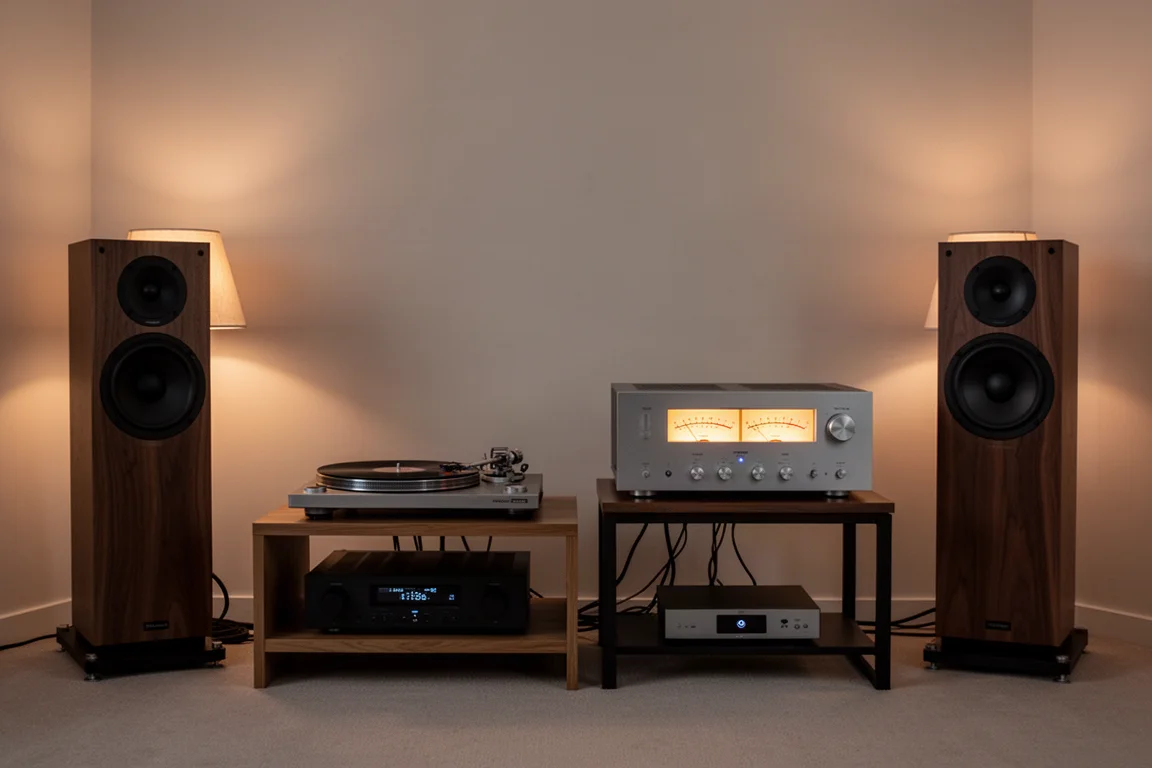
A warm-sounding speaker with a slightly dark profile, such as the ELAC Uni-Fi Reference UBR62, is tempered nicely by the Yamaha and produces a more balanced presentation overall. Those speakers cost around £750, so a pairing with a £3,750 amplifier is unlikely, but the result bodes well for other, more price-appropriate Yamaha amplifiers in the range if they share a similar sonic character.
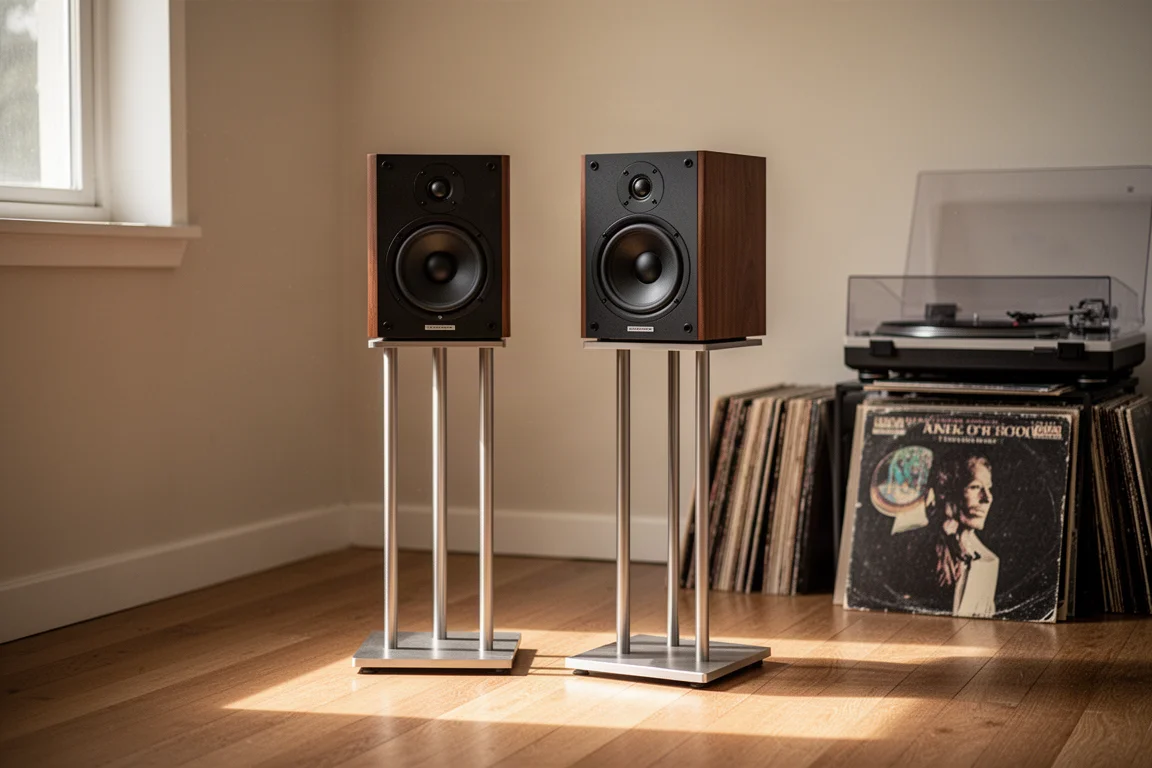
The Amphion Argon 1, at £1,300, can sound analytical on its own, but the AS2200 simply let them do what they do best: sound clean and dynamic. The most successful pairing by some margin was with the DALI MENUET SE, compact monitors at £1,500 that remain a benchmark near-field design. They are not quite as open in the midrange as the ProAcs, and that is precisely why the amplifier’s clinical nature was less obvious; they are still very revealing, with just enough romanticism to balance the Yamaha.
If maximum clarity below £4,000 is the goal, and a fully balanced signal path from input to output appeals, the AS2200 is an easy amplifier to recommend. If midrange body and bass weight matter more, warmer alternatives or warmer speakers will be the better route. Buyers who need streaming and digital inputs built in should compare carefully before committing, because the Yamaha expects those duties to be handled elsewhere.
Conclusion
The Yamaha AS2200 delivers the build quality that premium Japanese amplifiers are known for, and a well cared for example should last for generations. Its clarity sets a new benchmark for amplifiers below £4,000, and its ability to lay out a convincing space in front of the listener, with performers precisely placed, is genuinely impressive. The reservations are tonal rather than structural: a touch of lightness overall, a midrange that could use more body, and bass that could use a little more weight. For listeners who prize detail, separation and control, and who are prepared to match speakers thoughtfully, the AS2200 offers almost everything expected from a great balanced amplifier.
Product link
View more details for Yamaha AS2200
This product is mentioned in the review. Check the specifications, options, and compatibility before buying.
View more details for Yamaha AS2200Further reading
Related Reviews
Integrated Amplifiers
Advance Paris A10 Classic Review: Vintage Looks and a Lively, Punchy Sound
The Advance Paris A10 Classic pairs glowing blue VU meters and a tube stage with one of the widest input sets on any integrated amplifier. Here is what it does well and what to weigh before spending $2,500.
Integrated Amplifiers
Advance Paris A12 Apex Review: A Modern Integrated Amplifier With Vintage Character
A dual mono integrated amplifier with 180 watts per channel, a tube front end, VU meters, and a connectivity list that covers turntables, televisions, computers, and headphones.
Integrated Amplifiers
Advance Paris Nova Range Review: AI130, AI190 and Modular Upgrades
A practical look at the Advance Paris Nova range, including the AI130 and AI190 integrated amplifiers and the modular streaming, Bluetooth and remote accessories that expand them.