Hi-Fi Audio
Yamaha C-5000 and M-5000 Review: Inside the 5000 Series
A close look at Yamaha's two-piece analog flagship: a fully balanced preamplifier and a linear power amplifier built around a floating balanced output stage.
Introduction
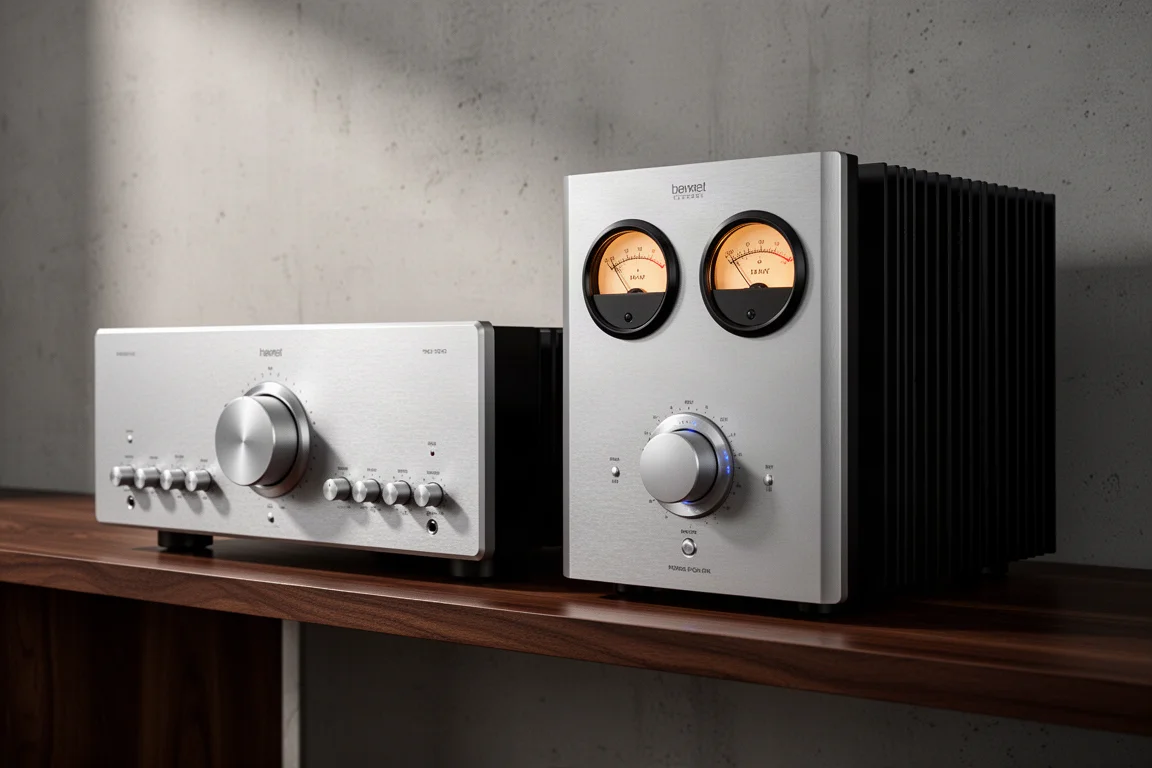
Yamaha’s 5000 Series is a two-piece analog flagship: the C-5000 preamplifier and the M-5000 power amplifier. Both are built around a single engineering idea, a fully balanced differential signal path that runs from the input all the way to the output stage, and both are housed in chassis that weigh far more than their modest power ratings suggest.
The C-5000 is a line-level preamplifier that tips the scales at roughly 50 pounds, which is more than many power amplifiers. The M-5000 is rated at a conservative 100 watts per channel into 8 ohms, yet it is built to deliver more power as speaker impedance drops and to hold a flat frequency response regardless of the load.
This guide walks through what each component does, the design decisions behind it, and who gets the most value from the pair.
Shared Design Priorities Across the 5000 Series
Balanced transmission is the foundation. Running a signal differentially cancels much of the noise picked up from power lines and from radiated interference produced by other electrical devices, and that noise would otherwise be amplified along with the music. In the 5000 Series the balanced path is not limited to the input connector: it continues through the gain stages and into the output stage.
That approach is expensive. A fully differential design roughly doubles the part count and the circuit complexity, which is why many manufacturers stop short of it. Yamaha carries it through with discrete components, and the C-5000 uses no operational amplifiers at all.
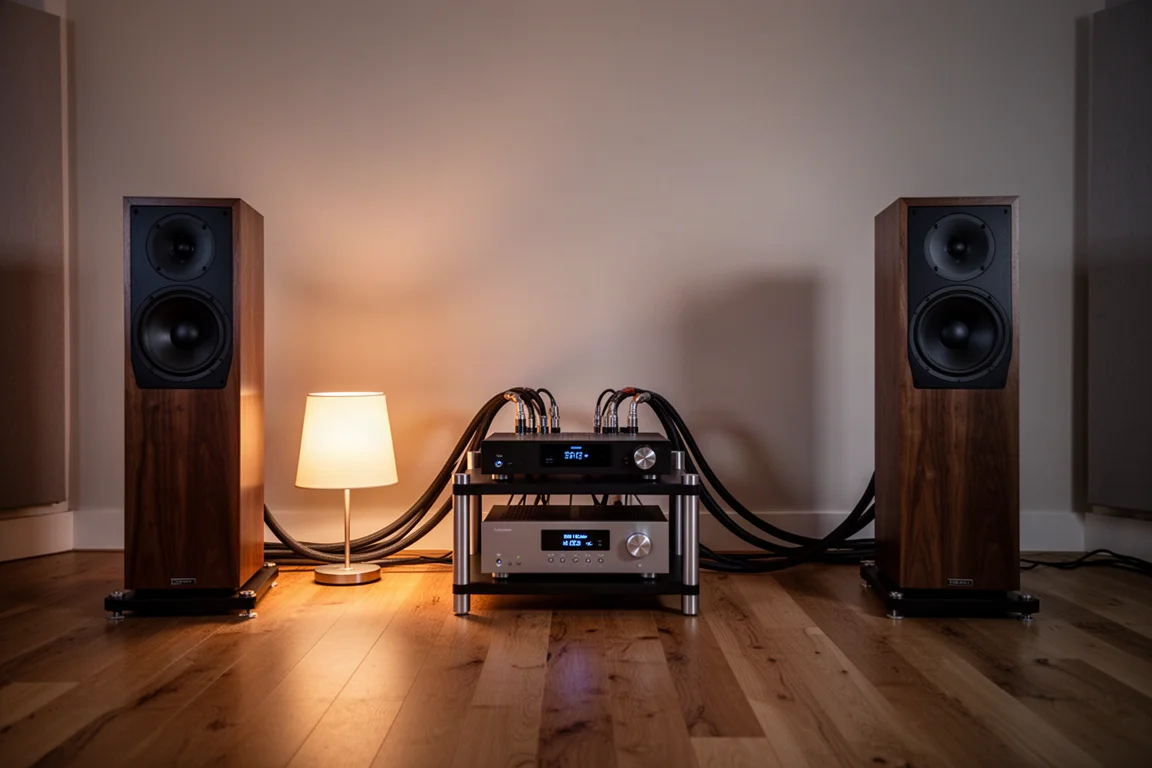
Bandwidth is the second priority. The M-5000 is a linear amplifier rather than a switching design, which allows it to stay flat to 100 kHz. Switching amplifiers generally have to contend with high switching frequencies and output filtering, and their usable bandwidth typically stops somewhere between 20 and 40 kHz. As a company that builds musical instruments, Yamaha frames the goal as low distortion across the widest possible frequency range, so the music keeps its natural character.
Yamaha C-5000 Preamplifier: A Fully Balanced Analog Preamplifier
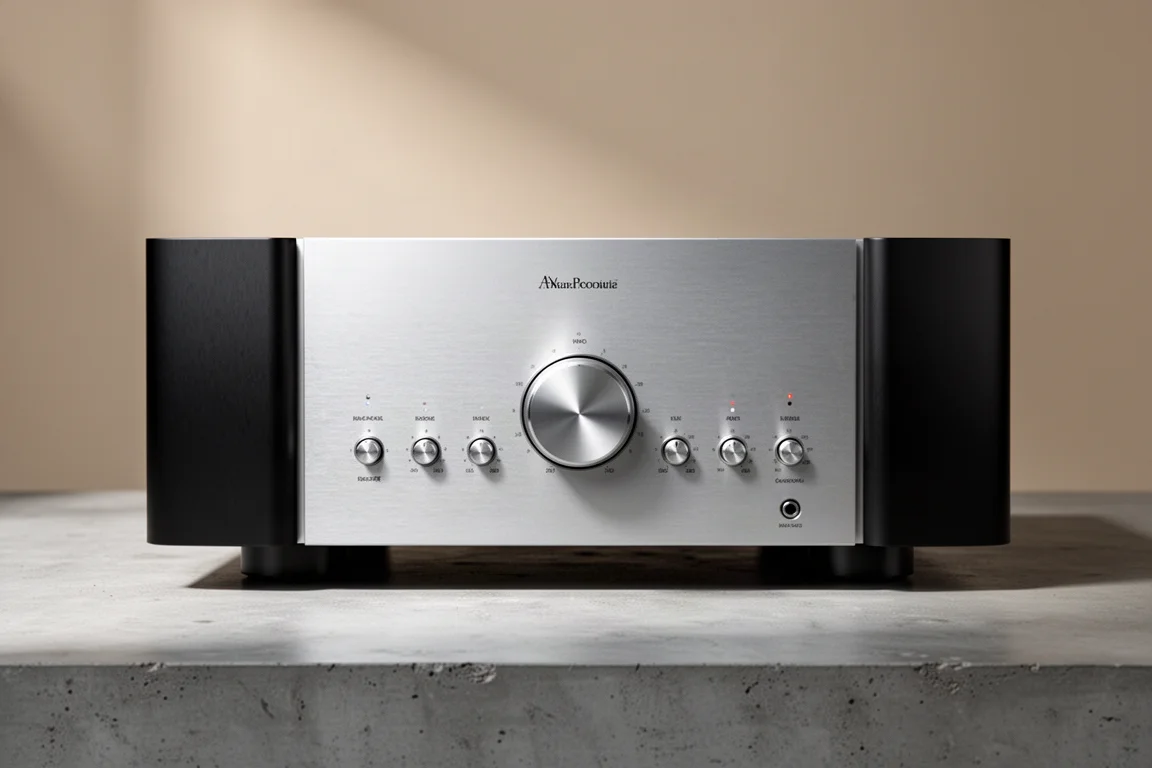
The C-5000 begins with a front panel in brushed aluminum and a deliberately symmetric control layout, and it continues with a chassis that feels closer to a military-grade enclosure than to typical consumer audio gear. Nearly 50 pounds of preamplifier is unusual, and the mass is there for a reason.
Internally, the preamplifier is fully balanced and differential from input to output. Two boards sit in a book-matched arrangement: one channel occupies the upper board and the second channel sits directly beneath it with the same components, so the signal travels through identical trace lengths in both halves. Each channel gets its own power supply and its own toroidal transformer.
There is no digital section. The C-5000 is an analog component with no DAC inside, and it includes a high-quality phono stage intended to match the 5000 Series turntable. Yamaha also offers a matching CD player in the same series for listeners who need digital playback. Residual noise is specified below three microvolts, and the retail price is around $10,000.
Inside the C-5000: Channel-Separated Layout and Copper Grounding
The bottom of the C-5000 chassis is copper. Copper is used to reduce resistance and impedance, and keeping that impedance low matters because the ground level is the voltage reference for the entire circuit. If the ground reference shifts, noise on it influences every stage downstream. A low-impedance, stable ground keeps that reference steady.
The combination of a fully balanced topology, channel-separated power supplies and a copper ground plane produces an extremely low noise floor. With no signal passing through the preamplifier, there is essentially nothing audible at the tweeter, which is the practical benefit of all that symmetry and shielding.

That quietness is not a party trick. A low noise floor is what allows fine detail and small dynamic shifts in a recording to stay intact, and it is the reason a preamplifier at this level can sound clean even when the volume is pushed hard.
Yamaha M-5000 Power Amplifier: Linear Power with a Floating Balanced Output
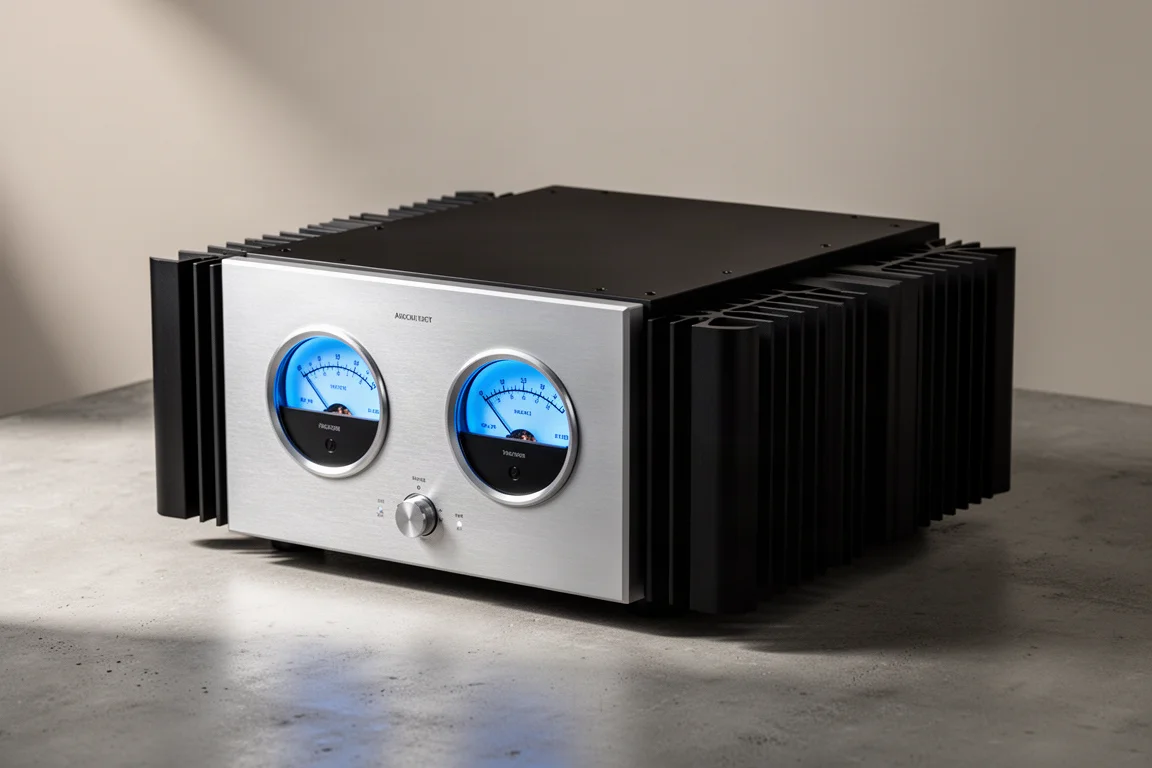
The M-5000 looks like what it is: a large two-channel power amplifier with substantial heat sinks and a power supply to match. It is rated at 100 watts per channel into 8 ohms, and Yamaha’s ratings are conservative, quoted at a low distortion level. As speaker impedance drops, the amplifier delivers more power, which is the mark of a stiff, well-regulated supply.
The supply itself uses four large capacitors and a toroidal transformer of the type used in the MX-5000, an eleven-channel amplifier, so there is considerable reserve on tap. That regulation is what keeps the amplifier composed with dense material such as a big band recording, where many instruments draw current at the same time.
The output stage is the more unusual part. It is a floating and balanced design: the speaker outputs are completely floated from ground, and instead of the usual push-pull arrangement, both the positive and negative halves of the signal are driven in push and pull using the same MOSFETs. Because the two halves of the circuit are matched, DC offset is lower and distortion performance improves.
Because it is a linear amplifier, the M-5000 stays flat to 100 kHz and its frequency response remains essentially unchanged whether it is driving an 8 ohm speaker, a 4 ohm speaker or a more complex load. Within the audio band the response stays ruler flat, which is a meaningful advantage for anyone with demanding speakers. Retail is around $10,000.
VU Meters, Feet, and Chassis Craftsmanship
The M-5000 carries two large blue VU meters, a feature that has largely disappeared from modern electronics. The glass covering them is 5 mm thick and made in Japan, and the meters can be switched to display either peak levels or the continuous signal, so you can watch dynamics in the way that suits you.
Build quality extends to the parts you rarely see. Top plates and front chassis panels are thick aluminum, and the feet are machined rather than simple spikes: each foot has internal damping and a cover, which helps limit mechanical vibration reaching the circuitry.
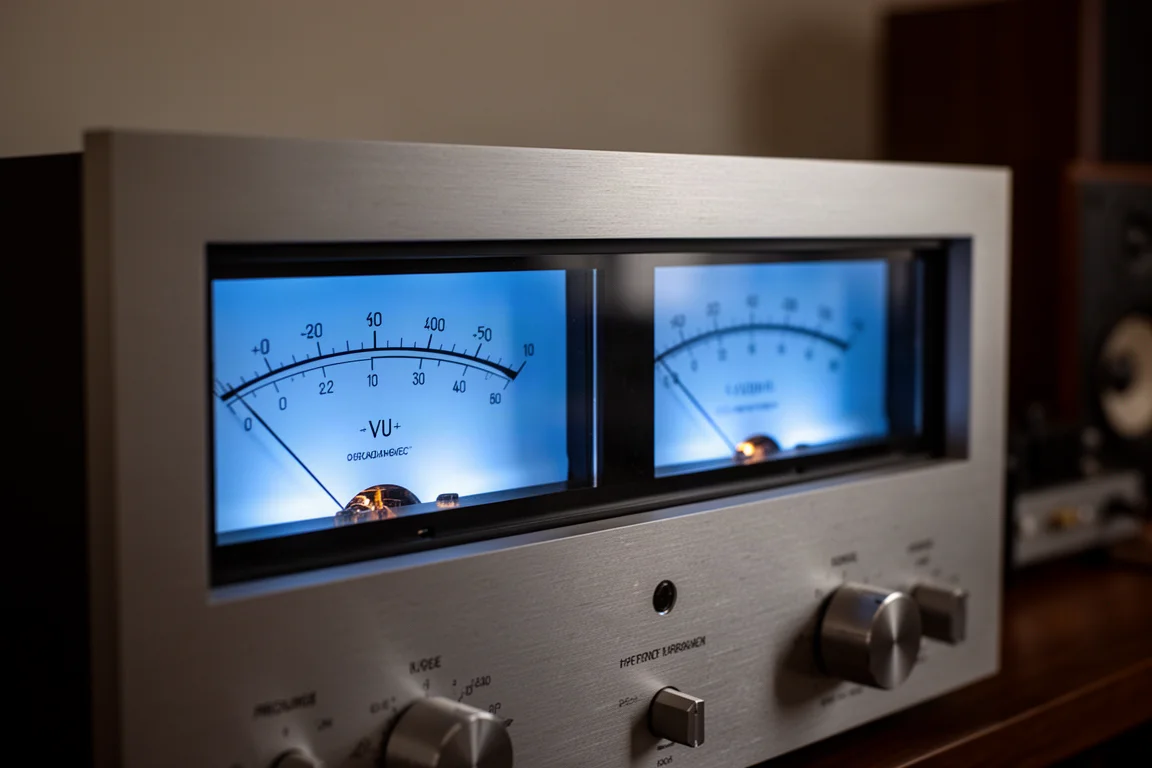
Nothing here is decorative for its own sake. Rigid, non-resonant panels and damped feet exist to keep mechanical energy out of sensitive analog circuits, and that priority is consistent with the rest of the design.
Who the 5000 Series Is For
This pair suits listeners building a serious analog two-channel system. If vinyl is central to your listening, the C-5000’s phono stage and its pairing with the 5000 Series turntable make the preamplifier a natural centerpiece. If you own speakers that dip to low impedances or present a complex load, the M-5000’s regulated supply and load-invariant response are the main arguments.
It is also a system for people who value a matching set. The C-5000, the M-5000, the series CD player and the turntable share the same industrial design and the same chassis philosophy.
Buying Advice: Matching the C-5000 and M-5000
Budget roughly $10,000 for each component, or about $20,000 for the pair. That places the 5000 Series firmly at the top of Yamaha’s two-channel range, so the decision is less about features and more about system fit.
Two practical points are worth planning for. First, the C-5000 has no DAC, so digital sources need either the matching CD player or a separate converter. Second, because the preamplifier is fully balanced end to end, its balanced inputs and outputs are the ones to use if your source components support them.
If your speakers are efficient and your room is modest, the M-5000’s headroom may be more than you need, and a smaller amplifier could be the more sensible allocation of budget. If you are chasing the last measure of quiet and control, the pairing is the point.
Conclusion
The C-5000 and M-5000 are a statement about analog engineering: balanced differential circuits from input to output, channel-separated power supplies, a floating balanced output stage, and chassis built to damp vibration rather than to save weight. They are expensive and uncompromising, and they are clearly aimed at listeners who want a two-channel system built to last.
Further reading
Related Reviews
Hi-Fi Audio
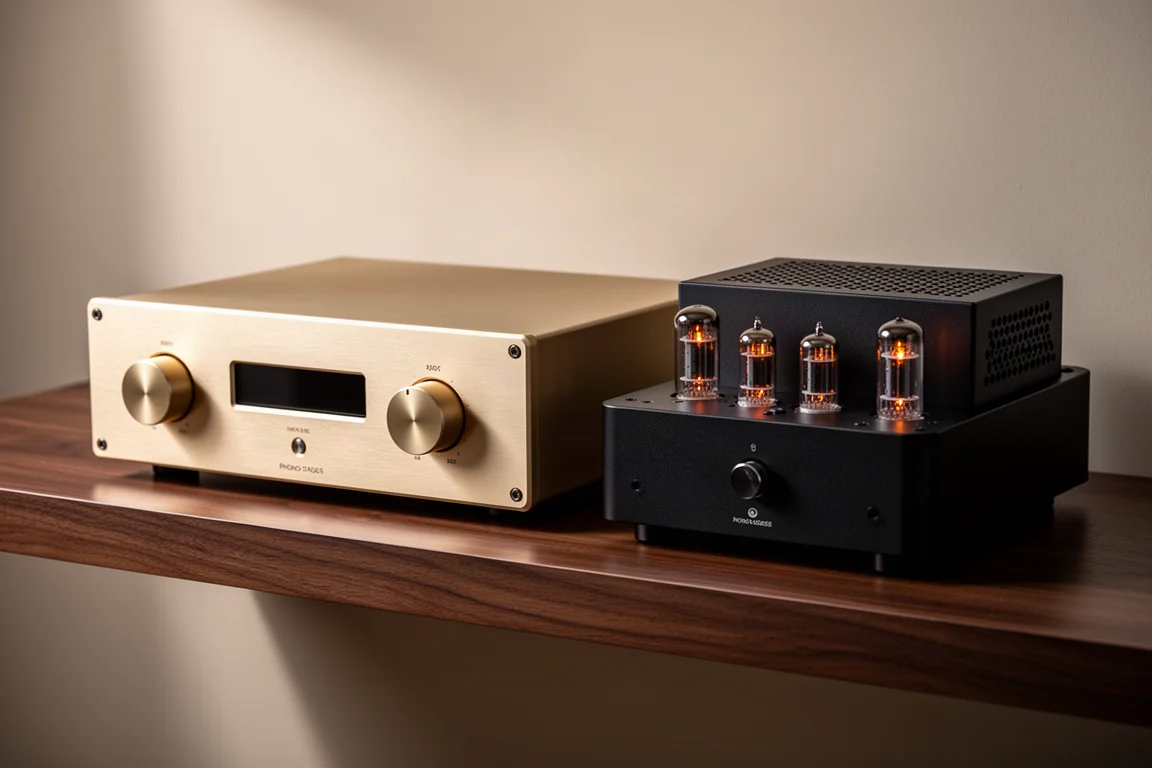
Accuphase C-57 vs Allnic H-7000V: Two High-End Phono Stages Compared
A fully balanced solid-state phono stage with a pitch-black noise floor meets a tube design built for well-loved records. Here is how to choose between them.
Hi-Fi Audio
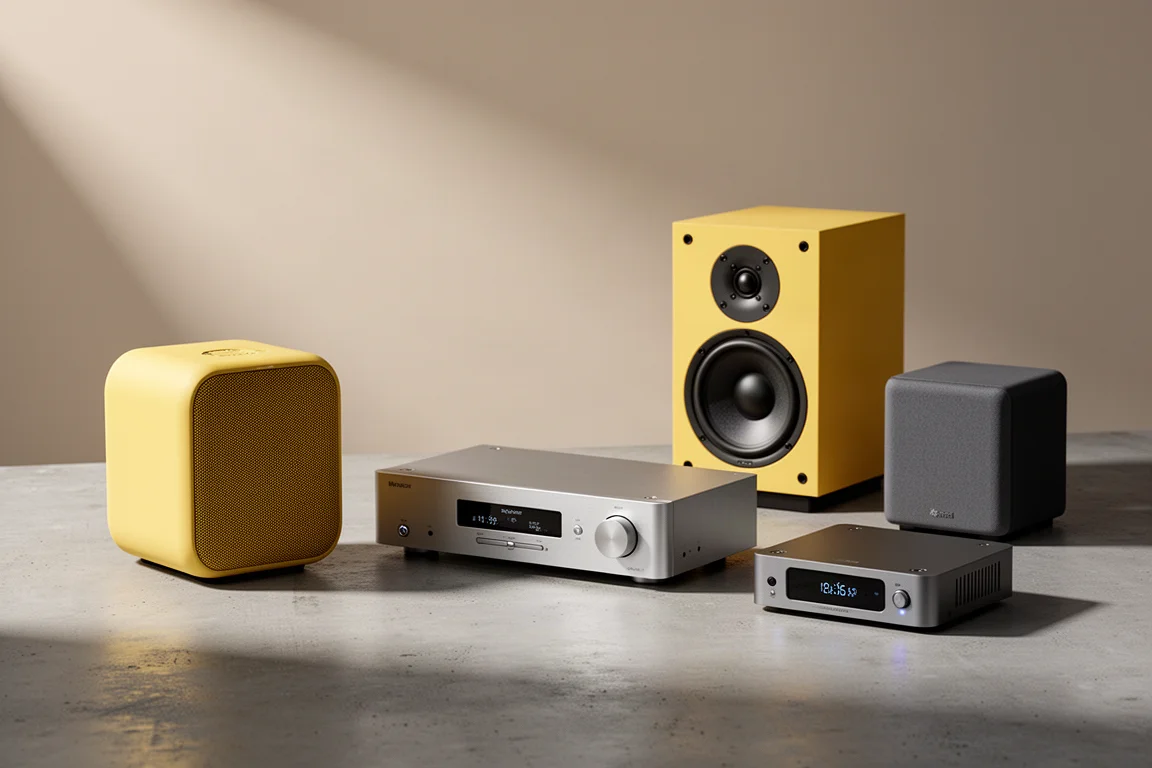
Active vs Passive Hi-Fi: Five Components for a Modern System
Five components that define modern active and passive hi-fi systems, with the strengths, trade-offs and setup details worth weighing before you buy.
Hi-Fi Audio
Advance Paris A10 Apex Review: A Hybrid Integrated Amplifier That Covers a Lot of Ground
A French hybrid integrated amplifier with a class A tube preamp stage, analogue power meters, and an internal DAC and phono stage good enough to make extra boxes unnecessary.