Hi-Fi Audio
Active vs Passive Hi-Fi: Five Components for a Modern System
Five components that define modern active and passive hi-fi systems, with the strengths, trade-offs and setup details worth weighing before you buy.
Introduction
Modern hi-fi systems tend to follow one of two paths. The first keeps everything inside the loudspeaker: streaming, digital-to-analog conversion, phono stage, HDMI ARC input, and a subwoofer output. The second moves that same connectivity into an outboard amplifier, which then drives a pair of passive loudspeakers.
The technical dividing line is not where the power socket goes but where amplification sits relative to the crossover. In an active loudspeaker, the DAC and amplification come after the crossover. In a passive system, the amplifier sits before the crossover and drives the speaker as a complete load.
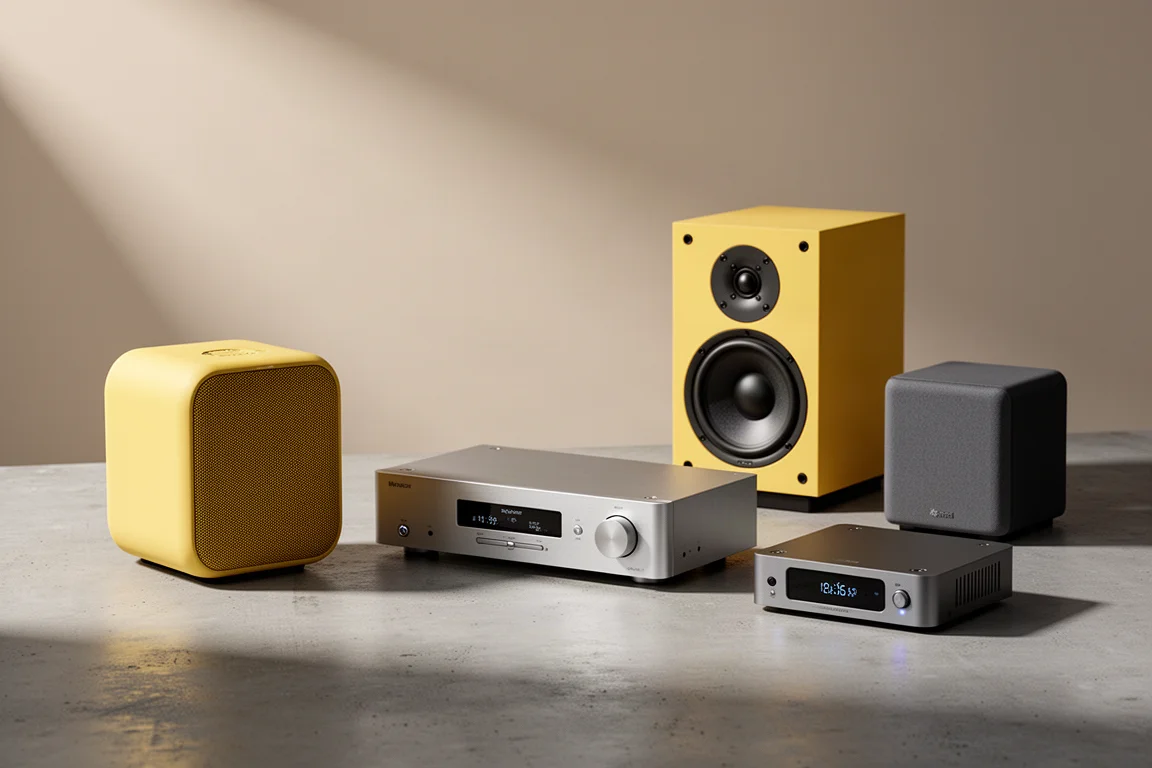
Both approaches can deliver a complete, modern feature set. This guide looks at five components that make each path work: an all-in-one active streaming loudspeaker, an integrated amplifier with broad connectivity, a passive standmount that punches above its price, a subwoofer for low-end extension, and a compact streaming amplifier alternative.
What Separates Active and Passive Systems
Out of the box, the functionality of a well-equipped active system and a passive system built around a modern integrated amplifier can be nearly identical. Streaming platforms, HDMI ARC, subwoofer outputs, and moving-magnet phono stages now appear on both sides of the divide.
The physical differences are more obvious. An active pair is tidy, but each loudspeaker needs its own wall power. A passive setup spreads across more boxes and more cables, and it is visually more intrusive, yet the amplifier is the only component that needs a mains connection.
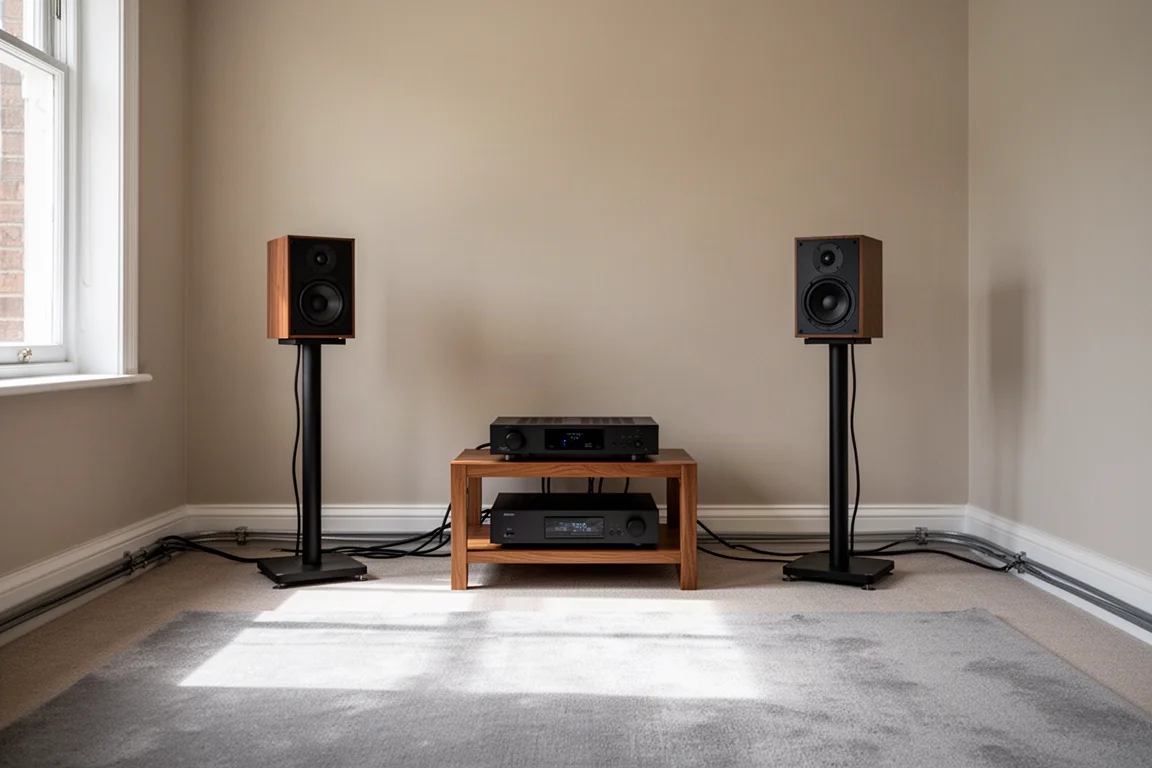
There is a widely repeated engineering argument that, all other things being equal, an active loudspeaker will produce a better audible result. In practice, all other things are almost never equal. In a passive system, the loudspeakers influence sound quality far more than the upstream electronics, which means a well-chosen pair of passive speakers can carry a system a long way.
Two more practical points apply to both paths. First, bass management varies considerably: some amplifiers low-pass the subwoofer only and leave the main speakers running full range, while others also high-pass the mains. Second, USB inputs are not guaranteed, so a computer connection may need a USB-to-SPDIF converter.
PSB Alpha IQ: The All-In-One Active Option
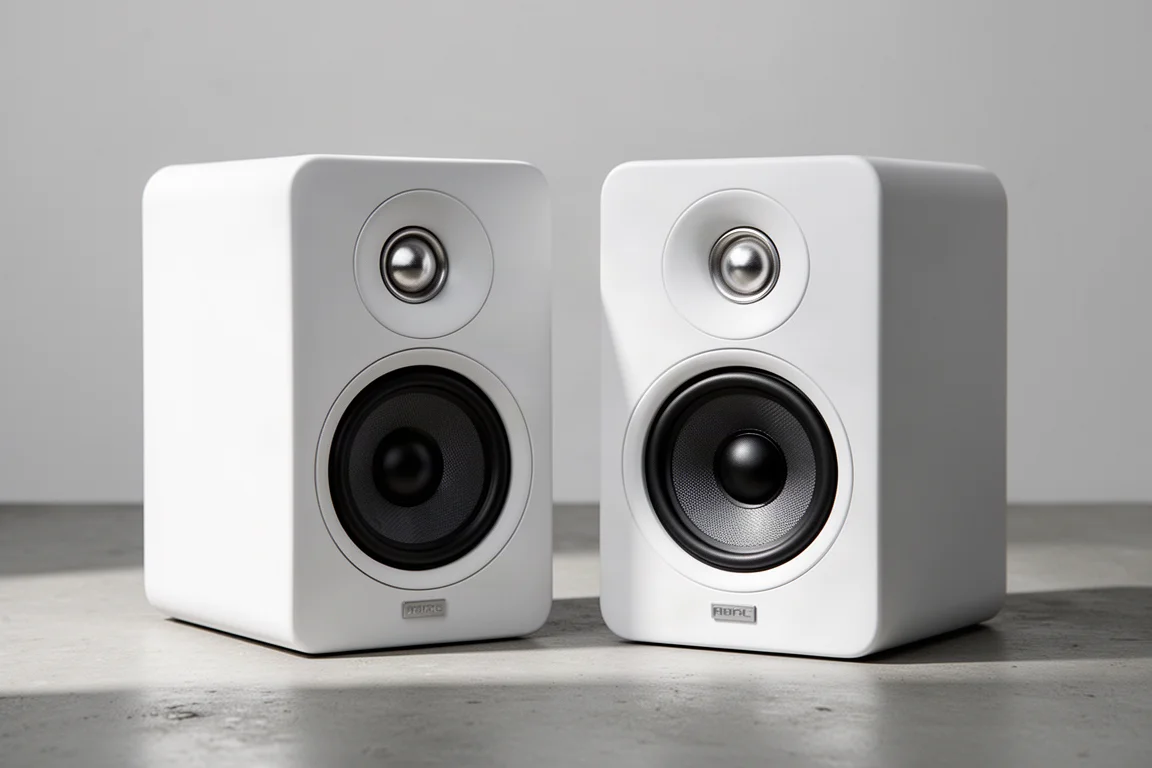
The PSB Alpha IQ is the clearest expression of the active path. Its internal DAC and amplification sit after the crossover, and the connectivity suite covers streaming, HDMI ARC, a subwoofer output, and a phono stage. The streaming platform is BluOS, which supports Tidal Connect and Roon readiness.
In use, the Alpha IQ takes a laid-back approach through the mid-range and above, and it counters with strong low-end punch. Its stand-out strength is placement flexibility: the cabinets are compact enough for desktop duty, and image focus is a clear highlight, with stable, well-defined positioning of instruments and voices.
Marantz Stereo 70s: The Connectivity Hub
The Marantz Stereo 70s is an integrated amplifier and AV receiver in one chassis, delivering 75 watts per channel of Class AB power into 8 ohms. It carries HEOS streaming, an HDMI ARC input, subwoofer outputs, and a moving-magnet phono stage. A 6.4 mm headphone socket sits on the front panel.
Two limitations are worth noting. There is no USB input, so a computer needs a USB-to-SPDIF converter. HEOS also lacks Tidal Connect and Roon readiness, which means those features are unavailable without an external streamer. Bass management is fairly basic: the subwoofer output can be low-pass filtered from the menu, but the main speakers receive no high-pass filter and run effectively full range.
Sonically, the Stereo 70s brings more upper mid-range bite than the active alternative, which makes a passive system sound urgent and exuberant. That character helps it communicate rhythmic complexity, and it produces a larger soundstage in every direction.
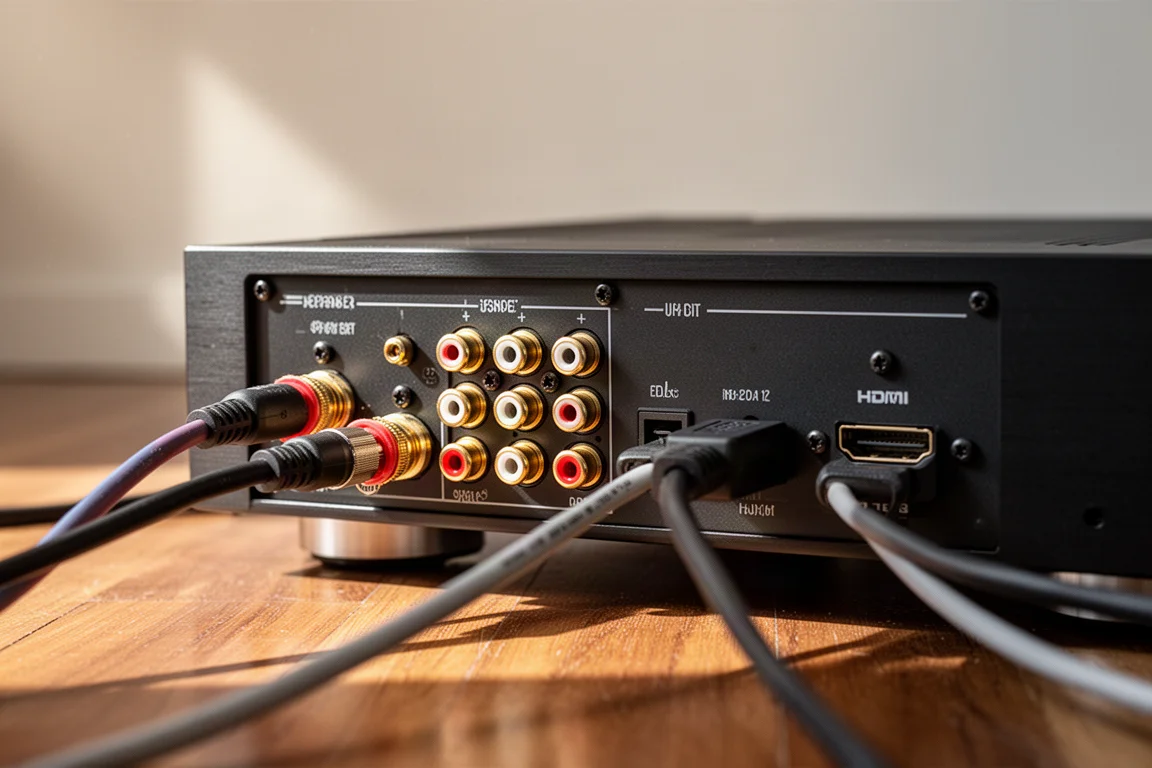
Adding a subwoofer to a Marantz-based system is straightforward, but because the mains run full range, the subwoofer is brought in from below to meet the speakers as they are rather than being crossed over with them. A front headphone socket gives the amplifier a further advantage over an active pair, which has no equivalent output.
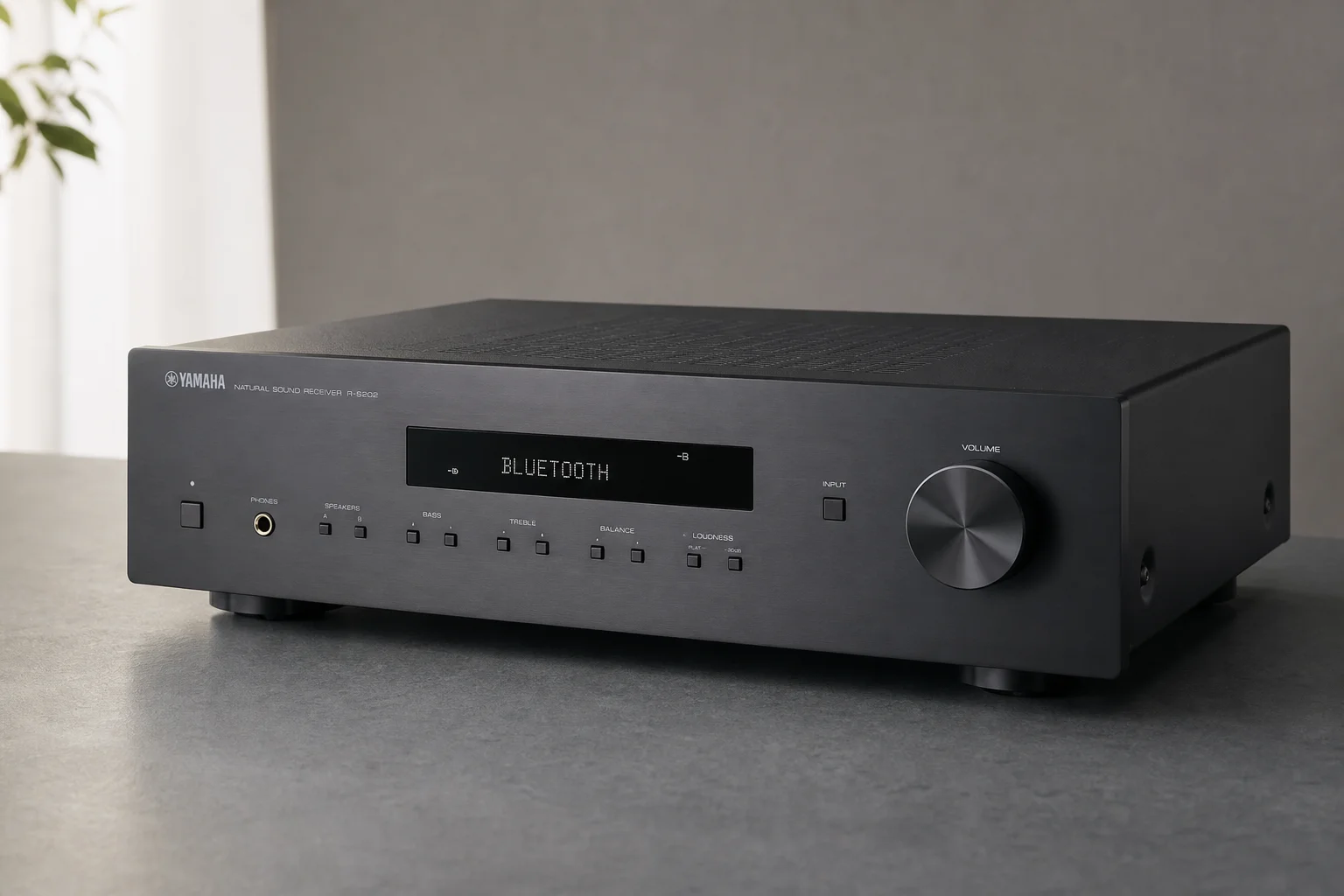
Pro-Ject Speaker Box 5 S2: The Passive Speaker That Overdelivers
The Pro-Ject Speaker Box 5 S2 is a two-way passive standmount with a 1-inch silk dome tweeter and a 5-inch glass-fibre mid-bass driver, augmented by a rear-firing bass reflex port. The cabinet is built from MDF and, unusually at this price point, the speakers are made in Europe. The asking price is €649.
The S2 revision is not positioned as a straight mark-two replacement for the original Speaker Box 5, which remains on sale. Instead it is a better-performing model, with special internal bracing, slightly different cabinet dimensions, heavier construction, eco-friendly glue, and slightly different tuning.
The finish is a matte yellow rather than a gloss, and the tone is an understated mustard rather than a bright, saturated yellow. On performance, the Speaker Box 5 S2 is a genuinely overachieving passive loudspeaker for the money, with a bigger, cleaner and more incisive presentation than its price suggests, stronger dynamics, and a clearer view of tonal contrasts. Paired with the Marantz, it also delivers more upper mid-range bite and a drier overall balance than the active option.
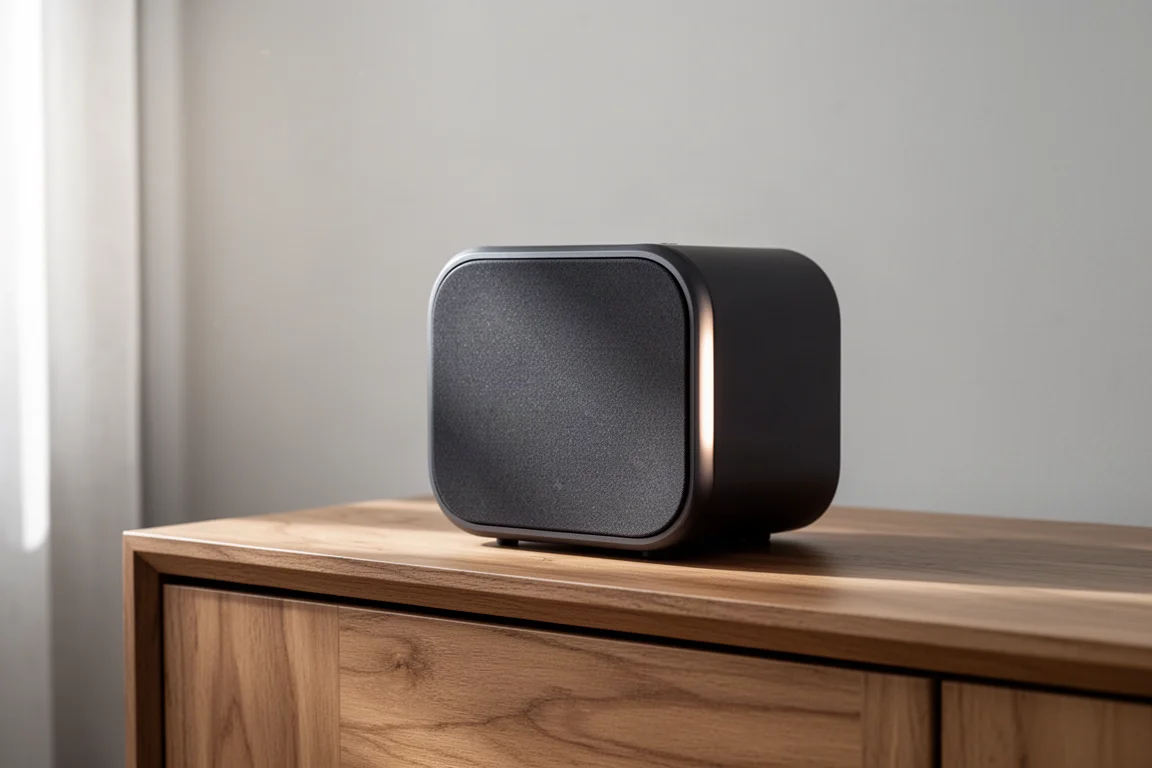
KEF KC62: Adding Low-End Weight
The KEF KC62 is the subwoofer used here to extend both a passive and an active system. Adding it to the Pro-Ject and Marantz combination makes the sound noticeably richer and fuller, with a knock-on improvement to movie dialogue intelligibility and more body behind vocals.
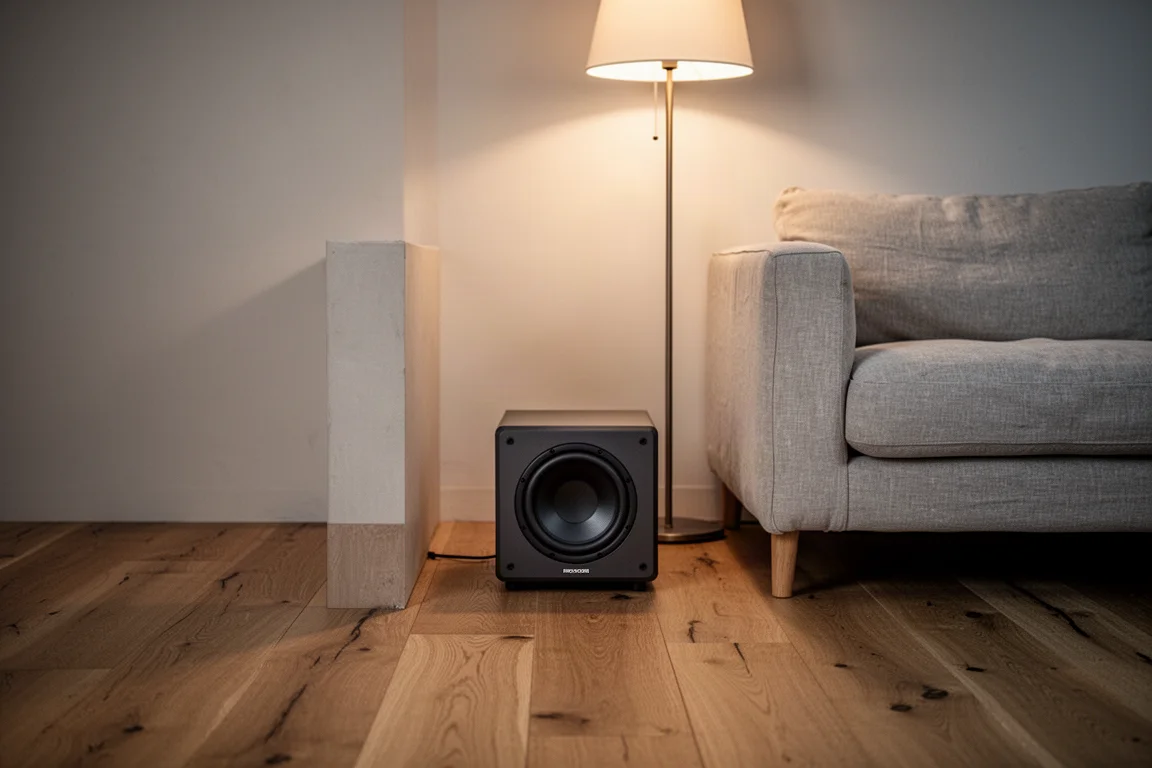
The subwoofer’s contribution depends heavily on how the amplifier handles bass management. With the Marantz, the subwoofer is low-pass filtered and the main speakers continue to run full range, so the subwoofer fills in below the speakers rather than taking over the low bass. With the Bluesound Powernode, the main speakers can be high-pass filtered, which gives the subwoofer and the speakers clearly separated roles and makes the subwoofer easier to integrate cleanly.
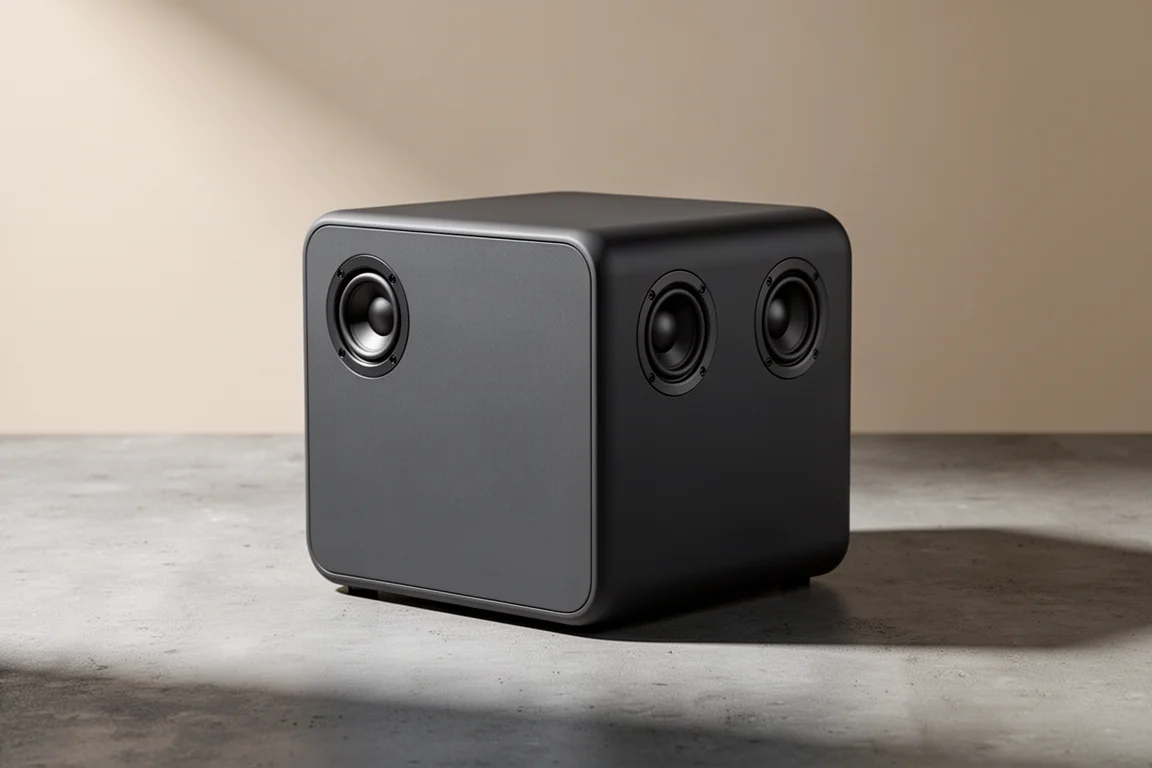
Bluesound Powernode: A Leaner Alternative Amplifier
The Bluesound Powernode covers the same core brief as the Marantz in a much smaller, tidier box: an internal network streamer, a DAC, an HDMI ARC input, and a subwoofer output. Power rises to 80 watts per channel, delivered by a Class D output stage. The trade-off is the loss of the moving-magnet phono input, so a turntable needs a separate phono stage.
Driving the same passive speakers, the Powernode produces slightly more bass weight and a shade more detail, but a comparatively leaner balance that is not quite as mid-range lush as the Marantz. Its real advantage appears when a subwoofer joins the system, because high-pass filtering of the main speakers becomes available.

Buying Advice
The right path depends on priorities rather than on which format is technically superior. An active system such as the PSB Alpha IQ keeps the box count low, needs no speaker cables, and offers the strongest placement flexibility, which matters on a desk or in a small room. The cost is that both speakers need mains power and the streaming platform is fixed.
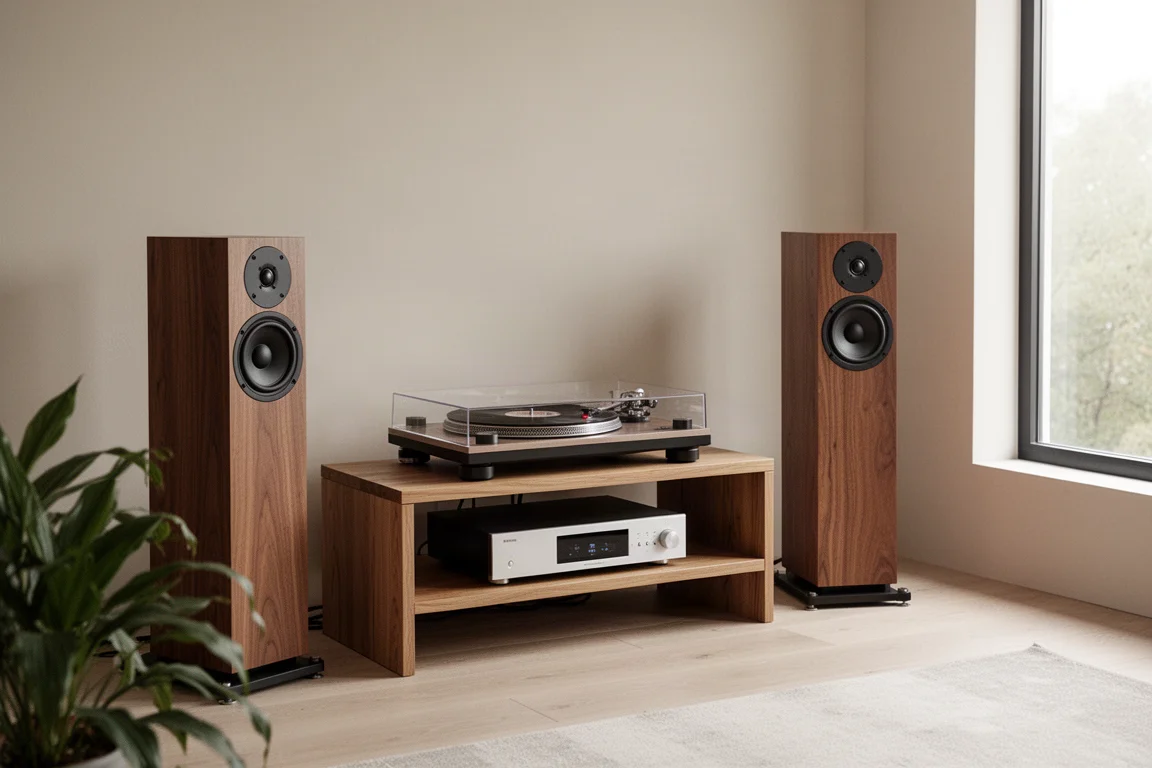
A passive system built around the Marantz Stereo 70s and the Pro-Ject Speaker Box 5 S2 offers more connectivity flexibility, a headphone output, and a more urgent, incisive presentation with a larger soundstage. Budget accordingly: with a €649 pair of speakers, the amplifier becomes the larger share of the total spend, and loudspeaker cables add a further amount on top.
Whichever route is chosen, plan the details that are easy to overlook. Confirm whether the amplifier has a USB input, whether the streaming platform supports the services you use, and whether bass management includes a high-pass filter for the main speakers. If desktop use or minimal clutter is the goal, the active route is the simpler answer. If system building, upgradability, and headphone listening matter more, the separates route still has plenty to offer.
Conclusion
Active and passive systems now overlap far more than the terminology suggests, and both can deliver streaming, HDMI ARC, phono inputs, and subwoofer outputs. The PSB Alpha IQ shows how clean and capable the all-in-one approach has become, while the Marantz Stereo 70s and Pro-Ject Speaker Box 5 S2 demonstrate that a well-chosen separates system can sound cleaner, more urgent, and more incisive. Add the KEF KC62 for low-end weight, or choose the Bluesound Powernode for a tidier amplifier with proper high-pass filtering. Match the format to the room and to your listening habits, and either path will serve you well.
Further reading
Related Reviews
Hi-Fi Audio
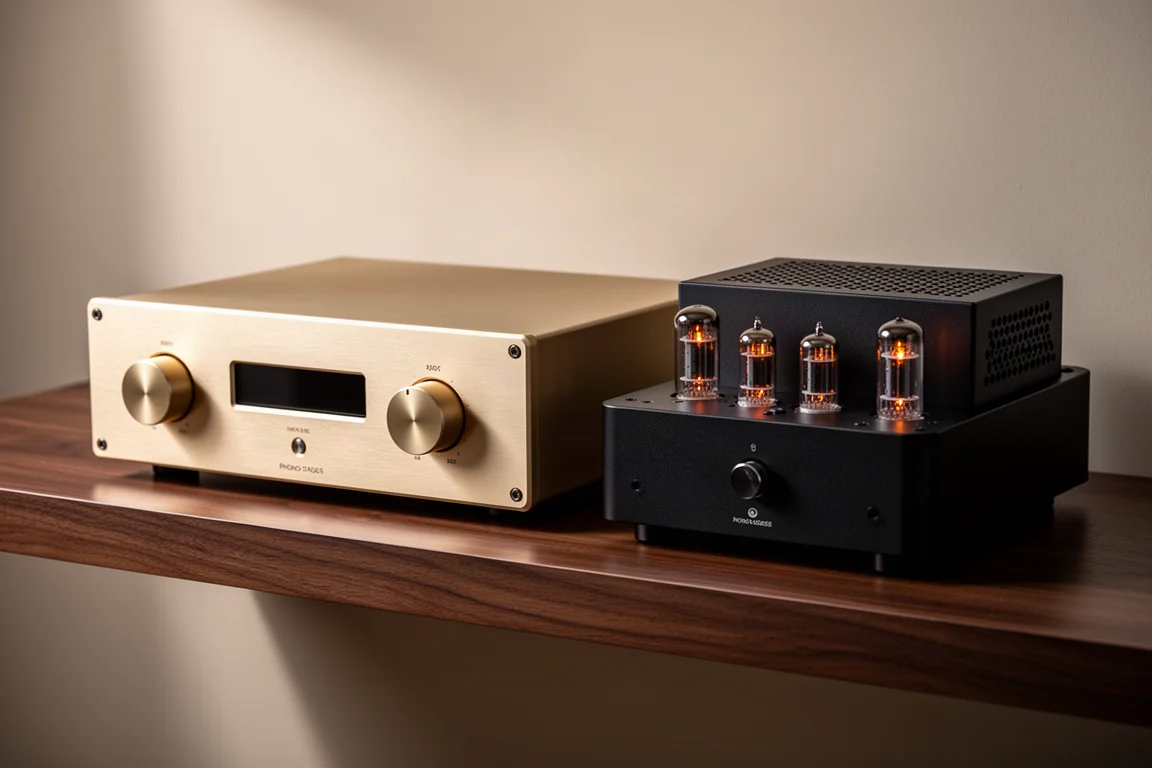
Accuphase C-57 vs Allnic H-7000V: Two High-End Phono Stages Compared
A fully balanced solid-state phono stage with a pitch-black noise floor meets a tube design built for well-loved records. Here is how to choose between them.
Hi-Fi Audio
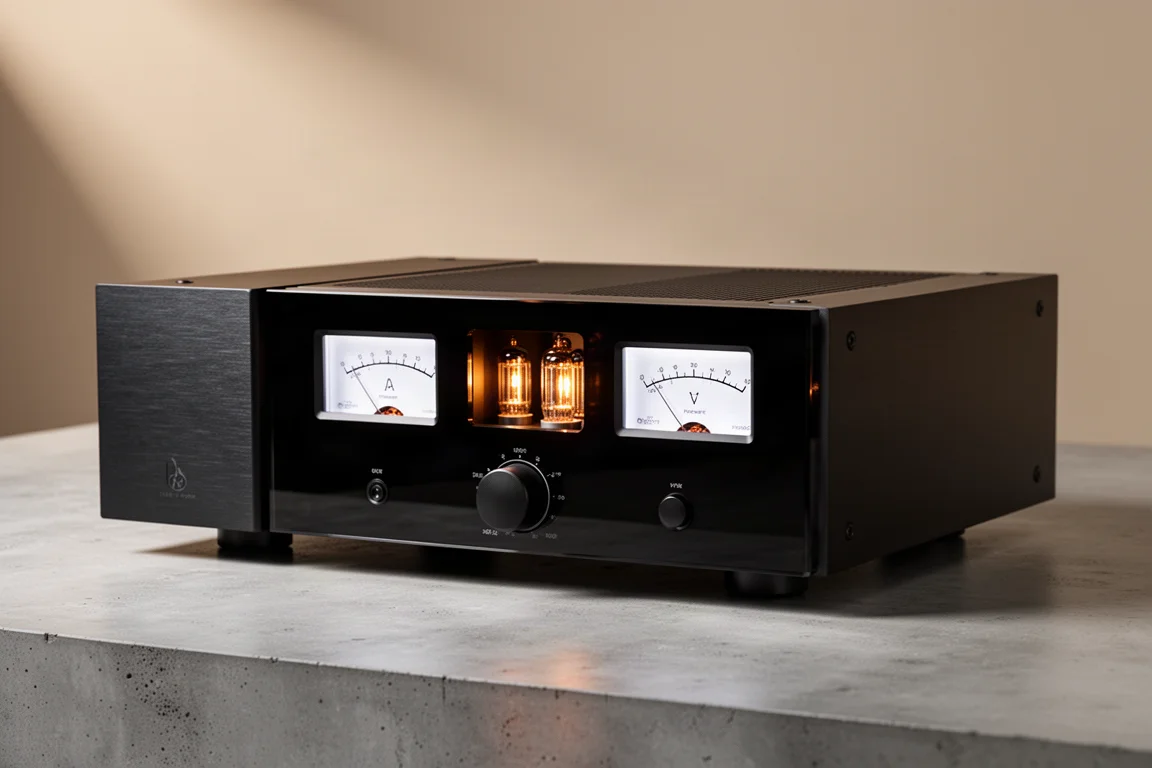
Advance Paris A10 Apex Review: A Hybrid Integrated Amplifier That Covers a Lot of Ground
A French hybrid integrated amplifier with a class A tube preamp stage, analogue power meters, and an internal DAC and phono stage good enough to make extra boxes unnecessary.
Hi-Fi Audio
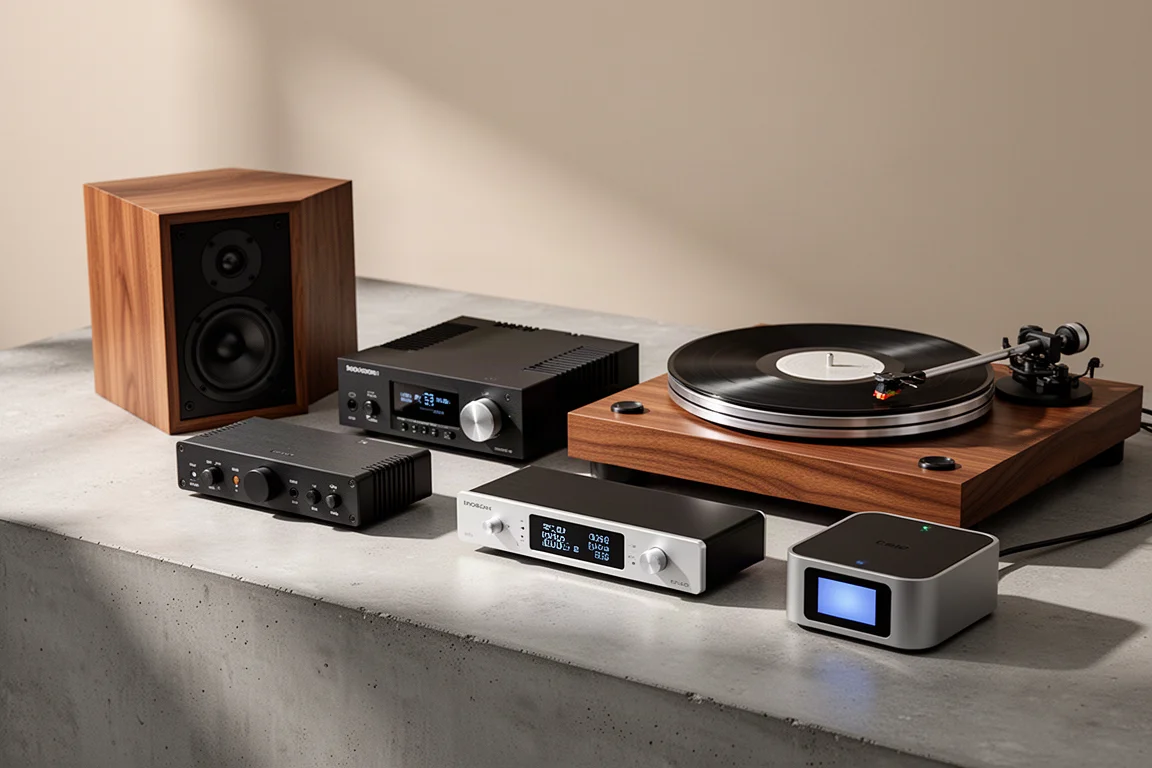
Affordable Hi-Fi Gear Worth Buying: Standout Components That Punch Above Their Price
A roundup of affordable speakers, amplifiers, DACs, and sources that deliver performance well beyond their price point.