Hi-Fi Audio
Advance Paris A10 Apex Review: A Hybrid Integrated Amplifier That Covers a Lot of Ground
A French hybrid integrated amplifier with a class A tube preamp stage, analogue power meters, and an internal DAC and phono stage good enough to make extra boxes unnecessary.
Introduction
Advance Paris is a French audio brand that has been around since 1995. It started with loudspeakers before branching into electronics in 2002. The amplifier that brought the company wider attention was the A10 Classic, launched at the end of 2020, with its acrylic front panel, tubes on display in the preamplifier stage and large blue power meters. It sold for just under £2,000 in the UK.
The A10 Apex is the successor, part of a renewal of the Classic range that marks the brand’s 30th anniversary. UK retail pricing is £2,450. The hybrid tube-and-transistor formula remains, the analogue power meters remain, and the fascia has been cleaned up.
Who the Advance Paris A10 Apex Is For
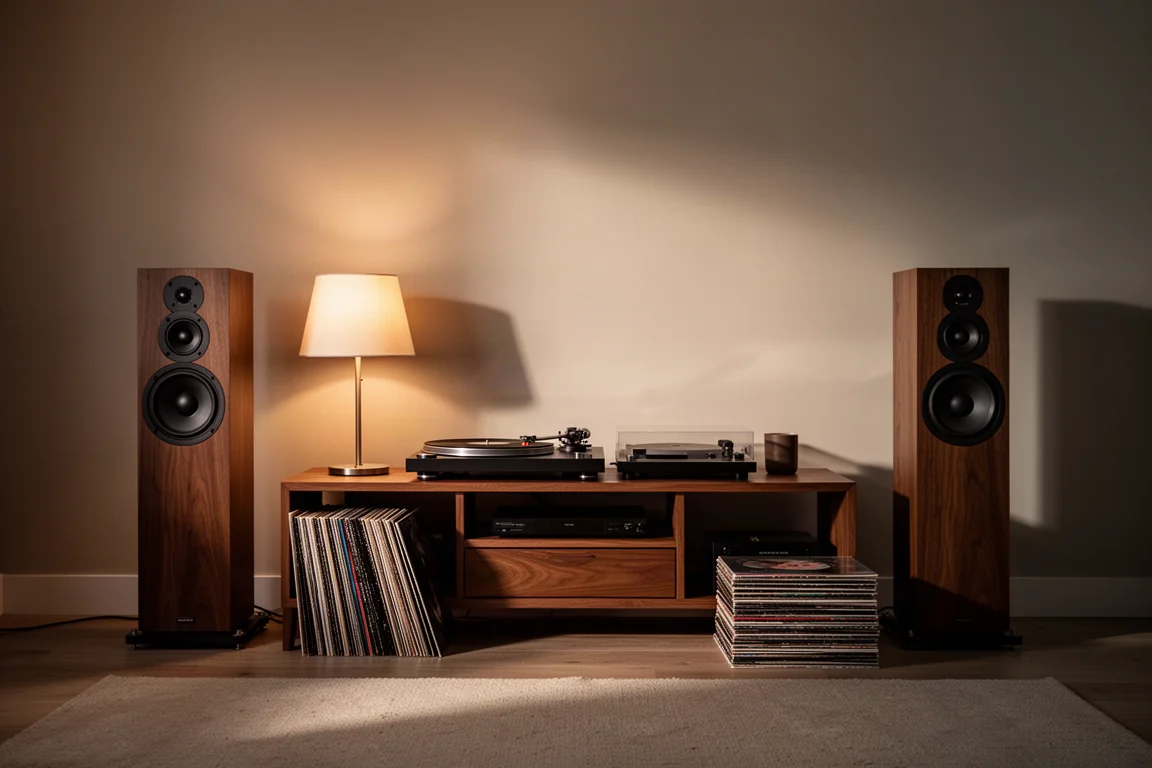
This is a one-box solution in the most practical sense. Add a source and a pair of speakers and the system is complete. The A10 Apex combines a tube preamplifier stage, a transistor power amplifier stage, a moving magnet phono stage and a digital-to-analogue converter with USB and HDMI eARC inputs.
That mix suits listeners who want a single well-equipped amplifier rather than a rack of separate boxes, and who value being able to connect a turntable, a disc transport, a computer and a television without adding extra components. With 130 watts into 8 ohms and 198 watts into 4 ohms, it also has enough output for speakers that ask more of an amplifier than average.
The hybrid topology is the part most buyers will care about. The preamplifier runs in pure class A using ECC81 or 12AX7 dual triode tubes, while the power amplification is solid state. It is a combination that aims for tube character without tube reliability concerns in the output stage.
Design and Build: Tubes, Meters, and a Cleaner Fascia
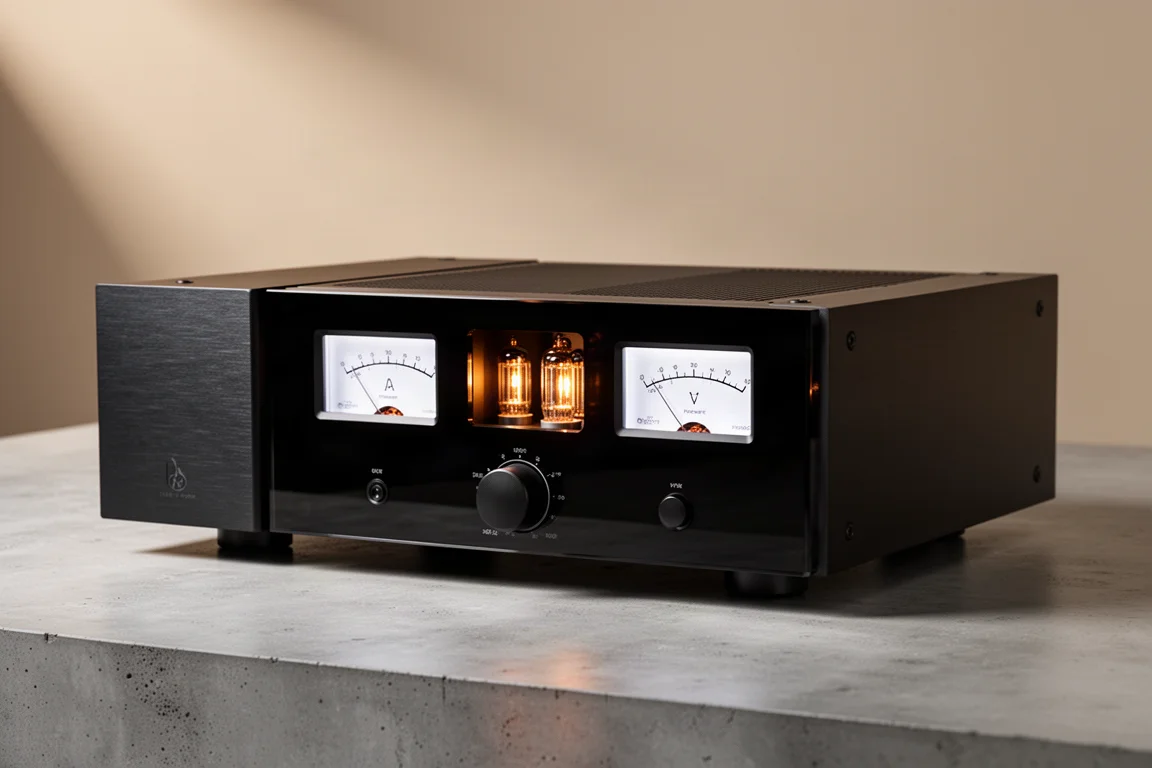
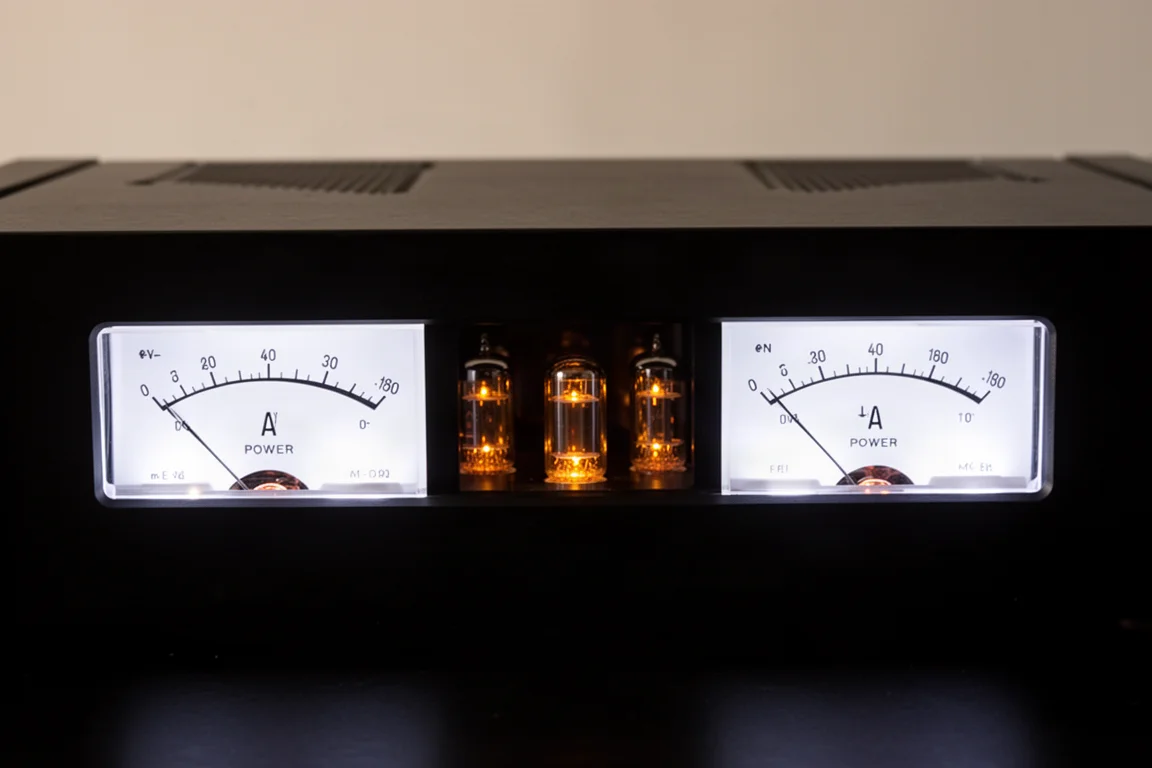
At 175 mm high and 12.9 kg, the A10 Apex is a full-width component built to standard rack dimensions. The chrome power button and central dial of the Classic have been replaced with black, and the analogue power meters now use white backlighting rather than blue, which reads with greater contrast against the black acrylic fascia. The tubes sit behind a small window between the meters.
A 6.35 mm headphone jack and a fully functional remote control are included. Volume is handled by the central dial, and a long press on it opens input selection and the setup menus, where tone controls, start volume, display adjustment, standby timing, and input and output configuration can be changed.
Inside, the power supply begins with an AC inlet filtering board and a large toroidal transformer mounted sideways, rated at 380 VA. That is generous for this class of amplifier, where around 250 VA would be more typical. The main board carries rectification and filtering, with four 6,800 microfarad capacitors giving 13,400 microfarads per side. That figure looks lean for an amplifier with this power rating, and it is one of the few areas where there is obvious room for improvement.
Elsewhere the picture is stronger. The power amplifier modules for the left and right channels are identical, making the layout dual mono from that point, and they use through-hole components throughout, which handle heat better than surface-mount parts. Four bipolar junction output devices, understood to be Toshiba high-power types, are mounted to the heatsink. The preamplifier section is discrete and through-hole as well. The tubes themselves sit under a cover that is not easily removed, so swapping them is not a practical proposition here.
Main Strengths: Sound Quality and Power
In listening, the A10 Apex delivers excellent bass control, a rich lower mid-range, an enticing upper mid-range and a sweet top end. The result is engaging without being fatiguing: it grips low frequencies, holds attention through the middle, and stays melodious at the top.
A toggle switch raises the class A bias from 5 watts to somewhere around 8 to 10 watts for a slightly richer sound. The amplifier runs warm rather than hot.
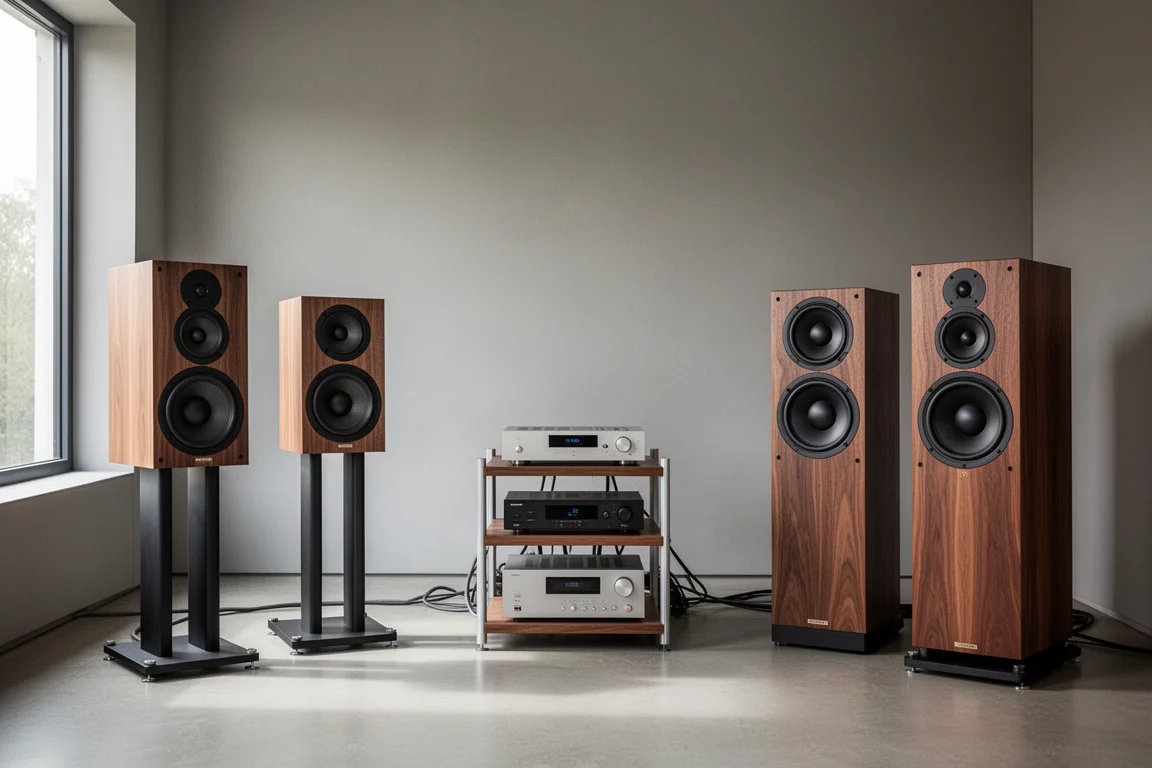
Speaker flexibility is a particular strength. With the Monitor Audio Silver 100 7G, an affordable standmount, the amplifier’s warmth pulled a slightly cool-sounding speaker back towards neutrality. The Dali Menuet SE showed the amplifier was capable of greater timbral insight, a combination well suited to small rooms and nearfield listening. With current-hungry Quadral speakers, the extra wattage and larger power supply kept the woofers under better control. Vintage ProAc Response 1 SC speakers worked just as well.
Connectivity: DAC, Phono Stage, and Digital Inputs
On the analogue side there are five RCA inputs, one XLR balanced input, a phono input, subwoofer outputs, a fixed input, pre-outs and a record output, along with two sets of speaker terminals. The moving magnet phono stage offers 100, 200 and 300 picofarads of capacitance loading, which allows it to be matched to different cartridges. That is a first clue that the phono stage was not fitted purely for convenience.
Digital connectivity covers one coaxial input, three optical inputs, USB and HDMI eARC. The outgoing A10 Classic offered ARC only; the eARC connection here supports a higher bit rate with uncompressed audio quality. Bluetooth is on board. A module for the main streaming services has been left out.
The converter is built around an ESS 9018 K2M chip. It is an older design, which points to some cost saving, but implementation matters far more than the chip alone.
Both the DAC and the phono stage are well enough executed that external boxes add little. An external DAC costing several times as much produced only a marginal increase in clarity and a modest opening of the soundstage. A dedicated outboard phono stage bettered the internal one for tonal density and expanded the sonic landscape, but again there was little to gain. In more revealing systems those upgrades would show more of their worth; here the internal stages are the reason the amplifier holds up.
Where It Sits Among Price-Point Rivals
At this price the obvious comparison is the Exposure 2510, an amplifier that focuses on quality internal components and short signal paths rather than a long feature list. It has a darker background that lets a little more detail through, and it produces a slightly wider but considerably deeper soundstage, with vocals and lead instruments sitting further back. The A10 Apex gets close in overall performance despite its additional circuitry and the potential for interference between sections.
The Willsenton R8, at roughly £1,500 once upgraded tubes are fitted to the preamp and power stages, offers even more acoustic saturation and a larger soundstage. That is what tube amplification can do exceptionally well, but tubes in the driving and power stages can be unreliable and expensive to replace.
Other integrated designs near the price take different routes. The Electrocompaniet ECI 80D sounds cleaner with better bass control, though its mid-range is more forward and less fluid. The Onkyo A-9000R has almost identical power ratings and similar bass control, but its mid-range resolution and top-end refinement do not match the A10 Apex. The Hegel H190 Mark II is a step up in fidelity with more weight in the lower registers, but its musical envelope is a little less coherent. The Audiolab 9000A stays neutral and gets out of the way, but it plays things safe and sits further behind the Exposure 2510 in clarity than the Advance Paris does.
The practical summary is that the A10 Apex gives up a whisker of resolution to the best integrated amplifiers at around £2,000, but neither of those rivals has its low-frequency grip or its ability to drive difficult speakers. Closing that gap with external DACs and phono stages would add cost, complexity and shelf space.
That trade-off is the heart of the decision. This amplifier is not the last word in transparency, but it is unusually complete for the money.
Things to Consider Before Buying
A few points are worth weighing before committing. The power supply’s capacitor bank is modest for the amplifier’s output rating, which is the clearest candidate for improvement. The tubes are not easily accessible, so anyone who enjoys rolling tubes should look elsewhere. There is no streaming module, so network playback requires an external source.
The internal converter uses an older chip. It performs well here, but buyers who already own a high-quality external DAC may find the internal one is not the reason to choose this amplifier.
Finally, this is a large full-width component that runs warm. It needs a shelf with reasonable ventilation and a cabinet deep enough to take a standard rack-width chassis.
Buying Advice
The A10 Apex makes its strongest case as a complete system in a single box. A turntable, a pair of speakers and a television are enough to cover vinyl, computer-based playback and everyday viewing, with the amplifier’s own DAC and phono stage handling conversion and cartridge matching. That is a lot of ground covered without additional boxes.
On speakers, the amplifier is unusually accommodating. If budget is tight, the Monitor Audio Silver 100 7G is a well-matched and affordable partner. The Dali Menuet SE suits smaller rooms and nearfield setups. If your speakers are current-hungry, the amplifier’s output and power supply are more of an advantage than its feature count.
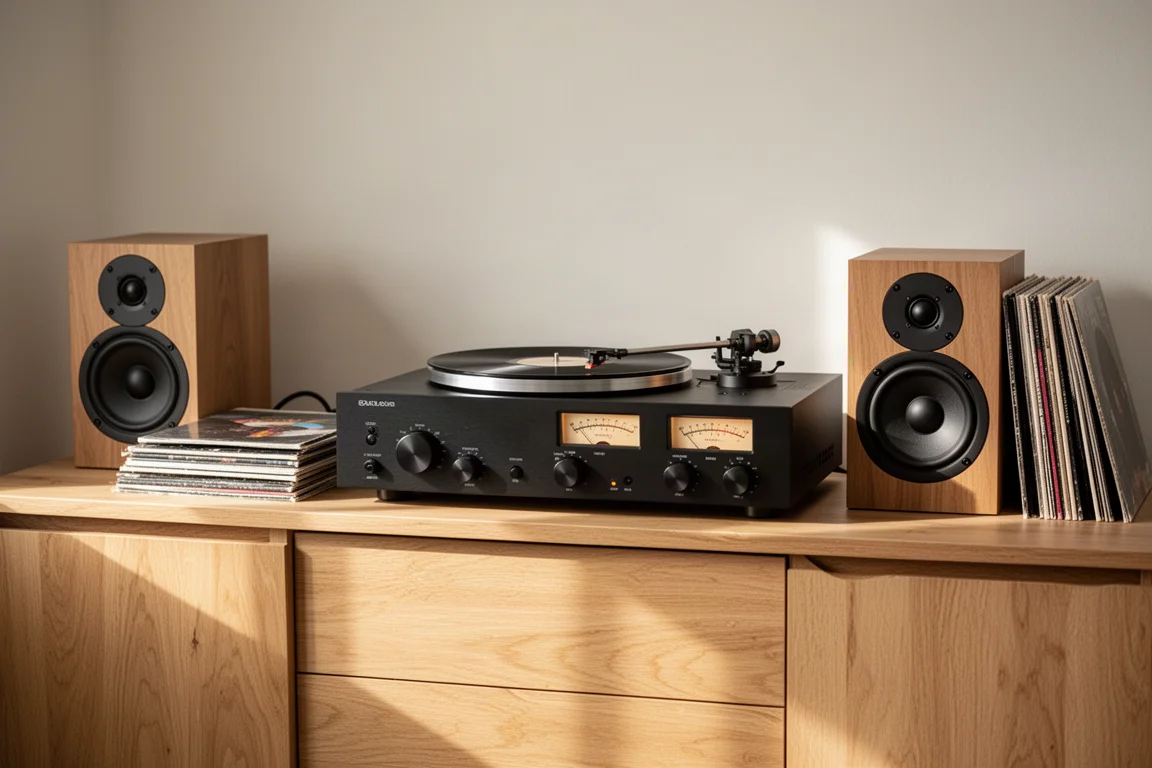
If you already own a high-quality separate DAC and phono stage and want the last degree of resolution and soundstage depth, the Exposure 2510 remains the more focused choice. If you want one box that can drive a wide range of speakers and covers analogue and digital sources without fuss, the A10 Apex is the more complete solution. At £2,450 in the UK, it justifies the step up from the outgoing A10 Classic.
Conclusion
The Advance Paris A10 Apex is a hybrid integrated amplifier that looks the part and, more importantly, sounds it. Excellent bass control, a rich lower mid-range and a sweet top end make it easy to live with, while the internal DAC and phono stage are strong enough that most owners will never need external boxes. The modest capacitor bank and the inaccessible tubes are the main caveats. For listeners who want a single amplifier to anchor a system built around vinyl, digital sources and a television, it is a compelling and genuinely complete choice.
Product link
View more details for Advance Paris A10 Apex Integrated Amplifier
This product is mentioned in the review. Check the specifications, options, and compatibility before buying.
View more details for Advance Paris A10 Apex Integrated AmplifierFurther reading
Related Reviews
Hi-Fi Audio
Accuphase C-57 vs Allnic H-7000V: Two High-End Phono Stages Compared
A fully balanced solid-state phono stage with a pitch-black noise floor meets a tube design built for well-loved records. Here is how to choose between them.
Hi-Fi Audio
Active vs Passive Hi-Fi: Five Components for a Modern System
Five components that define modern active and passive hi-fi systems, with the strengths, trade-offs and setup details worth weighing before you buy.
Hi-Fi Audio
Affordable Hi-Fi Gear Worth Buying: Standout Components That Punch Above Their Price
A roundup of affordable speakers, amplifiers, DACs, and sources that deliver performance well beyond their price point.