Metal Fabrication
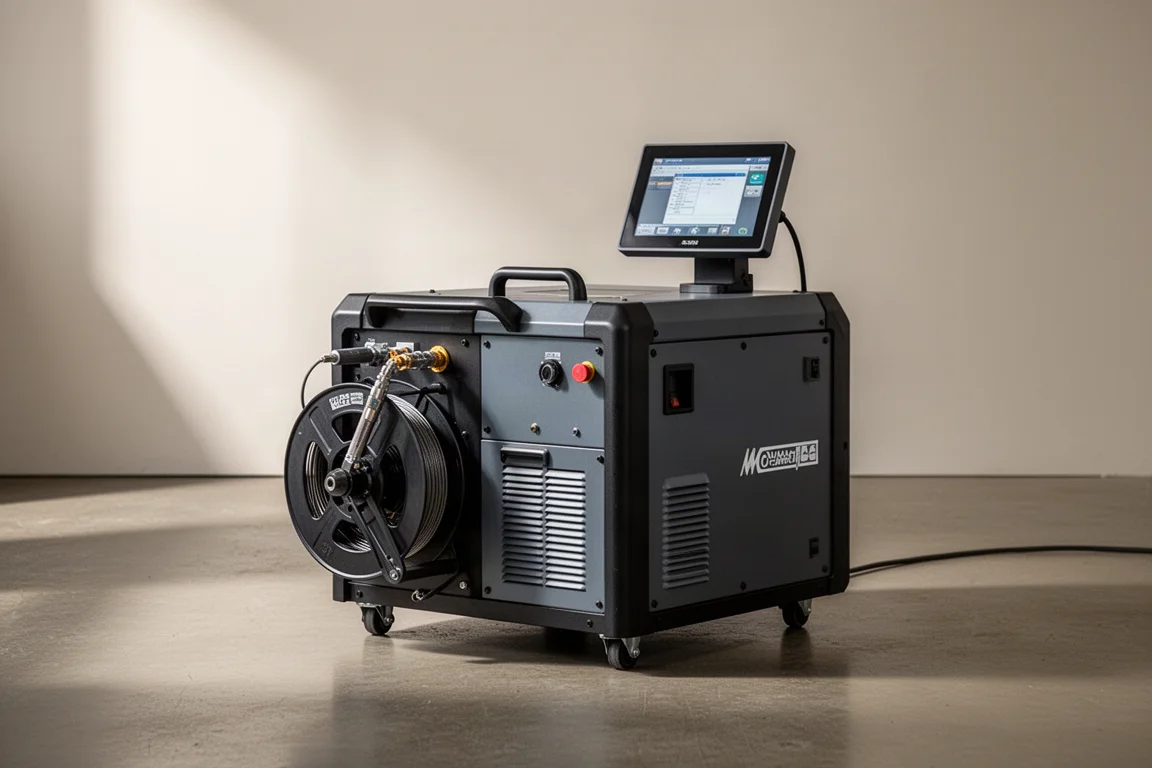
xTool MetalFab Review: A New Way to Cut, Weld, and Clean Metal
We put the xTool MetalFab against a traditional MIG welder and plasma cutter to see if one machine can really replace a full fabrication setup.
Introduction
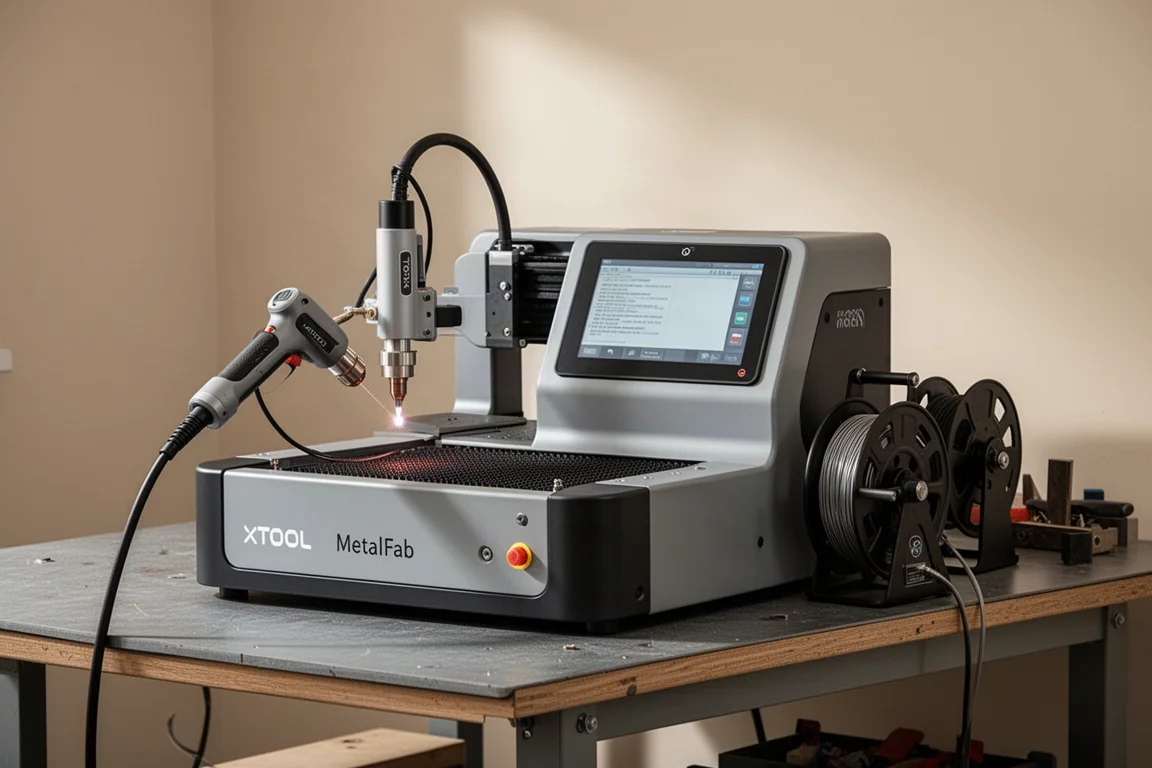
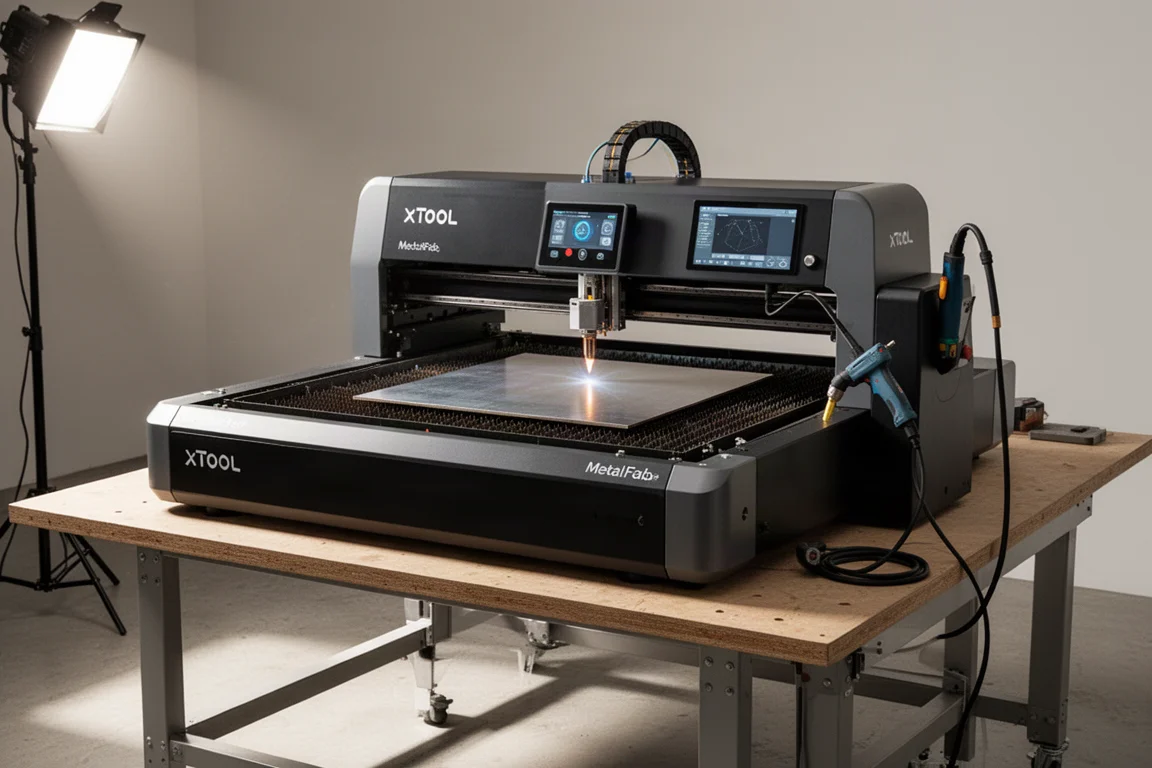
Laser welders have changed what is possible in a small workshop. The xTool MetalFab promises to replace a traditional MIG welder, plasma cutter, angle grinder, and metal cutting saw with a single machine that can cut, weld, and clean metal. This review puts that promise to the test by comparing the MetalFab head-to-head against a traditional setup, then using it to build a complete project.
The big appeal of these new machines is that they remove the steep learning curve of traditional metalworking tools. Until recently, laser welding and laser cutting were reserved for large fabrication shops. The MetalFab aims to bring that capability to small shops and serious makers. We also tested a competing laser welder and cutter to see how they compare.
Cutting: Laser vs Plasma
The first test was handheld cutting. A traditional plasma cutter requires a large air compressor with enough duty cycle to keep up, specialized glasses or a welding helmet, gloves, and full skin coverage. The torch tip must be held about 3 mm above the surface, which takes practice to get right.
Using a plasma cutter on 2 mm carbon steel produced a kerf just over 2 mm wide and left significant dross, the molten steel that accumulates on the bottom side of the cut. Cutting aluminum and stainless steel with plasma was possible but messy, especially aluminum, which is generally a very messy cut with plasma.
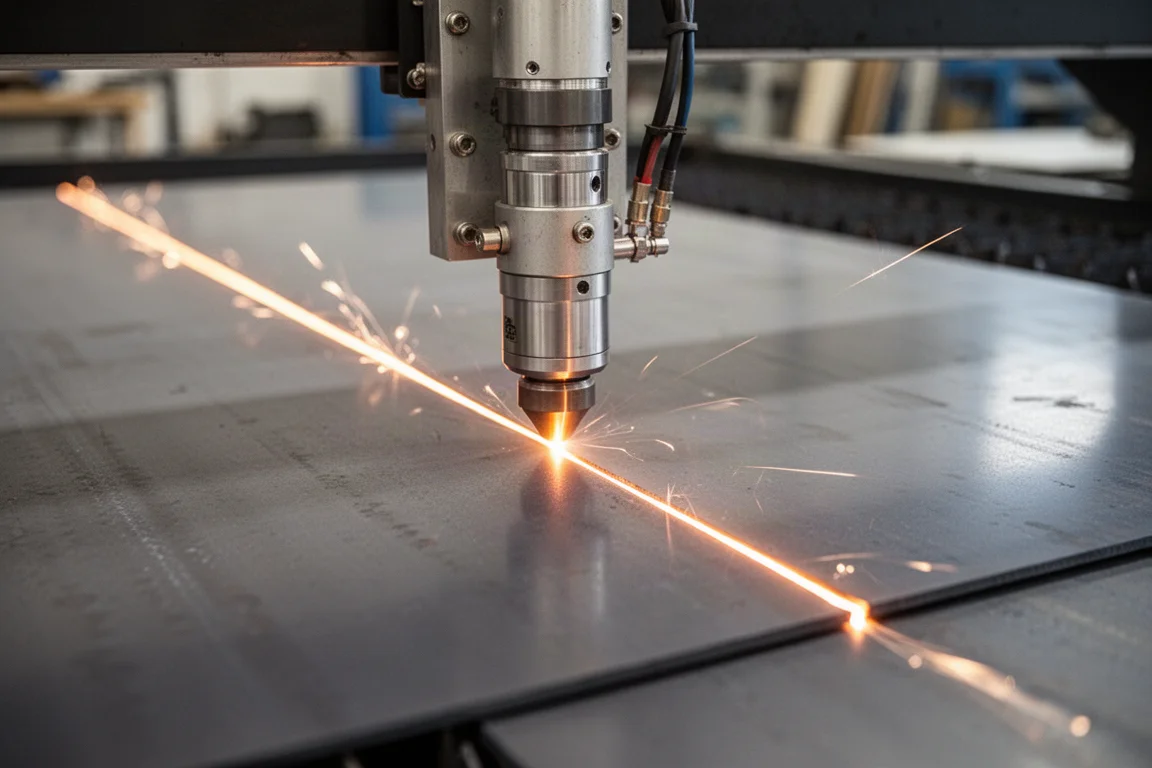
The MetalFab was a different experience. The cutting head rides smoothly right on the workpiece, keeping the laser perfectly focused at all times. This makes it much easier to follow a template. The result is a precise, very narrow kerf with minimal dross, no warping, and edges clean enough to go straight to assembly with no grinding required when settings and speed are dialed in.
The machine handled 2 mm carbon steel effortlessly and cut through 6 mm steel, the thickest material available for testing, without issue. The on-screen interface takes the guesswork out of settings. You select the material type and thickness, and the machine sets the defaults. An advanced mode allows manual overrides, but the defaults worked well throughout testing.
The type of gas used makes a big difference in cut quality. Nitrogen gives clean, shiny cuts with no oxidation, especially on stainless steel and aluminum. Argon is slower and more expensive but excellent for specialty metals like titanium. Compressed air is the budget-friendly option that works well for mild steel, though it produces more oxidation and a rougher edge. For this review, compressed air was used to save money, and the cleanup was still far less than with plasma.
Welding: Laser vs MIG
Switching the MetalFab from cutting to welding requires turning the machine off, disconnecting the air hose, connecting an argon gas hose, swapping the cutting tip for a welding tip, and attaching the wire feeder. The process takes a few minutes but is straightforward.
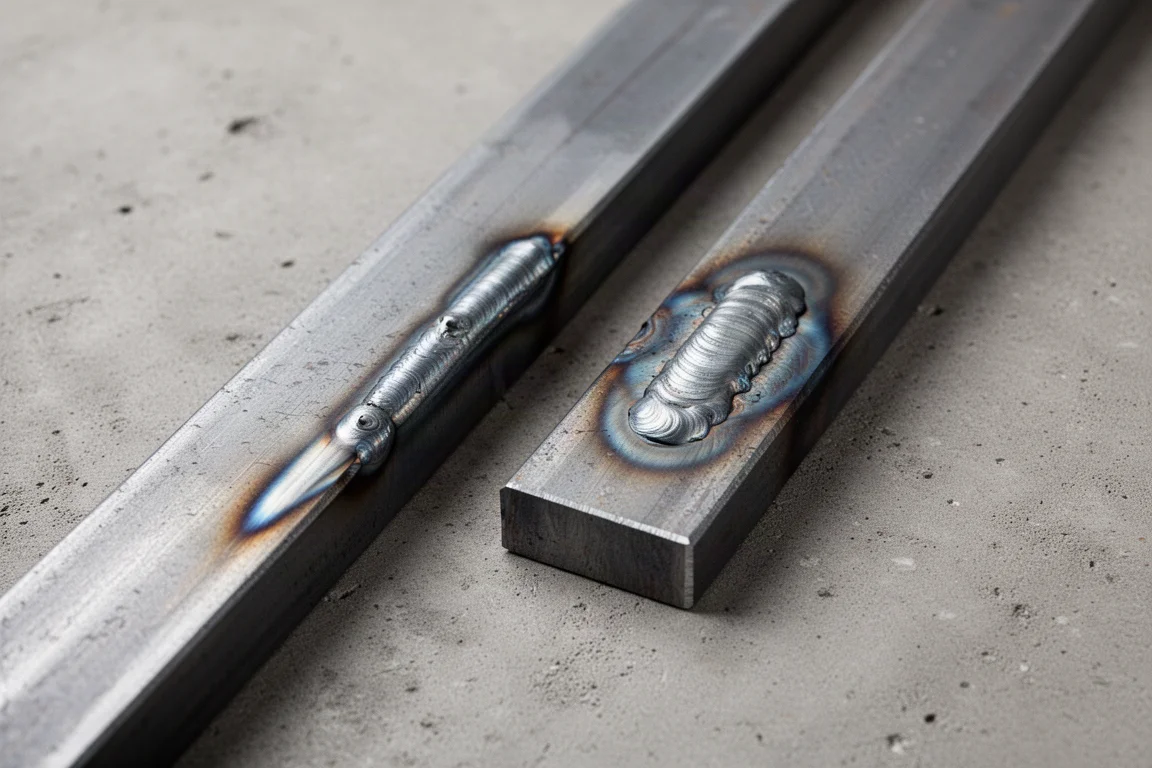
The first noticeable difference from MIG welding is the filler wire size. The filler is much smaller, producing a seam that is smaller and cleaner. This does not mean the weld is weaker. Laser welding has significantly more penetration than MIG welding.
The MetalFab supports welding with or without wire. Wire is used to fill gaps, add strength, or build up material on thicker parts. For tight, well-prepared joints or thin sheets, autogenous welding fuses the base metal without wire. When using wire, it must match the material: stainless steel wire for stainless steel, solid iron wire for carbon or galvanized steel, tin brass wire for brass, and aluminum wire for aluminum. The welder supports wire sizes from 0.8 to 1.6 mm and comes with a roll of 1 mm stainless wire to get started.
A safety circuit requires the clamp on the sensing cable to be attached to the workpiece and the nozzle to touch the metal. Once both the grip sensor and trigger are pressed, the laser starts instantly while the wire feeds in. The reaction from the weld pool pushes the gun back automatically, so the operator just guides it along the seam without controlling speed manually.
In testing, the laser weld on carbon steel was clean enough that no cleanup was needed. The laser can also be used to clean up welds pre and post welding, eliminating the need for an angle grinder. A strength test on 3/8 inch flat bar showed that both MIG and laser welds bent the metal before breaking, confirming the laser weld is not weaker despite using less filler.
Laser Cleaning
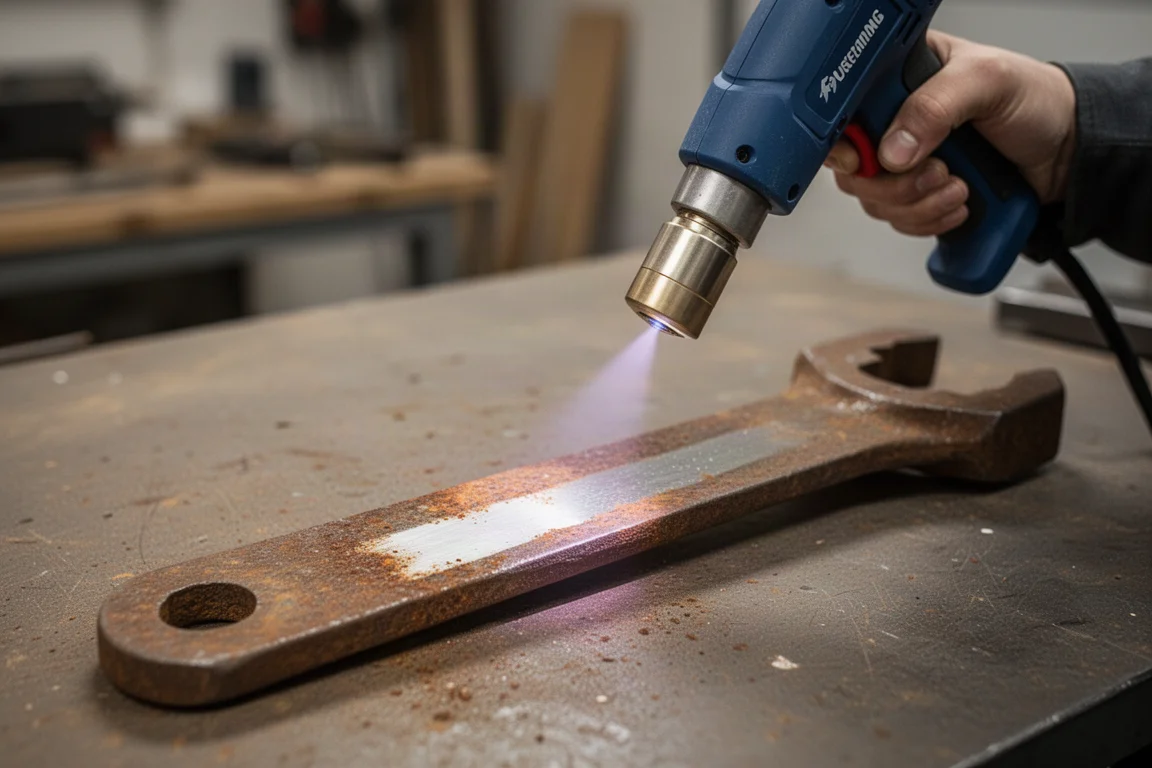
Beyond cutting and welding, the MetalFab functions as a laser cleaner. This capability is useful for cleaning welds before and after welding, but it also works on old rusty tools. The laser removes rust and mill scale quickly, leaving clean bare metal.
This feature replaces the need for a bench grinder or angle grinder for many cleaning tasks. It is fast, quiet, and produces no dust or debris. For anyone working with older or salvaged metal, this is a genuinely useful addition.
CNC Capabilities
The MetalFab also includes a CNC function. The same laser gun is fitted with a special tip and threaded into the machine, which rides on rails over a bed with removable slats. A tray of sand at the bottom catches pieces that fall through. A built-in camera allows the software to see exactly what is being cut.
The software includes default settings for common materials like 2 mm aluminum and stainless steel. Importing artwork and processing a cut is straightforward. In testing, stainless steel cuts came out with no dross and no cleanup on the back.
The software works on iOS, iPadOS, macOS, Android, and Windows, which is unusual for this category. It is the same software used for xTool’s CO2 laser, and it is intuitive and easy to use compared to many other digital CNC tools.
Comparison: xTool MetalFab vs X Laser Lab X1 Pro
The X Laser Lab X1 Pro by Photonix is a competing laser welder, cutter, and cleaner. It is a good all-around machine, but at 700 watts it cannot match the 1200 watt MetalFab. The extra power makes a real difference on thicker material.
The X Laser Lab has a CNC data port, but it is not plug-and-play. Users must source or build their own CNC, and the software does not integrate directly. The MetalFab CNC has a built-in camera, integrates seamlessly, and feels more polished.
The MetalFab gun layout is more ergonomic, and wire changes are tool-free and much faster. On the X Laser Lab, the extra rollers for different wire sizes are placed in an inconvenient spot. Overall, the MetalFab is faster, easier, and more enjoyable to use, with more thought put into its design, screen interface, and user experience.
Real-World Project: Building an Outdoor Patio Table
To test all the capabilities together, a complete outdoor patio table was built. The design started as a sheet metal exercise in Fusion 360, exporting flat files perfect for the MetalFab. A large sheet of 15 gauge sheet metal was broken down using the handheld laser cutter to fit into the CNC.
The CNC cut out the parts with no dross and no cleanup needed. A small sheet metal brake was used to bend the legs, the first time using such a tool. The frame was welded together with the MetalFab, using presets on the machine to make the process extremely fast. The tabletop was made from engineered wood used for decks, so it will hold up outdoors without finishing.
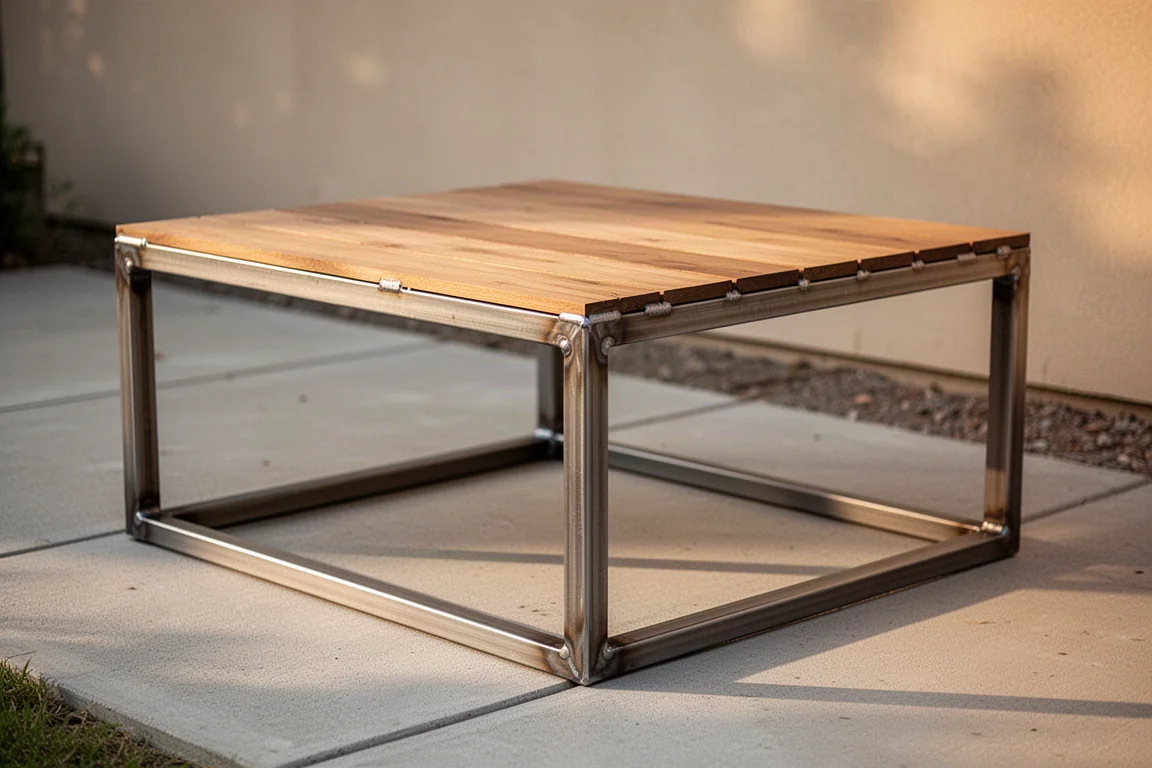
The project came together quickly and cleanly. Being able to select a preset on the machine made the welding process fast, and the laser welds required no grinding or cleanup afterward.
Buying Advice
The xTool MetalFab is a significant investment, but it is the first time a pro-level metal laser has been within reach for small shops and serious makers. It replaces a plasma cutter, angle grinder, bench grinder, and metal cutting saw. The laser handles thin sheet metal without the blowthrough or warping common with plasma cutting.
That said, the MIG welder is still worth keeping. The laser gives strong, deep welds, but it does not add filler like MIG. For bridging gaps or heavy repairs, a MIG welder still wins. The MetalFab is not a complete replacement for every traditional tool, but it covers most everyday fabrication tasks.
The machine is fast, quiet, and clean, with no steep learning curve. The laser arc is easier on the eyes than MIG, so you can actually see what is happening as you weld. xTool has also announced that engraving capability will be added soon, meaning the machine will eventually cut, weld, clean rust, and engrave all in one unit.
Conclusion
The xTool MetalFab delivers on its promise of making metal fabrication more accessible. Cutting is cleaner and easier than plasma, welding produces strong, narrow seams with more penetration than MIG, and the laser cleaning function removes rust and preps welds without grinding. The CNC adds another layer of capability for precise cuts.
It is not a complete replacement for a MIG welder, which remains useful for heavy repairs and bridging gaps. But for most small shop work, the MetalFab is faster, cleaner, and more precise than anything else in its class. For makers who want to prototype and build in metal without the steep learning curve of traditional tools, this machine opens up possibilities that were previously out of reach.
Further reading
Related Reviews
Fabrication Tools
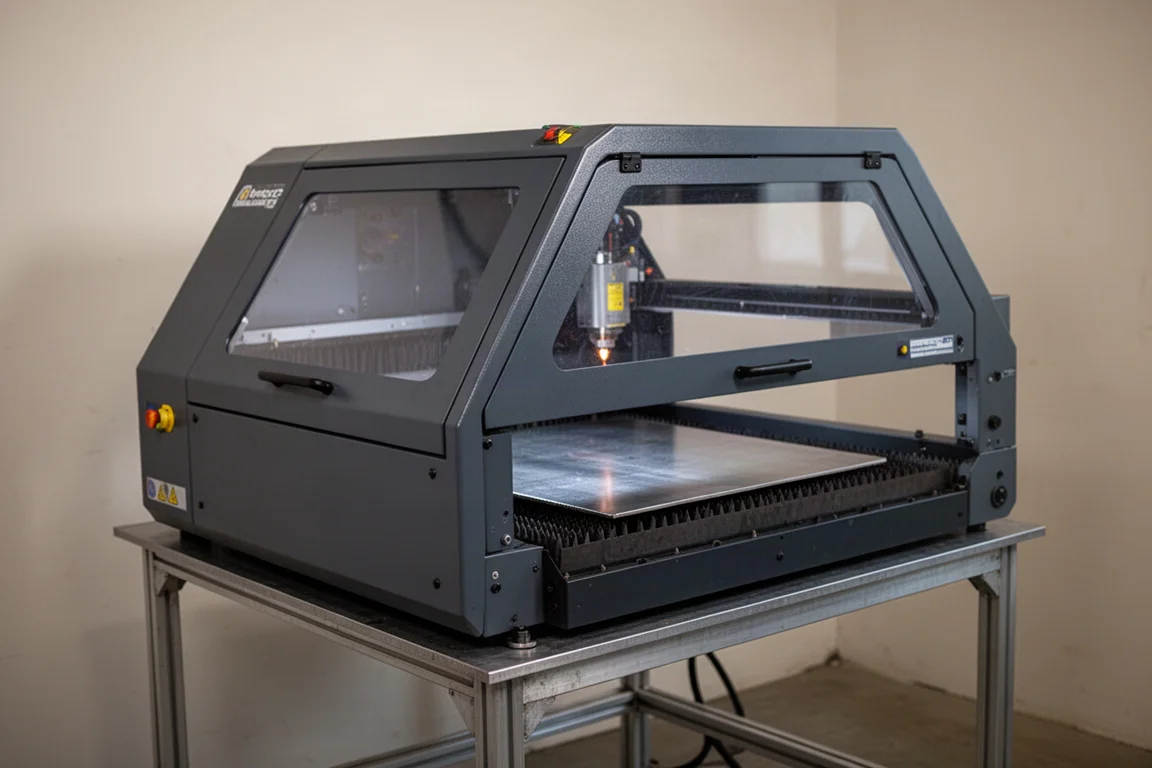
X-Tool Metal Fab Review: A Practical Look at Cutting and Welding in One System
A hands-on look at the X-Tool Metal Fab fiber laser, covering real cutting and welding performance on 1/4 inch steel.
Welding Equipment
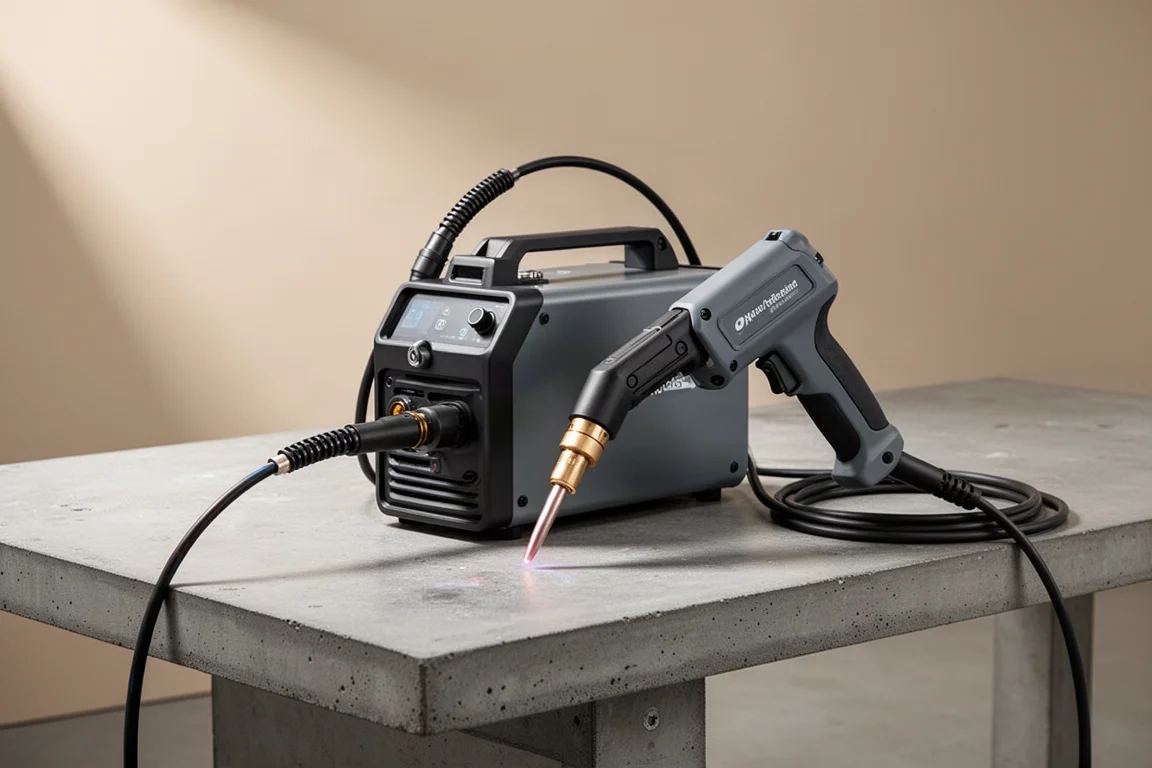
Xlaserlab X1 Pro Laser Welder: A Real Fabrication Project Review
A practical look at using the Xlaserlab X1 Pro laser welder to build a complete fabrication project, covering weld quality, ergonomics, and productivity.
Metalworking Tools
xTool MetalFab 800W Laser Welder Review: A Serious Tool for Sheet Metal Work
The xTool MetalFab 800W brings laser welding, cutting, and cleaning to a more accessible price point. We tested it on stainless steel, carbon steel, and aluminum to see if it holds up.