Metalworking Tools
xTool MetalFab 800W Laser Welder Review: A Serious Tool for Sheet Metal Work
The xTool MetalFab 800W brings laser welding, cutting, and cleaning to a more accessible price point. We tested it on stainless steel, carbon steel, and aluminum to see if it holds up.
Introduction
The xTool MetalFab 800W is the newest addition to xTool’s laser welding lineup, offering a significantly lower price point than the 1200W model while promising real welding, cutting, and cleaning capability. The question is whether 800 watts is enough to do actual work, how well the machine performs, and whether it belongs in a professional shop or stays in hobbyist territory.
This review puts the 800W unit through welding tests on stainless steel, carbon steel, and aluminum across multiple thicknesses. We also tested cutting and cleaning modes, and connected it to the CNC cabinet to see how it handles automated work.
Design and Build
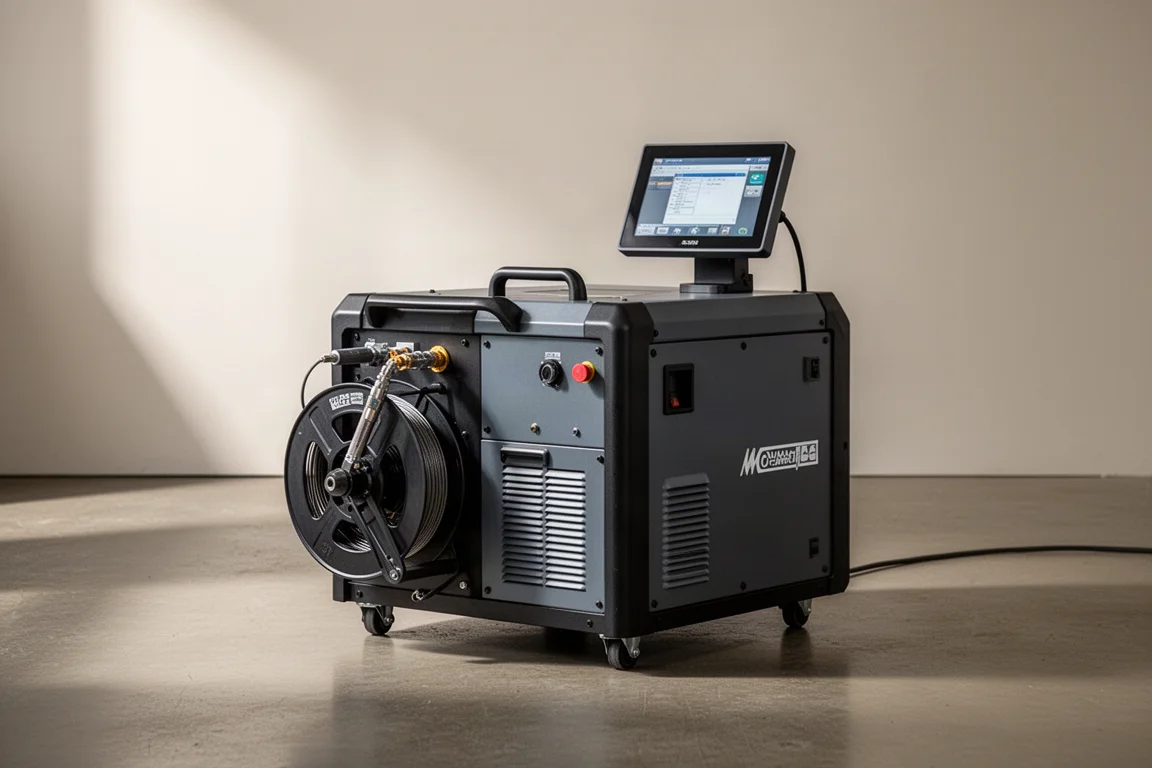
The 800W unit is a couple of inches smaller in each dimension than the 1200W model. One of the biggest improvements is the integrated wire feeder, which eliminates the need for a separate piece of equipment. This makes the machine much better for mobile work and for rolling around a shop.
There is storage for extra drive rolls, and the dual drive roll Swiss feed mechanism handles wire smoothly. The gun is the same design that works well on the 1200W unit and interfaces with the CNC table. Wire feed controls sit right on the gun, which is extremely helpful during operation.
Installing and removing the wire feed is noticeably easier than on competing machines. A hook on the back retains the cable when not in use.
There are a couple of design concerns. The vents on top could allow metal dust to settle into the electronics, and the screen on top is similarly exposed to grinding dust and metal dust. Covering the unit when not in use is a sensible precaution.
User Interface and Ease of Use
The user interface is a standout feature. Having used five different laser welders from four manufacturers, this is by far the best interface of the group.
In standard mode, you select weld, clean, or cut, choose your material such as stainless steel, set the thickness, pick the wire size, and you are ready to go. That is all there is to it.
For more control, you can switch to advanced mode and adjust power, scan width, frequency, and feeding speed. Pulse and tack welding options are also available. Professional mode opens up a large number of parameters for fine-tuning specialty applications.
The value here is that you do not need deep expertise to get good results. You turn it on, set it, and it works.
Welding Performance on Steel
The 800W unit produced a clean, bright weld bead on 16 gauge sheet metal with almost no discoloration on the back side. Bending the joint open from the unwelded side, the weld held without budging at all.
Moving up to 1/8 inch stainless steel, the machine handled it with a slower travel speed but produced minimal color on the back sides. The joint held up well when bent open, showing a solid connection.
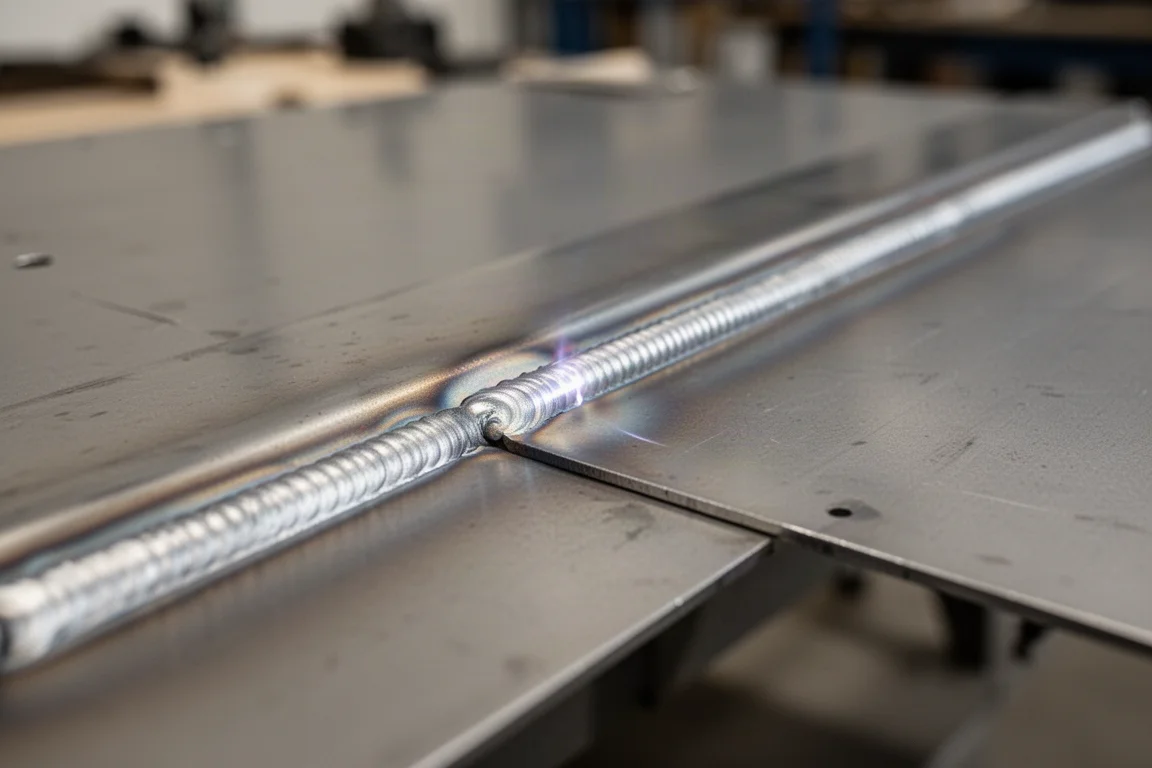
On very thin carbon steel at 0.035 inch, the results were impressive. For anyone making products from thin material, this process offers a low-skill path to high-quality welds.
A butt joint on 1/8 inch carbon steel with a slight chamfer produced a smooth weld with minimal heat tint spread. The root was about as clean as it gets, with a face just barely shy of flush. The built-in settings are well dialed in.
A T-joint on 1/8 inch material was cross-sectioned and etched to inspect penetration. The fusion zone penetrated most of the way through the upper plate, creating an effective throat much larger than the fillet weld size alone.
Welding some leftover trailer frame tubing together, the joint held up when a large truck drove over it. For applications like railings, the flush finish before grinding saves significant time.
Pushing the Limits on Thick Material
At 1/4 inch, the material is really pushing beyond what an 800W unit should handle. Running a single pass fillet weld at the maximum standard setting, the machine crawled along slowly but produced a nice, slick bead.
A fillet weld brake test showed the weld failed through the middle of the throat, which indicates good penetration down into the root and solid fusion into the base of the T-joint. No porosity or cracks initiated the failure. The weld size simply was not large enough to overcome the strength of the base metal, which is typical for thicker material with other processes as well.
The xTool gun design stands out here. Nozzles slide out easily and are keyed so they always come in the right orientation, unlike threaded designs that require reorientation.
An autogenous outside corner joint without filler metal required manual speed regulation but turned out surprisingly well. Running it with filler metal is also an option with a regular nozzle.
Aluminum Welding
Switching to aluminum, the 0.047 5356 wire fed easily. Smaller diameter or softer alloys will require more attention to keep everything straight and feeding well.
On 20 gauge aluminum, the default settings ran a little cold. Turning the power up slightly produced a slick bead that was insanely fast and easy. The hotter settings helped get through the oxide layer, and the fusion was definitely good.
On 1/16 inch aluminum, the factory recommended settings produced a slick bead with some distortion but no suck back or punch through. A brake test showed fusion on both sides, but the weld failed through the weld itself. For cyclically loaded applications welded on one side, this would not be comfortable. Welded on both sides, the advantage is much bigger.
On 1/8 inch aluminum, some black soot appeared, which is typical of MIG welding with 5356 and usually brushes right off. The weld was continuous and looked good. A test showed fusion on both sides but not a ton of meat. For decorative or ornamental work, this would be totally acceptable. For cyclically loaded structures, TIG welding would still be the better choice.
Overall, an 800W unit performing this well on aluminum is impressive.
Laser Cleaning and Weld Prep
The cleaning mode worked really well on rusty material. There is always a little bit of texture with laser cleaning, but that is the nature of the process.
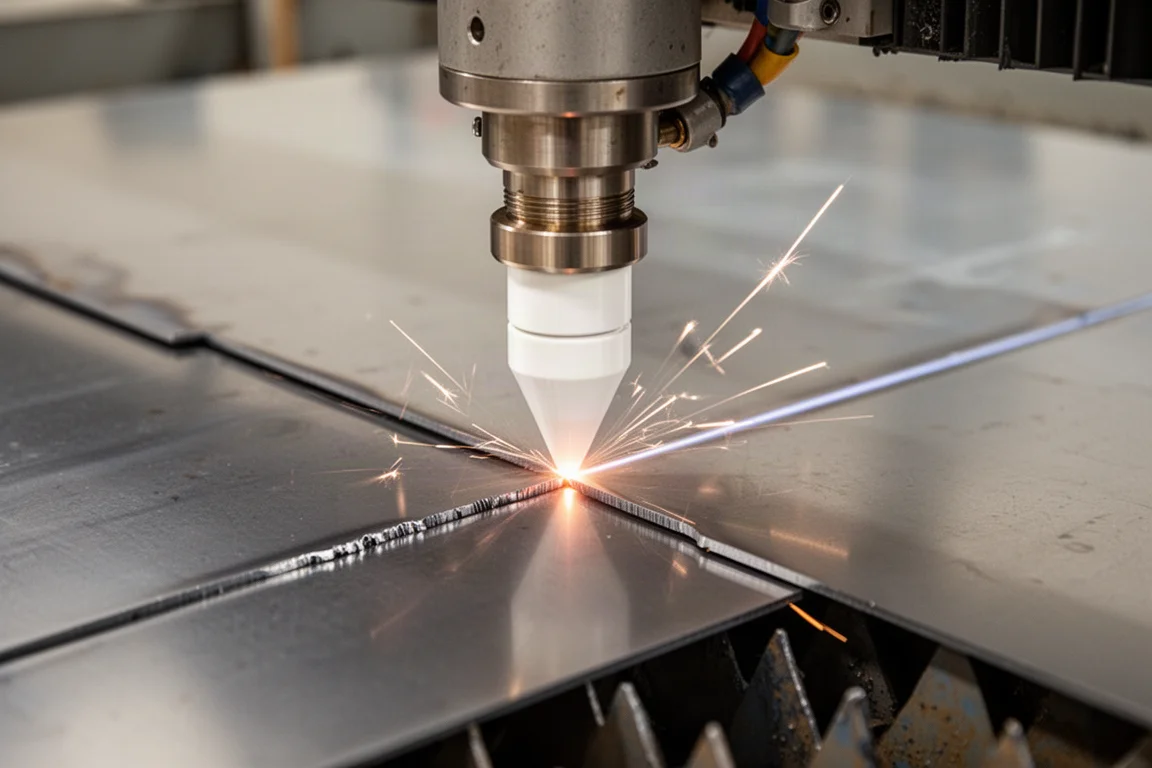
A particularly useful application is weld prep on mill scale. By hooking the edge of the nozzle on the edge of the plate and using it as a guide, you can strip mill scale in one specific area right along the edge of a joint. This works whether you are preparing for a laser weld or a MIG weld.
Cutting Performance
With the cutting nozzle and compressed air, the 800W unit cut through 3mm aluminum with no problem and good edge quality, with a little dross underneath to clean up.
On mild steel, the same thickness was no issue. The cut quality was good, probably a little better than a plasma cutter, with very little dross.
On very thin sheet metal, the cut was clean and could be handy for artistic work. The ergonomics of a plasma cutter gun are slightly better, but the cut quality here was excellent.
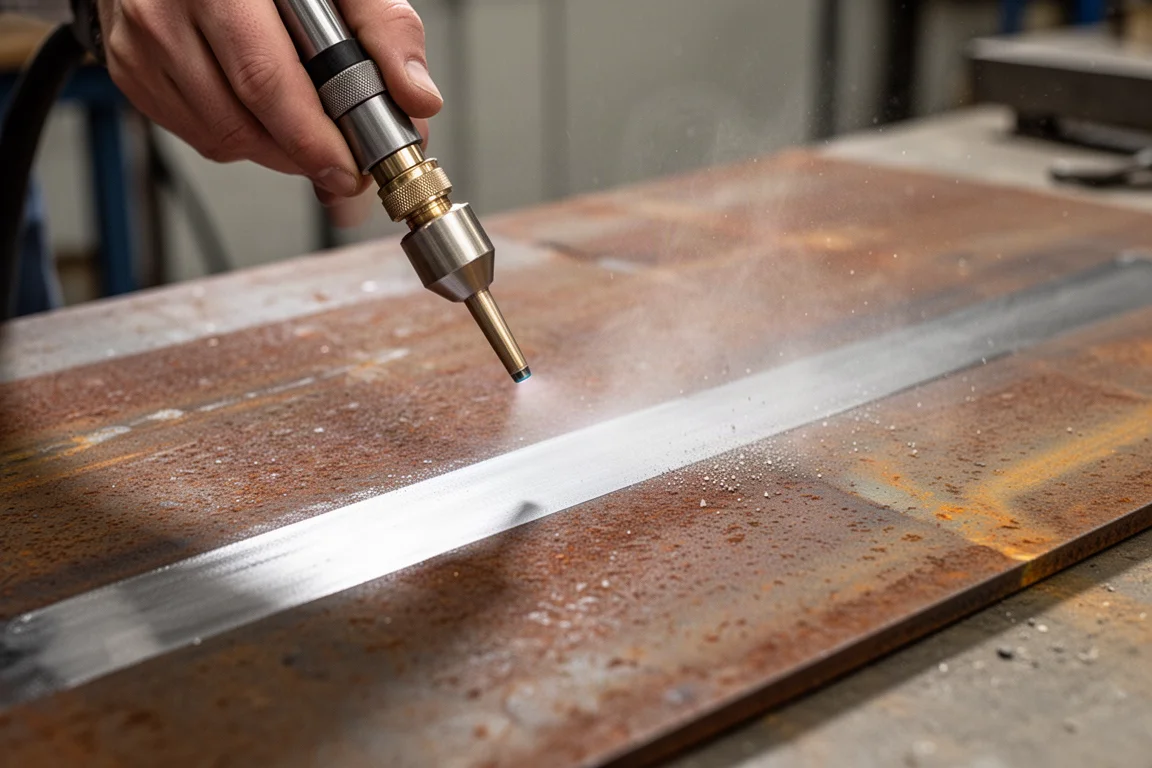
Using the save gas nozzle with a ceramic telescoping part that rides on the material, the air blasts right through and produces a burr-free cut with essentially zero dross.
Cutting out a full part set from 14 gauge material produced the best cut quality seen from this machine. Fine text detail came out well, with no dross or burrs. The same program on 12 gauge material also came out really nice.
At 1/4 inch thick, compressed air cutting met its match. Switching to oxygen cutting, which works more like a cutting torch, allowed the machine to cut through. The process preheats, pierces, and then cuts. The cut quality was good in some areas and not as good in others, suggesting the process window is right at the edge. Dialing in gas flow and speed would tune it up further.
CNC Cabinet Integration
The CNC cabinet integration is well engineered. A different nozzle with a capacitive sensor provides torch height control, and an adjustment for focus plus pins interface with the cabinet to ensure alignment.
Switching the machine over takes well under a minute. Once plugged in and turned on, the laser welder goes into controlled mode. It is not a pass-through design like some competitors offer.
The clamps and pass-through allow material longer than the bed to be used. Nesting parts in already-used material is easy, which is great for one-off projects.
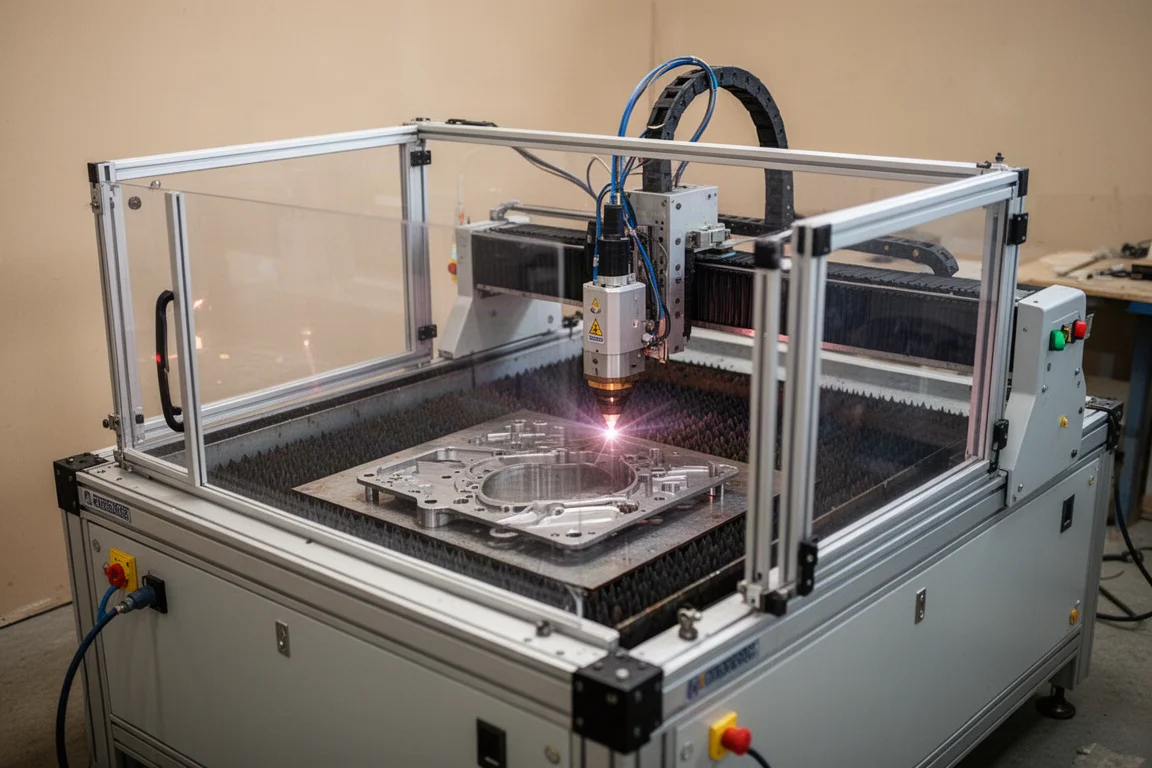
Real-time cut speed on thin stainless was impressive, with precise, clean cuts and only a very small bur. Cutting 1/8 inch stainless with the standard nozzle at slightly low air pressure still produced a nice cut with minimal dross.
Buying Advice
The xTool MetalFab 800W is a real piece of equipment that can be used in professional settings. Laser equipment does require more care than traditional welding machines, but the capability is absolutely there.
For those working primarily with sheet metal, 800 watts is more than enough. That is where laser welding offers the biggest advantage. For thicker material ranges where productivity and speed are critical, the extra wattage of the 1200W model would provide more throughput, since the 800W unit travels noticeably slower on thick material.
The machine successfully welded 1/8 inch material across stainless and carbon steel, handled thin aluminum impressively, cut cleanly through 14 and 12 gauge material, and integrated smoothly with the CNC cabinet. The user interface is the best available, making it accessible even without deep welding expertise.
Conclusion
The xTool MetalFab 800W is genuinely impressive. It is not a toy for hobbyists, though hobbyists will certainly appreciate it. It is a professional piece of equipment that makes laser welding, cutting, and cleaning accessible at a lower price point than the 1200W model.
For sheet metal work, 800 watts is more than enough. The machine produces clean welds, precise cuts, and effective cleaning with minimal skill required. The integrated wire feeder and excellent user interface make it the machine to beat in this category.
Product link
View more details for xTool MetalFab 800W
This product is mentioned in the review. Check the specifications, options, and compatibility before buying.
View more details for xTool MetalFab 800WFurther reading
Related Reviews
Fabrication Tools
X-Tool Metal Fab Review: A Practical Look at Cutting and Welding in One System
A hands-on look at the X-Tool Metal Fab fiber laser, covering real cutting and welding performance on 1/4 inch steel.
Welding Equipment
Xlaserlab X1 Pro Laser Welder: A Real Fabrication Project Review
A practical look at using the Xlaserlab X1 Pro laser welder to build a complete fabrication project, covering weld quality, ergonomics, and productivity.
Laser Cutting & Welding
xTool MetalFab: Common Questions Answered Before You Buy
A practical look at the xTool MetalFab laser cutting and welding system, covering cutting detail, software ease, welding performance, and real-world trade-offs.