Welding Equipment
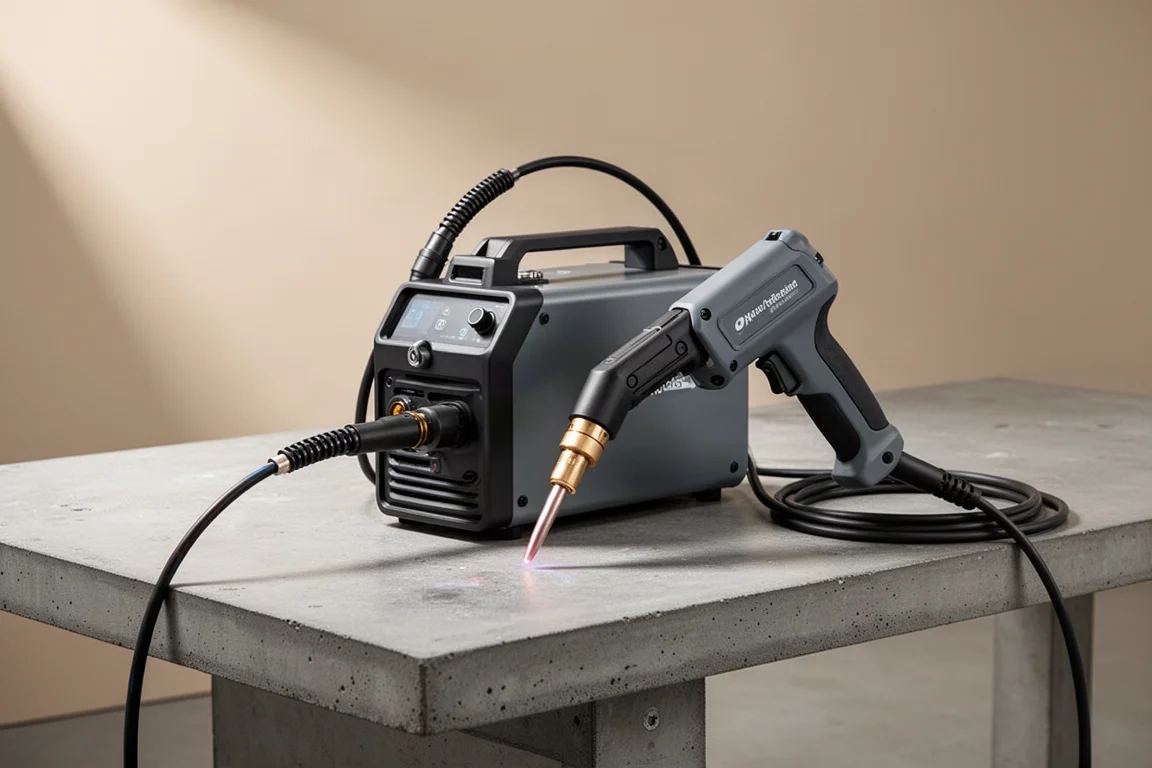
Xlaserlab X1 Pro Laser Welder: A Real Fabrication Project Review
A practical look at using the Xlaserlab X1 Pro laser welder to build a complete fabrication project, covering weld quality, ergonomics, and productivity.
Introduction
Laser welding has moved from trade show demos into real workshops, and the Xlaserlab X1 Pro is one of the machines making that transition possible. Most demonstrations show perfect bench coupons, but the real test is building an actual project. This review covers what it is like to use the Xlaserlab X1 Pro for a complete fabrication build, from fit-up and welding to cutting and final assembly.
The project in question was a rolling cart designed to hold the machine itself, the wire feeder, all cables, and a gas cylinder. It is a practical build that exercises a wide range of joints, positions, and techniques. The goal was to see whether the laser welder could handle real work, not just practice pieces.
First Impressions and Setup
Getting started with the Xlaserlab X1 Pro requires some adjustment. Fit-up matters more than with MIG or TIG welding. Clean, tight joints make a significant difference in weld quality. Using a saw to cut square tubing to precise lengths helps a lot. The 16 gauge square tubing used for this project fit together well, which is ideal for laser welding.
One of the first challenges is tracking the joint. Unlike MIG or TIG welding, where the weld puddle is clearly visible, laser welding requires a broader view. There is no fillet to guide the wire, so the welder has to rely on heat tint to judge whether the weld is balanced on both sides of the joint. This takes practice, but each joint gets easier.
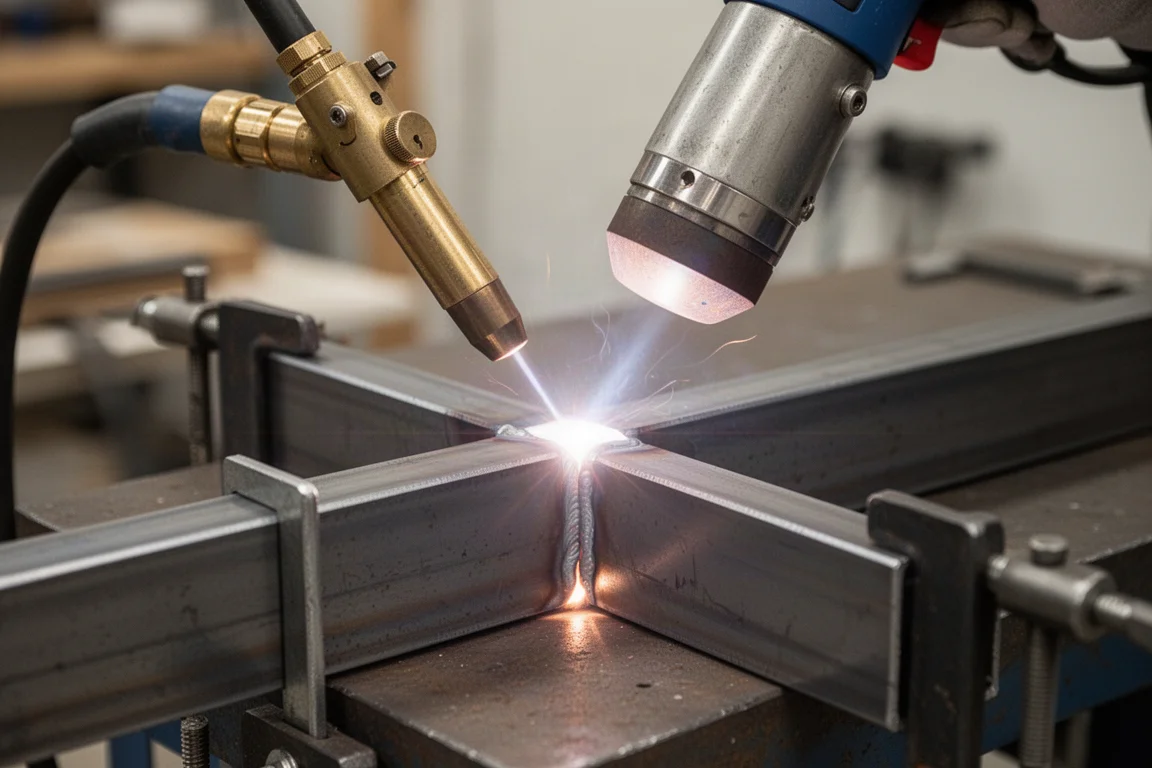
The machine comes with spare protective lenses, which is important because the lens can burn if the gun angle is wrong and the beam reflects back. This happened twice during the project. Replacement lenses are available, and with proper gun handling, the lens can last a long time.
Weld Quality and Finish
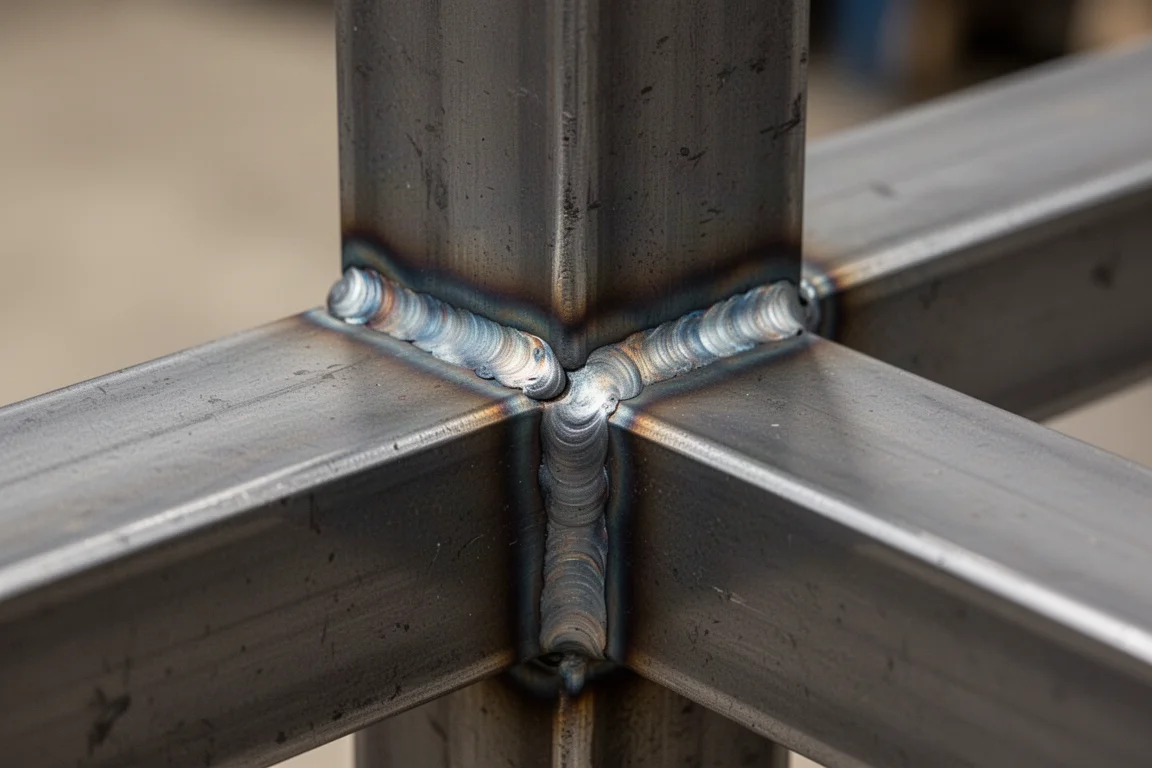
The Xlaserlab X1 Pro produces remarkably clean welds on 16 gauge tubing. Inside fillet welds are ideal for this machine. They come out with no spatter and require no post-processing. The finish is smooth and consistent, which is a major time saver compared to MIG welding.
Outside corners present a different challenge. Mitered corners leave little material, so autogenous welding does not work well. Switching to a nozzle with guides for outside corners and wire feed solved the problem. This nozzle tracked the joint well and produced good results.
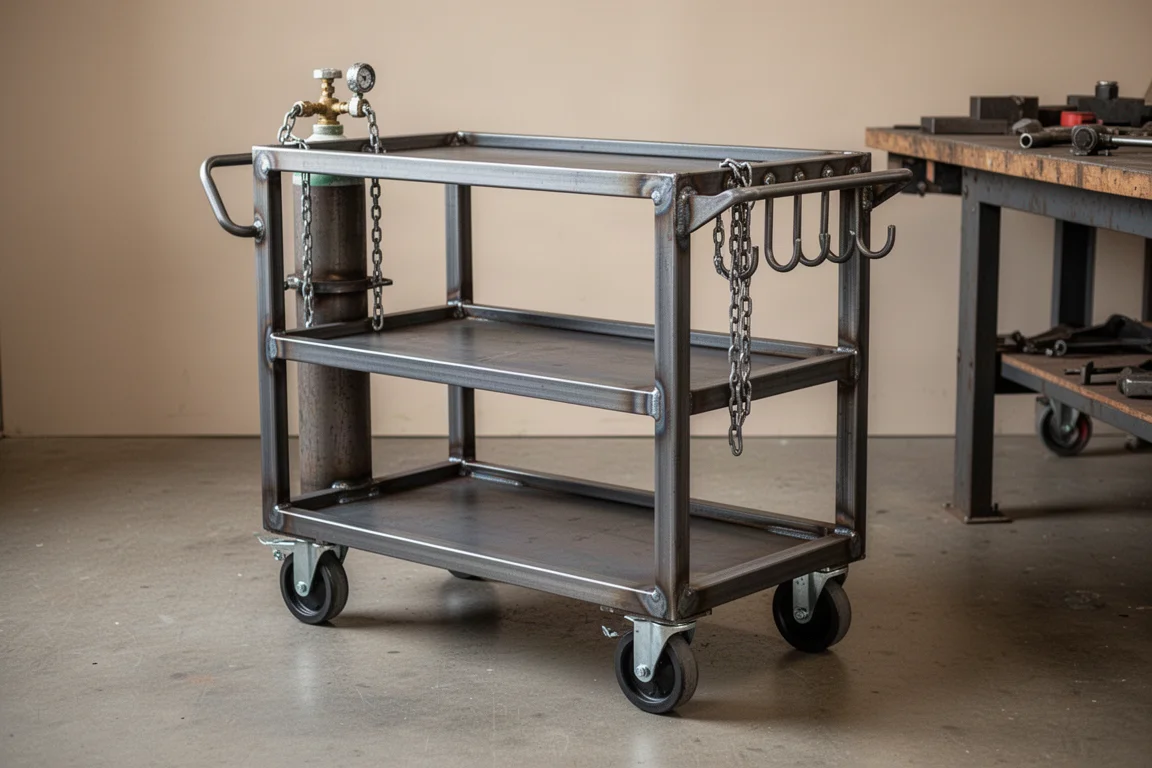
One notable advantage is the low distortion. The cart’s upper and lower tiers joined together with a nearly perfect fit, which suggests less heat input and distortion than other processes. There was still some welding distortion, but noticeably less than expected.
The welds also showed good penetration and strength on lighter gauge material. Intermittent welds on the back side of joints added rigidity without excessive heat. The process feels robust and reliable for this type of work.
Ergonomics and Handling
The biggest limitation of the Xlaserlab X1 Pro is the ergonomics of the gun. The welder has to think carefully about positioning because stray laser light can reflect off surfaces. The gun should never point toward the operator, and it must be held at a drag angle. This requires planning, especially on projects that cannot be rotated easily.
For this cart build, the project could be rolled and repositioned, which made access much easier. On a fixed structure, TIG welding might be easier to manipulate in tight spots. The long gun also makes wrapping corners tricky. Moving quickly is necessary, and it takes practice to get consistent results.
A special welding helmet or glasses are required when working with lasers. Standard welding helmets are not sufficient. Safety with stray laser light is a serious consideration.
Cutting and Cleanup
The Xlaserlab X1 Pro also includes a cutting feature. Switching to high-pressure compressed air at about 90 PSI allowed clean cuts through the steel. The cutting feel is different from a plasma cutter or cutting torch, and reading cut speed takes some getting used to. Sparks bouncing up indicate the speed is too fast.
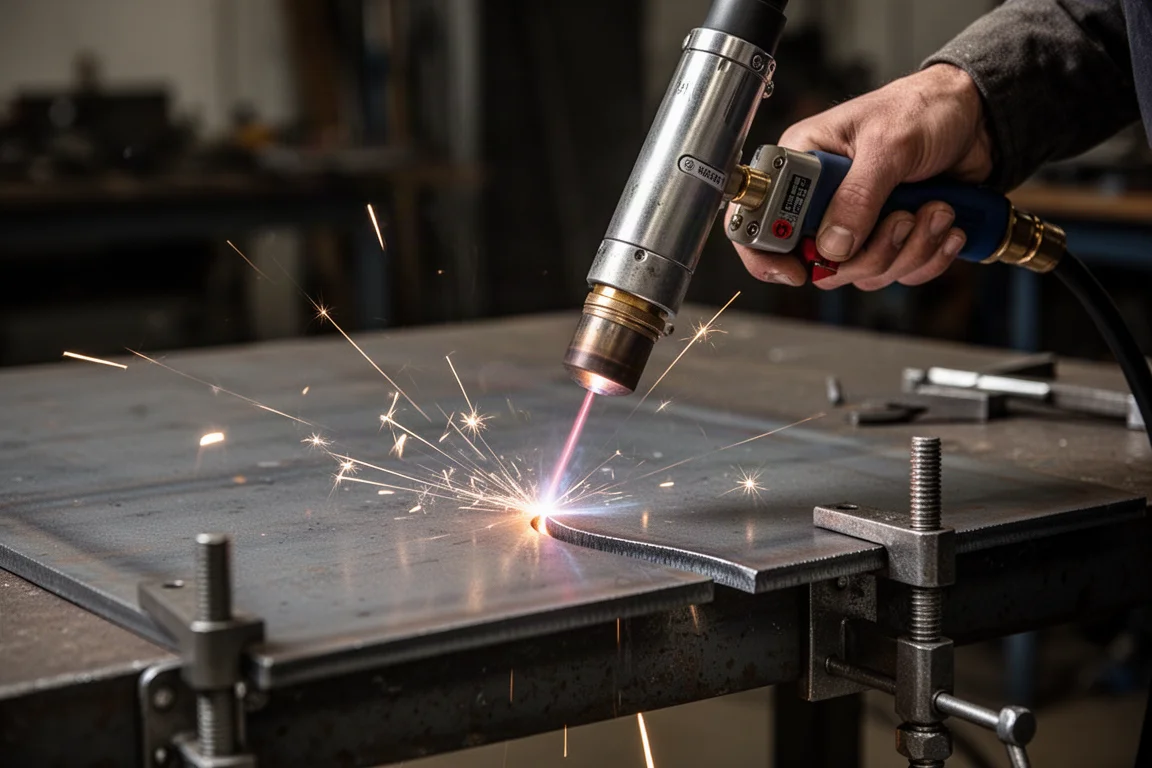
The beam extends past the cut more than with a plasma cutter, so caution is needed with what is behind the workpiece. Small curves and notches were cut cleanly, with only light dross that cleaned up quickly. The cutting capability adds versatility to the machine.
Productivity and Practical Use
Productivity with the Xlaserlab X1 Pro is high. Welds are fast, and the lack of spatter and minimal cleanup mean less time between joints. The cart build progressed quickly once the initial learning curve was overcome. By the end of the project, welds were coming out consistently good.
The machine also handles sheet metal parts well. Laser-cut parts with tab and slot designs are an ideal fit for laser welding. Small fillet welds on sheet metal come out exceptionally clean.
Designing the project around the process also pays off. Instead of a large weld on the bottom of an axle, small plates with fillet welds on both sides gave a cleaner look and adequate strength. This shows how laser welding can influence design choices.
Buying Advice
The Xlaserlab X1 Pro is a capable machine for workshops that want to add laser welding to their capabilities. It excels at clean fillet welds on lighter gauge material, offers a useful cutting mode, and delivers high productivity with minimal cleanup. The learning curve is real, especially for joint tracking and gun ergonomics, but it is manageable with practice.
The machine is best suited for fabricators who work with thinner materials and want a process that produces clean, consistent welds without heavy post-processing. It is less ideal for heavy structural work or situations where the workpiece cannot be repositioned easily. Safety equipment and spare protective lenses are essential accessories.
Conclusion
The Xlaserlab X1 Pro proved itself on a real fabrication project. It handled a variety of joints, positions, and tasks, from fillet welds to cutting, with impressive results. The welds are clean, distortion is low, and productivity is high. The main trade-offs are the learning curve and gun ergonomics, but these become manageable with experience.
For anyone considering a laser welder for actual shop work, the Xlaserlab X1 Pro is a strong option. It turns a demo tool into a practical fabrication machine.
Product link
View more details for Xlaserlab X1 Pro
This product is mentioned in the review. Check the specifications, options, and compatibility before buying.
View more details for Xlaserlab X1 ProFurther reading
Related Reviews
Welding Equipment
Berger 135 MP Multi-Process Welder Review: A $120 Flux Core, Stick, and TIG Machine
A practical look at the Berger 135 MP, a budget multi-process welder that handles flux core and stick welding with surprising competence for the price.
Welding Equipment
Hobart Handler 140EZ Review: A Simple MIG Welder for DIY Projects
A look at the Hobart Handler 140EZ, a 120-volt MIG welder with an easy set mode that makes it approachable for hobbyists and first-time welders.
Welding Equipment
HTP Freedom 250 Pulse MIG Welder Review: A Solid Performer for Controlled Welds
A practical look at the HTP Freedom 250 pulse MIG welder, covering how pulse transfer works, where it shines, and who should consider it.