Fabrication Tools
X-Tool Metal Fab Review: A Practical Look at Cutting and Welding in One System
A hands-on look at the X-Tool Metal Fab fiber laser, covering real cutting and welding performance on 1/4 inch steel.
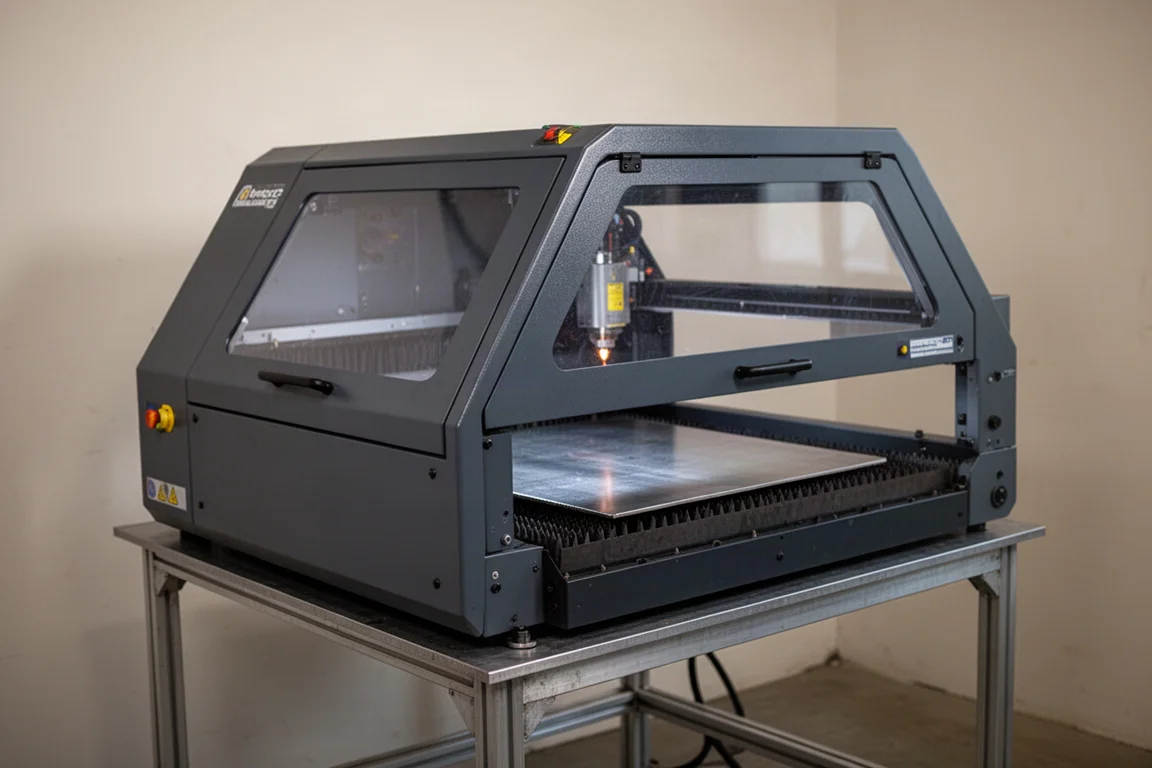
Introduction
Sometimes the simplest tools make fabrication a whole lot easier. When working on a welding table, lifting material up a little bit is often necessary, whether to weld around a joint or to line a few pieces up. It does not always need to be precise, but adjustability helps. Stacking drops of material can work, but hitting the right height is often difficult. Precision shims are nice and extremely accurate, but they are not always needed, and something faster to move is often more practical.
The Idea Behind the Project
The goal was a support that could hold a piece of bar stock across a frame at different heights, with quick adjustment. The design uses a piece of half-inch round bar that slides up through grooves incrementally. The bottom position sits right at 1 inch, increasing by 1/8 inch per groove. The next row above starts at 2 inches and moves up by 1/8 inch each step. The whole thing is made with a tab and slot design, which makes assembly and welding straightforward.
The parts are made from 1/4 inch thick carbon steel and cut on the X-Tool Metal Fab fiber laser. One of the standout features of this machine is that it lets you use every little bit of the material. A test cut can be placed in a small unused area of the sheet, thanks to a built-in camera system. A 1 inch square can be dragged into that spot on the screen, and the machine cuts it out exactly as shown.
Cutting Performance on 1/4 Inch Steel
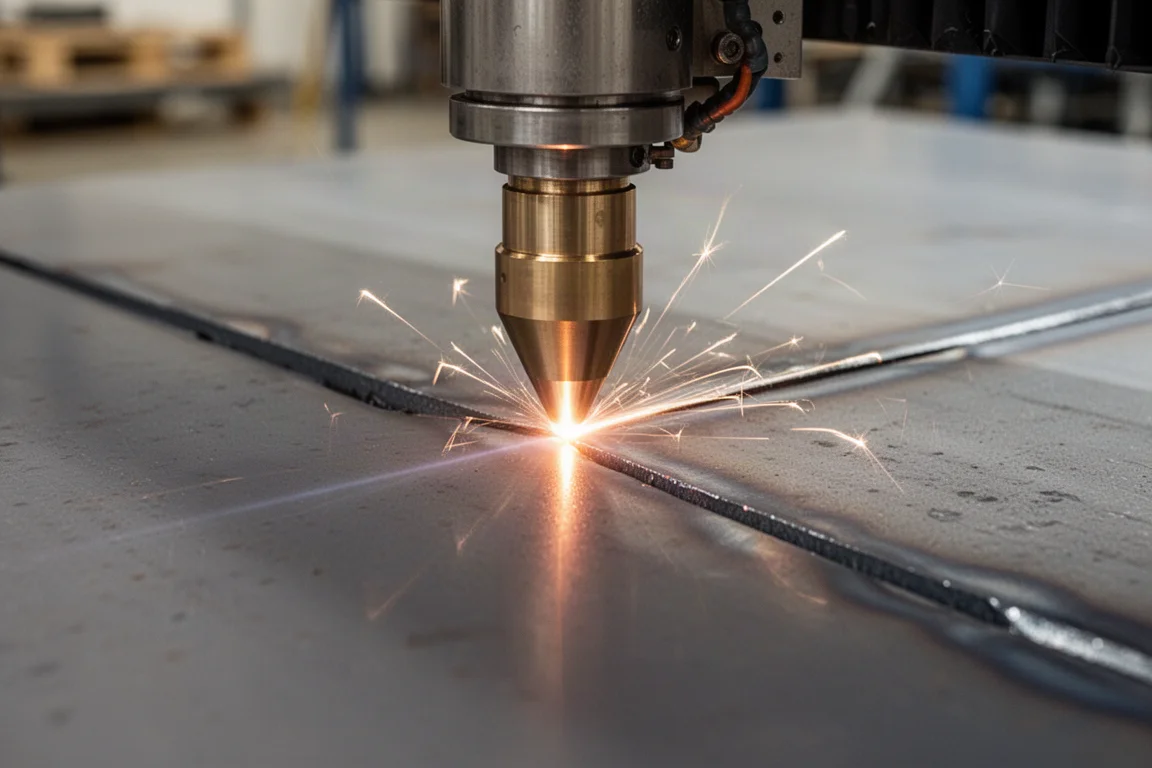
Running a test cut gives a good picture of the edge quality before committing to a larger piece. In this case, the edge quality looked really good. Oxygen cutting was not a favorite at first, largely because calibration took some practice. Once that improved, the quality became a huge selling point.
The machine uses oxygen as the assist gas rather than high-pressure compressed air or nitrogen. The oxygen reacts with the steel, similar to a cutting torch, allowing for more thickness and more speed than the laser alone could achieve. One challenge is a slightly wider kerf that has to be compensated for, but that is manageable with practice.
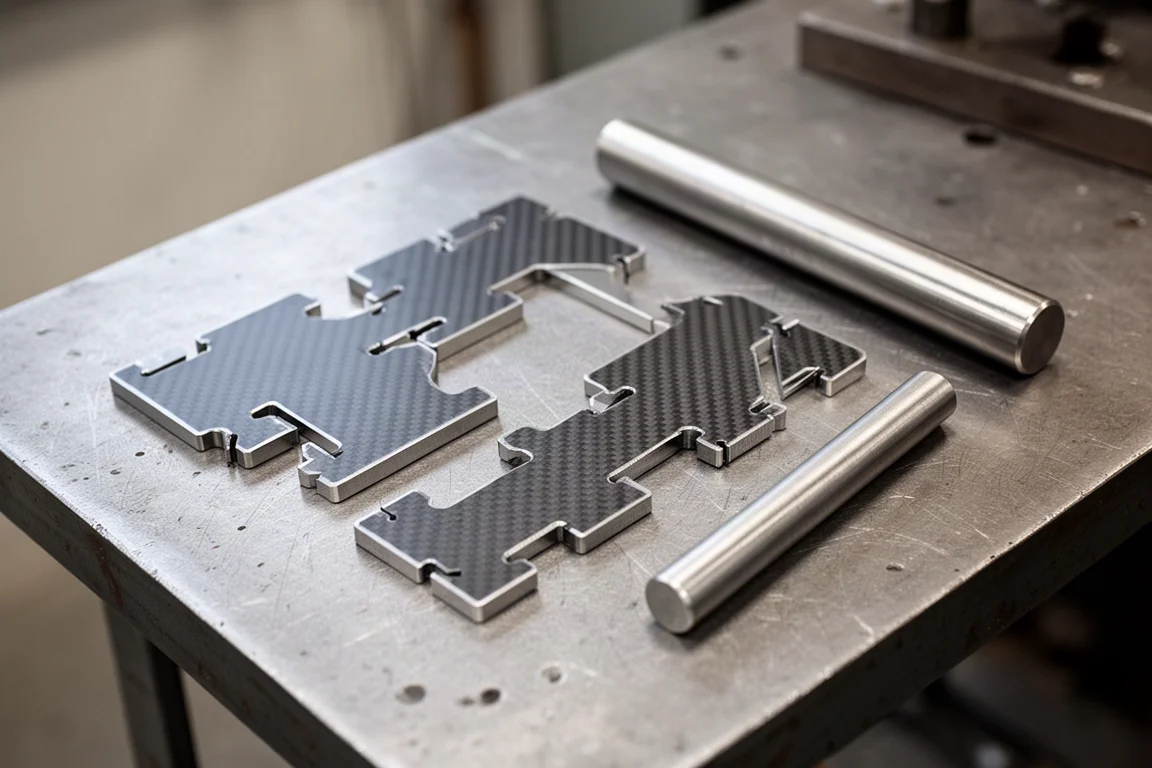
The cut quality on the parts was overall really impressive. There was a little bit of dross to clean off, but not a lot to get the parts in shape. One minor issue appeared when a nozzle was slightly out of calibration, causing some roughness on one side of a cut. That is the kind of thing that is easy to correct on the next run.
Designing the Adjustable Stand
The first version of the stand had slots that were a little too tight. Pressing the parts together buckled them slightly. Also, when the round bar was placed in the grooves to test the concept, it worked, but the bar was a little too easy to roll down. Deeper grooves were needed.
The real advantage of having this capability in a small machine that fits in a small shop or garage is the ability to redraw the part and try again right away. Changing a couple of dimensions resizes the whole base, and one more dimension spreads the holes out a little further and makes the grooves deeper. The updated files were exported, loaded in, and cut again.
The second run came out much better. After a quick deburr with a grinder, everything sat nicely and fit perfectly in the tab and slot joints. The pin drops into the slot at 1 inch above the table, and it can index up through 1 1/8, 1 1/4, 3/8, 1/2, and so on, clear up to 1 7/8. For higher positions, the second row covers 2 through 2 7/8 inches.
Switching to Handheld Laser Welding
Switching the X-Tool Metal Fab from machine operations to handheld operations is made easy. Changing over to the laser weld tube is done without tools, similar to adjusting a bicycle seat. Installing the wire feeder is just as simple. On the settings screen, the material and thickness are selected, and the wire feed can be enabled. That is all it takes to start welding.
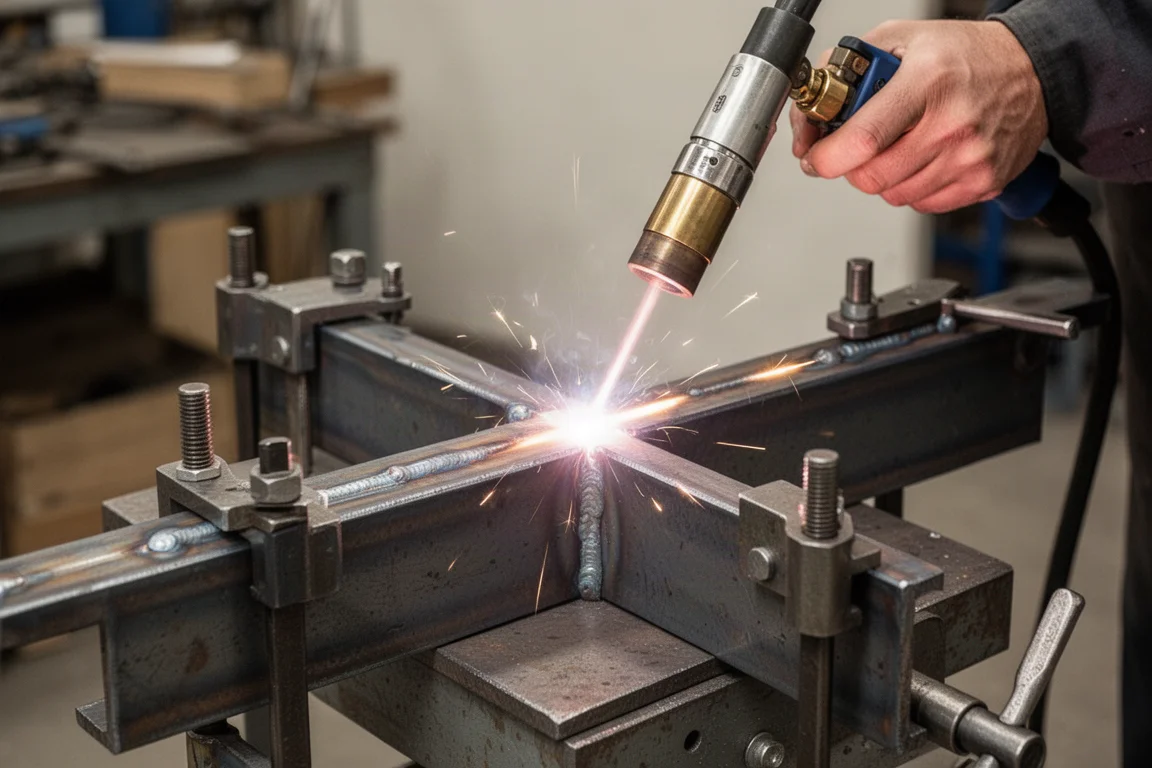
The workpiece was clamped to a square to keep it from warping too much during the weld. The real-time weld speed is noticeably slower than on thinner material, which is the trick used to penetrate deeper. This is a 1200 watt system, so welding 1/4 inch steel is pushing the upper limits, but it handled the job pretty well.
Some contamination appeared in the middle section of the weld, with a few small sparks and less smoothness. Looking at the actual weld, the sections over the tabs were picture perfect, but the areas between them showed more contamination and oxidation. The issue was likely oxide picked up from the cut edge, meaning a little more edge prep was needed. Welding on both sides produced basically the same result. The good sections had small silicon islands on the surface, but the middle showed a little porosity, confirming contamination from the cut edge.
With MIG welding, the filler metal would include deoxidizers that clean that out, so it would likely not be an issue. Laser welding on thinner material that was not cut with oxygen has not presented this problem before. It is a learning point, but in reality, the weld is not that bad and will definitely hold up for this kind of project.
Final Assembly and Testing
In the end, the stand turned out pretty well. It starts at 1 inch and ratchets clear up, and the pin can be pulled out and placed in the 2 inch range. It should work really well for lifting material off the welding table.
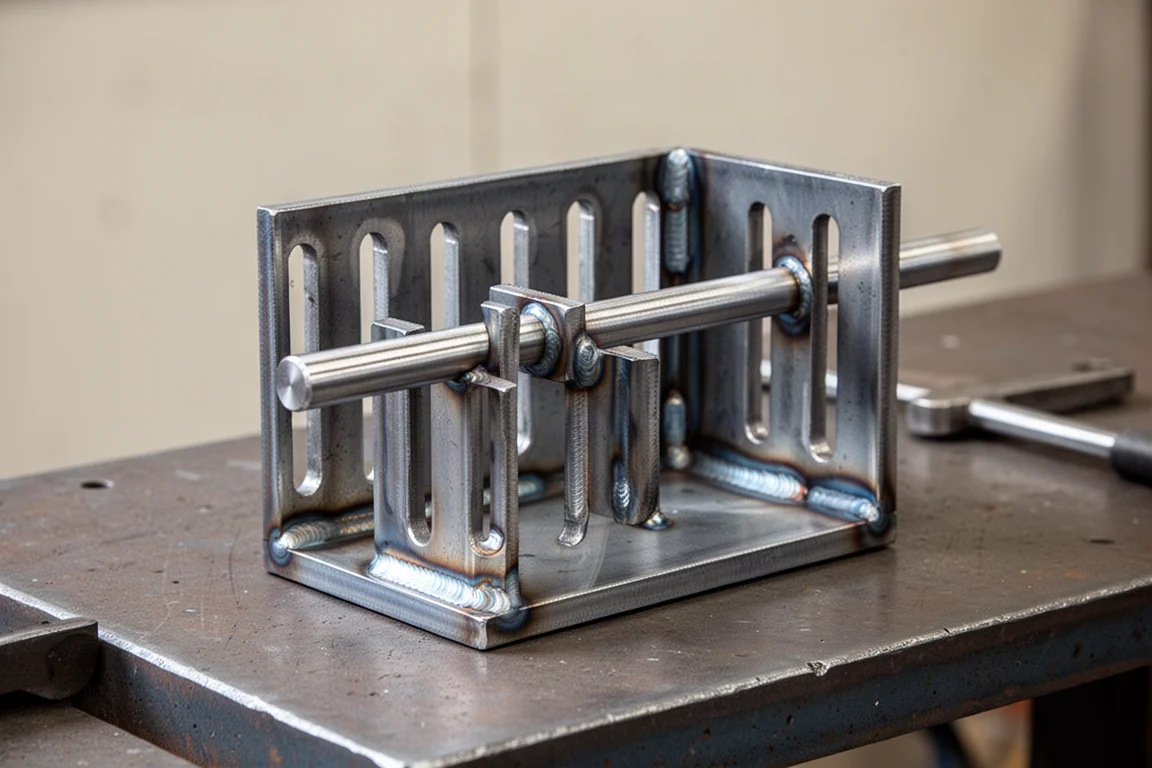
The X-Tool Metal Fab system proved capable of both cutting and welding 1/4 inch steel in a single session. The ability to iterate quickly on a design, cut new parts, and weld them together the same day is a genuine advantage for small shop fabrication.
Conclusion
The X-Tool Metal Fab is a versatile system for small shops and garages. It cuts thick steel efficiently, allows precise placement of test cuts using the built-in camera, and switches to handheld laser welding without tools. The main learning curve involves calibration and edge prep, but the results are strong. For anyone doing regular fabrication work, this machine offers a practical combination of cutting and welding capability in a compact footprint.
Product link
View more details for X-Tool Metal Fab
This product is mentioned in the review. Check the specifications, options, and compatibility before buying.
View more details for X-Tool Metal FabFurther reading
Related Reviews
Plasma Cutters
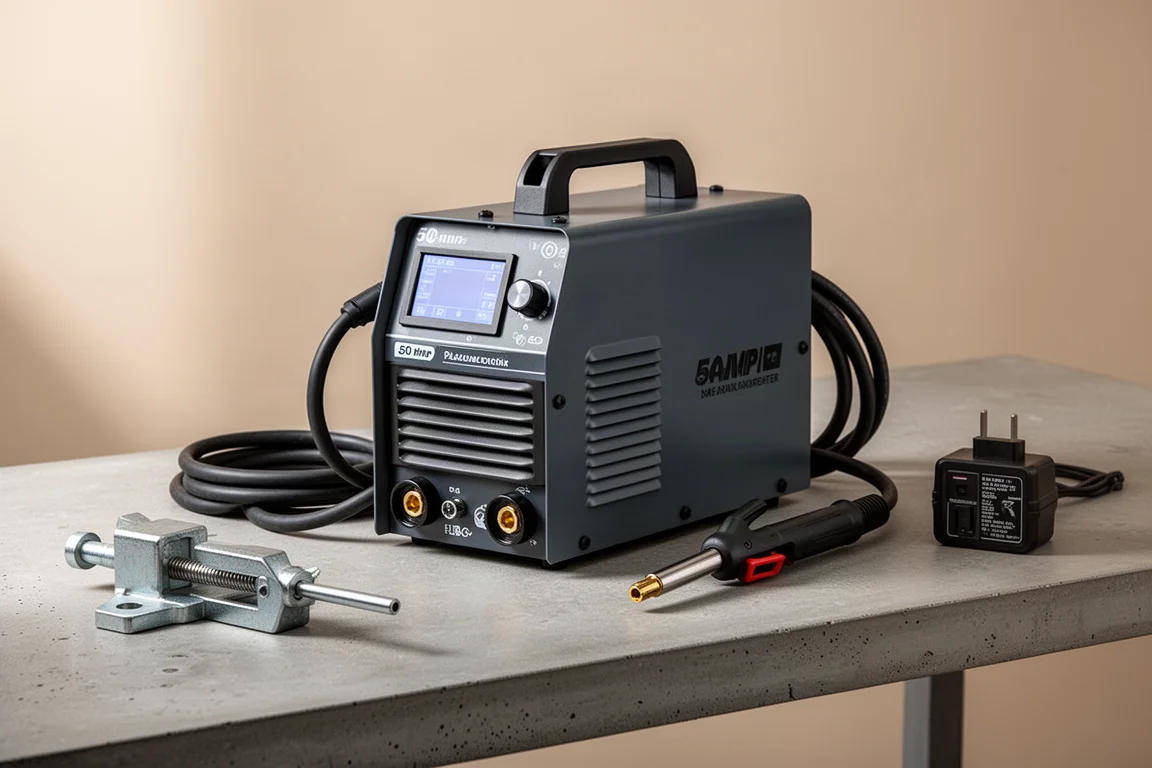
BestArc BTC500DP Pro Review: A Budget 50-Amp Plasma Cutter That Surprised Us
We tested the BestArc BTC500DP Pro on steel, aluminum, stainless, and expanded metal. Here is our honest take on this compact, app-connected plasma cutter.
Welding
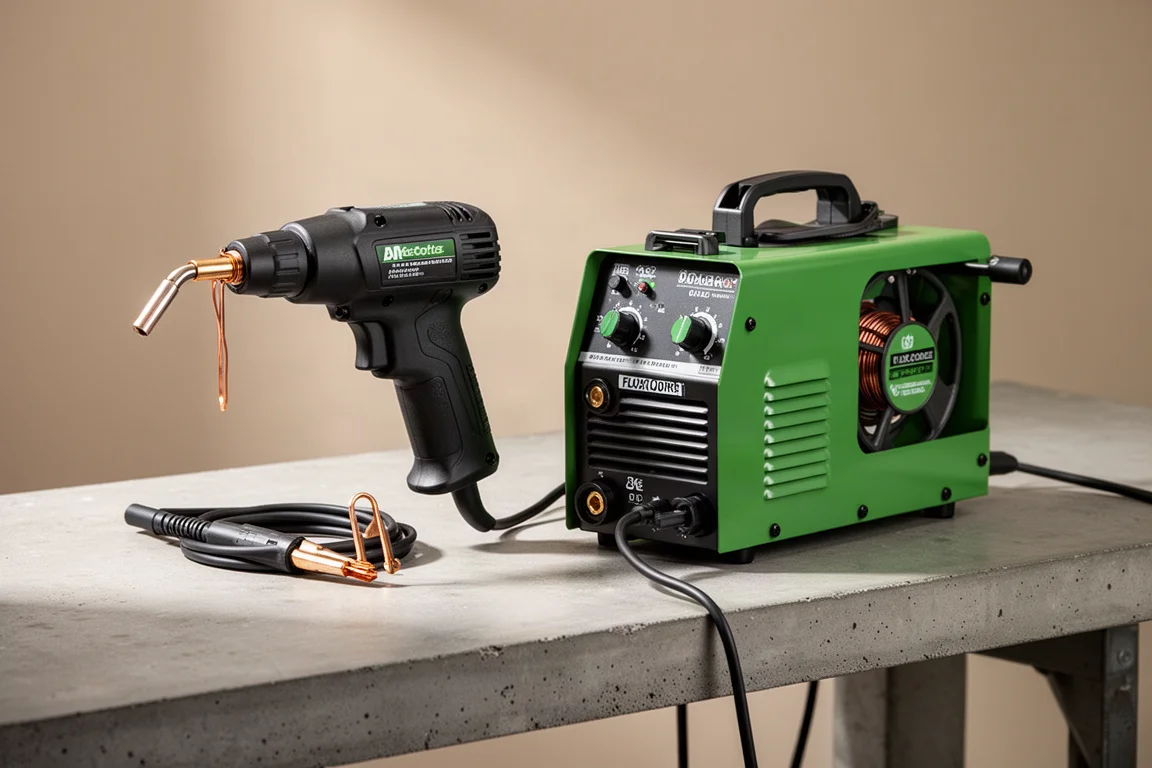
Budget Stick Welder vs Flux Core: What Beginners Should Know
A practical look at a sub-$60 drill-style stick welder and why a flux core machine may be the better starting point for home repairs.

Laser Engraving
Excel Laser HD1 Pro and Ultra: A First Look at the Dual-Source Hybrid
A practical look at the Excel Laser HD1 Pro and Ultra, two dual-source laser machines that combine diode and fiber capabilities in one system.