Bike Pedals
Wolftooth Alt, Control and Delete: Adjustable Q-Factor SPD Pedals Compared
Three SPD-compatible pedals with an adjustable axle that sets Q-factor at 55, 57 or 59 mm, plus guidance on choosing between the Alt, Control and Delete.
Introduction
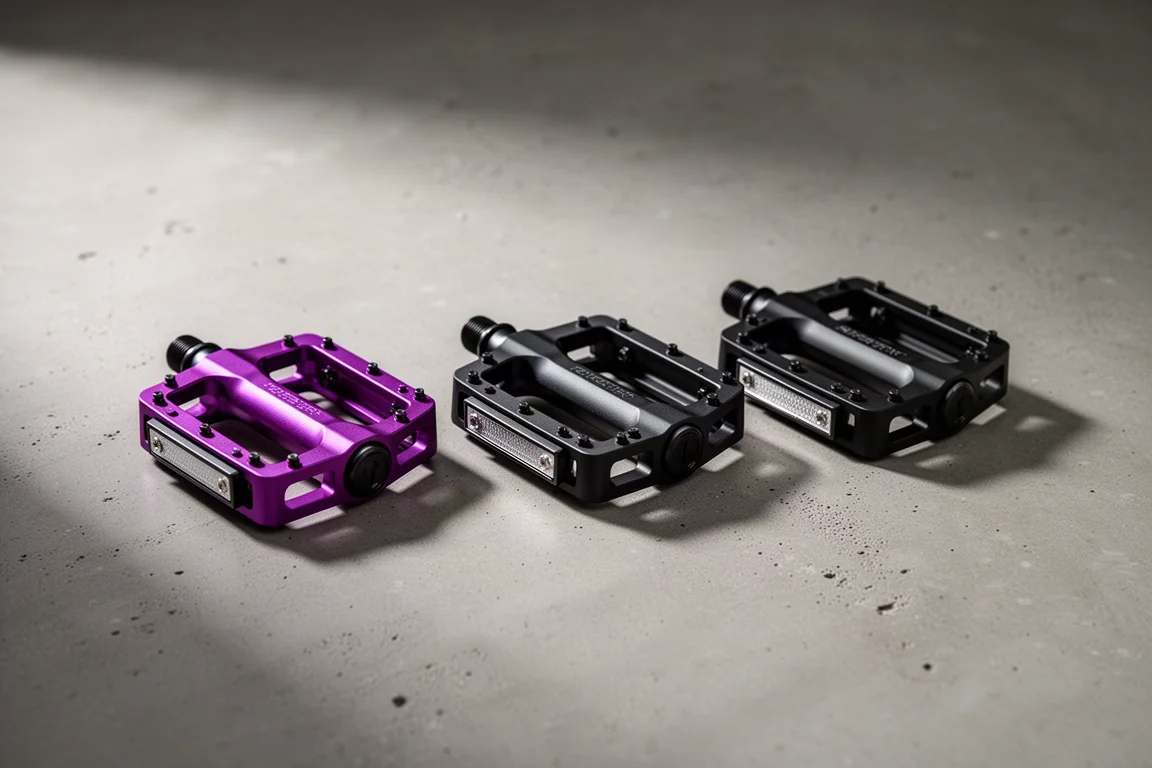
Wolftooth’s latest SPD-compatible pedals do something that has been surprisingly difficult to find in the mountain bike and gravel world: they let you change your stance width without changing your shoes, your cleats or your crank setup. The Alt, Control and Delete share an axle system that moves the pedal body outward in defined steps, giving riders a choice of 55 mm, 57 mm or 59 mm of Q-factor.
That matters most to riders who have worked out, or been told by a fitter, that their feet sit too close together. This guide covers what the adjustment actually changes, how the three models differ, and which one suits which kind of riding.
Why Stance Width Matters More Than You Think
When the pedals sit too close together, the foot tends to roll outward and load the outside edge. That shows up first as pressure along the outer side of the foot, and it is one of the reasons riders go looking for wider fitting shoes. Pushing the cleat inboard can buy a few millimetres of extra width, but that approach has limits.
For taller riders, and for riders with tibial varum, where the shin bone bows outward, the feet often need to sit further apart than cleat position alone can deliver. Insufficient stance has also been associated with saddle sores, genital numbness, knee pain, neck and shoulder discomfort, and numb hands. If any of those sound familiar, a wider stance is worth investigating before assuming the problem lies elsewhere.
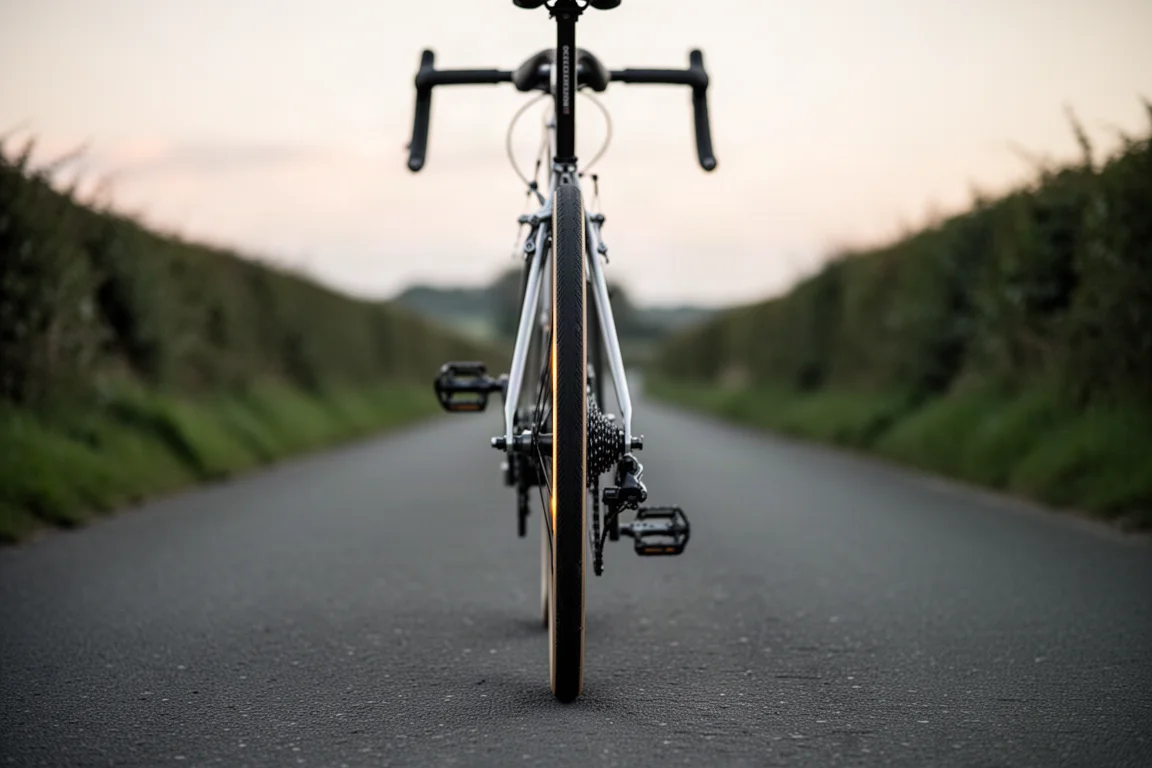
On the road side, there have been workarounds for years: long-axle pedals add around 4 mm of stance, thin washers add roughly another 2 mm, and axle replacement systems can push the feet out further still. Mountain bike and gravel riders, who use a recessed cleat, have had far fewer choices. The SQ Lab 511 has been one of the few wider-stance options, but its bearing surfaces, its tendency to develop play, and its finishing have been long-standing weak points.
How the Wolftooth Adjustment System Works
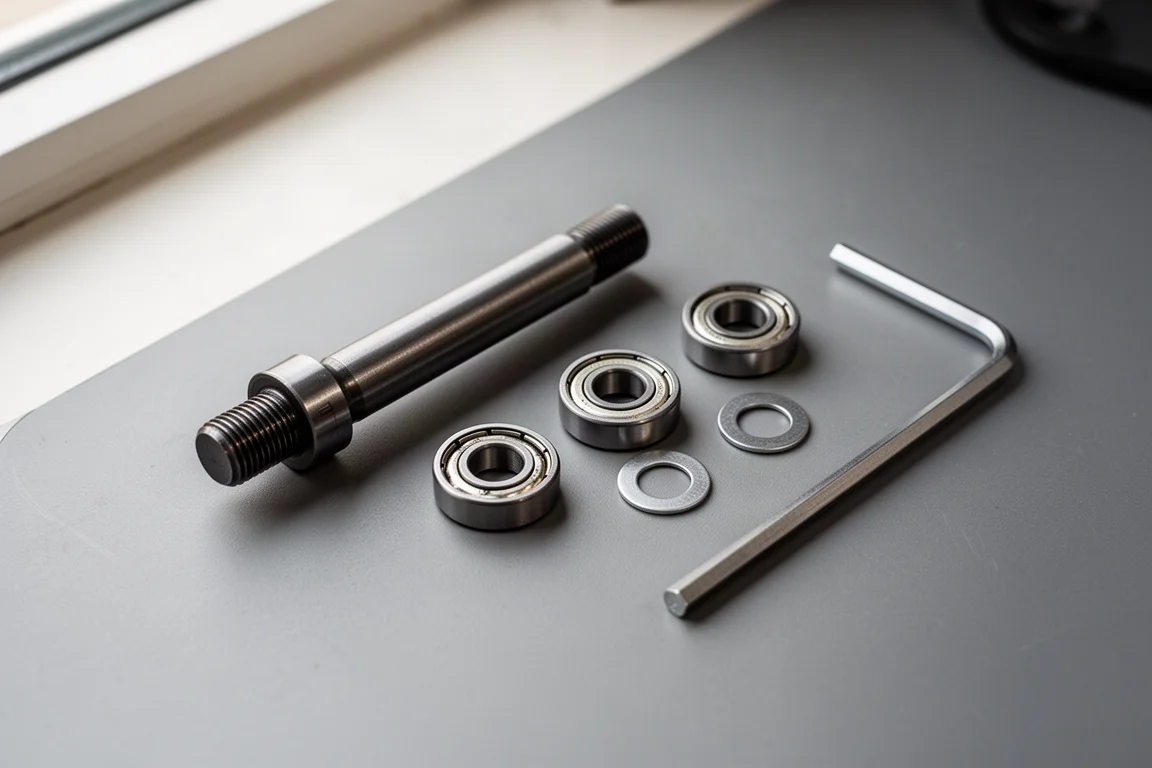
The Alt, Control and Delete all use the same adjustable axle design, so the procedure is identical across the range. A 6 mm Allen key removes the end cap, then the axle retention bolt comes out and the axle and bearings slide free. An 8 mm Allen key pushes the bearings and spacers out of the pedal body. There is no proprietary tool involved, and nothing about the process is delicate enough to require a workshop.
Stance is set by where two thin washers sit relative to the three cartridge bearings. Both washers outboard gives the widest setting at 59 mm. Both washers inboard gives the narrowest at 55 mm. One washer on each side gives 57 mm. Because the threads on a pedal are opposed and the washers float inside the body, the axle can shift while you tighten things down, and the end cap is what preloads the assembly. That cap also carries a rubber O-ring seal to keep water and dirt out of the bearings.
The result is a pedal with no bearing play, replaceable bearings, and replaceable retention plates, all of which can be renewed rather than replaced as a unit.
Wolftooth Alt: The Dual-Sided All-Rounder
The Alt is the version most riders should start with. It offers dual-sided entry, so you can clip in from either face, and it carries a claimed weight of 295 g. That places it in the middle of the range: light enough for gravel, familiar enough for everyday trail riding.

Because it shares the axle system with the rest of the family, the Alt delivers the full 55 to 59 mm stance range. The body is a conventional flat SPD platform, so it feels like a normal trail pedal once you are engaged, with the difference sitting quietly in the axle rather than under your foot.
Wolftooth Control: Extra Support for Aggressive Riding
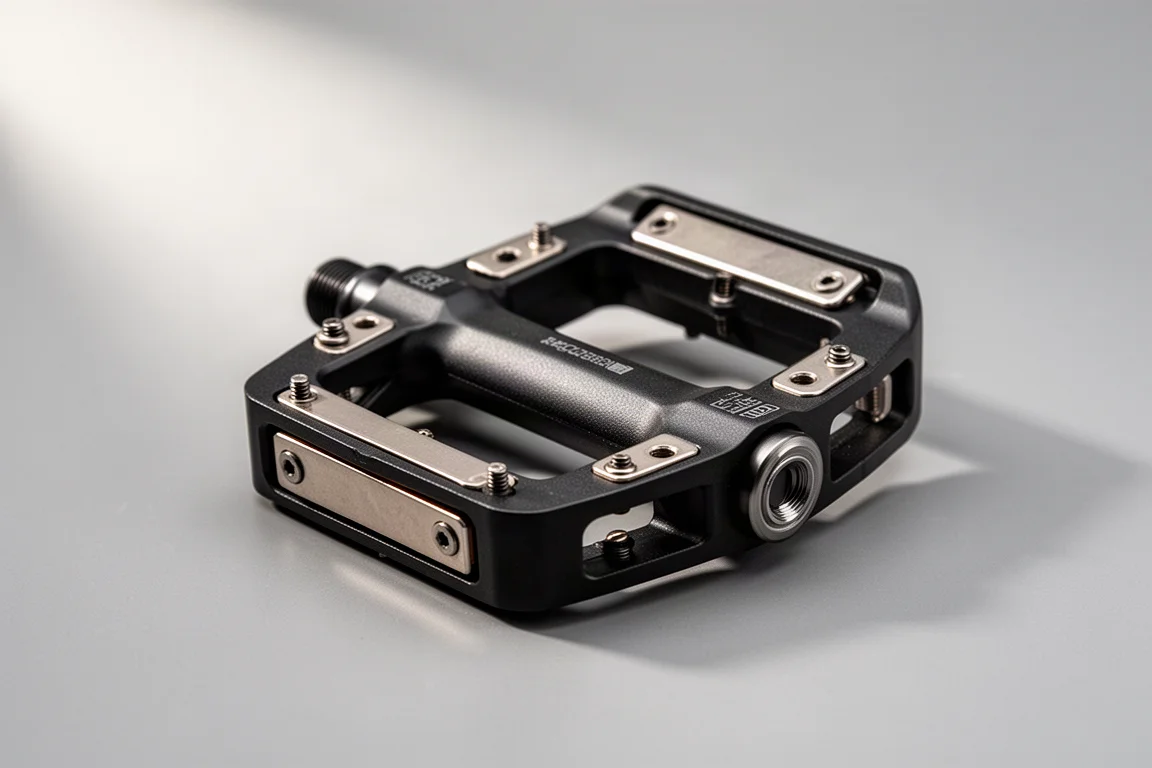
The Control uses the same adjustment mechanism but a wider pedal body, which Wolftooth says provides more stability and lateral support. At a claimed 328 g it is the heaviest of the three, and it is positioned towards more aggressive mountain bike riding, where a broader platform under the foot is welcome on rough ground.
If your priority is a planted, supportive feel on technical terrain rather than the lowest possible weight, the Control is the version that matches that brief.
Wolftooth Delete: The Light Single-Sided Option
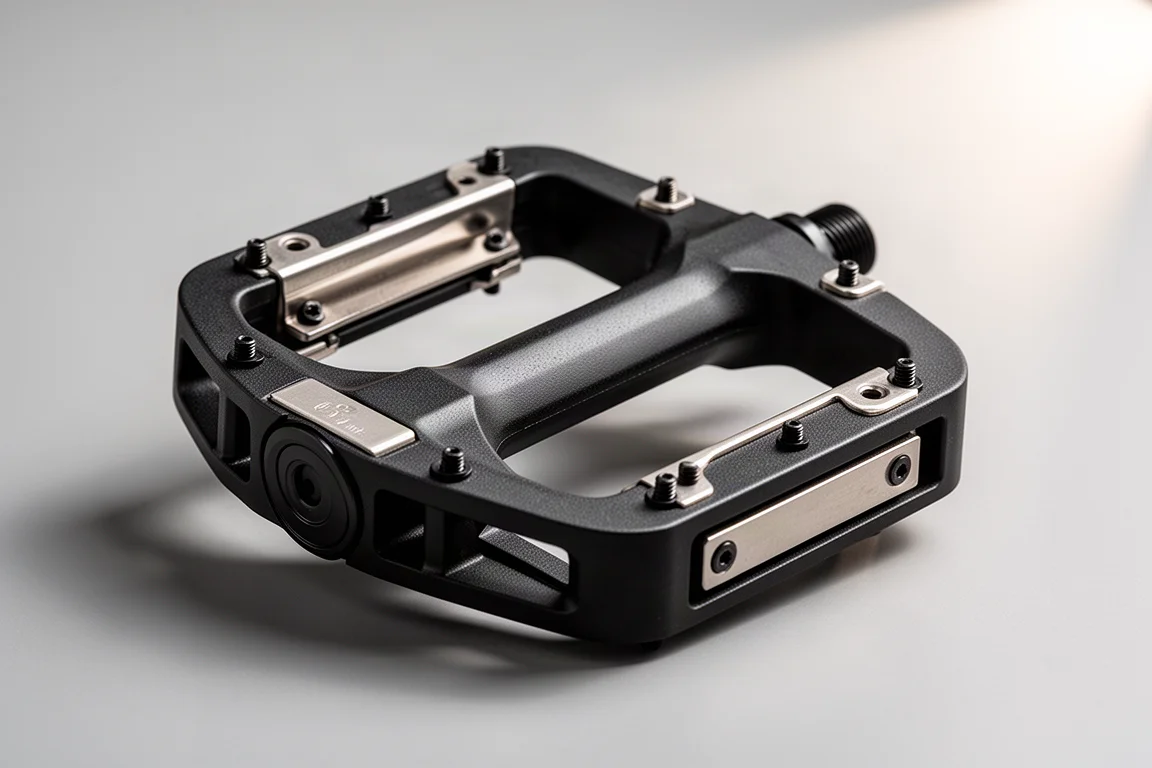
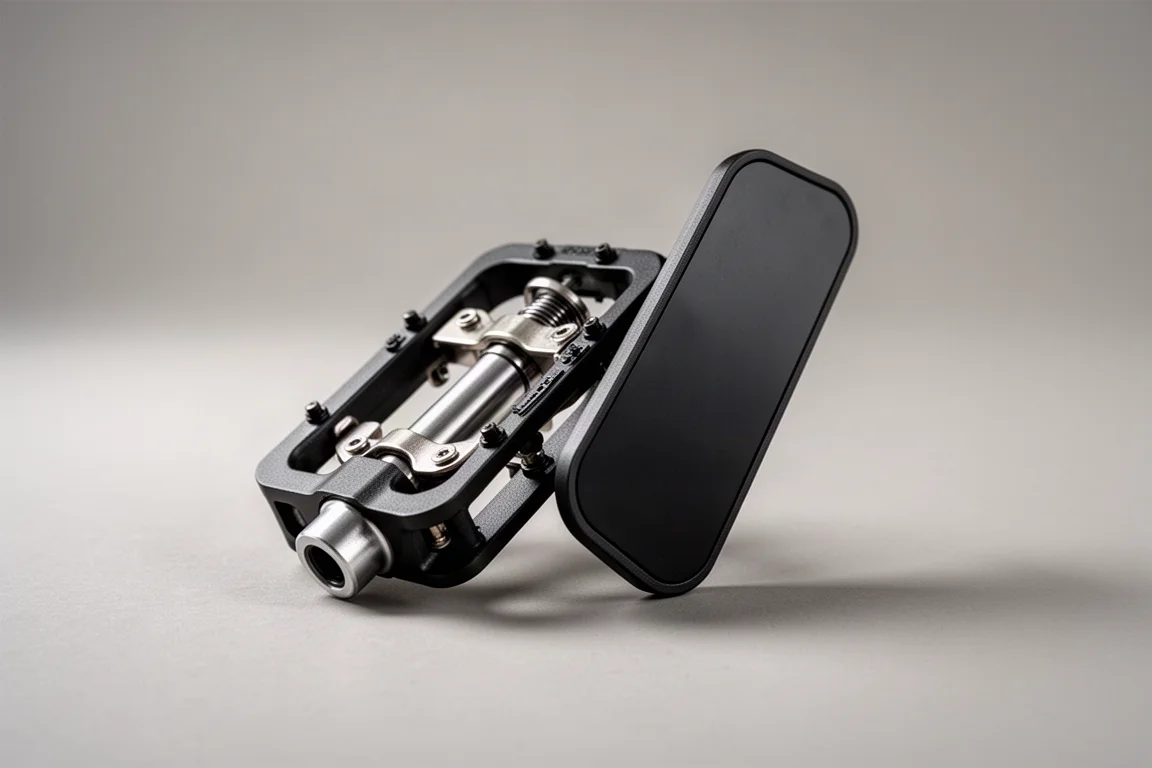
The Delete is single-sided and the lightest of the three at a claimed 217 g, which is a meaningful saving over the wider-bodied Control. It is suggested for gravel racing, where you clip in repeatedly and count every gram.
Single-sided entry asks a little more of the rider at the trailhead, because you need the correct face uppermost to engage. In exchange you get a slimmer, lighter pedal with the same adjustable stance range as the other two models.
What to Consider Before Buying
The honest case for these pedals is stance adjustment, not general pedal shopping. If your feet are comfortable at a standard width, a conventional SPD pedal does the same job for less money, and that is a sensible place to start.
Servicing is the other thing to weigh. Adjusting the stance means removing the end cap, pulling the axle, and handling loose bearings and washers, so it is a job for a clean bench rather than the side of the road. The upside is that the bearings and retention plates are replaceable, so the pedal can be kept running for years rather than thrown away when it wears.
Compatibility is straightforward. The pedals take a current SPD cleat, so existing shoes and cleats carry over. They are also available in a purple finish, which is either essential or entirely irrelevant depending on your build.
Which Wolftooth Pedal Fits Your Riding
Choose the Alt if you want one pedal that covers trail riding and gravel with dual-sided entry and a mid-range weight. Choose the Control if you ride aggressively and want the widest platform and the most lateral support underfoot. Choose the Delete if you race gravel, want the lightest option, and are happy to live with single-sided entry.

All three share the same axle system, so the stance range is identical whichever model you pick. The decision therefore comes down to entry type, body width and weight rather than to how much adjustment you get.
Conclusion
The Wolftooth Alt, Control and Delete bring something genuinely useful to SPD-compatible pedals: a stance that can be set to 55, 57 or 59 mm with basic tools, on a pedal that is fully serviceable and compatible with existing cleats. The pedals are listed at $189.99. For riders whose feet have never sat quite where they should, this is a rare case of a component solving a fit problem that shoes and cleats alone could not.
Further reading
Related Reviews
Bike Pedals
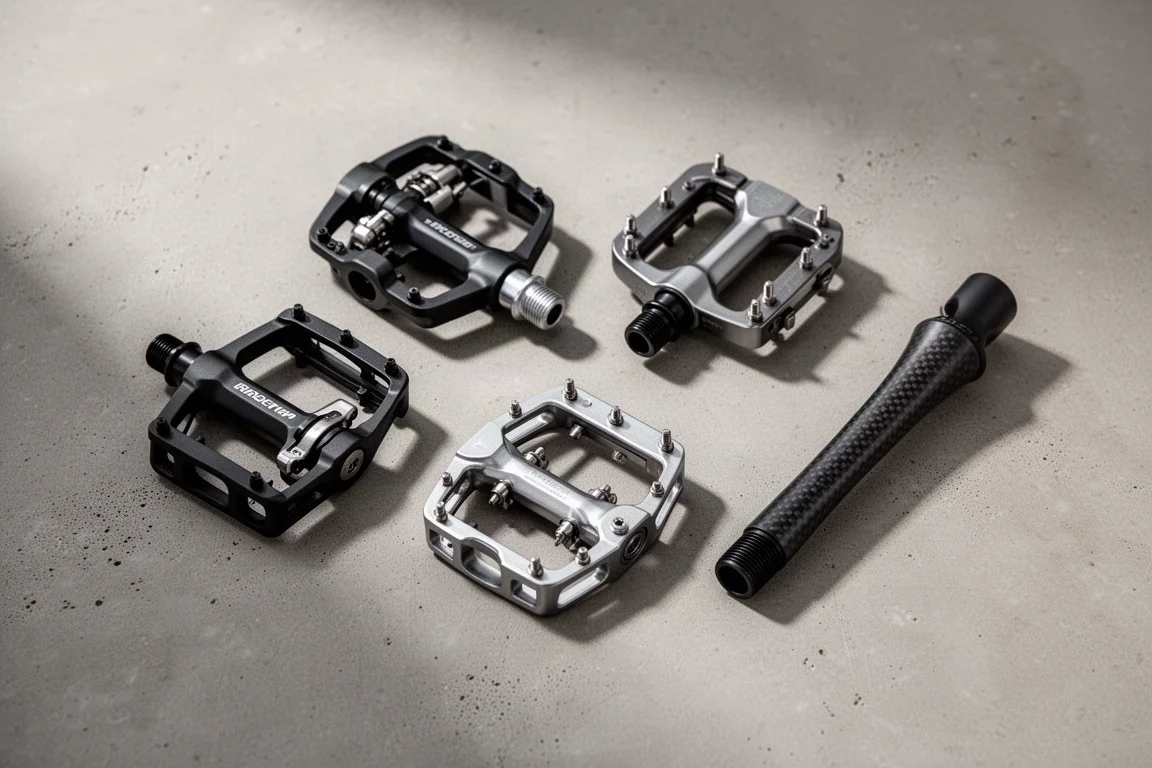
Best Bike Pedals: Road, Trail and Flat Options Worth Buying
A practical guide to the bike pedal systems that hold up over time, the ones that cause foot instability, and how to match a pedal to your stance and riding.
Bike Components
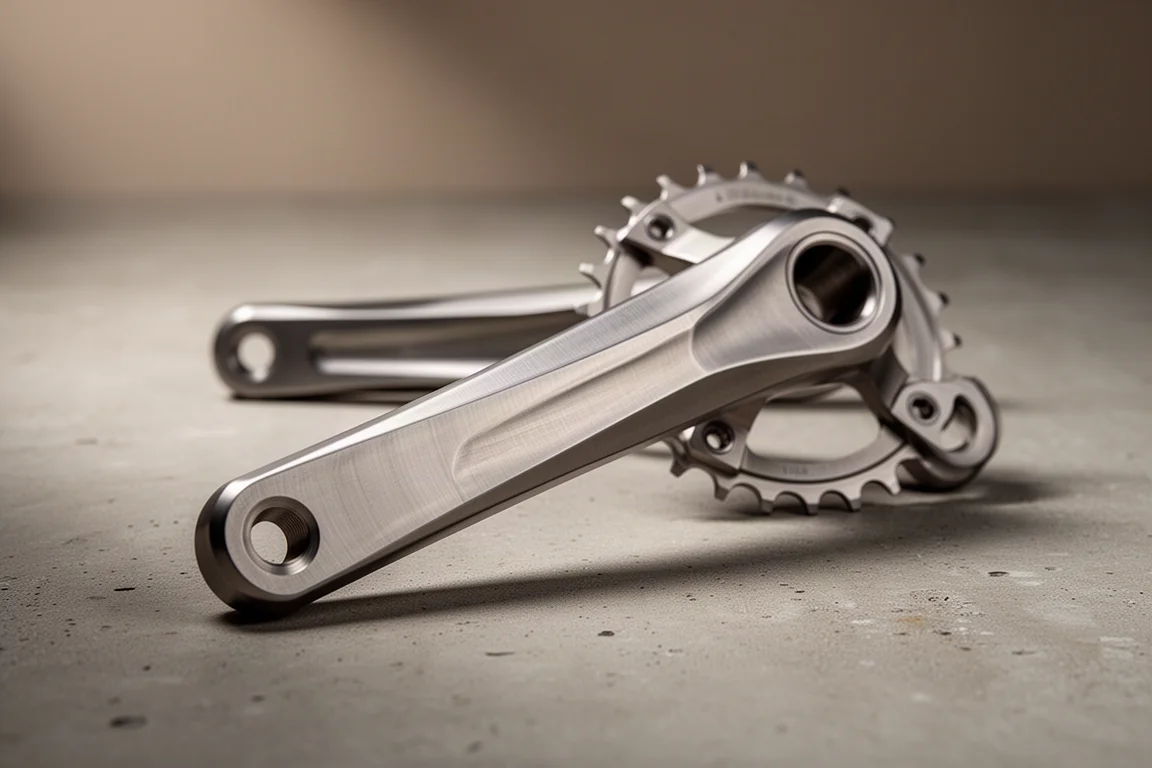
5Dev Titanium Cranks Review: Titanium Craftsmanship and the Shorter Crank Question
A close look at 5Dev's CNC machined titanium cranks, what shorter crank lengths actually change on the road, and how to decide whether this upgrade suits your bike fit.
Cycling Components
7 Bike Fit Products Fitters Avoid: What to Check Before You Buy
Seven bike components that regularly cause knee, foot and saddle problems, with the specific concerns behind each one and what to look for instead.