Bike Components
5Dev Titanium Cranks Review: Titanium Craftsmanship and the Shorter Crank Question
A close look at 5Dev's CNC machined titanium cranks, what shorter crank lengths actually change on the road, and how to decide whether this upgrade suits your bike fit.
Introduction
Crank length is one of the few parts of a bike fit that most riders inherit rather than choose. A bike arrives with 172.5mm or 175mm arms, they feel normal, and the question never comes up again. Taller riders in particular tend to assume longer is better, because long legs and long levers feel intuitively efficient.
5Dev, a Californian component manufacturer based in San Diego, approaches cranks from a different direction. The company machines titanium in house, applying knowledge built up making aerospace and medical titanium parts, and its crank range is available in a spread of lengths that goes well below what most bikes ship with. That makes it a useful test bed for a question worth asking: does a shorter crank actually help, or does it just feel different?
What Makes 5Dev Titanium Cranks Different
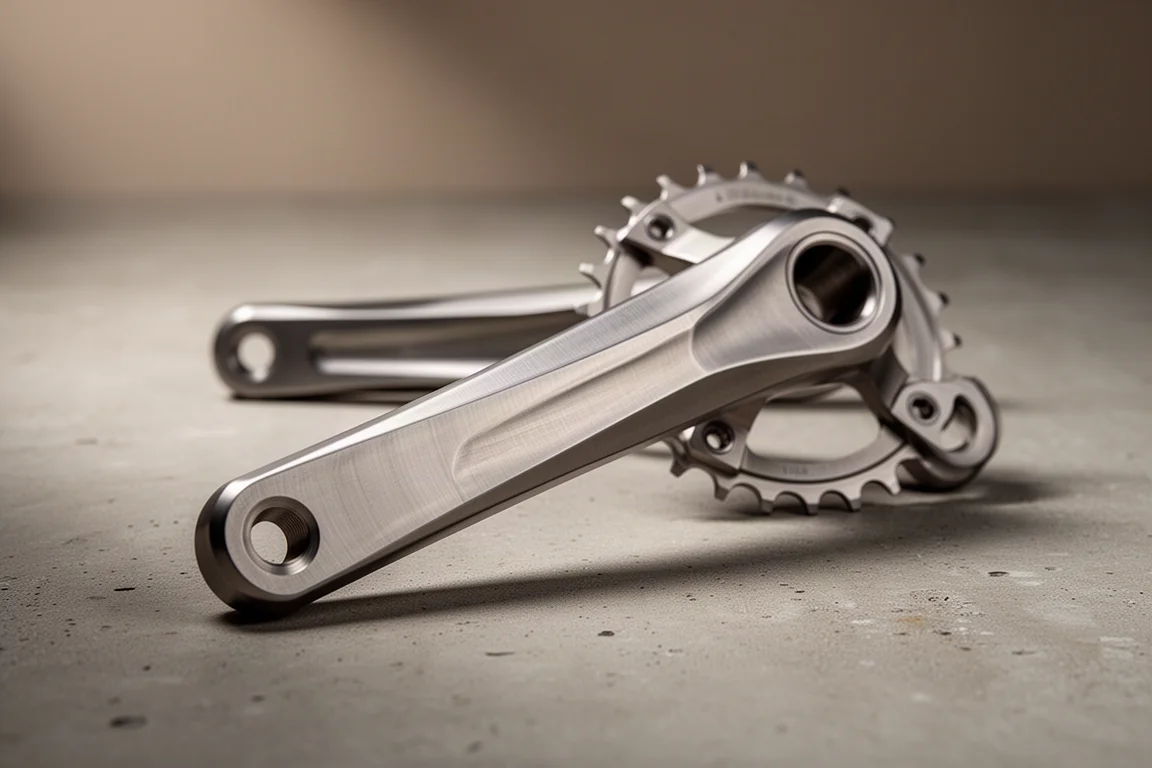
These are CNC machined titanium cranks, produced entirely in house at the company’s San Diego headquarters. Titanium is a demanding material to machine, and the aerospace and medical background shows in the finish: precise, cleanly chamfered edges, a machined surface rather than a polished showroom shine, and a look that reads as purposeful rather than decorative. There is no mistaking them for a standard aluminium crank.
The design is also modular. The cranks form part of a three-piece setup, which means they can be run with different length axles and different bottom brackets. In practice, that makes them far easier to move between bikes than a conventional one-piece crankset, which matters if you own several bikes and want to try a different length on each without committing to a full rebuild every time.
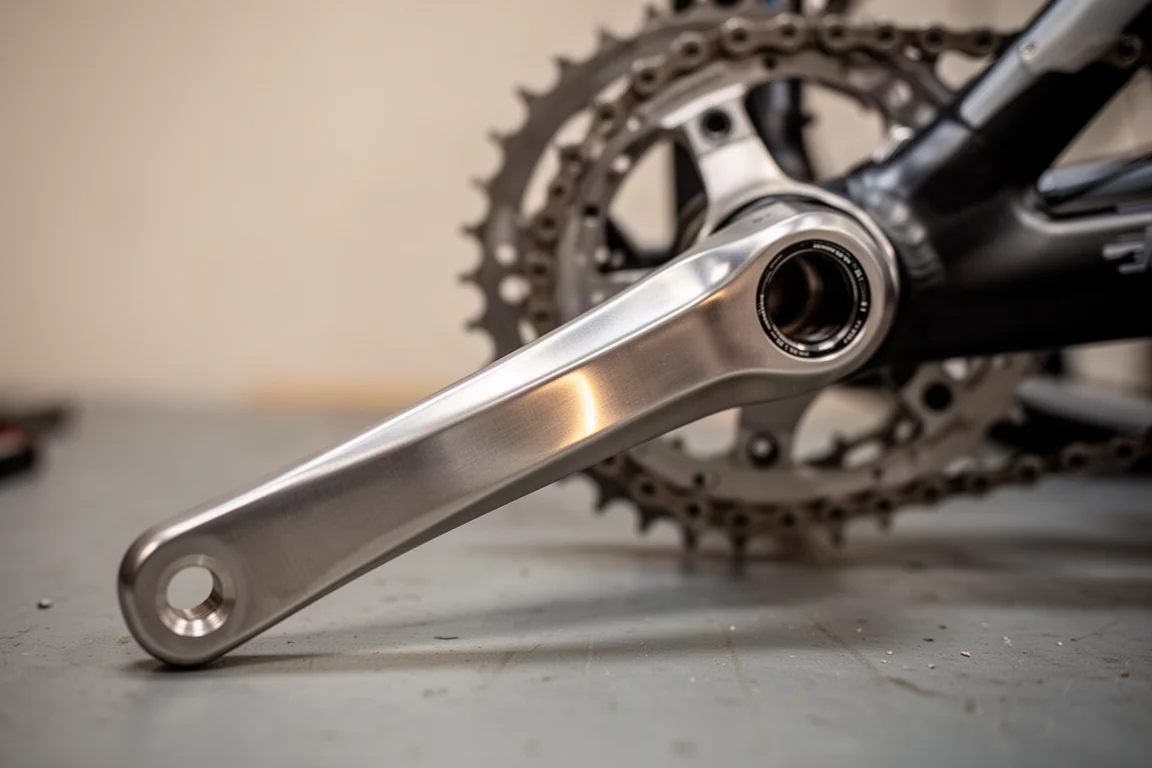
It is worth being clear about the positioning here. This is premium, low-volume componentry aimed at riders who are already deep into their setup and want to take it further. The materials and machining come at a cost, and the value case rests on longevity and fit flexibility rather than on shaving grams.
Why Shorter Cranks Are Worth Considering
The physics is straightforward. Torque at the bottom bracket equals force multiplied by distance, so a longer crank gives you more leverage. But the power you actually produce depends on cadence as well, and a longer crank has further to travel through one full pedal revolution, so cadence falls as length increases. Since bikes have gears, you can use a different ratio instead of a longer lever to hold a given speed on a given gradient. A longer crank is, mechanically, close to a lower gear.
The more interesting argument is comfort, and comfort is not a soft benefit because it feeds directly into how much power you can sustain. A shorter crank brings the knee and thigh less far up into the torso on the upstroke, so the hip angle stays more open. Riders who struggle to breathe in a low, aggressive position often find relief here, because the diaphragm has room to descend. It also tends to reduce irritation around the knee, back and hip for the same reason, and it lets riders hold a lower front end without their position collapsing into dead spots in the pedal stroke.
There is a well-established precedent in elite track and road programmes. Bike fitting specialists who have worked with national track squads describe riders moving to 165mm and even 160mm, and at least one high-profile rider dropping from 177.5mm to 170mm against advice, lowering the front end substantially and reducing aerodynamic drag by more than 3 percent. A shorter crank is not automatically slower. In the right position, it can be measurably faster.
Riding Impressions Across Three Crank Lengths
The reference point here was 175mm, the standard length on most bikes, and the starting point for comparison was 170mm, a modest 5mm reduction. The first surprise is how quickly the difference shows up. The pedal stroke feels like a smaller circle, and the saddle has to come up a little because the pedals are no longer reaching as far away. Within a few minutes it stops feeling wrong and starts feeling smooth.
The clearest sensation on 170mm was reduced movement through the hips and lower back, along with the ability to hold a lower, flatter position for longer without discomfort. On a timed local loop, the 170mm setup was the fastest of the three lengths tested, only a modest margin off a recent best effort on longer cranks. The lungs still hurt, as they will, but the position felt easier to sustain.
Going to 155mm was a bigger jump. It felt outrageous for the first few minutes, then surprisingly natural after some tweaking, which is a useful reminder that the body adapts quickly. The problem showed up at intensity. Accelerating out of corners and getting back on top of a gear felt vague, and the timed run came in roughly 40 seconds slower than the 170mm effort. The final test at 145mm was the extreme case. Only a 34-tooth chainring would fit, and the whole ride felt like pedalling in tiny increments, with almost no leverage to accelerate. That run finished around three minutes slower than the 170mm run.

The takeaway was not that short cranks fail, but that there is a point of diminishing returns, and for a very tall rider with long legs, 145mm was well past it. The 170mm length, on the other hand, was comfortable enough to consider keeping permanently.
Practical Considerations Before You Switch
Changing crank length is rarely a one-part job. Saddle height has to be adjusted, and as the cranks get shorter the saddle generally needs to go up, which in turn can push the saddle position beyond where the frame was designed to sit comfortably. On very short lengths, chainring clearance becomes a real constraint, and the 145mm test only accepted a 34-tooth ring.
Shorter cranks are also less commonly stocked than standard lengths, so availability and lead times are worth checking before you commit. This is where the 5Dev three-piece design earns its keep, since different axles and bottom brackets allow the same cranks to move across bikes, softening what would otherwise be an expensive experiment repeated per bike.
Comfort and Positioning on the Bike
The most persuasive case for going shorter is not time savings but posture. A more open hip angle lets you ride lower at the front without your knees and chest fighting each other, and it keeps the glutes, the largest and strongest muscle group involved in pedalling, properly engaged through the stroke. When that engagement is lost, riders shift around on the saddle, the position stops looking aerodynamic in practice even if it photographs well, and power production develops flat spots.
That is why the gains here tend to appear as consistency rather than as a single big number. A position you can hold steadily for an hour is worth more than a lower position you cannot tolerate for twenty minutes, and crank length is one of the few adjustments that changes both the comfort and the aerodynamic outcome at the same time.
Sizing and Setup Notes
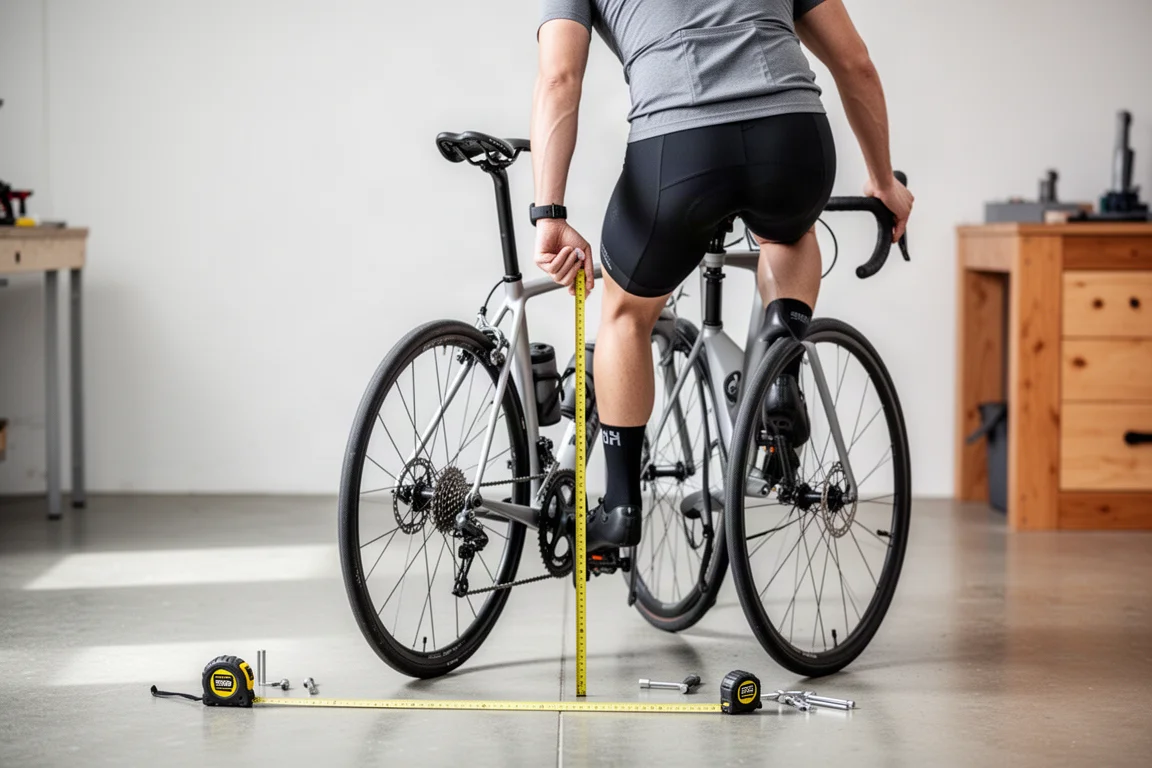
If you are coming from a standard 175mm crank, a step down to 170mm is a sensible and low-risk place to start. It is a small enough change to adapt to within a ride or two, and large enough that most riders notice the smoother stroke and the easier hip angle. Anything below 165mm is a more serious experiment and is best treated as a deliberate fit change rather than a casual swap.
Expect to raise the saddle as crank length drops, and check that the resulting position still leaves you with a reach and stack you can live with. Because the cranks accept different axle lengths and bottom brackets, the same set can be transferred between frames, which makes it practical to test a length on one bike before committing the whole stable to it. Give any new length at least a few proper rides before judging it, since the first ten minutes are mostly your legs arguing with the change.
Value, Durability, and Buying Advice
These are super premium cranks, and the price reflects the material, the in-house machining and the low production volume. The durability case is genuinely strong: titanium resists fatigue and corrosion well, the machined construction should hold up to years of hard use, and the modular platform means the cranks can outlast the bike they are first fitted to. If you keep bikes for a long time and change frames more often than components, that flexibility is worth real money.
The fit case is more personal. If you are tall, ride a low front end, or deal with knee, hip or back discomfort that has resisted other adjustments, a modest reduction in crank length is one of the more promising changes available, and the 170mm experience here supports that. If you are shorter, or already comfortable in a compact position, the returns are likely to be smaller. Buy these for the material, the machining and the ability to tune length across several bikes, not for an instant speed gain.
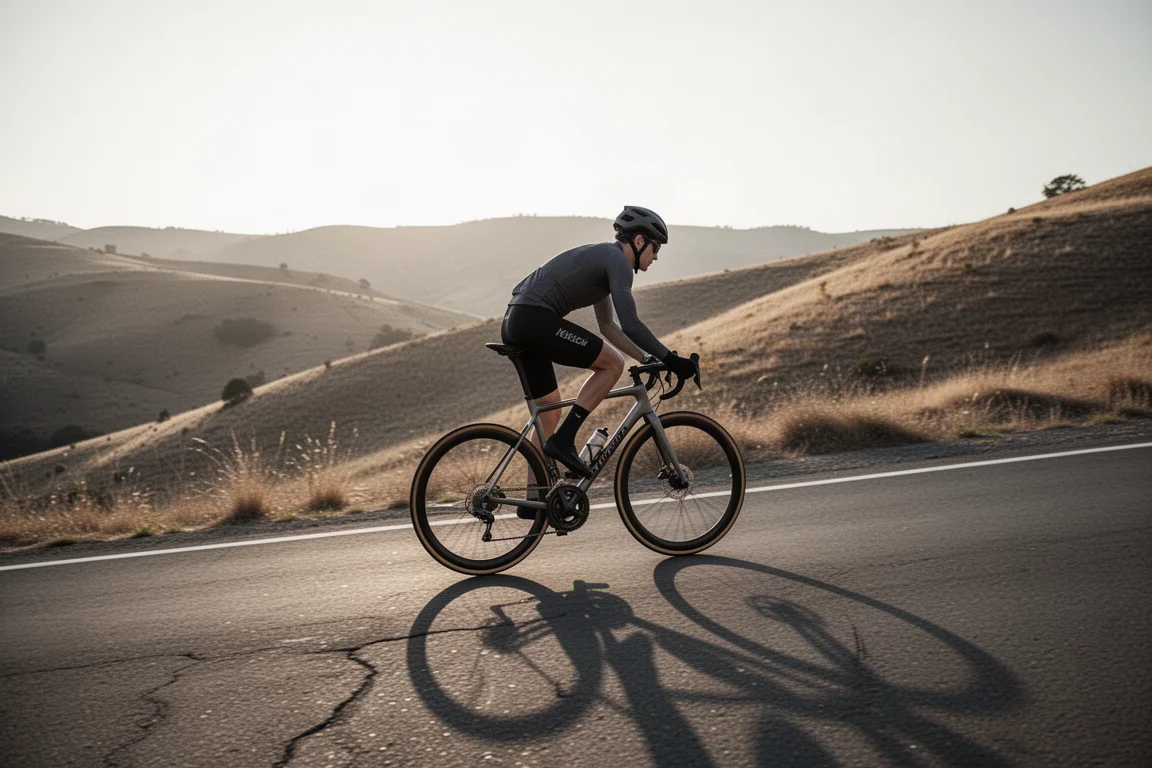
For most riders, the honest advice is to try one step shorter before spending at this level. If that step feels better, the 5Dev range gives you room to explore further with a component that will hold its value and its finish for a long time.
Conclusion
The 5Dev titanium cranks are an unusually well-made piece of kit, and the range of available lengths makes them a genuinely useful tool for exploring bike fit rather than just a cosmetic upgrade. The testing experience points to a clear conclusion: modest reductions in crank length can improve comfort and position with very little cost in speed, while very short lengths push past the point where most riders gain anything. For tall riders chasing a lower, more sustainable position, a move from 175mm to 170mm is a change worth making.
Product link
View more details for 5Dev Titanium Cranks
This product is mentioned in the review. Check the specifications, options, and compatibility before buying.
View more details for 5Dev Titanium CranksFurther reading
Related Reviews
Bike Components
Bike Groupsets Explained: Shimano, SRAM & Campagnolo Compared
A plain-English guide to the groupset pyramid, from Campagnolo Super Record to Shimano Acera, with buying advice for every tier.
Bike Components
Bird Spokes Review: Are Fabric Bicycle Spokes Worth It?
Fabric spokes promise less weight, more compliance, and better vibration damping than steel. Here is how a Bird spoke wheel build compares with the same rims and hubs laced with steel.
Bike Components
FSA K-Force Team Edition Crankset Review: 1,000 km on 165 mm Cranks
A practical look at shorter crank lengths, what the FSA K-Force Team Edition crankset changed in comfort and bike fit, and where the gains stop.