Camping Tents
Winterial Bivvy Tent vs Snugpak Ionosphere: Which One-Person Bivvy Tent Makes More Sense?
A direct comparison of two near-identical one-person bivvy tents, covering packed size, interior space, door placement, materials, weather protection, and price.
Introduction
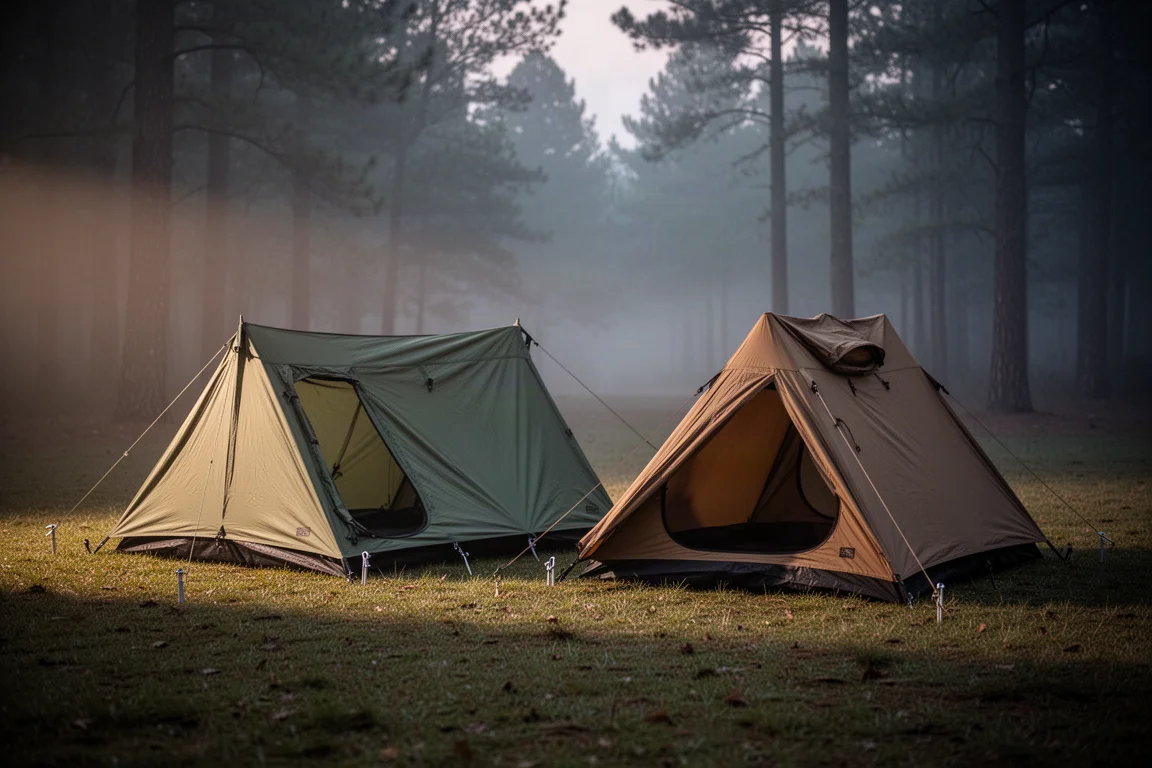
At a glance, these two one-person bivvy tents look like the same product built by two different companies. They share a low, tactical silhouette, a very similar packed size, and broadly comparable materials. The difference that matters most is price: the Winterial Bivvy Tent sells for around $90, while the Snugpak Ionosphere now carries a retail price of roughly $300 in the United States.
That gap is the reason this comparison is worth reading. The Snugpak Ionosphere built its reputation over many years as a low-profile, inexpensive shelter. As its price climbed, campers started looking for a like-for-like alternative, and the Winterial Bivvy Tent is the closest match around. Below, the two are compared across packed size, interior dimensions, entry design, materials, weather protection, and overall value.
Shared Design and Packed Size
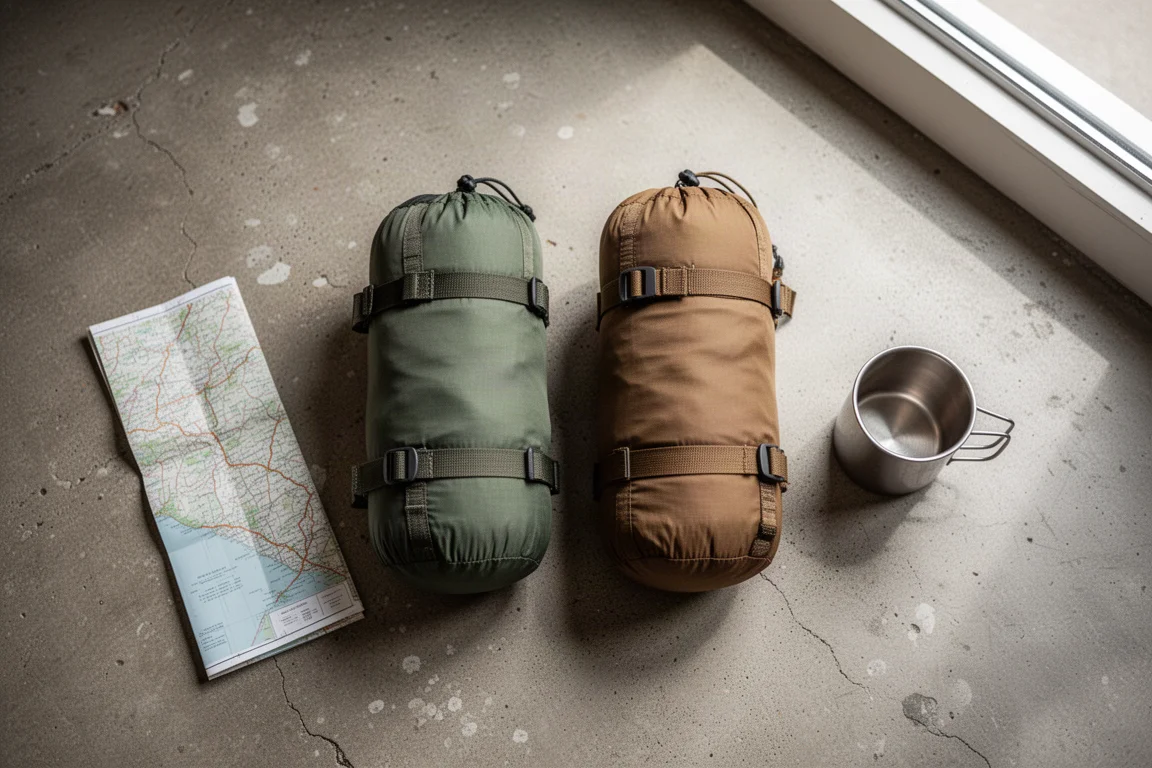
Both tents ship in a stuff sack measuring roughly 21 inches long and about 5 inches wide, so neither has a meaningful advantage once it is rolled up and strapped to a pack. The carry bags use similar arrangements, and the compression straps on both do little beyond holding the bundle together.
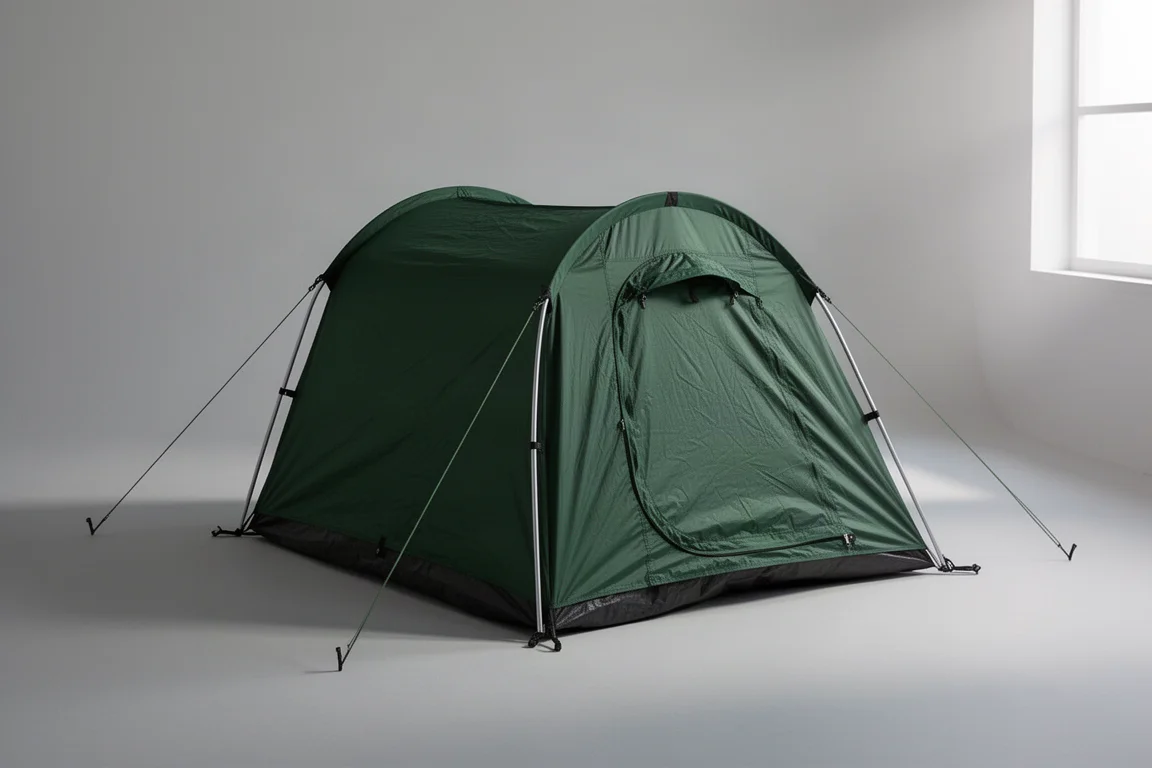
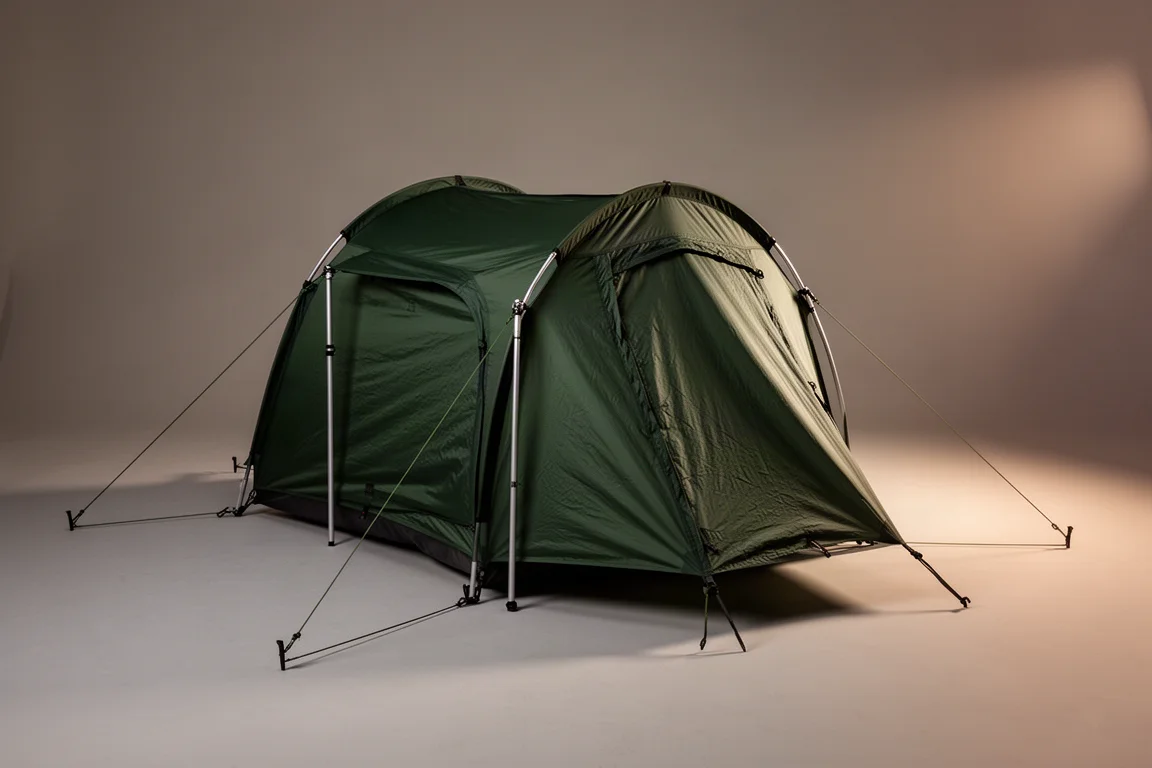
Pitched without their flies, the two tents reveal the same basic architecture: grommets at the sides and a low profile that keeps the shelter close to the ground. The interiors are similarly sparse, with two pockets in each tent, though the pocket positions differ. The Winterial places one pocket at the top and one at the middle, while the Snugpak puts both roughly in the middle of the body. The Winterial also adds a hook at the center peak, which the Snugpak does not have.
Weight is nearly identical as well. The Winterial Bivvy Tent is listed at 3.4 pounds and the Snugpak Ionosphere at 3.3 pounds, a difference small enough to disappear once the tents are inside a pack.
Winterial Bivvy Tent: The Budget Option
The Winterial Bivvy Tent is made from 190T polyester, which the brand lists for both the fly and the floor, and it carries a 5,000 mm hydrostatic head rating. It is available in two colors: green and orange.
Day to day, the Winterial is the friendlier tent to live with. Its interior pole clips are noticeably easier to work with than the pole sleeves on the Snugpak, and buckles at some corners make fitting the fly a little faster. The side-entry door is the other practical advantage: getting in and out is one motion and a zip.
The trade-off is length. The Winterial is roughly 10 inches shorter inside than the Snugpak, though it is about 3 inches wider. Length is the measurement most people actually notice in a bivvy tent, so taller campers should weigh that carefully. Interior construction, on the other hand, is a clear point in the Winterial’s favor: the stitching is tidy, with very few loose threads.
Snugpak Ionosphere: The Long and Narrow Classic
The Snugpak Ionosphere uses a 210T fly over a 190T floor and matches the Winterial’s 5,000 mm hydrostatic head rating. It comes in coyote brown tan and olive green. At 3.3 pounds it is the lighter of the two by a hair.
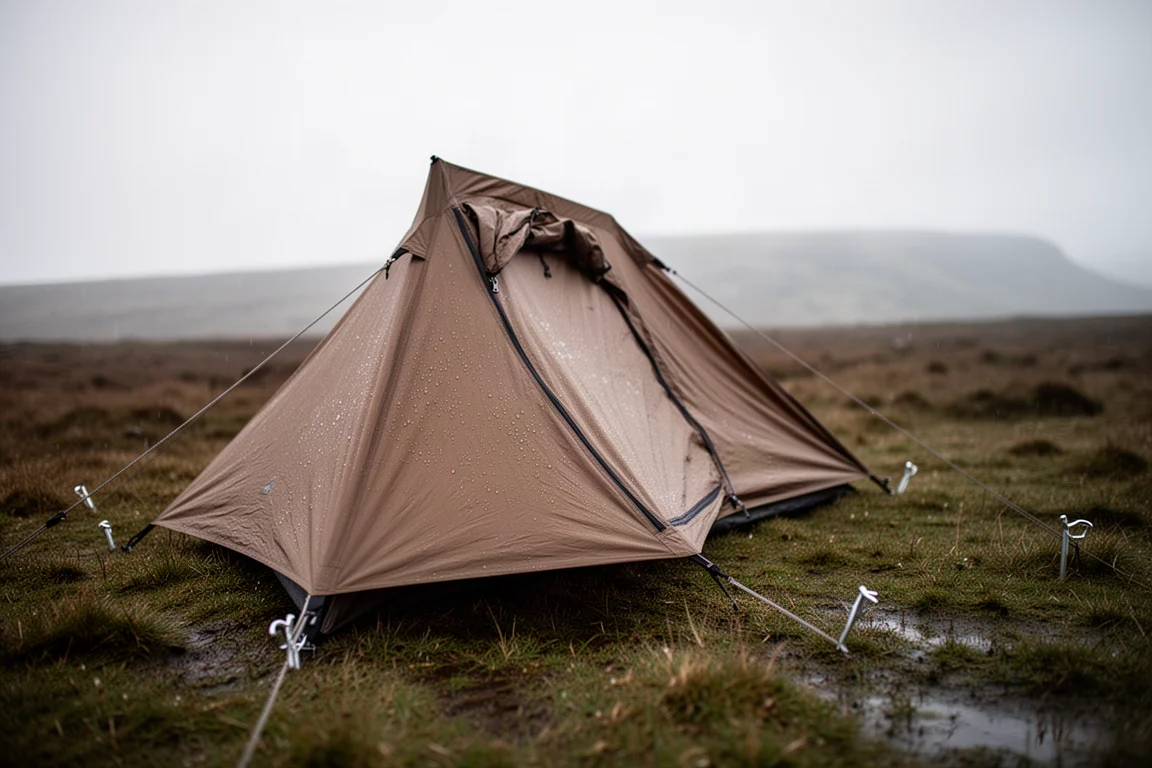
Inside, the Ionosphere is the longer tent by roughly 10 inches and the narrower one by about 3 inches. Entry is through a door at the top of the tent rather than the side, which takes more effort than the Winterial’s side door. Both tents use unbranded zippers, and both rely on grommets at the sides for their main structure.
Where the Ionosphere pulls ahead is storm readiness. It has noticeably more stakeout points and guyline attachment points than the Winterial, which gives it an edge in sustained wind and heavy rain. That edge is real but modest, and for most trips it will not change the experience. Interior finishing is where it falls behind: the stitching looks rough, with loose threads in several places.
Getting In and Out: Door Placement and Setup
Door placement is the single biggest everyday difference between these two tents. On the Snugpak, the door sits at the top, so getting in means maneuvering yourself up and over before you can zip closed. On the Winterial, the door is on the side, so entry is a straightforward slide in and zip. Over one night the difference is small; over a multi-day trip, especially in poor weather, it becomes noticeable.
Setup is close between the two. Both use grommets at the sides, and the fly goes on easily for either tent. The Winterial’s interior pole clips and corner buckles give it a slight speed advantage when pitching, which helps most when you are setting up in the dark.
Materials, Weather Protection, and Interior Details
Both tents use polyester fabrics from the same broad family: 190T on the Winterial fly and floor, and a 210T fly over a 190T floor on the Snugpak. Neither uses premium zippers, and both tents share the same 5,000 mm hydrostatic head rating, a respectable figure for a shelter of this type.
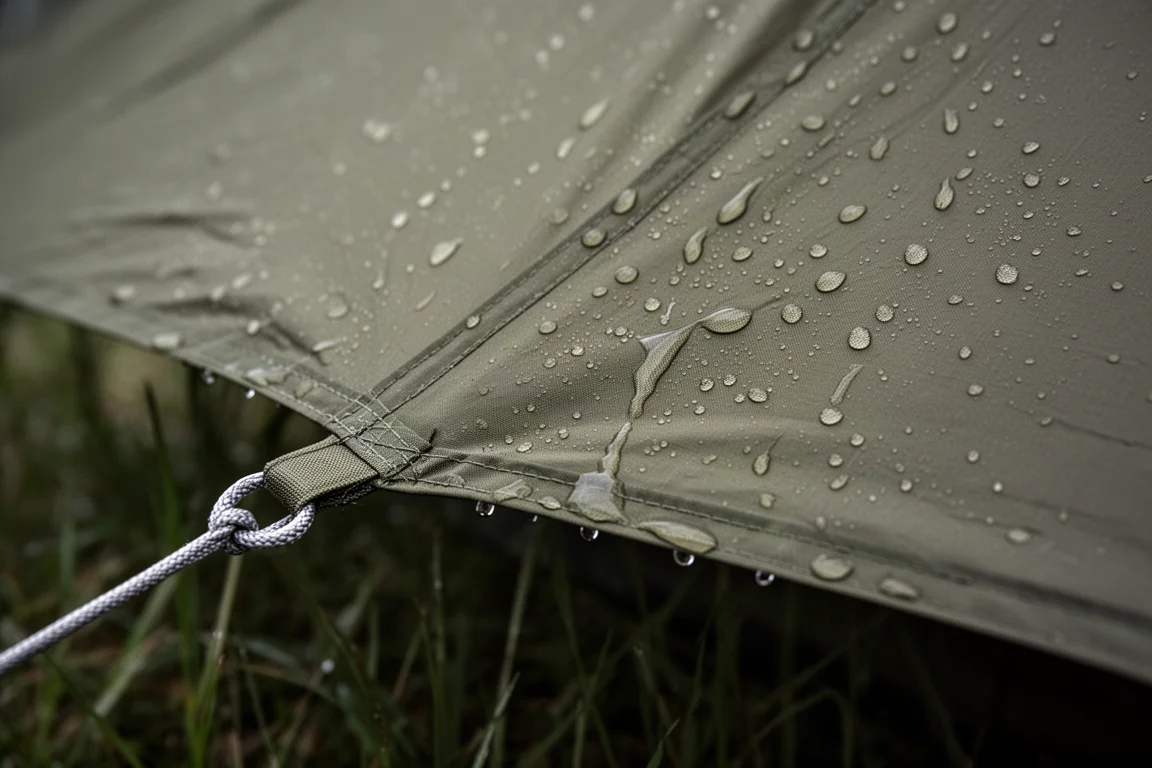
In practice, that means the two should handle comparable rain, though the Snugpak’s extra anchoring points help it hold its shape when the wind picks up. Treat the 5,000 mm figure as the manufacturer’s rating for now, since independent wet-weather testing on the Winterial is still pending.
Indoors, the two tents feel similar in layout but not in finish. The Winterial’s seams and stitching look considerably cleaner, while the Snugpak interior shows loose threads throughout. It is a cosmetic difference rather than a structural one, but it is visible every time you open the tent.
Pricing: Ninety Dollars Versus Three Hundred
Price is where these two tents stop being comparable. The Winterial Bivvy Tent sells for about $90. The Snugpak Ionosphere retails for about $300 in the United States, which is a great deal of money for a one-person polyester bivvy tent.
For a shopper who specifically wants the Ionosphere’s look and length, a fair ceiling is roughly $150. Beyond that, the money is better spent elsewhere: at $300 the budget reaches into larger two-person tents with lighter materials, stronger fabrics, and better water resistance. Paying premium money for a small, simple shelter does not add up.
The Winterial, at $90, offers the same material family, a similar packed size, and a comparable weight, with easier entry and tidier stitching. If the goal is a low-profile bivvy tent at a sensible price, that is the straightforward answer.
Who Should Buy Which Tent
Choose the Winterial Bivvy Tent if value matters most, if you want side-door entry that is quick to use in bad weather, and if you prefer cleaner interior finishing. Its shorter interior is the main compromise, so campers who need maximum length should think twice before committing.
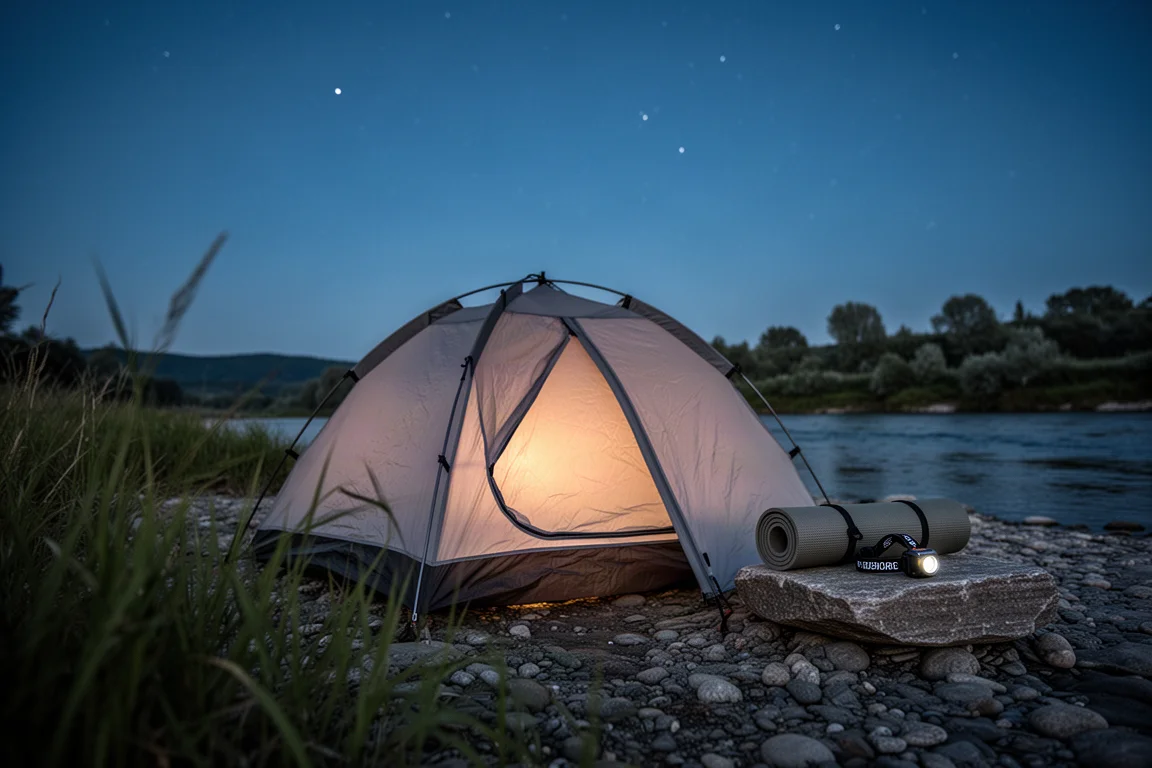
Choose the Snugpak Ionosphere if interior length is a priority, if you want more stakeout points for exposed campsites, and if the coyote brown or olive green colorways appeal to you. Be honest about the price first: at full retail it is difficult to justify, and it only makes sense at a meaningful discount.
Either way, the two tents are close enough in construction that the decision comes down to length, entry design, and how much you are willing to pay for the Snugpak name and colorway.
Conclusion
These two bivvy tents are very similar in so many ways that, for most practical purposes, they are the same shelter with different labels. The Winterial Bivvy Tent matches the Snugpak Ionosphere on fabric class, hydrostatic head rating, packed size, and weight, and it is easier to get in and out of, with cleaner stitching.
The Ionosphere still has genuine strengths: a longer interior and more anchoring points for rough weather. Those strengths are worth something, but they are not worth a $210 gap. If you want a low-profile one-person bivvy tent that does the job without overpaying, the Winterial is the sensible pick. If you want the extra length and the storm anchoring and can find the Ionosphere at a substantial discount, it remains a capable tent.
Further reading
Related Reviews
Camping Tents
3F UL Gear Taiji Two-Person Tent Review: Field Waterproofing Results and Buying Advice
The Taiji pairs an attached fly with a removable inner, but sustained rain exposed untaped vent seams that need sealing before this shelter can be trusted.
Camping Tents
3FUL Gear Lanshan 2 Pro 4-Season Review: A Sub-$200 Single-Wall Trekking Pole Tent
An early look at the 3FUL Gear Lanshan 2 Pro 4-Season, covering its straightforward pitch, generous interior space, and the condensation and seam-sealing questions that come with any single-wall shelter.
Camping Tents
Alps Mountaineering Lynx 1-Person Tent Review: Big Value in a Small Budget Tent
A close look at the Alps Mountaineering Lynx 1-Person Tent, covering real interior dimensions, materials, setup time, ventilation limits, and who should buy it.