Sleeping Pads
Two of the Warmest Winter Sleeping Pads: Exped Ultra 10R and Highlander Napsack R 11
A close look at two ASTM-tested winter sleeping pads with R values above 10, including how each one performed through a sub-zero overnight test and which is worth the money.
Introduction
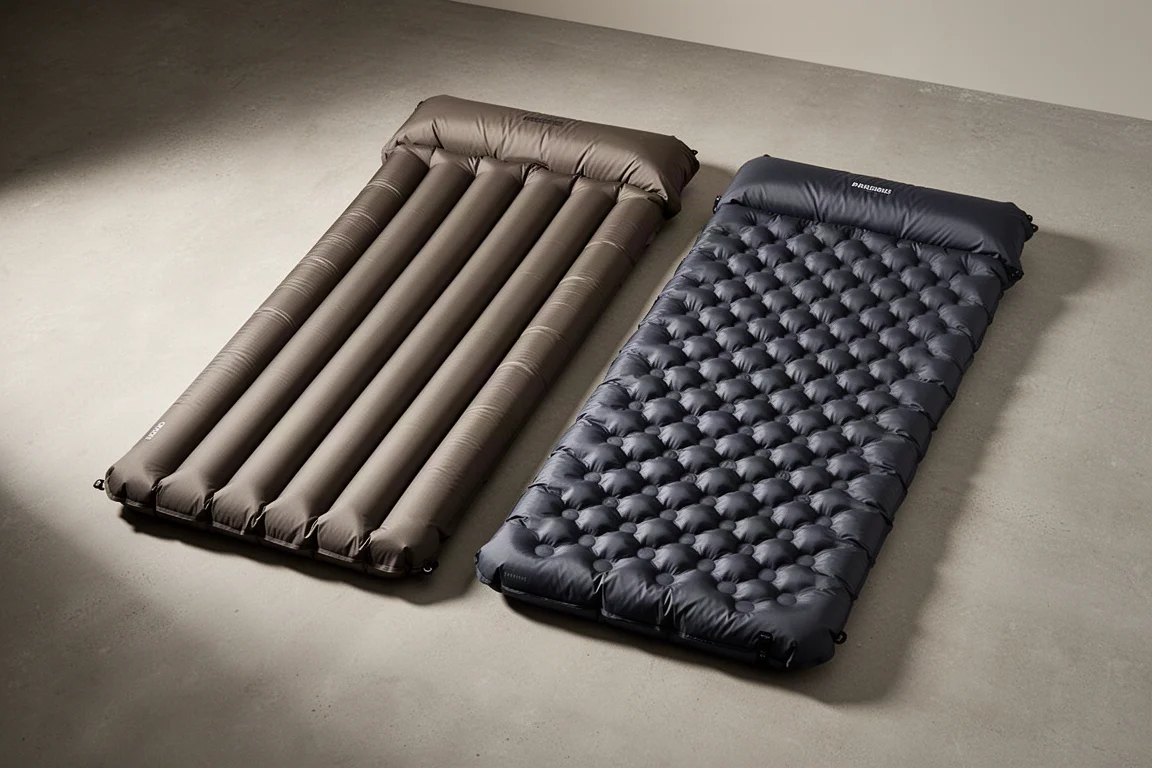
Two sleeping pads currently sit at the top of the winter warmth chart: the Exped Ultra 10R and the Highlander Napsack R 11. Both carry ASTM-tested R values above 10, which places them among the warmest pads available that are still light enough to carry backpacking.
The difference is price. The Highlander Napsack R 11 sells for $135, while the Exped Ultra 10R costs roughly twice as much. The question worth answering is whether the cheaper pad can hold its own once the temperature drops well below freezing.
What Matters in a Winter Sleeping Pad
Warmth is the headline number, but an R value alone does not tell the whole story. Both pads here are tested to the ASTM standard, which makes their ratings directly comparable: 10.2 for the Exped Ultra 10R and 11 for the Highlander Napsack R 11.
Inflation matters just as much. To reach its rated R value, a winter pad has to be fully inflated. Letting air out to soften the surface lowers warmth, so pressure relief and stability become more important in winter than they are during three-season camping.
Weight is part of the equation too. Neither of these pads is light. The Exped Ultra 10R weighs 813 g in its long wide rectangular size, and the Highlander Napsack R 11 weighs 855 g in the same format. Both use a 20-denier shell, polyester on the Exped and nylon on the Highlander, so the fabric thickness is broadly similar.
Design details separate them further. Baffle pattern, shell stretch, pad width, and the number and quality of weld points all influence how warm, comfortable and durable a pad feels after a long night. Weld points are a known weak spot in cold weather, because low temperatures can make them brittle and a single failure can leave a pad unusable. Rectangular pads also expose more surface area to cold air than mummy-shaped pads, which is worth remembering whenever a rating is quoted for a rectangular model.
Exped Ultra 10R: Insulation and Stability
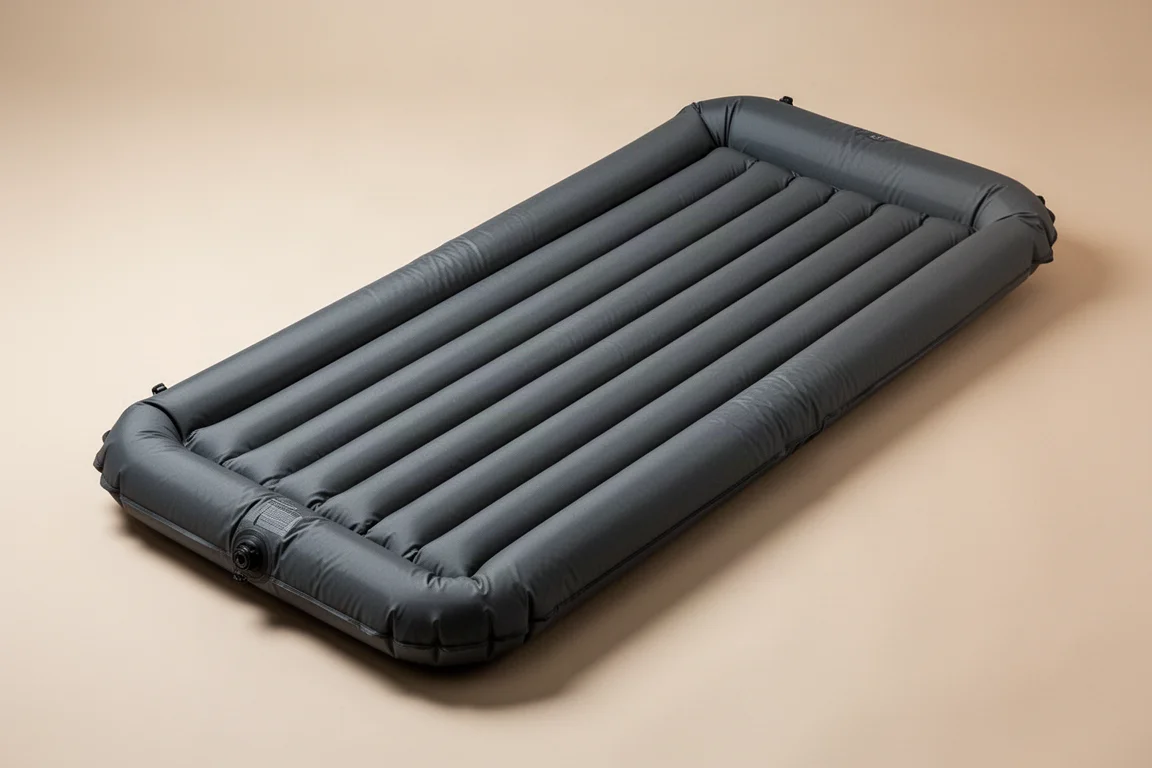
Exped is the brand that popularised the inflatable sleeping pad, and the Ultra 10R shows its insulation approach at its most complete. A synthetic layer is bonded to the top and to the bottom of the pad, and reflective film is attached to both of those synthetic layers. In the lower-rated Ultra 6.5R the treatment appears on the top surface only; here it runs on both faces.
That insulation does not wrap around the sidewalls, which leaves a small air gap along the edges. It is a detail worth knowing rather than a dealbreaker.
The pad measures 9 cm thick and uses long vertical baffles with slightly larger outer tubes. In practice that translates into a stable sleeping surface with good edge support, so you can sleep near the side without feeling like you are about to slide off. The 20-denier polyester shell has a little stretch to it, which helps with pressure relief, and the fabric stays quiet as you move around.
Highlander Napsack R 11: Warmth at a Lower Price
Highlander is a less familiar name in this category, and the Napsack R 11 is the cheaper of the two pads at $135. It carries a higher ASTM-tested R value of 11 and weighs 855 g in the long wide size, with a 20-denier nylon shell.
Its insulation works differently: three layers of reflective film are suspended inside the pad. Three layers is a modest count compared with other reflective designs, which can use anywhere from one to seven, so the R 11 figure deserves a little caution until the pad has proven itself in genuine cold.
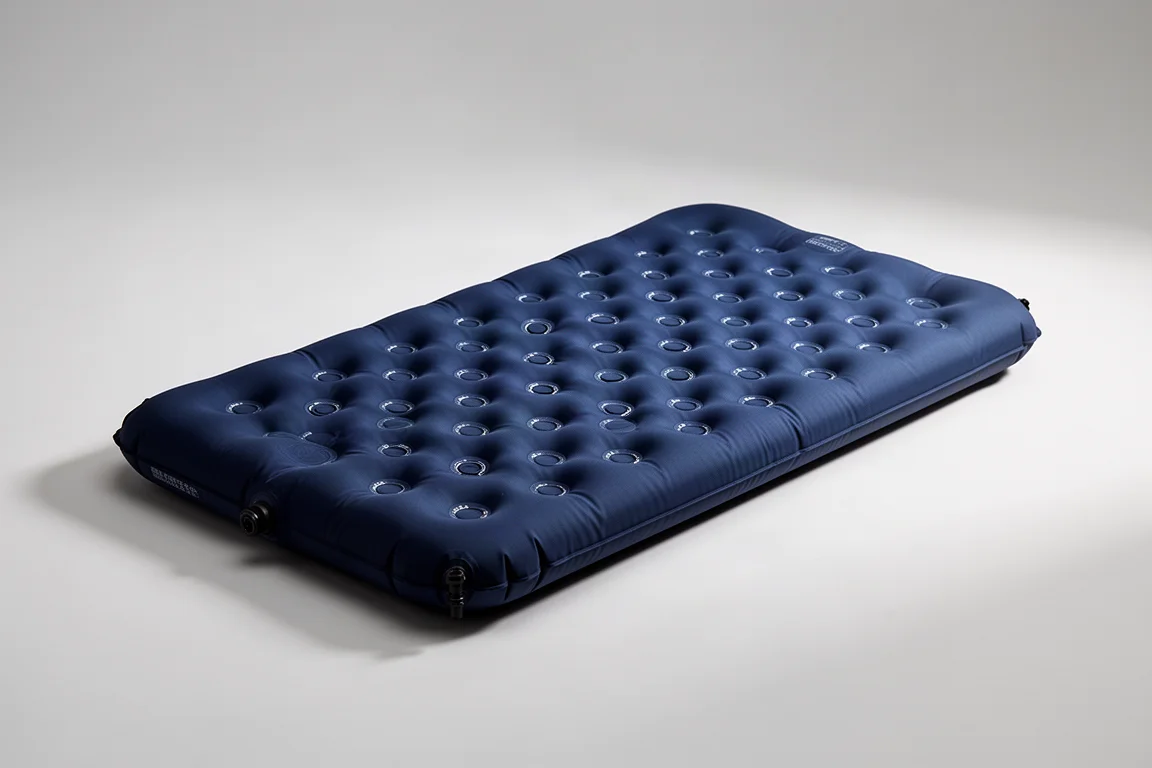
The baffling uses a dimpled pattern, generally one of the more comfortable layouts available. The pad also claims 10 cm of thickness, slightly more than the Exped, although the Exped appears thicker in use. It is roughly an inch narrower than the Exped and curves toward the sides, so it feels smaller and less stable near the edges. The shell is noticeably noisier as well, with a rubbery crinkle as you shift across the dimples and more sound when it rubs against a tent floor.
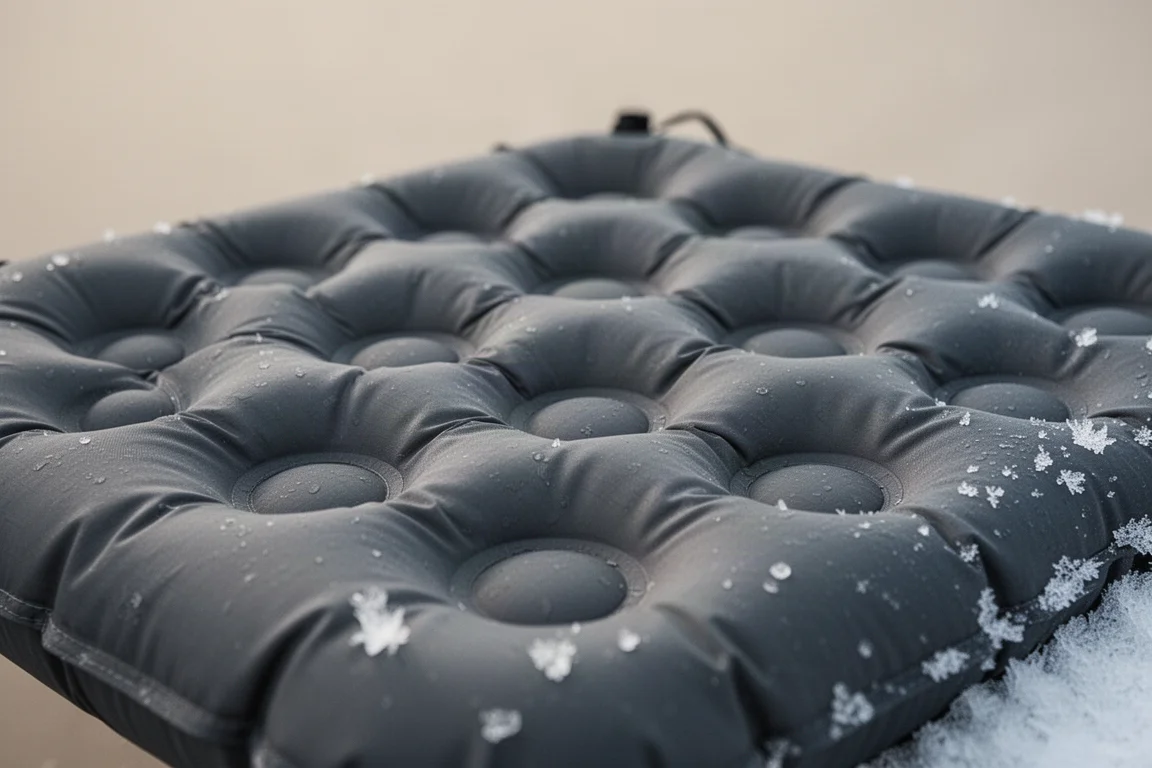
Weld points are another consideration. The dimpled construction creates a large number of connection points between the top and bottom of the pad, and similar designs on other pads have failed at exactly those circles. Long-term user reports on the Napsack R 11 are still limited, so checking reviews before buying is sensible.
How Warm Each Pad Slept
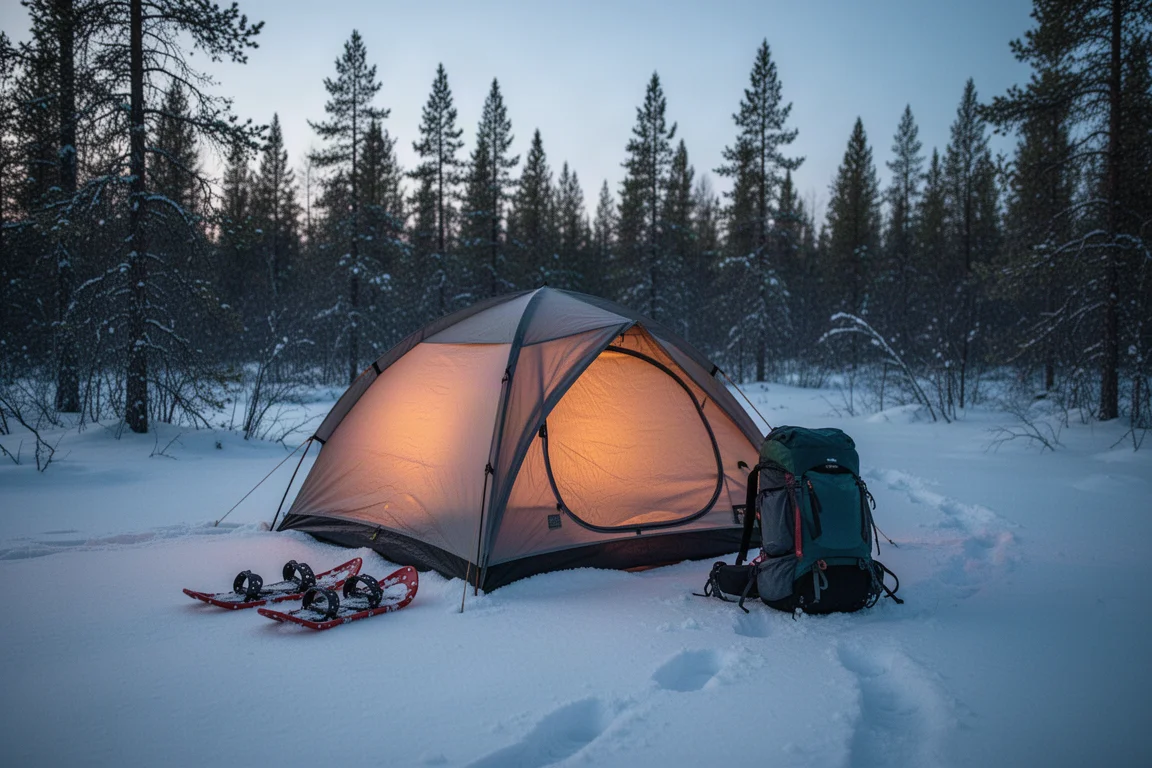
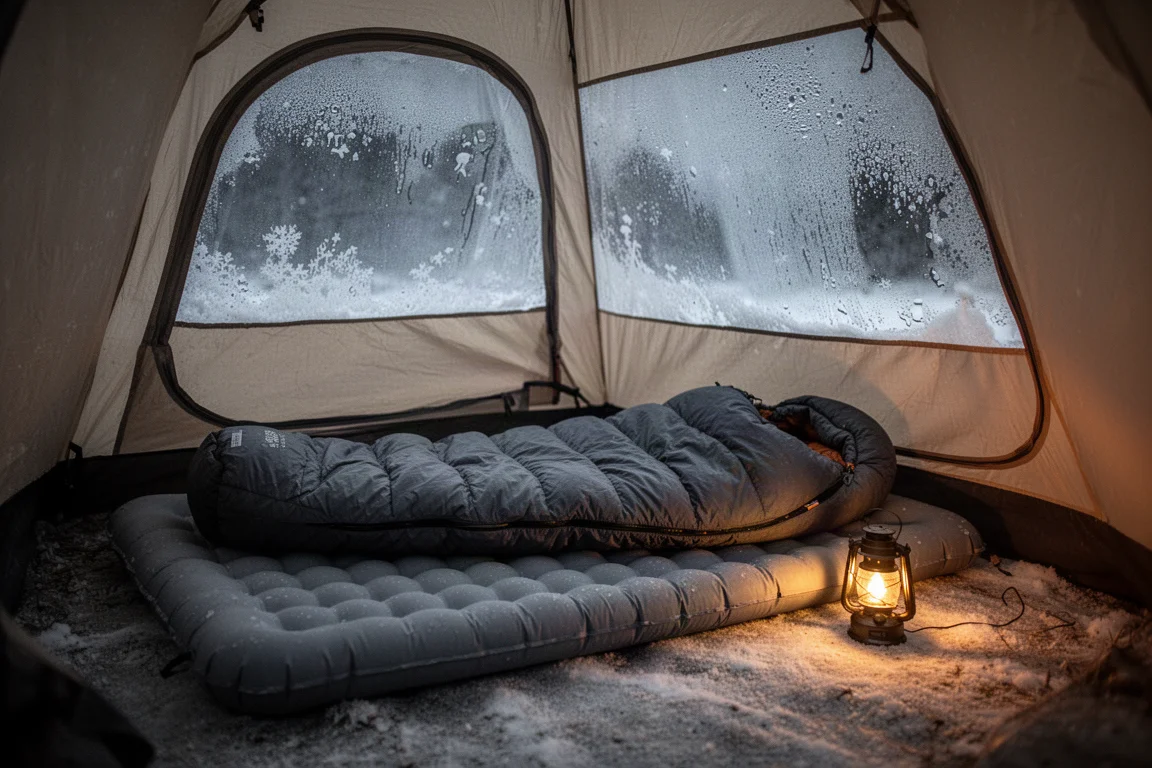
Both pads were used overnight in Canadian winter conditions, with the temperature holding near minus 13 °C for most of the night before dropping to minus 18 °C in the morning. While switching between the two through the evening, both handled minus 10 °C without any trouble at all.
The Highlander Napsack R 11 was the surprise. It stayed comfortable at minus 13 °C with no noticeable heat loss, and only around minus 15 to minus 16 °C did the first hint of cold wake a sleeper. That points to a comfort limit somewhere between minus 16 and minus 20 °C depending on how warm a person sleeps, which is a strong result for a pad at this price.
The Exped Ultra 10R was still going at the coldest point of the night. At minus 16 °C the reflective layers were noticeable, and sleep continued through to minus 18 °C with a warm torso. The one caveat is the rectangular shape: the lower legs felt a little cool, simply because a long wide rectangle exposes more sleeping bag surface to the surrounding air.
Comfort, Stability and Noise
Warmth is only half of a good night. The Highlander Napsack R 11 was comfortable enough on both back and side, but the Exped Ultra 10R felt better once the two were compared directly. The Exped’s slightly wider surface, thicker outer tubes and vertical baffling gave it a larger usable area and more confidence near the edges. Pressure relief was close to even between the two, with the Exped’s stretchy top fabric doing good work even when the pad was fully inflated.
Noise follows the same pattern. The Exped is quiet, producing only a faint material crinkle. The Highlander is louder, both from the dimpled surface under body movement and from contact with a tent floor. For anyone sharing a tent, that is worth factoring in.
Durability and Winter Reliability
Cold weather is hard on sleeping pads. Weld points are the most common failure location, and the Highlander’s dimpled design has many of them, with a welded circle around every dimple. That is not proof of a problem, but it is a design that deserves attention, especially since there is not yet a large body of user experience to draw on.
The Exped approach reduces the number of weld points by relying on long vertical baffles, and the brand’s welds have a solid recent track record with very few reported failures. Whichever pad you choose, it is worth reading through user reports for signs of repeated weld failures before committing to a winter trip.
Overall Buying Advice
At $135, the Highlander Napsack R 11 is one of the best winter-rated pads at its price point. Most pads near $100 that claim winter performance struggle once temperatures fall well below freezing, and this one does not. It is warm, reasonably comfortable, and it carries a genuine ASTM-tested R value of 11. It also sleeps colder than that number suggests, feels narrower and less stable at the edges, and makes more noise.
The Exped Ultra 10R is the more refined pad of the two. It is more comfortable, more stable, quieter, and it stayed warm at minus 18 °C without reaching its limit. The trade-offs are a higher price and a weight of 813 g that puts it on the heavier side for a backpacking pad.
Choose the Highlander if budget matters and you want a winter-capable pad that performs well beyond its price. Choose the Exped if you want the most comfortable and confidence-inspiring option here and do not mind paying roughly double.
Conclusion
Both pads earn their place among the warmest backpacking options with ASTM-tested R values above 10. The Highlander Napsack R 11 delivers surprising warmth for $135, with comfort and edge stability as the compromises. The Exped Ultra 10R costs more and weighs more, and in return it offers better comfort, a quieter night and warmth that held up at minus 18 °C. Either way, matching the pad to the temperatures you actually camp in is the decision that matters most.
Further reading
Related Reviews
Sleeping Pads
Best Backpacking Sleeping Pads 2026: Nine Pads Rated on Price, Comfort, Warmth, and Weight
Nine backpacking sleeping pads compared on price, comfort, warmth, and weight, from a $65 summer pad to a year-round option rated at R-7.3.
Sleeping Pads
Best Backpacking Sleeping Pads: Comfort, Warmth, and Weight Compared
A practical comparison of the Nemo Quasar 3D, Therm-a-Rest NeoAir XTherm Max, and Big Agnes Rapide SL for backpackers choosing between comfort, warmth, and packed weight.
Sleeping Pads
Best Backpacking Sleeping Pads: Ultralight, Winter, Comfort and Budget Picks
A practical roundup of the sleeping pads that stand out for ultralight weight, winter warmth, pressure relief and value, plus three popular pads that fell short.