Backpacking Gear
Winter Backpacking Gear: 9 Pieces Worth Trusting in Deep Snow and Cold
A field-tested look at nine winter backpacking items, from snowshoes and trail crampons to a one-pound shelter, a 6.9 R-value pad, and a 1000 fill down jacket.
Introduction
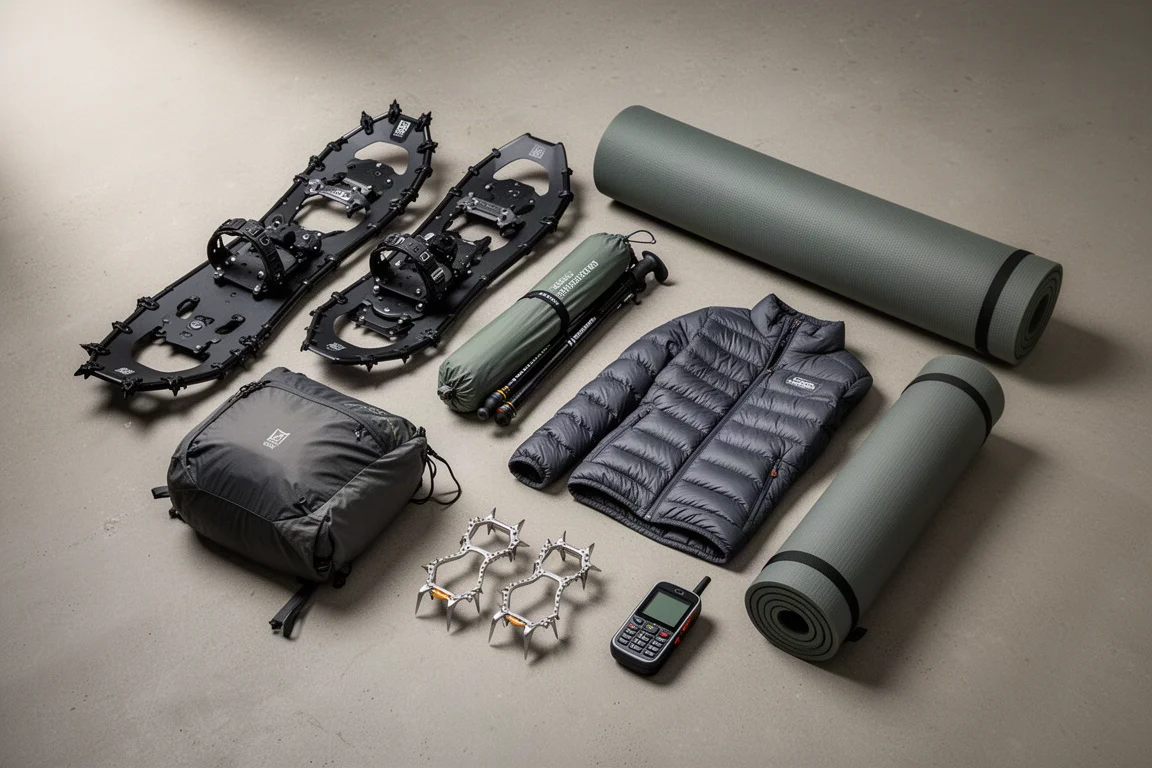
Winter backpacking asks a specific question of every item you carry: is it light enough to haul for miles and warm enough to trust when the temperature drops? On a multi-day traverse with nine feet of snow on the ground and a temperature spread of roughly 40 to 50 degrees between exposed high ground and the sheltered canyon floor, a handful of pieces stood out as genuinely load-bearing decisions.
This is not a complete packing list. It is a focused look at nine items that earned their place, what each one does well, and where the trade-offs sit.
What Made This Gear List Work
Two conditions shaped every choice. The first was weight. Long approaches on snowshoes are slow and physical, and every extra ounce compounds over a full day. The second was range. The same trip moved between deep snow and cold at elevation and much warmer conditions lower down, so gear had to work across climates rather than in one narrow window.
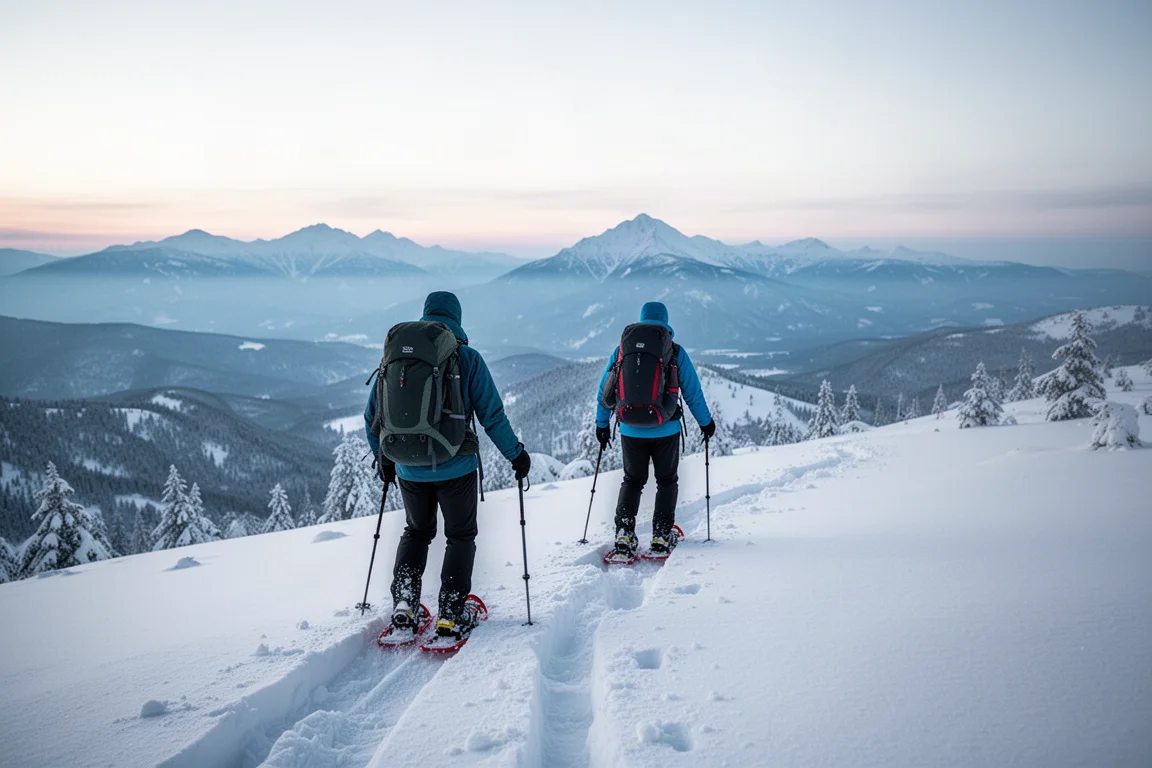
The result was a kit built around warmth-to-weight ratio, fast setup with gloves on, and traction that could be trusted on ice. Expensive gear is not automatically better gear, but in this category the lightest and warmest options do tend to cost more.
MSR Lightning Ascent Snowshoes
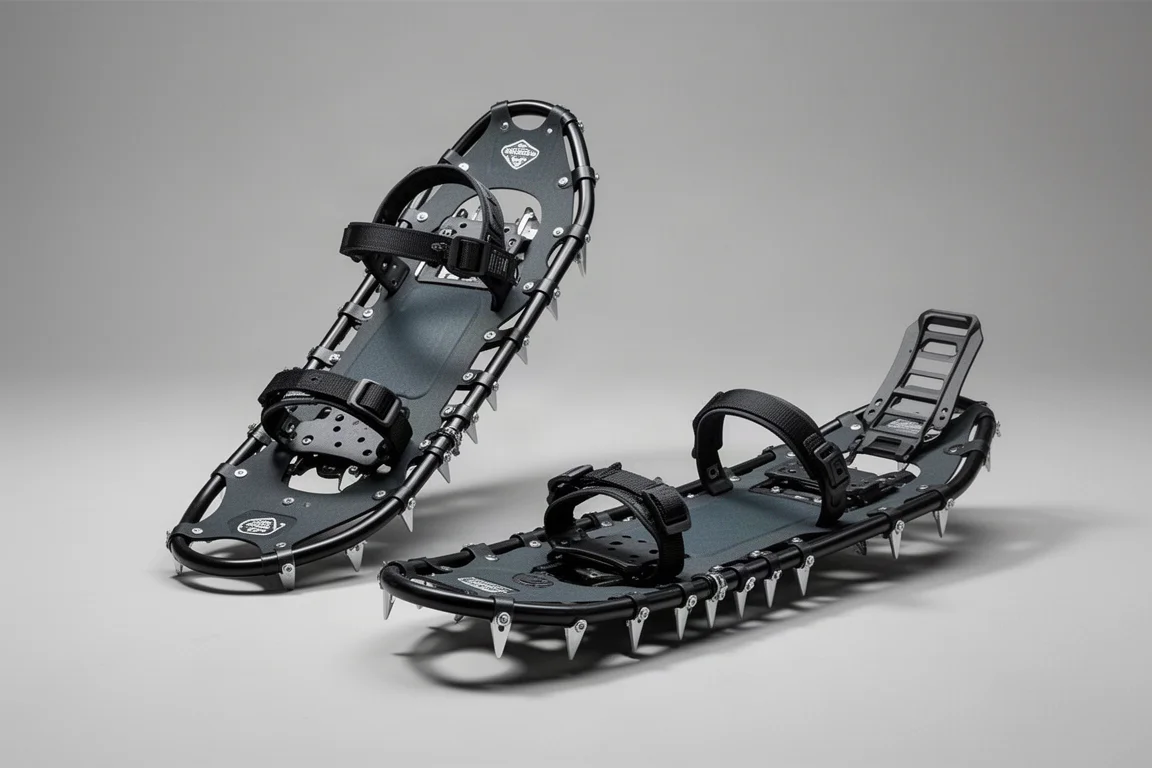
Snowshoes rarely make hiking easier. They keep you from sinking, and in exchange you carry extra weight on each foot while snow packs onto the deck and has to be lifted out with every step. That trade-off is worth accepting when the alternative is post-holing through deep powder.
The Lightning Ascent handles that job with a lightweight frame and a binding system that uses very few straps, which means it can be fastened without taking gloves off. The base carries aggressive traction teeth across the full length and along both sides, so sidestepping up a slope still bites. A heel bar flips up for climbing and keeps the foot closer to level, which reduces calf and foot fatigue on long ascents and makes the climb feel more like taking steps than pushing up a hill.
They are expensive, and they are not a piece of gear most people need often. In conditions where snow travel is the whole trip, they are the difference between an attempt and a no-go.
Zpacks Arc Haul Backpack
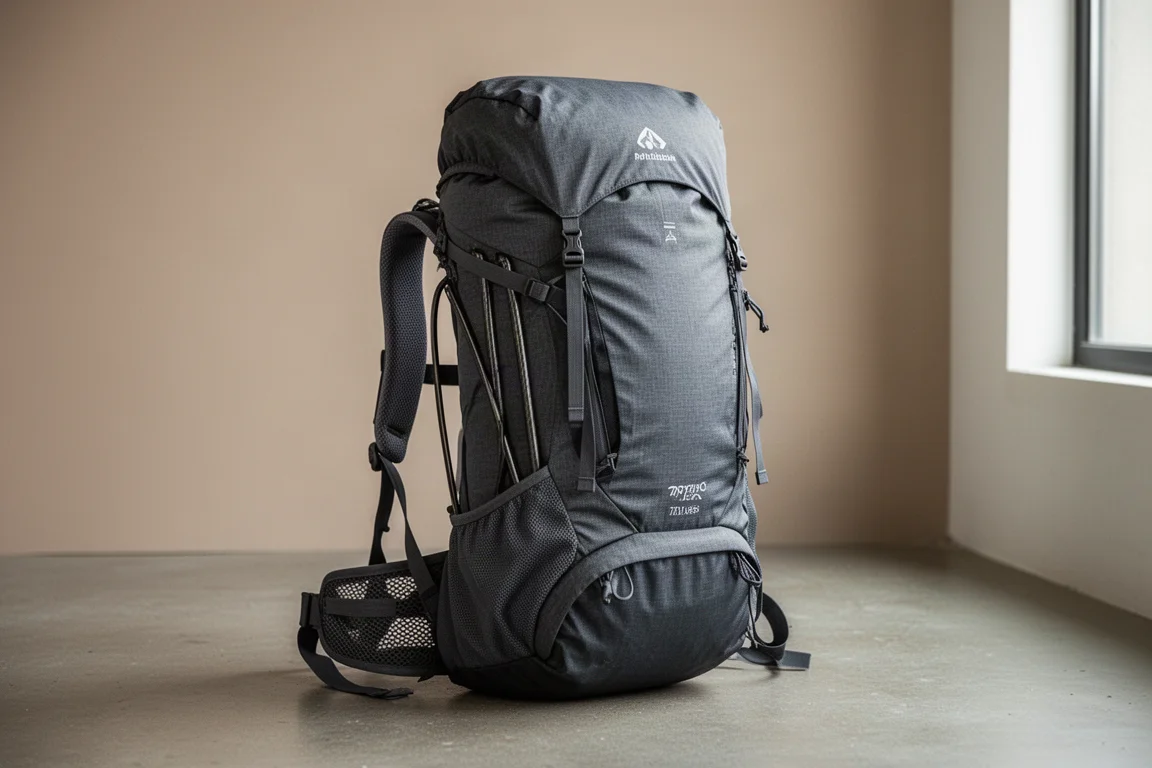
The Arc Haul is an ultralight 70-litre pack that weighs a little over 20 ounces. That combination of capacity and low weight is the reason it went on this trip: winter gear takes up far more volume than three-season gear, and a small pack simply would not have closed.
Loaded with roughly 34 to 35 pounds of gear, food, water, and fuel, it carried without any shoulder strain, despite using thin carbon fibre stays as the frame. The weight transfers to the hips cleanly enough that adjustment stops being a constant concern. At around $400 it is an expensive pack with very little material to show for it, but it is the one item on your back every single day. The main criticism is the hip belt attachment at the front, which is a little short and slightly awkward to loosen.
Durston X-Mid Pro 1 Tent
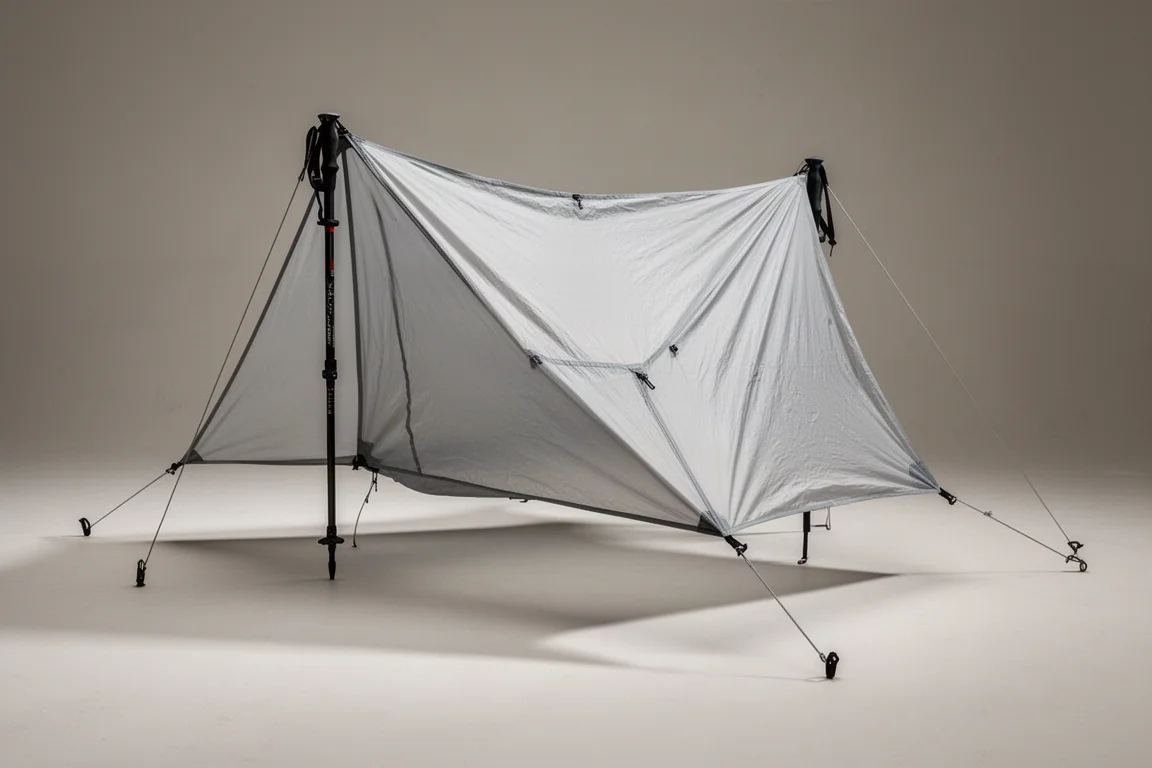
The X-Mid Pro 1 weighs about one pound, which is remarkable for a shelter that can stand up to wind. It is a trekking pole tent, so it pitches with two poles and a small number of stakes, and it goes up quickly.
That speed matters in cold conditions, and the wind performance matters more than it might seem. On exposed ground, a shelter that flutters or collapses turns a long day into a miserable night.
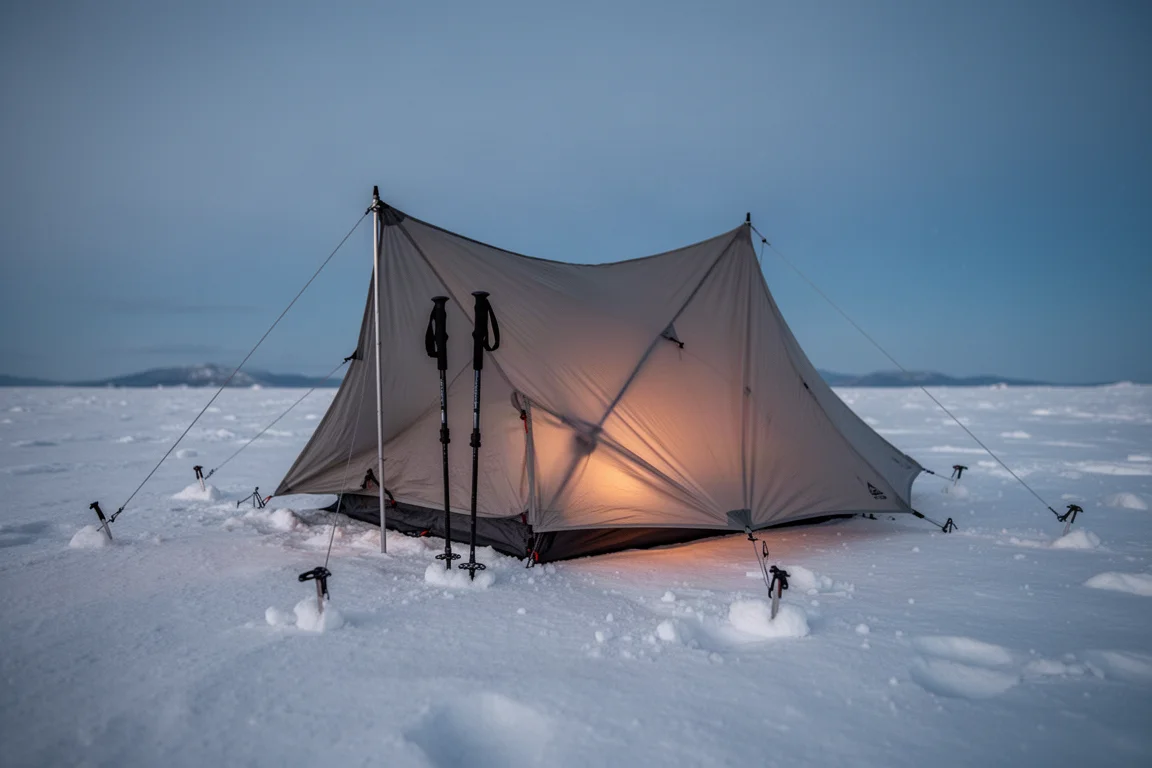
There is one practical catch in deep snow: trekking pole tips sink unless they are fitted with large snow baskets, which is how the shelter was anchored on this trip. Plan for that before you leave.
Hillsound Trail Crampons
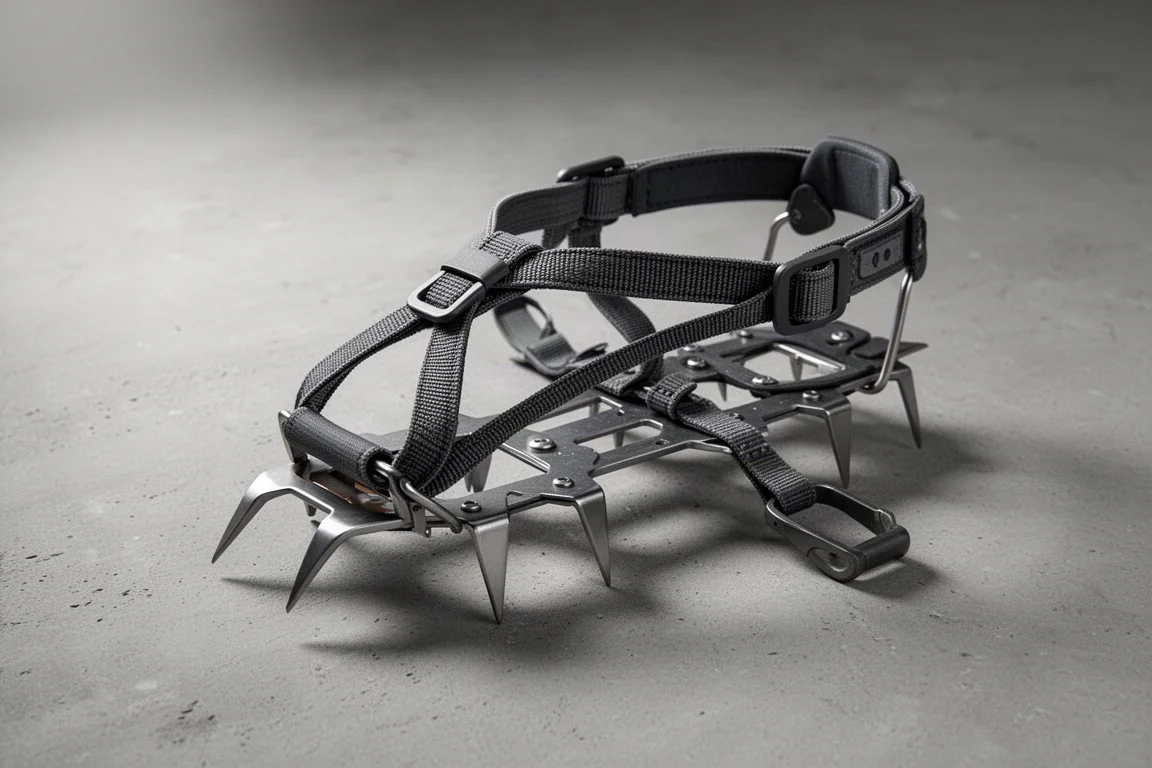
Trail crampons are the unglamorous item that makes icy terrain passable. These are beefy compared with lightweight microspikes, and they wrap around a boot or shoe with a harness that stays put.
On steep, ice-covered ground they provide the grip needed to move uphill at all. Without traction like this, a section that looks manageable from below can stop a group entirely.
Keen Bellows Flex Shoes
Choosing footwear for a trip that spans multiple climates is genuinely difficult. A trail runner is ideal for the warmer sections and inadequate for deep snow. A heavy insulated boot is the reverse.
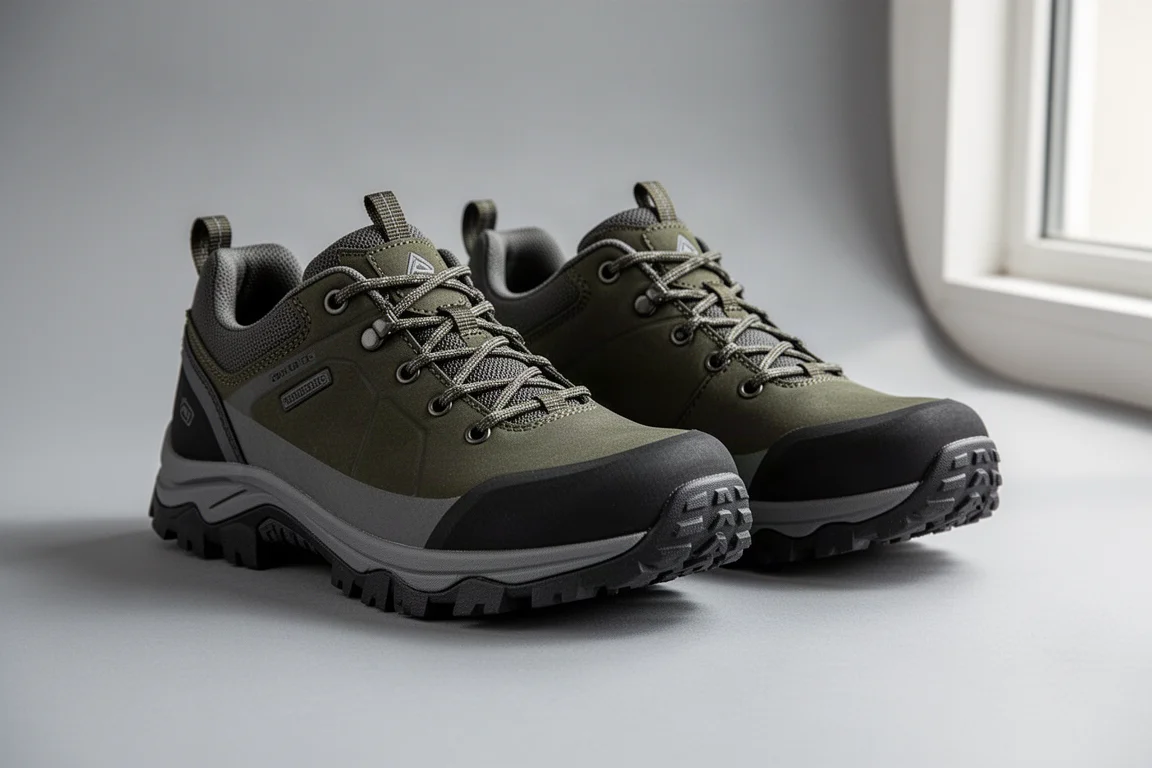
These sit in between. They are waterproof, uninsulated but thicker than an average trail runner, and warm enough to stay comfortable while wading through snow. The wide toe box lets toes spread rather than rub together, which reduces blister risk, and the toe cap is solid enough to take repeated kicks into ice and crust. Paired with gaiters, they kept snow out even when a foot sank to knee depth.
Montbell Plasma 1000 Down Jacket
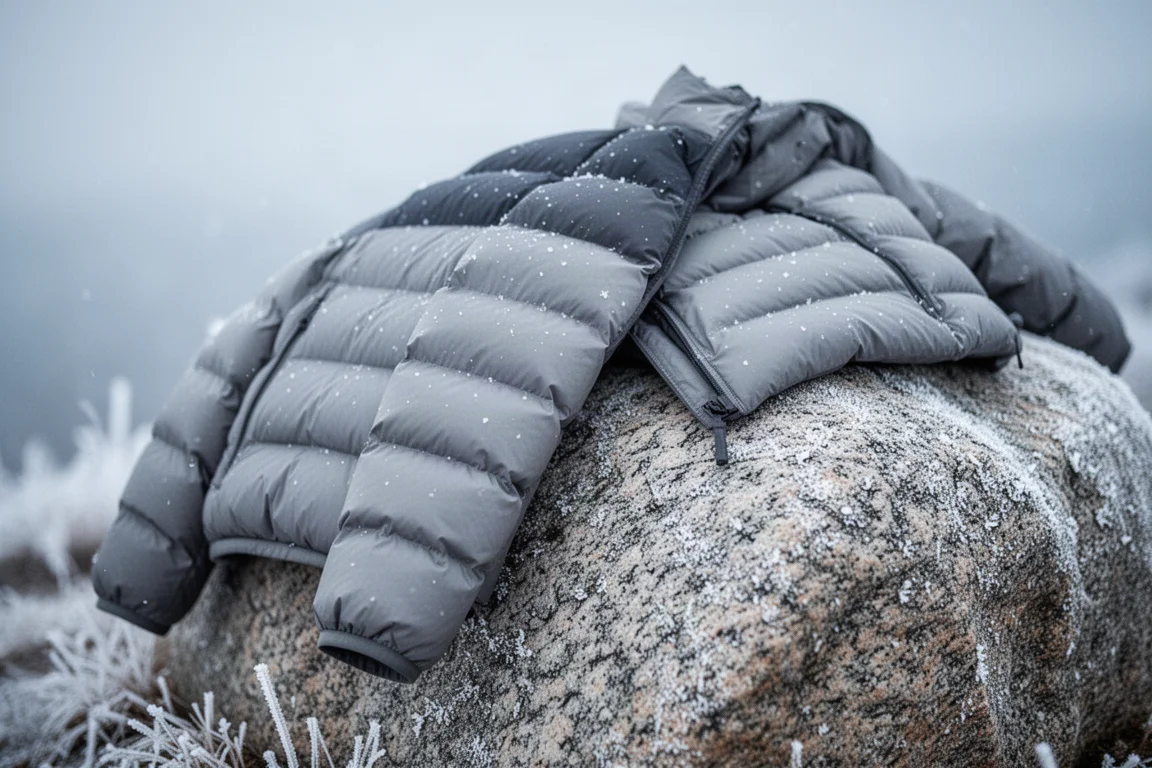
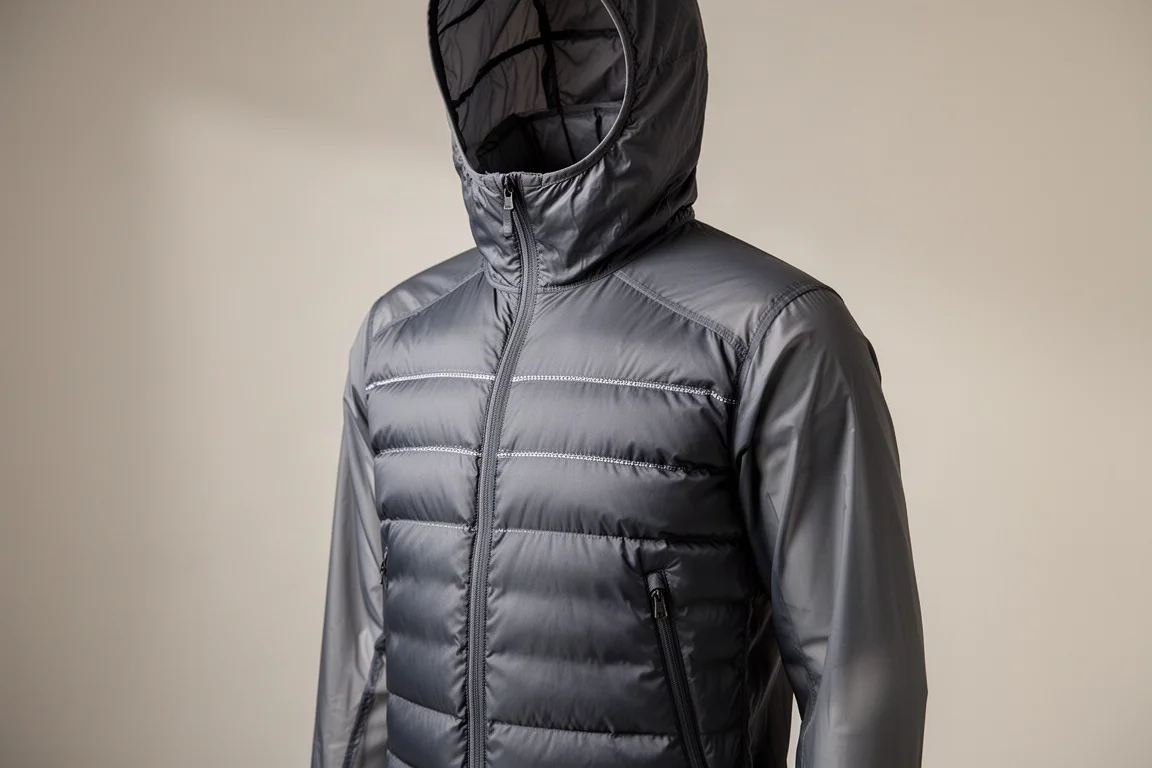
At around 8.5 ounces with 1000 fill down and a four-season loft, this jacket is the clearest example on the list of paying for warmth-to-weight. It kept the wearer warm below 20 degrees Fahrenheit as the only jacket on the trip, which is roughly twice the warmth of the Mountain Hardwear Ghost Whisperer.
It is a fully featured piece despite the weight, with pockets, a hood, and cinches. It is also extremely expensive, in the region of $400 to $500, and that is the honest trade-off. Cheaper jackets exist, but a lighter or less warm option would not have been enough as the sole insulation layer in those conditions.
If your budget allows only one place to spend more, this is the category where the difference is felt every evening in camp.
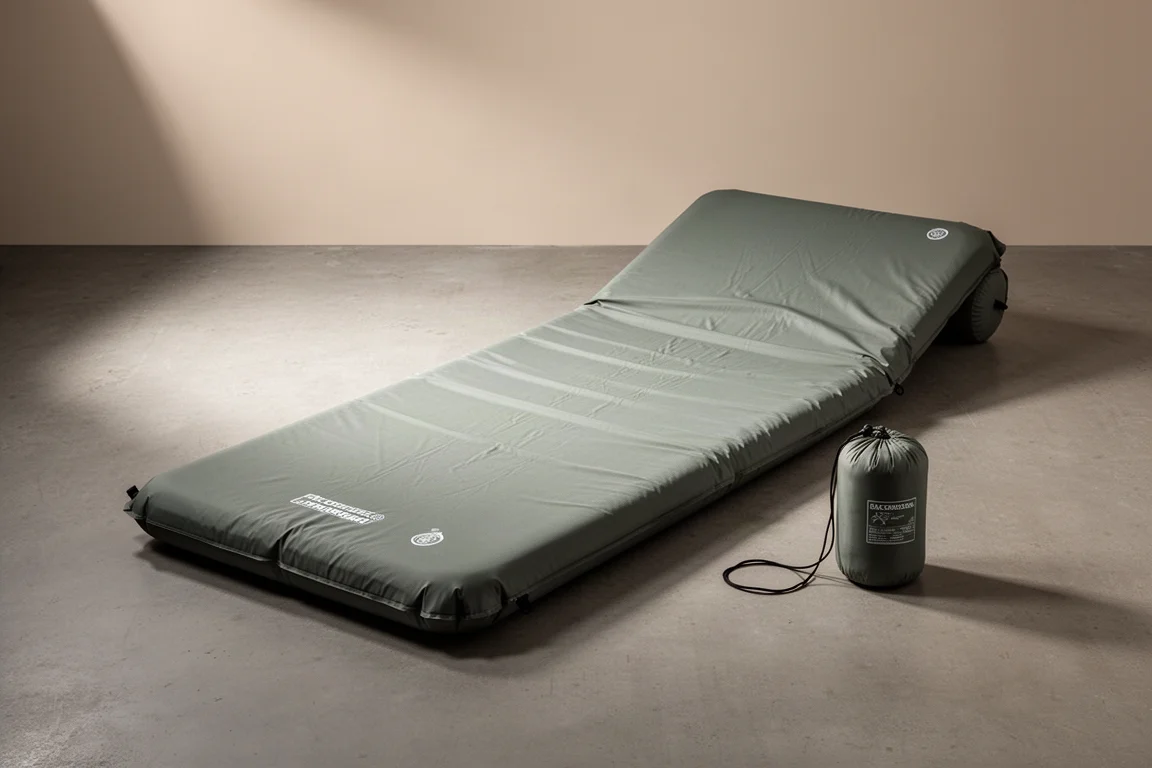
Therm-a-Rest NeoAir XTherm Sleeping Pad
A 6.9 R-value is the headline. That rating is what allows the pad to be laid directly on snow without the cold seeping up through the night, which is exactly how it was used.
The long version weighs somewhere between 17 and 20 ounces, giving it the best warmth-to-weight ratio in its class. For winter camping, the pad is not the place to save weight, because no sleeping bag can compensate for heat loss underneath you.
Outdoor Vitals Summit 0°F Sleeping Bag
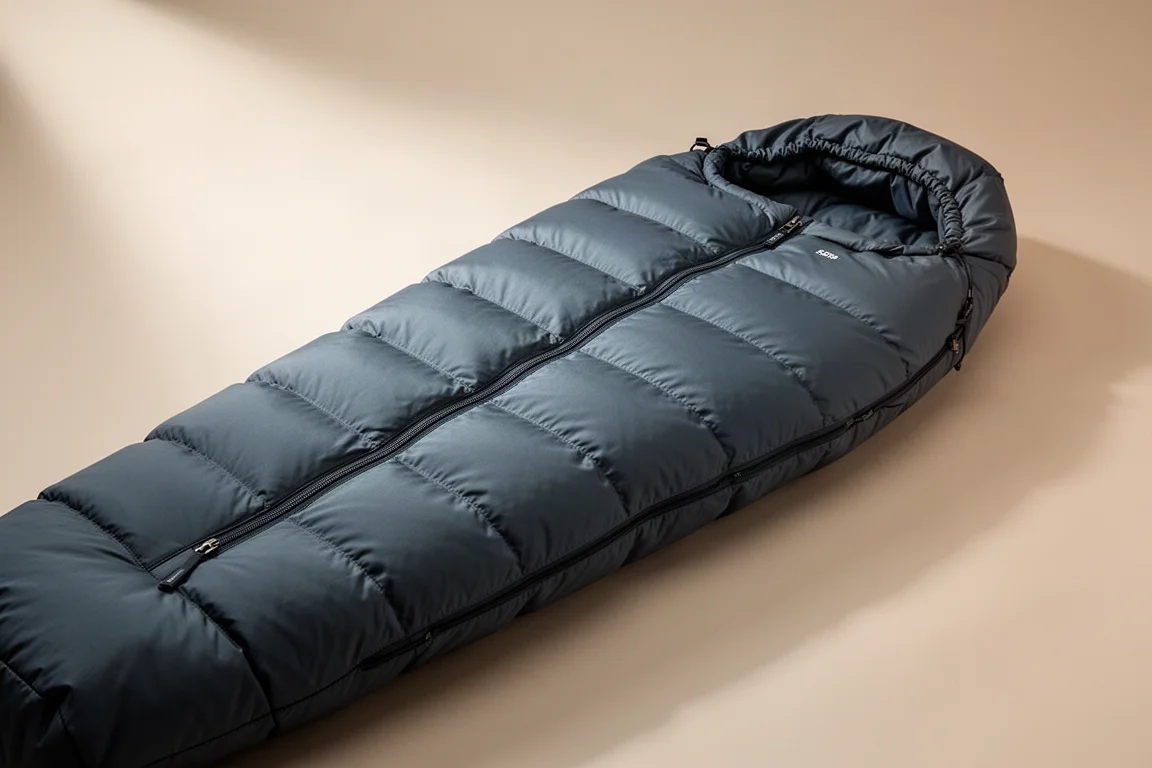
The Summit uses a centre zip that runs up the middle of the bag rather than along one side. That design detail matters more than it sounds: the zipper stays reachable whether you sleep on your back or your side, and the insulation is uniform across the top, sides, and bottom instead of being shifted around to save grams.
Many manufacturers move down around the bag on the assumption that a sleeper stays in one position all night. This bag does not make that assumption, so it works for back sleepers and side sleepers alike. It is also light for its warmth and inexpensive relative to comparable bags. On a night that dropped to 16 degrees Fahrenheit, the chill came from other factors rather than the bag, and the rating holds up well enough to take it into the single digits with confidence.
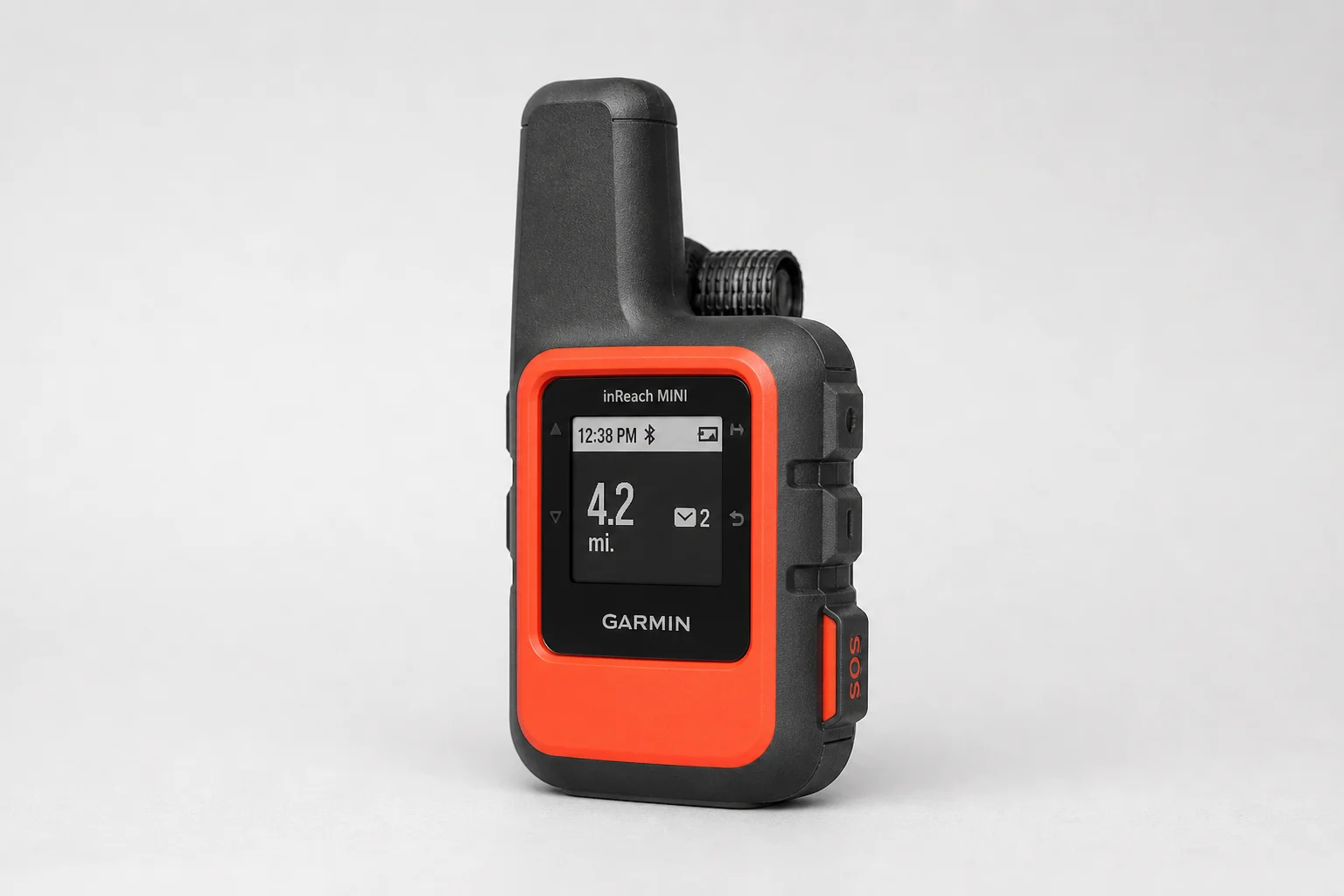
Garmin inReach Mini
The inReach Mini is a satellite communicator with an SOS button that can call for rescue, and it goes on every trip regardless of season. It was carried on this one as well, though the SOS was not triggered because cell service happened to be available.
That is exactly the point of carrying it. A satellite communicator is the item you hope stays unused, and it is the one piece of safety equipment that works where phones do not.
Buying Advice
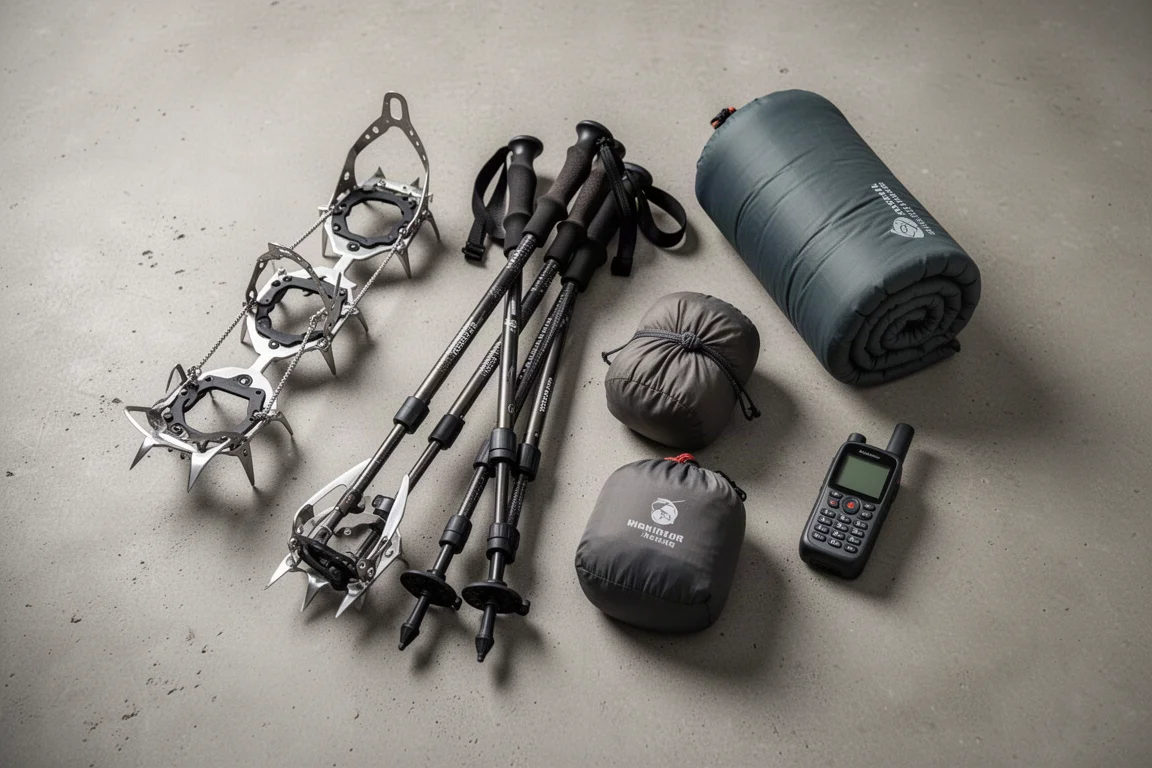
Start with the items that determine whether the trip happens at all. Snowshoes and crampons are non-negotiable for deep snow and ice, and trekking poles with properly sized snow baskets turn a trekking pole shelter from a problem into a solution.
From there, spend where the weight and warmth math is worst. A pack that carries 35 pounds without shoulder strain, a sleeping pad with enough R-value to lie on snow, and a down jacket that is genuinely warm for its weight will do more for a winter trip than a long list of small accessories. Expensive ultralight gear is not required to enjoy winter backpacking, but if you are choosing one place to invest, choose the layer between you and the ground or the layer between you and the cold.
Capacity is the last consideration worth naming. A larger ultralight pack costs very little extra weight compared with a smaller one, and winter gear plus food and fuel will fill the space quickly.
Conclusion
Nine items, one theme: gear that removes a problem rather than adding one. The snowshoes and crampons made the terrain possible, the pack and shelter kept the load manageable, and the sleep system and jacket made the cold survivable. None of it is cheap, but every piece on this list earned its weight.
Further reading
Related Reviews

Backpacking Gear
Building a 10 lb Base Weight: An Ultralight Backpacking Gear List
A practical walkthrough of the ultralight pieces behind a 10 lb base weight, from a 765 g pack and a roomy one-person tent to a full camp chair and a dependable water filter.
Backpacking Gear
A 15-Pound Lightweight Backpacking Gear List for Solo Trips
A beginner-friendly 15-pound backpacking setup built from easy-to-find gear, with notes on what each piece does, how it packs, and where to spend your attention.
Backpacking Gear
8 Ultralight Backpacking Gear Upgrades Worth Carrying
Eight small, affordable backpacking upgrades that solve real trail annoyances, from a pillow that stays put to a fuel valve that rescues leftover canister gas.