High-End Audio
Wilson Audio Watt Puppy Review: A Modern Take on an Iconic Loudspeaker
A close look at the 2024 Wilson Audio Watt Puppy, covering its Alex V tweeter, Sasha V woofers, amplifier demands, custom ordering process and on-site installation.
Introduction
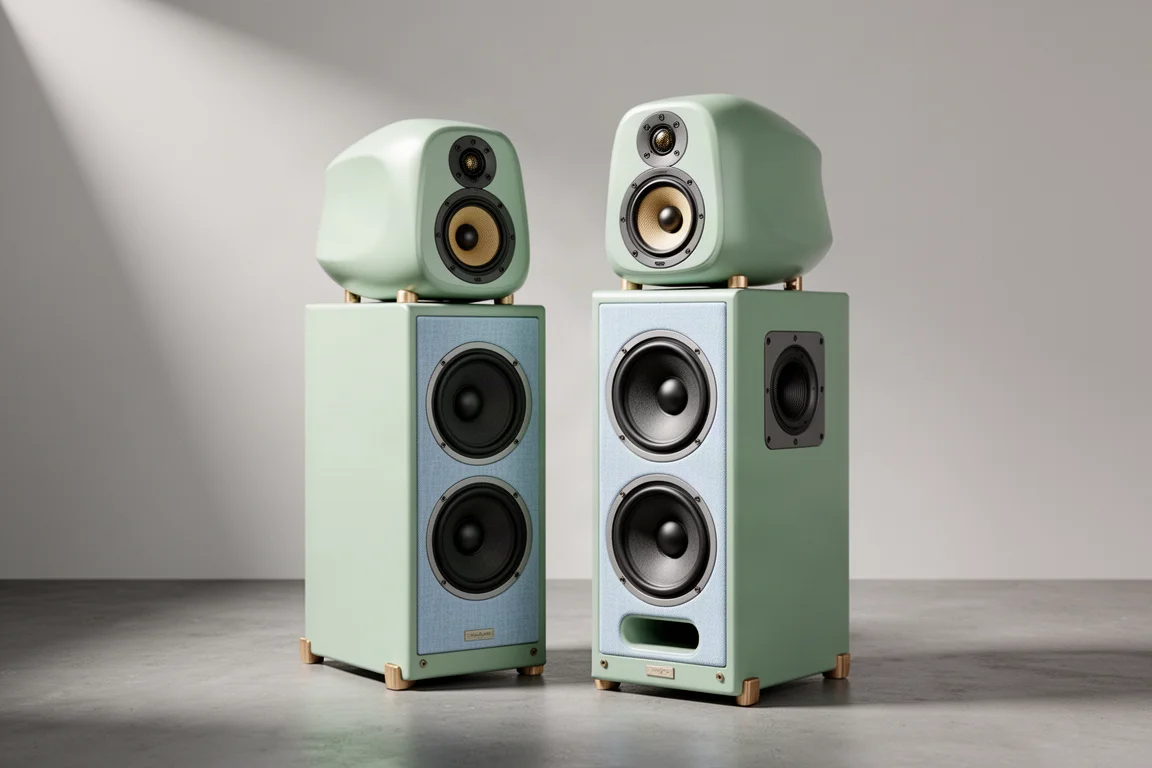
Wilson Audio’s Watt/Puppy story begins in 1986 with the Watt, a compact triangular two-way stand-mounted speaker designed for founder Dave Wilson’s recording studio. It combined a 1-inch inverted dome tweeter with a 6.5-inch woofer. When the Watt proved unsatisfying alongside third-party subwoofers, Wilson designed the Puppy, a bass enclosure housing two 8-inch woofers, and the Watt/Puppy was born. The model stayed in continuous production from 1989 to 2011, leaving behind a legacy that few speakers have matched.
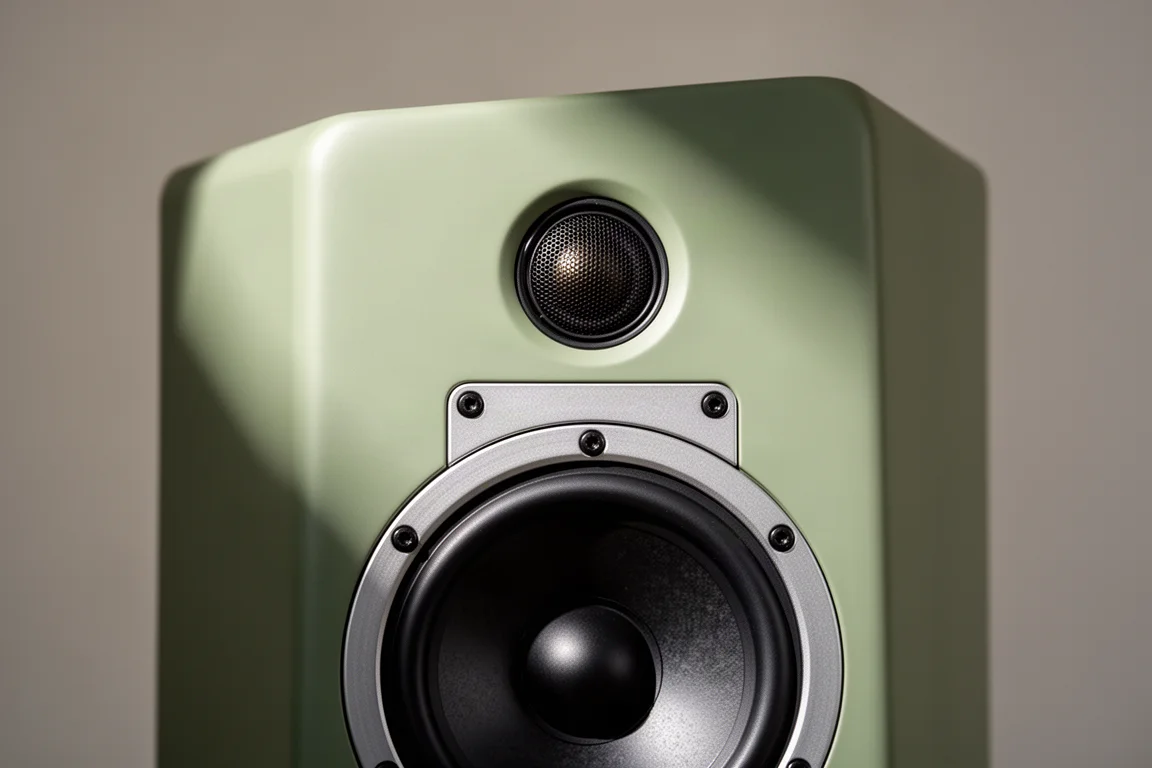
The 2024 Watt Puppy celebrates Wilson Audio’s 50th anniversary, and it borrows heavily from the company’s larger designs. The 1-inch CSC tweeter was originally developed for the Alex V, a $135,000 tower speaker. Below it sits a 7-inch quadromag midrange driver, with both housed in a separate time-aligned module. Two 8-inch woofers sourced from the more expensive Sasha V handle the low end in a rear-ported base enclosure. Wilson quotes a frequency response of 26 Hz to 30 kHz, 89 dB sensitivity and a nominal impedance of 4 ohms, and the company is upfront that the speaker can dip below 3 ohms, so a capable amplifier is required for the best results.
Who This Speaker Is For
This is a speaker for listeners building a serious two-channel system, and it doubles as an excellent left and right main pair in a home theater setup. Its center imaging and intelligibility are strong enough that the lack of a center channel was never an issue with movie material. Buyers who want subwoofer-like bass without adding a subwoofer, and who appreciate a personalized ordering and installation process, will get the most from it.
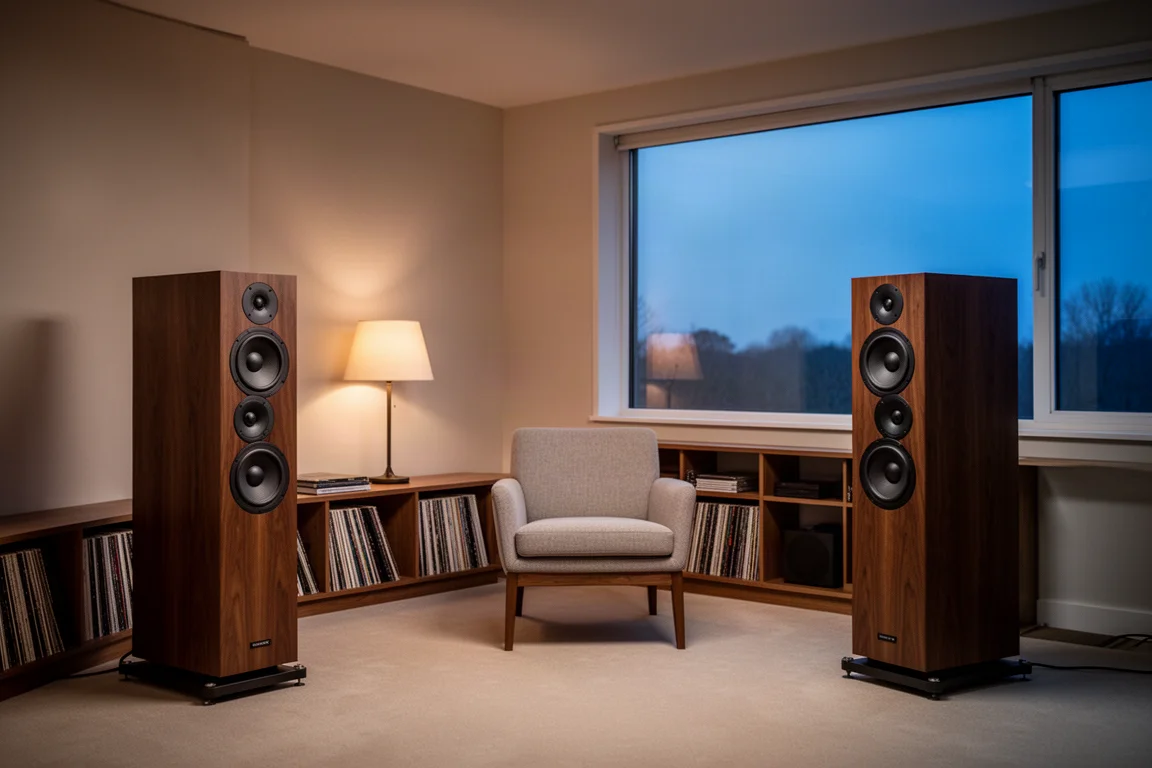
It is not the right choice for anyone who wants a fully active, self-contained speaker, or for a system built around a modest amplifier. The Watt Puppy asks for current, and it rewards a system that can deliver it.
Main Strengths
Coherence is the defining quality here. The cabinet is remarkably silent, so the individual drivers stop announcing themselves and the sound floats free of the enclosures. The result is a stable, holographic stage that holds up across source material, from well-recorded acoustic sessions to rougher digital files. Where some high-end speakers suggest extra detail through added energy in the upper midrange and treble, this one achieves it by stepping out of the way.
Bass performance is equally convincing. Measurements at the listening position reached down to 20 Hz in-room, roughly 4 dB below the 75 dB measurement level, and the response stays notably linear from about 300 Hz up to 20 kHz. The low end pressurizes a room in a visceral way while keeping its focus, detail and speed, so bass notes arrive with unusual immediacy. A subwoofer is not required, and movies benefit just as much as music.
How the Watt Puppy Compares With Other High-End Speakers
Against the Bowers & Wilkins 800 Signature, the Watt Puppy comes out as the more affordable option. The Signature asks $60,000, and at that figure a complete system could be built around the Watt Puppy with money left over. The Watt Puppy is also smaller, far more customizable, and it comes with professional installation and a more personal ownership experience.
Compared with the Focal Diablo Utopia Color Evo, a bookshelf design that retails close to $26,000 for the pair before stands, the Watt Puppy costs more but delivers a substantial step up in performance, with no need for stands or a subwoofer to fill out the bottom end.
Next to the Klipsch La Scala, the Watt Puppy is the easier speaker to live with. The La Scala is brilliant with piano and jazz, and it costs roughly half as much, but it needs considerable extra effort to reach a comparable level, and listeners who want deep bass on electronic material will find it gives up half the performance. The Watt Puppy is also easier to accommodate in a room thanks to its smaller footprint.
The Bang & Olufsen Beolab 90 remains in a class of its own in some respects. As a fully active design with built-in DSP and beam steering, it can be reconfigured and revoiced on the fly, and it reaches subsonic frequencies the Watt Puppy cannot match. In sheer scale, dynamics and three-dimensional presentation, the Beolab 90 goes further. It also costs roughly five times as much, which makes the comparison a lopsided one on price alone.
Things to Consider Before Buying
Amplifier matching deserves attention before anything else. With impedance dipping below 3 ohms, the Watt Puppy needs a high-current amplifier to sound its best. Pairing it with the wrong electronics will hold back everything described above.
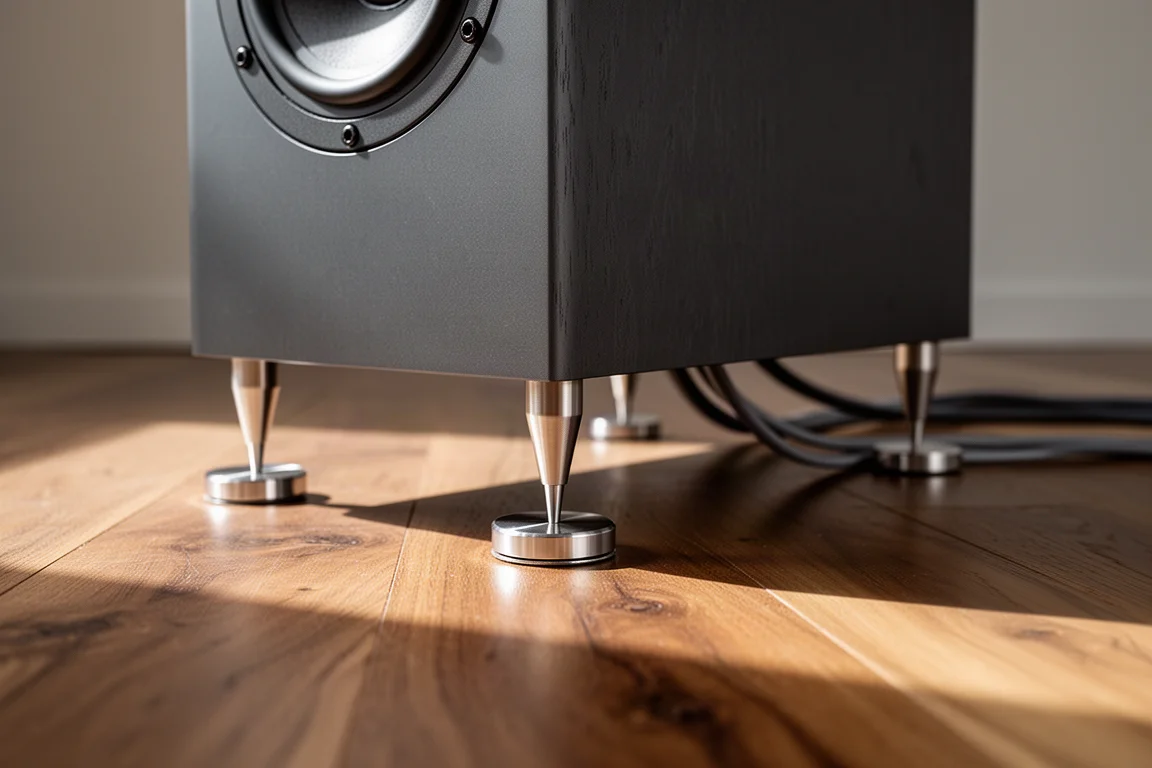
Physical ownership is another factor. These are very heavy, very dense loudspeakers, and they need to sit on purpose-built spikes to perform at their best. They are not towers you slide out of the way on a whim. Wilson offers sliders that make moving them easier, but they are sold separately for $1,000. Grille attachment has moved away from Velcro to metal pins, which is a step forward, though the pins can be fiddly to work with and careless handling risks scratching the finish.
The ordering process is part of the product. Buyers choose the cabinet finish, grille cloth and hardware colors, and the build takes around three months. Wilson-trained professionals then assemble and position the speakers on site at no additional charge, a process that can take several hours. Placement is dialed in with remarkable precision, often a quarter of an inch at a time, using familiar test tracks until the sound locks in.
Buying Advice
Budget for the whole system, not just the speakers. The Watt Puppy is priced at approximately $40,000 for the pair, and a high-current amplifier is a genuine requirement rather than an optional upgrade. Room size matters less than placement quality, and because installation is included, buyers get that part handled by people who know the speaker well.
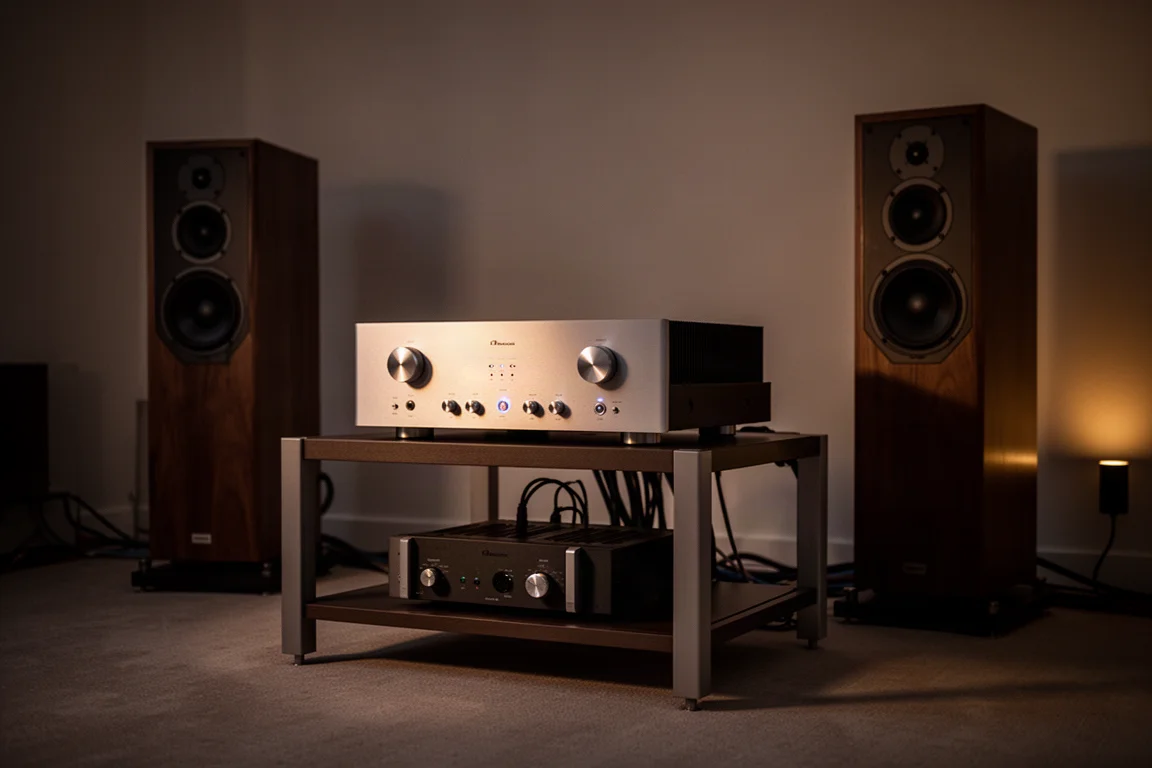
For anyone weighing a high-end purchase in this range, the practical path is to compare the Watt Puppy against the alternatives in a familiar room, and to think about how much the finish, the grille and the installation service matter to you. Those elements are a real part of the value here. So is the fact that the speaker does not need a subwoofer, which simplifies both the system and the room.
Conclusion
The 2024 Watt Puppy carries a long name forward with modern driver technology, a bespoke ordering process and an installation service that removes most of the setup guesswork. It delivers deep, controlled bass without a subwoofer, a silent cabinet and a level of coherence that makes the hardware disappear. The caveats are real but narrow: it needs serious amplification, it is heavy, and a few accessories cost extra. For listeners shopping at this level, those trade-offs are worth understanding before committing.
Product link
View more details for Wilson Audio WATT/Puppy
This product is mentioned in the review. Check the specifications, options, and compatibility before buying.
View more details for Wilson Audio WATT/PuppyFurther reading
Related Reviews
High-End Audio
Accuphase E-3000 Review: A Class AB Integrated Amplifier Built to Last
The Accuphase E-3000 is the entry point into a legendary Japanese high-end line. Here is how it sounds, how it is built, and who should consider it.
High-End Audio
Arreté Floorstanding Speakers and Benchmark HPA2: A Premium Pairing Worth Hearing
A close look at how Arreté floorstanding speakers and Benchmark HPA2 power amplifiers pair up, what each component contributes, and what to weigh before buying.
High-End Audio
Aurelia Acoustics MRB1 Review: Marble Cabinets and a Big, Lively Sound
The Aurelia Acoustics MRB1 pairs a marble cabinet with Accuton ceramic drivers and a lively, spacious sound that stays easy to listen to. Here is what to know before buying.