High-End Audio
Arreté Floorstanding Speakers and Benchmark HPA2: A Premium Pairing Worth Hearing
A close look at how Arreté floorstanding speakers and Benchmark HPA2 power amplifiers pair up, what each component contributes, and what to weigh before buying.
Introduction
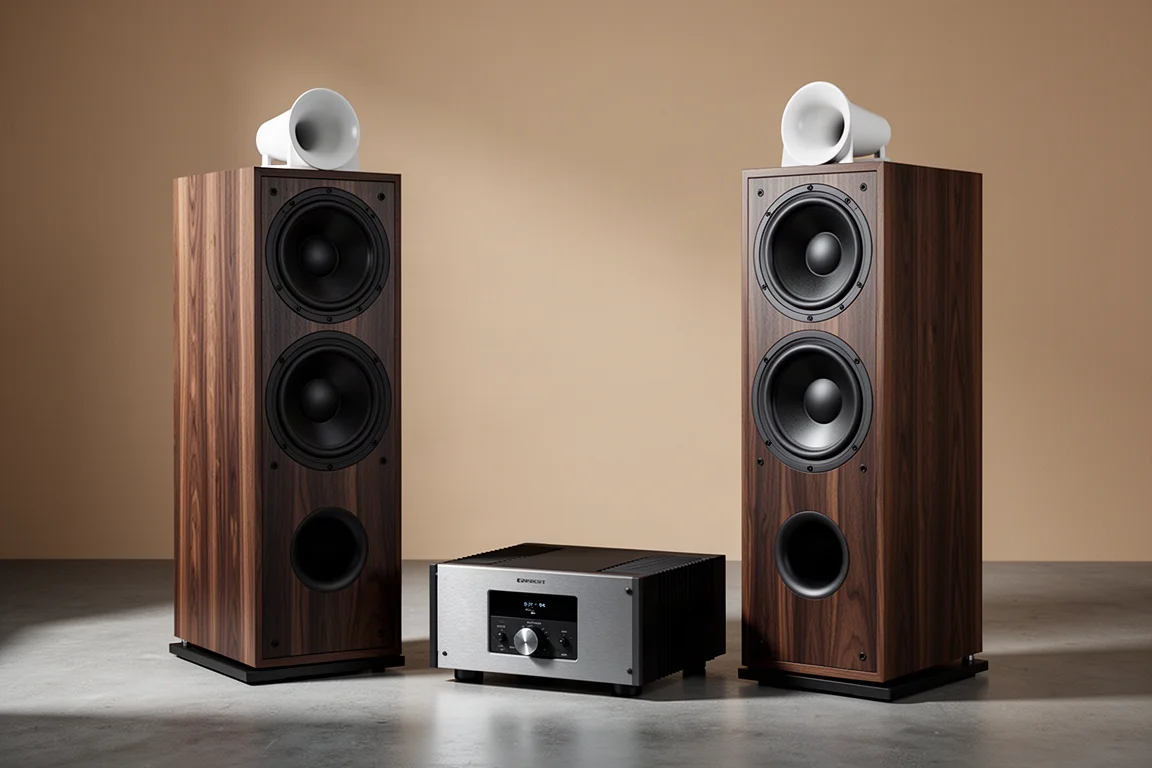
A passive floorstanding speaker and a compact solid-state amplifier can be a surprisingly potent combination when both are built around the same priorities: low distortion, tight bass, and a clean midrange. The pairing of Arreté floorstanding speakers with Benchmark Media Systems amplification is a good example, and it made for one of the more memorable demonstrations of a recent hi-fi show.
The Arreté towers are built in Latvia, and the electronics come from Benchmark Media Systems. Together they produced deep, punchy bass and unusually clear vocals with no equalisation applied anywhere in the chain. This article looks at what each component contributes, where the pairing shines, and what to weigh before committing to a system like this.
What This Pairing Brings to a Listening Room
The signal chain was deliberately simple: a clean digital source feeding Benchmark electronics and then the Arreté towers. No room correction, no EQ, no processing. What came through was a presentation with strong spatial qualities: individual details in a recording arriving from distinct positions, a wide soundstage, and vocal lines that stayed clear even when the low end was working hard.
Bass was the standout. A single floorstanding speaker with an eight-inch driver at the front and another at the rear produced the kind of weight and decay you would normally associate with large subwoofers. Just as notable, the system kept its composure as the volume came up: no sense of compression, no hardening of the treble, and no listening fatigue over long stretches.
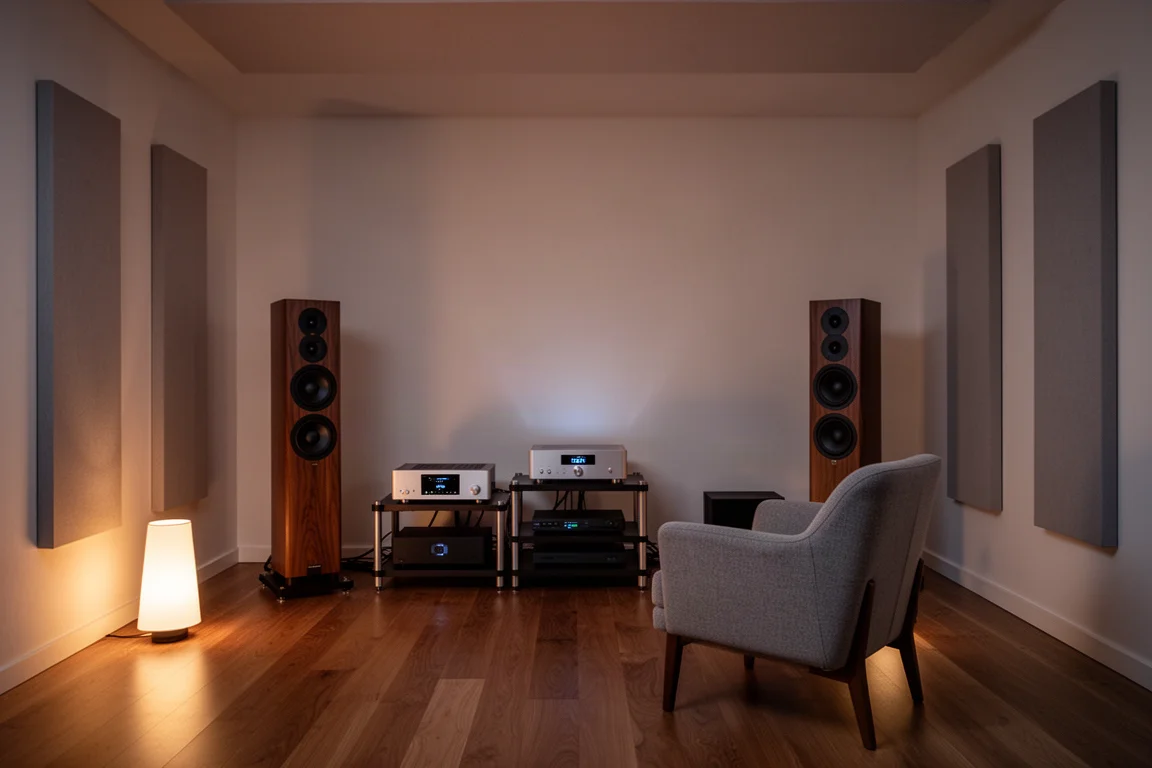
That combination of scale and composure depends on both halves of the system. The speakers have to move air cleanly, and the amplifier has to deliver current without adding anything of its own.
Arreté Floorstanding Speakers: Design and Character
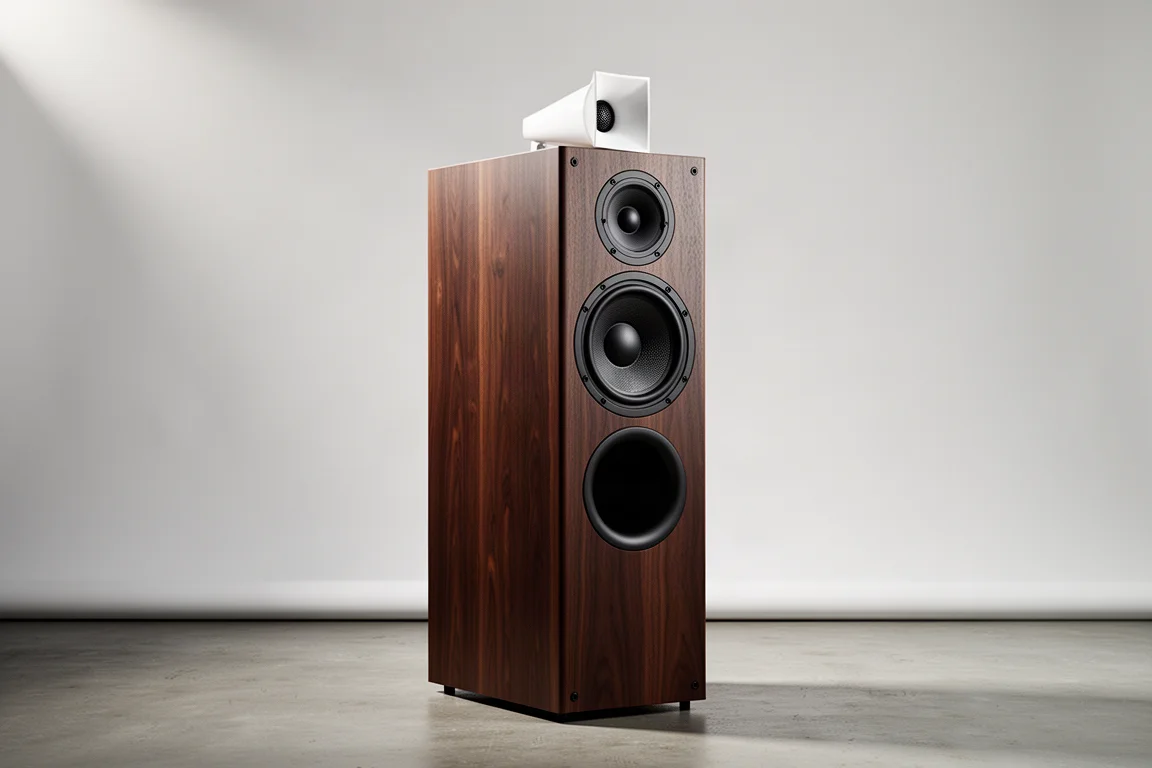
Arreté builds its speakers in Latvia, and the floorstanding model takes an unusual approach to the low end. The cabinet is a large, ported enclosure with an eight-inch driver on the front baffle and a matching eight-inch driver on the back. A small white waveguide tweeter horn sits on top, which looks unconventional at first and makes more sense once you hear how the top end integrates with the rest.
The design goal was bass that goes deep and still punches. That is difficult to achieve in a fully passive speaker, and Arreté solved it partly through acoustic design and partly in the crossover, suppressing the frequencies that typically make a speaker sound boomy and tuning the cabinet so the bass stays transient-perfect.
The rear-firing woofer does double duty. Because the two woofers work against each other in a push-push arrangement, they cancel some cabinet resonances. The distance differences between the front and rear drivers also average out the peaks and dips caused by the speaker’s position relative to the wall behind it. In practice, that means smoother low-frequency behaviour in a real room, without digital correction.
Benchmark HPA2: Clean Power in a Small Chassis
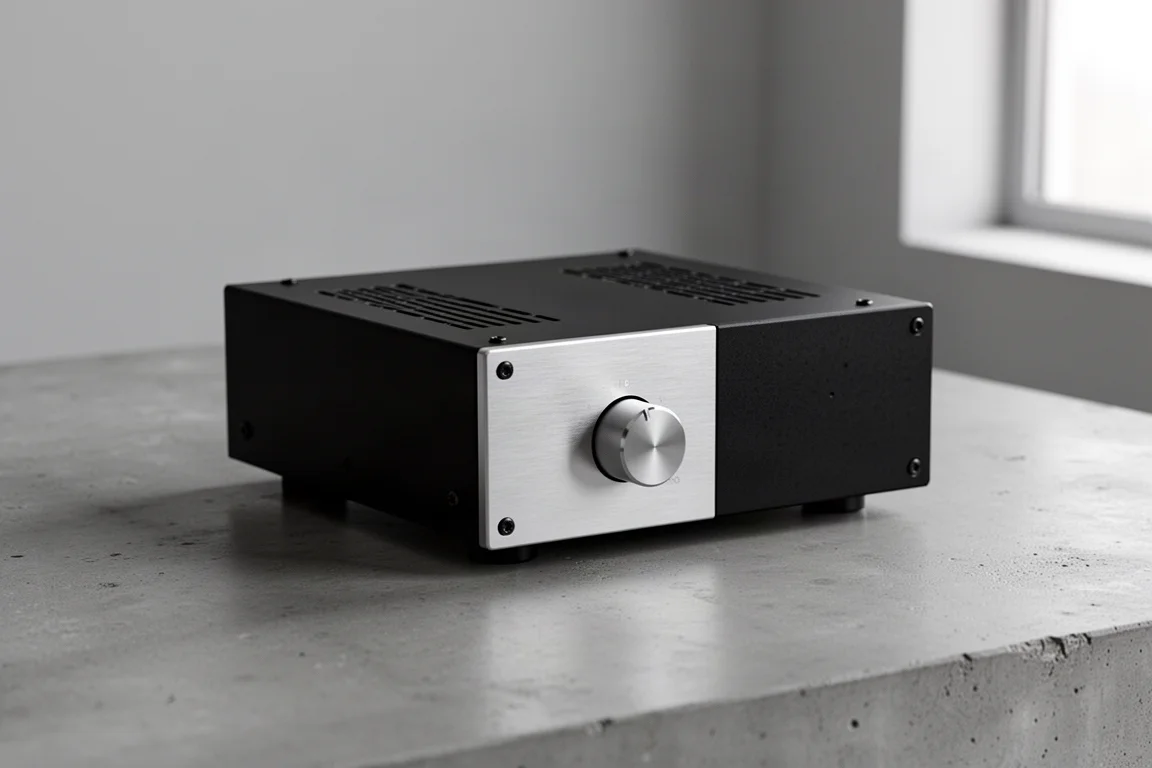
The Benchmark HPA2 is a compact power amplifier with a minimalist front panel, and it is easy to mistake for something far less powerful. A small switch on the rear panel selects between stereo and bridge mono operation, and in bridge mono a single unit delivers 380 W into 8 ohms.
The headline claim is transparency. Distortion and noise stay below the threshold of hearing at every playback level used in the room, all the way to the amplifier’s clip point. The music is never masking audible artefacts, because there are none to mask. In a system like this, the character you hear comes from the speakers and the room rather than from the electronics.
The other half of the story is current delivery. Low output impedance and a high damping factor give the amplifier firm control over the woofers, which is exactly what a bass-heavy passive tower needs. Even when the system was driven hard, the low end stayed disciplined and the amplifier never sounded like it was running out of headroom.
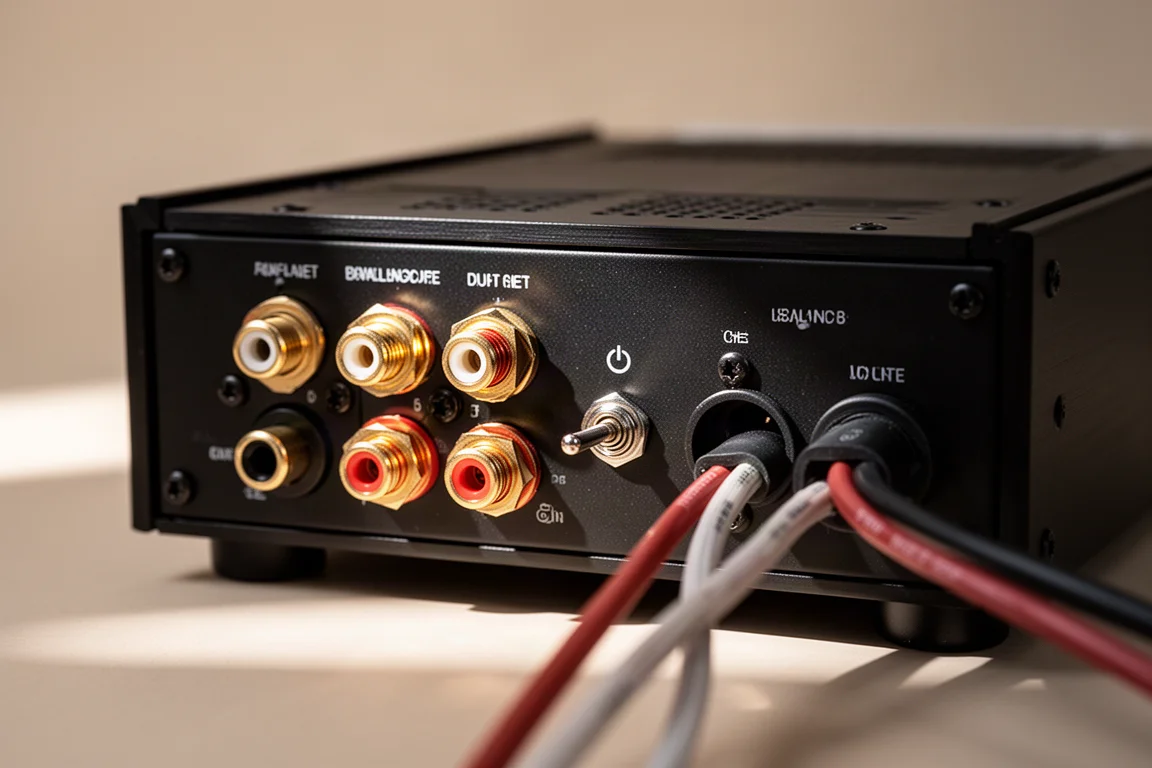
That combination of very low distortion and strong bass grip is why these amplifiers suit a speaker that depends on passive crossover tuning rather than digital correction.
How the Arreté Speakers and Benchmark HPA2 Work Together
Good pairings are usually about balance rather than brute force. Here, the speaker does the acoustic work, shaping deep bass through cabinet and crossover design, while the amplifier supplies clean power with minimal output impedance. The result is a system where heavy bass and clear vocals coexist instead of competing.
It also keeps the system simple. There was no equalisation in the chain, and none was needed. If you are building around a passive floorstander, that simplicity is a genuine advantage: fewer settings to get wrong and fewer stages between the recording and your ears.
Bass, Room Interaction, and Placement Notes
A tower speaker that is not pushed against the front wall will interact with the wall behind it, creating a dip at certain frequencies depending on the distance involved. With a woofer on both the front and the rear baffle, that interaction becomes more complex, and the Arreté design turns the complexity into an advantage by averaging out the cancellations and peaks.
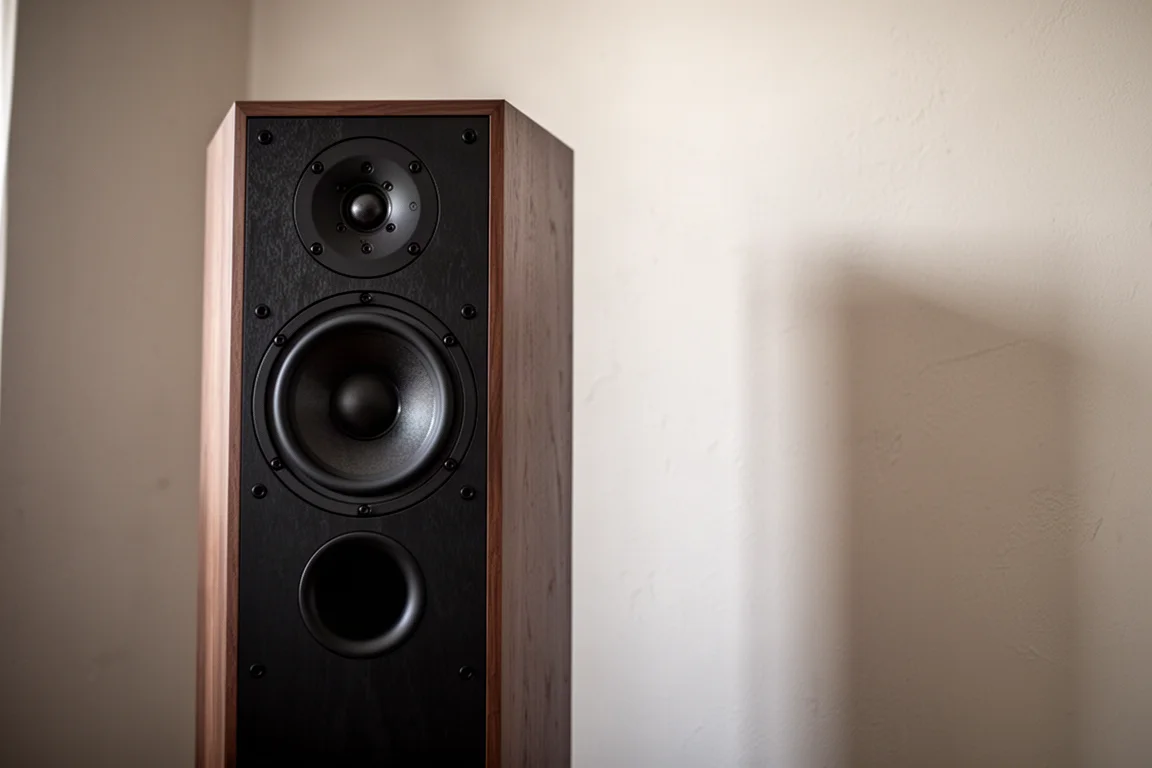
In practical terms, this gives you more freedom in placement than a typical rear-ported tower, though the enclosure is still large and deserves breathing room. A ported cabinet of this size rewards a little experimentation with distance from the wall and toe-in, and the payoff is bass that stays tight rather than thickening up.
Considerations Before You Commit
The Arreté floorstanding model sits at a premium price point, so it makes sense to plan the rest of the system at the same time. Because the speakers are fully passive and rely on crossover tuning rather than processing, the amplifier has to be up to the job. That is where a pair of HPA2 units in bridge mono comes in, and it is worth budgeting for two amplifiers if you want the full 380 W into 8 ohms.
Space is the other consideration. The cabinet is a large ported design with drivers on both faces, so it needs room to work and a little distance from the wall behind it. A treated room helps as well, and the same care that went into the demonstration setup will pay off at home.
Buying Advice: Matching the System to Your Room
If you are weighing this pairing, start with the speakers. They set the character of the system, and their bass performance is the main reason to consider them. The amplifier choice is then about control and transparency rather than tone, which narrows the decision considerably.
For listeners who want deep bass without adding subwoofers, the Arreté towers are the centre of the system, and they were described in the demonstration as a giant killer relative to their price. Pairing them with Benchmark amplification keeps the chain clean and gives the woofers the grip they need. Two HPA2 units in bridge mono are the natural match for a larger room, while a single unit in stereo may be enough in a smaller space.
It is also worth remembering where the value sits in a system like this. Money spent on premium cables will not fix a room or a placement problem, and these components do not need help to sound clean. The speakers and the room do the heavy lifting.
Conclusion
The Arreté floorstanding speakers and Benchmark HPA2 amplifiers make a persuasive case for keeping a high-end system simple. Deep, punchy bass, clear vocals, and a wide soundstage came out of a passive speaker and a pair of compact amplifiers with no equalisation anywhere in the chain. If you value bass weight and control without sacrificing midrange clarity, this is a pairing worth seeking out for a listen.
Further reading
Related Reviews
High-End Audio
Accuphase E-3000 Review: A Class AB Integrated Amplifier Built to Last
The Accuphase E-3000 is the entry point into a legendary Japanese high-end line. Here is how it sounds, how it is built, and who should consider it.
High-End Audio
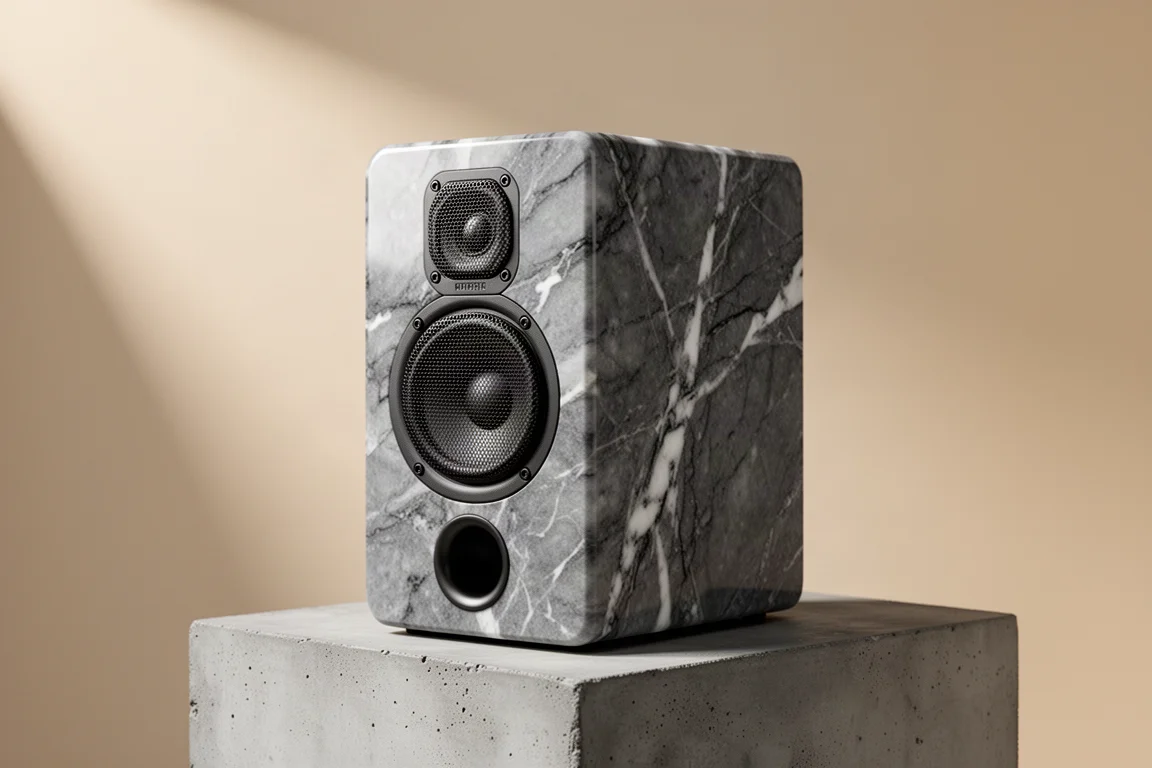
Aurelia Acoustics MRB1 Review: Marble Cabinets and a Big, Lively Sound
The Aurelia Acoustics MRB1 pairs a marble cabinet with Accuton ceramic drivers and a lively, spacious sound that stays easy to listen to. Here is what to know before buying.
High-End Audio
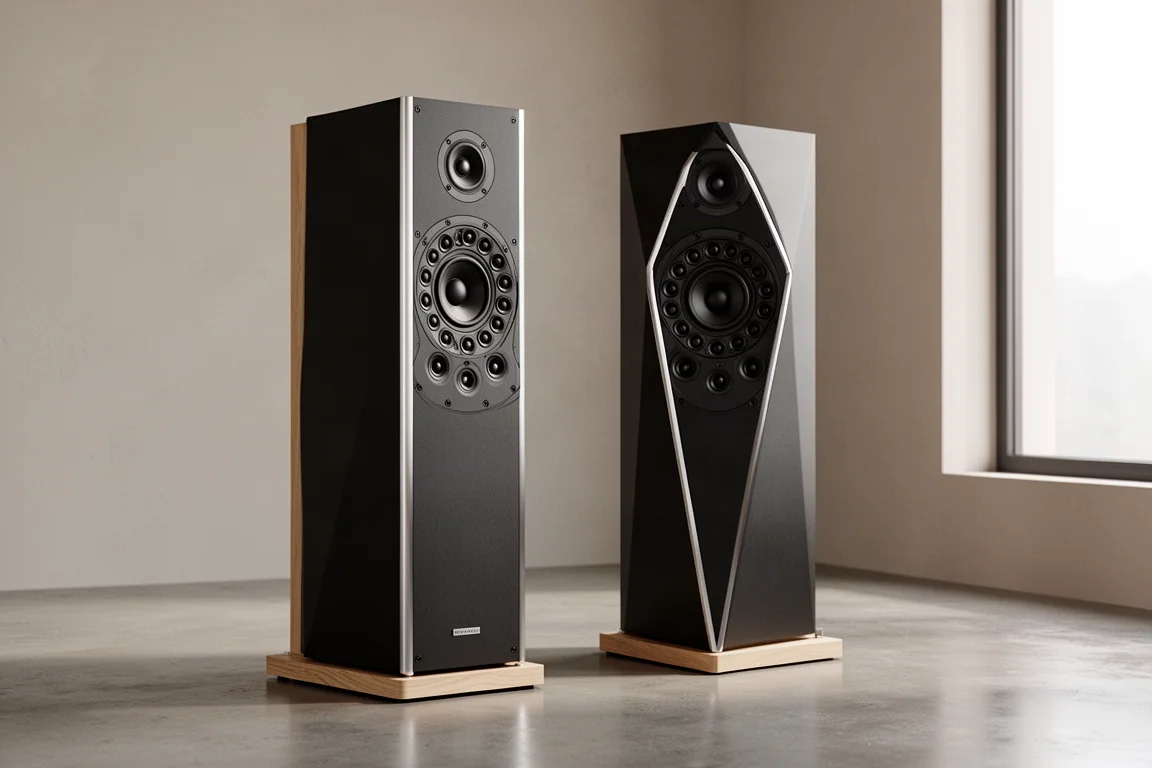
Bang & Olufsen Beolab 90 Review: A Sculptural Flagship Loudspeaker
A close look at the Bang & Olufsen Beolab 90, from its 18-driver array and room calibration to the finish options and setup details that shape ownership.