Hi-Fi Amplifiers
Willsenton R300 Plus Review: 8 Watts of Single-Ended Triode Sound
A close look at the Willsenton R300 Plus, a class A single-ended triode amplifier with 300B output tubes, 8 watts per channel, and a very particular set of requirements.
Introduction
Single-ended triode amplifiers occupy a very specific corner of hi-fi. They are simple, low in power, and unapologetic about both. The Willsenton R300 Plus is the updated version of the brand’s class A single-ended triode design, and it arrives with 8 watts per channel, a set of 300B output tubes, and a physical presence that makes most modern integrated amplifiers look anonymous.
It sits above the popular Willsenton R8 in the range, and the two are not interchangeable. The R8 is the more flexible amplifier; the R300 Plus is the more specialised one. This review covers what it does well, where it runs out of headroom, and which speakers tend to suit it.
Who This Amplifier Is For
The R300 Plus makes most sense for listeners who keep average levels low to moderate, listen in a medium-sized room, and sit roughly 2 to 3 metres (about 7 to 10 feet) from their speakers. In that context, 8 watts goes further than the number suggests. The amplifier stays comfortable with average listening levels in the 60s and 70s dB range and remains composed below roughly 80 dB.
Speaker sensitivity matters a great deal. High-sensitivity designs rated in the 90s dB are the natural match, and the amplifier is worth considering even with moderately sensitive speakers rated in the mid to high 80s, provided their impedance curve stays reasonably flat.
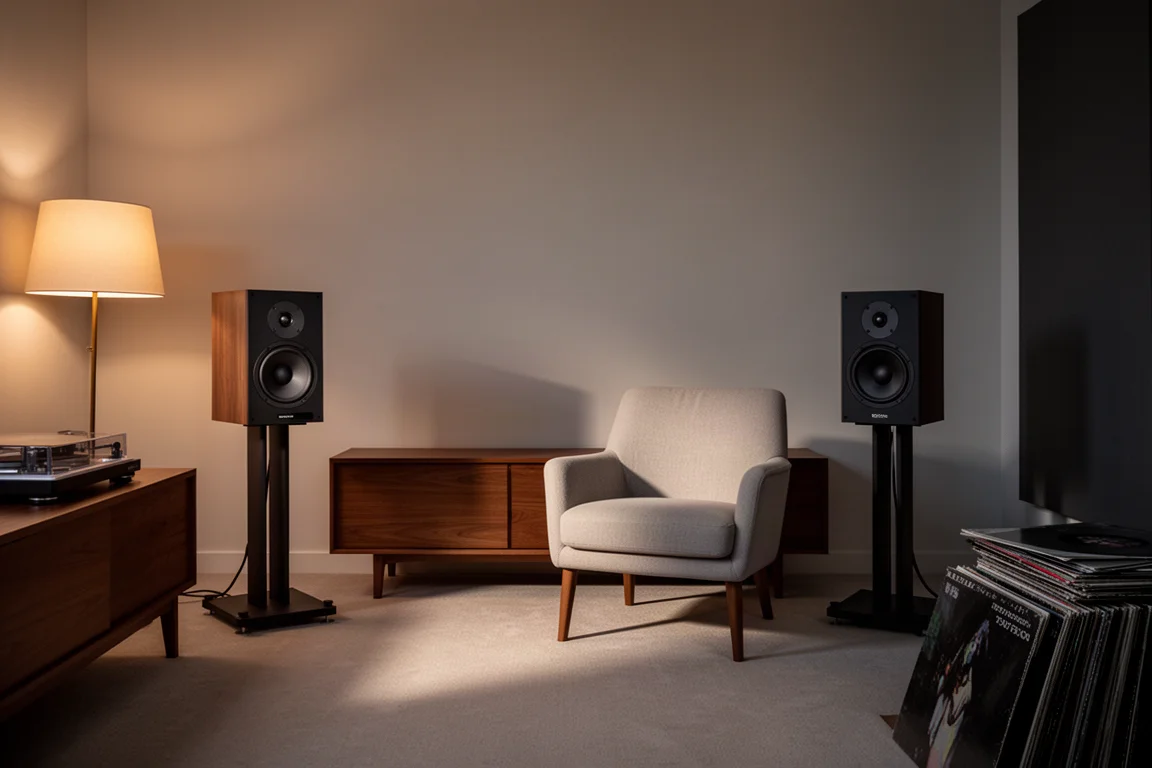
Owners of speakers with large impedance swings should look elsewhere, or at least audition carefully first. The same applies to anyone who regularly listens loud. This is not the amplifier for that habit, and it will make the point clearly.
Main Strengths
At low to moderate volumes, the R300 Plus produces a presentation that is hard to find at its price. The bass has a meaty, juicy quality. The midrange carries so much body that the room itself seems to change, as though the recording had been made somewhere with unusually good acoustics. High frequencies render harmonics with a graceful, airy quality rather than edge.
The soundstage can be vast with the right speakers, extending beyond the physical boundaries of the room. That is not a common occurrence, even with considerably more expensive equipment.
The appeal of the topology is straightforward. A single-ended design uses one output device per channel to handle the entire signal, so the circuit is simpler and the signal passes through fewer components. Push-pull amplifiers take their output from between two devices and need those devices to be very closely matched; when they are not, the design trades one kind of distortion for another that is far less pleasant to hear.
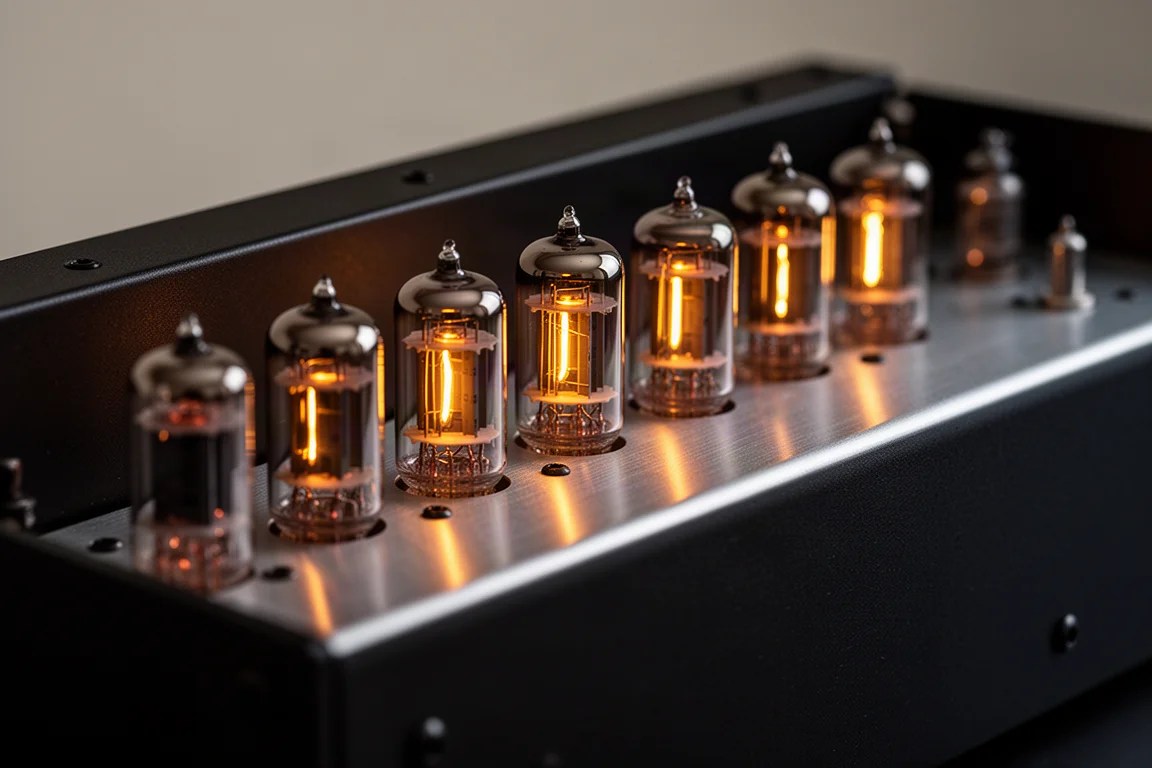
The 300B output tube is also unusually linear as a voltage amplification device, more linear than transistors and more linear than the pentodes used on the output stage of many tube amplifiers, including the Willsenton R8. That linearity lets the design run with very little negative feedback. The R300 Plus applies a small amount, but almost certainly far less than the R8.
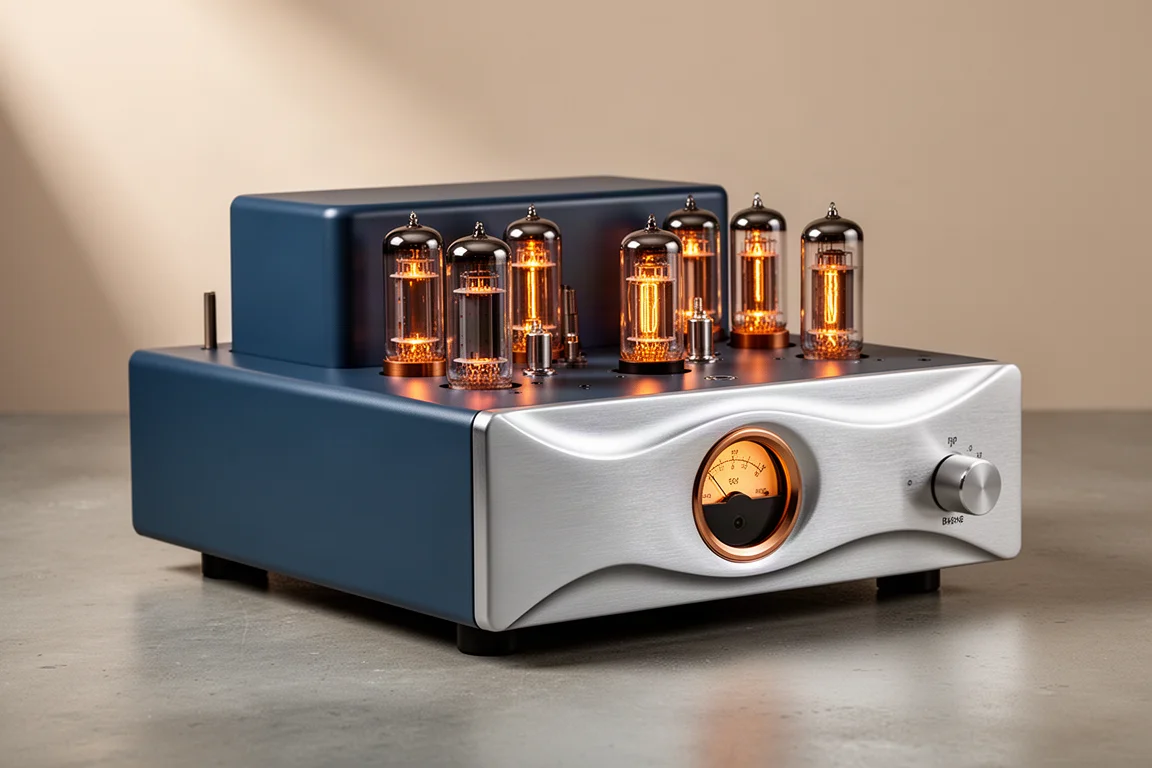
Inside, a single 6SN7 and two Willsenton-branded 6SN7s handle the preamplifier and driver stages, two 300B tubes sit on the output stage, and a pair of rectifier tubes converts AC to DC. The chassis is painted in an automotive deep blue-grey with a contoured aluminium front panel and a rose gold-plated biasing port window. It is a full rack-width unit and reassuringly heavy at 23 kg (51 lb).
Things to Consider Before Buying
Power is the obvious limitation. Eight watts per channel will not drive every speaker, and the amplifier’s limits are audible rather than subtle. When it runs out of steam, the bass turns woolly and bleeds into the midrange, giving an overall cloudy presentation, and a little hardness creeps into the high frequencies. Because tube amplifiers clip softly, this is less unpleasant than the harshness of a transistor amplifier running out of headroom, but it is still a limit.
Heat is a normal consequence of class A operation. The R300 Plus gets hot, although its low power output means it does not generate noticeably more heat than the Willsenton R8. Keep it well ventilated and out of reach of children and pets.
Tube replacement deserves its own budget line. Swapping most of the tubes is inexpensive, but the 300B output tubes are the exception: a pair of current-production Gold Lion 300Bs costs around £400, while new old stock options such as Western Electric can cost about as much as the amplifier itself for a matched pair. Chinese options from PSVane and other makers provide more affordable routes.
None of these points are faults in the design. They are the terms of the deal, and they are worth accepting only if the rest of the system can meet them. Buyers who can meet them get an amplifier whose virtues are unusually persuasive.
Speaker Pairing and Setup Notes
The power button sits on the side of the chassis, and the amplifier needs about 30 seconds for its tubes to reach minimum operating temperature before it comes to life. Controls are simple: a selector for three line-level inputs plus a preamplifier input that allows the unit to be used as a power amplifier, and a smooth Alps volume control with decent resistance. The supplied remote handles muting and volume but cannot change inputs, because the input selector is not motorized. On the rear, next to the inputs, is a row of speaker binding posts with taps for 4, 8 and 16 ohm speakers for impedance matching.
Bias setting is part of ownership. With nothing playing, hold down the bias toggle switch, place a flathead screwdriver in the appropriate hole, and turn the screw until the needle reaches the 12 o’clock position on the biasing meter. Repeat for the second 300B.
The R300 Plus only drives speakers with a relatively flat impedance characteristic. Large impedance swings pull on the power supply in a way that no amount of care elsewhere will fix. It is also worth experimenting with the speaker taps rather than assuming that a nominal 8-ohm speaker belongs on the 8-ohm tap, since manufacturers often rate their speakers generously.
Pairing results are revealing. Horn-loaded speakers such as the JBL 4309 proved a strong combination, with real presence and energy while keeping the amplifier’s richness and soundstage strengths intact. The Monitor Audio Silver 100 also worked well, provided average listening levels stayed below 80 dB. A floorstanding speaker with a 200 mm (8-inch) woofer asked for more bass control than the amplifier could give, and a crisp, clean-sounding standmount turned out to be a poor match because its character ran against the R300 Plus’s warmth. A pair of compact mini monitors that do not reach far below 60 Hz gave the best result of the group, disappearing completely into the wide soundstage; a subwoofer remains an option for listeners who want more bass extension.
How It Compares With Other Amplifiers
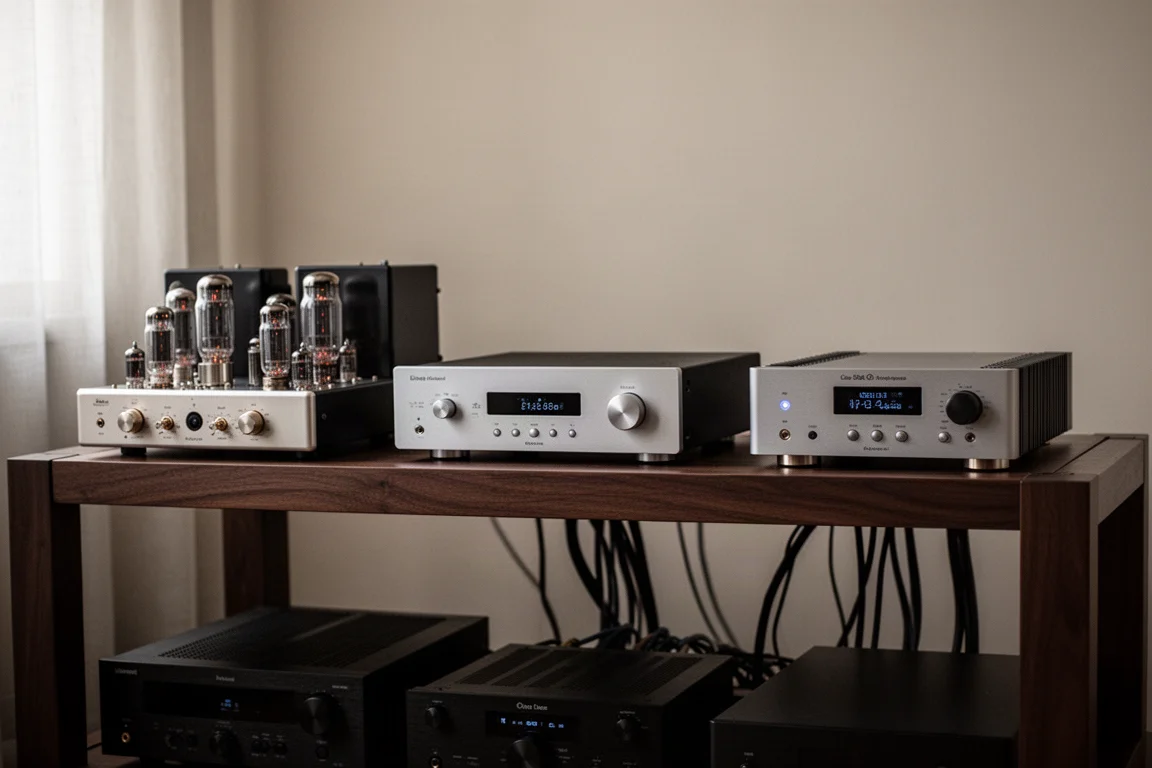
Against the Willsenton R8, the R300 Plus gives up flexibility and gains character. The R8 is a push-pull design, built like a tank, with enough power to drive many speakers and a clean, dynamic presentation; at around $900 plus shipping and taxes it is a genuine bargain and a warm, expansive introduction to tube amplification, and with stock tubes it does not lack anything for its price. Heard next to the R300 Plus, though, it sounds thin and hard. Upgrading its tubes across all three stages narrows the gap without matching the richness and scale of the R300 Plus on stock tubes. What the R8 keeps is the ability to play louder and to drive more difficult speakers.
Two alternatives are worth knowing about. The Musical Fidelity A1 lands at a similar price once shipping and taxes are added to the R300 Plus, and it is a class A design with a full bass, a liquid smooth midrange and an open top end, staging well in the process; those qualities are simply expressed more strongly by the R300 Plus, and while the A1 plays louder and handles more demanding speakers, it will not rival the single-ended amplifier when it comes to pushing at the boundaries of the room. The Atoll IN80 Signature is the option for listeners who cannot live with class A heat, a warm, rich-sounding amplifier with weighty bass and a wide soundstage, though it does not offer quite the midrange detail of the Musical Fidelity A1, and the R300 Plus sounds a little more open again, a finding that would need both amplifiers side by side to confirm.
There may also be more performance to unlock. The R300 Plus rewards tube rolling, and swapping the smaller tubes is affordable, but the cost of premium 300B pairs means that experiment should be planned rather than impulsive.
Buying Advice
The R300 Plus is best understood as a specialist amplifier rather than a universal one. Buyers with high-sensitivity speakers rated in the 90s dB should put it on their shortlist. Buyers with moderately sensitive speakers rated in the mid to high 80s can consider it as well, as long as they know what they are dealing with: it will not play loud, and the speaker match has to be chosen carefully to keep the bass under control.

Where it fits, the amplifier’s virtues are seductive. It is a beautifully constructed single-ended triode design that offers an expansive, rich and airy sound not heard from other amplifiers at this price, and it embarrasses many more expensive offerings. For listeners whose habits and speakers match its strengths, it is an easy recommendation.
Conclusion
The Willsenton R300 Plus trades power and flexibility for a presentation that is genuinely special at low to moderate volumes. Eight watts per channel is a real constraint, and speaker matching takes patience. What buyers get in return is body, air and a soundstage that reaches past the walls of the room. For the right room, the right speakers and the right listening habits, that trade is worth making.
Product link
View more details for Willsenton R300 Plus
This product is mentioned in the review. Check the specifications, options, and compatibility before buying.
View more details for Willsenton R300 PlusFurther reading
Related Reviews
Hi-Fi Amplifiers
Accuphase E-280 Review: Entry-Level Accuphase With Flagship Attention to Detail
A close look at the Accuphase E-280 integrated amplifier, covering its champagne build, AAVA volume control, sound quality, and the speakers and sources that suit it best.
Hi-Fi Amplifiers
Advance Paris A10 Classic vs Yamaha A-S301: Two Integrated Amplifiers Compared
A practical comparison of a $350 integrated amplifier and a $2,500 reference model, covering the differences that matter and the ones that do not.
Hi-Fi Amplifiers
Affordable Chinese Amplifiers Worth Buying: Five Budget Hi-Fi Amps Compared
A practical look at five affordable amplifiers, what each one does well, and the trade-offs to weigh before you buy.