Hi-Fi Amplifiers
WiiM Vibelink Amp Review: 100 Watts of Quiet, Load-Friendly Power
A compact stereo power amplifier rated at 100 watts into 8 ohms with a very low noise floor and steady response across speaker loads. Here is what it does well and what to weigh first.
Introduction
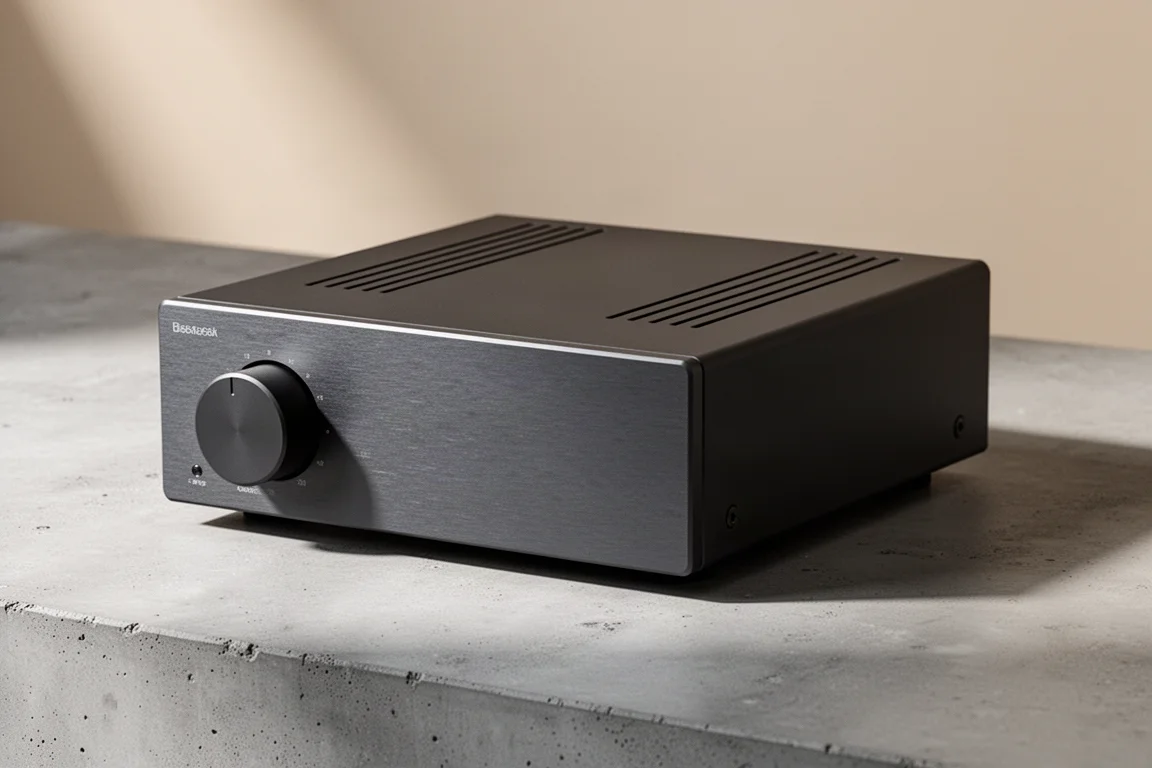
The WiiM Vibelink Amp is a compact stereo power amplifier for listeners who already own a source and a preamp but want more output than an all-in-one streaming amplifier can deliver. It is rated at 100 watts per channel into 8 ohms and 200 watts into 4 ohms, and it borrows the clean, low-profile chassis language of the brand’s other components.
It sells for about $299 on its own. Paired with a WiiM Ultra streamer, the total lands at roughly $630, while the WiiM Amp Pro bundles streaming and amplification into a single unit for about $380. That price gap frames the real question: how much does the extra power matter, and who actually needs it?
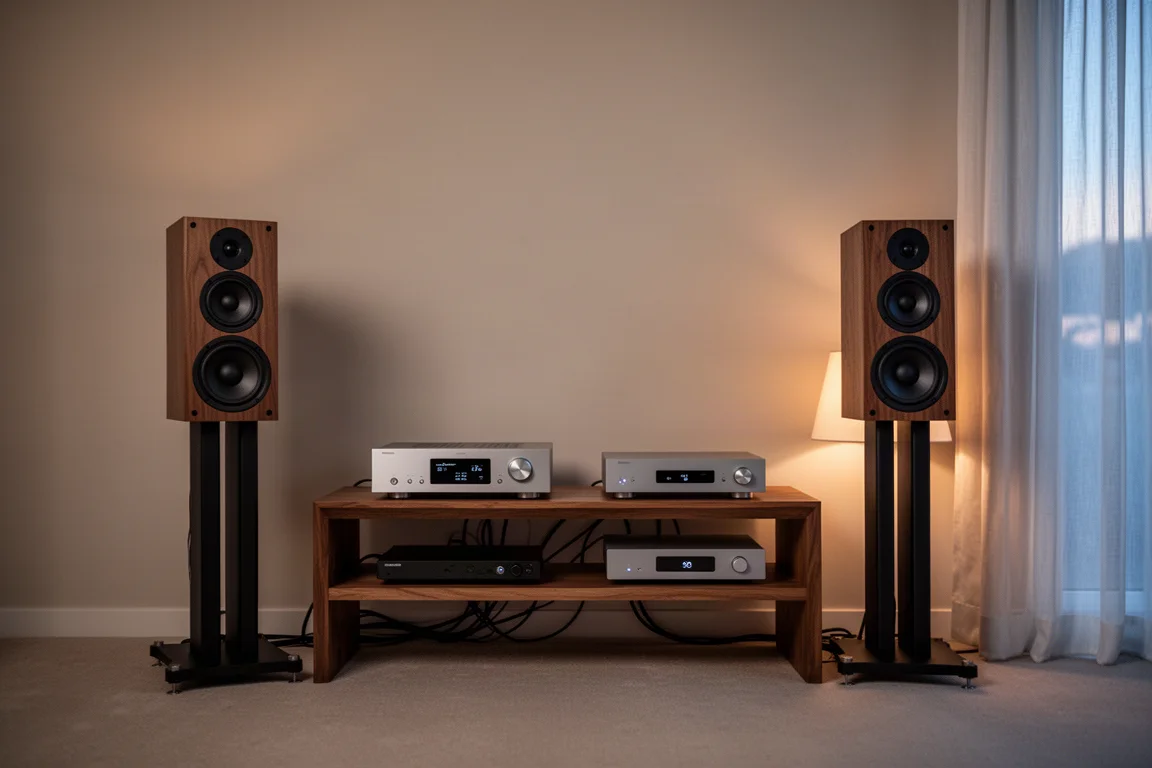
The short answer is that this amplifier is aimed at a fairly specific listener. What follows covers where it earns its place in a system, what it measures and sounds like in practice, and the trade-offs worth understanding before you buy.
Who This Amplifier Is For
The Vibelink makes most sense for someone who already has a preamp, or a streamer with its own volume control. Because it is a pure power amplifier, it has no streaming platform built in. It accepts optical, coaxial digital, analog RCA, and USB-C inputs, so nearly any preamp, streamer, or DAC with variable output can feed it. A trigger input is included as well, which lets a preamp switch the amplifier on and off automatically instead of requiring a manual press every time.
The clearest upgrade path runs from an all-in-one streaming amplifier. The Vibelink offers roughly twice the power of the WiiM Amp Pro, so listeners who feel their system runs out of steam, or who want more punch and dynamic swing from the same speakers, are the intended audience. It also suits anyone who prefers to keep streaming and amplification as separate stages that can each be replaced on their own schedule.
On the other side of the decision, if you want one box that handles streaming and power together and your speakers are reasonably efficient, an all-in-one unit stays the simpler choice. The Vibelink is a component for a system already built around separates.
Main Strengths
The appeal of this amplifier comes down to three things: usable power, an unusually quiet output stage, and behavior that stays consistent no matter which speakers you connect.
Power and Headroom
Amplification comes from a Texas Instruments TPA3255 chip, a class D design rated at 100 watts into 8 ohms and 200 watts into 4 ohms. Bench data backs those figures up. Into 8 ohms, continuous maximum output measured around 113 watts, with dynamic transients around 114 watts. Into 4 ohms, continuous output reached roughly 207 watts, with dynamic transients around 213 watts.
Distortion behavior is orderly rather than abrupt. With 8-ohm and simple loads, the amplifier stays clean to roughly 75 watts before distortion begins to climb, and it passes 100 watts before reaching 1 percent total harmonic distortion plus noise. With 4-ohm and complex loads, the knee arrives somewhere between 150 and 170 watts, and output exceeds 200 watts before hitting that same 1 percent mark.
One characteristic is worth understanding before you buy. Continuous and instantaneous power sit very close together here. Class AB designs often show a wide spread, sometimes approaching a doubling, between sustained output and short-burst output. This class D design is efficient enough to reach its maximum at essentially its continuous rating, which means less headroom on brief peaks but also an output figure you can count on rather than a transient number that appears for a fraction of a second.
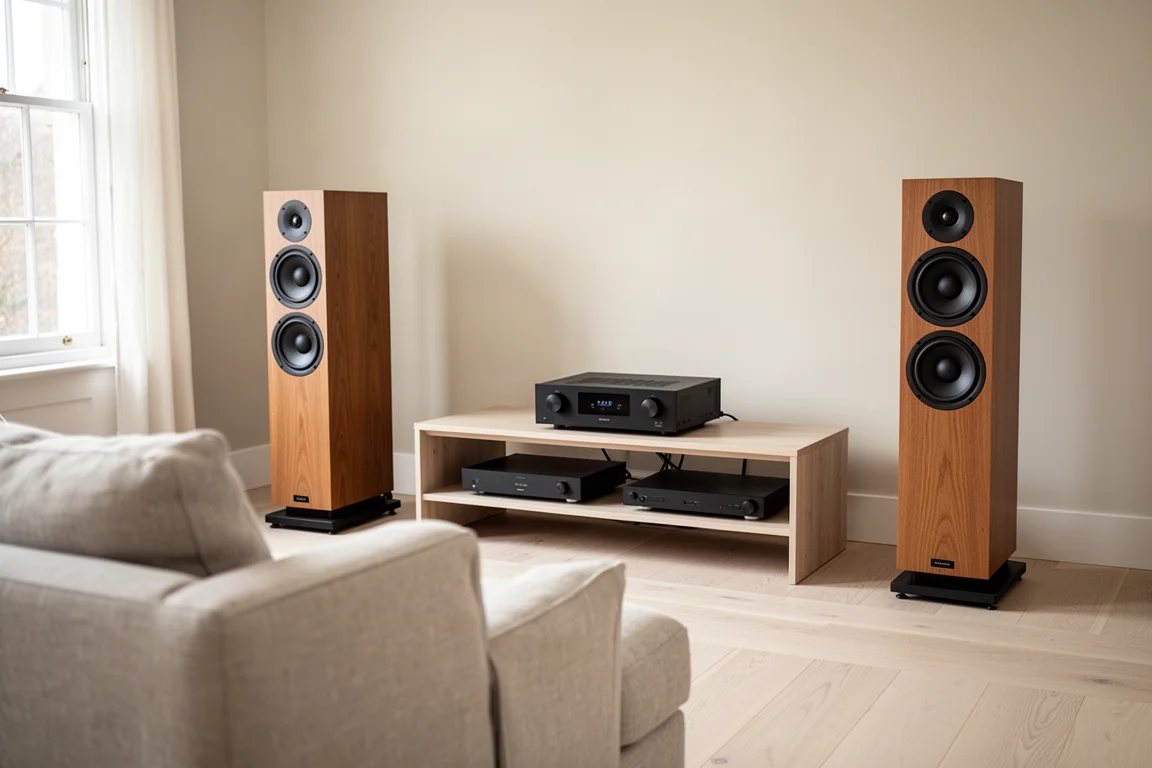
Across a range of speakers, from budget models up to pairs costing around $5,000, the amplifier reached satisfying output levels without strain, and it did not appear to care which pair was connected.
Noise Floor and Load Independence
Self-noise measures around 5 microvolts, which is very low. Unless you are running high-sensitivity speakers and sitting with your ear against the driver, the amplifier’s own noise is effectively inaudible. That holds true regardless of where the volume knob sits: internal noise does not change between the minimum and maximum position.
Load independence is the other standout. Frequency response does not shift with the speaker attached. Measurements taken into static 2-ohm, 4-ohm, and 8-ohm resistor banks, plus reactive loads designed to simulate simple and complex speaker behavior, produced deviations of roughly a tenth of a decibel. For a listener, that translates into a tonal balance that stays consistent from one pair of speakers to the next.
A built-in ESS DAC handles digital conversion, supporting 24-bit/192kHz PCM through coaxial, optical, and USB-C inputs. Analog RCA inputs are also provided for traditional preamps and sources.
Build and Everyday Usability
The chassis is aluminum with a reassuring heft, and the front panel keeps things simple with a single volume knob. Speaker connections use inset banana jacks rather than protruding binding posts, which keeps the rear panel tidy and makes the amplifier easier to slide onto a shelf.
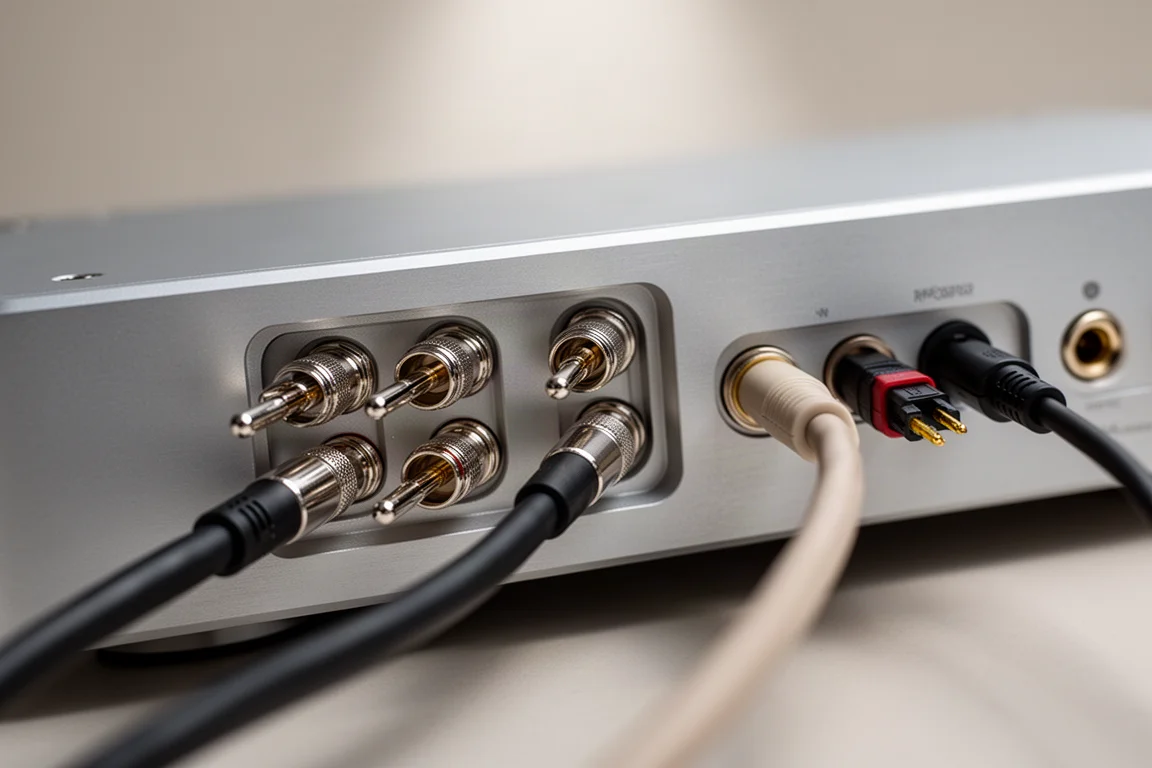
Under sustained testing, the amplifier ran for hours into static and reactive loads at both low and high volume without failing. The one behavior to know about is its protection circuit. If it is fed too much voltage for too long, it mutes its output and shuts down, and pressing the reset button on the rear panel brings it straight back. That is a protective response rather than a fault, and it is useful to know before it happens for the first time.
Things to Consider Before Buying
- This is a power amplifier only. It has no streaming platform of its own, so it needs a preamp, a streamer with volume control, or a DAC with variable output to form a complete system.
- Continuous and dynamic power are nearly identical. In a very large room, listening from a long distance away, you may want the extra dynamic transient power that a larger class AB amplifier can provide.
- In a medium-sized room at normal listening distances, the available power is more than adequate.
- It is not an amplifier that adds character or calls attention to itself. That is either exactly what you want or a reason to look at something with a stronger sonic signature, depending on your taste.
- If protection mode engages after a sustained overload, output stays muted until the reset button on the back is pressed.
Buying Advice
At about $299, the Vibelink is priced as a step up in power rather than a step up in features. The comparison that matters most is the roughly $380 WiiM Amp Pro, which puts streaming and amplification in one chassis with about half the power, and the roughly $630 combination of the Vibelink with a WiiM Ultra streamer.
Choose the Vibelink if you already own a preamp or streamer and your system needs more output, or if you prefer to split streaming and amplification into separate components that can each be upgraded later. Choose an all-in-one if you want one box, fewer cables, and your speakers do not need the extra watts.
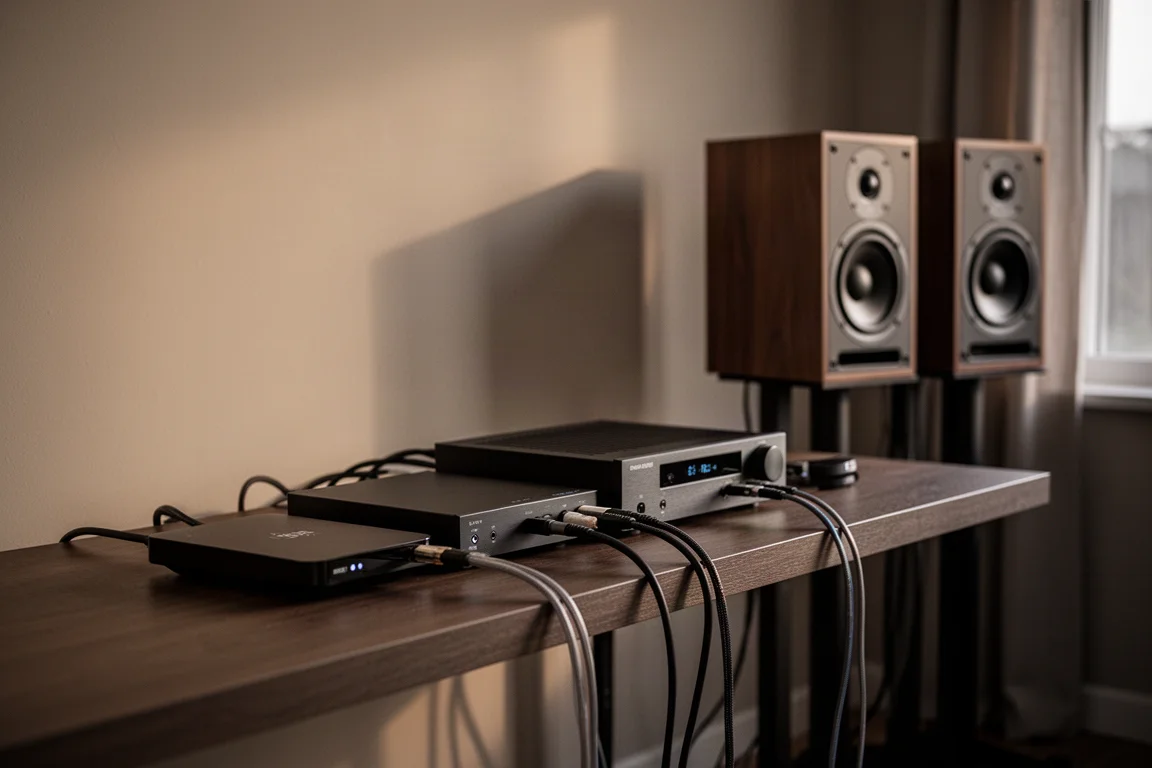
Either way, the deciding factors are your speakers and your room rather than the specification sheet. Efficient speakers in a medium room will sound comfortable on either approach, while harder-to-drive speakers in a larger space are where the extra power of the Vibelink earns its keep.
Conclusion
The WiiM Vibelink Amp does a narrow job well. It supplies 100 watts into 8 ohms and 200 watts into 4 ohms, keeps its own noise around 5 microvolts, and holds its frequency response steady across very different speaker loads. It is quiet, consistent, and built to sit in a rack without drawing attention to itself. For listeners who already have a preamp or streamer and want more drive than an all-in-one can offer, it is a sensible next step. For anyone who wants a single box that does everything, the bundled alternative remains the easier answer.
Product link
View more details for WiiM Vibelink Amp
This product is mentioned in the review. Check the specifications, options, and compatibility before buying.
View more details for WiiM Vibelink AmpFurther reading
Related Reviews
Hi-Fi Amplifiers
Accuphase E-280 Review: Entry-Level Accuphase With Flagship Attention to Detail
A close look at the Accuphase E-280 integrated amplifier, covering its champagne build, AAVA volume control, sound quality, and the speakers and sources that suit it best.
Hi-Fi Amplifiers
Advance Paris A10 Classic vs Yamaha A-S301: Two Integrated Amplifiers Compared
A practical comparison of a $350 integrated amplifier and a $2,500 reference model, covering the differences that matter and the ones that do not.
Hi-Fi Amplifiers
Affordable Chinese Amplifiers Worth Buying: Five Budget Hi-Fi Amps Compared
A practical look at five affordable amplifiers, what each one does well, and the trade-offs to weigh before you buy.