Amplifiers
WiiM Vibe Link Review: A $299 Amplifier With Serious Current Delivery
The WiiM Vibe Link pairs a Texas Instruments TPA3255 chipset with PFFB and an internal power supply, delivering 100W into 8 ohms for $299.
Introduction
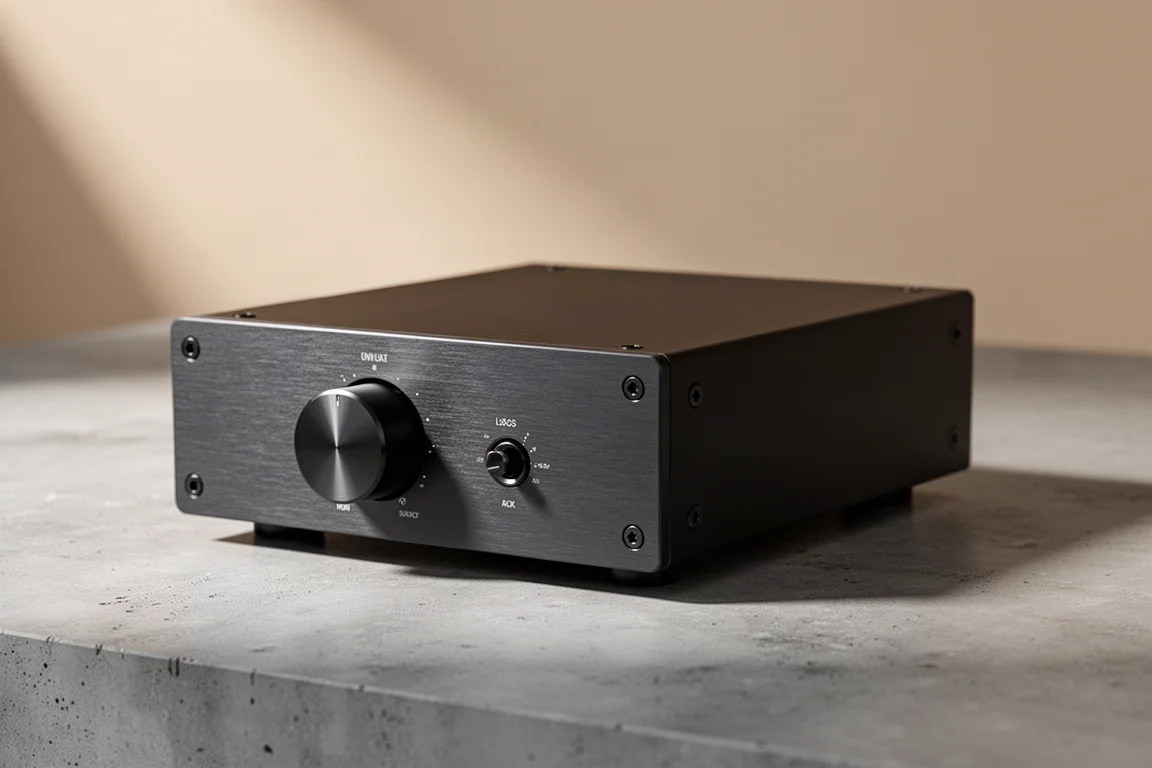
The WiiM Vibe Link is a compact stereo amplifier priced at $299, and it lands in a category that is already crowded with small Class D designs. What sets it apart is the combination under the hood: a Texas Instruments TPA3255 amplifier chipset implemented with PFFB (post-filter feedback) technology, output rated at 100 watts into 8 ohms and 200 watts into 4 ohms, and an internal power supply rather than the external brick that usually accompanies this class of amplifier.
It is also a departure for WiiM, a brand known mainly for network streamers such as the WiiM Mini, WiiM Pro, WiiM Pro Plus, WiiM Amp, WiiM Amp Pro, and WiiM Ultra. The Vibe Link is the company’s move into straight amplification, and it adopts the compact half-rack chassis language of the Ultra so the two can sit together as a matched pair.
This review covers what the Vibe Link does well, where it falls short, and who should consider it.
Who the WiiM Vibe Link Is For
The Vibe Link suits listeners who want a simple, compact power source for a small system. The front panel keeps controls to a volume knob and a three-position input selector: coaxial digital, optical digital, and RCA analog. There is no app dependency for basic playback, and the analog input is described as a pure analog circuit that does not convert the incoming signal to digital.
It is a natural partner for a WiiM Ultra. The two share the same form factor, and the Vibe Link has enough current delivery to drive speakers that are not especially easy loads. In practice it was paired with Emotiva XT2 floor-standing speakers, which need a good amount of current, and it handled them without strain.
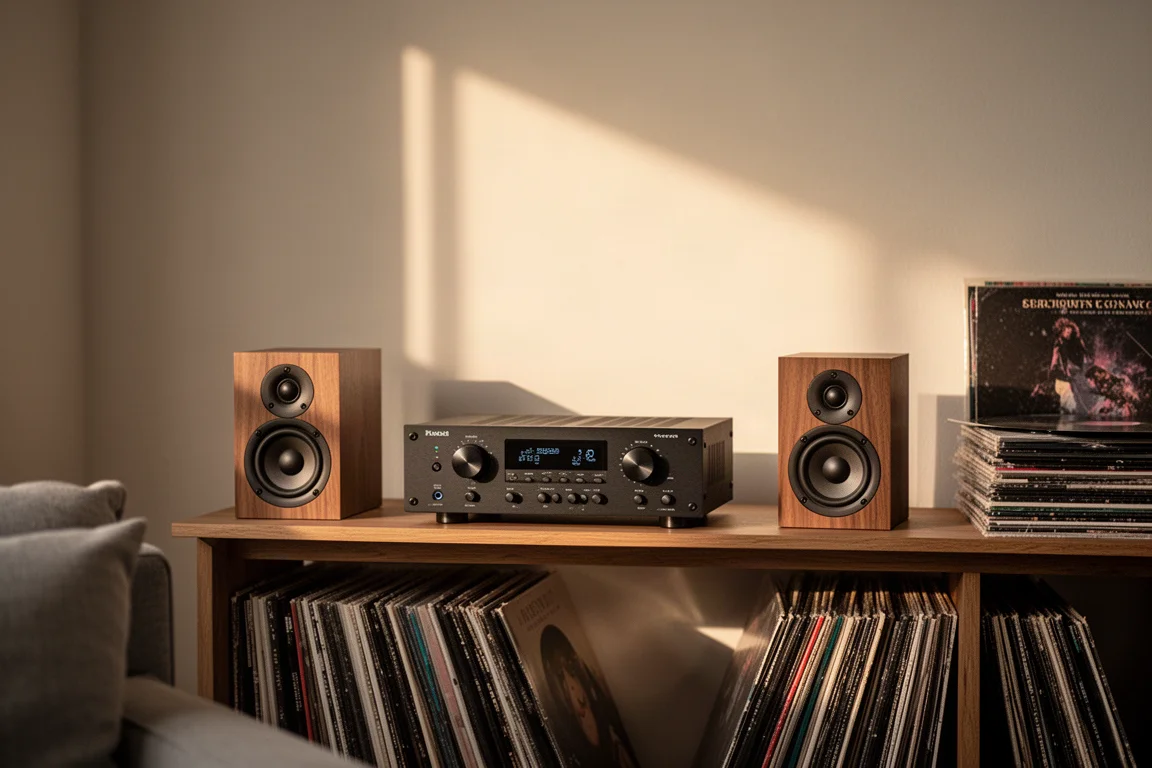
It is less suited to anyone who wants a traditional full-width component, a remote control, or Class AB amplification on principle. The appeal here is compactness, simplicity, and current delivery at a modest price.
Design, Power, and Connectivity
Build quality is a step up from WiiM’s earlier streamers, which have a lighter, more plastic feel. The Vibe Link feels substantial, partly because the power supply is internal. Ventilation slots sit on the bottom of the chassis, and the compact footprint means it takes up very little shelf space while matching the WiiM Ultra almost exactly.
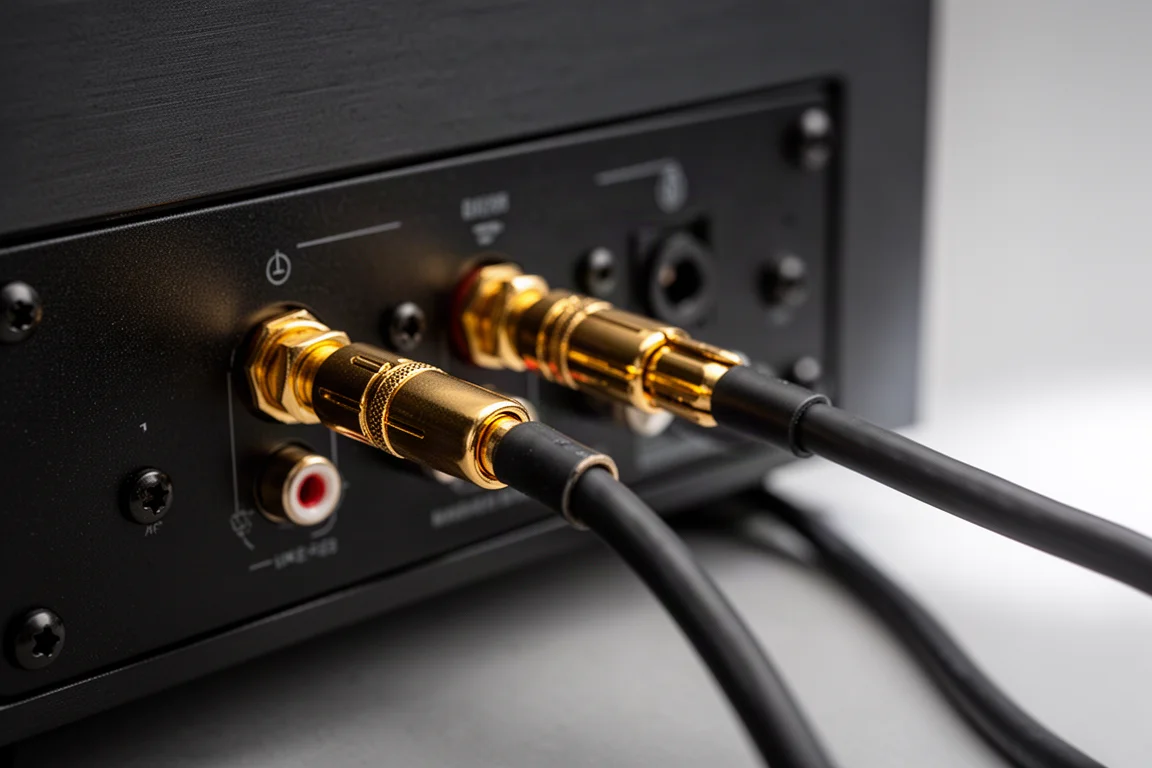
The rear panel is straightforward: RCA input, coaxial input, optical input, a trigger input, the power button, and a set of speaker binding posts that are unusually well executed. Banana plugs push straight into the posts rather than clamping onto the outside, and an included adapter screws in for anyone using bare wire. Everything feels high quality.
WiiM also states that the amplifier will not click or pop at power-up. One practical note: the power cord uses a less common connector type, similar to the one used on some Apple computers, so it is worth keeping track of.
How the Vibe Link Sounds
Tonally the Vibe Link is neutral with a touch of warmth through the mid-range, and it avoids the hardness at the top end that older Class D designs were known for. It is an extremely dynamic amplifier, and it does not sound like a typical Class D implementation. Even premium ICEpower amplifier modules do not necessarily sound better than a well-executed TPA3255 design, and this is a well-executed one.
Soundstage is large and everything sits clearly in its place. On densely layered recordings, individual elements remain distinct rather than collapsing into a single mass, which points to good instrument separation.
Current delivery was the biggest surprise. The Emotiva XT2 floor-standers can sound intense at the top end with the wrong amplifier pairing, and there was a real question about whether a compact Class D amplifier could supply enough current to drive them properly. It did, at low volumes and at high volumes alike. The amplifier also scales with better electronics upstream: controlling volume through a WiiM Ultra and using the Ultra’s internal DAC sounded very good, and a dedicated outboard DAC improves things further.
How It Compares With Other Amplifiers
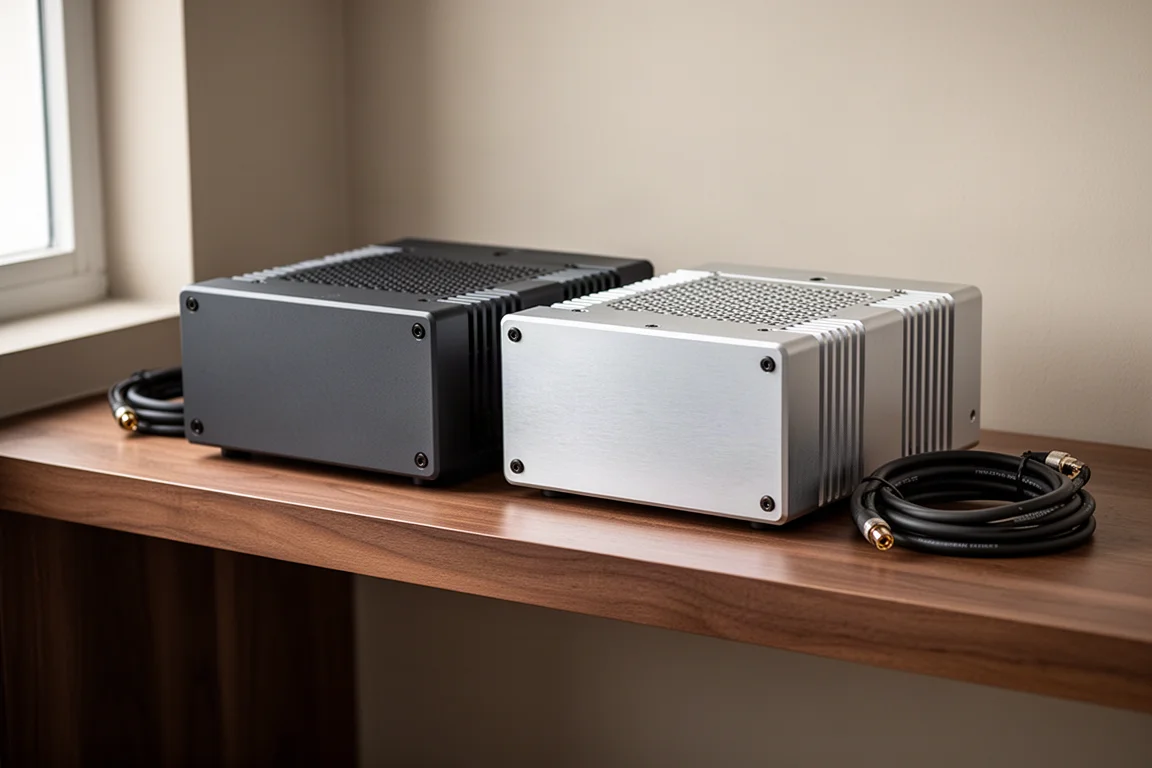
The most obvious competitor is the Emotiva A2L+, a Class AB design rated at 50 watts into 8 ohms and around 90 watts into 4 ohms, priced at $350 and frequently discounted. The two sound fairly similar, though the Vibe Link edges ahead on instrument separation. The Emotiva is a straight power amplifier with no volume control and no DAC, so the choice often comes down to whether you want Class AB and a traditional full-width chassis.
The Vibe Link also avoids the enormous external power brick that some TPA3255-based amplifiers rely on, and it has genuine US distribution through dealers such as Crutchfield as well as Amazon. That combination of internal power supply and established distribution is unusual for a direct-to-consumer brand in this space.
Lower-cost integrated amplifiers using the same chipset and PFFB topology exist for less money, but they do not match the Vibe Link’s output and current capability. On reliability, there is a notable pattern: reports of WiiM products failing out of the box are hard to find, while connectivity questions tend to centre on the streamers rather than the hardware itself.
Things to Consider Before Buying
- The rear panel printing is low contrast and hard to read when you are reaching behind the amplifier to connect speakers. This is the same criticism that applies to the WiiM Ultra.
- There is no switch to run the unit as a power amplifier only. You can work around it by setting the volume to maximum and controlling level from a preamp or streamer.
- The built-in DAC is solid, but a dedicated outboard DAC on the front end will likely sound better. Some listeners would prefer the amplifier without a DAC at all.
- It is not really intended as a desktop amplifier, though it can be used that way.
- The compact half-rack form factor is a matter of taste. Buyers who prefer traditional hi-fi proportions may not love it.
Buying Advice
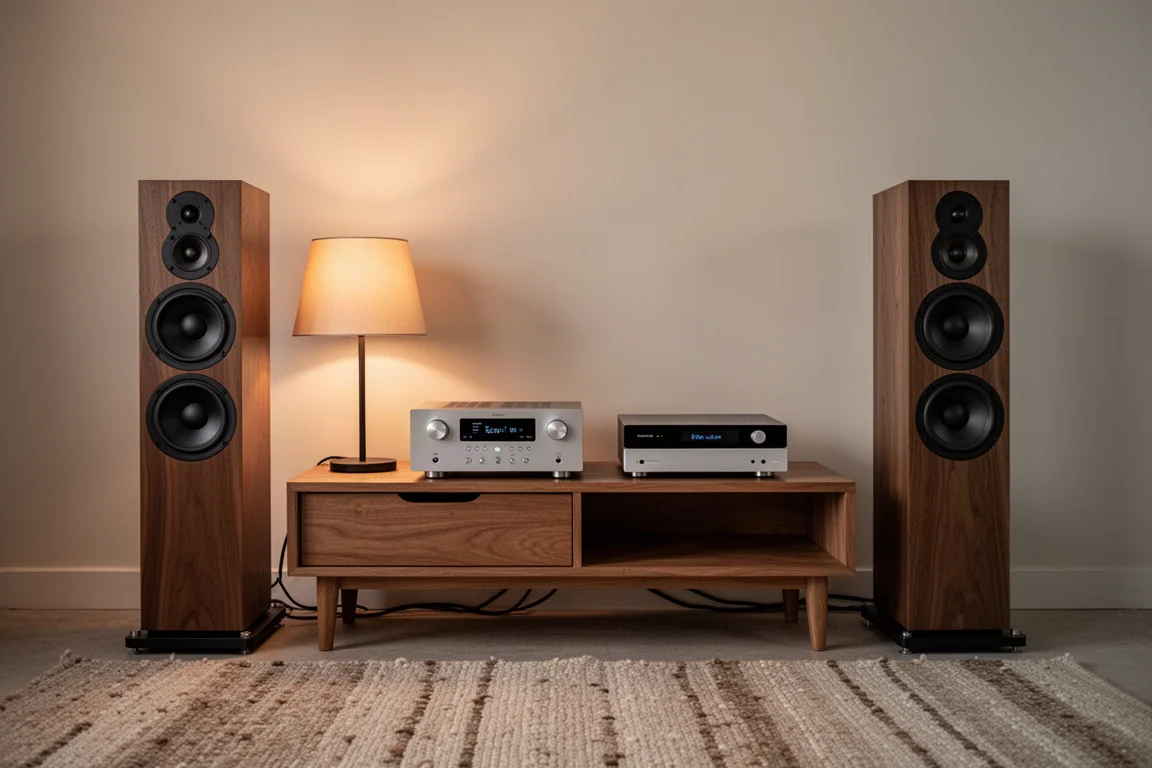
At $299, the Vibe Link is the most compelling amplifier available at this price. It delivers more current than its size suggests, sounds closer to a good Class AB design than to a budget Class D one, and pairs neatly with a WiiM Ultra, which is priced around $330. A complete two-piece system lands at roughly $630.
If you want the smoothest ownership experience, buy through a US dealer or Amazon so support and returns are straightforward. If you specifically want Class AB amplification or a full-width chassis, the Emotiva A2L+ at $350 is a reasonable alternative. If compactness, simplicity, and current delivery matter more, the Vibe Link is the stronger pick.
Conclusion
The WiiM Vibe Link is a small amplifier that behaves like a much larger one. The internal power supply, the well-implemented TPA3255 chipset with PFFB, the generous current delivery, and the neutral, dynamic sound all point to the same conclusion: this is the amplifier to beat at $300. The main compromises are cosmetic and functional rather than sonic, namely the hard-to-read rear panel and the absence of a power-amplifier-only mode. For anyone building a compact system around a WiiM Ultra, it is an easy recommendation.
Product link
View more details for WiiM Vibe Link
This product is mentioned in the review. Check the specifications, options, and compatibility before buying.
View more details for WiiM Vibe LinkFurther reading
Related Reviews
Amplifiers
AIYIMA A07 Max Review: A Budget Class D Amplifier That Can Run Bridged
A close look at the AIYIMA A07 Max, a TPA3255 desktop amplifier that adds bridging, swappable op-amps, and a very quiet noise floor at a budget price.
Amplifiers
AIYIMA A08 Review: A Compact Class D Amplifier With USB DAC and Bluetooth
A practical look at the AIYIMA A08, a $115 Class D integrated amplifier that adds a USB DAC, Bluetooth, and an internal power supply to a proven budget platform.
Amplifiers
Aiyima A300 vs Topping PA5: Two Class D Amplifiers Compared
A practical comparison of the Aiyima A300 and the Topping PA5, two Texas Instruments 3255 class D amplifiers with very different prices and feature sets.