Amplifiers
Aiyima A300 vs Topping PA5: Two Class D Amplifiers Compared
A practical comparison of the Aiyima A300 and the Topping PA5, two Texas Instruments 3255 class D amplifiers with very different prices and feature sets.
Introduction
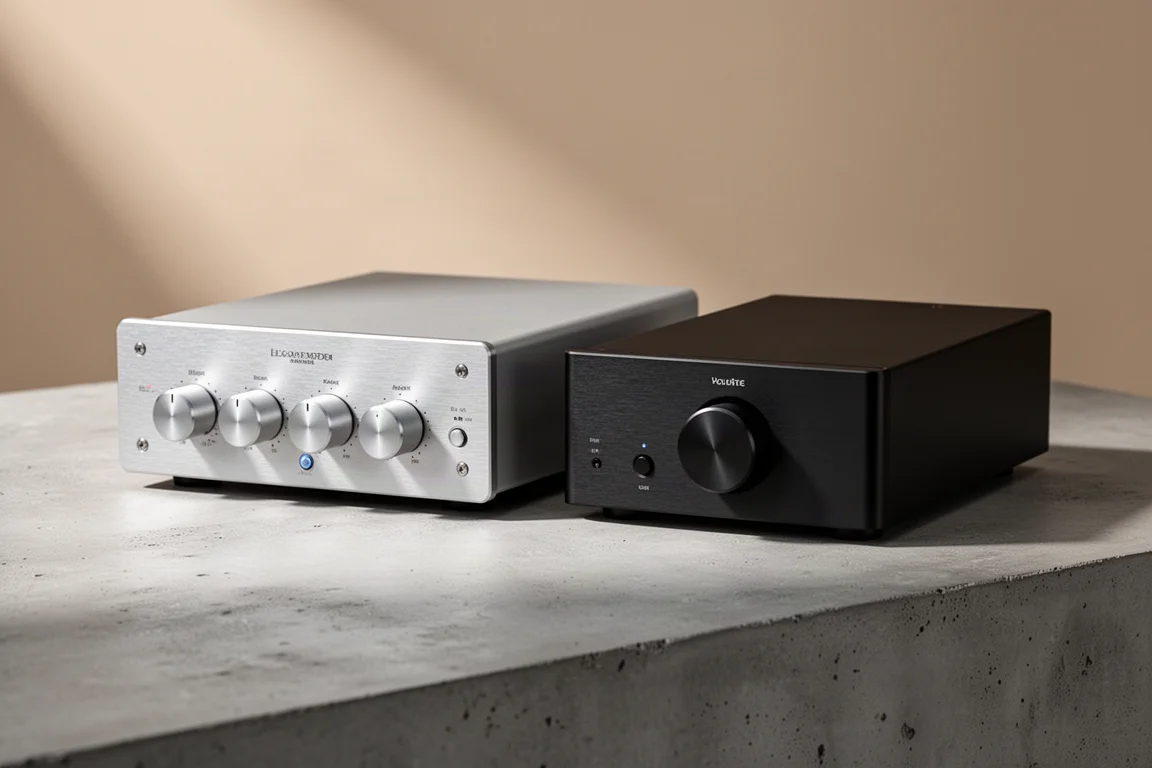
Two compact class D amplifiers, one shared amplifier chip, and a price gap of roughly $175. The Aiyima A300 arrives at about $175, while the Topping PA5 sells for around $350. Both are built around the Texas Instruments 3255 chip, and both are aimed at listeners who want a small, efficient amplifier that still sounds like a well-executed class A/B design rather than a thin, digital-sounding box.
That shared foundation makes the comparison unusually direct. The question is not whether either amplifier can drive a pair of speakers, because both can. The question is what you get for the extra money, and whether the A300’s broader feature set matters more to you than the PA5’s cleaner output at high volume.
The Shared Foundation: Texas Instruments 3255
The TI 3255 is the reason these two amplifiers sound as good as they do. Across many class D designs, 3255-based amplifiers stand out for a fuller, more organic character, without the harshness or digital sheen that shows up in some other class D implementations. They tend to land closer to a well-made class A/B amplifier than to the stereotypical class D sound.
That matters for buyers because it means the chip itself is not the limiting factor. What separates the A300 from the PA5 is implementation, features, and how each one behaves as the volume climbs.
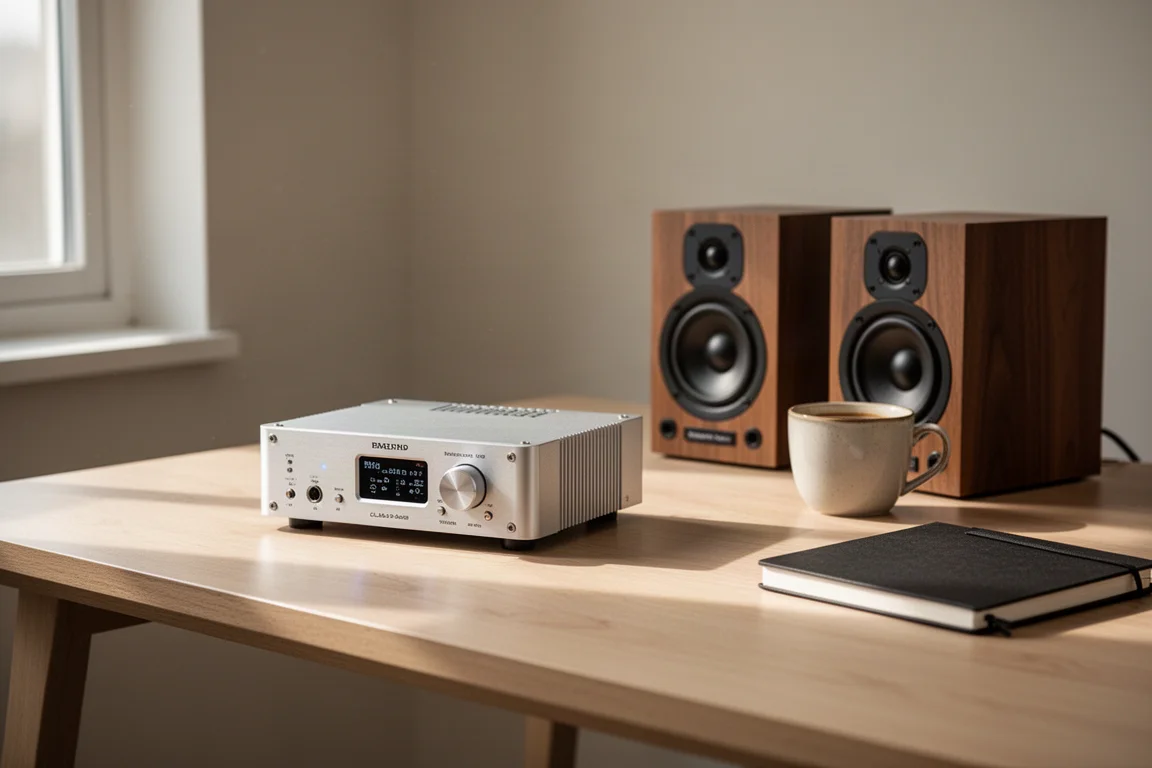
Both amplifiers also share the practical appeal of a small footprint, which makes them easy to place on a desk or inside a media cabinet without drawing attention.
Aiyima A300: Inputs, Tone Controls, and Power
The A300 is the more flexible of the two. On the front panel you get a function button that mutes with a short press and switches between direct mode and tone control mode with a long press, an input selector covering XLR, auxiliary, and Bluetooth, plus treble and bass controls and a smooth volume knob. The tone controls track cleanly without the scraping that cheap potentiometers often show.
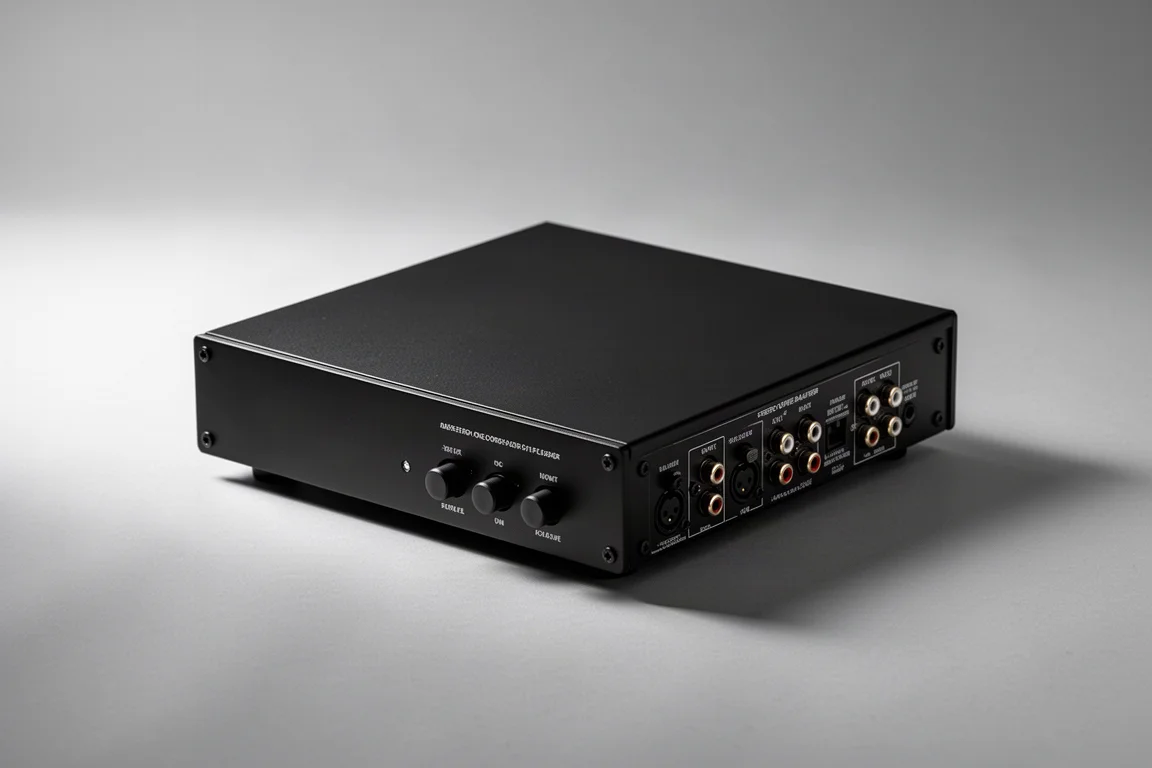
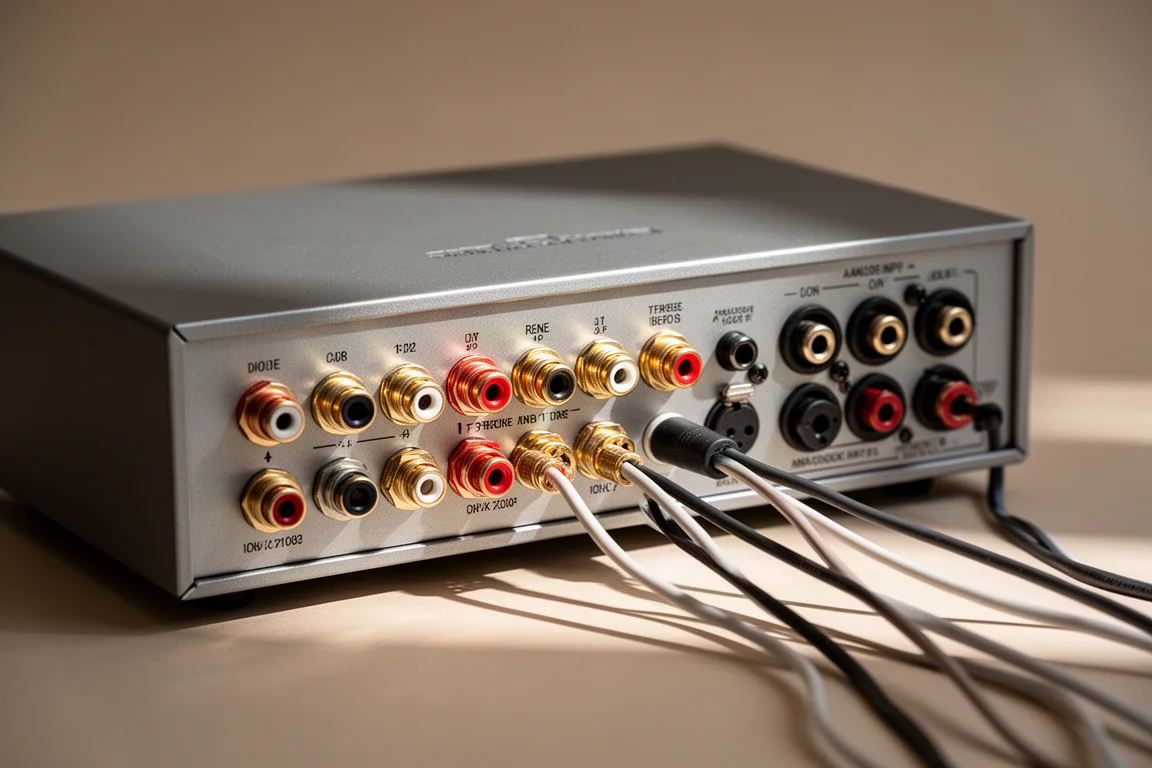
Around the back the story is just as generous: a Bluetooth antenna, a subwoofer output, RCA inputs, XLR inputs, speaker outputs, and an IEC power connection with a power toggle. The RCA inputs are the detail that matters most here, because most source components still offer RCA outputs, and having both RCA and XLR on the same amplifier makes the A300 easy to slot into almost any system.
Power comes from an internal supply rather than an external brick. Aiyima rates the A300 at 215 watts into 4 ohms at 10 percent total harmonic distortion, a figure that mostly describes peak behavior. At a more realistic 1 percent distortion, usable output lands somewhere around 110 to 125 watts into 4 ohms and roughly 65 to 70 watts into 8 ohms. In practice that is enough to drive any reasonably efficient speaker with room to spare.
Topping PA5: Cleaner Output, Fewer Inputs
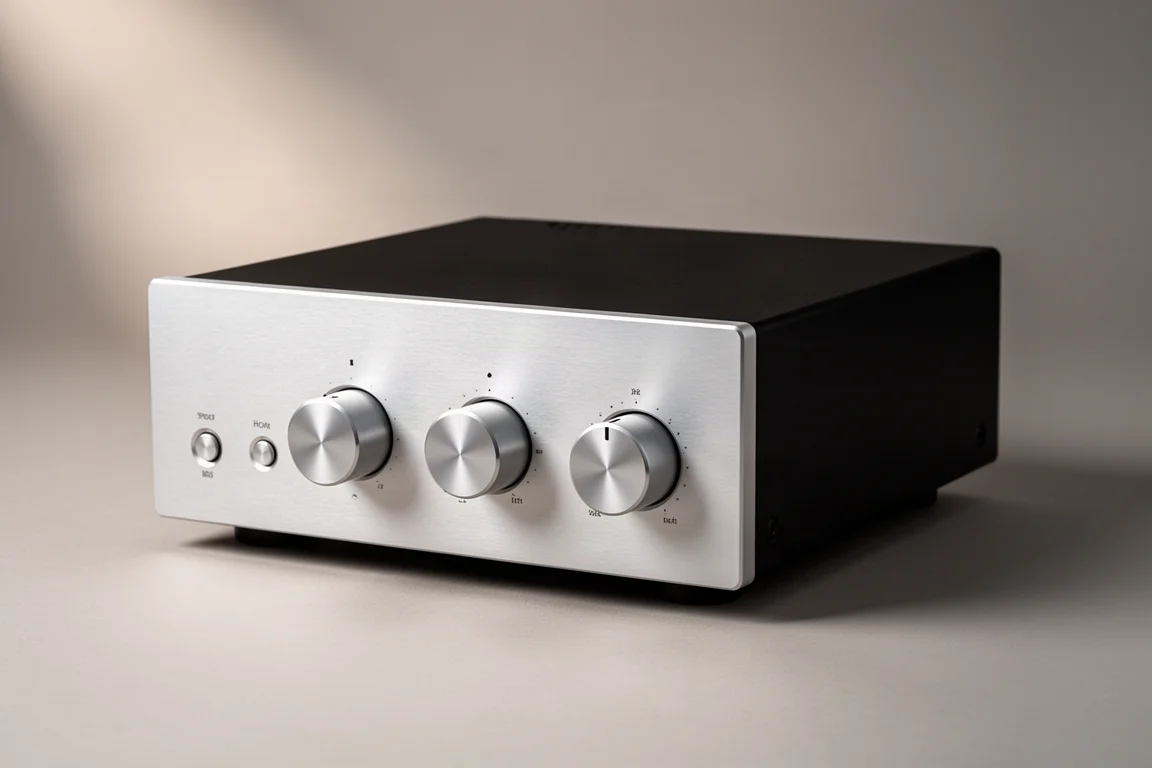
The PA5 uses the same TI 3255 chip and delivers the cleaner implementation of the two. It stays composed as the volume climbs, with punch and weight in the low end and no loss of control. Listeners who want maximum clean power from a small chassis tend to gravitate toward it.
The trade-off is flexibility. The PA5 does not offer RCA inputs, which means many source components cannot connect directly without an adapter cable. If your source has XLR outputs, that is not a problem, but if it does not, you will be shopping for the right cable before you can listen. It also costs about twice as much as the A300, and it does not include tone controls, so there is no way to trim a bass-heavy recording or lift a dull one.
How the Two Amplifiers Compare in Listening
Level-matched listening through the same DAC and the same pair of nearfield speakers shows the two amplifiers are closer than their prices suggest. Below roughly 90 dB, the A300 holds its own and the differences are subtle. Above that point the PA5 pulls ahead with a cleaner, more controlled presentation, while the A300 begins to show a little more distortion.
With tone controls bypassed, the A300 leans slightly more neutral, with upper midrange and treble that are more forward and more on display. The PA5 goes the other way, with a low end that hits harder and a generally punchier balance. Neither approach is wrong; they simply emphasize different parts of a recording.
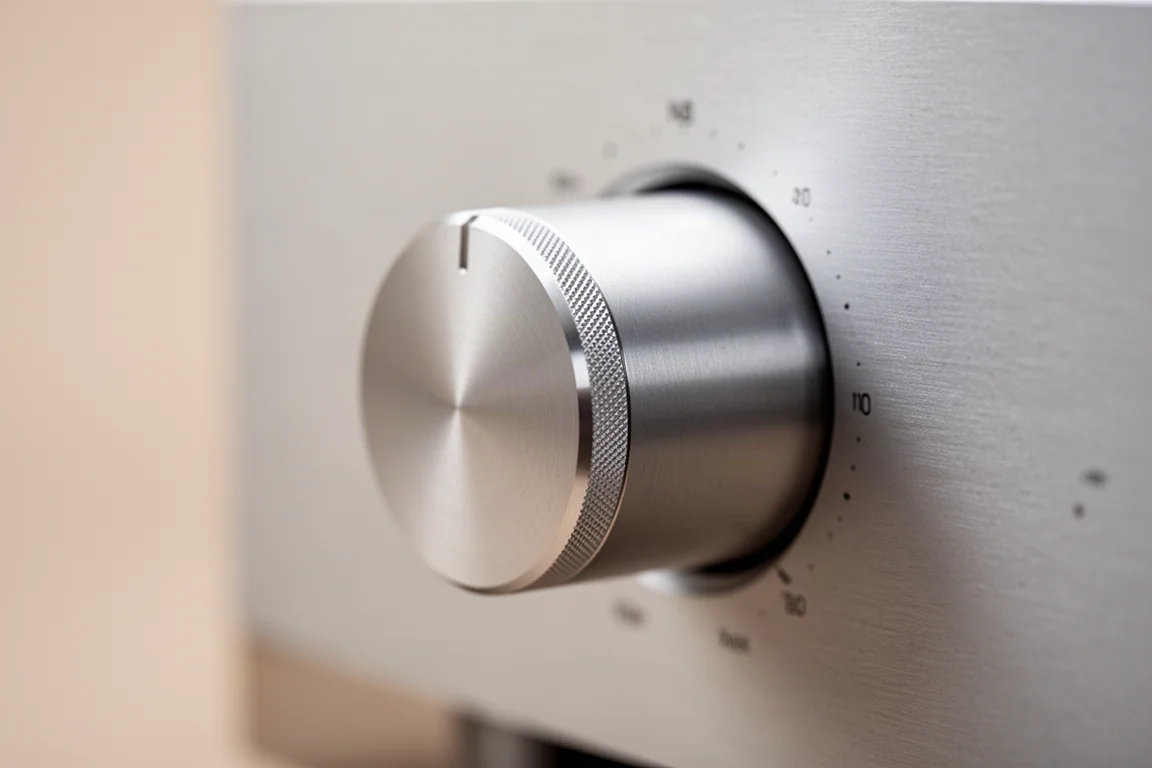
That said, the A300’s tone controls change the equation. Being able to add or trim bass and treble makes it easy to tune the amplifier to the room or the recording, which the PA5 cannot do.
Realistic Use Cases: Desktop, TV, and Nearfield
Both amplifiers suit a desktop nearfield setup, where their small chassis and modest heat output make them easy to live with. The A300’s extra inputs and tone controls give it an edge in that context, especially if you switch between a DAC, a phono preamp, and a phone over Bluetooth.
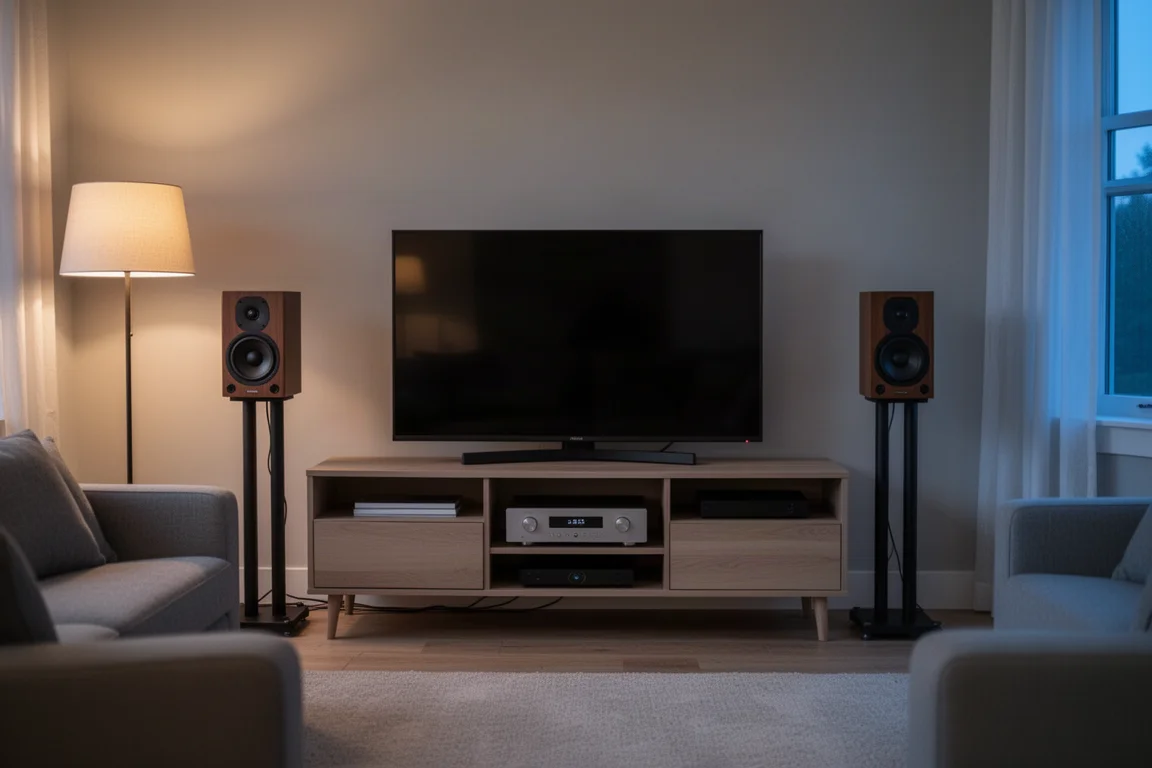
The A300 also works well as a replacement for a soundbar. With a subwoofer output and Bluetooth on board, it can sit behind a television, drive a pair of compact speakers, and hand off low frequencies to a sub. Adding a DAC with its own remote control completes the setup, and the volume on the A300 can be left at roughly 60 to 75 percent while the DAC handles level changes upstream.
What the Aiyima A300 Does Better
Feature coverage is where the A300 separates itself. Balanced XLR inputs, RCA inputs, Bluetooth, a subwoofer output, and tone controls in one chassis is an unusual combination at this price. The internal power supply also keeps the installation tidy, with no external brick to hide.
Compared with the Aiyima A08, the A300 is the more sensible buy. The A08 adds a USB DAC and an internal supply, but the A300 lands at about the same price while offering Bluetooth, a subwoofer output, and balanced inputs. The A08 still makes sense on a desk where a USB connection is the priority, but for most buyers the A300 covers more ground.
What the Topping PA5 Does Better
Clean power delivery is the PA5’s strength. It holds together at higher volumes with lower distortion, and its low end has a weight and punch that the A300 does not quite match. If you listen loudly, or if you have speakers that benefit from a firm grip in the bass, that difference is audible.
The catch is everything around it. There are no RCA inputs, no tone controls, and no Bluetooth, so the PA5 asks you to build the rest of the system around its limitations.
Buying Advice
For most listeners, the A300 is the better value. It costs roughly half as much, offers more inputs, includes tone controls, and adds Bluetooth and a subwoofer output that open up desktop and television setups. Its power is more than adequate for typical speakers in typical rooms, and its sound quality is close to the PA5 at ordinary listening levels.
Choose the PA5 if clean output at high volume is the priority and the budget allows for it. Be prepared to sort out cables, since its lack of RCA inputs means many sources will need an adapter or a balanced connection. If your source already offers XLR outputs, the decision is easier.
Either way, both amplifiers benefit from a source with its own volume control. Feeding them from a DAC with variable output lets you set the amplifier near its comfortable range and handle level adjustments upstream, which keeps the noise floor low and the operation simple.
Conclusion
The A300 and the PA5 are both excellent examples of what the TI 3255 chip can do in a compact, affordable chassis. The PA5 is the cleaner performer at high volume. The A300 is the more practical purchase for most people, with a wider set of inputs, tone controls, Bluetooth, and a subwoofer output for about half the price. Match either one to a source you can control and a pair of speakers you know well, and both will reward the effort.
Further reading
Related Reviews
Amplifiers
AIYIMA A07 Max Review: A Budget Class D Amplifier That Can Run Bridged
A close look at the AIYIMA A07 Max, a TPA3255 desktop amplifier that adds bridging, swappable op-amps, and a very quiet noise floor at a budget price.
Amplifiers
AIYIMA A08 Review: A Compact Class D Amplifier With USB DAC and Bluetooth
A practical look at the AIYIMA A08, a $115 Class D integrated amplifier that adds a USB DAC, Bluetooth, and an internal power supply to a proven budget platform.
Amplifiers
Emotiva BasX A1 Monoblock Review: Affordable Stereo Power With Real Strengths
A close look at Emotiva's entry-level 200W monoblock: taut bass, a neutral midrange, and a noise floor worth checking against your speakers.