Amplifiers
AIYIMA A08 Review: A Compact Class D Amplifier With USB DAC and Bluetooth
A practical look at the AIYIMA A08, a $115 Class D integrated amplifier that adds a USB DAC, Bluetooth, and an internal power supply to a proven budget platform.
Introduction
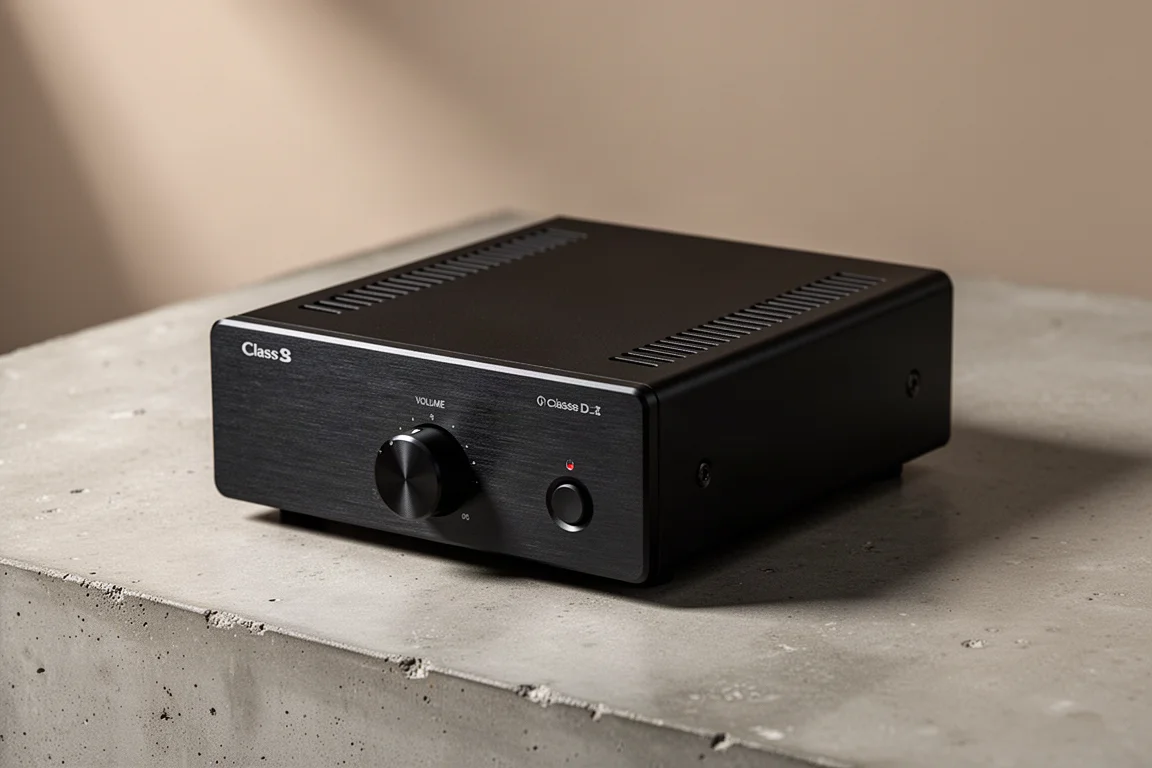
The AIYIMA A08 is a compact Class D integrated amplifier that pairs a proven budget amplification platform with a built-in USB DAC, Bluetooth, and an internal power supply. It sells for around $115 on Amazon, while AIYIMA lists it at $150 on its own store. For listeners who want a small desktop or secondary system without a stack of extra boxes, the A08 handles both amplification and digital input in a chassis roughly the size of a brick.
The essentials are all on the outside: power and volume on the front, and a full-size USB input, Bluetooth, RCA inputs, and speaker outputs on the back, with a rear switch toggling between USB and RCA. There is no remote control, no subwoofer output, and no tone controls. What you get instead is a neutral, balanced presentation that behaves more like a well-executed Class A/B design than a typical budget Class D amplifier.
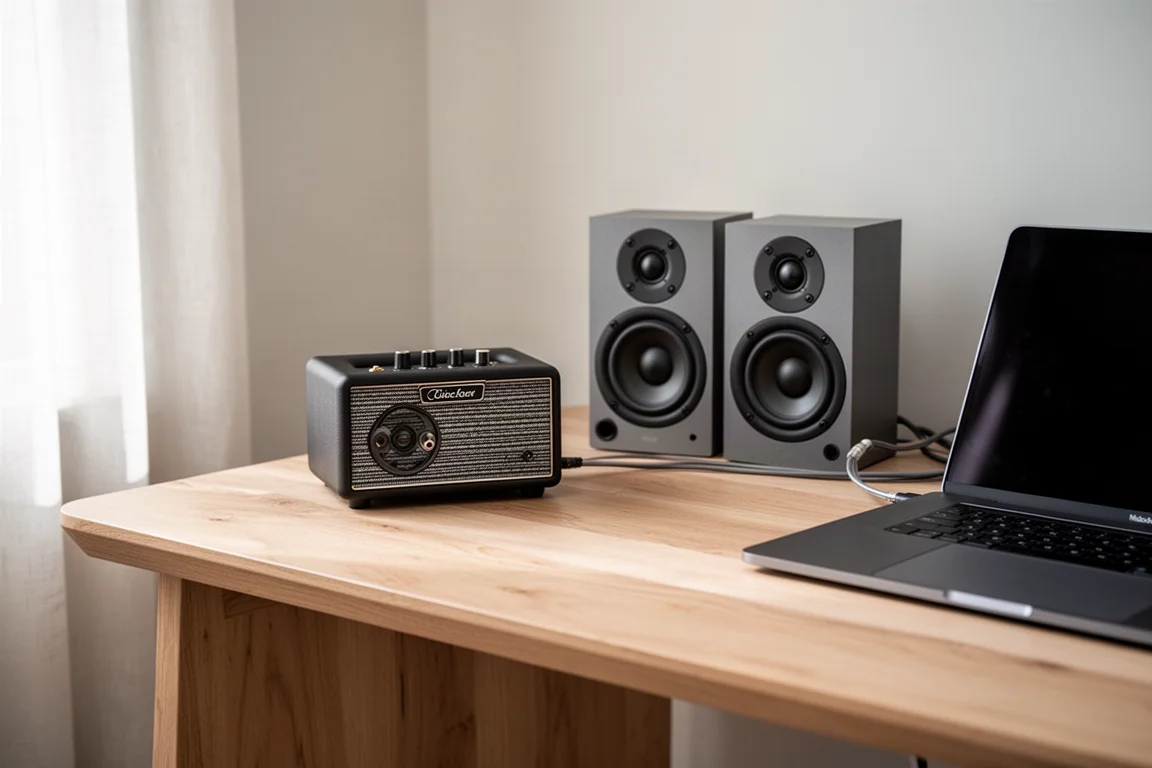
That combination of a small footprint, an internal power supply, and a clean tonal balance is the core of the A08’s appeal.
Who this product is for
The A08 suits desktop listeners, small-room systems, and anyone replacing a soundbar with a pair of passive speakers. It is also a sensible choice for a main system when the source is a DAC with variable output and its own remote, since the A08’s volume control is manual.
It is less suited to listeners who want to adjust volume from the couch without getting up, who need a subwoofer output for a two-channel plus sub setup, or who rely on tone controls to tune the sound to their room. In those cases the deliberately minimal feature set becomes the limiting factor rather than the sound.
Design, Inputs, and Connectivity
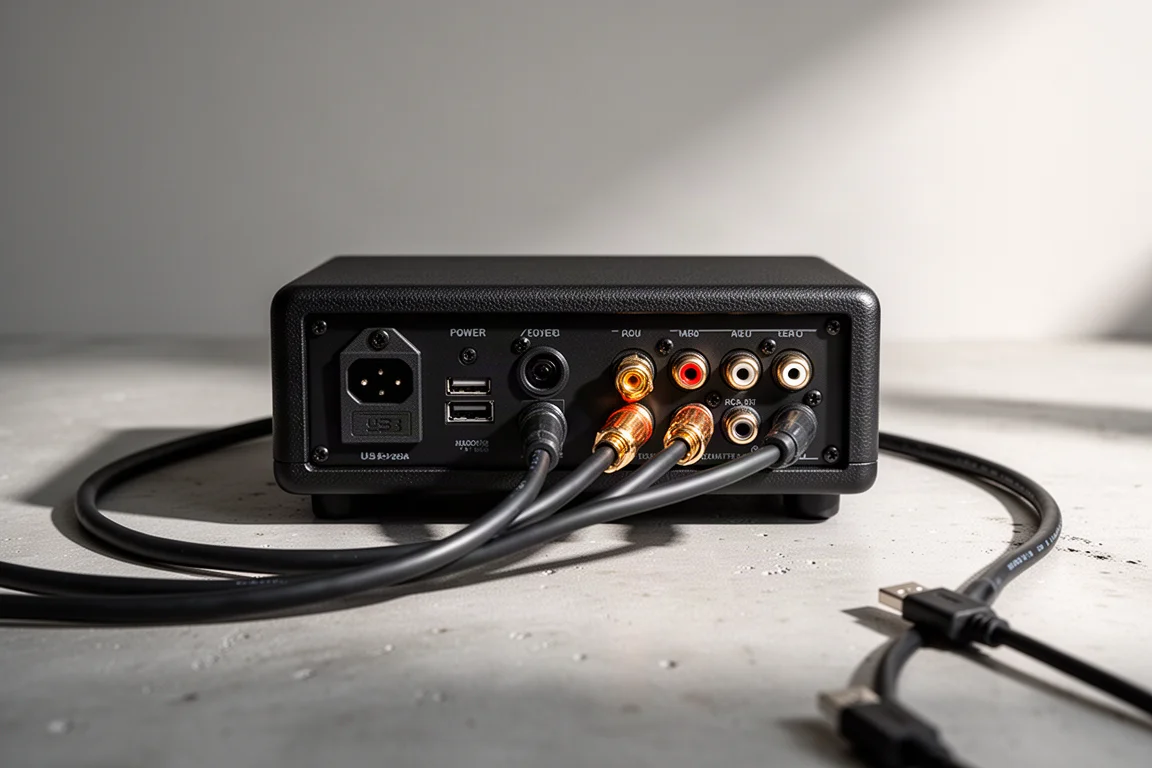
The A08 moves the power supply inside the chassis, so there is no laptop-style brick to hide behind the desk. The rear panel uses an IEC connector for a standard power cable, alongside a full-size USB input, Bluetooth, RCA inputs, and speaker terminals. A fuse sits under the cover.
Inside, the layout follows the A07 closely enough that op-amp rolling remains possible. Four screws and the volume knob come off first, then a small nut on the volume control sleeve, and finally the rear plate so the board can slide out. Swapping op-amps is entirely optional, and the amplifier already sounds convincing as it ships.
The chassis is compact and fitted with vent holes on the top panel, although it does not run particularly hot in normal use. The front panel keeps only power and volume, which reinforces the minimalist approach.
Sound Quality and Power Output
Power is quoted at 260 watts into 4 ohms and 150 watts into 8 ohms at 1 percent total harmonic distortion. Higher figures published at 10 percent distortion are not useful listening levels, so the 1 percent numbers are the ones that matter. In practice the A08 drove a pair of modified Sony SSCS5 speakers, fitted with a redesigned crossover and a lower impedance load, without strain.
Tonally the A08 is neutral and balanced, with a robust character rather than the thin, dry presentation that budget Class D amplifiers sometimes have. It does not sound like a Class D amplifier at all, and the balance is close enough to a good Class A/B design that there was no urge to reach for tone controls. Compared with the A07 it sounds cleaner, with a little more separation between instruments, a slightly larger sound stage, and better placement of instruments in space. Tonality itself is effectively identical, which is expected given the shared amplifier and op-amp chips.
Bass control is a clear step up from the Fosi Audio BT20A, and separation improves as well, while the overall tonal signature stays similar. Against a much more expensive separates combination, the differences are real but smaller than the price gap suggests. A dedicated power amplifier and preamp pairing costing over $1,000 was cleaner, with less smearing between instruments and a deeper sound stage, yet the A08 remained far from disgraced. Adding an external DAC such as the SMSL SU-9N at around $400 brought more top-end detail and better instrument separation, though not a dramatic jump.
Living With the AIYIMA A08
Day to day, the A08 is about as simple as an amplifier gets. The volume knob occasionally scrapes against the chassis, and pulling it out by roughly a millimeter clears it. There is one RCA input, so sources need to be switched upstream or connected one at a time.
Bluetooth pairing works by turning the amplifier on and selecting it from the source device. Once paired, the USB input stops working until Bluetooth is released, which means disconnecting or unpairing the device in its Bluetooth settings rather than simply switching inputs. That is worth knowing before relying on both inputs in the same session.
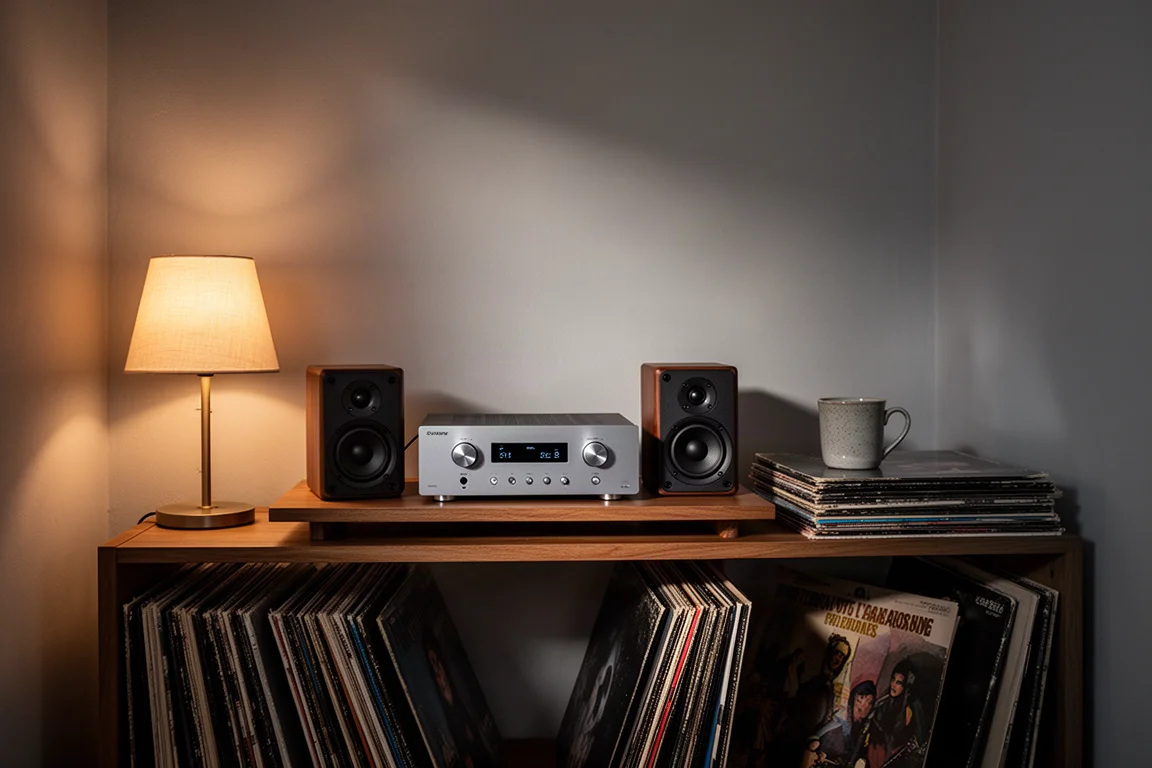
Because there is no remote and no subwoofer output, the A08 fits most naturally on a desk or in a compact system where volume is set once and adjusted at the source. Its footprint is small enough for a soundbar replacement setup built around a pair of compact bookshelf speakers.
Things to Consider Before Buying
The A08 is deliberately limited. There is no subwoofer output, no remote control, no tone controls, and only a single RCA input. Buyers who want those features should look at options such as the AIYIMA D03, which offers a subwoofer output, a remote, and tone controls, although the A08 is the better sounding amplifier of the two.
Tinkerers who enjoy swapping power supplies may still prefer the A07, which uses an external supply and allows more experimentation. The A08’s internal supply is not adjustable, though it sounded better than the stock supply that ships with the A07.
It is also worth setting expectations against more expensive electronics. A high-end separates chain will sound cleaner and more expansive, and a separate DAC in the $400 range adds top-end refinement. Neither gap is large enough to make the A08 a compromise at its price, but both are real.
Buying Advice
At around $115, the A08 is one of the strongest values in budget amplification. Pairing it with a $90 pair of speakers and a set of cables brings a complete desktop system to roughly $210, and moving meaningfully beyond that level of sound quality costs considerably more. Direct pricing from AIYIMA is higher at $150, so the Amazon listing is the more attractive route when stock is available.
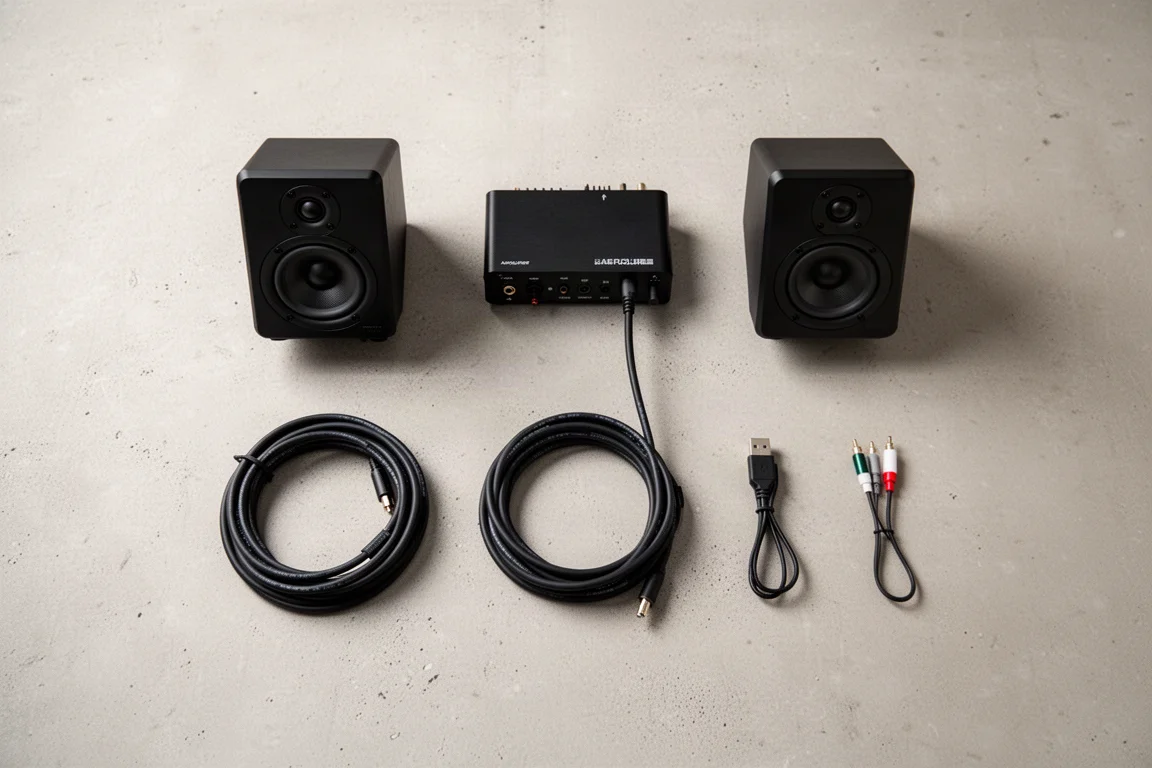
Buy the A08 if you want a neutral, balanced amplifier with USB and Bluetooth built in, and you are happy to control volume at the source. Choose something else if you need a remote, a subwoofer output, or tone controls, or if you want the freedom to experiment with external power supplies.
Conclusion
The AIYIMA A08 takes a proven budget amplifier platform and adds the two things most small systems actually need: a USB DAC and Bluetooth, with the power supply built in. It sounds clean, balanced, and more refined than its price suggests, and it drives a wide range of speakers without complaint. The trade-offs are functional rather than sonic, and for listeners who can live without a remote, tone controls, and a subwoofer output, it is an easy recommendation.
Product link
View more details for AIYIMA A08
This product is mentioned in the review. Check the specifications, options, and compatibility before buying.
View more details for AIYIMA A08Further reading
Related Reviews
Amplifiers
AIYIMA A07 Max Review: A Budget Class D Amplifier That Can Run Bridged
A close look at the AIYIMA A07 Max, a TPA3255 desktop amplifier that adds bridging, swappable op-amps, and a very quiet noise floor at a budget price.
Amplifiers
Aiyima A300 vs Topping PA5: Two Class D Amplifiers Compared
A practical comparison of the Aiyima A300 and the Topping PA5, two Texas Instruments 3255 class D amplifiers with very different prices and feature sets.
Amplifiers
Emotiva BasX A1 Monoblock Review: Affordable Stereo Power With Real Strengths
A close look at Emotiva's entry-level 200W monoblock: taut bass, a neutral midrange, and a noise floor worth checking against your speakers.