Music Streamers
WiiM Ultra vs Cambridge Audio CXN100 SE: How Much Should You Spend on a Music Streamer?
A practical comparison of two music streamers at very different prices, covering software, controls, sound character, and the hidden cost of upgrading a cheaper model.
Introduction
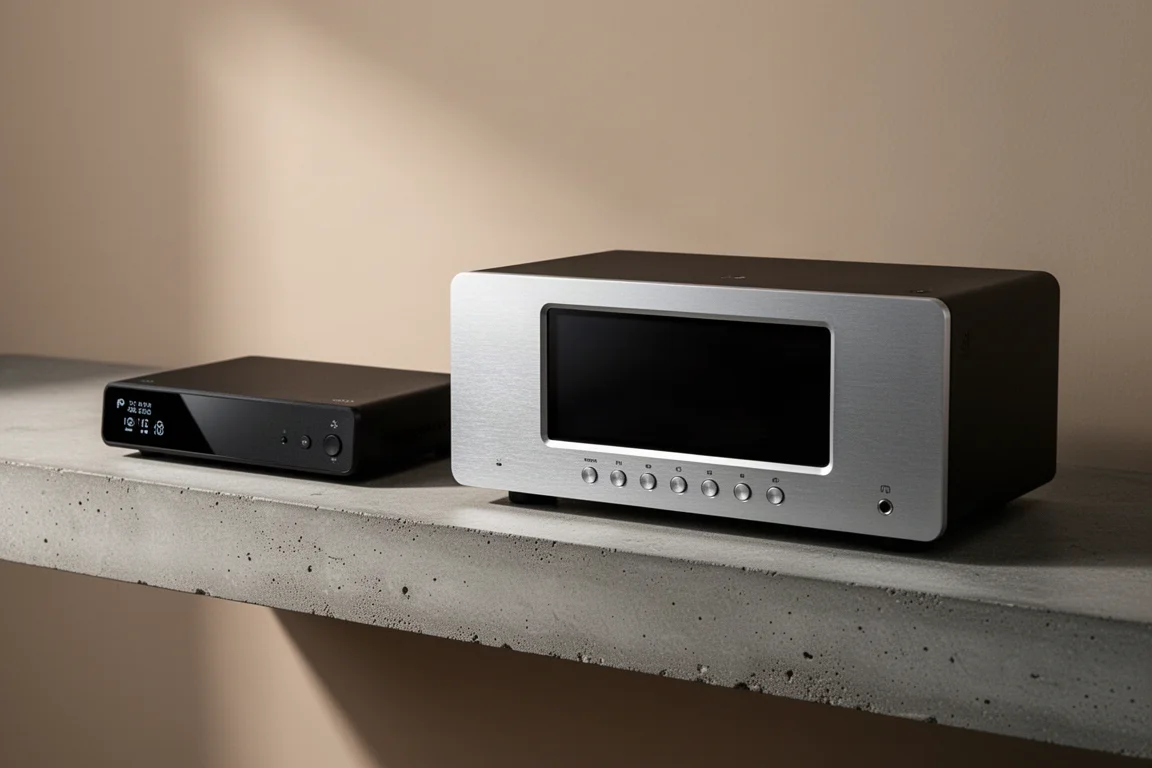
Music streamers occupy an odd position in a hi-fi system. The signal they pass along is digital, so the easy assumption is that every streamer should sound identical. In practice, two streamers at very different prices can sound noticeably different, even when the gap is not dramatic. The WiiM Ultra and the Cambridge Audio CXN100 SE sit roughly three times apart in price, and each makes a different case for where your money should go.
The more useful question is not which one sounds better in absolute terms. It is which one you will actually use, enjoy, and keep using in the system you already own.
Why Sound Quality Is Only Part of the Story
Consider a component that measures beautifully and sounds excellent when it works, but is frustrating enough to operate that it slowly stops being switched on. Friction of that kind is easy to underestimate. When the steps required to get sound out of a system become a chore, the system tends to be abandoned, no matter how good it sounds once it is running.
That idea is usually described as affordance, meaning how intuitively a product communicates its own use. Poor affordance raises friction, and higher friction tends to end in disuse. For a streamer, most of that friction lives in the control app.
There is a second effect worth knowing about. More options do not automatically make people happier, and they often do the opposite. A streamer packed with settings can leave a listener wondering whether one more adjustment would improve the sound, which gets in the way of simply enjoying the music.
WiiM Ultra: Flexible Streaming With Room to Grow
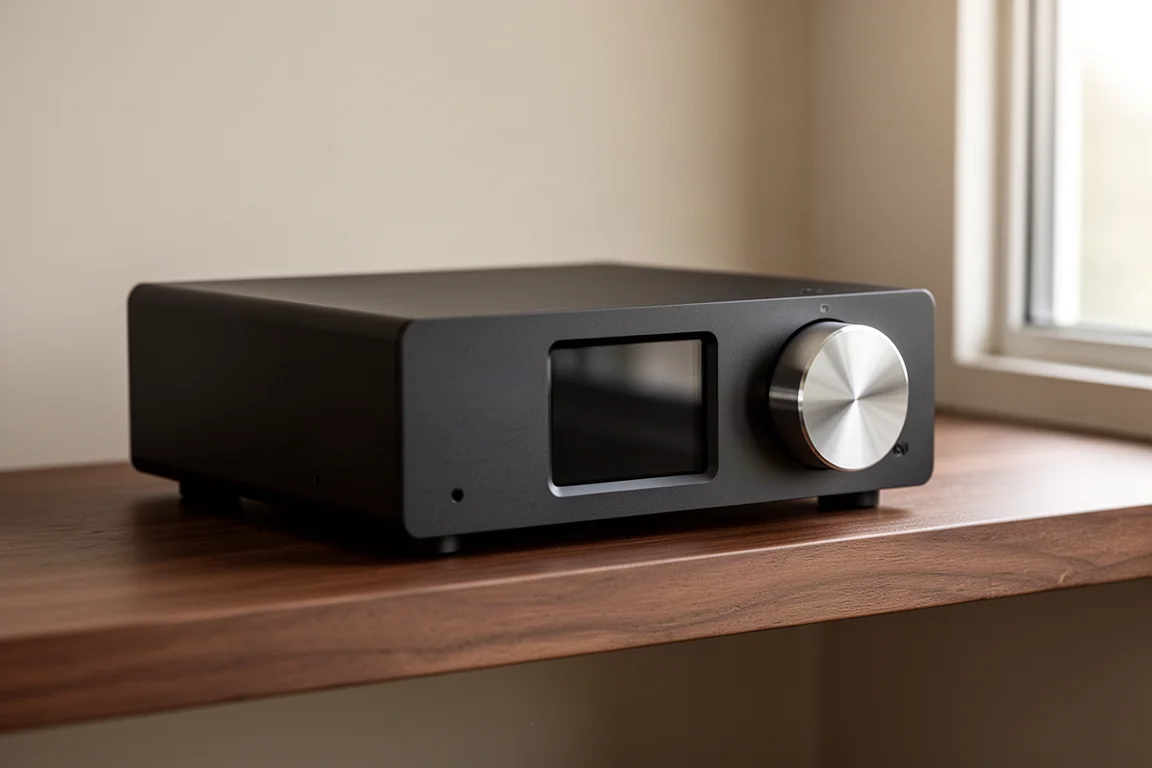
The WiiM Ultra arrives at around $350, and its strongest argument is software. The platform is straightforward to set up, and it has been developed aggressively over several years, to the point where it now competes with the best control apps in the category. It also carries more features than its price suggests, including graphic EQ, parametric EQ, and room correction.
The trade-off is that all of those options can pull attention away from listening. For some owners that is a genuine drawback, and for others it is the whole point.
Cambridge Audio CXN100 SE: Refined, Button-Led Listening
At around $1,100, the Cambridge Audio CXN100 SE takes the opposite approach. Its StreamMagic platform is solid and covers everything most listeners need, including EQ, but the feature list is deliberately shorter. The hardware is where the money goes: a dedicated analog output stage, a more substantial power supply, and a better clock.
Those parts are what separate the two on sound. The CXN100 SE comes across as cleaner, with better instrument separation, more low-level detail, a deeper sound stage, and a lower noise floor. The clock is central to that. Music arrives at the streamer as data, is held in a buffer, and is then clocked out to the DAC. When the timing is less precise, the result is not obvious distortion but a subtle smearing that hides detail. A better clock makes those details easier to hear.
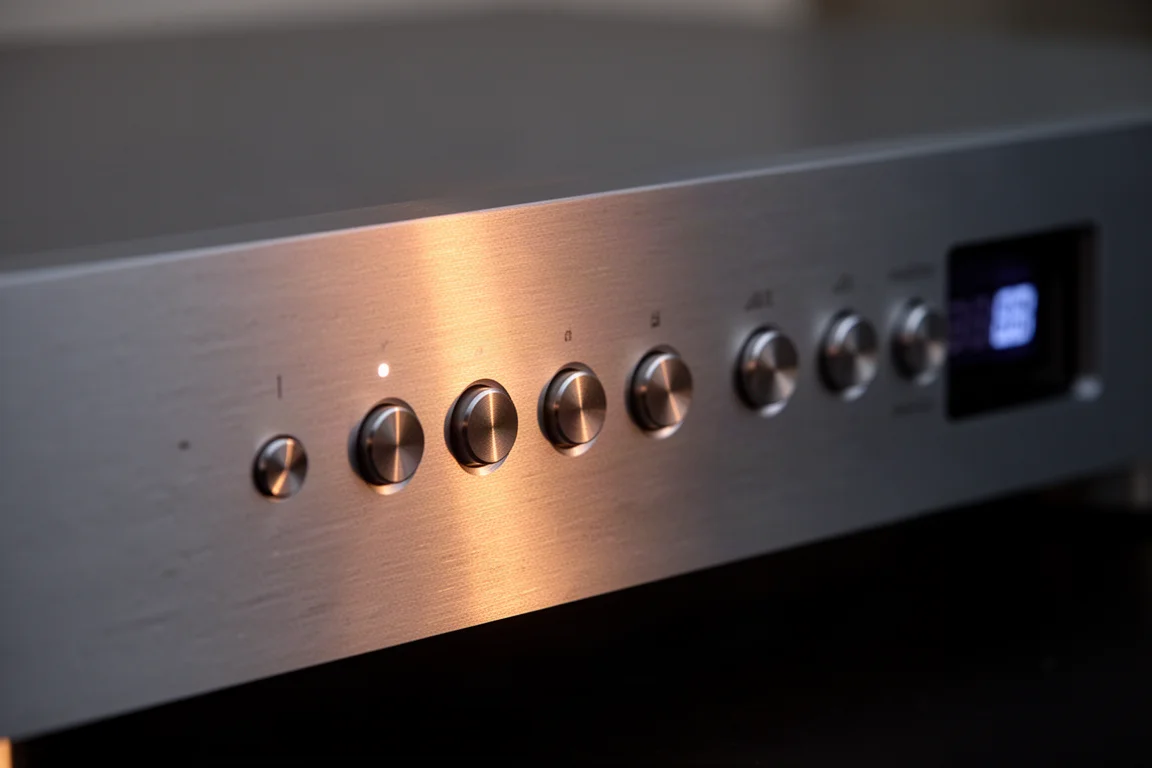
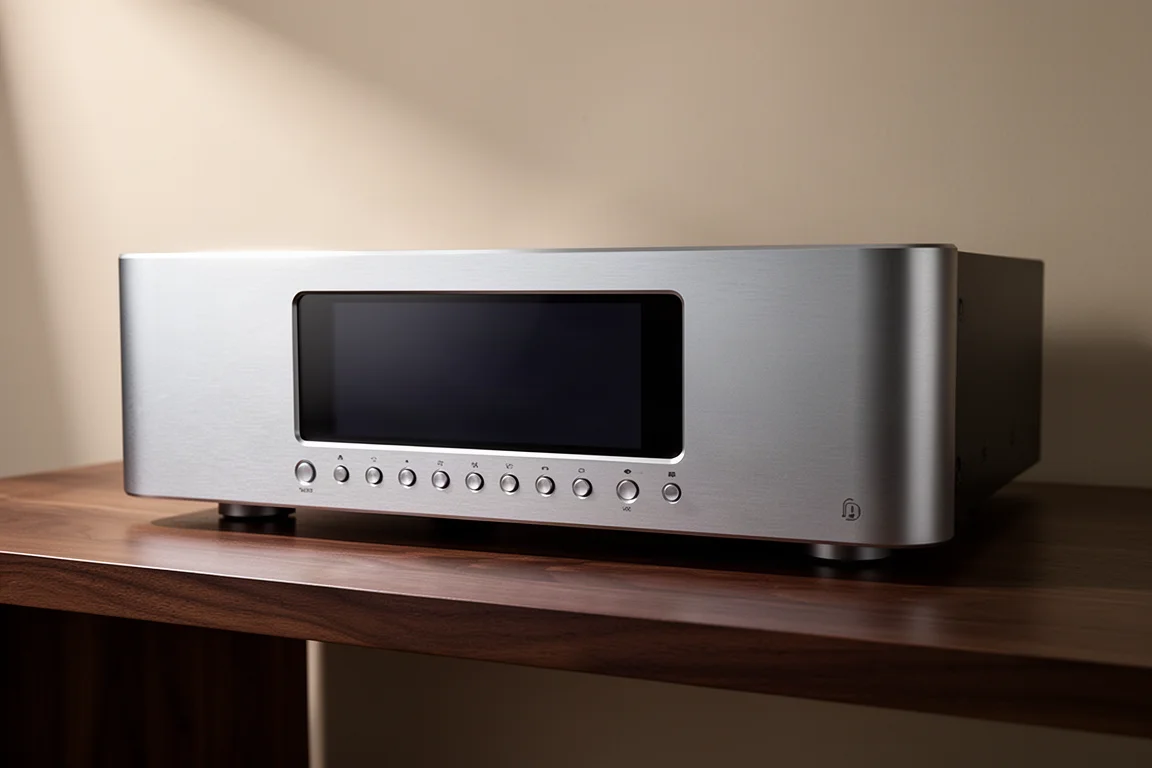
The physical controls matter just as much as the internals. The CXN100 SE bridges the gap between a CD player and a streamer, with buttons on the front panel that let you change tracks without reaching for a phone. For listeners who grew up with disc players, that familiarity makes the unit more pleasant to operate, and a product that feels better to use tends to get used more often.
The Upgrade Path: When the Cheaper Streamer Costs More
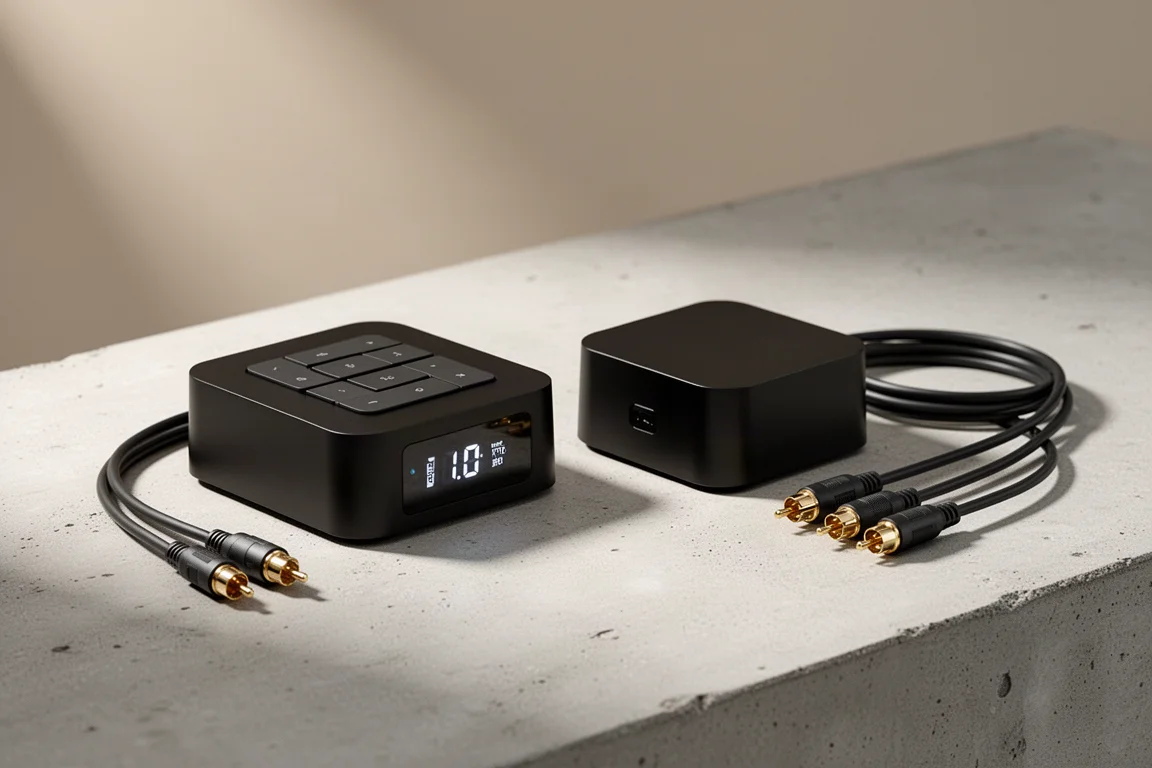
The WiiM Ultra can be brought close to the Cambridge on sound quality, but not by itself. Adding an external re-clocker, at roughly $80, and a better external DAC, at roughly $500, brings the total to about $950, which is close to the price of the CXN100 SE. The difference is that those purchases can be spread out over time, so the WiiM gets you listening immediately and can be improved gradually.
That flexibility suits some buyers and not others, and it changes what you are actually buying. For a tinkerer, the WiiM is less a product than a process, and the improvements along the way are part of the appeal. The catch is that each improvement quickly becomes normal, and the next one starts to look necessary, so the pursuit of upgrades can become a habit with no natural end point. It is also worth noting that the WiiM’s power supply is fixed, so not every part of the chain can be addressed later.
Matching a Streamer to Your System
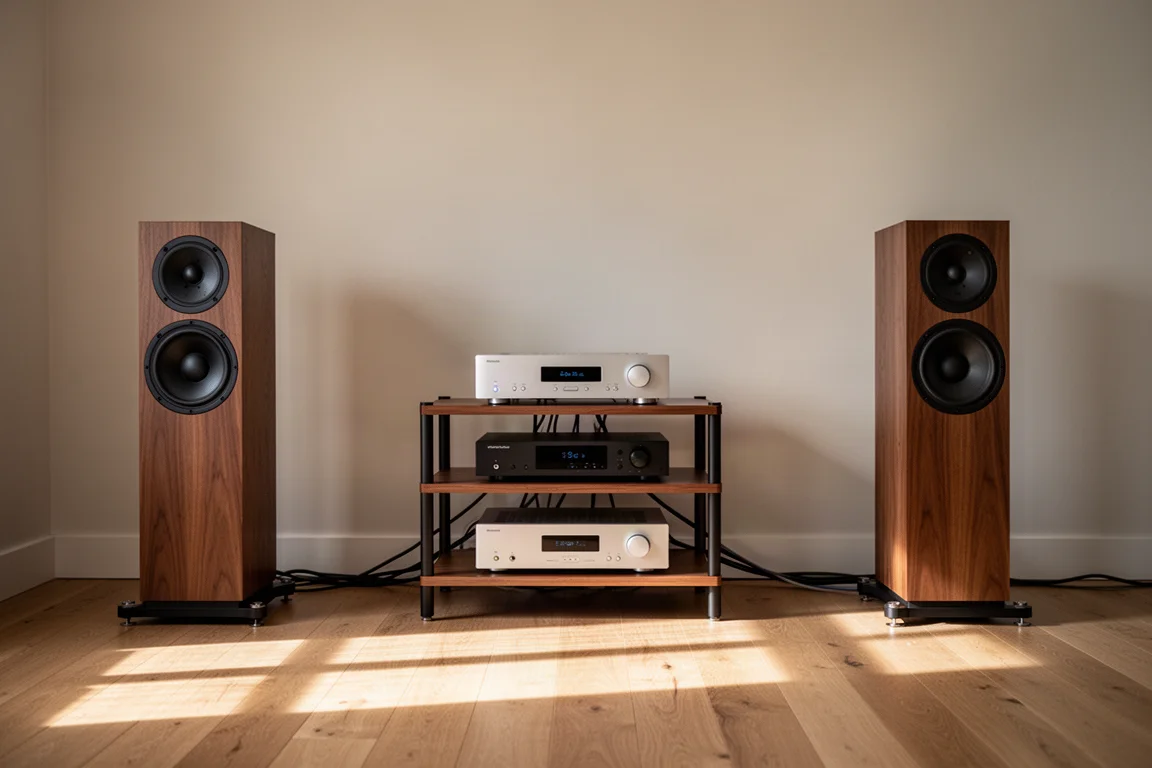
A better streamer only helps if the rest of the system can show what it is doing. If the amplifier is noisy, or the speakers roll off before the top end gets truly revealing, the differences described above will be difficult to hear. The same is true in the other direction. A high-end speaker with a warm, forgiving character can smooth over exactly the detail that the CXN100 SE preserves.
A useful comparison is a camera body and a lens. An excellent lens cannot resolve more detail than the sensor behind it can capture. Before spending three times as much on a streamer, it is worth being honest about whether the amplifier and speakers are in a position to pass those differences along.
None of this means a modest system cannot benefit from a better streamer. It means the benefit scales with what the rest of the chain is able to reveal.
Key Differences at a Glance
Price: the WiiM Ultra sits at roughly $350, while the Cambridge Audio CXN100 SE sits at roughly $1,100.
Software: the WiiM offers a broader, more feature-dense app with room correction and multiple EQ types. StreamMagic is simpler but covers the essentials, including EQ.
Controls: the CXN100 SE has physical buttons on the unit, while the WiiM leans on its app and its touch interface.
Upgrade path: the WiiM can be improved with an external re-clocker and DAC, at the cost of around $600 extra and some tinkering. The Cambridge is designed to be used as it comes.
Buying Advice
The WiiM Ultra suits listeners who enjoy the process, want to start at a lower price, and are comfortable improving the sound over time. It also makes sense for anyone who wants the widest set of software features and room correction without spending much.
The Cambridge Audio CXN100 SE suits listeners who want to plug in, connect to the network, and simply listen. Its shorter feature list is not a shortcoming in that context. The refinement, the quieter presentation, and the physical controls are the point.
It is worth acknowledging how much of this decision is not about sound. Buyers who choose the affordable option often conclude it is just as good as the expensive one, and buyers who choose the expensive option often conclude it was obviously worth it. Both reactions are shaped by a reluctance to feel that a decision was wrong. Group preferences push in the same direction, and the communities around budget gear and premium gear tend to reinforce whichever choice was already made. None of that is a reason to distrust your own judgement. It is a reason to be clear about your own goals before you buy.
Conclusion
If you want a journey, with upgrades to make along the way and a lower entry price, the WiiM Ultra is the natural starting point. If you want the experience of a refined, quietly capable streamer that you operate with your hands and then leave alone, the Cambridge Audio CXN100 SE earns its price. Either way, both make streaming music easy to live with.
Further reading
Related Reviews
Music Streamers
Arylic S10 Plus vs WiiM Mini: Two Affordable Music Streamers Compared
A practical comparison of the Arylic S10 Plus and the WiiM Mini, covering connections, apps, tone controls, and how each internal DAC actually sounds.
Music Streamers
Auralic Aries G1.1 Review: A Streaming Transport That Lifts a Resolving System
A close look at the Auralic Aries G1.1 streaming transport, covering its twin-transformer power supply, Tesla G2 processing, Lightning DS app and the systems where it genuinely pays off.
Music Streamers
Bluesound Nano Review: A Compact Streamer That Keeps Things Simple
The Bluesound Nano is a stripped-down network streamer at $299, with a solid chassis, quick setup, and a clean, punchy sound. Here is what to know before buying.