Music Streamers
Arylic S10 Plus vs WiiM Mini: Two Affordable Music Streamers Compared
A practical comparison of the Arylic S10 Plus and the WiiM Mini, covering connections, apps, tone controls, and how each internal DAC actually sounds.
Introduction
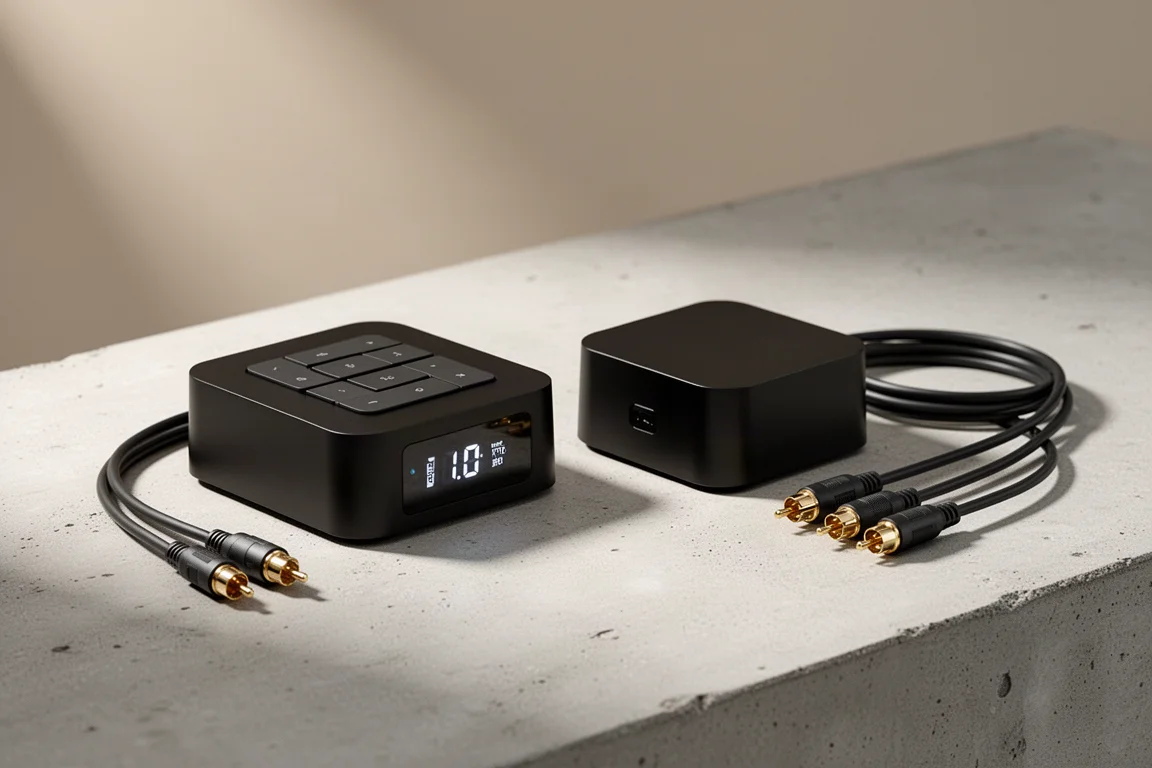
A little over two years ago, an inexpensive network streamer changed what budget-minded listeners could expect from a hi-fi system. That product was the WiiM Mini, and it made cloud streaming accessible without leaning on Bluetooth or AirPlay. The category has grown since, and the Arylic S10 Plus is one of the more interesting challengers. It currently sells for about $70 from the manufacturer’s site, below the WiiM Mini’s typical $80 to $90 street price, though the WiiM Mini launched at $100.
That price gap raises an obvious question: is the cheaper streamer the better one? The answer depends on the speakers or amplifier you already own, how you want to control your music, and how much weight you place on app convenience. This comparison covers the hardware, the software, and the sound of both units.
What These Two Streamers Have in Common
Both the Arylic S10 Plus and the WiiM Mini are network streamers first and Bluetooth devices second. Their main job is to pull music from the internet rather than from a phone, and both include an internal digital-to-analog converter alongside a digital output for listeners who prefer an external DAC.
Both also come in below the dedicated Bluetooth receivers that established hi-fi brands have sold for years, which often sit in the $150 to $200 range. A Bluetooth-only box at that price is hard to justify when a streamer adds cloud playback for less money, and both of these units can be controlled from a phone app.
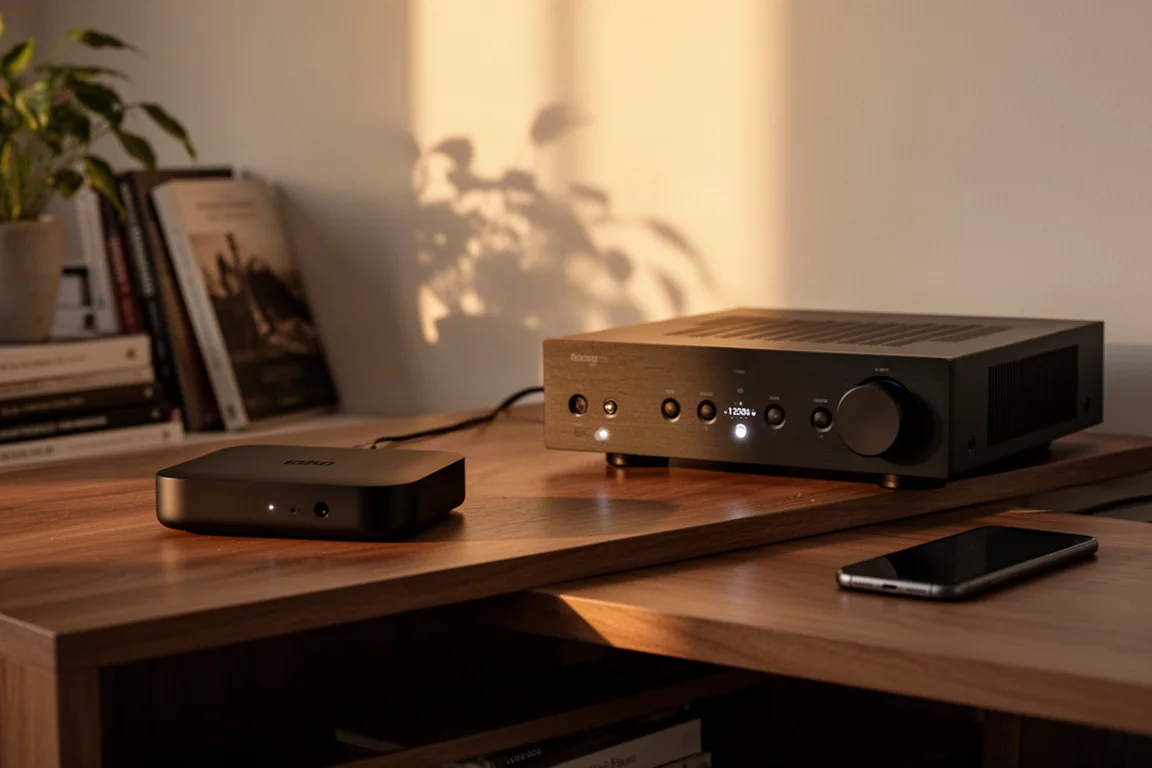
That shared foundation means the decision rarely comes down to basic capability. It comes down to connections, app design, and the character of each internal DAC, which is where these two products genuinely diverge.
Arylic S10 Plus: Hardware, Inputs, and Outputs
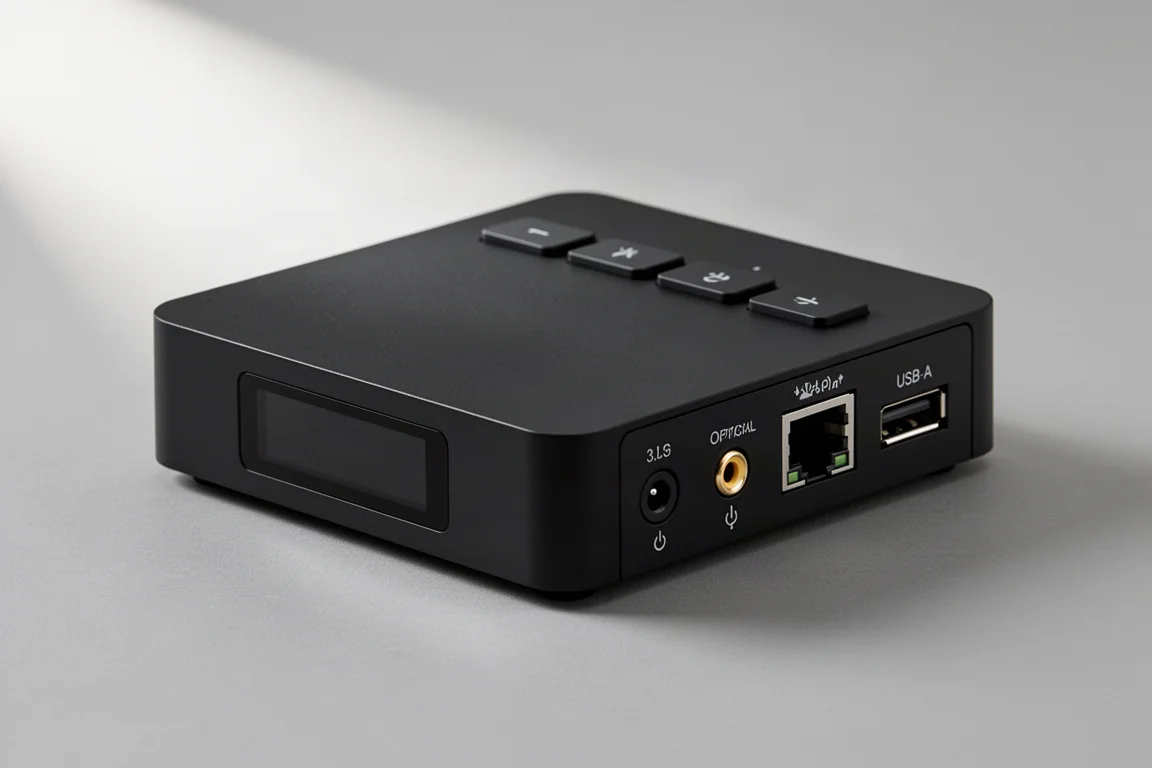
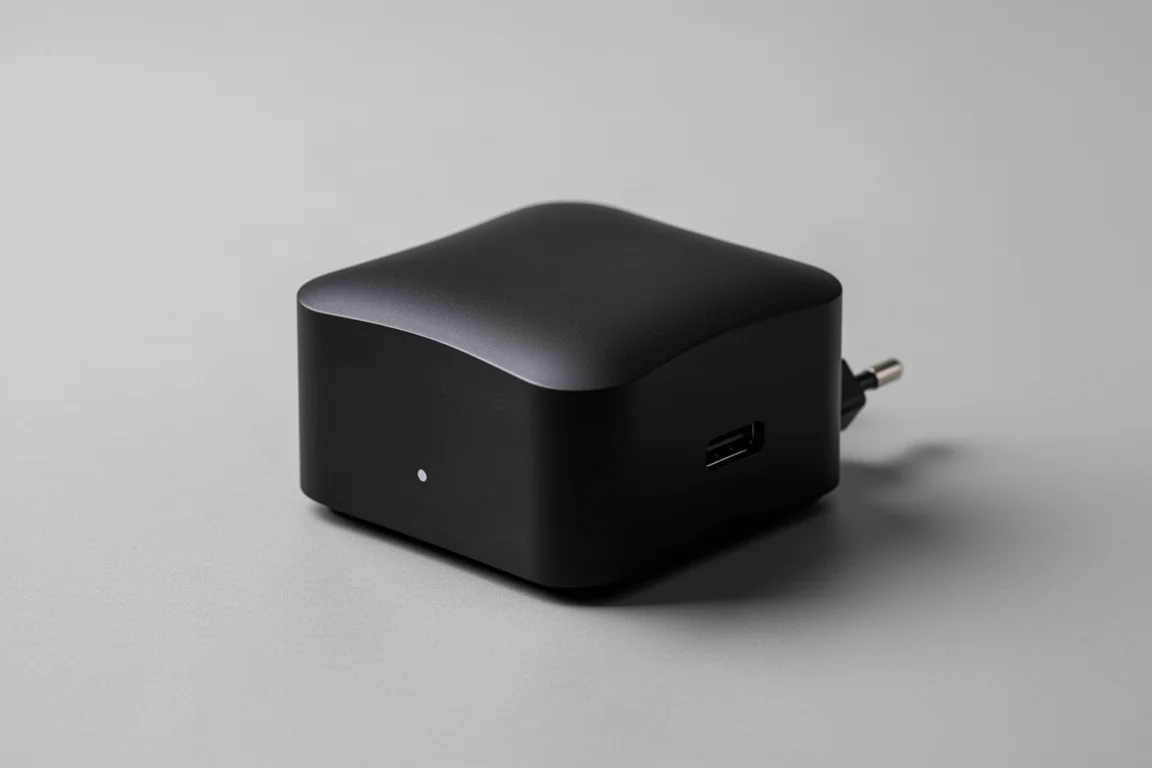
The Arylic S10 Plus is powered from a 5V USB input and ships with a suitable USB plug. Around the back you get an optical output, an analog output that runs from a 3.5mm jack to RCA, a hardwired Ethernet port, Bluetooth support, and a USB-A port that accepts a thumb drive full of music.
The front panel carries a small display, and the top surface has buttons that look like they should click but do not. They still work, and they feel similar to the controls on the WiiM Mini. One notable omission is a dedicated subwoofer output, which matters if you want to high-pass the main channels while leaving a subwoofer untouched. The optical output was also a tight fit for a thicker aftermarket cable.
Analog and digital outputs can be connected at the same time, and the digital output stays active regardless of what else is running, which makes quick comparisons between the two straightforward.
Arylic S10 Plus: Software, Apps, and Tone Controls
Software matters as much as hardware on a streamer. Arylic splits control across two apps: For Stream, a shared platform used by several affordable streaming products, and Go Control, which unlocks the deeper adjustments.
For Stream handles setup, input switching, and everyday playback. Go Control is where balance, bass, mid-range, EQ presets such as Rock and Pop, a custom EQ curve, and a high-pass filter live. Go Control can also skip tracks, but it cannot switch between music services, so moving from one streaming platform to another has to happen in the other app. Whole-home audio is supported across the platform.
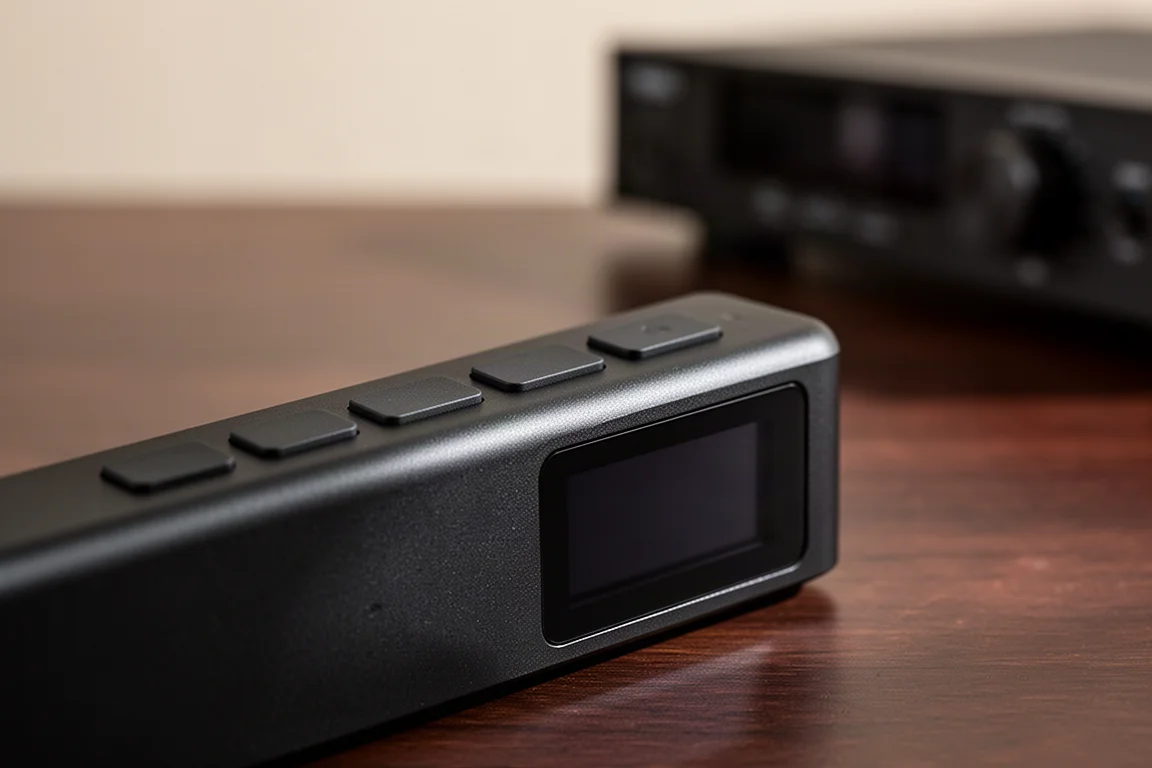
Two apps is more work than one, and in testing the high-pass filter made no audible difference even when pushed up to around 250 Hz. The bass boost, described as a deep bass intensity control, did work and can genuinely help a thin-sounding powered speaker. The preset EQ options are also opaque: selecting Pop does not visibly change any level in the interface, while the custom curve gives you something concrete to adjust. Most listeners change tone settings occasionally rather than constantly, so the extra app is inconvenient rather than disqualifying.
WiiM Mini: The Established Budget Alternative
The WiiM Mini has been on the market longer and typically sells for $80 to $90 after launching at $100. It supports Bluetooth, offers an optical output, and keeps its control in a single app that provides more options in one place than the For Stream environment does. Tone and EQ adjustments do not require a second download.
That single-app workflow is the practical advantage the WiiM Mini holds over the Arylic S10 Plus, and it is the main reason many listeners will not want to switch ecosystems.
Sound Quality: Internal DACs Versus Digital Output
The Arylic S10 Plus internal DAC is thick and full. It has weight and punch in the low end, it smooths over rough recordings, and its presentation recalls older Wolfson and Burr-Brown converters with a rich, slightly veiled character. What it gives up is mid-range and top-end detail.
Switching to the digital output into an integrated amplifier such as the Cambridge Audio CXA81 brought the mid-range and top end to life immediately. That result is expected, but the internal DAC is better than its reputation suggests, and it is a reasonable starting point for a first system.
The WiiM Mini goes the other way. Its internal DAC has more happening in the top end, with more audible reverb and detail, although the upper mid-range can jump forward a little. Between the two, the WiiM Mini’s internal DAC is the more revealing of the pair.
Both internal converters sit well behind even an affordable external DAC such as the SMSL SU-1, which is the more meaningful upgrade path.
Volume handling is worth noting on the Arylic. The analog output means level control happens on the S10 Plus itself, so setting it around 80 percent and using the amplifier’s volume control is the practical approach. The analog and digital outputs do not match in level, so comparisons need a small adjustment.
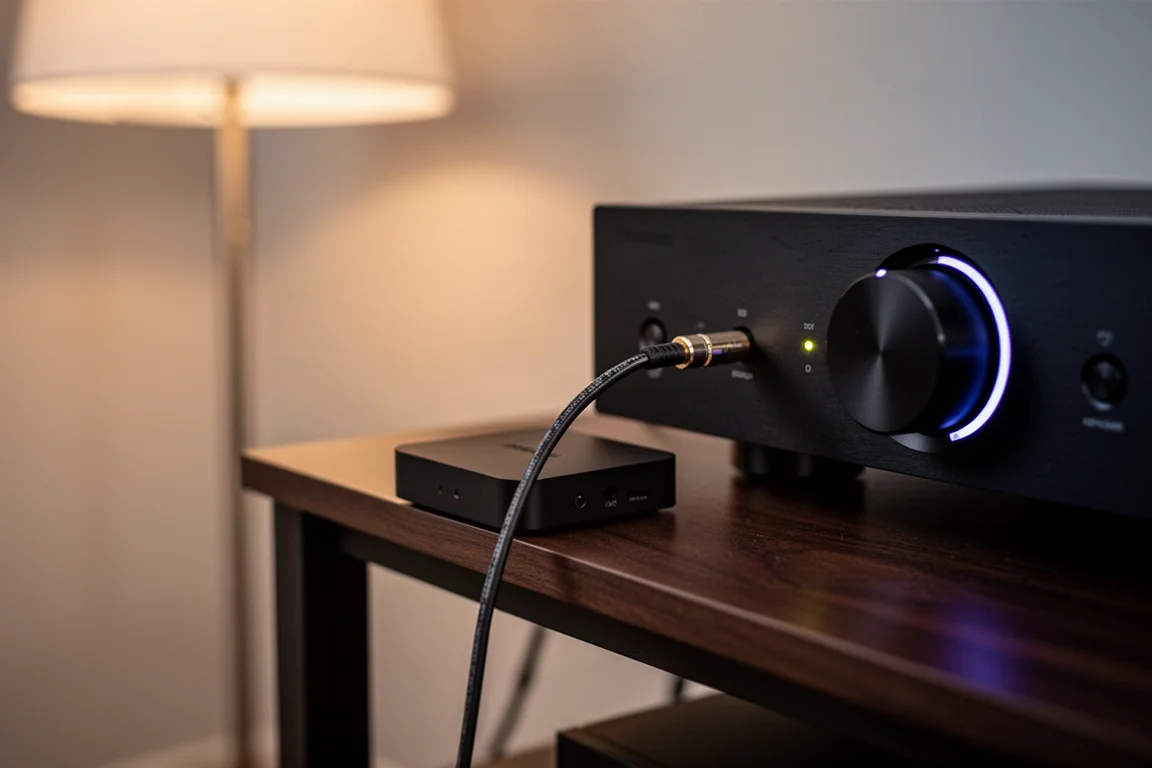
Matching the DAC’s character to the rest of the system matters more than any single specification. A thicker, more forgiving source can settle a bright speaker in a way a more detailed source cannot.
Things to Consider Before You Buy
Availability is the biggest practical wrinkle for the Arylic S10 Plus. At the time of writing it was not listed on Amazon, and the straightforward source was the manufacturer’s own site at $70. The previous S10 model is still available for around $55, but the Plus is the more interesting product and the one worth waiting for.
For low-cost audio gear produced overseas, buying through a retailer with an easy return policy is often the safer route, because warranty service can otherwise mean shipping a unit back at your own expense. That is a real consideration at this price point and a good reason to confirm stock before ordering.
The two-app arrangement on the Arylic side is the other thing to weigh, along with the absence of a subwoofer output. Neither is likely to be a deal breaker, but both shape day-to-day ownership.
Which Streamer Suits Which System
System matching decides a lot here. The Arylic S10 Plus analog output is thick and forgiving, which makes it a strong partner for bright or forward speakers and for harsh-sounding Class D amplification. With a first-generation Klipsch RP-600M or RP-500M, that richer balance could be a genuine benefit.
The WiiM Mini is the better choice in a system that is already balanced and where you want more mid-range and top-end detail. It is also the more convenient platform to live with.
If you are just getting started, either unit will stream your music and neither internal DAC will hold you back badly. Adding a modest external DAC later delivers a bigger improvement than switching between these two streamers would.
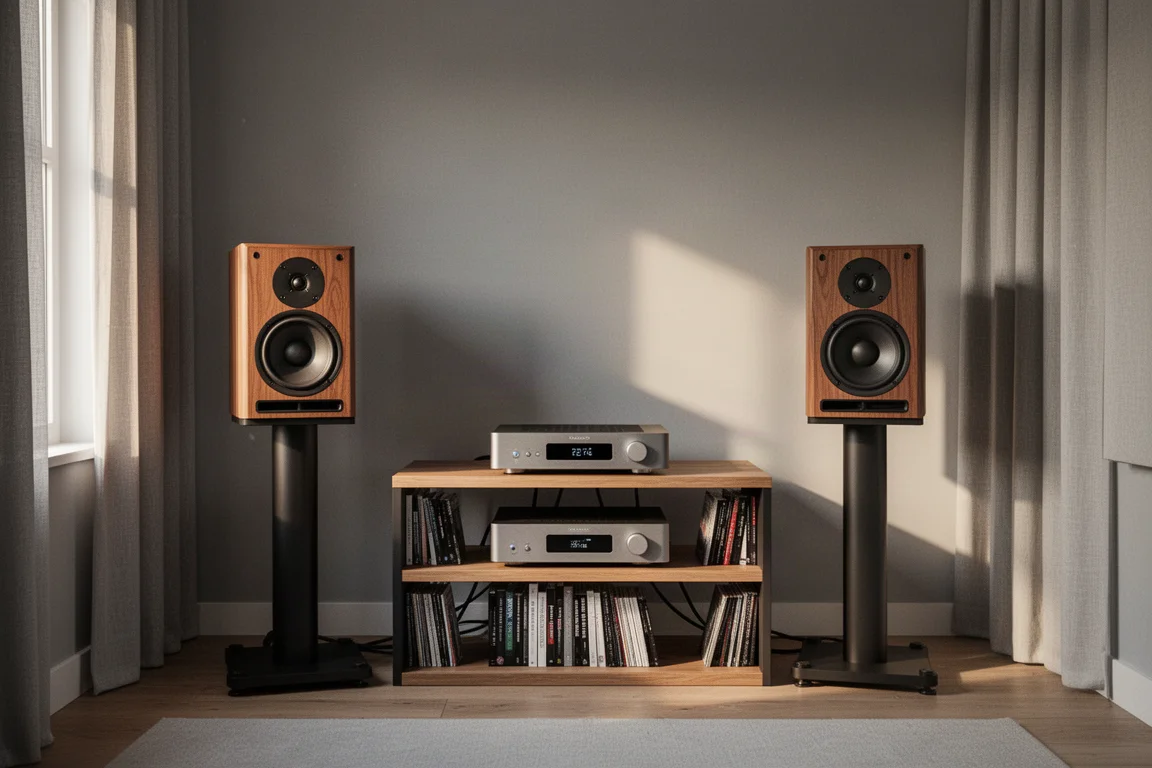
Whichever direction you take, the priority is the same: pick the streamer whose character complements your speakers, and keep the app workflow in mind, because that is what you will interact with every day.
Conclusion
Both streamers are competent, and the Arylic S10 Plus is a legitimate alternative for listeners who would rather not use the WiiM ecosystem. It costs less, supports whole-home audio, and its sound signature flatters bright systems. The WiiM Mini remains the more polished platform with the more detailed internal DAC, and it keeps everything in one app.
The right choice comes down to the system you already own and how much you value convenience. Arylic’s strength is ultra-affordable streaming and budget preamplification, and its wider range includes products with HDMI input for television audio. At this price level, either unit gets music into a system cleanly, and that is the point.
Further reading
Related Reviews
Music Streamers
Auralic Aries G1.1 Review: A Streaming Transport That Lifts a Resolving System
A close look at the Auralic Aries G1.1 streaming transport, covering its twin-transformer power supply, Tesla G2 processing, Lightning DS app and the systems where it genuinely pays off.
Music Streamers
Bluesound Nano Review: A Compact Streamer That Keeps Things Simple
The Bluesound Nano is a stripped-down network streamer at $299, with a solid chassis, quick setup, and a clean, punchy sound. Here is what to know before buying.
Music Streamers
Bluesound Node Icon Review: A Flagship Streamer With Dual DACs and Balanced Outputs
A close look at the Bluesound Node Icon, a sub-$1,000 music streamer with dual ESS Saber DACs, a fully balanced output path, HDMI eARC, and a full-size headphone jack on each side.