Music Streamers
WiiM Mini vs WiiM Pro vs WiiM Pro Plus vs WiiM Amp: Which Streamer Fits Your System?
A practical look at four WiiM streaming options, from the compact WiiM Mini to the all-in-one WiiM Amp, and how to choose between them.
Introduction
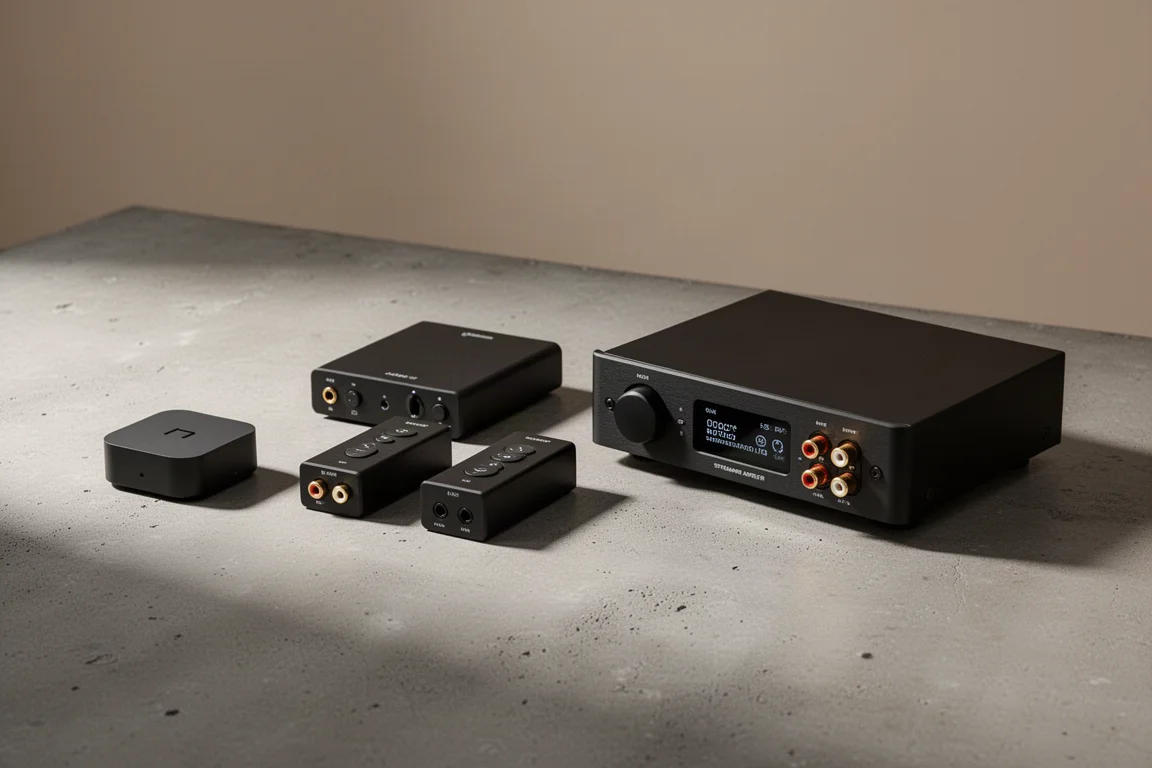
WiiM has built a following by offering streaming hardware with a level of software support that is uncommon at these price points. The range now spans four main options: the tiny WiiM Mini, the more capable WiiM Pro and WiiM Pro Plus, and the all-in-one WiiM Amp, which adds amplification so it can drive a pair of speakers directly.
Each one solves a slightly different problem. Choosing well comes down to what you already own, how revealing your system is, and whether you need an amplifier or just a streamer. This guide walks through what each model offers and where it makes the most sense.
Why the Control App Matters
The streaming experience lives or dies by its control software. WiiM’s parent company brought software design experience to the brand, and the goal was an app with the major music services built in, so listeners would not have to jump between apps when changing services.
The WiiM Home app includes services such as Spotify, iHeart Radio, Tidal, Amazon Music, Qobuz, Napster and Deezer, with more to come. Apple Music is not currently available on these devices. Beyond playback, the app handles alarms, synchronising music across multiple devices, personal routines and a built-in equaliser for tailoring sound. A universal search lets you look across several streaming services at once.
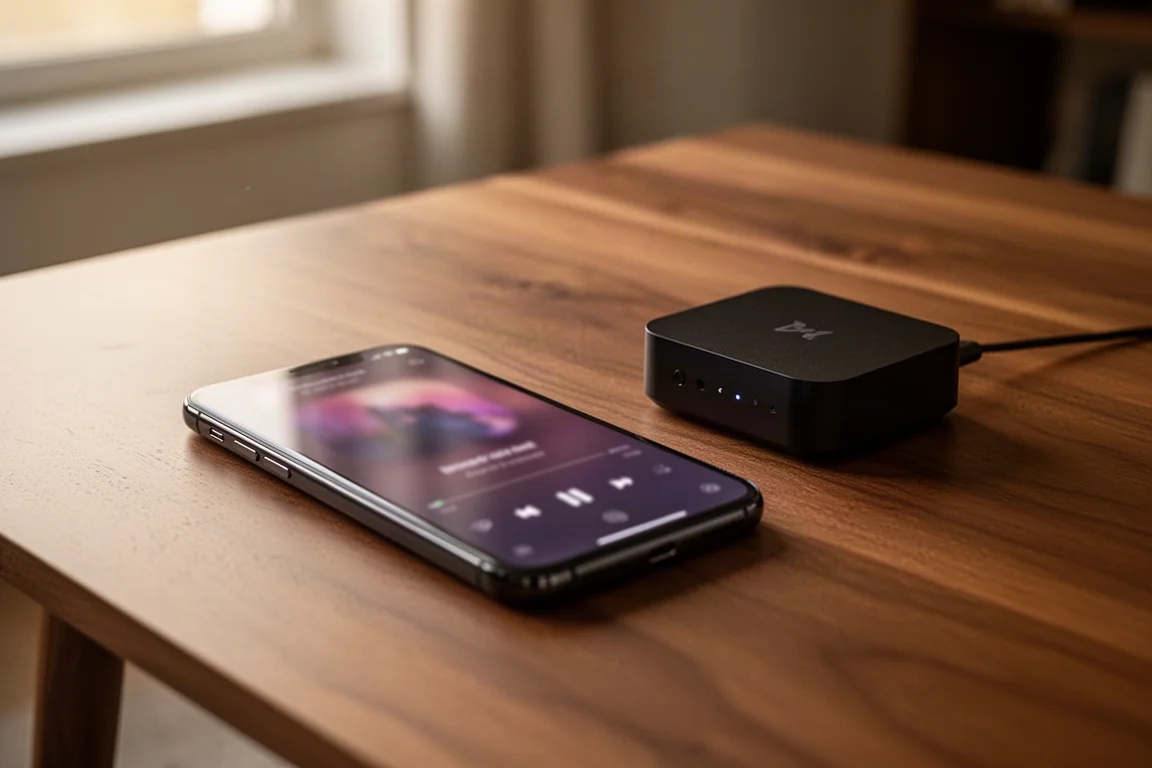
That breadth of control in a single app is rare in this price class, and it is a large part of why these devices are easy to live with day to day.
WiiM Mini: The Entry Point
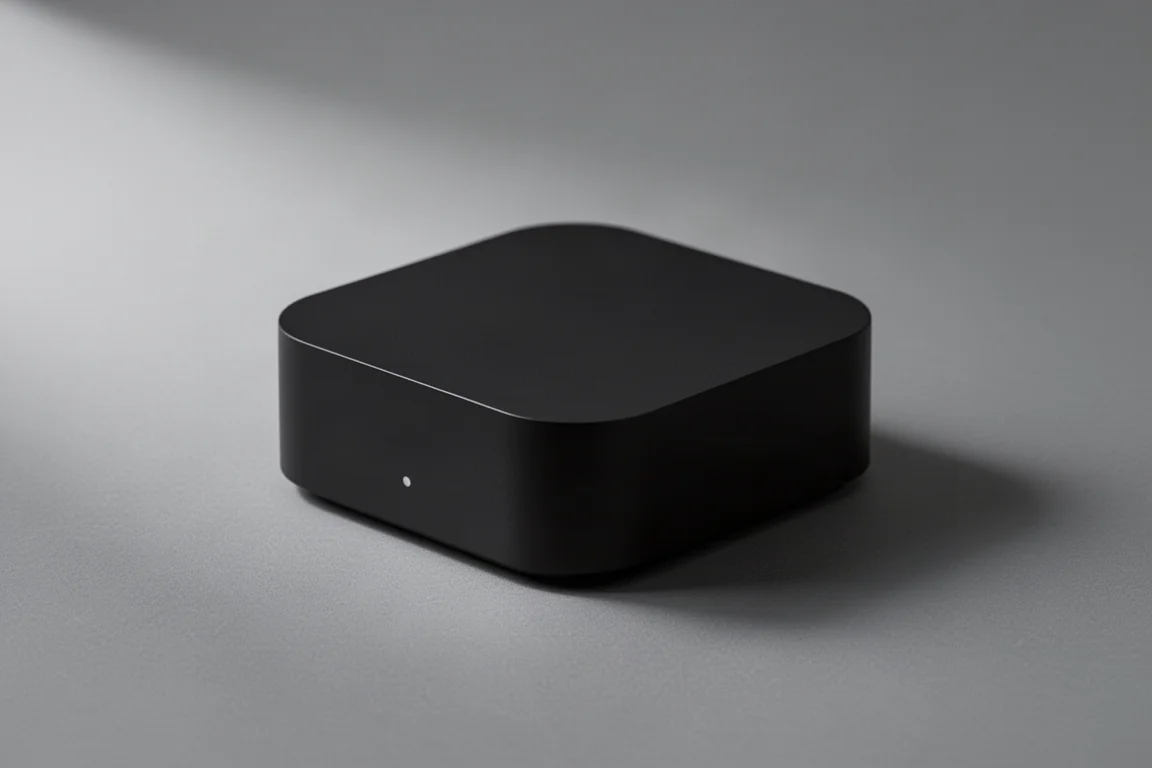
The WiiM Mini is the product that brought the brand wider attention, largely because it delivers a lot of functionality for the money. It measures roughly 2.7 inches across and 0.9 inches tall, making it one of the smallest streamers available, and its size makes it easy to tuck away in a system.
It supports up to 24-bit/192kHz audio and uses a TI PCM5121 DAC chip to decode it. That chip is not a flagship part, but it produces clean, clear sound in situations that do not call for a top-end DAC. The internal DAC reaches your amplifier through the included 3.5mm-to-RCA adapter. A Toslink S/PDIF connector lets you send audio to a DAC of your choosing, which opens up both sound quality and use cases. There is also a 3.5mm aux input for other sources, limited to 16-bit/48kHz conversion, and power comes from a small USB-C supply.
AirPlay 2, Spotify Connect, Tidal Connect, DLNA and gapless playback are all supported, and Bluetooth is included for quick connections from a phone or other source. Soft-touch controls sit on the top panel for those who prefer not to reach for a phone.
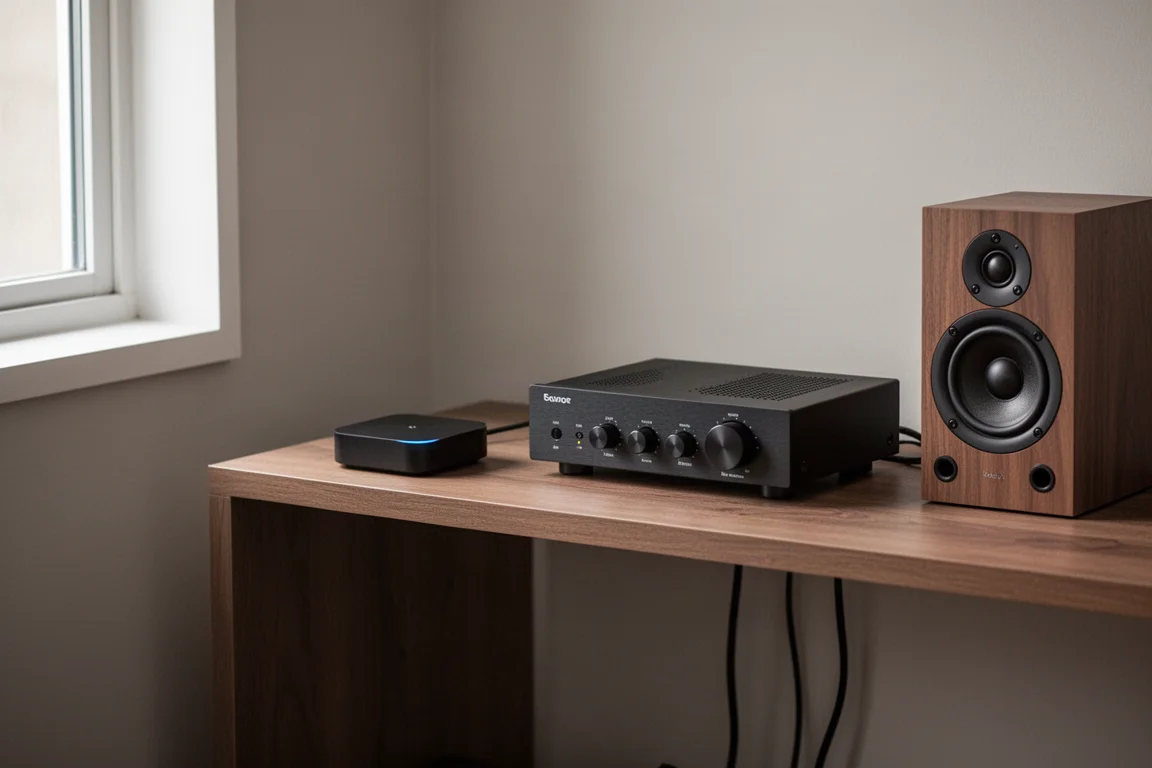
Its real strength is how completely it can disappear into a system while still offering most of the functionality of a full-size streamer. The small footprint also gives it a portability that few competitors with these capabilities can match.
WiiM Pro and WiiM Pro Plus: More Connections, More Headroom
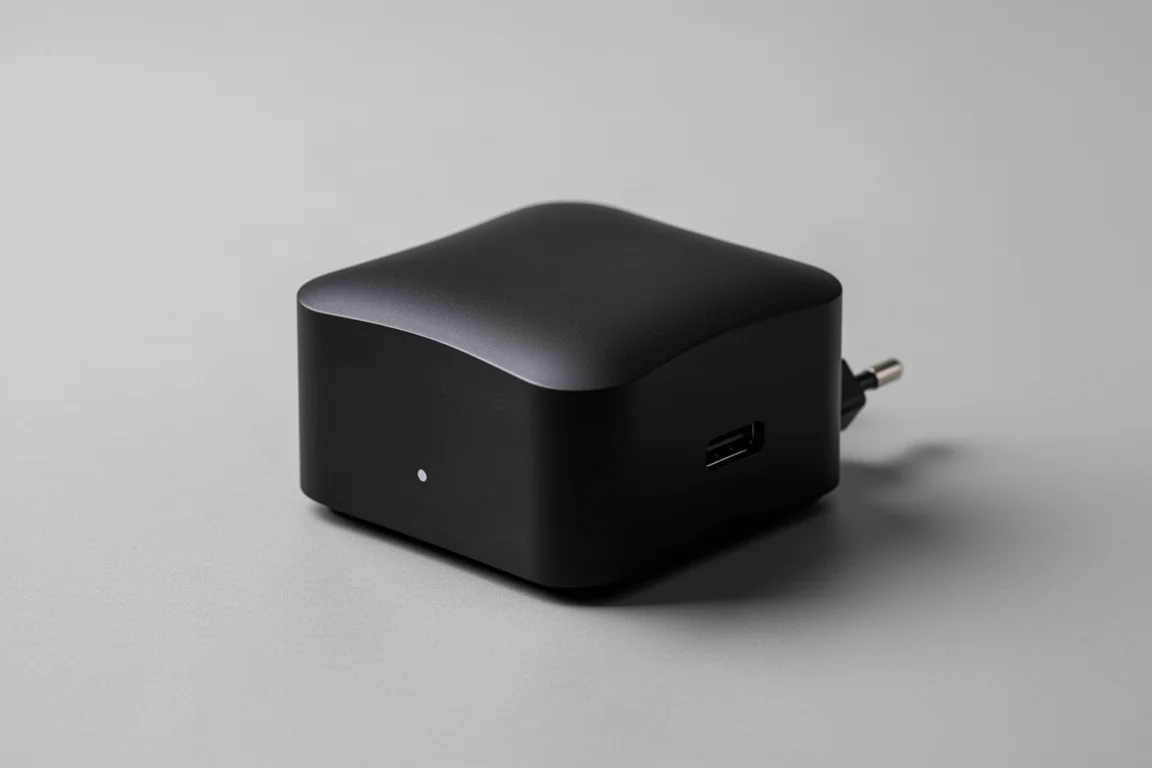
The Pro and Pro Plus take the Mini’s concept and add a newer quad-core processor and more memory, so music streams and app commands are processed noticeably faster. Both are larger at roughly 5.5 inches square and 1.5 inches tall, and the soft-touch controls move from the top panel to the front, where they work well.
The extra space allows full RCA jacks for input and output, so cables connect directly without a 3.5mm adapter. Alongside the S/PDIF Toslink output there is an additional input for external sources. On the Pro Plus, those analogue inputs convert at up to 24-bit/192kHz, an improvement over the 16-bit/48kHz standard conversion. Both units add a coaxial digital output, a useful addition given that coaxial inputs are close to universal on modern DACs.
The WiiM Pro uses the same TI PCM5121 DAC as the Mini. The Pro Plus steps up to an AKM 4493 SEQ DAC, lifting the signal-to-noise ratio from 106dB to 121dB with lower distortion. Those improvements make the Pro Plus a better fit for more revealing systems.
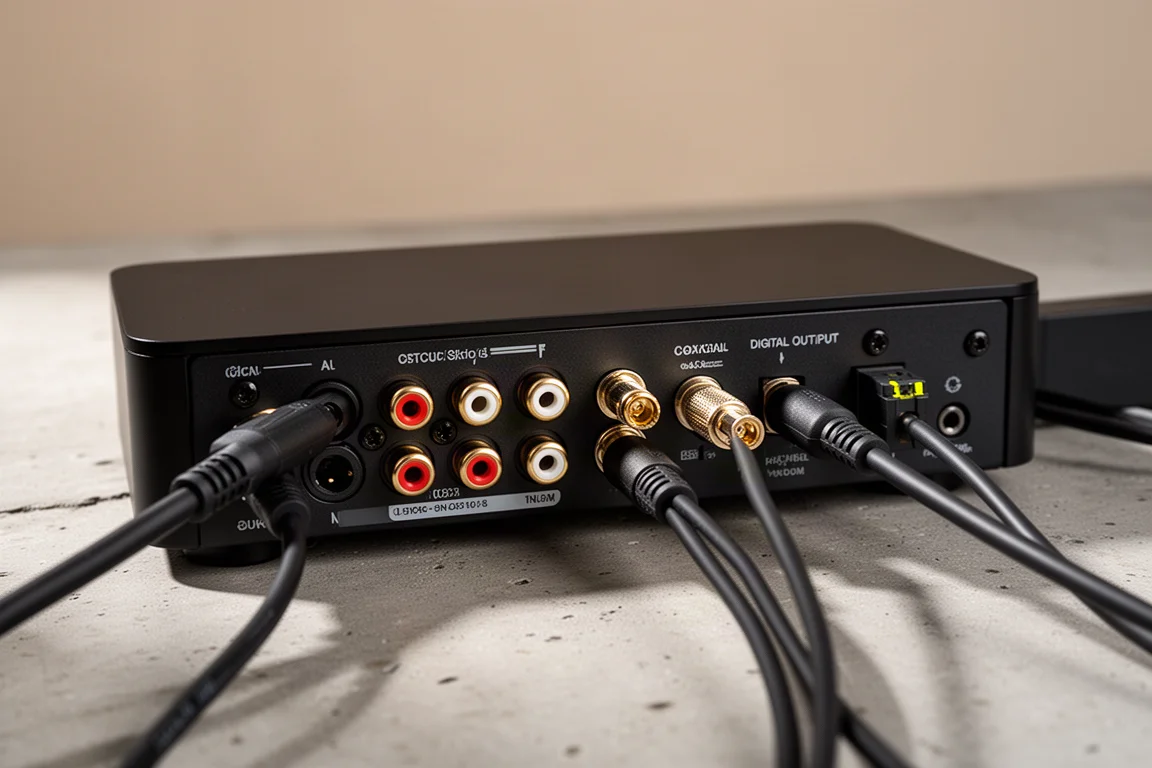
An Ethernet connection is one of the key additions on both models, and a wired network link is widely regarded as a cleaner path for audio performance. Roon Ready support is also included, letting Roon users add either unit to their existing setup, which is uncommon at these prices. The combination of Ethernet, coaxial digital output and Roon support puts both models on the shortlist for anyone wanting strong streaming quality with room to expand later.
If you already own a good DAC, the Pro and Pro Plus are a low-cost way to explore music streaming. The Pro Plus in particular offers better instrument separation, improved imaging and soundstaging, and a treble response with far less glare and etch, so long listening sessions stay comfortable. Its digital outputs still allow an upgrade path to a better separate DAC.
WiiM Amp: An All-in-One Streaming Amplifier
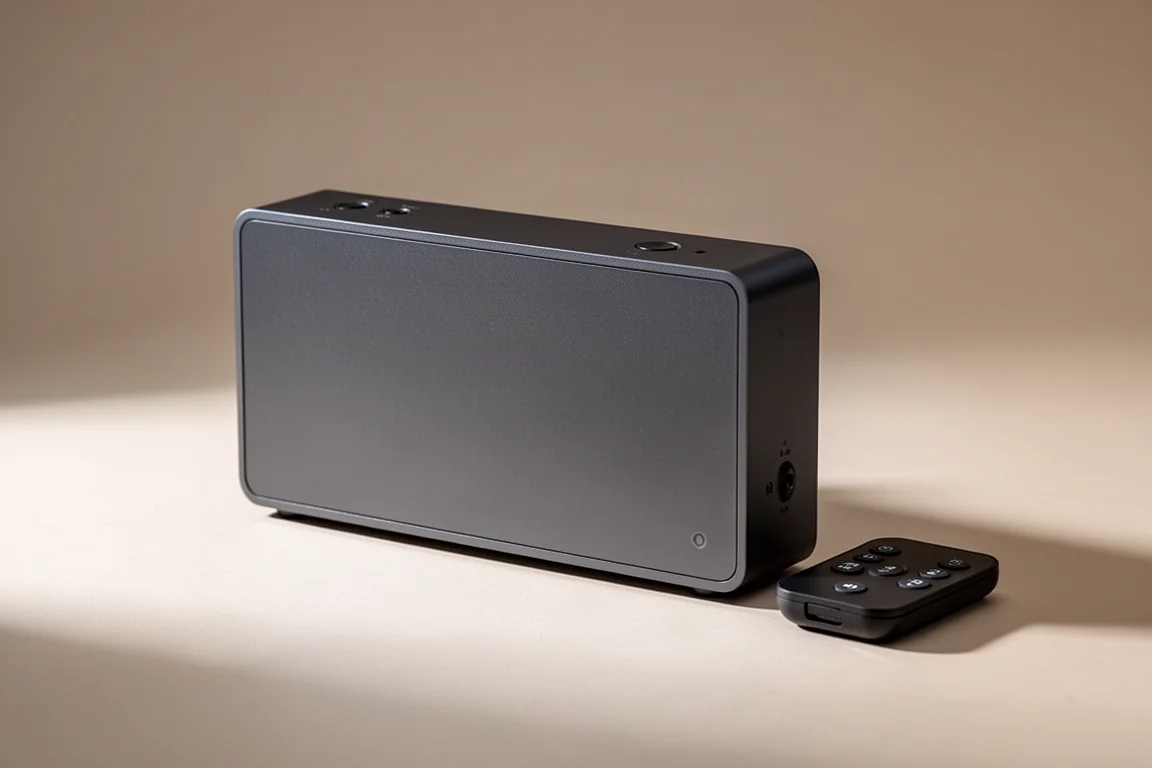
The WiiM Amp is aimed at listeners who want a small, simple device that streams and amplifies in one box, making the just-add-speakers approach affordable and high quality. It measures about 7.48 inches square and only 2.48 inches tall, so it fits where most amplifiers simply will not. Controls sit on the front panel, with a volume control and a multi-function button.
Because it is a complete solution, it omits the digital outputs found on the streamers. In their place are quality speaker binding posts and a crossover-controlled subwoofer output. There is one RCA analogue input for external sources, a USB input for music on a flash drive, and Toslink digital inputs.
An HDMI ARC input is among its most useful features, letting you connect a smart TV and control volume with the television remote, upgrading TV audio without juggling remotes. A Bluetooth remote is included as well, offering wider coverage than a traditional infrared remote, and it supports voice control.
Internally, the DAC section uses an ESS ES918K2M chip with a signal-to-noise ratio of 98dB and total harmonic distortion plus noise of -92dB at 0.2%. That is not quite Pro Plus territory, but it is respectable for an all-in-one device. The amplifier section uses a TI TPA3255 Class D chip rated at 60 watts per channel into 8 ohms and 120 watts per channel into 4 ohms, enough to drive most stand-mount or high-sensitivity speakers to room-filling levels. Adding a powered subwoofer through the 30 to 200Hz crossover output turns it into the centrepiece of a high-value system.
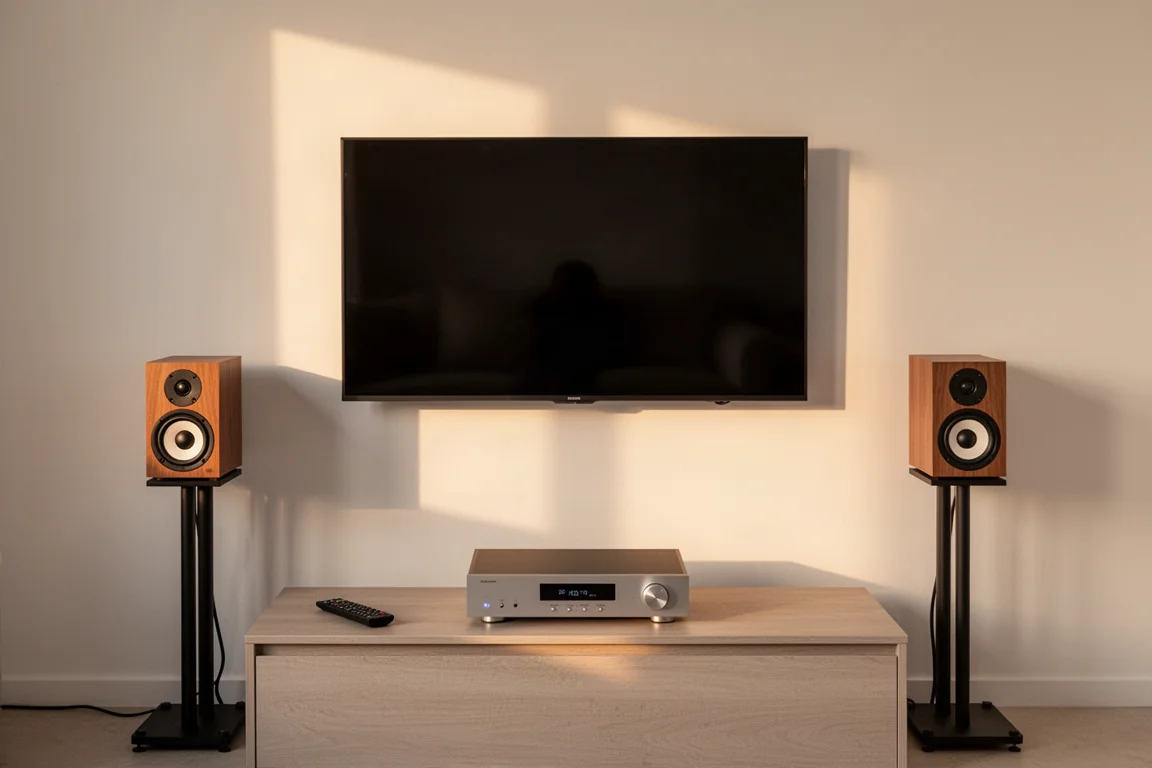
In practice it delivered good power and drove higher-sensitivity speakers well, with clean and clear output, good tonal balance, tight bass that reached low enough to keep music flowing, and a detailed mid-range and treble. On harder-hitting tracks with cymbals and treble energy there was a hint of glare and edginess, and the soundstage and imaging were decent rather than exceptional, which is a fair reflection of its price position. It is not the right choice for most tower speakers or large, hard-to-fill rooms.
What Is Coming Next
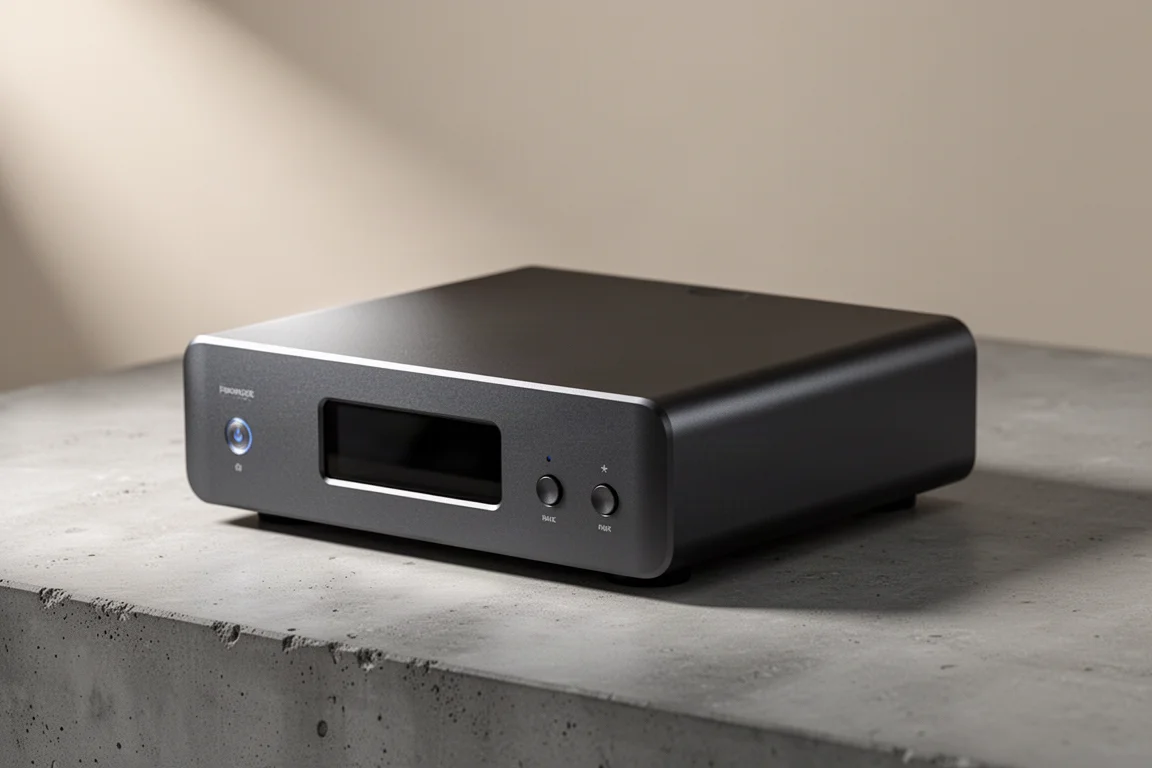
Two new models have been announced: the WiiM Ultra streamer and the WiiM Amp Pro. Depending on when you read this, they may already be available, so it is worth checking current listings before deciding.
Both are said to feature a 32-bit/384kHz ES9038Q2M Sabre DAC, Wi-Fi 6, Bluetooth 5.3 and an auto-tuning feature. The WiiM Ultra is a streamer similar in size to the current WiiM Amp, with a 3.5-inch touchscreen for album artwork and settings, a physical volume knob on the front, and a phono input on the back, the only WiiM device with one. The WiiM Amp Pro is positioned as an upgrade to the WiiM Amp, with improved Wi-Fi and Bluetooth and a higher signal-to-noise ratio of 120dB compared with 98dB on the standard Amp.
Buying Advice
Start with your existing system. If you have a good DAC and simply want to add streaming at low cost, the WiiM Pro or Pro Plus is the logical entry point, and the Pro Plus is the better match for more revealing setups thanks to its AKM DAC and improved measurements. If you want the smallest possible footprint and mostly casual listening, the WiiM Mini covers the fundamentals for very little outlay and can grow later through its Toslink output.
If you have no amplifier at all and want a compact one-box solution for stand-mount or high-sensitivity speakers, the WiiM Amp does the whole job, including TV audio over HDMI ARC. It is a poor fit for large tower speakers or big rooms that need more grunt.
All four support multi-room audio, though if multi-room is your main priority there are other brands worth considering in that space. Likewise, better-sounding streaming products exist from more expensive brands, but they cost considerably more. Across the range, setup was straightforward, the app was intuitive, and no connection hiccups appeared during use.
Conclusion
The WiiM range makes the most sense for budget-minded music lovers. Software quality is the standout here: one app covers the major streaming services, playback control, equalisation and multi-room duties without forcing you to switch between apps. Sound quality is good at each price point, and the Pro Plus and Amp stand out as the two models that give the most for their respective roles. If you want streaming without a large outlay, these are worth a serious look.
Further reading
Related Reviews
Music Streamers
Arylic S10 Plus vs WiiM Mini: Two Affordable Music Streamers Compared
A practical comparison of the Arylic S10 Plus and the WiiM Mini, covering connections, apps, tone controls, and how each internal DAC actually sounds.
Music Streamers
Auralic Aries G1.1 Review: A Streaming Transport That Lifts a Resolving System
A close look at the Auralic Aries G1.1 streaming transport, covering its twin-transformer power supply, Tesla G2 processing, Lightning DS app and the systems where it genuinely pays off.
Music Streamers
Bluesound Nano Review: A Compact Streamer That Keeps Things Simple
The Bluesound Nano is a stripped-down network streamer at $299, with a solid chassis, quick setup, and a clean, punchy sound. Here is what to know before buying.